
Lowland Brittle Fern (Cystopteris protrusa)
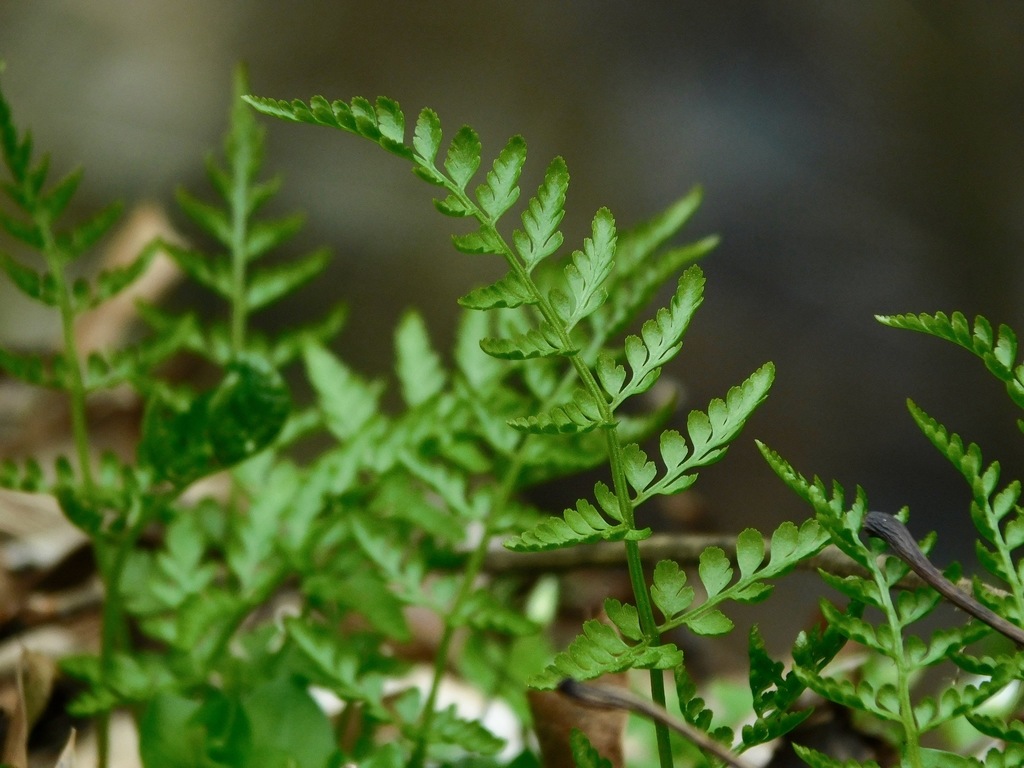
Cystopteris protrusa, known as Lowland Brittle Fern, lowland bladderfern or southern fragile fern, is a small, delicate deciduous fern of rich, moist deciduous woods in eastern and central North America. It belongs to the bladder fern family (Cystopteridaceae) and is one of the first ferns to send up new fronds in spring.
The soft, lacy fronds are usually 6 to 16 inches long and come up in loose rows from a creeping underground stem (rhizome). The species name protrusa refers to the tip of that rhizome, which “protrudes” an inch or more beyond the current fronds and is covered in shiny, golden-brown hairs. This feature, together with its habit of growing in soil rather than on rock, separates it from its close relatives.
Lowland brittle fern is common on floodplains, wooded slopes and ravine bottoms from the Great Lakes and southern New England south to the Gulf states. It is an easy, low-key fern for shady wildflower gardens, where its bright green spring fronds pair well with spring ephemerals. Like other Cystopteris, it goes dormant early, often by late summer.
Identification
Look for small, thin, bright green, twice-divided fronds in loose rows on soil in moist hardwood forest, with a hairy rhizome tip that extends past the fronds.
Growth Habit
A deciduous fern with a slender, creeping rhizome just under the soil surface. Fronds rise singly or in small groups along the rhizome, forming loose patches rather than a tight clump. The rhizome tip extends about 1/2 to 1 1/2 inches beyond the newest fronds and is covered in golden-brown hairs. Fronds appear in early spring and usually wither by mid to late summer.
Fronds
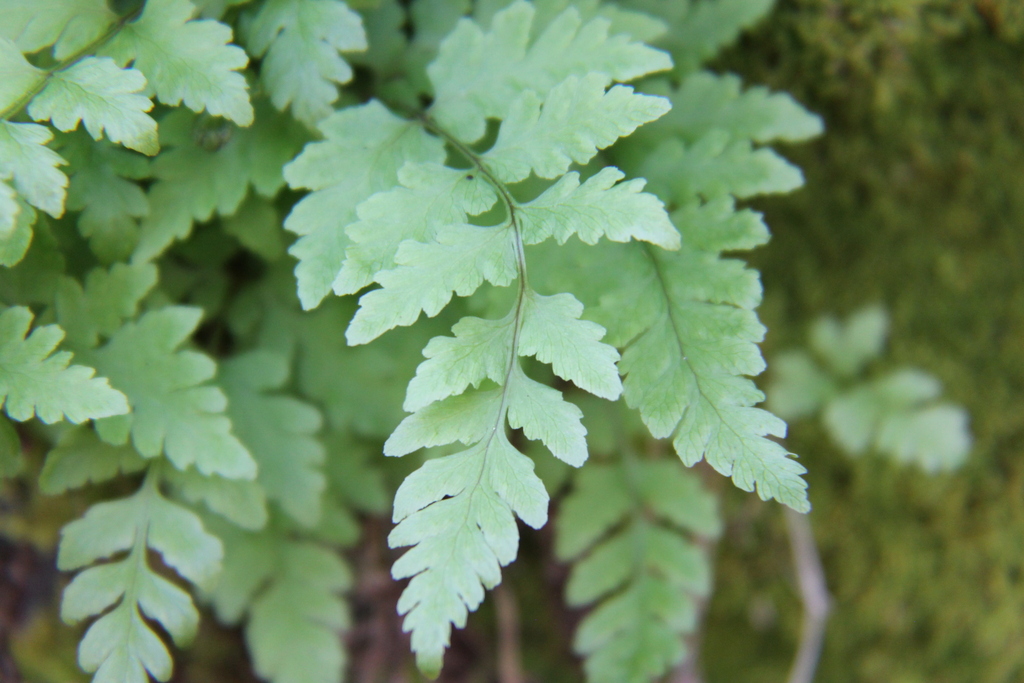
Fronds are 6 to 16 inches long (occasionally to about 18 inches). The leaf stalk (stipe) is slender, green to straw-colored, and roughly as long as the blade. The blade is lance-shaped to narrowly oval, widest near the base or middle, and twice divided: the leaflets (pinnae) are cut into rounded, toothed segments. Early fronds are smaller and mostly sterile; later fronds carry spores.
Spores
Small, round clusters of spore cases (sori) sit on the underside of the leaflets, each partly covered by a thin, hood-like flap (indusium) attached at one side. This bladder-like hood gives the genus its name: Cystopteris means “bladder fern.” The spores ripen in late spring and early summer.
Look-alikes
Fragile fern (Cystopteris fragilis) and Mackay’s brittle fern (C. tenuis) look very similar, but they form compact clumps with no protruding, hairy rhizome tip, and they usually grow on rock, ledges or mossy logs. Bulblet fern (C. bulbifera) has long, narrow, tapering fronds with small bulblets underneath and grows on wet limestone. Young sensitive fern and lady fern have larger, coarser fronds. Dig gently near the base: a hairy rhizome tip extending past the fronds confirms lowland brittle fern.
Quick Facts
| Scientific Name | Cystopteris protrusa |
| Family | Cystopteridaceae (bladder fern family) |
| Plant Type | Deciduous fern |
| Mature Height | 6–16 in |
| Mature Spread | 1–2 ft; slowly spreading patches |
| Growth Rate | Moderate |
| Sun Exposure | Part shade to full shade |
| Water Needs | Medium; evenly moist soil |
| Soil Type | Rich, humusy loam or alluvial soil |
| Soil pH | About 5.5–7.5 |
| Bloom Time | None (spores late spring–early summer) |
| Flower Color | None; fern |
| Fall Color | Goes dormant by late summer |
| Fruit | None; round sori under a hood-like indusium |
| Deer Resistant | Yes; rarely browsed |
| USDA Hardiness Zones | 4–8 |
Native Range
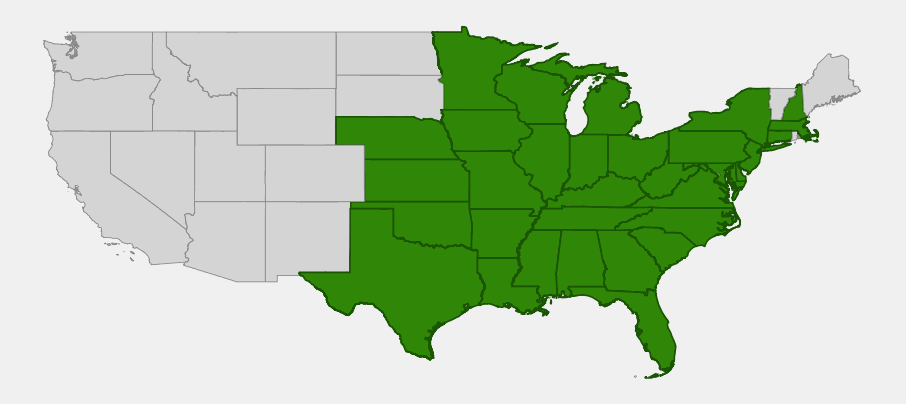
Lowland brittle fern is native to eastern and central North America, from southern Ontario and the Great Lakes south to the Gulf Coastal Plain, and west to Minnesota, Nebraska, Kansas, Oklahoma and east Texas. USDA PLANTS lists it as native in 32 states, from Massachusetts, Connecticut and New Hampshire south to Georgia and the Florida Panhandle.
It is most common in the Ohio and Mississippi valleys, the Ozarks, the Interior Low Plateaus and the Piedmont. It is local and uncommon at the edges of its range, including New England, Florida, the Great Plains states and east Texas, where it is limited to rich, wooded valleys.
Its typical habitat is rich, moist deciduous forest on deep soil: floodplain terraces, stream banks, ravine bottoms and the lower parts of wooded slopes. Unlike most of its relatives, it almost always grows in soil rather than on rocks.
📋 Regional plant lists featuring Lowland Brittle Fern: North & South Florida · Alabama, Georgia & Mississippi · North & South Carolina · Maryland, Virginia & West Virginia · Kentucky & Tennessee · Arkansas, Louisiana, Eastern Oklahoma & Eastern Texas · Illinois, Iowa & Missouri · Ohio & Indiana · Nebraska, Kansas & Eastern Colorado · Michigan, Wisconsin & Eastern Minnesota · New York, Pennsylvania & Northern New Jersey · Delaware, Southern New Jersey & Long Island · Connecticut, Massachusetts & Rhode Island · New Hampshire, Maine & Vermont
Growing & Care Guide
Lowland brittle fern is only occasionally sold by native plant nurseries, but it is easy to grow in a shady, moist woodland garden. Think of it as a spring fern: it is at its best from March to June and fades in summer.
Light
Part shade to full shade under deciduous trees. Spring sun before the trees leaf out is fine; hot summer sun scorches it.
Soil & Water
It wants rich, loose, humusy soil that stays evenly moist, like the leaf mold of a floodplain forest. Slightly acidic to neutral soil suits it. Water during dry spells in spring. Summer drought simply sends it into early dormancy.
Planting Tips
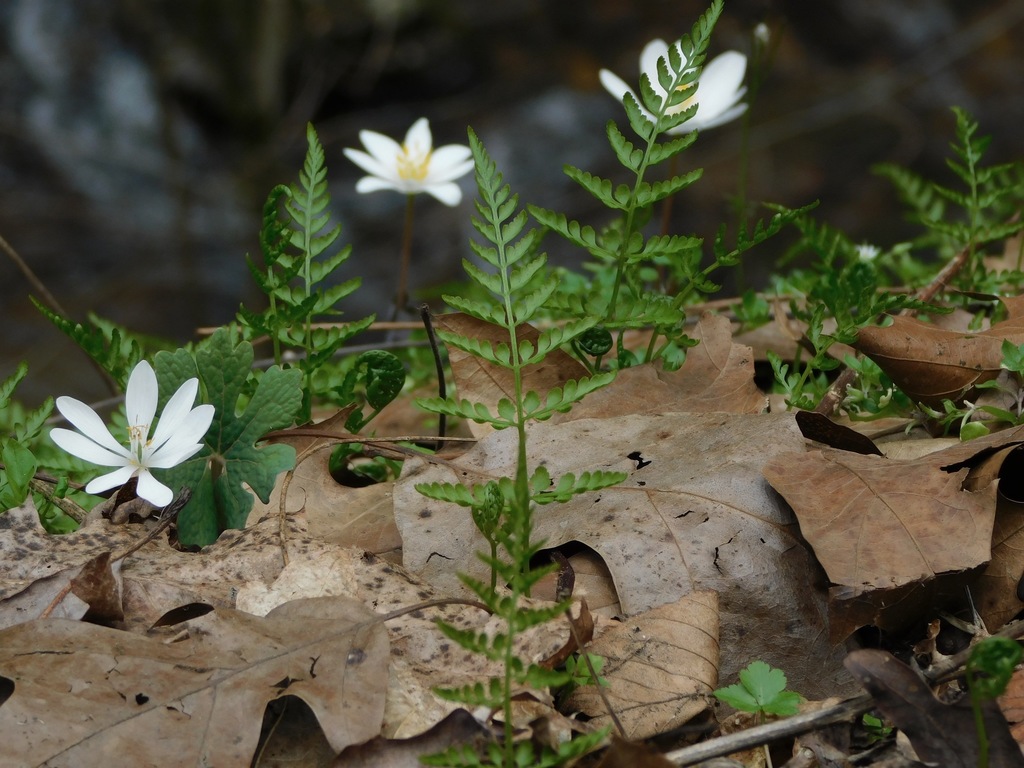
Plant divisions or potted plants in early spring or fall, with the rhizome just under the surface and the growing tip pointing where you want it to spread. Mark the spot, since it disappears in summer. Combine it with spring ephemerals such as bloodroot, twinleaf and rue anemone, and with later plants that fill in after it goes dormant.
Pruning & Maintenance
No pruning is needed. Let fallen leaves stay as mulch over the bed in fall, since the plant depends on a loose layer of leaf litter. Avoid heavy wood-chip mulch and foot traffic over the rhizomes.
Propagation
Divide the creeping rhizomes in early spring, making sure each piece has a growing tip and roots. It can also be grown from spores sown on sterile, moist medium, though this is slow. Never dig plants from the wild; buy nursery-propagated plants or share divisions from a garden.
Landscape Uses
- Woodland gardens: soft, bright green spring fronds among spring wildflowers
- Shade groundcover: loose patches under deciduous trees and shrubs
- Floodplain and rain garden edges: tolerates seasonally moist, rich soil in shade
- Ecological restoration: native understory fern for rich bottomland forests
- Fern collections: an early-season contrast to evergreen ferns
Wildlife & Ecological Value
Lowland brittle fern is a small plant, but it is a common part of the spring ground layer in rich eastern forests.
For Pollinators
As a fern it has no flowers and does not feed pollinators. It does provide shelter for small insects and spiders in the leaf litter layer.
For Birds
Ground-foraging birds such as wood thrushes and ovenbirds search the fern layer and leaf litter for insects, and fronds offer some cover near the ground.
For Mammals
Deer and rabbits seldom eat it. Small mammals, salamanders and toads use the cool, moist cover of fern patches.
Ecosystem Role
Its creeping rhizomes help bind loose alluvial soil on floodplains and stream banks. It is also of interest to botanists: lowland brittle fern is a diploid parent of several hybrid and polyploid Cystopteris species, including Tennessee bladder fern (C. tennesseensis) and Mackay’s brittle fern.
Cultural & Historical Uses
For many years lowland brittle fern was treated as a variety of fragile fern, under names such as Cystopteris fragilis var. protrusa. Charles Weatherby described it as a variety in 1935, and Robert Blasdell raised it to a separate species in 1963, and later genetic work showed it is one of the ancestors of several other North American Cystopteris.
The names “brittle fern” and “fragile fern” come from the thin, easily broken leaf stalks typical of the genus. The name “bladder fern” refers to the inflated, hood-like flap over each spore cluster.
Because it appears so early, lowland brittle fern is one of the first green ferns spring wildflower walkers notice in rich woods, often unfurling alongside bloodroot, trout lilies and spring beauties.
Frequently Asked Questions
How do I tell lowland brittle fern from fragile fern?
Look at where it grows and at the rhizome. Lowland brittle fern grows in soil and has a creeping rhizome whose hairy tip extends past the fronds; fragile fern forms compact clumps, usually on rock, with no protruding tip.
Why does my lowland brittle fern disappear in summer?
It is naturally an early-season fern. Fronds usually die back by mid to late summer, especially in dry weather, and new fronds return the next spring.
Is it evergreen?
No. It is deciduous and is often dormant from late summer through winter.
Does it need a lot of water?
It likes evenly moist, rich soil in spring. Summer dryness is tolerated because the plant is dormant then.
Is lowland brittle fern deer resistant?
Yes. Deer rarely browse it.

Looking for a nursery that carries Lowland Brittle Fern?
Browse our native plant nursery directory: Alabama & Arkansas · Connecticut, Delaware, Florida & Georgia · Illinois, Indiana, Iowa & Kansas · Kentucky, Louisiana, Maryland, Massachusetts, Michigan, Minnesota, Mississippi & Missouri · Nebraska, New Hampshire, New Jersey, New York, North Carolina, Ohio & Oklahoma · Pennsylvania, South Carolina, Tennessee, Texas & Virginia · West Virginia & Wisconsin

