Virginia Bluebells (Mertensia virginica)
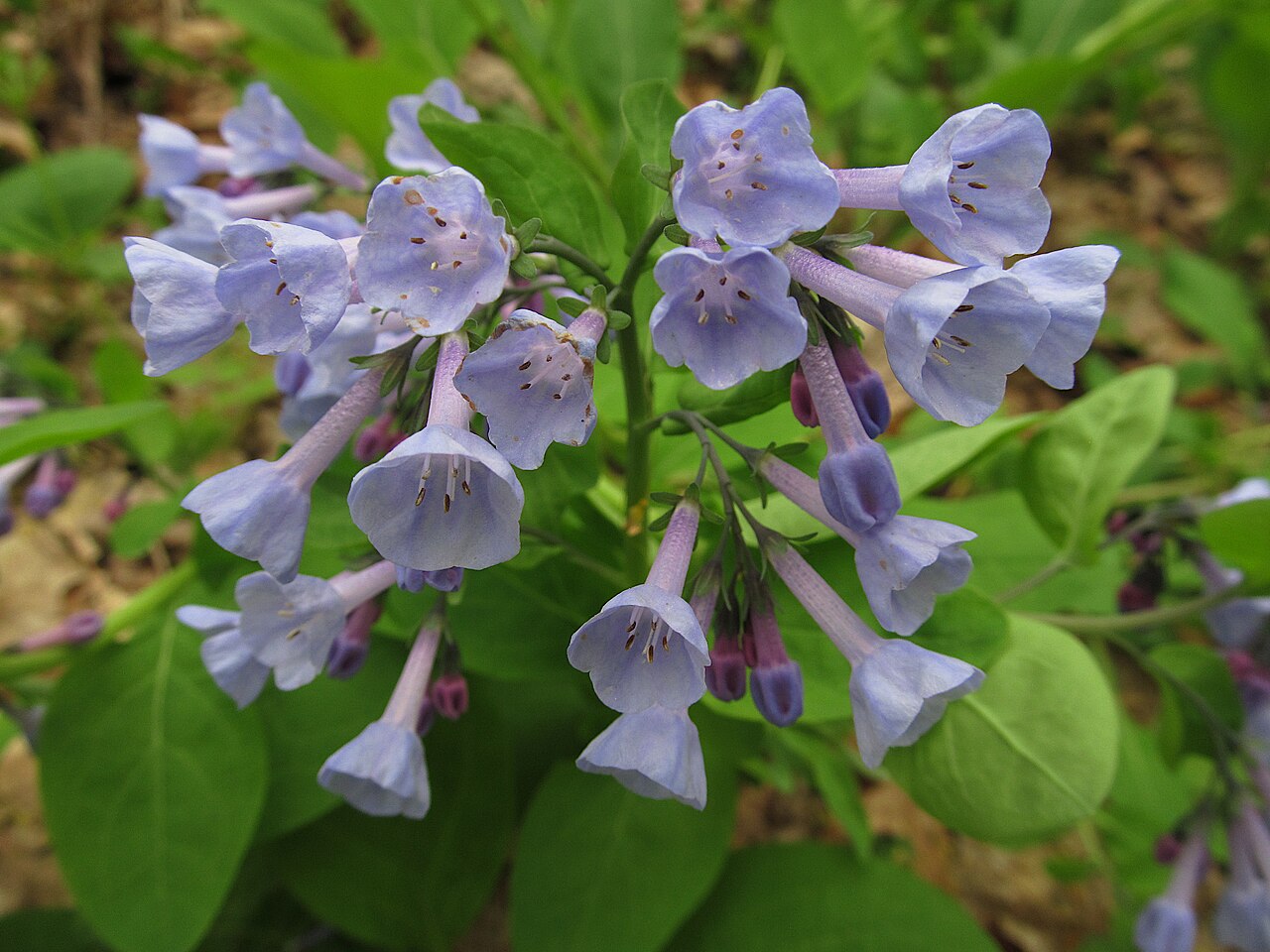
Mertensia virginica, known as Virginia Bluebells, Virginia cowslip, Roanoke bells, or simply bluebells, is one of the great spring ephemerals of the eastern and central United States. A member of the Boraginaceae (borage) family, it sends up bronze-purple shoots in the first warm days of late winter, opens drooping clusters of pink buds that swing open into sky-blue trumpets, and then quietly withdraws underground by early summer. For a few weeks in March and April it can carpet a river bottom or a shaded slope in a haze of blue that few other native plants can match.
The species is a true woodland gardener’s plant: 1 to 2 feet tall, with soft, smooth, gray-green leaves, a taproot-based crown that slowly thickens, and a habit of forming generous colonies where the soil is rich and consistently moist. It has earned the Royal Horticultural Society’s Award of Garden Merit in Britain, and it is a staple of eastern native plant sales for good reason. It is also a plant with a schedule. Everything about growing it well, from where you plant it to what you plant beside it, follows from the fact that it is above ground for only a few months of the year.
This page is written with the Deep South gardener in mind, and it is honest about geography. Virginia Bluebells reach the southern edge of their native range in northern Alabama, Georgia, and Mississippi, where wild populations are scattered and tied to rich, moist bottomland and cove woods. That does not make the plant a poor choice for the region. It makes it a plant that rewards good site selection: deep shade, cool root zones, steady spring moisture, and companions that fill the gap when the bluebells go dormant in May.
Identification
Virginia Bluebells are herbaceous perennials that grow 12 to 24 inches tall (Illinois Wildflowers gives 1 to 2½ feet) from a thick, fleshy root system, forming clumps that widen slowly and spread further by seed. Stems are smooth, round, and usually light green, sometimes flushed with purple, and branch a little near the top. Because the plant is so early and so short-lived above ground, the best identification window is short: emergence in late winter, bloom in March through April in the South, and yellowing foliage by late spring.
Leaves & Stems
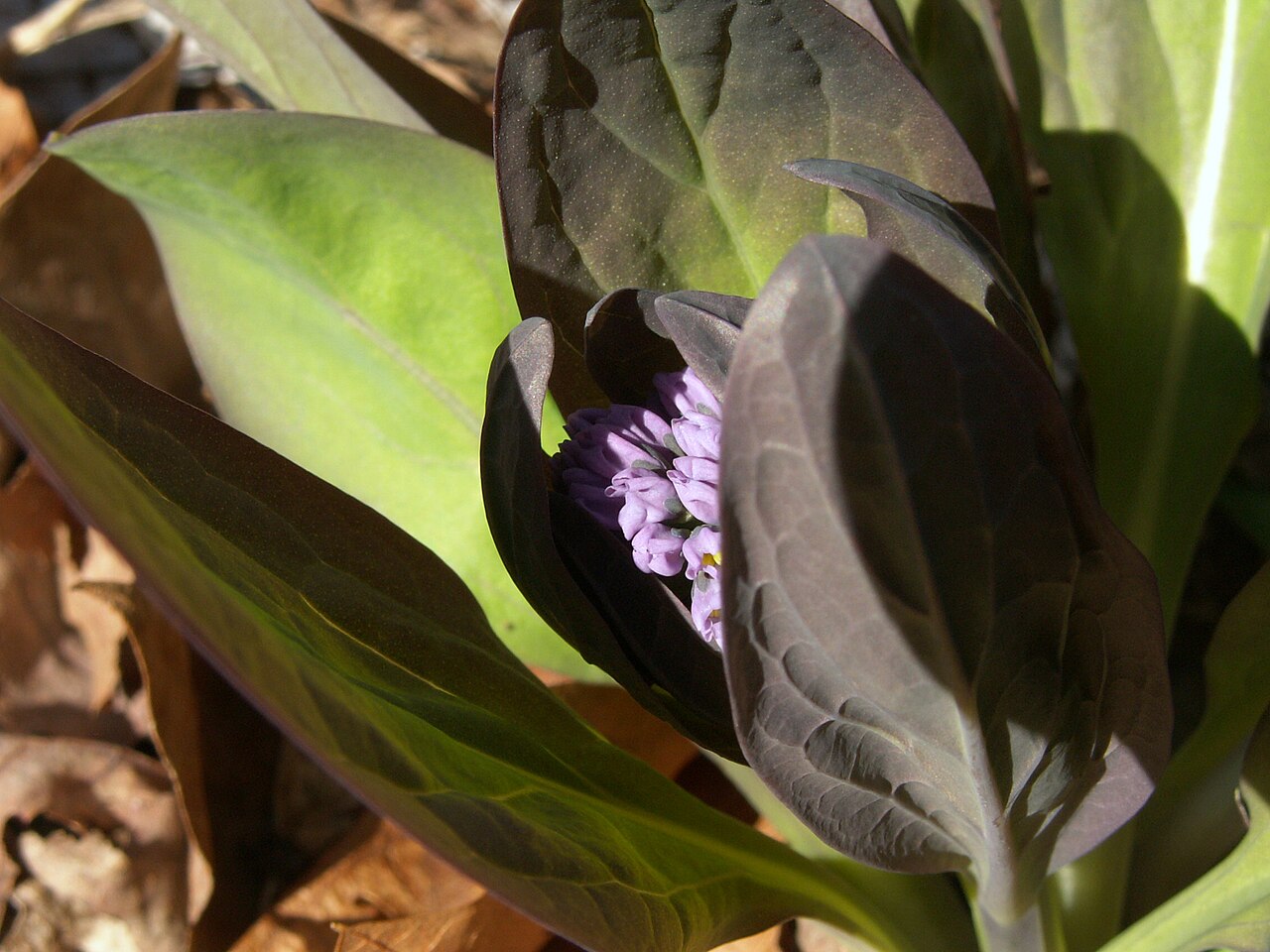
The leaves are alternate, simple, and entirely smooth-edged (entire), with a soft, slightly floppy texture and a gray-green to blue-green cast. Basal and lower leaves are broadly oval to ovate, up to 7 or 8 inches long and about 3½ inches wide, tapering to a winged leaf stalk (petiole). Upper stem leaves are smaller and often stalkless (sessile). Venation is pinnate and obvious on the underside. New growth is distinctive: the emerging shoots and unfolding leaves are flushed bronze or purplish, then shift to green within days as the foliage expands. There is no hair, bristle, or rough texture, which helps separate Virginia Bluebells from most other Mertensia species, whose foliage tends to be hairier, and from rough-leaved borage relatives such as comfrey.
Flowers
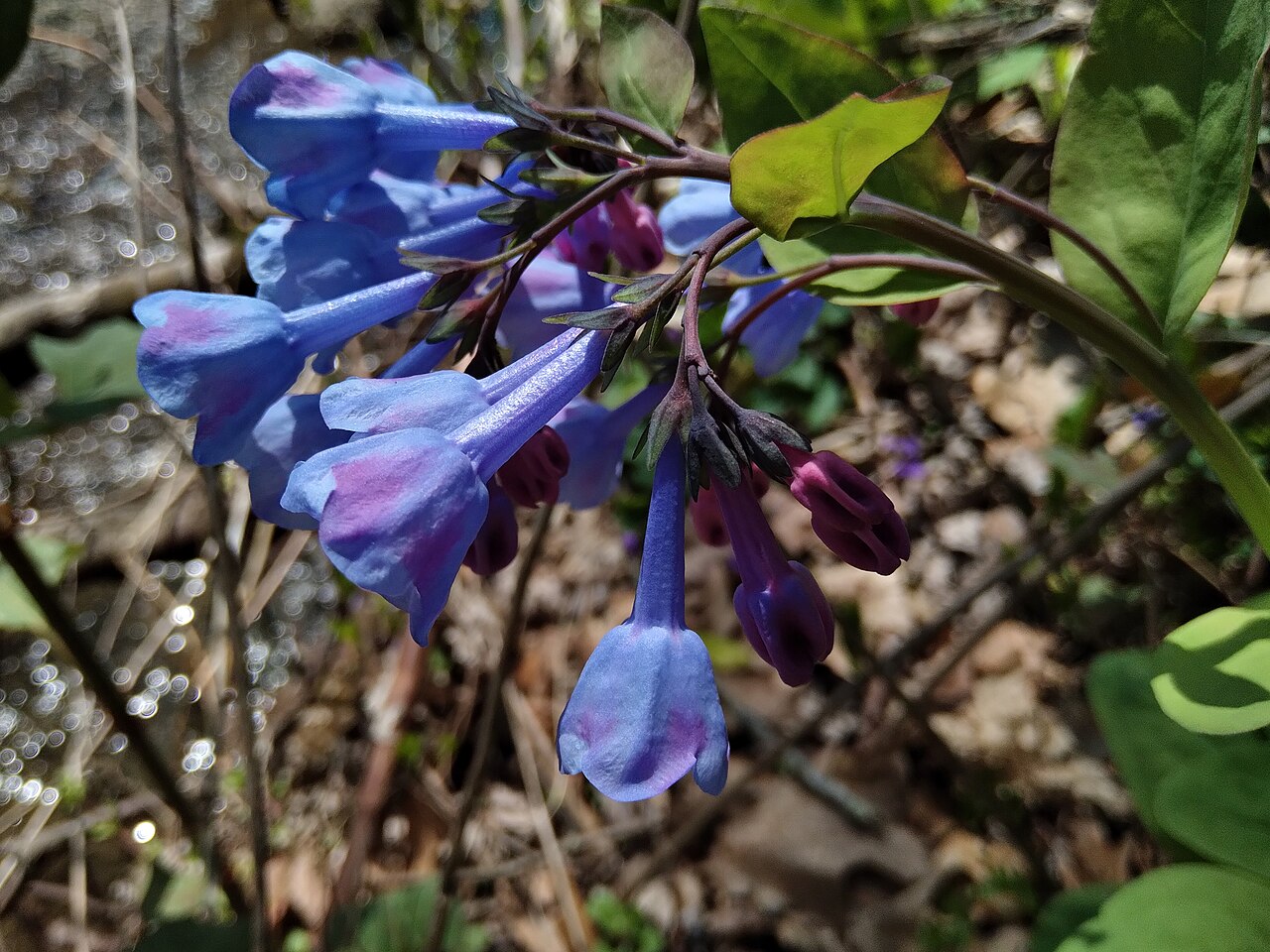
The inflorescence is a nodding cyme at the end of each arching stem, carrying a dozen or more flowers. Buds are pink to bluish-purple, and the color shift as they age is a large part of the plant’s charm: pink-tinged buds, lavender-blue flowers just opening, and clear sky-blue blooms in the same cluster at once. Each flower is about ¾ to 1¼ inches long. The corolla is a narrow tube at the base that flares into a shallow bell with five barely discernible lobes; five white stamens with tan anthers and a long, slender white style sit inside the throat. The greenish-gray calyx is small and divided into five narrow teeth. Blue is the standard color, but pink-flowered and pure white forms turn up in wild populations and in the nursery trade. Bloom lasts roughly three weeks at a given site, running March to April in Alabama, Georgia, and Mississippi, and from mid- to late spring further north.
Fruit & Seeds
Each fertilized flower produces a four-lobed fruit (a schizocarp) that separates into four small, dark brown, wrinkled nutlets, roughly ovoid and flattened on one side. Seed ripens about 3 to 4 weeks after flowering, usually right as the stems collapse. Self-sown seedlings are how established colonies thicken and expand gradually in favorable sites. The root system is a taproot with thick, fleshy roots that store the energy the plant needs for its brief spring sprint.
Quick Facts
| Scientific Name | Mertensia virginica (L.) Pers. ex Link (syn. Mertensia pulmonarioides) |
| Family | Boraginaceae (Borage) |
| Plant Type | Herbaceous perennial wildflower; spring ephemeral |
| Mature Height | 12–24 in (30–60 cm) |
| Mature Spread | 12–18 in (30–45 cm); colonizes by self-seeding |
| Growth Rate | Fast in spring, then dormant; colonies expand slowly over several years |
| Sun Exposure | Part Shade to Shade (full sun only in cool climates with constant moisture; not advised in the Deep South) |
| Water Needs | Average to high during growth; consistently moist soil from emergence through seed set. Tolerates dry summers only because it is dormant |
| Soil Type | Rich, moist, well-drained loam or bottomland soil high in organic matter; tolerates rocky, limestone-influenced soils |
| Soil pH | Near neutral, about 6.0–7.5 (slightly acidic to slightly alkaline) |
| Bloom Time | March – April in the South; March – May across the range |
| Flower Color | Sky blue from pink buds (rarely pink or white) |
| Fall Color | None; foliage yellows and disappears by early summer |
| Fruit | Four-lobed schizocarp splitting into four dark brown nutlets |
| Deer Resistant | Mostly; deer may browse the foliage occasionally in spring |
| USDA Hardiness Zones | 3–8 |
Native Range
Virginia Bluebells are native to eastern North America, from western New York and southern Ontario west to eastern Minnesota, and south to North Carolina, Arkansas, and eastern Kansas, according to the Lady Bird Johnson Wildflower Center. The species is most abundant in the Midwest and Ohio Valley, where it can dominate entire floodplain woods. USDA lists it as native in both the lower 48 and Canada, including Ontario and Quebec. Sources differ on the far northeastern fringe, where some list New England states as native and the Lady Bird Johnson Wildflower Center describes the range as naturalized northeastward. The map below follows the more conservative range and leaves New England unshaded.
The Deep South is at the southern edge of that range. Virginia Bluebells are documented as native in Alabama, Georgia, and Mississippi, but populations there are more localized than in Illinois, Missouri, or Ohio and are concentrated in rich alluvial woods and moist lower slopes, generally in the northern parts of each state (the USDA county-level map linked below shows exactly where it has been recorded). If you garden in south Georgia, the Alabama Black Belt, or the Gulf coastal plain, treat the plant as a challenging woodland accent rather than a landscape workhorse: it can succeed in deeply shaded, moisture-retentive sites, but it is not going to behave the way it does in Kentucky or Missouri. In the northern half of Alabama, Georgia, and Mississippi, and in mountain and Piedmont gardens, the odds are considerably better.
In the wild it grows in moist woods, on river terraces and floodplains, and in clearings and openings along streams. Its wetland indicator status leans wet (FAC to FACW depending on region), which tells you what it wants: soil that stays damp in spring, with good drainage in summer and enough humus to hold moisture. The Lady Bird Johnson Wildflower Center lists it as a species at risk in Ontario, a reminder that this is a plant of intact riverside forest and worth protecting where it still grows.
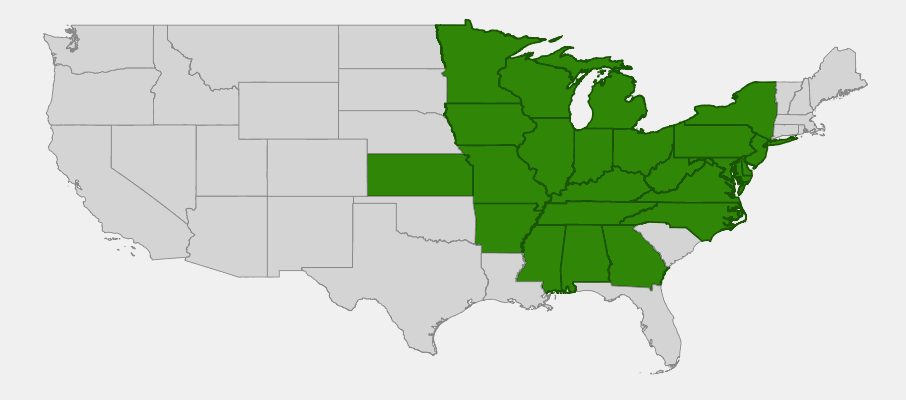
📋 Regional plant lists featuring Virginia Bluebells: Alabama, Georgia & Mississippi · Illinois, Iowa & Missouri · Maryland, Virginia & West Virginia
Growing & Care Guide
Virginia Bluebells are easy to keep happy once you match the site to the plant, and difficult to rescue when you do not. The mistakes are predictable: planting in too much sun, forgetting where the clump is once it goes dormant and digging it up, or leaving it to dry out in a spring dry spell. Get those three things right and a small planting can persist for decades.
Light
Give Virginia Bluebells part shade to full shade. The easiest way to think about it is to plant where the site is sunny in late winter and shaded by summer: under deciduous trees that leaf out in April. That gives the plant the full-sun window it needs to fuel its growth while the canopy is bare, and the shade it needs to stay cool and moist as spring warms. Some published sources say the plant tolerates full sun. In cool northern climates with constantly moist soil that can be true, but in Alabama, Georgia, and Mississippi, where April already runs warm, full-sun plantings scorch and go dormant weeks early. For that reason this page lists Part Shade to Shade rather than the wider Full Sun to Shade range.
Soil & Water
The ideal soil is a deep, rich, organic loam that stays damp in spring: the kind you find in creek bottoms and at the foot of wooded slopes. Near-neutral pH suits the plant best, and it tolerates limestone-influenced, rocky soils well. In the red clay of the Georgia and Alabama Piedmont, dig in leaf mold or well-aged compost to a depth of 8 to 12 inches before planting, and keep a permanent 2 to 3 inch layer of shredded leaves on top. In sandy Coastal Plain soils, add compost heavily and place the plant where it will catch runoff or stay shaded through summer.
Water is the critical variable during growth. Keep the soil evenly moist from the time the shoots appear until the foliage begins to yellow. In a dry spring, a weekly deep soaking is worth doing. Once the leaves have gone dormant, the plant no longer needs supplemental water, and in the South, where summers are humid and often wet, it is better not to overwater the bed. Soggy soil over dormant crowns in July can cause rot.
Planting Tips
Plant dormant root divisions or container plants in fall, or in very early spring before growth starts. Set the crown about 1 to 2 inches below the surface, spread the fleshy roots out, and firm the soil around them. Space plants 12 to 18 inches apart for a drift. The roots are brittle, so avoid bare-root shipments that arrive dried out, and buy from nurseries that propagate their own stock rather than digging wild plants. The plants can be difficult to find in the trade, so it is worth checking the nursery directories below early in the year.
Because the plant vanishes in early summer, mark the spot with a small plant tag or a stone, or plant it among companions so you do not accidentally dig into the crown when planting summer annuals or perennials. Expect a modest first year: bluebells often bloom lightly the first spring after planting and then improve as roots establish.
Pruning & Maintenance
Virginia Bluebells need almost no maintenance. The main task is to let the foliage die back on its own. It is tempting to cut yellowing leaves off in May, but the plant is still feeding its roots, so leave the foliage alone until it collapses. Once it has, you can rake or pull away the dead material. If you do not want the plant to spread, snip off the flower stalks before seed ripens, but in a woodland garden the modest self-sowing is a benefit, not a problem. Watch for slugs and snails on emerging shoots in wet springs. Otherwise, the plant has no serious insect or disease problems.
Propagation
Propagation is by seed or division. Seed should be sown fresh, in early summer right after collection, or stored cold and moist and sown about six weeks before the last spring frost. Seed stored over winter and planted in spring needs roughly six weeks of cold, moist stratification, and seedlings are slow to reach flowering size. Crowns can be divided while the plant is dormant, but the brittle roots resent disturbance, so divide only mature clumps and replant them the same day. Root cuttings taken in fall may be attempted, though results are variable, and North Carolina State Extension notes the plant can be difficult to propagate.
Landscape Uses
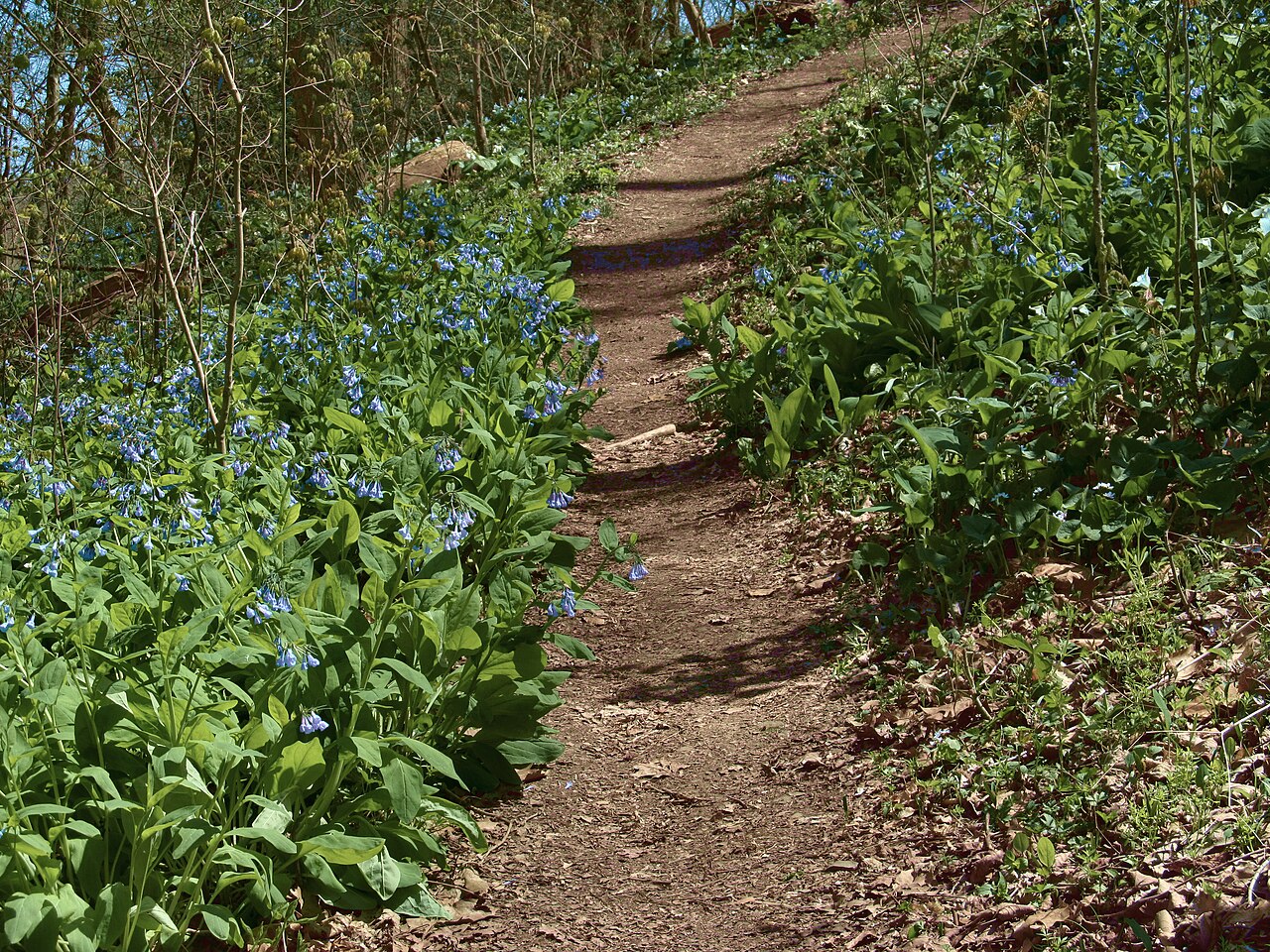
Virginia Bluebells are best treated as a seasonal feature in a layered woodland planting. They look best in drifts of at least five to seven plants, and they need neighbors that will cover the bare ground when they retire:
- Woodland and shade gardens under deciduous trees, where they get spring sun and summer shade
- Creek banks, rain gardens, and bottomland plantings that stay damp in spring but drain in summer
- Naturalized drifts along paths and property edges, where self-seeding can carry the planting forward
- Companion planting with summer foliage such as Christmas Fern, Lady Fern, or Cinnamon Fern to fill the gap left by the dormant foliage
- Spring ephemeral gardens paired with Wild Geranium, Columbine, Jack-in-the-Pulpit, and Dutchman’s Breeches
- Restoration of moist woodlands alongside Virginia Waterleaf and under Sycamore
One design note: bluebells and ferns are a natural pairing because the ferns unfurl just as the bluebell foliage yellows. In the South, that handoff usually happens in early May.
Wildlife & Ecological Value
Virginia Bluebells bloom at a time when the pollinator calendar is nearly empty, which makes them more valuable than their short season suggests. They are one of the few plants in the woodland understory offering nectar and pollen in March and early April, when queen bumblebees and other early bees are emerging from hibernation.
For Pollinators
The flowers are cross-pollinated primarily by long-tongued bees, including honeybees, bumblebees, digger and Anthophorid bees, and mason bees (Osmia spp.), which take nectar or gather pollen. Other regular visitors include the giant bee fly (Bombylius major), butterflies, skippers, sphinx moths including the hummingbird moth (Hemaris thysbe), and, in some areas, ruby-throated hummingbirds. Small halictid bees and syrphid flies visit as well but are too small to be effective pollinators. Early-emerging bumblebee queens are among the visitors that benefit from having a reliable nectar source this early in the season.
For Birds
Virginia Bluebells are not a significant bird food, and their value to birds is mostly indirect: the early flowers support the insects that insect-eating birds look for in spring. Ruby-throated hummingbirds returning in late March and April will sample the nectar where the timing lines up.
For Mammals
White-tailed deer browse the foliage occasionally in spring, but bluebells are generally not a preferred food, and the plant’s brief above-ground season limits damage. Large colonies provide protective ground cover for small wildlife during the spring, and the flush of foliage adds to the early spring cover on bottomland floors.
Ecosystem Role
Spring ephemerals like Virginia Bluebells are generally understood to capture nutrients released from decomposing winter leaf litter while the canopy is still open, then return them to the soil when the foliage dies back in early summer. The plant is a good indicator of rich, undisturbed bottomland or cove forest, and it typically grows alongside other rich-woods species such as wood nettle and waterleaf. Because the flowering window is so narrow, it depends on an intact native tree canopy overhead and on bees that are flying when it blooms, which is one reason to plant it alongside other early-blooming natives rather than on its own.
Cultural & Historical Uses
The name Mertensia honors Franz Karl Mertens (1764–1831), a German botanist. The species has an unusually tangled naming history. Linnaeus described it in 1753 as Pulmonaria virginica, and when Albrecht Wilhelm Roth erected the genus Mertensia in 1797, he called the plant Mertensia pulmonarioides, apparently unaware of Linnaeus’s earlier name. Roth’s name is now considered a superfluous synonym, but it is still widely used in older literature and in the nursery trade, so you may see either name on plant tags. Virginia Bluebells are the type species of the genus Mertensia. The Royal Horticultural Society has recognized the plant with its Award of Garden Merit.
Records of traditional use come from several Native American nations, including the Cherokee and Iroquois. The Cherokee are recorded as using the plant for whooping cough and tuberculosis, and the Iroquois used a root infusion as an antidote for poison and a root decoction for venereal complaints, according to the Native American Ethnobotany Database. These uses are historical documentation, not recommendations, and no part of the plant should be treated as a home remedy.
Some foraging sources describe the flowers and young leaves as edible, and Wikipedia notes the same. Members of the borage family often contain pyrrolizidine alkaloids that can harm the liver, so this page treats Virginia Bluebells as an ornamental and ecological plant and does not recommend eating it.
In gardens the plant is now one of the most popular native spring wildflowers in the East, and gardeners in Britain grow it too as a shade-garden perennial. Floodplain sites such as Riverbend Park on the Potomac in Virginia and river bottoms across the Midwest are known for spectacular spring displays, and finding a local bluebell drift in bloom is a good reason for a March or April woods walk.
Frequently Asked Questions
Will Virginia Bluebells grow in Alabama, Georgia, or Mississippi?
Yes, with the right site. The species is native to all three states, but at the southern edge of its range, so success depends on deep shade, moisture-retentive soil, and a cool location. It does best in the northern parts of each state and in shaded bottomland or cove sites. In the hotter, drier parts of the region, expect earlier dormancy and shorter-lived colonies.
Why did my Virginia Bluebells disappear in summer?
That is normal. Virginia Bluebells are spring ephemerals, and the foliage dies back completely by early summer after the seed ripens, usually by May or June in the South. The roots remain alive underground and the plant returns the next spring. Plant ferns and other native woodland perennials nearby to fill the space, and mark the spot so you do not disturb the crown.
Are Virginia Bluebells the same as English bluebells or Alaska bluebells?
No. English bluebells (Hyacinthoides non-scripta) and Spanish bluebells (Hyacinthoides hispanica) are bulbs from Europe, and Spanish bluebells can be invasive. Virginia Bluebells are a native North American perennial in the borage family. Other native bluebells such as Mertensia paniculata (see Alaska Bluebells) are different species from the north and west with hairier leaves and stems.
Can Virginia Bluebells grow in full sun?
Only with difficulty. They are sometimes reported to tolerate full sun in cool northern climates when the soil stays constantly moist. In the Deep South, full-sun plantings typically scorch and go dormant weeks early, so we recommend part shade to full shade, ideally under deciduous trees that leaf out in April.
Do Virginia Bluebells spread, and are they invasive?
They spread slowly by self-seeding, forming colonies over several years in good conditions, but they are a native plant and are not considered invasive within their native range. Outside their range, particularly in parts of New England, escapes from gardens have naturalized. In the garden, thin or move seedlings if colonies get thicker than you want.

Looking for a nursery that carries Virginia Bluebells?
Browse our native plant nursery directory: Alabama · Georgia · Mississippi