Oconee Bells (Shortia galacifolia)
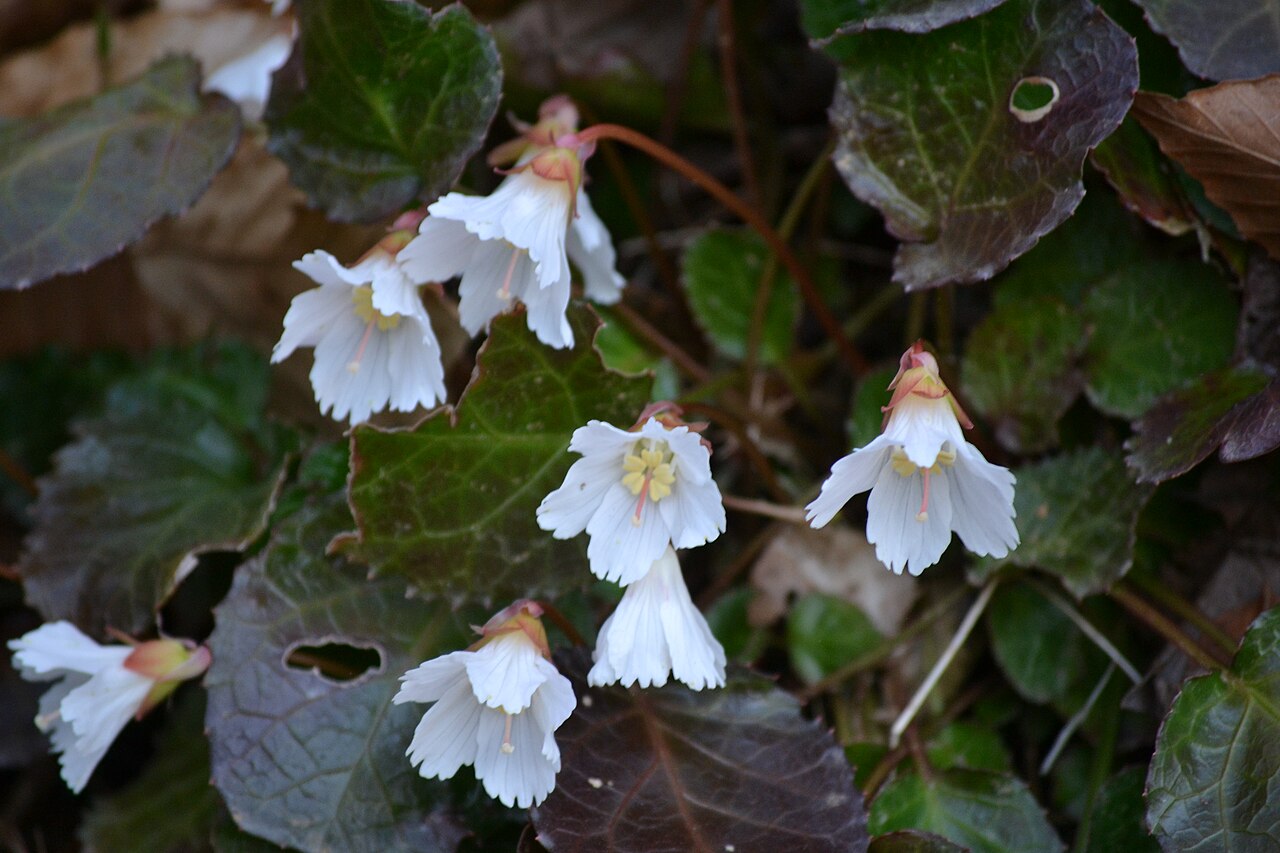
Shortia galacifolia, commonly known as Oconee Bells, is a low, evergreen wildflower of the southern Blue Ridge escarpment and one of the most storied plants in American botany. Each spring a single nodding, fringed white bell rises just a few inches above a carpet of glossy, round, scalloped leaves that turn bronze and maroon through winter. It belongs to the small Diapensiaceae family, and it is a genuine relict: a plant that once ranged more widely and now survives in a handful of cool, humid, rainy river gorges where Georgia, North Carolina, and South Carolina meet.
Before anything else, an honest note about where it belongs on this site. Oconee Bells appears on the Alabama, Georgia & Mississippi regional list because it is native to Georgia, where a single known population grows in Rabun County. It is not native to Alabama or Mississippi. Reports of wild plants in Alabama, Tennessee, Virginia, and Massachusetts are generally treated as garden escapes or deliberate transplants. Even in Georgia it is a rarity: the state ranks it critically imperiled and lists it as Endangered. This is a plant to admire, protect, and grow with clean conscience from nursery-propagated stock, never from a plant dug in the wild.
As a garden plant, Oconee Bells rewards patience. It is slow to establish, slow to spread, and fussy about acidic, humus-rich, evenly moist soil in real shade. Given those conditions it becomes one of the finest evergreen groundcovers for a woodland garden, with year-round interest and a spring display that arrives when little else is blooming. This guide covers identification, its true native range, and everything you need to grow it well in Georgia and the surrounding Southeast.
Identification
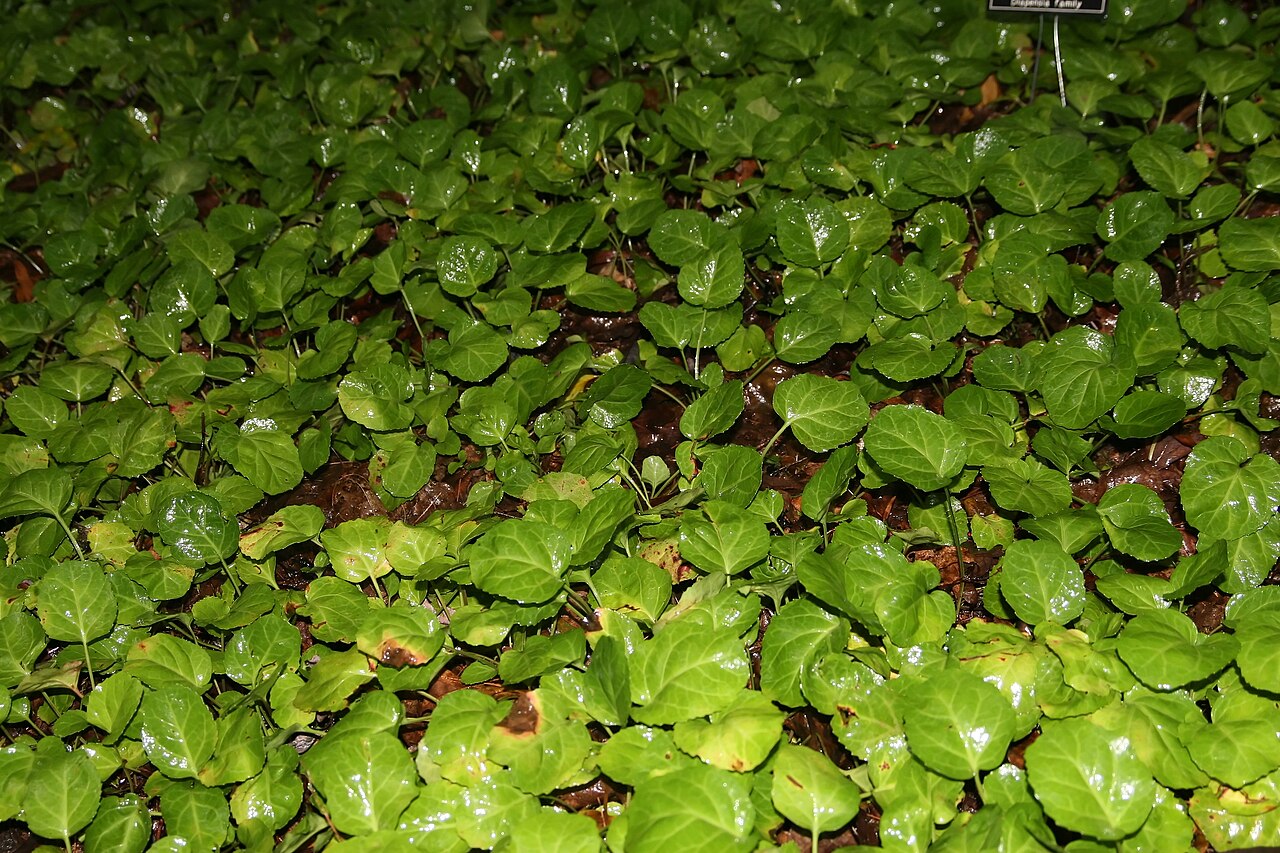
Oconee Bells is a stoloniferous, evergreen perennial herb that stays under about 6 inches tall in flower. Plants grow from a shallow, creeping root system, sending out horizontal stems (stolons) that root at the nodes and produce new plants. Over time a colony forms a dense mat, and in the wild it is often the only ground layer species in a given patch.
Leaves
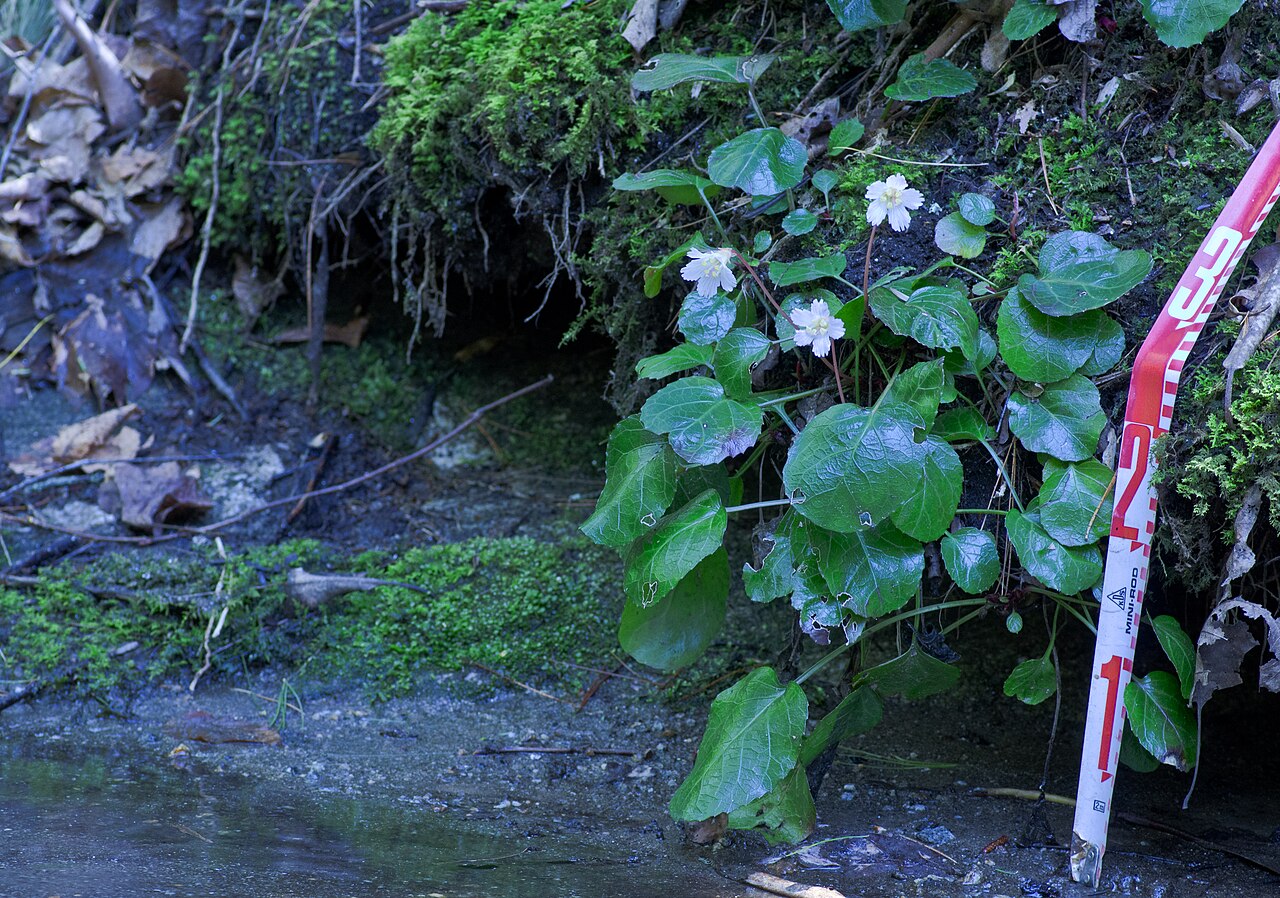
The leaves are basal, simple, and leathery, roughly round to broadly oval, 1 to 3 inches (3–8 cm) across, with a heart-shaped base and a flat or slightly notched tip. They are dark, shiny green with a network of pale veins, and the margins are wavy and coarsely toothed, each tooth ending in a tiny point. The leaf stalks are long, 1.5 to 6 inches, so the blades stand up from the ground rather than lying flat. In fall the foliage turns bronze, then maroon or reddish, and it persists through winter, which is the plant’s greatest ornamental strength and also why it can be spotted in the woods when nothing is in bloom. New shoots emerge in late summer along with next year’s flower buds.
Beginners often confuse it with Galax (Galax urceolata), which shares the same mountain habitat and a similar glossy round leaf. Galax leaves are always round with a rounded tip, have finely toothed, bristle-tipped margins, and lack conspicuous pale veins, and Galax flowers are tiny and carried in a tall slender spike rather than as one large bell.
Flowers
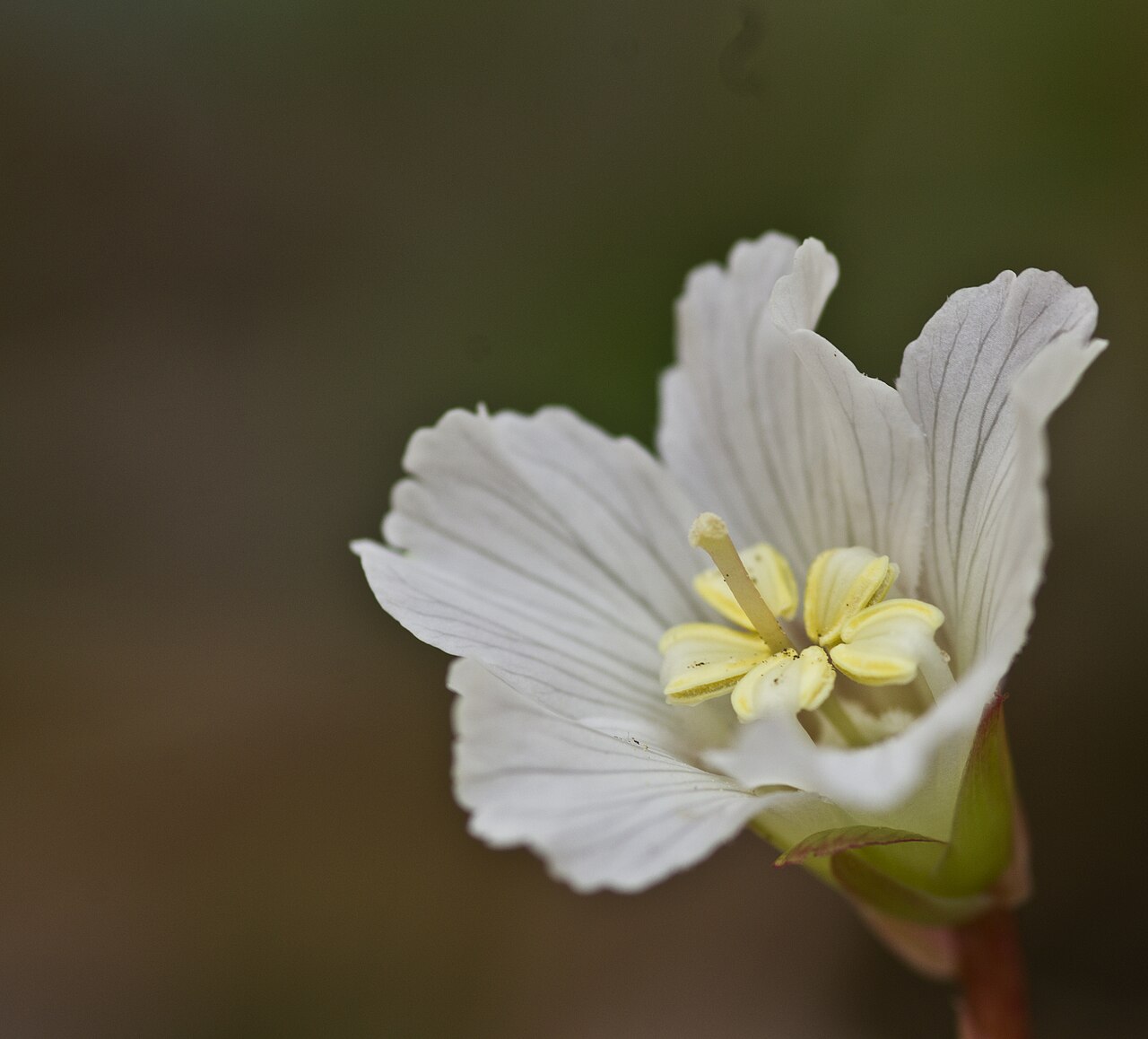
The flowers are the showpiece. A single bell-shaped flower nods at the top of an erect, reddish stalk 3 to 7 inches tall, about an inch across, with five white or pale pink petals that are fringed or toothed along the outer edge. Inside, the five yellow stamens carry flap-like anthers pointing inward around a slender style. The flowers have a mild fragrance and produce pollen but no nectar. Bloom runs from mid-March through April, peaking early in the Blue Ridge foothills and lasting into May at higher elevation.
Fruit & Seeds
The fruit is a small, three-valved capsule, roughly a fifth of an inch (5–6 mm) long, that ripens in early summer. The seeds are tiny, slender, and light to medium brown. Seedlings appear in late summer, roughly six weeks after the capsules mature, and overwinter as seed leaves only, developing true leaves the following spring. Seedlings are rarely found more than a few feet from a parent plant, and plants do not flower until they are four or more years old, which explains a great deal about why this species recovers so slowly from disturbance.
Two varieties are recognized by some authorities: var. galacifolia, the typical form, and var. brevistyla, distinguished by a shorter style. For garden purposes the two behave the same way.
Quick Facts
| Scientific Name | Shortia galacifolia Torr. & A.Gray (syn. Sherwoodia galacifolia) |
| Family | Diapensiaceae (Diapensia) |
| Plant Type | Evergreen perennial groundcover (herbaceous, stoloniferous) |
| Mature Height | 3–6 in (7–15 cm), including the flowering stalks; leaves 1–3 in |
| Mature Spread | Slowly forms a mat by creeping stolons; individual plants stay compact |
| Growth Rate | Slow (slow to establish and slow to spread) |
| Sun Exposure | Part Shade to Shade (dappled light; direct midday sun scorches the leaves) |
| Water Needs | Average, kept evenly moist; poor drought tolerance |
| Soil Type | Humus-rich, well-drained, sandy or clay loam |
| Soil pH | Acidic (roughly 4.5–6.0) |
| Bloom Time | Mid-March – April |
| Flower Color | White to pale pink, fringed |
| Fall Color | Evergreen; leaves turn bronze to maroon-red in fall and hold that color through winter |
| Fruit | Small three-valved capsule, ripening in early summer |
| Deer Resistant | Not known as a deer favorite (no significant pests or diseases reported) |
| USDA Hardiness Zones | 5–7 (does best where summers are cool and humid) |
Native Range
Oconee Bells is endemic to the southern Appalachians, concentrated in the tri-state corner where Georgia, North Carolina, and South Carolina meet. Within that small area it is restricted to the escarpment, the steep, rain-soaked edge of the Blue Ridge where the mountains drop toward the Piedmont. Records center on Rabun County in Georgia; Oconee and Pickens counties in South Carolina; and Transylvania and Jackson counties, with scattered records elsewhere along the escarpment, in North Carolina. Annual rainfall in its habitat is very high, on the order of 55 to 79 inches, and the gorges stay cool and humid through summer.
In Georgia the picture is stark. The Georgia Department of Natural Resources ranks the species S1 (critically imperiled) and lists it as Endangered; only one population is known in the state, on National Forest land in the northeast corner. Some botanists have speculated that this population may have been transplanted from a nearby South Carolina site during a rescue effort tied to the construction of Lake Jocassee. North Carolina rates it as imperiled and a species of special concern, and NatureServe assigns it a global rank of G3 (vulnerable).
Much of the plant’s original stronghold vanished under water. The rivers around Jocassee, where André Michaux collected the first specimen in 1788, were impounded when Jocassee Dam was completed in 1973, drowning a large share of the historic population. Logging, road building, second-home development on stream corridors, invasive plants, and plant poaching add to the pressure. Because the plant reproduces best on freshly disturbed, bare mineral soil, such as small landslides and windthrow gaps, it is in a bind: it needs some disturbance to seed in, yet the forest closing back over those gaps eventually shades out the conditions it needs.
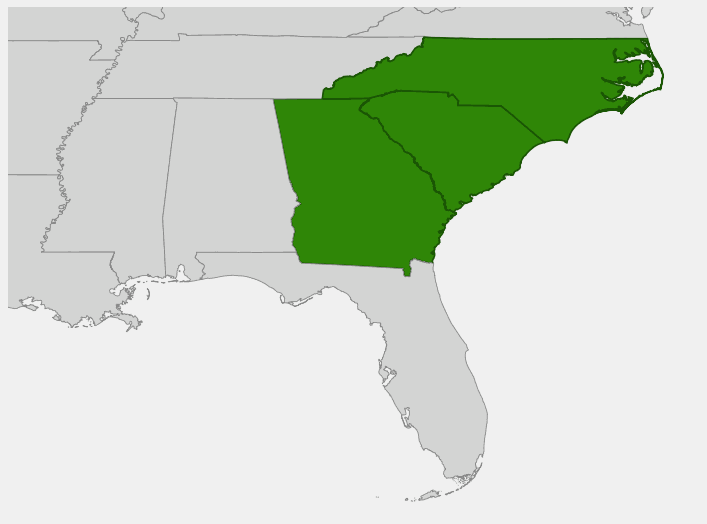
📋 Regional plant lists featuring Oconee Bells: Alabama, Georgia & Mississippi
The state-level map above shades Georgia, North Carolina, and South Carolina, but the plant occupies only a few counties within them. Use the USDA county-level data for the precise distribution.
Growing & Care Guide
Oconee Bells has a reputation as a difficult plant, and that reputation is half deserved. It is not hard because it is delicate; it is hard because it wants a specific set of conditions, and it punishes shortcuts by simply sulking for a few years. Recreate the gorge (cool, acidic, humusy, shaded, evenly moist, well drained) and it is a long-lived, low-maintenance groundcover. Fail on any one of those and it declines. Lady Bird Johnson Wildflower Center notes that it is difficult to establish and slow to spread, yet commonly cultivated as a groundcover, which is exactly the right expectation to carry into planting day.
Light
Give it dappled to fairly deep shade. North Carolina data describe plants growing in gorges under Rosebay Rhododendron with only a couple of hours of direct sun per day, and in Georgia it does well in small sunny gaps along shaded streams. In a garden, morning sun or filtered light under deciduous trees and rhododendrons works well; strong afternoon sun in the South will scorch the leaves and dry the soil. Because it is evergreen, remember that winter light is fine: bare deciduous canopies in winter give it plenty of light when it is making next season’s buds.
Soil & Water
Oconee Bells wants acidic, humus-rich, loamy soil with some sand or clay, and good drainage. Compacted red clay straight from a builder’s grade will not do. Work in generous leaf mold, shredded pine bark, or composted leaves and plant at the same level as it grew in the pot. A pH somewhere between roughly 4.5 and 6.0 suits it; avoid lime, wood ash, and fresh concrete residue nearby. Water is the other half. It does not tolerate drought, and even short dry spells brown the leaf edges and stress the shallow stolons, so mulch with 2 to 3 inches of leaf litter and water during dry weather, particularly in the first three years. Standing water is just as harmful as drought; slopes and raised woodland beds with drainage are the best sites, ideally near a spot that catches natural seep moisture.
Planting Tips
Plant in fall or very early spring, when soil is cool and moist. Space plants about 8 to 12 inches apart if you want a mat to form, and expect very little growth the first year. Start with a small group of three to five rather than a single plant, because the flowers need cross-pollination between different clones to set seed, and a group of nursery divisions is an easy way to get some genetic diversity. Site them where they will not be disturbed: away from foot traffic, dogs, and areas where raking is routine. A layer of oak or beech leaf litter each fall mimics the forest floor and supplies the slow acidity they like. Avoid piling wet mulch directly over the crowns.
Pruning & Maintenance
There is almost nothing to do. Do not shear or mow; the evergreen foliage is the plant. Pick out fallen twigs and heavy oak leaves that smother the crowns in spring, and remove dead or damaged leaves if you like a tidy look. Do not fertilize heavily; a thin top-dressing of leaf mold is plenty. NC State Extension reports no significant insect or disease problems, and once a colony is established it needs little care while providing year-round interest. Divide only to make more plants, and only from a healthy, well-established clump.
Propagation
Division is the easiest method: lift a healthy clump in fall or early spring, separate rooted stolon pieces, and replant immediately. Seed is possible but slow and demanding. Because plants of different clones must cross-pollinate to set seed, single-clone gardens rarely produce any. Sow seed fresh, as soon as it is collected, in a humusy, acidic, moist seed mix, and protect the seedlings for at least a year. Expect four or more years from seed to first flower. This is why nursery-propagated plants are worth what they cost, and it is also the strongest argument against wild collection: a plant taken from the forest is decades of growth that cannot be replaced.
Landscape Uses
Oconee Bells is a specialist, but a specialist that pays off. It works well as:
- Evergreen groundcover in deep-to-part shade woodland gardens, forming a bronze-toned carpet in winter
- Understory planting beneath Rosebay Rhododendron and Mountain Laurel, where the acidic litter matches its native habitat
- Stream and seep banks where soil stays cool and evenly moist but drains freely
- Shaded rock gardens and slopes with humus pockets between stones
- Early-spring interest when few other native wildflowers are up
- Conservation gardens, where a small, protected colony of nursery-grown plants helps keep the species in cultivation
Good companions include Rosebay Rhododendron, Mountain Laurel, and Christmas Fern, all of which share its shade and acidic soil, with Eastern Hemlock as the overhead conifer in a true Blue Ridge gorge palette.
Growing It Outside Its Native Range
Gardeners in northern Georgia, the western Carolinas, and the higher, cooler parts of north Alabama have the best odds. Oconee Bells has been grown successfully far north of its native range, even into Quebec, so cold is not the problem. Heat, humidity, and dry summers are. In the hot lowlands of south Georgia, south Alabama, and Mississippi, expect the plant to struggle without a shady, moist, cool microsite such as a north-facing stream bank or a raised shade bed with reliable moisture. If your site cannot offer that, consider a more forgiving native groundcover and enjoy Oconee Bells at a botanical garden instead.
Wildlife & Ecological Value
Oconee Bells is valued more for what it says about its habitat than for lavish wildlife benefits. Its role is quiet: a shade-loving, evergreen ground layer in some of the most biodiverse forests in temperate North America.
For Pollinators
The flowers are pollinated by insects, primarily bees, that are drawn to a mild fragrance and to the pollen; there are no nectaries. Because it blooms in mid-March to April, before most of the forest wakes up, it is a useful early pollen source for the first bees flying on warm spring days. Plants are not self-fertile in the usual sense, which makes bee visits between separate clones essential for seed set.
For Birds
The plant does not produce fleshy fruit and is not a significant bird food. Its value to birds is indirect. The evergreen mats shelter small invertebrates in the leaf litter of the gorge floor, which is foraging ground for ground-feeding birds.
For Mammals
Oconee Bells is not known as an important mammal browse. The dense, low mat holds soil on steep, wet slopes, which helps keep the stream corridors that other wildlife depend on intact, and the plant has not been documented as a preferred food for deer in accounts of its horticulture or ecology.
Ecosystem Role
Within its small range, Oconee Bells frequently forms dense mats that may prevent seeds of other species from germinating, so it is often the only or one of only a few ground-cover species in a patch. It grows below hemlock, sweet birch, red maple, tulip poplar, and beech, with Rosebay Rhododendron in moist sites and Mountain Laurel on drier ones. Its stoloniferous mats stabilize stream banks, and seedlings establish in bare mineral soil after small slides or tree falls. The plant also serves as an indicator of intact escarpment gorge habitat. Loss of hemlocks to the introduced hemlock woolly adelgid changes the shade these colonies depend on, so healthy canopy and cool stream corridors are part of its future as much as the plants themselves.
Cultural & Historical Uses
Oconee Bells has almost no history as a food or medicine plant; its fame is scientific. In December 1788 the French botanist André Michaux collected a fruiting specimen in the “High Mountains of Carolina” and sent it back to Paris, where it sat in the herbarium of the Jardin des Plantes. Half a century later, in the spring of 1839, the great American botanist Asa Gray saw that fragment, decided it represented a new genus, and named the genus Shortia for Charles Wilkins Short, a Kentucky physician and botanist with whom he corresponded but never met.
Gray then spent decades hunting for a living plant. He made several unsuccessful field trips to the southern mountains, the last in 1876, without ever finding it. In May 1877 a young collector named George McQueen Hyams, digging herbs with his father along the Catawba River in McDowell County, North Carolina, came upon a small evergreen he did not recognize. Eighteen months later the specimen reached the botanist Joseph Whipple Congdon, who wrote to Gray. When the specimen was placed in Gray’s hands after 39 years of searching, he is said to have exclaimed, “Now let me sing my nunc dimittis.” In spring 1879 Gray led an expedition to the site, with the Hyamses assisting.
Michaux’s original locality is still debated. Some accounts place it near the confluence of the Horsepasture and Toxaway rivers in Transylvania County, North Carolina, others along the Keowee River near Jocassee in Oconee County, South Carolina, the county that gave the plant its common name. Much of the Keowee River area now lies under Lake Jocassee. The species name galacifolia means “with leaves like Galax,” and the plant later appeared on the 2011 U.S. postage stamp honoring Asa Gray.
Frequently Asked Questions
Is Oconee Bells native to Alabama or Mississippi?
No. Oconee Bells is native to only a few counties along the Blue Ridge escarpment of Georgia, North Carolina, and South Carolina. It appears on the Alabama, Georgia & Mississippi list because of its Georgia native status. Populations reported in Alabama and elsewhere are considered introduced or naturalized garden escapes. If you garden in Alabama or Mississippi, it can be grown as a special woodland garden plant, but it is not part of your local native flora.
Is Oconee Bells endangered?
It is rare everywhere it grows. Georgia lists it as Endangered (only one wild population is known there), North Carolina classifies it as imperiled and a special-concern species, and NatureServe ranks it globally as vulnerable. Dam construction, habitat loss, and poaching are the main threats. NC State Extension notes that it may not be collected in the wild.
Can I dig Oconee Bells from the wild or buy it anywhere?
Never dig it from the wild; doing so is harmful to the species and, in several states, illegal. Buy only nursery-propagated plants from a reputable native plant nursery or botanical garden plant sale, and ask the seller how the plants were propagated. Nursery-grown plants are commercially available but often in small quantities, so plan ahead.
Why won’t my Oconee Bells spread or flower?
It is simply slow. Expect little growth the first year or two, and seedlings take four or more years to flower. The most common failures are too much sun, dry soil, and alkaline or compacted soil. Keep it evenly moist and acidic in real shade, mulch with leaf litter, and give it a few seasons. Growing a few plants together helps if you also want seed, since different clones must cross-pollinate.
How do I tell Oconee Bells from Galax?
The leaves look alike, but Oconee Bells has coarsely toothed, wavy margins with pointed tips, conspicuous pale veins, and a single large bell-shaped flower in early spring. Galax has finely toothed, bristly-margined leaves and blooms in a tall spike of tiny white flowers in early summer.

Looking for a nursery that carries nursery-propagated Oconee Bells?
Browse our native plant nursery directory: Alabama · Georgia · Mississippi · North Carolina · South Carolina