Galax (Galax urceolata)
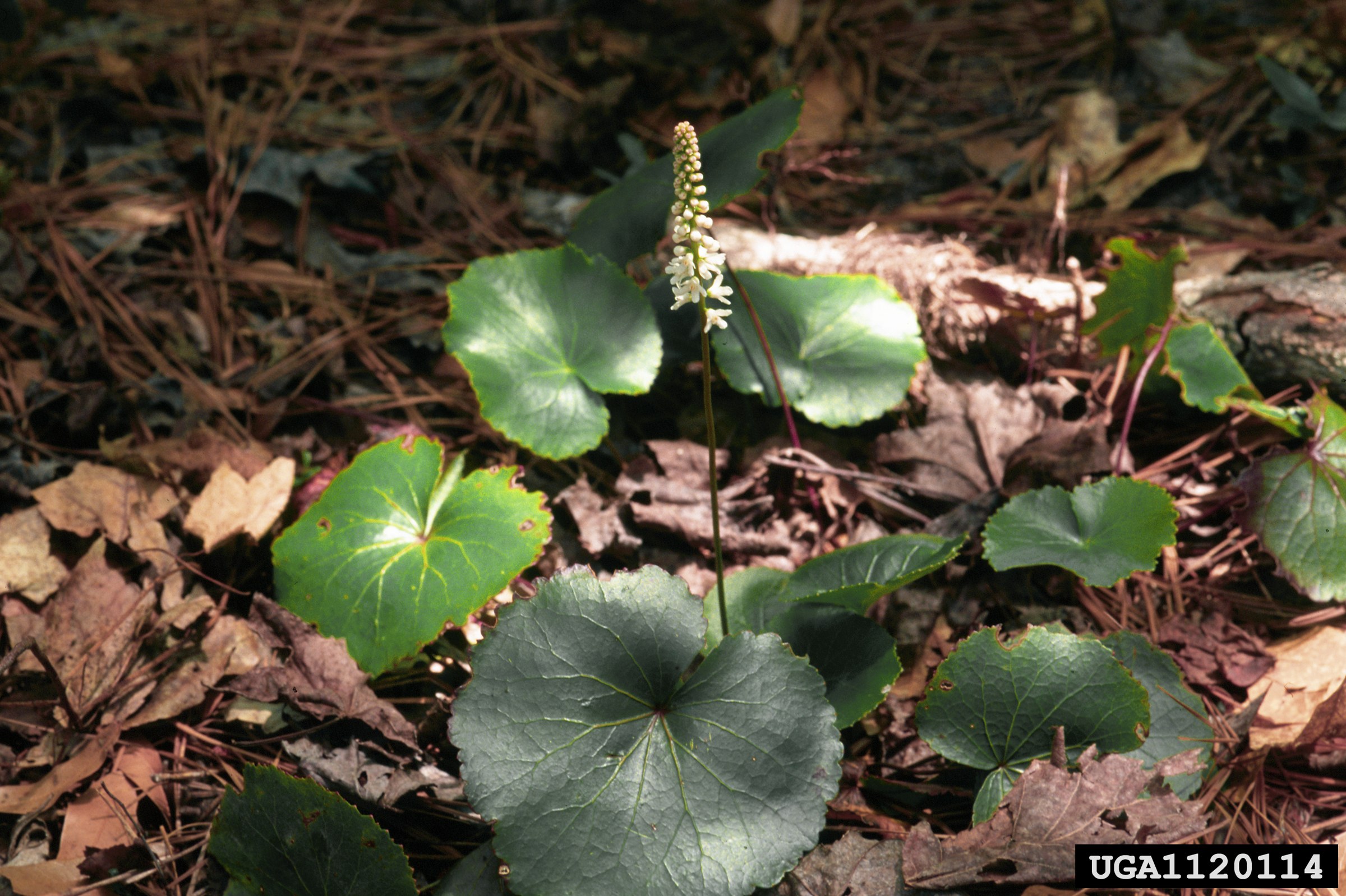
Galax urceolata, commonly known as Galax, Beetleweed, or Wandflower, is a low, evergreen, rhizomatous perennial native to the shaded forests and rocky slopes of the Southern Appalachian Mountains. The sole species in its genus, galax forms dense, ground-hugging mats of glossy, round, heart-shaped leaves that turn a striking bronze-purple in cold weather, topped in late spring and early summer by slender, wand-like spikes of tiny white flowers that give the plant one of its common names.
In the wild, galax carpets the floor of moist to dry-mesic hardwood and mixed forests, especially along the cove forests, ridgelines, and rocky balds of the Blue Ridge and Appalachian Plateau, from West Virginia and Maryland south through Virginia, North Carolina, South Carolina, Tennessee, Kentucky, Georgia, and Alabama. It is a defining groundcover of the rich, high-elevation forests that make the Southern Appalachians one of the most botanically diverse regions in eastern North America.
For gardeners in the Southeast and mid-Atlantic with a shaded, acidic woodland bed, galax is an outstanding native groundcover: evergreen, slow-spreading but persistent, essentially pest-free, and strikingly textural both in and out of bloom. Because wild populations have been heavily collected for the floral greens trade, gardeners should always buy nursery-propagated plants and never dig galax from the wild.
Identification
Galax is a low, stemless-looking evergreen perennial, typically 6 to 12 inches tall in leaf, spreading slowly by rhizomes into broad colonies several feet across over time. Everything about the plant — its rounded leaves, wiry leaf stalks, and single unbranched flower spikes — rises directly from the rhizome at ground level.
Leaves
The leaves are the plant’s signature feature: rounded to heart-shaped, 2 to 5 inches across, leathery and glossy, with finely scalloped or toothed margins and a long, wiry petiole that lifts each leaf a few inches above the ground. Leaves are deep green through the growing season and often turn a rich bronze, maroon, or purplish-red in fall and winter, especially in colder, more exposed sites, before greening up again in spring. The foliage is long-lasting when cut, which is why galax leaves have been harvested commercially for floral arrangements for over a century.
Flowers
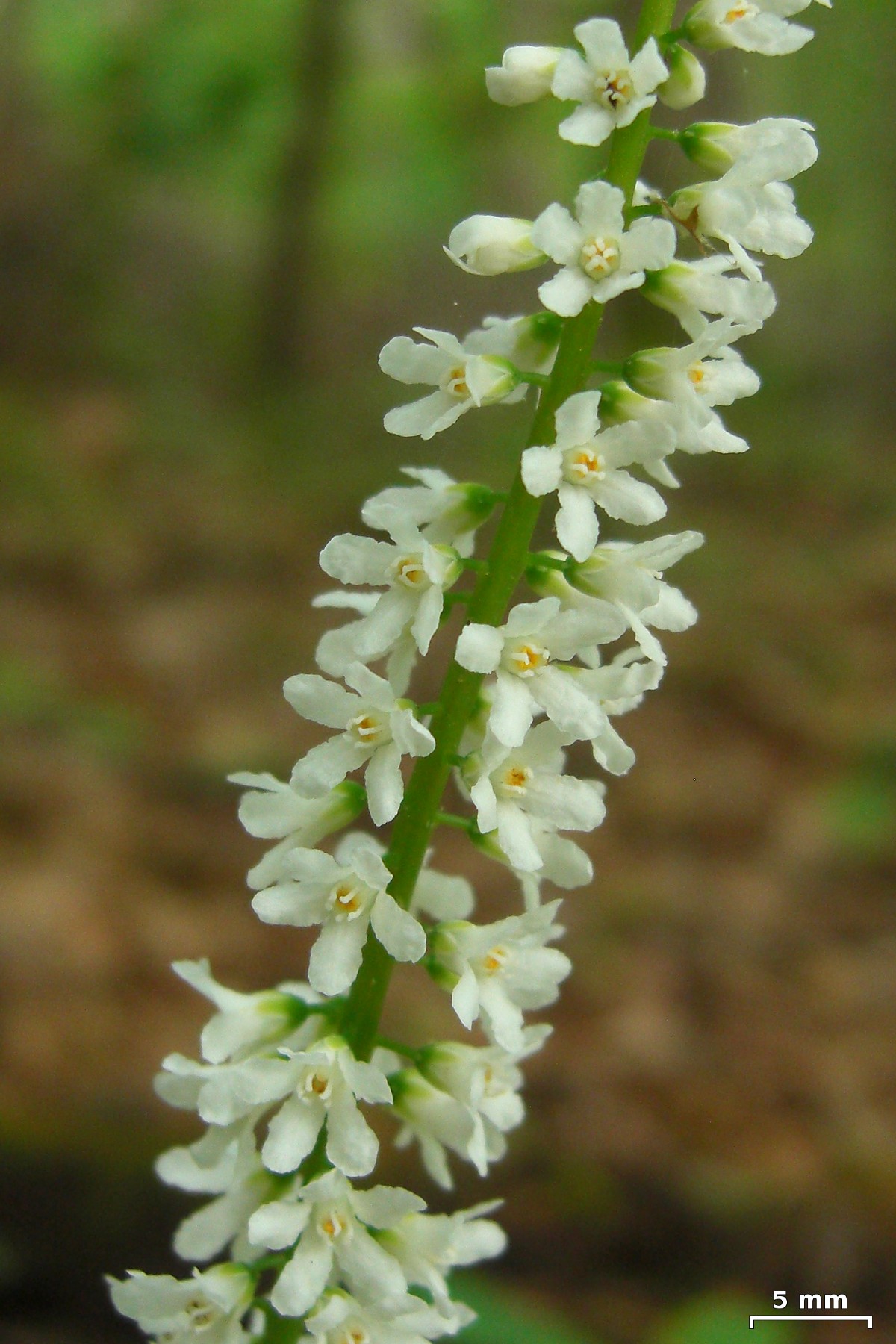
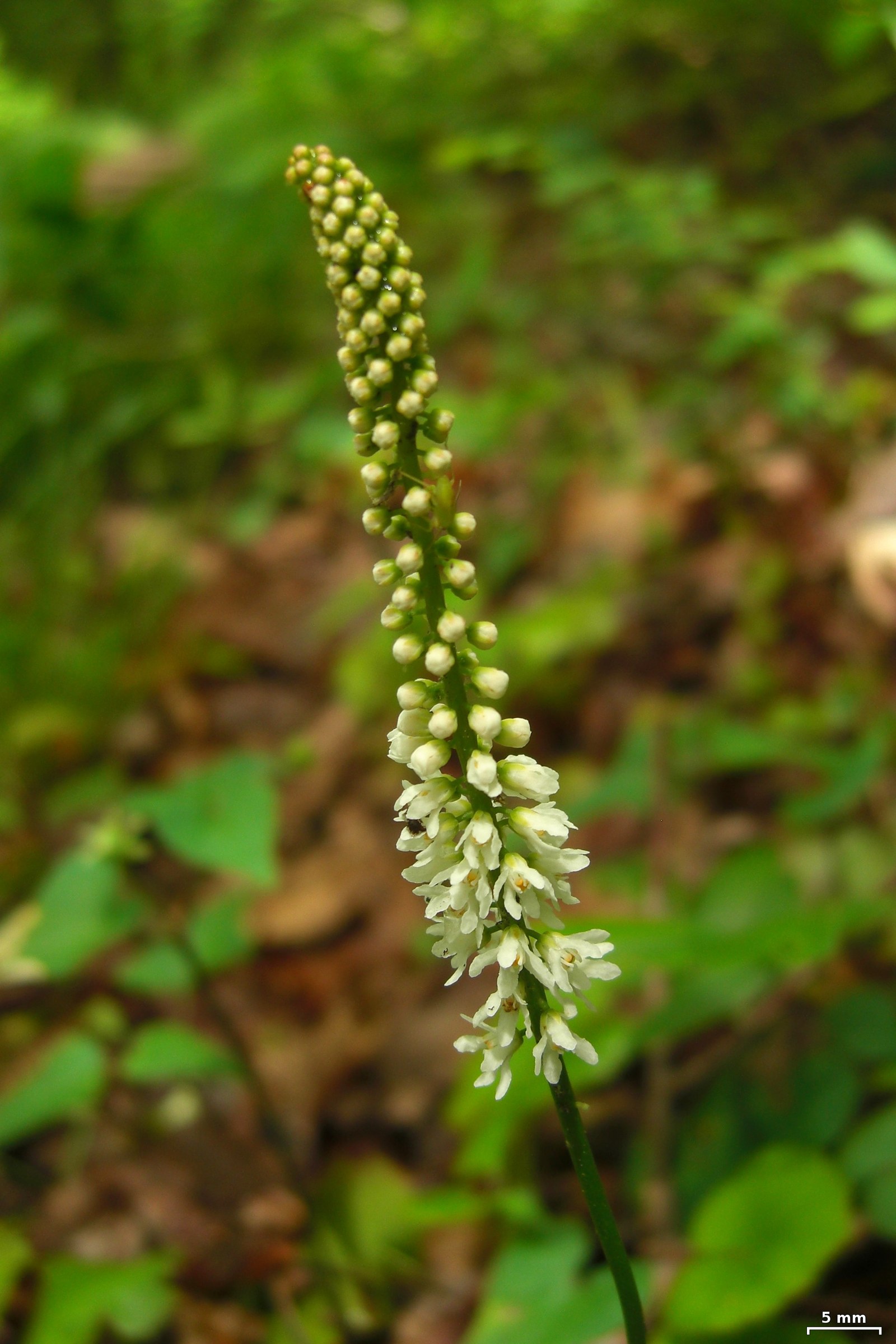
From late spring into early summer, each rhizome sends up a single, leafless flower stalk 1 to 2.5 feet tall, bearing a dense, narrow spike (a raceme) of small, star-shaped white flowers, each about a quarter-inch across with five narrow petals. The spike opens gradually from the bottom up and can remain attractive for several weeks. Flowers have a faint, musky-sweet fragrance that some gardeners find pleasant and others find cloying at close range.
Fruit & Seeds
After flowering, each bloom matures into a small, urn-shaped (urceolate) seed capsule — the source of the species name urceolata — that splits open to release numerous tiny seeds. Seed capsules are inconspicuous and are rarely the plant’s main garden interest; most spread in cultivation comes from slow rhizome expansion rather than self-seeding.
Quick Facts
| Scientific Name | Galax urceolata |
| Family | Diapensiaceae (Diapensia) |
| Plant Type | Evergreen rhizomatous perennial (groundcover) |
| Mature Height | 6–12 in in leaf; flower spikes to 2.5 ft |
| Mature Spread | Spreads indefinitely by rhizome; slow |
| Growth Rate | Slow |
| Sun Exposure | Part shade to full shade |
| Water Needs | Average, consistent moisture; not drought tolerant in dry shade |
| Soil Type | Humus-rich, well-drained woodland soil |
| Soil pH | Acidic (4.5–6.0) |
| Bloom Time | May – June |
| Flower Color | White |
| Fall Color | Evergreen leaves bronze to maroon-purple in cold weather |
| Fruit | Small urn-shaped capsule, inconspicuous |
| Deer Resistant | Yes |
| USDA Hardiness Zones | 5–8 |
Native Range
Galax is native to the Southern and Central Appalachian region of the eastern United States, with its core range running from West Virginia and western Maryland south through Virginia, North Carolina, South Carolina, eastern Tennessee, eastern Kentucky, northern Georgia, and northern Alabama. It is centered in the Blue Ridge, Appalachian Plateau, and adjacent mountain provinces, generally at elevations from roughly 1,000 to 5,000 feet.
Throughout this range, galax is a characteristic understory and groundcover species of mountain hardwood and mixed forests, rocky slopes, and balds, often growing in dense colonial mats alongside rhododendron, mountain laurel, and other acid-loving understory plants beneath oak, hickory, and tulip poplar canopies. It tends to favor the cooler, moister microclimates of north-facing slopes and higher elevations within its range, though it also occurs on drier ridgetops in some areas.
Galax has been heavily collected from the wild for over a century to supply the commercial floral greens industry, and unsustainable harvesting remains a documented conservation concern in parts of its range, particularly in national forest lands in North Carolina and Tennessee. Gardeners should source only nursery-propagated plants, since wild-collected galax both depletes native populations and often fails to establish well once removed from its forest habitat.
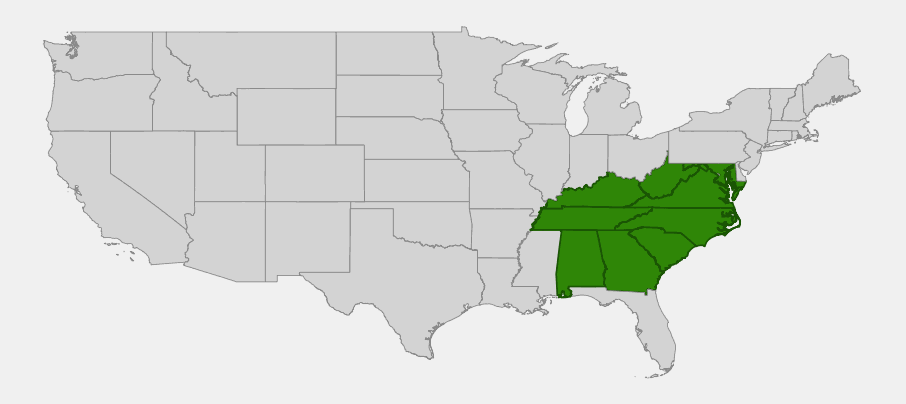
📋 Regional plant lists featuring Galax: Maryland, Virginia & West Virginia · North Carolina & South Carolina · Georgia, Alabama & Mississippi · Kentucky & Tennessee
Growing & Care Guide
Galax is an easygoing groundcover once it is given the shaded, humus-rich conditions it needs to establish — the main challenge is patience, since it spreads slowly and may take a couple of seasons to settle in before putting on visible growth.
Light
Part shade to full shade suits galax best, mimicking its native forest-floor habitat. Morning sun with afternoon shade is tolerated, especially in cooler, moister sites, but hot afternoon sun will scorch the leaves and stress the plant, particularly at lower, warmer elevations outside the mountains.
Soil & Water
Galax needs acidic, humus-rich, well-drained soil — essentially the same conditions favored by rhododendron and mountain laurel. Consistent moisture is important, especially during establishment; while established colonies tolerate brief dry spells, galax is not a true drought-tolerant plant and performs poorly in dry shade under thirsty tree roots. A thick layer of leaf-litter mulch helps retain moisture and replicates the forest floor environment the plant evolved in.
Planting Tips
Plant nursery-grown divisions or container stock in spring or fall, spacing plants 12 to 18 inches apart to allow colonies to knit together over time. Incorporate leaf mold or pine duff into the planting area if the native soil is not already acidic and humus-rich. Avoid planting where competing tree roots will out-compete galax for moisture, and never collect plants from wild populations.
Propagation
Galax is most reliably propagated by dividing established rhizome clumps in early spring or fall, since seed propagation is slow and less predictable in cultivation. Divisions should include a portion of healthy rhizome with roots attached and be kept consistently moist until new growth appears.
Landscape Uses
Galax is a versatile, textural native groundcover for shaded sites:
- Woodland garden groundcover beneath native shade trees
- Companion planting with rhododendron, mountain laurel, and other acid-loving shrubs
- Rock garden and shaded slope stabilization
- Evergreen winter interest with bronze-purple foliage color
- Cut-foliage plantings for sustainably sourced floral greens
- Native alternative to non-native evergreen groundcovers such as vinca or pachysandra
Wildlife & Ecological Value
Galax contributes to Southern Appalachian forest ecology primarily as a dense, year-round groundcover rather than as a major wildlife food source.
For Pollinators
The small white flowers attract a variety of native bees, flies, and other small pollinating insects during their spring bloom, offering an early-to-mid-season nectar source in the shaded forest understory where flowering plants are less abundant than in sunnier habitats.
For Birds & Mammals
Galax’s dense, evergreen mats provide year-round ground-level cover for small forest wildlife, including invertebrates, salamanders, and ground-foraging birds that shelter and forage among the leaves. The foliage is not a significant food source for larger mammals, which contributes to the plant’s reliable deer resistance in garden settings.
Ecosystem Role
As a dominant evergreen groundcover across large areas of Southern Appalachian forest, galax helps stabilize soil on steep mountain slopes, moderates moisture loss from the forest floor, and contributes substantially to the leaf-litter layer’s structure and decomposition dynamics. Because its wild populations are under real harvest pressure, maintaining and expanding cultivated, nursery-propagated populations in gardens helps reduce demand for wild-collected plants.
Cultural & Historical Uses
Galax has long been valued in the Southern Appalachians for its durable, glossy evergreen leaves, which hold their color and texture for weeks after cutting. Commercial harvesting of wild galax leaves for the floral greens trade — supplying florists, wreath makers, and the Christmas greenery market — began in the late 1800s and grew into a significant regional industry, particularly in western North Carolina and the surrounding mountains, where it remains a source of supplemental income for some rural harvesters today.
Historical ethnobotanical records indicate that some Indigenous groups in the Southern Appalachians used galax leaves and roots in traditional remedies, including as a treatment for kidney ailments and wounds; these uses are recorded here as historical ethnobotany rather than guidance for modern use, since the plant’s medicinal properties have not been established by modern research.
The heavy, sustained demand from the floral greens trade has made wild galax harvesting a recurring conservation issue on U.S. Forest Service lands within its range, prompting permit systems and harvest limits in some national forests. This history is part of why nursery propagation — rather than wild collection — is strongly encouraged for anyone wanting to grow galax in the garden.
Frequently Asked Questions
Is galax the same as Beetleweed or Wandflower?
Yes — Beetleweed and Wandflower are both common names for the same plant, Galax urceolata. “Galax” is the most widely used name in both horticulture and the floral trade.
Can galax grow in full sun?
Not well. Galax is adapted to forest shade and typically scorches or struggles in full sun, especially in hot climates. Part to full shade with consistent moisture gives the best results.
Why won’t my galax spread faster?
Galax is naturally a slow spreader, expanding gradually by rhizome rather than aggressively colonizing an area. Established colonies thicken over several years; patience, consistent moisture, and acidic, humus-rich soil are more effective than trying to force faster growth.
Is it okay to dig galax from the wild?
No. Wild galax populations have been significantly impacted by commercial over-harvesting for the floral greens trade, and wild-collected plants often transplant poorly. Always buy nursery-propagated galax from a reputable native plant source.
Does galax’s foliage really turn purple?
Yes — in cold weather, especially at higher elevations and in more open, exposed sites, galax leaves commonly shift from deep green to bronze, maroon, or purplish tones, then green back up with the return of warm weather in spring.

Looking for a nursery that carries Galax?
Browse our native plant nursery directory: Virginia, South Carolina & Tennessee · Maryland & Kentucky · West Virginia · North Carolina · Georgia · Alabama