Sweet Birch (Betula lenta)
Betula lenta, commonly known as Sweet Birch, Cherry Birch, or Black Birch, is a magnificent native deciduous tree of eastern North America that stands as one of the most distinctive and aromatic members of the birch family. This stately tree, reaching heights of 40 to 75 feet, is instantly recognizable by its dark, almost black bark marked with prominent horizontal lenticels (breathing pores) that give it an appearance more similar to cherry trees than the white-barked birches most people know.
Sweet Birch earns its common name from the intensely aromatic, wintergreen-scented sap and inner bark that releases its fragrance when scratched or broken. This natural wintergreen oil (methyl salicylate) was historically harvested to make birch beer, medicines, and wintergreen flavoring before synthetic alternatives became available. The tree’s twigs, when chewed, taste distinctly of wintergreen — a characteristic that has made it a favorite of hikers and nature enthusiasts for generations.
Growing naturally in rich, moist soils of deciduous and mixed forests from southeastern Canada to northern Georgia, Sweet Birch is an excellent choice for large native landscapes, restoration projects, and naturalized areas throughout the Carolinas. Its spectacular golden-yellow fall color, ecological value for wildlife, and cultural significance as a source of traditional medicines and flavoring make it a valuable addition to any native plant garden with sufficient space to accommodate its mature size.
Identification
Sweet Birch is a large deciduous tree typically growing 40 to 75 feet tall with a trunk diameter of 1 to 3 feet, though exceptional specimens can reach over 80 feet. Young trees develop a pyramidal crown that becomes more rounded and irregular with age. The overall form is graceful and upright, with ascending branches that create a moderately dense canopy.
Bark
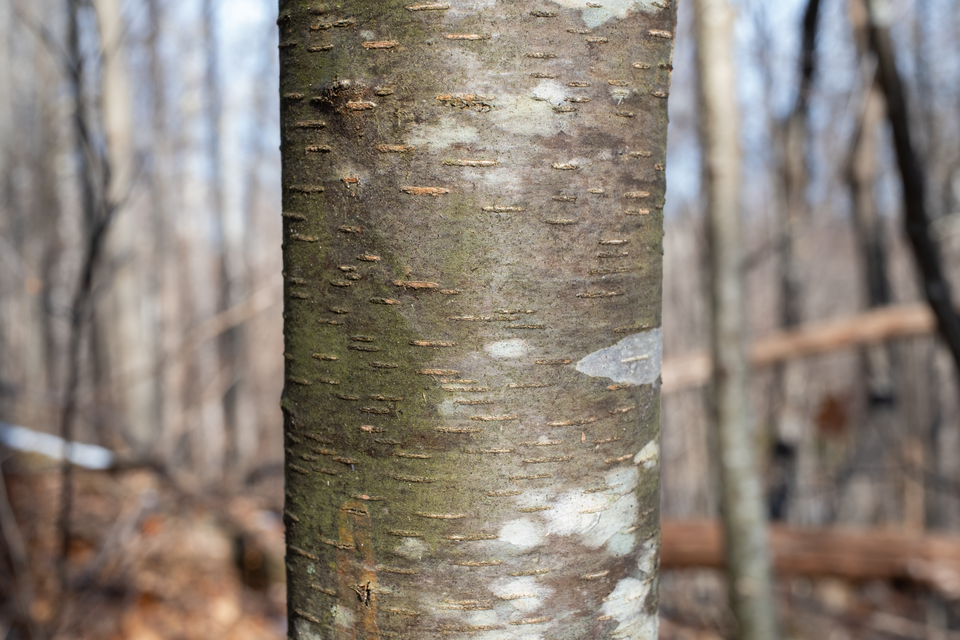
The bark is Sweet Birch’s most distinctive feature and the easiest way to identify the species. Unlike other birches, the bark is smooth, tight, and dark reddish-brown to nearly black, resembling cherry bark more than typical birch bark. The most diagnostic feature is the presence of prominent horizontal lines called lenticels — raised, elongated breathing pores that appear as light-colored dashes across the dark bark surface. The bark does not peel like Paper Birch or River Birch. When scratched, the inner bark releases a strong wintergreen aroma.
Leaves
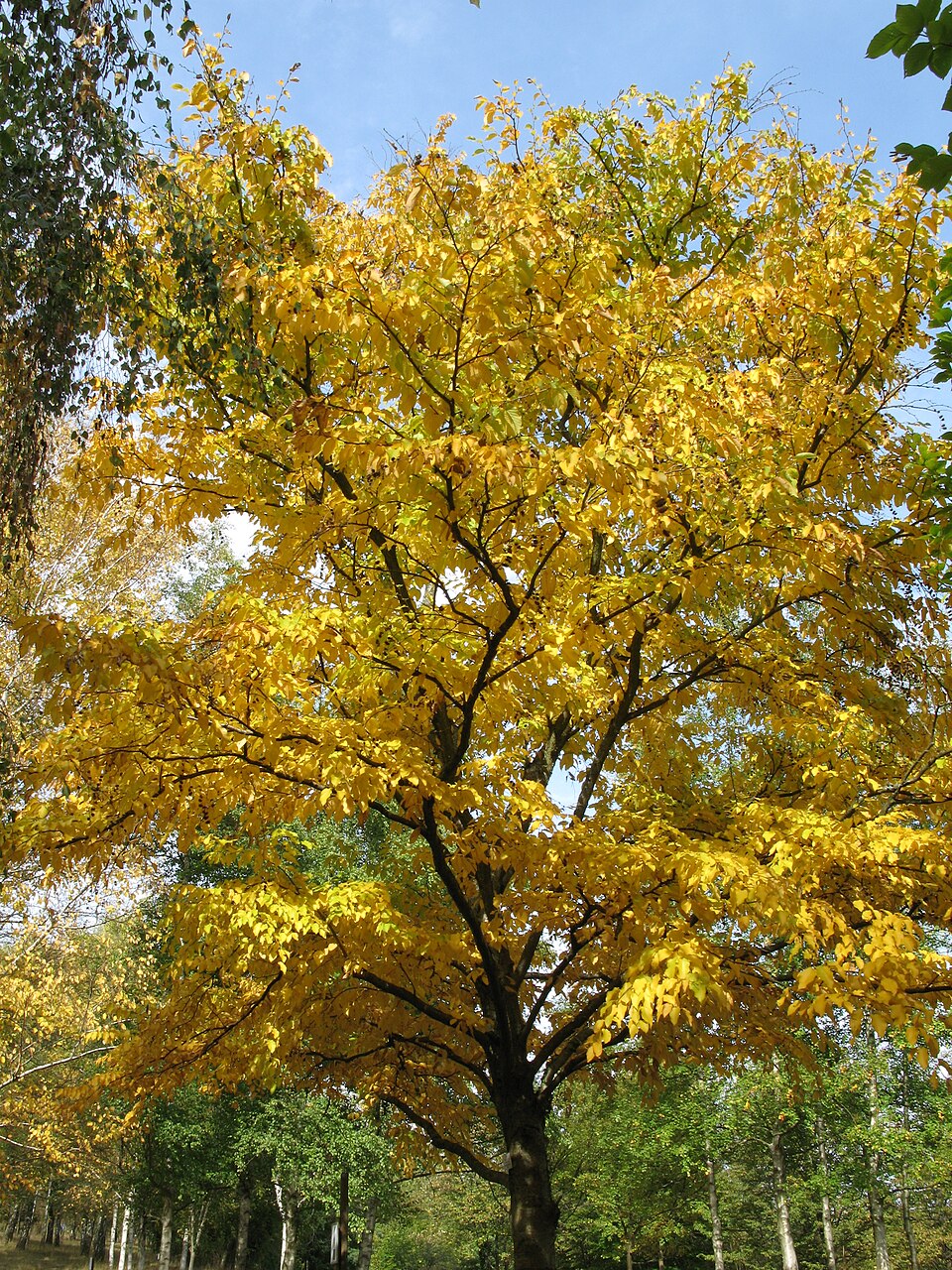
The leaves are alternate, simple, and oval-shaped, measuring 2½ to 5 inches (6–13 cm) long and 1½ to 3 inches (4–8 cm) wide. They have sharply serrated (toothed) margins with veins that run straight from the midrib to each tooth — a characteristic pattern in birches. The upper surface is bright green and slightly glossy, while the underside is paler with fine hairs along the veins. In autumn, the foliage transforms into a brilliant golden-yellow display that rivals any ornamental tree.
Flowers & Fruit
Sweet Birch is monoecious, producing separate male and female flowers on the same tree. The male catkins are yellowish-brown, pendulous, and 3 to 4 inches (7–10 cm) long, appearing before the leaves in early spring. Female catkins are smaller, upright, and about ¾ inch (2 cm) long. The fruit is a small, winged nutlet (samara) contained in cone-like structures called strobiles that break apart when mature, releasing the seeds to be dispersed by wind.
Twigs & Buds
Young twigs are slender, reddish-brown, and strongly aromatic when broken or scratched, releasing the characteristic wintergreen scent. The buds are small, pointed, and covered with several overlapping scales. Winter identification is easy due to the distinctive bark and the wintergreen aroma of broken twigs.
Quick Facts
| Scientific Name | Betula lenta |
| Family | Betulaceae (Birch) |
| Plant Type | Deciduous Tree |
| Mature Height | 40–55 ft |
| Sun Exposure | Full Sun to Part Shade |
| Water Needs | Moderate |
| Bloom Time | March – May |
| Flower Color | Yellowish-brown catkins |
| USDA Hardiness Zones | 3–7 |
Native Range
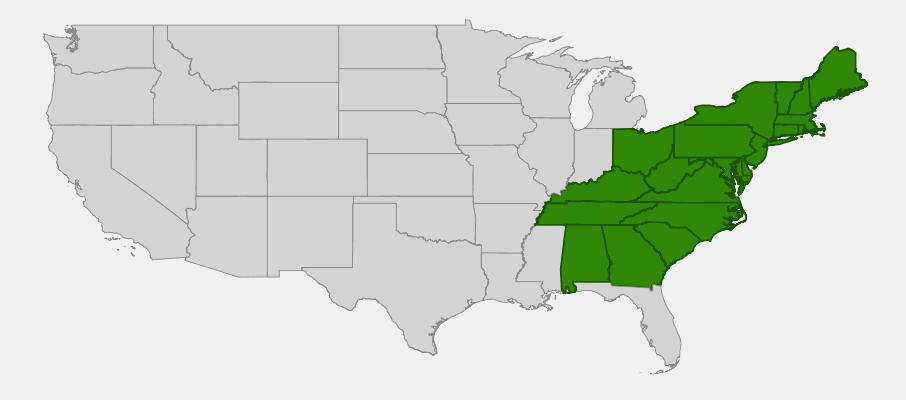
Sweet Birch is native to eastern North America, with a range extending from southeastern Canada (New Brunswick, southern Quebec, and southern Ontario) south through the Appalachian Mountains to northern Georgia and northern Alabama. The species is most abundant in the cooler, mountainous regions of its range, particularly in the Appalachian Mountains, where it can be found from the valleys up to elevations of 3,000 feet or more.
In North Carolina and South Carolina, Sweet Birch is primarily found in the mountain regions, where it grows in rich, moist soils of cove forests and north-facing slopes. The tree thrives in areas with consistent moisture and cool temperatures, making the higher elevation forests of the Appalachians its preferred habitat. It is commonly associated with other mountain species such as Eastern Hemlock, American Beech, Sugar Maple, and Yellow Birch.
The natural habitat of Sweet Birch includes rich deciduous forests, particularly those dominated by maples, beech, and other hardwoods. It prefers well-drained but consistently moist soils with high organic content, and it often grows along stream valleys and in areas protected from hot, dry winds. The species is moderately shade-tolerant when young but requires more light as it matures, often growing in forest gaps or along edges where more sunlight is available.
📋 Regional plant lists featuring Sweet Birch: North Carolina & South Carolina
Growing & Care Guide
Sweet Birch is a relatively easy tree to grow in the right conditions, but it does have specific requirements that must be met for successful establishment and long-term health. Understanding its natural habitat preferences is key to success.
Light
Sweet Birch prefers full sun to partial shade, though it can tolerate more shade when young. Mature trees perform best with at least 4-6 hours of direct sunlight daily. In hot climates, some afternoon shade can be beneficial, especially during the establishment period. The tree naturally grows in forest openings and edges where it receives good light but some protection from intense afternoon sun.
Soil & Water
This species requires rich, well-drained, consistently moist soil for optimal growth. Sweet Birch prefers slightly acidic to neutral soil (pH 5.0–7.0) with high organic content. The tree is intolerant of drought and poorly drained soils — both conditions will stress the plant and make it susceptible to pests and diseases. Mulching with organic matter helps maintain soil moisture and mimics the natural forest floor conditions the tree prefers.
Planting Tips
Plant Sweet Birch in early spring or fall when temperatures are cool and moisture is more reliable. Choose a location that provides good air circulation but protection from hot, dry winds. The tree needs space to reach its full size — plant at least 20-30 feet from buildings and other large trees. When planting, maintain the same soil level as the tree was growing in the nursery, and water thoroughly during establishment.
Pruning & Maintenance
Sweet Birch requires minimal pruning beyond removing dead, damaged, or crossing branches. Prune in late fall or winter when the tree is dormant to avoid excessive bleeding of sap. The tree naturally develops a good structure and rarely needs corrective pruning. Avoid heavy pruning, as birches can be slow to recover from major cuts and may become susceptible to insect attack at wound sites.
Landscape Uses
Sweet Birch works well in several landscape applications:
- Large shade tree for spacious properties and parks
- Naturalized areas and woodland gardens
- Stream or pond-side plantings where consistent moisture is available
- Fall color specimens — spectacular golden-yellow display
- Wildlife habitat plantings — seeds feed birds
- Native plant collections representing Appalachian flora
- Educational gardens — historic uses as flavoring and medicine
Potential Issues
Sweet Birch can be susceptible to bronze birch borer, especially when stressed by drought or poor growing conditions. Maintaining adequate soil moisture and avoiding soil compaction around the root zone helps prevent this pest. The tree is also sensitive to salt spray and road salt, making it unsuitable for coastal or roadside plantings in areas where deicing salts are used.
Wildlife & Ecological Value
Sweet Birch provides significant ecological value, supporting numerous wildlife species throughout the year and playing an important role in forest ecosystems.
For Birds
The small winged seeds (samaras) are consumed by many bird species, including chickadees, nuthatches, siskins, redpolls, and various finches. Woodpeckers often forage on the bark for insects, and the tree’s structure provides nesting sites for various songbirds. Wild Turkeys also consume the seeds when available, particularly during fall and winter months.
For Mammals
White-tailed deer browse the twigs and young shoots, while squirrels and chipmunks collect and cache the seeds for winter food. Beavers will utilize Sweet Birch when available, though they generally prefer other species. The tree also provides cover and denning sites for various small mammals in forested habitats.
For Pollinators
While the flowers are wind-pollinated and not particularly attractive to bees, the tree does host various moths and butterflies as caterpillars. Several species of moths use Sweet Birch as a larval host plant, including some native species that are important food sources for insectivorous birds during the breeding season.
Ecosystem Role
Sweet Birch plays an important role in forest succession, often establishing in forest gaps and edges where disturbance has occurred. The tree’s leaf litter decomposes relatively quickly, enriching the soil and supporting diverse soil communities. As a component of Appalachian hardwood forests, it contributes to the structural diversity that supports complex forest ecosystems.
Cultural & Historical Uses
Sweet Birch has one of the richest cultural histories of any North American tree, with uses spanning food, medicine, and commerce dating back centuries. The tree’s most famous characteristic — its wintergreen-scented bark and twigs — made it an important source of natural flavoring and medicine long before synthetic alternatives were developed.
Native American tribes throughout the tree’s range utilized Sweet Birch extensively. The Cherokee, Haudenosaunee (Iroquois), and other tribes made teas from the inner bark and twigs to treat various ailments including headaches, fevers, and stomach problems. The wintergreen oil (methyl salicylate) contains compounds similar to aspirin, giving these traditional remedies legitimate medicinal properties. Many tribes also used the aromatic bark as a natural breath freshener and to flavor foods and beverages.
European colonists quickly adopted these uses and expanded on them commercially. By the 1800s, Sweet Birch was being harvested extensively for its wintergreen oil, which was distilled from the bark and twigs. This oil was used to make wintergreen flavoring for candies, gums, and medicines, as well as the popular beverage known as birch beer — a naturally fermented drink with a distinctive wintergreen flavor that was especially popular in Pennsylvania and other Mid-Atlantic regions.
The commercial harvesting of Sweet Birch for wintergreen oil became a significant industry in some areas, with entire groves being cut for bark processing. This practice contributed to the species becoming less common in some parts of its range. The development of synthetic wintergreen oil (methyl salicylate) in the early 20th century ended most commercial harvesting, though small-scale production and traditional uses continue in some areas.
Beyond its aromatic properties, Sweet Birch wood was valued for furniture making, cabinetry, and interior finishing due to its attractive grain and ability to take stain well. The wood was sometimes used as a substitute for cherry wood in furniture construction. Today, while commercial uses have largely disappeared, Sweet Birch remains valued by woodworkers and craftspeople for specialty projects.
Frequently Asked Questions
Why is it called Sweet Birch?
The name comes from the intensely sweet, wintergreen aroma released when the bark or twigs are scratched or broken. This scent is due to natural wintergreen oil (methyl salicylate) in the tree’s tissues, which was historically used to make wintergreen flavoring and birch beer.
Can you make birch beer from Sweet Birch?
Historically, yes — birch beer was made by fermenting the sap or by extracting wintergreen oil from the bark and twigs. However, modern birch beer is typically made with synthetic wintergreen flavoring. Making traditional birch beer requires specialized knowledge and can be dangerous if not done properly.
How fast does Sweet Birch grow?
Sweet Birch has a moderate to fast growth rate, typically adding 1-2 feet per year under good conditions. Growth is fastest in rich, moist soils with adequate sunlight. The tree can reach significant size relatively quickly but requires consistent moisture to maintain good growth rates.
Is Sweet Birch the same as Black Birch?
Yes, Sweet Birch and Black Birch are the same species (Betula lenta). It’s also called Cherry Birch because of its bark’s resemblance to cherry tree bark. These are all common names for the same tree, though “Sweet Birch” emphasizes its wintergreen aroma.
Will Sweet Birch grow in South Carolina?
Sweet Birch can grow in the mountain regions of South Carolina, particularly in the Blue Ridge Mountains where elevations are higher and temperatures are cooler. It’s not suitable for the hot, humid lowlands but can thrive in the cooler mountain forests of upstate South Carolina.

Looking for a nursery that carries Sweet Birch?
Browse our native plant nursery directory: North Carolina · South Carolina