
Woolly Vervain (Verbena canescens)
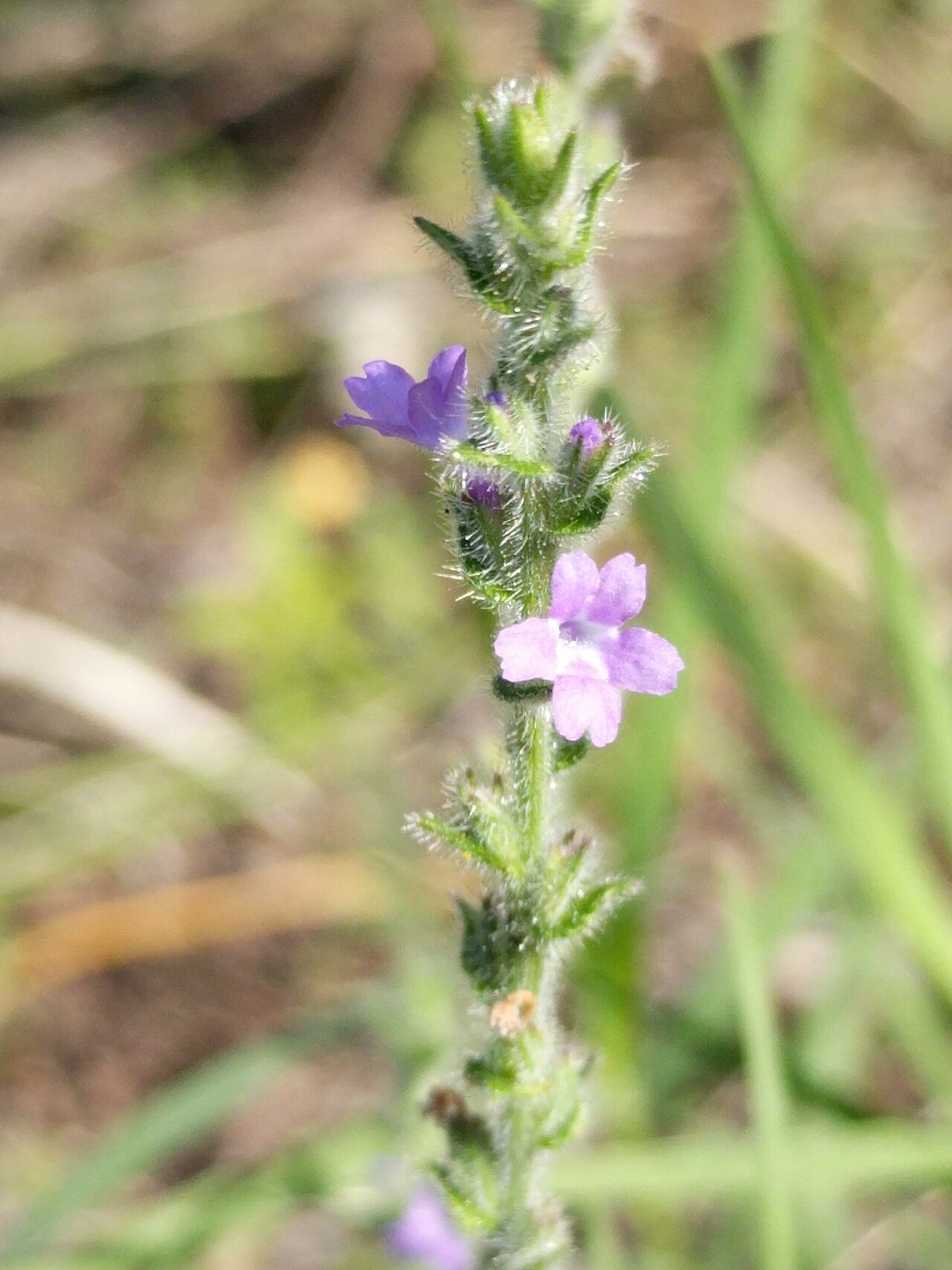
Verbena canescens, known as Woolly Vervain or gray vervain, is a small, short-lived native perennial of the verbena family (Verbenaceae). It grows in dry grasslands, pastures, roadsides and open brush across much of Texas and into New Mexico and northern Mexico. The plant is covered with stiff, grayish hairs, which give it a soft, gray-green look, and it sends up slender spikes of small lavender, blue-violet or occasionally white flowers from spring into fall.
Woolly vervain is modest in size, usually 6 to 18 inches tall, with several sprawling to upright stems from a single crown. It is one of the early wildflowers of Texas spring, blooming alongside bluebonnets and paintbrushes, and with a little rain it keeps producing flowers through the summer and fall. The flowers are a reliable source of nectar for small butterflies, bees and skippers.
In gardens it is an easy, drought-tolerant filler for short meadows, rock gardens and dry borders, and it reseeds lightly. It does best in full sun and well-drained soil, and needs very little water once established.
Identification
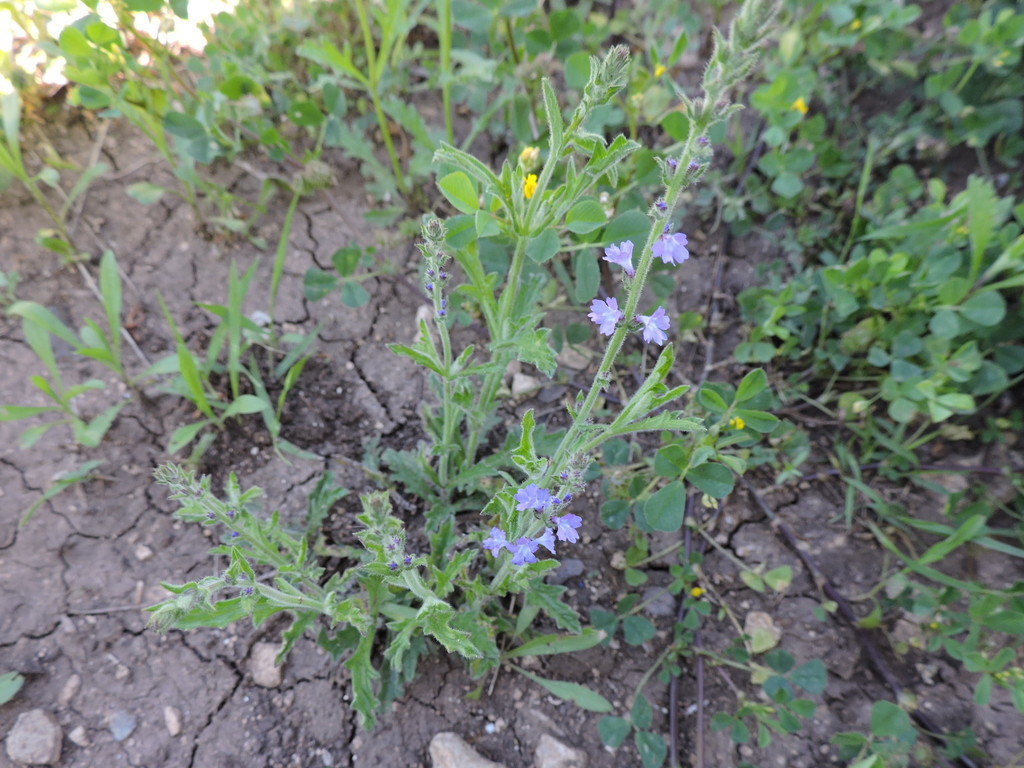
Look for a low, gray-green, very hairy plant with deeply toothed or lobed leaves and thin spikes of small lavender flowers that elongate as they bloom.
Growth Habit
Woolly vervain is a short-lived perennial, sometimes behaving as an annual or biennial. It grows from a taproot and forms a clump of several stems, usually 6 to 18 inches tall and up to about 2 feet in good conditions. The stems are four-angled, as in other vervains, and spread or curve upward from the base.
Leaves
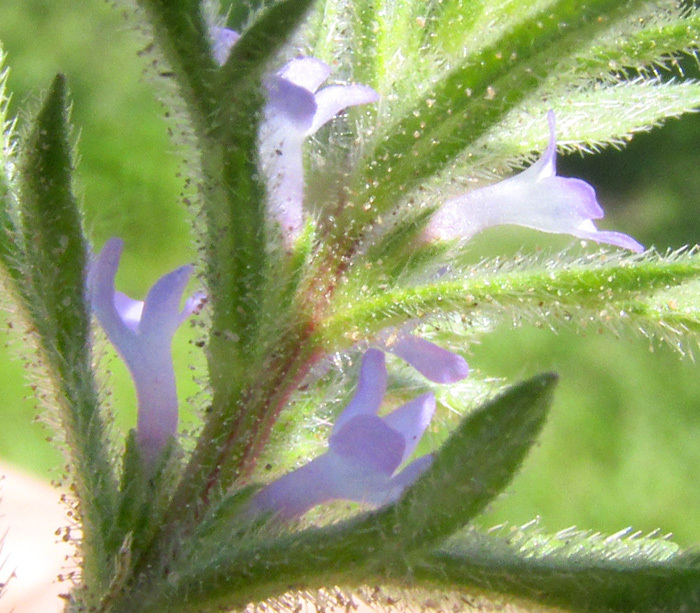
The leaves are opposite, 1 to 3 inches long, oblong to lance-shaped, and irregularly toothed to deeply lobed, often with the lower lobes cut nearly to the midrib. Both the leaves and the stems are densely covered with stiff, grayish hairs, which give the plant its common names.
Flowers
The flowers are about 1/4 inch across, with five slightly unequal, rounded lobes on a short tube. They are usually lavender to blue-violet, sometimes pinkish or white. They are borne on slender, hairy spikes at the stem tips. Only a ring of flowers near the tip of each spike is open at once, and the spike lengthens as it blooms, leaving a trail of fruits below. Flowering is mainly from March to June, and again after rain into October.
Fruit
Each flower produces four small, hard nutlets enclosed in the persistent calyx. The fruiting spikes become long and narrow by late season.
Look-alikes
Hoary vervain (Verbena stricta) is also hairy but taller, with broad, unlobed leaves and dense, thick spikes. Dakota mock vervain (Glandularia bipinnatifida) has finely dissected leaves and flat-topped clusters of larger flowers. Other Texas vervains such as Texas vervain (Verbena halei) are less hairy and have smooth, green, more upright stems.
Quick Facts
| Scientific Name | Verbena canescens |
| Family | Verbenaceae (verbena family) |
| Plant Type | Short-lived herbaceous perennial |
| Mature Height | 6–18 in (rarely to 2 ft) |
| Mature Spread | 8–18 in |
| Growth Rate | Fast |
| Sun Exposure | Full sun |
| Water Needs | Low; drought tolerant |
| Soil Type | Well-drained sandy, gravelly, loamy or clay soils |
| Soil pH | Neutral to alkaline (about 6.5–8.5) |
| Bloom Time | March–October (mainly spring) |
| Flower Color | Lavender, blue-violet, occasionally pink or white |
| Fall Color | None |
| Fruit | Four small nutlets in the persistent calyx |
| Deer Resistant | Moderately; hairy foliage is seldom browsed |
| USDA Hardiness Zones | 7–10 |
Native Range
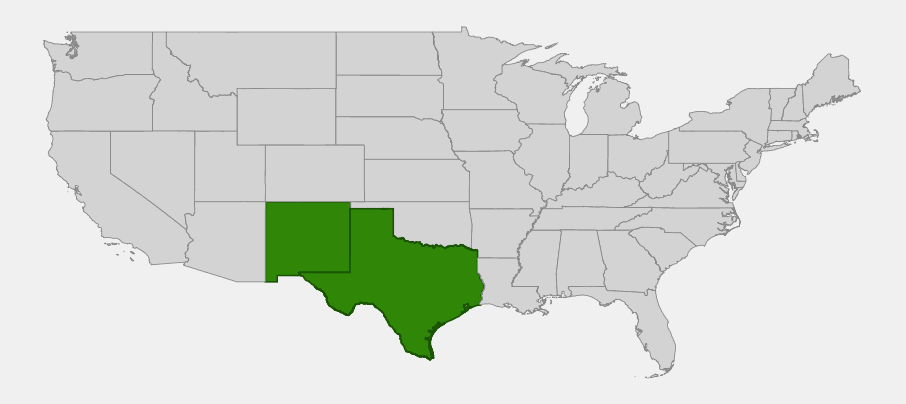
Woolly vervain is native to Texas, New Mexico and northern and central Mexico. In Texas it is widespread across the central, southern and western parts of the state, including the Edwards Plateau, the Blackland Prairie, the Rio Grande Plains and the Rolling Plains. It becomes scarce in the forested east. In New Mexico it is known from only a handful of records in the southeast, so it is an outlying, uncommon plant there.
USDA PLANTS also lists Alabama, California and Nevada. Herbarium records show that the Alabama plant was collected on ship ballast at the port of Mobile and the California plant along a railroad in 1908; both were short-lived introductions rather than native populations, and there are no current herbarium or observation records from Nevada. This page therefore treats Texas and New Mexico as its native U.S. range.
It grows in open, sunny places: grasslands, savannas, pastures, roadsides, vacant lots, limestone hills and thin soils over caliche. It often appears where the soil has been lightly disturbed, and it quickly fills in bare ground after rain.
📋 Regional plant lists featuring Woolly Vervain: South & West Texas
Growing & Care Guide
Woolly vervain is easy to grow in hot, dry, sunny places. It is not long-lived, but it reseeds modestly, so a patch usually persists. It is offered by some native plant nurseries and seed companies in Texas.
Light
Full sun. In shade it becomes thin and floppy and flowers poorly.
Soil & Water
It needs well-drained soil and tolerates sand, gravel, thin limestone soils and even heavy clay if water does not stand. Water young plants until established, then water only in long droughts. Too much water and rich soil shorten its life.
Planting Tips
Plant container plants in spring or fall, about 12 inches apart, or scatter seed in fall on bare ground in a meadow. Combine it with other short wildflowers and bunchgrasses, such as four-nerve daisy, purple poppy mallow and grama grasses. It also works in a sunny pot or rock garden.
Pruning & Maintenance
Cut back the old flower spikes after the spring bloom to encourage a new flush of flowers. Leave some spikes to set seed if you want it to reseed.
Propagation
Grow it from seed. Fresh seed sown in fall germinates the next spring, and seed benefits from a few weeks of cold, moist stratification if sown in spring. Stem cuttings taken in spring also root easily.
Landscape Uses
- Short meadows and prairies: a long-blooming, low wildflower among grasses
- Rock and gravel gardens: tolerates thin, dry, alkaline soils
- Pollinator gardens: steady nectar for small butterflies and bees
- Containers: a soft, gray-green filler in a sunny pot
- Roadside and lawn-edge plantings: tough enough for disturbed, dry ground
Wildlife & Ecological Value
Small as it is, woolly vervain is a steady source of food for pollinators over a long season in the dry grasslands of Texas.
For Pollinators
The small, tubular flowers are visited by skippers, small butterflies, bees and day-flying moths. Its long bloom season from spring to fall makes it useful when other flowers are scarce.
For Birds
Seed-eating birds such as sparrows and finches pick the small nutlets from the old spikes.
For Mammals
The rough, hairy foliage is seldom browsed by deer or livestock.
Ecosystem Role
As a quick colonizer of bare ground, it helps cover soil after drought or disturbance, giving way over time to longer-lived grasses and wildflowers.
Cultural & Historical Uses
The species name canescens is Latin for “becoming gray” or “grayish,” a reference to the hairy foliage. The genus name Verbena is the ancient Latin name for sacred plants used in religious ceremonies.
Vervains have a long history in folk medicine in Europe and the Americas, and several species were used as bitter tonics. There is no well-documented traditional use specific to woolly vervain, and it should not be used as a home remedy.
In Texas, woolly vervain is a familiar part of spring wildflower displays on roadsides and in pastures, often overlooked next to showier bluebonnets but blooming much longer.
Frequently Asked Questions
Is woolly vervain a perennial?
Yes, but it is short-lived. It often lives only two or three years, and sometimes acts as an annual, but it reseeds to maintain a patch.
Where is woolly vervain native?
It is native to Texas, southeastern New Mexico and northern and central Mexico. Records from Alabama and California were short-lived introductions.
When does woolly vervain bloom?
Mainly from March to June, and again after rain into fall, with lavender to blue-violet flowers.
Is woolly vervain drought tolerant?
Yes. Once established it needs little or no extra water and does best in dry, well-drained soil in full sun.
How is woolly vervain different from hoary vervain?
Hoary vervain is taller, with broad, unlobed leaves and dense, thick flower spikes. Woolly vervain is smaller, with lobed or toothed leaves and thin, open spikes.

Looking for a nursery that carries Woolly Vervain?
Browse our native plant nursery directory: New Mexico · Texas

