Dakota Mock Vervain (Glandularia bipinnatifida)
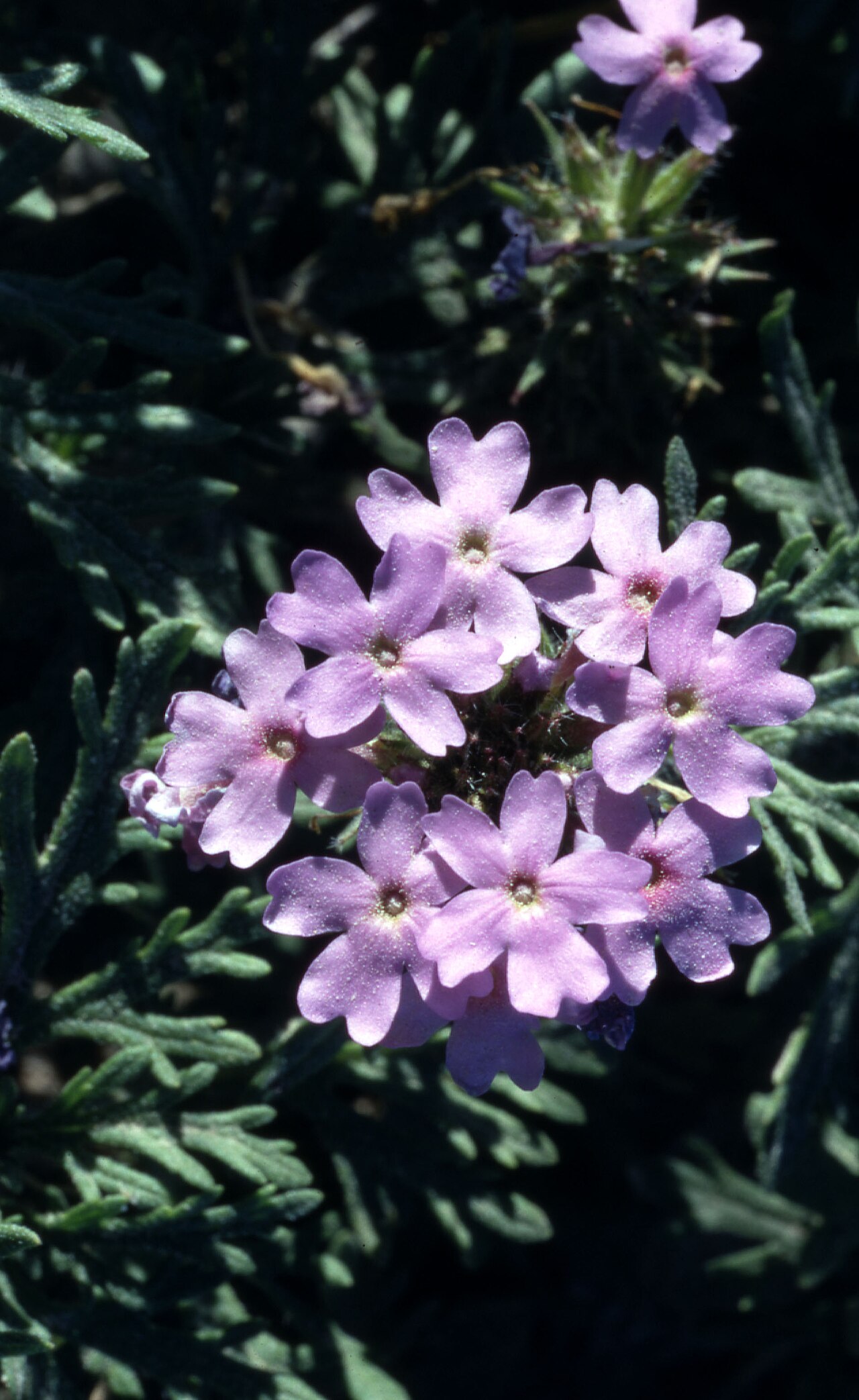
Glandularia bipinnatifida, commonly called Dakota Mock Vervain (also Dakota Vervain, Prairie Verbena, Purple Prairie Verbena, or by its Spanish names Moradilla and Alfombrilla), is a low, mat-forming perennial wildflower of the central and south-central United States. A member of the Verbenaceae (verbena family), it is one of the most widespread and reliable spring-through-fall bloomers of the Great Plains and southern prairies, often carpeting roadsides, pastures, and open ground in sheets of pink, lavender, or purple.
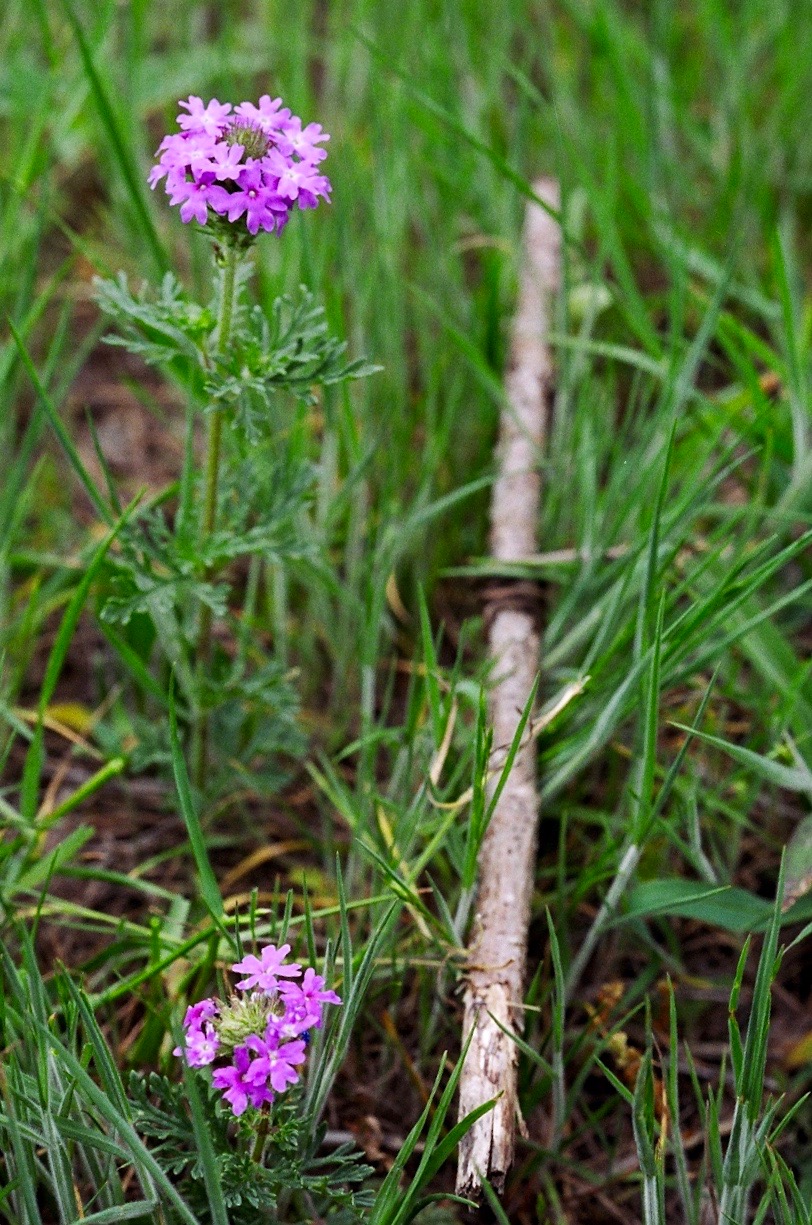
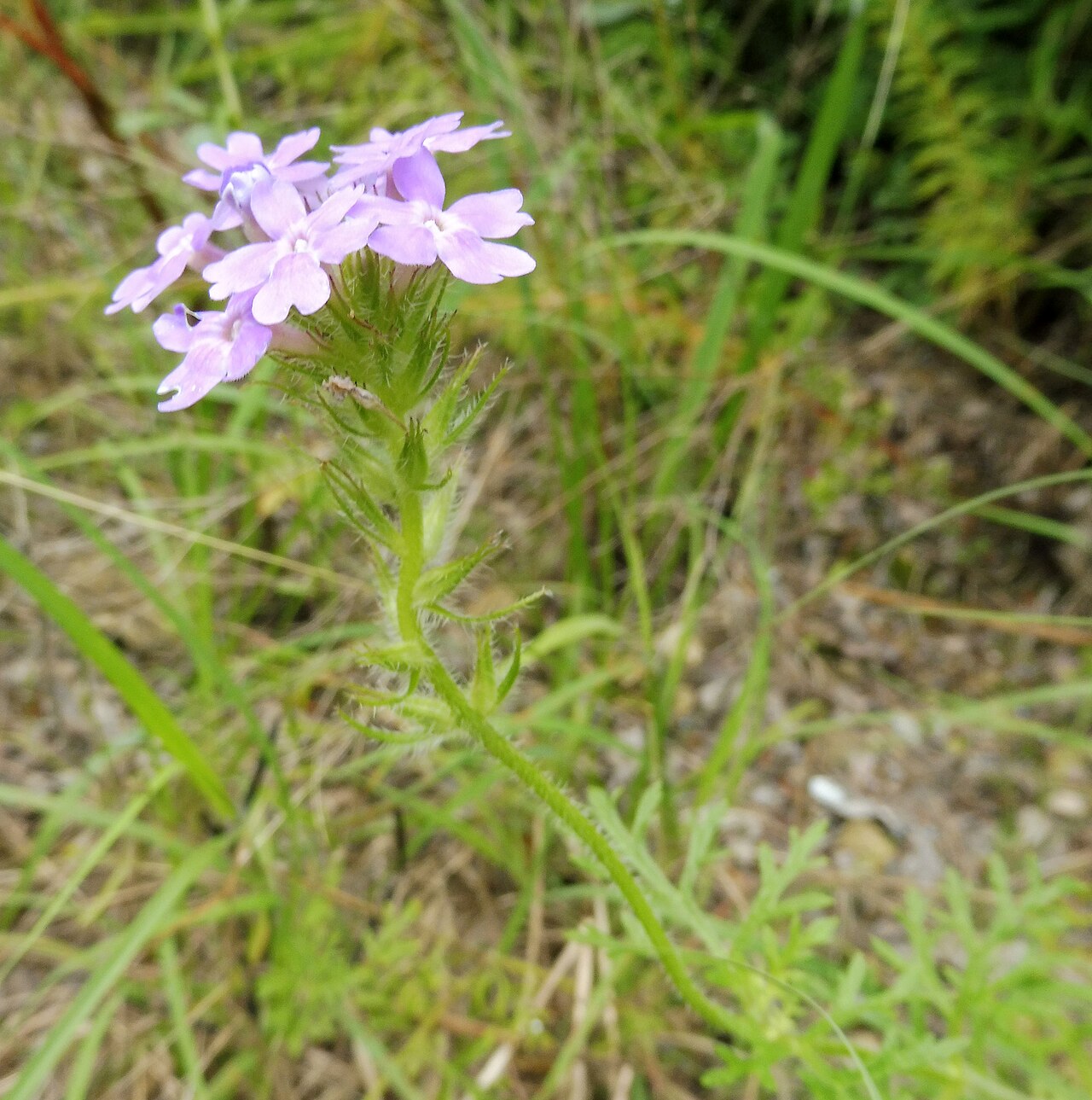
Dakota Mock Vervain grows as a sprawling, ground-hugging plant with finely divided, fern-like gray-green leaves and a somewhat woody, branching base. From spring through fall it produces rounded, phlox-like clusters of small, five-lobed flowers in shades of pink, lavender, or purple, each cluster packed tightly atop short stems that rise just above the foliage. In good conditions a single plant can spread into a low mound a foot or more across, and in favorable years entire fields and roadsides across its range turn purple-pink with its bloom.
Thriving in open, sunny, well-drained ground from dry prairies to disturbed roadsides, Dakota Mock Vervain is an easy, low-maintenance native for gardeners from the Dakotas south through Texas and across to the Gulf states. It is short-lived as an individual plant, but reseeds readily, so an established planting tends to renew itself year after year with minimal care — a dependable, long-blooming source of color and nectar for a wide range of pollinators.
Identification
Dakota Mock Vervain is a prostrate-to-ascending, mat-forming perennial herb growing from a somewhat woody, branched base, with flowering stems that can trail or sprawl up to about two feet long while staying low — usually under a foot tall.
Stems & Leaves
Stems are sprawling to ascending and moderately to densely covered with short, bristly hairs. Leaves are opposite, deeply and repeatedly divided (bipinnatifid, as the species name indicates) into narrow, fern-like segments, giving the foliage a lacy, gray-green texture quite different from the broader leaves of many other prairie wildflowers. This finely cut foliage is a useful identification feature even when the plant is not in bloom.
Flowers
Flowers are small, tubular at the base with five flaring, notched lobes, and are packed into tight, rounded to slightly domed terminal clusters that sit just above the foliage — a growth habit that lets large colonies create a continuous carpet of color. Flower color ranges from pink to lavender to purple, often with a pale throat. Bloom begins as early as March in the southern part of the range and continues, often with a brief summer slowdown in the hottest areas, all the way into October, making this one of the longest-blooming native perennials of the southern plains.
Similar Species
Dakota Mock Vervain is easily confused with other low Glandularia and Verbena species. Moss Verbena (Glandularia pulchella), widely naturalized from South America, has more finely dissected, almost moss-like foliage and is not native to North America — it should not be mistaken for this species in a native planting. Hoary Vervain (Verbena stricta), which shares much of this plant’s range, is an upright, unbranched species with simple (not deeply divided) leaves and a tall flowering spike, easily distinguished from the low, sprawling habit of Dakota Mock Vervain.
Quick Facts
| Scientific Name | Glandularia bipinnatifida |
| Family | Verbenaceae (Verbena) |
| Plant Type | Herbaceous Perennial, Mat-Forming Groundcover |
| Mature Height | 6–12 in (15–30 cm) |
| Mature Spread | 1–2 ft (30–60 cm) |
| Growth Rate | Fast |
| Sun Exposure | Full Sun to Part Shade |
| Water Needs | Low to Moderate |
| Soil Type | Well-drained sand, loam, clay, caliche, or limestone |
| Soil pH | 6.5–8.0 (neutral to alkaline) |
| Bloom Time | March – October |
| Flower Color | Pink, lavender, or purple |
| Fall Color | Not significant; foliage persists gray-green until frost |
| Fruit | Small dry schizocarp splitting into nutlets |
| Deer Resistant | Mostly, though light browsing can occur |
| USDA Hardiness Zones | 5–9 |
Native Range
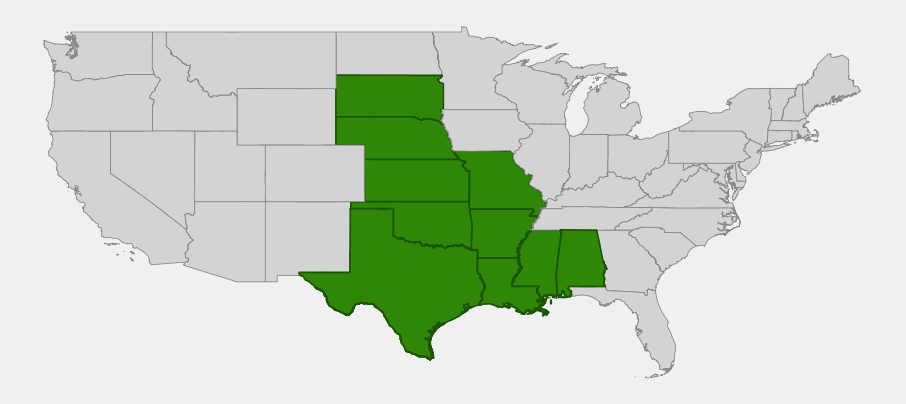
Dakota Mock Vervain is native across a broad swath of the central and south-central United States, from South Dakota, Nebraska, and Kansas south through Oklahoma and Texas, and east through Missouri, Arkansas, and Louisiana to Mississippi and Alabama. Despite USDA PLANTS listing the species as present in a number of additional states, county-level distribution records (BONAP) confirm native populations concentrated in this core Great Plains and south-central range; the species should not be assumed native outside it without local confirmation.
Within this range, Dakota Mock Vervain grows across a wide variety of open, sun-exposed habitats: dry and mixed-grass prairies, rocky or caliche hillsides, pastures, roadsides, and other disturbed open ground. It is especially common and conspicuous on the southern Great Plains and across much of Texas, where it is one of the first wildflowers to bloom in spring and one of the last to be stopped by fall frosts.
Its range also extends south through much of Mexico, reflecting the species’ broad tolerance of hot, dry, open conditions. Gardeners within its core U.S. range can plant it with confidence as a true regional native; gardeners further north, east, or west of this range should treat it as a well-adapted regional wildflower rather than a native of their immediate area.
📋 Regional plant lists featuring Dakota Mock Vervain: North Dakota, South Dakota & Western Minnesota · Nebraska, Kansas & Eastern Colorado · South & West Texas · Arkansas, Louisiana, Eastern Oklahoma & Eastern Texas · Illinois, Iowa & Missouri · Georgia, Alabama & Mississippi
Growing & Care Guide
Dakota Mock Vervain is about as easy and forgiving as native wildflowers come, as long as it has sun and drainage — the two things it absolutely cannot do without.
Light
Plant in full sun for the heaviest, longest-lasting bloom. It will tolerate light or part shade, but flowering becomes sparser and the mat grows looser and less floriferous the more shade it receives.
Soil & Water
Dakota Mock Vervain is remarkably adaptable to soil type — it grows naturally in sand, loam, clay, caliche, and limestone-based soils — but good drainage is essential in all of them. Water needs are low to moderate; established plants are drought-tolerant and generally need only occasional supplemental water during extended dry spells, with a bit more moisture appreciated during the heat of summer to keep bloom going strong.
Planting Tips
Set out container-grown plants in spring or fall, spacing them 12 to 18 inches apart to allow the mats to fill in without excessive overlap. The species self-sows readily, so a planting of a few individuals often fills in a bed within a season or two without further work.
Propagation
Propagate from seed collected after the small dry fruits mature, or increase existing plants by division of rooted stem sections, since sprawling stems often root where they touch the ground. Self-sown seedlings are usually abundant around established plants and can be transplanted or simply left in place.
Pruning & Maintenance
Because individual plants are often short-lived — sometimes just a single growing season, sometimes two or three years — periodic light shearing after a bloom flush encourages denser regrowth and a new round of flowers, and also helps manage self-seeding where a tidier look is wanted. Otherwise, this plant asks for very little: no fertilizer is needed, and pest and disease problems are minimal.
Landscape Uses
Dakota Mock Vervain’s low, spreading habit and long bloom season make it useful in many garden settings:
- Groundcover for sunny, dry areas where turf struggles
- Prairie and meadow restorations
- Rock gardens and gravel beds
- Butterfly and pollinator gardens
- Edging and border fronts in xeric perennial beds
- Erosion control on dry slopes and roadside cuts
Wildlife & Ecological Value
Dakota Mock Vervain’s exceptionally long bloom season makes it one of the most consistently valuable native nectar sources across its range, flowering when many other prairie wildflowers are between bloom cycles.
For Pollinators
The nectar-rich flower clusters attract a wide range of bees, including native solitary bees and honeybees, drawn to the dense, easily accessible blooms. Because flowering runs nearly continuously from early spring into fall, Dakota Mock Vervain helps bridge gaps between the bloom periods of other prairie wildflowers, providing a steady nectar supply across the growing season.
For Butterflies
Butterflies are frequent visitors to the flat-topped flower clusters, which offer an easy landing platform and concentrated nectar reward. The plant is a popular inclusion in butterfly gardens throughout its range for exactly this reason.
For Birds
Various seed-eating birds feed on the small nutlets produced after flowering, adding a modest but useful food source in prairie and grassland habitats where the species grows in quantity.
Ecosystem Role
As a low, spreading perennial adapted to disturbed and open ground, Dakota Mock Vervain plays an important early-succession role on the southern Great Plains, often among the first wildflowers to recolonize bare or disturbed soil. Its mat-forming habit and extensive, fibrous root system also contribute modestly to soil stabilization on dry slopes and roadside cuts within its native range.
Cultural & Historical Uses
Dakota Mock Vervain does not carry an extensively documented history of Indigenous medicinal or ceremonial use comparable to some other prairie plants, though verbenas in general have a long history of traditional use across many cultures, and the Spanish common names Moradilla and Alfombrilla (“little purple one” and “little carpet,” respectively) reflect the long familiarity of Spanish-speaking communities across Texas and Mexico with this abundant, carpet-forming wildflower.
Its primary modern significance is as a reliable, widely available native groundcover and wildflower seed-mix component across the southern and central Great Plains. It is a frequent component of commercial native wildflower seed mixes sold for roadside plantings, prairie restorations, and low-water residential landscaping throughout its range, valued for its fast establishment, drought tolerance, and extraordinarily long bloom season.
The related ornamental Moss Verbena (Glandularia pulchella), a South American species with similarly finely cut foliage, has sometimes been confused with or substituted for Dakota Mock Vervain in the horticultural trade; gardeners seeking the true native species should confirm the scientific name on plant tags, since Moss Verbena is not native to North America and can become weedy outside cultivation in warm climates.
Frequently Asked Questions
Is Dakota Mock Vervain native to my state?
It is confirmed native across South Dakota, Nebraska, Kansas, Oklahoma, Texas, Missouri, Arkansas, Louisiana, Mississippi, and Alabama. USDA PLANTS lists it in a few additional states, but county-level records do not confirm it as a true native population outside this core range, so check local sources before assuming it is native elsewhere.
How long does Dakota Mock Vervain bloom?
It has one of the longest bloom seasons of any native prairie wildflower, often flowering from March into October, with a possible lull during the hottest part of summer in the southern part of its range.
Is Dakota Mock Vervain the same as Moss Verbena?
No. Moss Verbena (Glandularia pulchella) is a related but distinct species native to South America that is sometimes sold alongside or confused with Dakota Mock Vervain. Check the scientific name to be sure you are planting the true native species.
Does Dakota Mock Vervain spread aggressively?
It spreads readily by self-seeding and by rooting along sprawling stems, which makes it an excellent, fast-filling groundcover, but it is not considered invasive within its native range. Light shearing after bloom flushes can keep self-seeding in check in a tidier garden bed.
How much water does it need?
Very little once established. It is adapted to dry prairies and roadsides and tolerates drought well, though occasional water during extended dry spells will keep the bloom going stronger through the heat of summer.

Looking for a nursery that carries Dakota Mock Vervain?
Browse our native plant nursery directory: South Dakota & Texas · Nebraska & Oklahoma · Kansas · Missouri, Louisiana & Mississippi · Arkansas & Alabama