
Canaigre Dock (Rumex hymenosepalus)
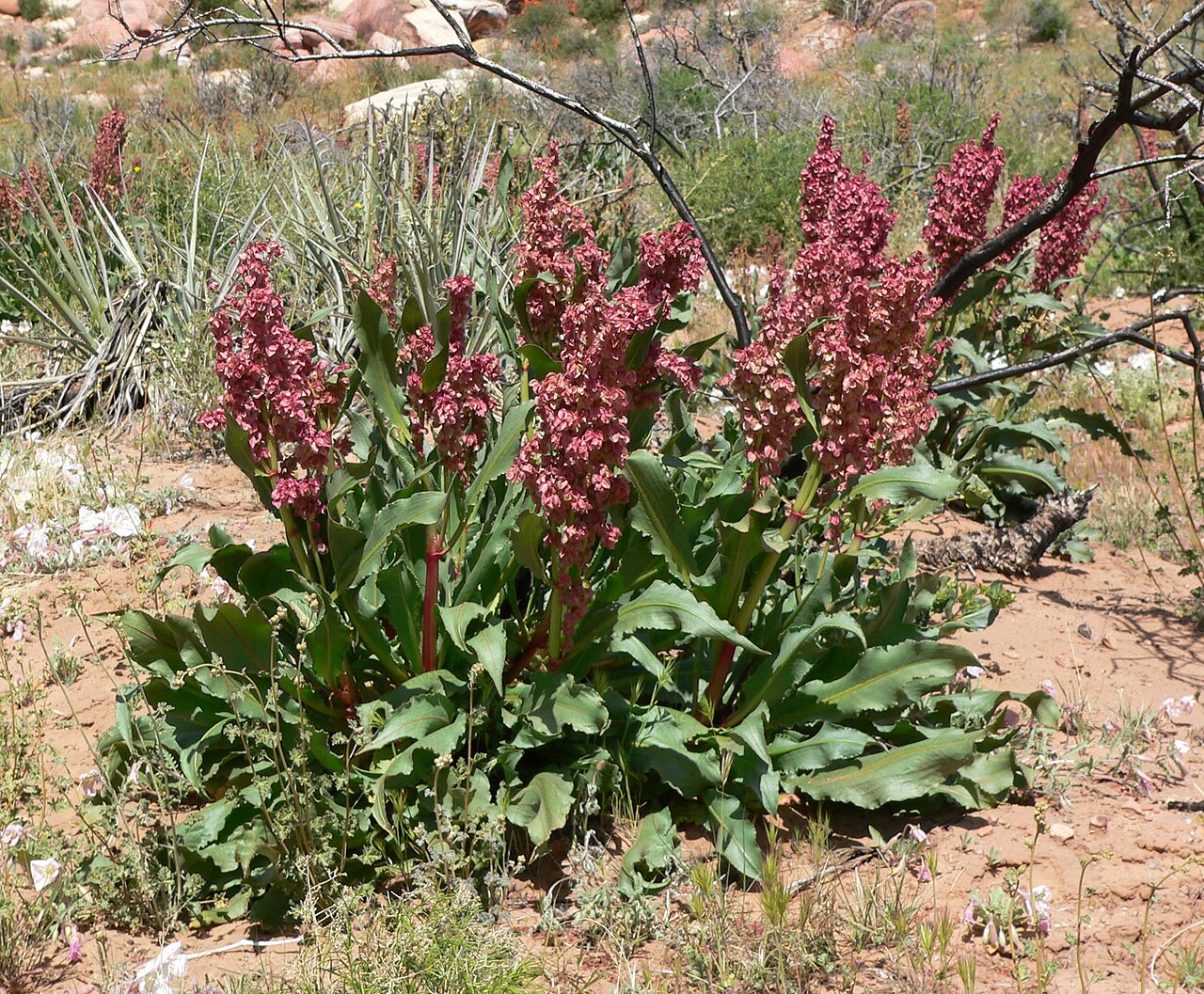
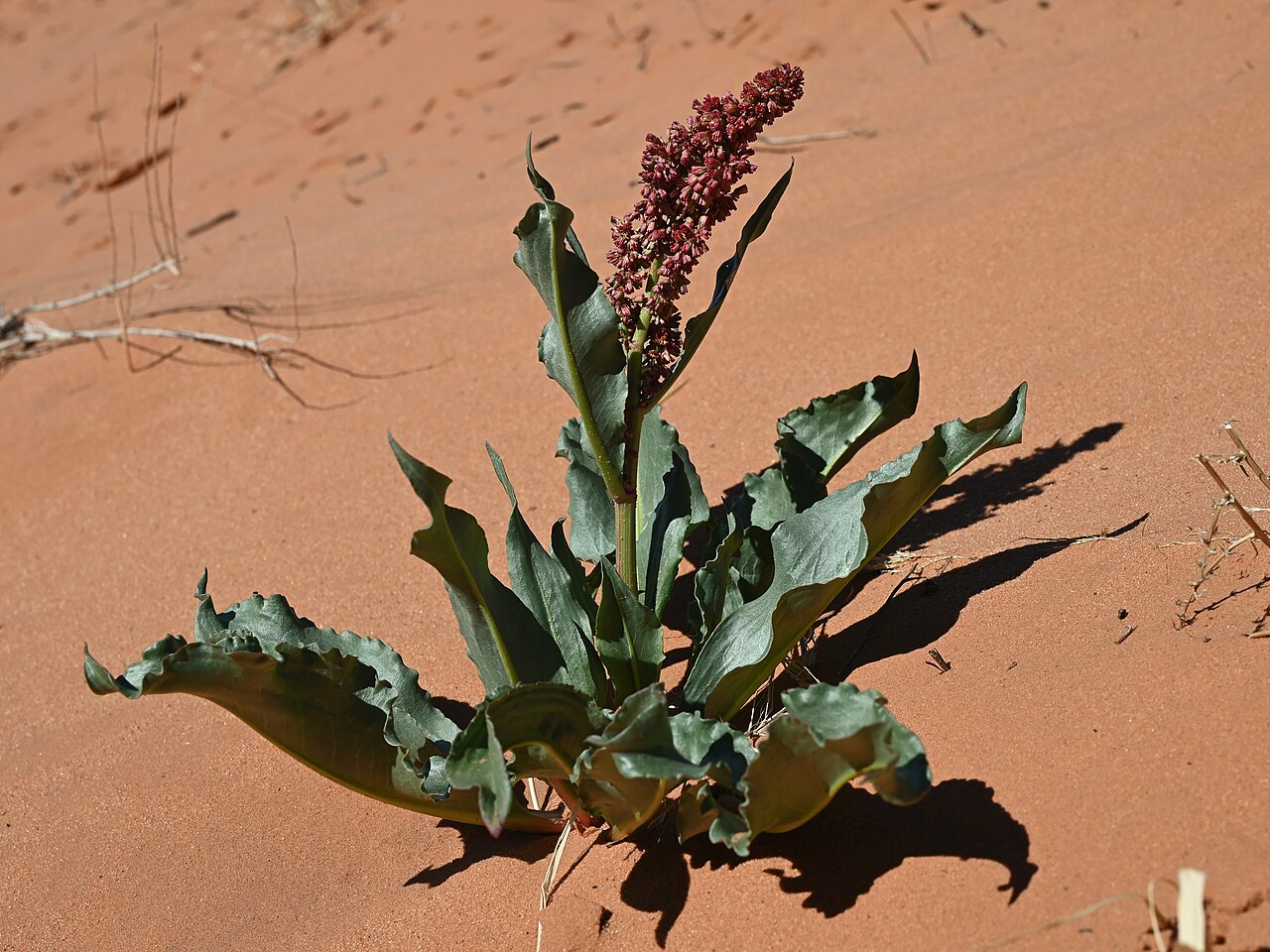
Rumex hymenosepalus, known as Canaigre Dock, canaigre, wild rhubarb, tanner’s dock or Arizona dock, is a stout perennial of the buckwheat family (Polygonaceae) that grows in the sandy deserts, washes and grasslands of the American Southwest and northern Mexico. It sprouts from clusters of fleshy, tuberous roots in winter, forming a bold rosette of large, thick, wavy-edged leaves, and in spring sends up dense spikes of rosy-red flowers and fruits 1 to 3 feet tall.
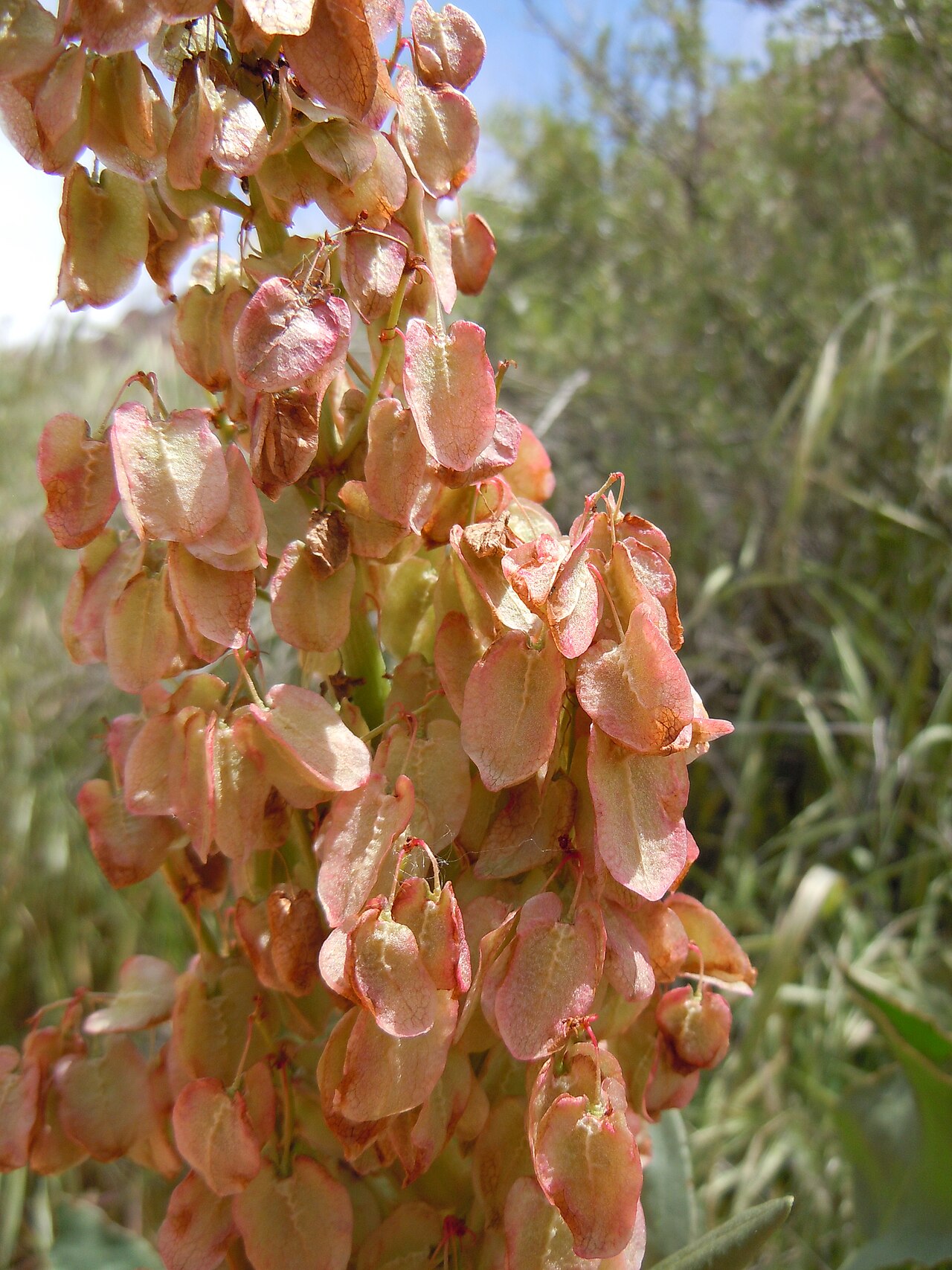
Canaigre is a plant of the cool season. It grows and flowers from late winter through spring, then dies back to its underground tubers as the soil dries in early summer, reappearing after the next winter rains. The showy part is the fruit: each seed is enclosed in three large, papery, heart-shaped wings that turn pink, red and finally tan, giving the plant its colorful look for weeks.
Its roots are exceptionally rich in tannins, and canaigre was once grown commercially in the Southwest as a source of tannin for leather. Native peoples used it for tanning, dye, food and medicine. Today it is appreciated as a striking wildflower of sandy desert ground and as a larval food plant of the ruddy copper butterfly. This guide covers how to identify it, where it grows, how to grow it, and an important note about oxalates in its leaves.
Identification
Canaigre dock is one of the most recognizable desert wildflowers in spring. No other plant on open desert sand has its combination of large, fleshy leaves and dense, reddish spikes of papery fruit.
Roots & Growth Habit
Each plant grows from a cluster of thick, brownish, potato-like tuberous roots several inches below the surface. These store water and tannins and allow the plant to survive long dry periods. Above ground it forms a basal rosette and one or a few stout, smooth, often reddish flowering stems 1 to 3 feet tall.
Leaves
The leaves are large and thick, oblong to lance-shaped, up to about a foot long, smooth, somewhat fleshy and bluish to bright green, with wavy or crinkled edges. They sit mostly at the base of the plant on thick stalks, with smaller leaves on the flowering stem. The leaves wither as the plant goes dormant in early summer.
Flowers
Small flowers are crowded in dense, branched clusters (panicles) 4 to 12 inches long at the top of the stem. Each flower has six greenish to pink tepals. They bloom mainly from late winter to spring, as early as January in the low desert and later at higher elevations.
Fruit
After flowering, the three inner tepals grow into large, papery, heart-shaped to rounded wings about 1/2 inch long that enclose a single, shiny, brown, three-sided seed. Unlike many docks, the wings usually have smooth edges and lack the bumps (tubercles) seen on curly dock. The fruit clusters turn pink to deep red and then tan, and the winged fruits blow away in the wind.
Look-alikes
Curly dock (Rumex crispus), a common introduced weed, has narrower, strongly curled leaves, smaller fruit wings with a bump on each, and grows in moist disturbed ground. Garden rhubarb has similar large leaves but much larger, broader leaf blades and is only found in cultivation. Canaigre’s large, smooth, wavy leaves, big papery fruits and dry sandy habitat set it apart.
Quick Facts
| Scientific Name | Rumex hymenosepalus Torr. |
| Family | Polygonaceae (buckwheat family) |
| Plant Type | Herbaceous perennial from tuberous roots; summer-dormant |
| Mature Height | 1–3 ft in flower |
| Mature Spread | 1–2 ft |
| Growth Rate | Fast in the cool season |
| Sun Exposure | Full sun |
| Water Needs | Low; winter-spring moisture, dry summer dormancy |
| Soil Type | Sandy or gravelly, well-drained soils; dunes, washes and sandy flats |
| Soil pH | About 6.5–8.5 |
| Bloom Time | January–May |
| Flower Color | Greenish to pink; fruits pink to red, aging tan |
| Fall Color | None; dormant from early summer until winter |
| Fruit | Seed enclosed in three large, papery, heart-shaped wings |
| Deer Resistant | Moderate |
| USDA Hardiness Zones | 5–10 |
Native Range
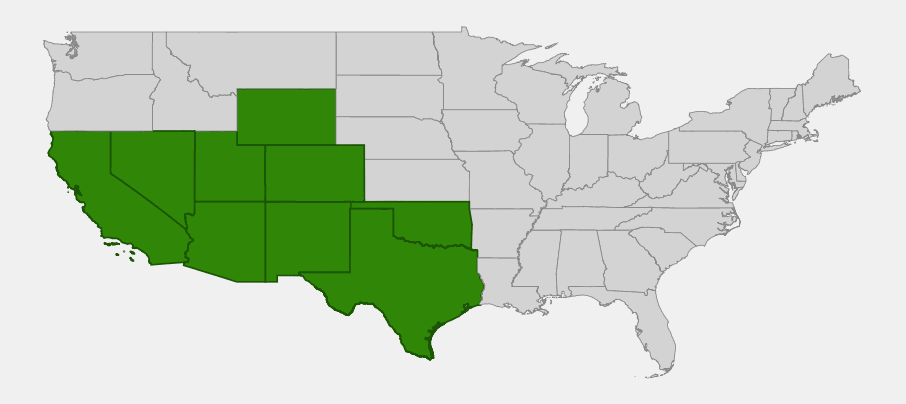
Canaigre dock is a plant of the deserts and dry grasslands of the American Southwest. USDA PLANTS lists it as native to Arizona, California, Colorado, Nevada, New Mexico, Oklahoma, Texas, Utah and Wyoming, and its range extends south into northern Mexico, including Baja California, Sonora and Chihuahua.
It is most common in the Sonoran and Mojave Deserts and on the sandy plateaus of the Colorado Plateau in northern Arizona, southern Utah and northwestern New Mexico. In California it grows in the southern deserts and the western Mojave. In Texas it is a plant of West Texas, and the Oklahoma and Wyoming records lie at the northeastern and northern edges of its range.
Typical habitats are sandy flats, stabilized dunes, sandy washes and streambeds, roadsides and sandy grasslands. It is often most abundant where deep sand lets winter rain soak in and where its tubers can stay cool below the surface during the summer.
📋 Regional plant lists featuring Canaigre Dock: Montana & Wyoming · Utah & Western Colorado · Arizona & New Mexico · South & West Texas · California & Nevada
Growing & Care Guide
Canaigre dock is an unusual and rewarding plant for sandy desert gardens, where its bold leaves and red fruit spikes bring color in late winter and spring. It is sometimes offered by native nurseries and seed companies in the Southwest. The key is to match its rhythm: water in the cool season, dry dormancy in summer.
Light
Plant canaigre in full sun. In the wild it grows on open sand with little shade, and in shade it becomes floppy and flowers poorly.
Soil & Water
Give it deep, sandy or gravelly soil with excellent drainage. It grows with winter and spring moisture and should be left dry once it goes dormant in early summer; summer water on dormant tubers in heavy soil can cause rot. In a dry winter, an occasional deep soak from January to April helps it grow and flower.
Planting Tips
Plant tubers or container plants in fall, setting tubers several inches deep. Mark the spot, because the plant disappears for half the year. Pair it with desert wildflowers and bunchgrasses that fill the gap while it is dormant, such as globemallows, sand verbena and Indian ricegrass.
Pruning & Maintenance
No pruning is needed. Leave the fruit stalks standing while they are colorful; they can be cut for dried arrangements. Remove the dry stalks and leaves after the plant goes dormant if you want a tidier look.
Propagation
Grow it from fresh seed sown in fall or early winter, or divide the tuber clusters while the plant is dormant in summer or fall. Plants grown from seed take a few seasons to build up tubers large enough to flower well.
Safety Note
Like rhubarb and other docks, canaigre leaves contain oxalic acid and oxalates, and the roots are very high in tannins. Eating large amounts of the leaves or roots can cause stomach upset and, with oxalates, more serious problems, especially for people prone to kidney stones. Do not eat the plant unless you are certain of the identification and know how it is traditionally prepared, and keep pets and livestock from grazing heavily on it.
Landscape Uses
- Sandy desert gardens: bold leaves and red fruit spikes in late winter and spring
- Butterfly gardens: a larval food plant of the ruddy copper butterfly
- Dune and wash restoration: a native perennial adapted to deep sand and dry summers
- Dried arrangements: the papery pink to tan fruit clusters keep their shape when dried
- Ethnobotanical and dye gardens: a historic source of tannin and a warm brown dye
Wildlife & Ecological Value
Canaigre is one of the first green plants on desert sand after winter rains, and its leaves, flowers and seeds support a range of wildlife.
For Pollinators
Docks are largely wind-pollinated, and canaigre is not a major nectar plant. Small bees and flies may visit the flowers for pollen. Plant it with nectar-rich desert wildflowers if you want to attract pollinators.
For Butterflies
Canaigre is a recorded larval food plant of the ruddy copper (Lycaena rubidus), a western butterfly whose caterpillars feed on docks. Copper butterflies are among the reasons to leave native docks in place in natural areas.
For Birds & Mammals
Seed-eating birds and rodents eat the seeds, and the dense rosettes give shelter to small animals and insects early in the year. The leaves are browsed lightly by deer and other mammals, but the high tannin content makes them less palatable than many other plants.
Ecosystem Role
As a cool-season perennial with large storage roots, canaigre makes use of winter rain on sandy soils and adds early-season green growth to desert and grassland communities. Its tubers help it persist on shifting sands, and its winged fruits spread by wind across open ground.
Cultural & Historical Uses
The genus name Rumex is the old Latin name for docks and sorrels. The species name hymenosepalus means “membrane sepals”, describing the large, papery fruit wings. John Torrey described the species in 1859 from collections made during the survey of the U.S.–Mexico boundary. The name canaigre comes from the Spanish of the borderlands.
Canaigre roots contain very high levels of tannin, and in the late nineteenth and early twentieth centuries it was grown and harvested commercially in the Southwest as a source of tannin for leather. It also yields a warm, medium brown dye. Native peoples of the region used the roots for tanning hides and dyeing, and as a medicine, for example in teas for colds and sore throats.
The name wild rhubarb reflects its relationship to garden rhubarb, which is in the same family. Young leaves and leaf stalks were traditionally cooked and eaten, and older stalks were cooked like rhubarb. Because of the oxalates and tannins, these traditional foods were prepared carefully and eaten in moderation.
Frequently Asked Questions
Why is canaigre dock called wild rhubarb?
It belongs to the same family as garden rhubarb and has similar large leaves and thick, reddish leaf stalks, which were sometimes cooked like rhubarb.
Is canaigre dock poisonous?
It is not highly toxic, but the leaves contain oxalates and the roots are very high in tannins. Eating large amounts can cause stomach upset and other problems, so do not eat it unless you know it well and know how it is traditionally prepared.
When does canaigre dock bloom?
It flowers from late winter through spring, as early as January in the low desert. The colorful papery fruits follow and last for several weeks before the plant dies back for the summer.
Why did my canaigre disappear in summer?
That is normal. It is summer-dormant and dies back to its underground tubers as the soil dries, then regrows after winter rains. Do not water it heavily while it is dormant.
What was canaigre used for?
Its roots are rich in tannins and were used to tan leather, both by Native peoples and in commercial production in the Southwest. The roots also produce a brown dye.

Looking for a nursery that carries Canaigre Dock?
Browse our native plant nursery directory: Arizona · California · Colorado · Nevada, New Mexico & Oklahoma · Texas & Utah · Wyoming

