Mormon Tea (Ephedra viridis)
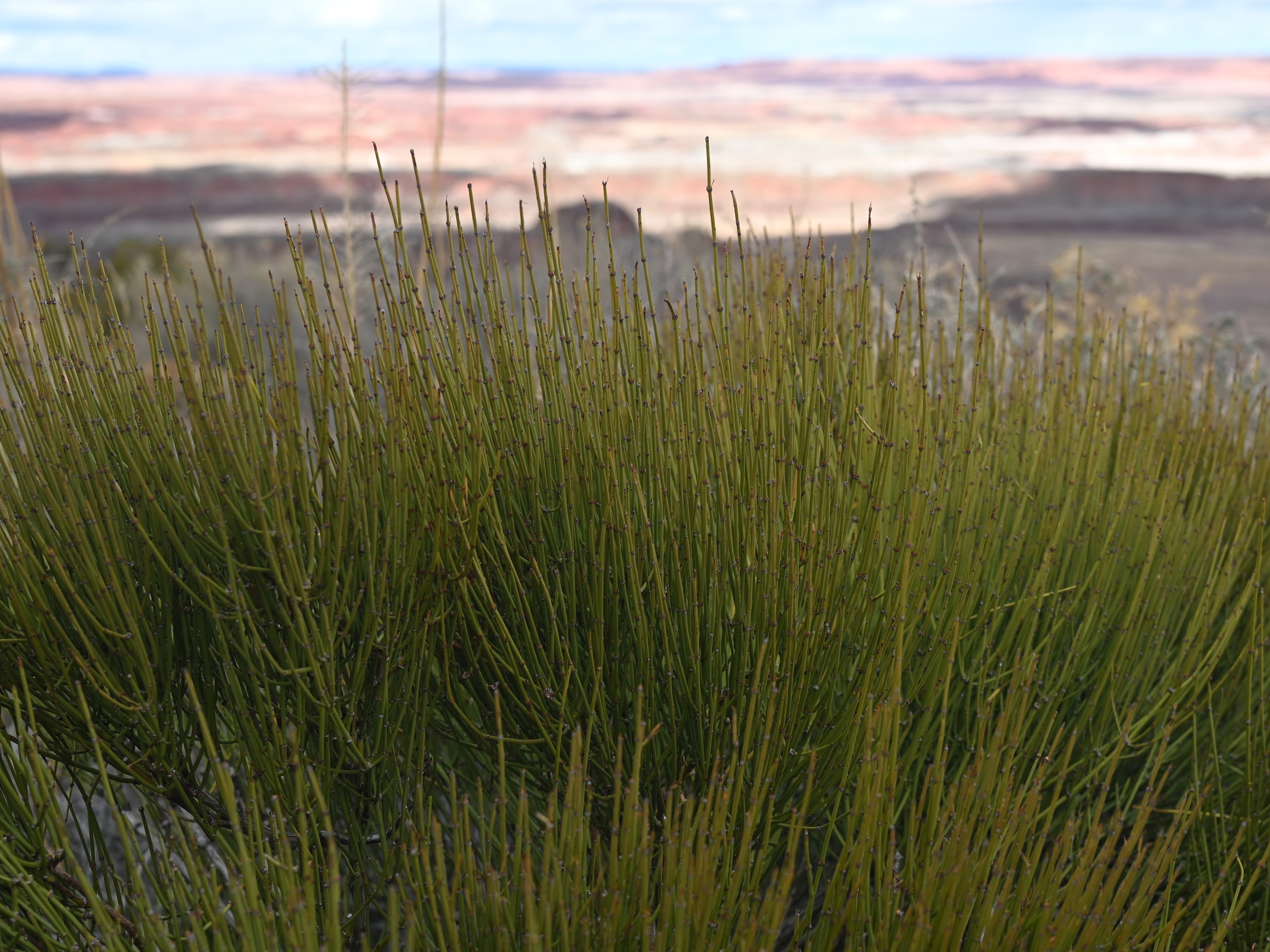
Ephedra viridis, commonly known as Mormon Tea, Green Ephedra, or Green Mormon Tea, is one of the most distinctive and botanically fascinating native shrubs of the Great Basin and Colorado Plateau. In a region where drought is the dominant ecological force, this remarkable plant has evolved a radical solution: it has essentially eliminated its leaves and instead photosynthesize through bright green, jointed stems that give the plant an otherworldly, almost cactus-like appearance. Despite looking unlike any conventional shrub, Mormon Tea is actually a gymnosperm — a cone-bearing plant more closely related to conifers than to flowering shrubs — representing one of the most ancient lineages of vascular plants still growing today.
The common name reflects its long use as a beverage plant by both Indigenous peoples and Mormon settlers, who brewed the stems into a mildly stimulating herbal tea that was widely consumed as a coffee substitute in the 19th century. Unlike its Asian relatives (Ephedra sinica and others), which contain significant quantities of ephedrine, Ephedra viridis contains only trace amounts of this compound, making it safe for use as a beverage plant with no stimulant effects beyond mild astringency and a pleasant, slightly pine-like flavor.
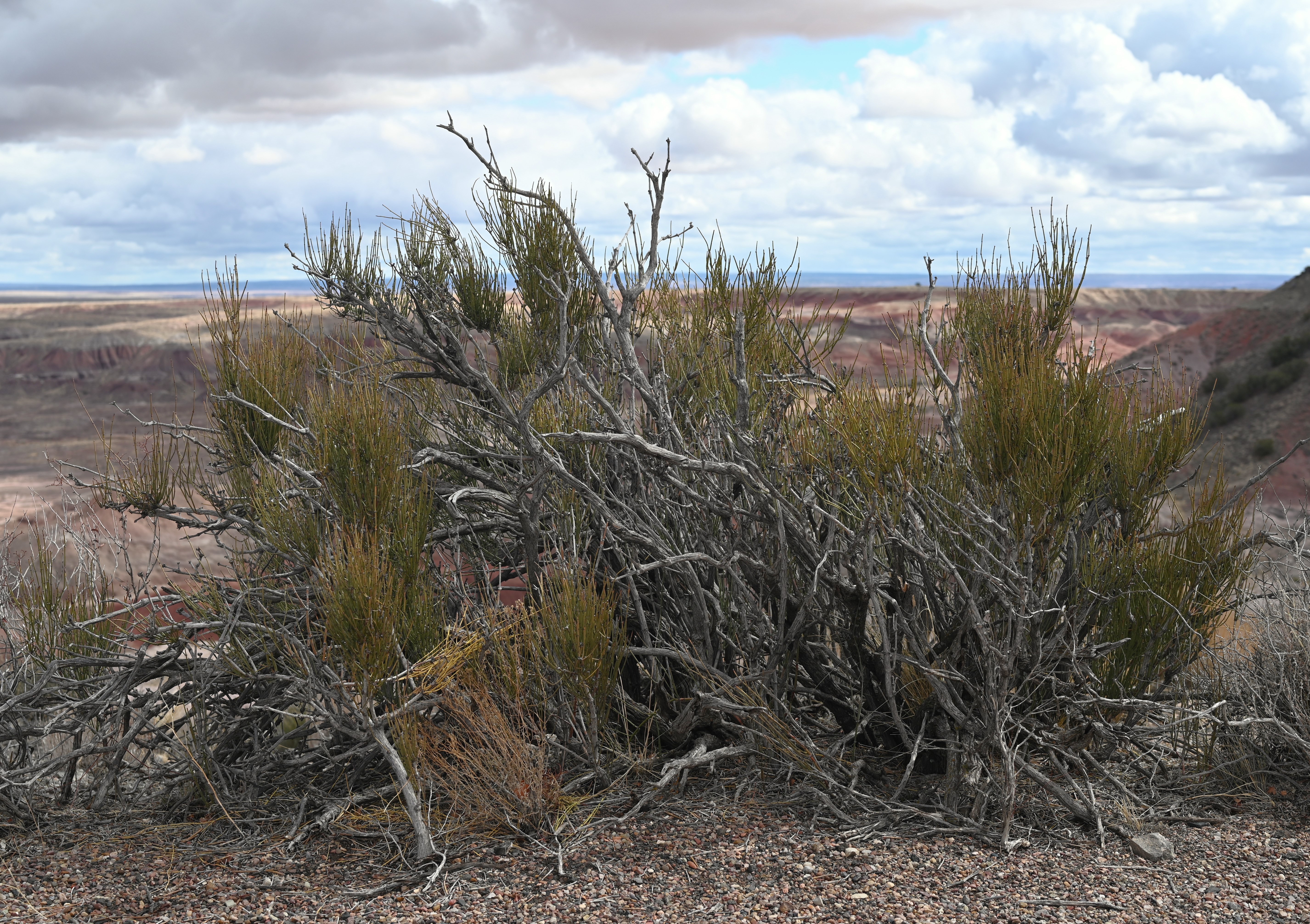
In the landscape, Mormon Tea is a structural marvel — its dense mound of stiff, upright, bright green stems provides year-round visual interest without a single conventional leaf. Established plants are virtually indestructible in desert conditions: surviving extreme heat, prolonged drought, periodic freezing, and poor, alkaline soils with remarkable equanimity. For xeriscape and desert-inspired gardens throughout the Southwest and Great Basin, it offers a unique textural element that no other native plant quite duplicates.
Identification
Mormon Tea grows as a multi-stemmed, densely branched shrub, forming rounded to irregularly mounded clumps typically 2–5 feet tall and of similar spread. In favorable conditions with good soil and some moisture, mature plants can reach 6 feet. The growth form is dense and twiggy, with the mass of photosynthetic stems creating a fine, broom-like texture when viewed from a distance. Up close, the jointed, segmented nature of the stems is immediately apparent.
Stems
The stems are the defining feature — bright green (viridis = green) to blue-green, smooth, photosynthetic, and jointed at nodes spaced 1–2 inches apart. Each joint (node) is encircled by tiny, scale-like leaves that are reduced to 2 narrow scales barely 2–4 mm long — vestigial remnants of what were once true leaves. The stems are somewhat succulent and contain chlorophyll throughout, enabling year-round photosynthesis even when temperatures are near freezing. When broken, the stems have a characteristic astringent, slightly bitter smell that is distinctive to the genus.
Cones (Reproductive Structures)
As a gymnosperm, Mormon Tea bears cones rather than flowers. Male (pollen) cones appear in early spring (February–April) at the stem nodes — they are small, yellow, oval structures resembling tiny flower buds. Female cones develop on separate plants (the species is dioecious) and mature into small, oval, berry-like seed cones that are green when young, turning tan to reddish-brown when ripe. These “berries” (technically naked seeds surrounded by fleshy scales) are eaten by birds and small mammals. The yellow male pollen cones are what most people call “flowers” when they notice the plant blooming in spring.
Quick Facts
| Scientific Name | Ephedra viridis |
| Family | Ephedraceae |
| Plant Type | Native gymnosperm shrub (non-flowering) |
| Mature Height | 2–5 ft |
| Sun Exposure | Full Sun |
| Water Needs | Low (Drought Tolerant) |
| Bloom (Cone) Time | February – April |
| Cone Color | Yellow (male pollen cones); green to tan (female seed cones) |
| Wildlife Value | Seeds eaten by birds, small mammals; cover for reptiles |
| Deer Resistant | Yes — rarely browsed |
| USDA Hardiness Zones | 4–9 |
Native Range
Mormon Tea is native to the Great Basin and Colorado Plateau regions, with a range centered on the four-corners states (Utah, Colorado, Arizona, New Mexico) and extending west through Nevada into southeastern California and east into extreme western Texas. In Utah, it is one of the most common shrubs of the desert and semi-desert zones, occurring extensively on plains, mesas, canyon rims, and rocky slopes from the lowest desert elevations to about 7,000 feet. In Nevada, it is widespread across the Basin and Range province.
The species is a dominant or co-dominant shrub in many Great Basin and Colorado Plateau plant communities, often occurring with big sagebrush (Artemisia tridentata), blackbrush (Coleogyne ramosissima), shadscale (Atriplex confertifolia), winterfat (Krascheninnikovia lanata), and various cacti and desert perennials. It is also a common component of pinyon-juniper woodland understories. The species tolerates a remarkably wide range of soil types including sandy, gravelly, rocky, and even moderately alkaline or saline substrates.
Mormon Tea’s range overlaps with several other Ephedra species in the Southwest, and hybridization can occur in areas of sympatry. Ephedra viridis is distinguished by its bright green (rather than grayish-green or yellow-green) stems and its typically taller stature compared to some related species like E. nevadensis and E. torreyana.
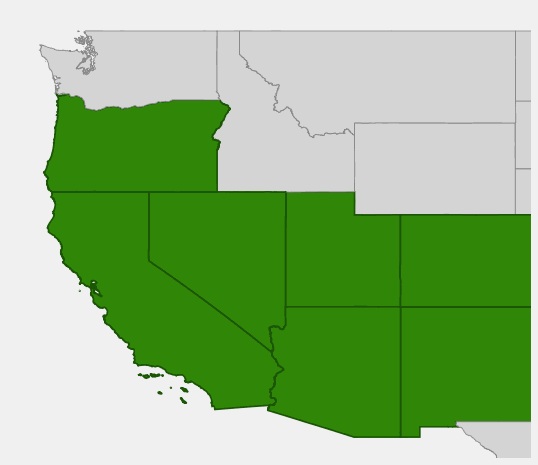
📋 Regional plant lists featuring Mormon Tea: Intermountain West
Growing & Care Guide
Mormon Tea is among the most drought-tolerant native shrubs available for western gardens — once established, it requires virtually no care and will outlast most other plants in extreme heat and drought. Its unique appearance makes it a conversation piece in any native plant garden.
Light
Full sun is essential — Mormon Tea evolved in open desert environments and does not perform well in shade. Even partial shade causes the plant to become etiolated (leggy and pale). Choose the brightest, most exposed location in the landscape. The plant handles reflected heat from walls and pavement particularly well.
Soil & Water
Mormon Tea is extraordinarily drought tolerant — among the most drought-resistant native shrubs of the West. It requires fast-draining, gravelly or sandy soil and absolutely cannot tolerate wet or waterlogged conditions. On clay soils, plant on berms or raised areas, or amend deeply with gravel. Established plants need watering only occasionally during the driest months of summer — perhaps once a month in very hot, dry areas. During establishment (first growing season), water once a week to 10 days. After the first year, cut back watering dramatically. Overwatering will kill this plant quickly.
Planting Tips
Plant in spring after the last frost, or in fall before winter. Container-grown plants establish readily. Set the plant at the same depth as in the container — do not plant too deep. Mulch with gravel rather than organic material. Since Mormon Tea is dioecious (male and female plants are separate), you need plants of both sexes if you want to produce seed. Most nursery plants are sold without sexes specified — buy several to ensure you get both.
Pruning & Maintenance
Mormon Tea requires essentially no maintenance once established. The dense network of stems does not need pruning for health — in fact, heavy pruning is not recommended, as the plant regenerates slowly from cuts. If desired, remove dead stems at the base in early spring. The plant is immune to most pest and disease problems that affect conventional shrubs. It is essentially maintenance-free.
Landscape Uses
- Desert xeriscape — an architectural element requiring zero water once established
- Textural contrast in mixed native shrub plantings
- Erosion control on dry, rocky slopes
- Wildlife habitat — cover for reptiles; seeds for birds
- Rock garden centerpiece or accent plant
- Living fence or screen — the dense, spiny stems deter passage
- Container gardening — an excellent architectural plant for large containers in desert climates
Wildlife & Ecological Value
Despite its unusual appearance, Mormon Tea provides important wildlife habitat and food resources in the desert ecosystems it dominates.
For Birds
The fleshy seed cones are consumed by various birds including quail, doves, and sparrows. The dense, interlocking stems provide excellent nesting cover — particularly for small songbirds seeking protected nest sites in open desert environments. Le Conte’s Thrasher and Crissal Thrasher regularly nest in Mormon Tea thickets in the Mojave Desert. The plant also supports insects that attract insectivorous birds.
For Mammals
Small mammals including kangaroo rats, ground squirrels, and rabbits shelter within and beneath Mormon Tea clumps, using the dense stems as cover from predators and heat. The seeds are eaten by small rodents. Pronghorn occasionally browse the stems but deer and most larger grazers avoid it. The dense growth creates microhabitats with significantly cooler temperatures and higher humidity than the surrounding open desert.
For Reptiles & Invertebrates
Mormon Tea thickets are important habitat for desert reptiles — lizards (horned lizards, side-blotched lizards) and snakes use the dense stems for shelter, thermoregulation, and hunting cover. Various desert beetles, grasshoppers, and other invertebrates shelter within the stems, supporting the broader desert food web.
Ecosystem Role
In desert ecosystems where plant cover is sparse, Mormon Tea clumps function as island refugia — concentrating biological activity in an otherwise harsh landscape. The stem network traps windblown organic material and holds soil against erosion. As nitrogen-fixing bacteria are sometimes associated with Ephedra roots, the plant may marginally enrich surrounding soils. In pinyon-juniper communities, it is a key understory species providing structural complexity and habitat diversity.
Cultural & Historical Uses
Mormon Tea has one of the most colorful common names of any native plant in the American West — a name that reflects its genuine importance as a beverage plant during the 19th-century settlement of the Great Basin. When Mormon settlers arrived in Utah in the late 1840s, they encountered Indigenous peoples who had been brewing the jointed stems of Ephedra species into a beverage for centuries. The settlers quickly adopted the practice, and “Mormon tea” became a common household drink throughout the territory, particularly among those who abstained from coffee and caffeinated beverages on religious grounds.
For Indigenous peoples, Mormon Tea was a versatile medicinal and beverage plant. Numerous tribes — including the Navajo, Hopi, Paiute, Shoshone, and Ute — used preparations of the stems and roots for a wide range of purposes: as a general tonic, to treat sexually transmitted diseases, kidney and urinary disorders, headaches, and skin conditions. The Navajo used it to treat syphilis, and this use was noted by early ethnobotanists in the 19th century. Modern research has confirmed that Green Ephedra contains various alkaloids, tannins, and flavonoids with documented antimicrobial and anti-inflammatory properties.
Unlike Asian Ephedra species (E. sinica, E. equisetina), which contain substantial quantities of ephedrine and pseudoephedrine (stimulant compounds used in decongestants and, unfortunately, methamphetamine production), Ephedra viridis contains only trace or undetectable amounts of these alkaloids. The FDA warning about ephedra dietary supplements (2004) applies primarily to products made from Asian species and should not discourage the traditional North American use of E. viridis as an herbal tea. Mormon Tea remains a legal and safe herbal beverage with a pleasant, astringent, slightly pine-like flavor.
Frequently Asked Questions
Is Mormon Tea the same as Ma Huang?
No — they are related but different species. Ma Huang (Ephedra sinica) is an Asian species that contains high levels of ephedrine and was the subject of a 2004 FDA ban on ephedra dietary supplements due to serious cardiovascular risks. Mormon Tea (Ephedra viridis) is a North American species that contains only trace amounts of these alkaloids and is safe for use as a traditional herbal tea. Do not confuse the two.
How do you make Mormon Tea?
Collect several green stems, rinse well, and simmer in water for 10–15 minutes. Strain and drink. Some people prefer to dry the stems first. The flavor is astringent and slightly bitter — similar to a green tea or pine needle tea. It can be flavored with honey, lemon, or mint. It contains no significant caffeine or ephedrine when made from E. viridis.
Is Mormon Tea good for landscaping?
Excellent for desert and xeriscape gardens in its native range. It offers unique texture, year-round green color, and virtually zero maintenance requirements once established. The main challenge is ensuring perfect drainage — this plant absolutely cannot tolerate wet soils.
How do I know if my Mormon Tea plant is male or female?
Male plants bear small, yellow, oval pollen cones in spring. Female plants bear larger, more ovoid seed cones that mature from green to tan/brown. You can only tell with certainty when the plant is in cone-bearing stage (spring). Nursery plants are often sold without sex specified; buying 3–5 plants gives you a good chance of getting both sexes.
Can Mormon Tea grow in clay soil?
Only with significant amendment or on raised berms. Heavy clay that holds moisture will cause root rot and kill the plant within one to two wet seasons. In clay areas, build a raised bed or berm with native topsoil and gravel mix at least 18 inches deep before planting.