Bracted Spiderwort (Tradescantia bracteata)
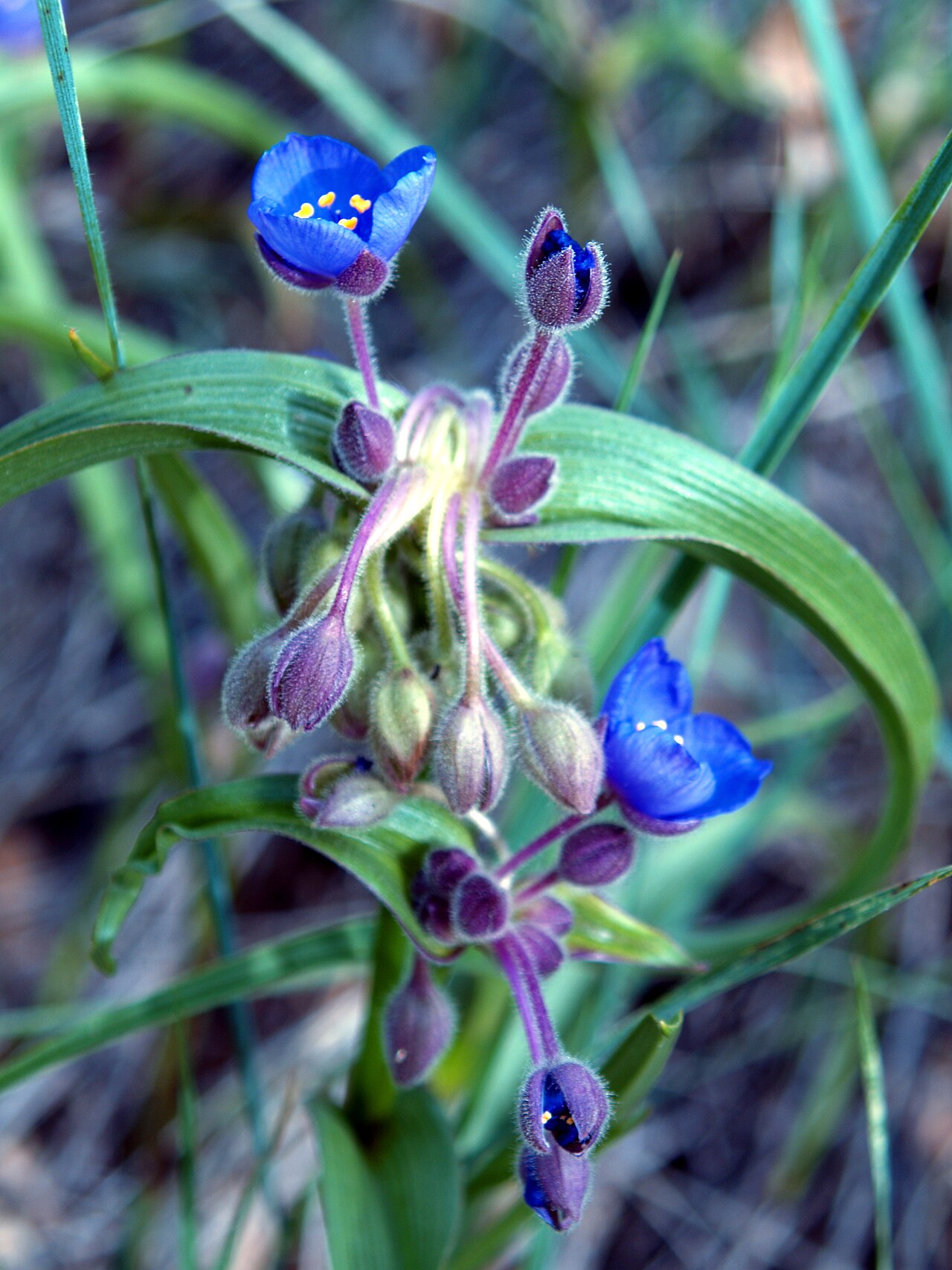
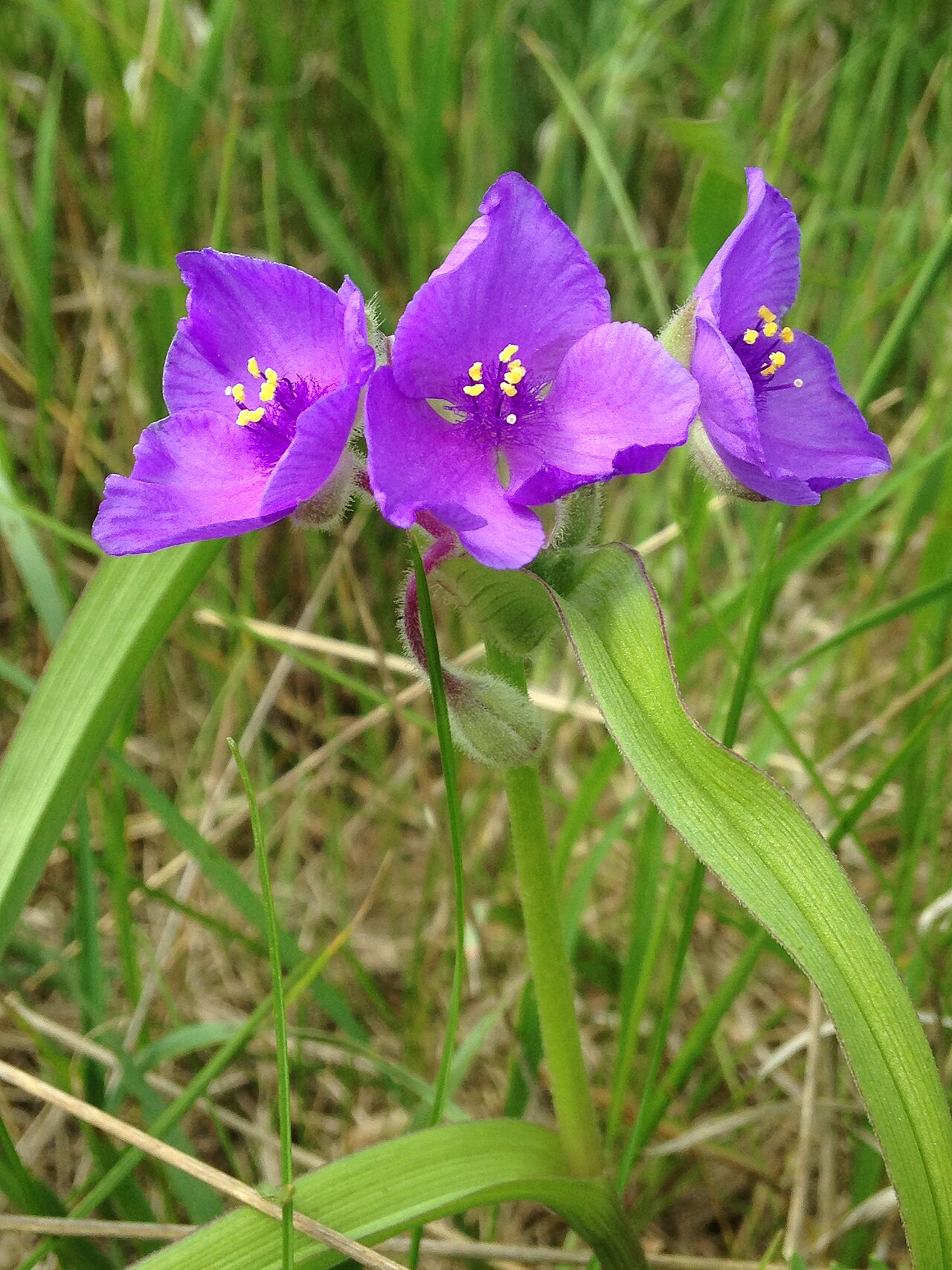
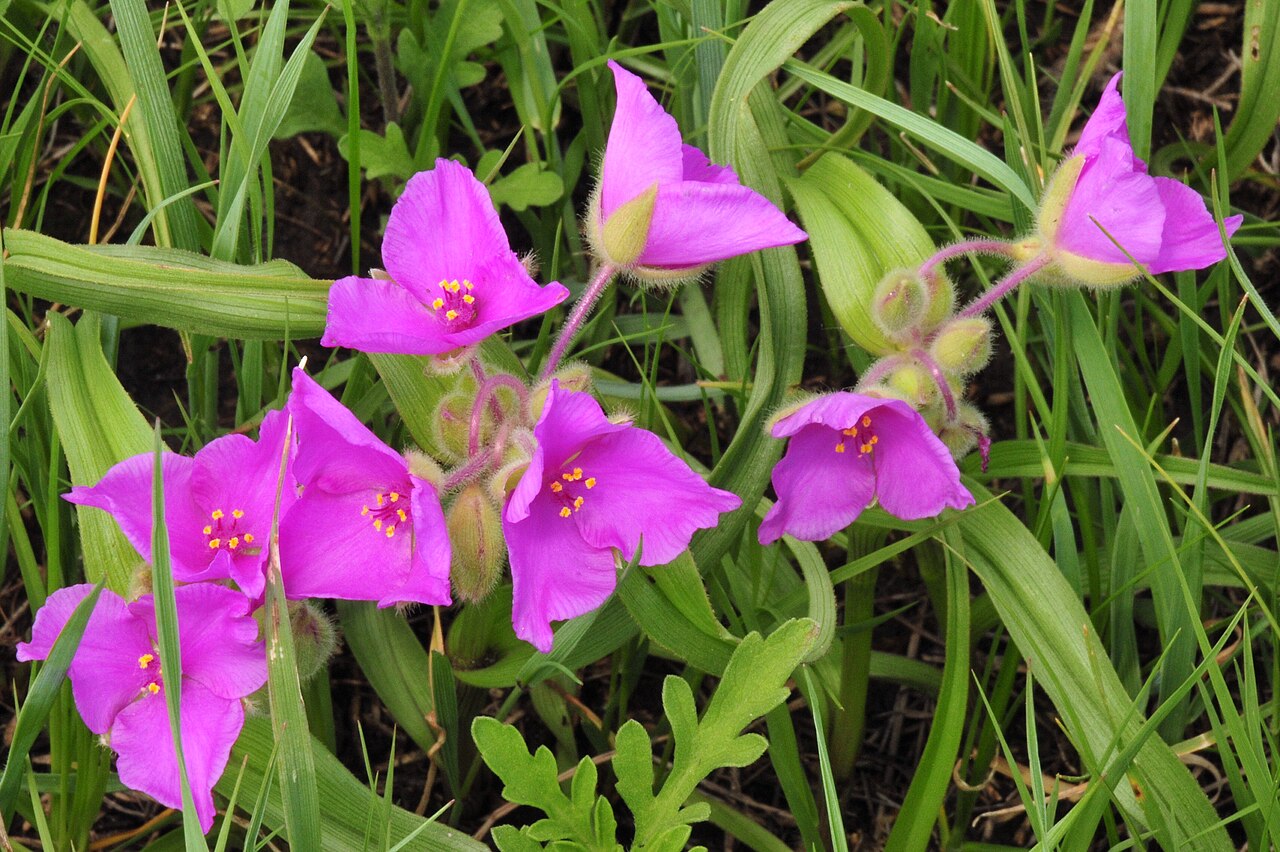
Tradescantia bracteata, commonly known as Bracted Spiderwort (also called longbract spiderwort or prairie spiderwort), is a clump-forming perennial wildflower of the Great Plains. Each cluster of three-petaled flowers — typically blue-violet, though pink and purple-flowered plants are common too — opens in the morning and closes again by midday, lasting only a single day, with fresh buds opening on following mornings through much of the summer.
Bracted spiderwort grows as an erect, mostly unbranched clump of narrow, grass-like leaves 10 to 18 inches tall. At the top of each stem, a cluster of flower buds is cradled by long, leaf-like bracts (similar in shape to the stem leaves) that give the plant both its scientific epithet and its common name — “bracteata” simply means “bracted.” The flowers’ six golden-tipped stamens, covered in fine hairs, stand out brightly against the blue or purple petals and are the main draw for the bees that visit.
Because it tolerates both moist and fairly dry prairie soils and blooms for weeks at a time, bracted spiderwort is a reliable, low-maintenance addition to a native wildflower planting across much of the central United States — one of the easiest true prairie natives to establish from seed or division.
Identification
Bracted spiderwort is easiest to recognize by its combination of grass-like leaves, three-petaled flowers, and the prominent leafy bracts just below each flower cluster.
Stems & Leaves
Stems are stout, erect, and usually unbranched, reaching 10 to 18 inches tall, often with a slightly waxy (glaucous) bluish-green bloom. The leaves are long, narrow, and strap-like or grass-like, folded somewhat like a trough along the midrib, and clasp the stem at their base. This grassy foliage means the plant can be easy to overlook when not in flower, especially among real prairie grasses.
Flowers
Flowers are borne in clusters (cymes) at the top of each stem, subtended by two or more elongated, leaf-like bracts. Each individual flower has three broad, rounded petals, usually blue to violet-purple (occasionally pink or white), surrounding six stamens with conspicuous hairy filaments and bright yellow anthers. Flowers open in early morning and wilt by early afternoon, especially on hot days, but the plant keeps producing new buds over a long early-summer bloom period.
Fruit & Seeds
After flowering, each bloom is replaced by a small, three-chambered seed capsule that dries and splits open at maturity to release a handful of small, angular seeds.
Quick Facts
| Scientific Name | Tradescantia bracteata |
| Family | Commelinaceae (Spiderwort) |
| Plant Type | Herbaceous perennial wildflower |
| Mature Height | 10–18 in |
| Mature Spread | 12–18 in clumps, slowly expanding |
| Growth Rate | Moderate |
| Sun Exposure | Full Sun to Part Shade |
| Water Needs | Moist to dry once established |
| Soil Type | Adaptable; moist to dry prairie loam or clay-loam |
| Soil pH | Neutral to slightly alkaline |
| Bloom Time | June–July |
| Flower Color | Blue-violet, purple, or occasionally pink |
| Fall Color | None notable; foliage dies back |
| Fruit | Small three-chambered dry seed capsule |
| Deer Resistant | Somewhat (occasionally browsed, not preferred) |
| USDA Hardiness Zones | 3–8 |
Native Range
Bracted spiderwort is a Great Plains native, ranging from Montana and Wyoming east across the Dakotas and Minnesota, south through Nebraska, Iowa, Kansas, Missouri, Illinois, Oklahoma, and Arkansas. Its range is centered on the mixed-grass and tallgrass prairie belt running roughly from Wisconsin southwest to Montana and south to Arkansas and Oklahoma, with scattered native populations elsewhere at the margins of that range.
Across this range, bracted spiderwort grows in open, sunny prairie: mixed-grass and tallgrass prairie remnants, prairie draws, open woodland edges, and roadside or pasture prairie remnants, tolerating both moister low spots and fairly dry upland prairie soils. It is often found growing alongside other classic prairie wildflowers and grasses, including little bluestem, purple coneflower, and prairie clover.
Because it spans such a wide part of the central United States, bracted spiderwort appears on several PlantNative regional lists; check the 📋 line below for the lists covering your specific state.
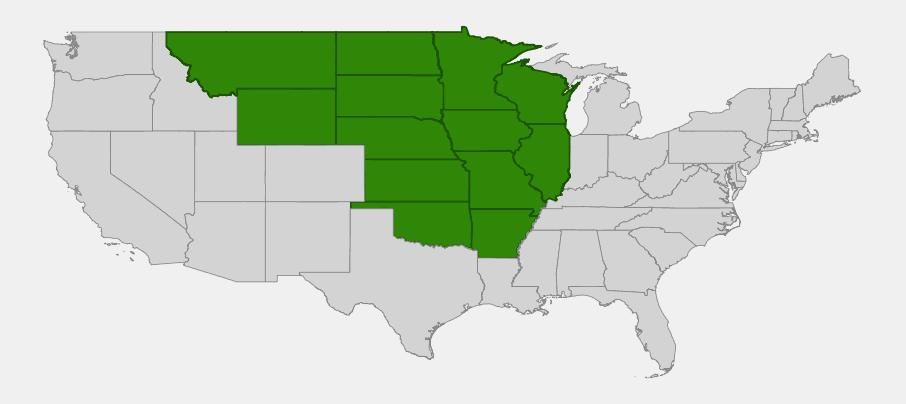
📋 Regional plant lists featuring Bracted Spiderwort: Montana & Wyoming · North Dakota, South Dakota & Western Minnesota · Nebraska, Kansas & Eastern Colorado · Arkansas, Louisiana, Eastern Oklahoma & Eastern Texas · Illinois, Iowa & Missouri · Michigan, Wisconsin & Eastern Minnesota
Growing & Care Guide
Bracted spiderwort is a forgiving, low-fuss prairie perennial well suited to a sunny wildflower bed, prairie restoration, or border planting.
Light
Give it full sun to light part shade. Plants in full sun tend to be more compact and floriferous, while those in part shade grow a bit taller and leggier while reaching for light.
Soil & Water
Bracted spiderwort adapts to a wide range of soils, from moist prairie loam to drier clay-loam, and tolerates occasional dry spells well once its root system is established. It does not need rich garden soil and, like many true prairie natives, often performs better in average to lean soil than in heavily fertilized beds, where lush growth can flop.
Planting Tips
Fall-sown seed germinates best after a period of cool, moist stratification over winter; alternatively, divide an established clump into several pieces in early spring or early fall and replant immediately. Space plants about 12 to 18 inches apart to allow clumps to fill in without overcrowding. It is commercially available from prairie-species nurseries, so there’s no need to collect wild plants.
Propagation
Collect the small, dry, light-green seed capsules two to three weeks after flowering, just before they split open; a small bag tied around an unsplit capsule makes collection easy. Store seed in a sealed, refrigerated container and cold-moist stratify for about 120 days before spring sowing. Clump division in early spring or fall is a faster route to flowering-size plants.
Pruning & Maintenance
Established clumps need very little upkeep. Cutting plants back by about half after the main bloom flush can tidy up floppy foliage and may encourage a second light bloom later in summer. Divide congested clumps every three to four years to maintain vigor.
Landscape Uses
- Prairie restoration and wildflower meadows, where it mixes naturally with native grasses
- Pollinator gardens, for the bees that specifically seek out its pollen
- Border and cottage-style plantings that can handle a plant whose flowers close by midday
- Rock gardens and dry slopes, thanks to its drought tolerance once established
- Naturalized plantings alongside other true prairie wildflowers
Wildlife & Ecological Value
Bracted spiderwort’s short-lived but abundant flowers make it a dependable early-summer resource in prairie plant communities.
For Pollinators
The flowers are especially attractive to native bees, including long-horned bees and bumblebees, which gather the pollen directly from the prominent hairy stamens; because the flowers offer pollen but little nectar, the plant mostly draws pollen-collecting bees rather than butterflies.
For Birds
Bracted spiderwort is not a major bird food source, though the dense clump of grass-like foliage offers some low cover for ground-foraging birds in a prairie setting.
For Mammals
Deer and rabbits will browse the foliage occasionally, though it is not a preferred food source, and established clumps generally recover well from light grazing.
Ecosystem Role
As a long-lived prairie perennial, bracted spiderwort’s fibrous root system helps bind prairie soil, and its early-summer bloom fills a niche between the earliest spring ephemerals and the main flush of mid- and late-summer prairie wildflowers, helping support pollinators through that gap.
Cultural & Historical Uses
The genus Tradescantia honors John Tradescant the Younger (and his father of the same name), gardeners to Charles I of England in the 17th century who introduced many American plants to European gardens. Bracted spiderwort itself has no significant documented traditional food or medicinal use among Indigenous peoples of the Great Plains, unlike some of its showier prairie neighbors, and its historical significance is mostly horticultural and botanical, as one of several native spiderworts that attracted the interest of early American and European plant collectors.
In the garden world, Tradescantia species are also well known for readily hybridizing with one another, and bracted spiderwort has contributed to the parentage of some ornamental spiderwort selections grown for cut-flower trial gardens, though straight species plants remain the standard choice for native plantings.
Frequently Asked Questions
Why do the flowers close every afternoon?
Bracted spiderwort flowers are short-lived by design, typically opening at dawn and wilting by early-to-mid afternoon, especially in hot or sunny weather. The plant compensates by producing a steady supply of new buds, so a healthy clump has fresh flowers open most mornings through its bloom period.
Is bracted spiderwort the same as common spiderwort?
No. “Spiderwort” is a common name used loosely for many species in the genus Tradescantia. Bracted spiderwort is a specific Great Plains native distinguished by its long leafy bracts beneath the flower cluster; other spiderwort species have different ranges, leaf shapes, and bract sizes.
Will bracted spiderwort spread aggressively in my garden?
No. It forms a slowly expanding clump rather than running aggressively by rhizomes or reseeding into a nuisance, making it a well-behaved choice for a border or wildflower bed.
Does bracted spiderwort need regular watering?
Not once established. It tolerates both moist low spots and drier upland prairie soil, and mature clumps are fairly drought tolerant, though occasional deep watering during extended dry spells helps keep the bloom going longer.
What pollinators does bracted spiderwort attract?
Mainly native bees that specialize in collecting pollen, including bumblebees and long-horned bees, drawn to the bright yellow anthers on the hairy stamens.

Looking for a nursery that carries Bracted Spiderwort?
Browse our native plant nursery directory: Minnesota, Missouri & Montana · Wisconsin & Wyoming · Nebraska, North Dakota & Oklahoma · Illinois, Iowa & Kansas · Arkansas