Western Yellow Pond-lily (Nuphar polysepala)
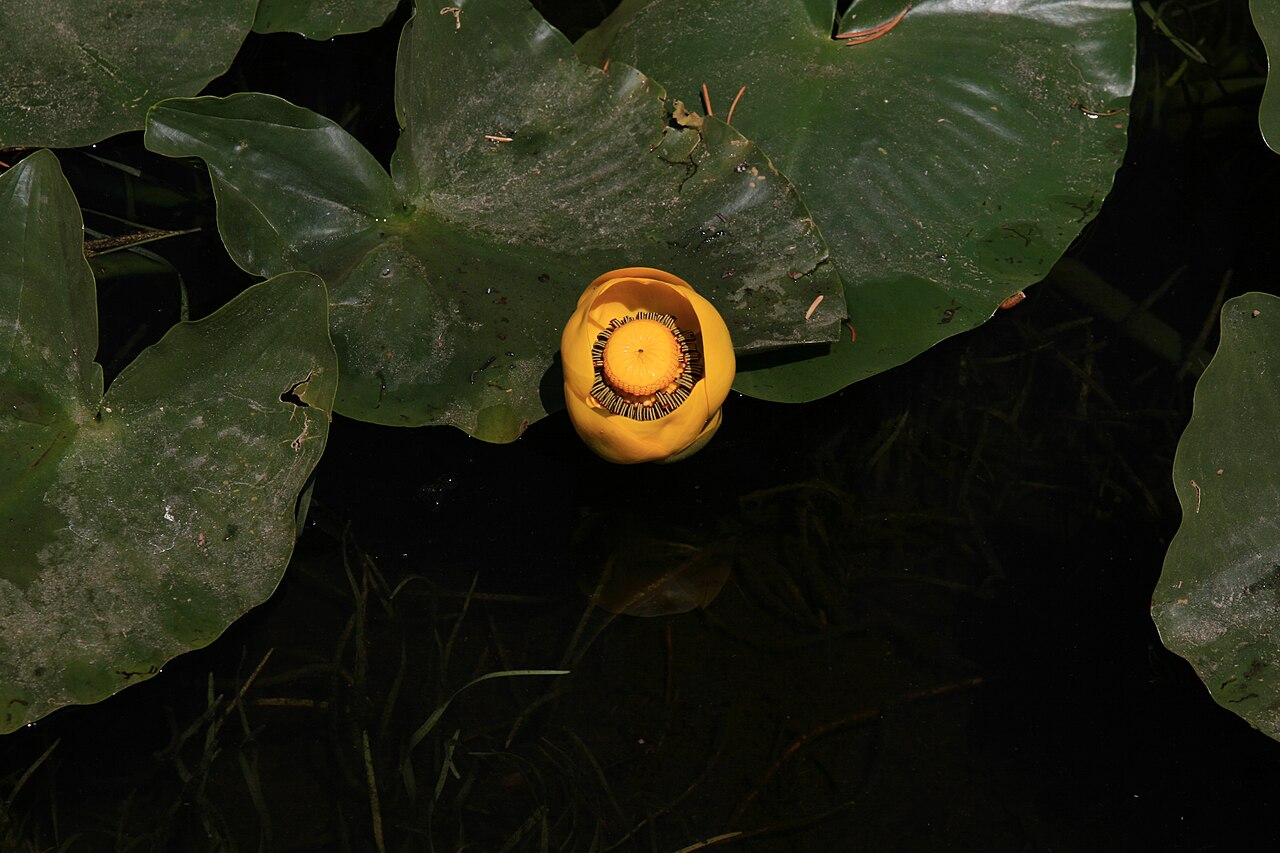
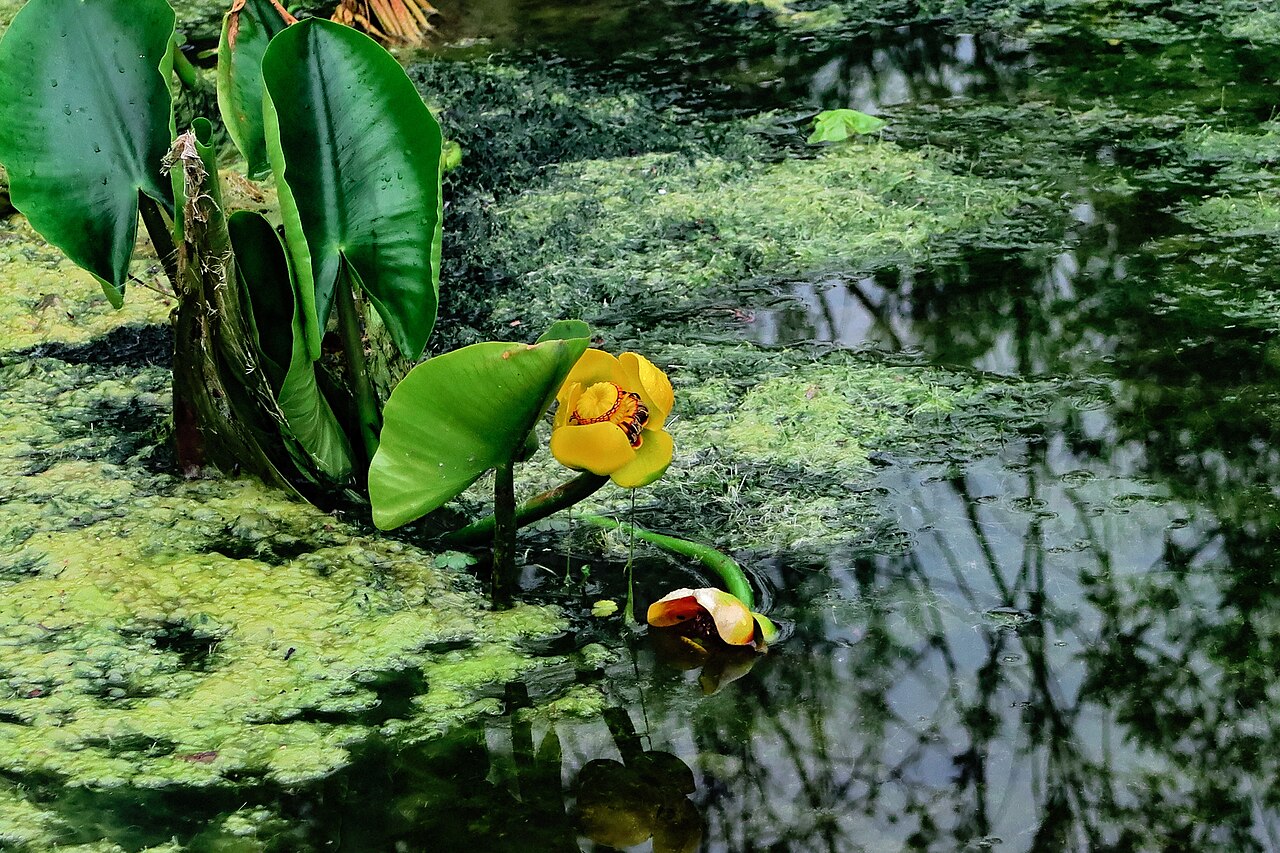
Nuphar polysepala, known as the Western Yellow Pond-lily, Great Yellow Pond-lily, or by its Klamath name Wokas, is the signature native aquatic plant of mountain lakes, ponds, and slow streams across the western United States. Its thick, waxy, cup-shaped yellow blooms and large floating leaves are a familiar sight from subalpine lakes in the Rockies to coastal wetlands in the Pacific Northwest and California.
This species is closely related to the eastern Spatterdock (Nuphar advena) and is sometimes lumped with it and other North American Nuphar populations under the single, broadly defined species Nuphar lutea; USDA PLANTS currently treats the western plant as Nuphar lutea subsp. polysepala, while Flora of North America and most western field guides recognize it as the full species Nuphar polysepala, distinguished by its notably numerous, large sepals and generally bigger flowers than its eastern relatives.
Western Yellow Pond-lily is an outstanding choice for naturalizing a western pond, lake margin, or large water garden, offering season-long structural interest, a long bloom period, and some of the best wildlife value of any aquatic native in its range — including a deep historical connection to Indigenous foodways in the Pacific Northwest and Great Basin.
Identification
Like other pond-lilies, this is a rhizomatous aquatic perennial that dies back to its thick, fleshy rootstock each winter and resprouts leaves and flowers from the same rhizome the following spring.
Leaves
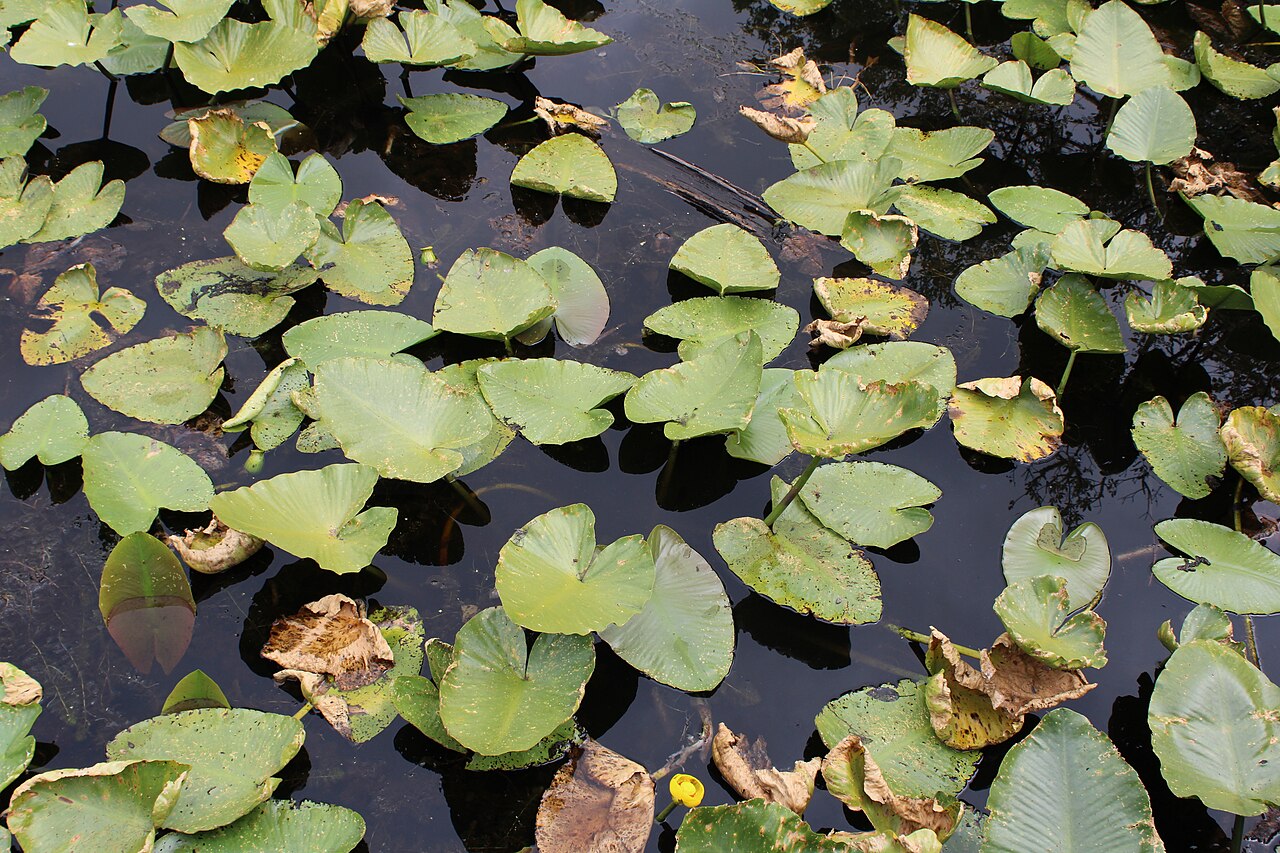
Leaves are large, 6 to 16 inches long, broadly oval to heart-shaped with a deep basal notch, and typically float flat on the water surface, though some leaves on vigorous plants in shallow water may stand slightly above it. The upper surface is smooth and deep green; leaves arise individually from the rhizome on long, round stalks.
Flowers
Flowers are solitary, held at or just above the water on a stout stalk, and notably large for the genus — 2 to 4 inches across. The showy yellow structure is made up of 7 to 12 large, rounded sepals (more numerous than in eastern Nuphar species, which is the source of the name polysepala, “many sepals”); true petals are small and inconspicuous, tucked among the numerous stamens inside the cup. The flower stays mostly cupped rather than opening flat, with blooms often taking on a reddish or purplish tinge on the outer sepals in cooler conditions. Bloom runs from late spring through late summer depending on elevation and snowmelt timing.
Fruit & Seeds
The flower matures into an ovoid, somewhat ribbed green seed capsule that ripens above the water, eventually splitting to release numerous seeds. Historically, these seeds were a significant food resource (described further below).
Quick Facts
| Scientific Name | Nuphar polysepala Engelm. (USDA: Nuphar lutea subsp. polysepala) |
| Family | Nymphaeaceae (Water Lily) |
| Plant Type | Aquatic Perennial (floating-leaved) |
| Mature Spread | Leaves float on the surface, spreading 4–8 ft per clump |
| Growth Rate | Moderate |
| Sun Exposure | Full Sun |
| Water Needs | Aquatic — standing or slow water 1–8 ft deep |
| Soil Type | Soft mud or silt pond/lake bottom |
| Soil pH | 6.0–7.5 |
| Bloom Time | May – August (varies with elevation) |
| Flower Color | Yellow, often reddish-tinged outer sepals |
| Fruit | Ovoid, ribbed green seed capsule |
| Deer Resistant | Yes — grows out of browsing reach in open water |
| USDA Hardiness Zones | 3–9 |
Native Range
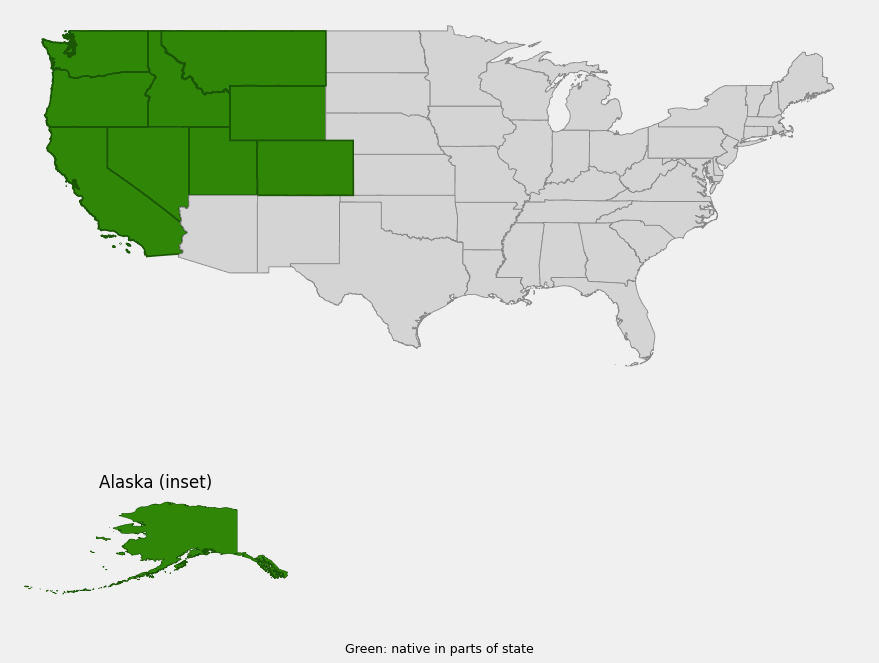
Western Yellow Pond-lily is native across the mountain West and Pacific Coast, from Alaska and British Columbia south through Washington, Oregon, and California, and east through Idaho, Montana, Wyoming, Nevada, Utah, and Colorado. It is a characteristic plant of subalpine and montane lakes and ponds throughout the Rocky Mountains, Cascades, and Sierra Nevada, as well as lower-elevation wetlands nearer the coast.
It grows rooted in soft organic mud in still or very slow-moving fresh water, from shallow pond margins to several feet deep, including glacially formed mountain lakes, beaver ponds, slow streams, and marshy lake edges. It tolerates the short growing seasons and cold winters typical of high-elevation sites, going dormant below ice-covered water and resuming growth as soon as conditions allow in spring.
This species does not occur natively east of the Rocky Mountain states; the ecologically similar eastern pond-lily is Spatterdock (Nuphar advena), native from the Great Plains to the Atlantic Coast.
📋 Regional plant lists featuring Western Yellow Pond-lily: Western Oregon & Western Washington · Idaho & Eastern Oregon/Washington · Utah & Western Colorado · Montana & Wyoming · California & Nevada · Alaska
Growing & Care Guide
Western Yellow Pond-lily is a straightforward, cold-hardy plant for a sunny western pond or lake, asking mainly for still water and a season to settle in before rewarding you with a long summer bloom season.
Light
Plant in full sun for the best flowering; it will tolerate light shade but blooms less freely as shade increases.
Water & Planting Depth
Set the rhizome into soft mud or a wide container of heavy clay-loam soil in water 1 to 3 feet deep for young plants, which established clumps can tolerate up to about 8 feet in larger lakes. Still or very slow-moving water is best; this species is well suited to beaver ponds, glacial lakes, and other naturally calm western waters, and handles the seasonal ice cover of high-elevation sites without special protection as long as the rhizome stays below the freeze line.
Planting Tips
Plant divisions in late spring to early summer once water has warmed enough for active growth, positioning the rhizome crown just below the mud surface with the growing tip oriented toward open water. Because it is adapted to a short mountain growing season in much of its range, established plants are vigorous once the water warms, even at high elevation.
Maintenance
Remove spent leaves and flower stalks periodically to keep a garden pond tidy, though in a naturalized lake or pond setting this is unnecessary. Divide congested rhizome clumps every several years if flowering declines noticeably. The plant requires no winter protection within its native cold-hardiness range.
Landscape Uses
- Mountain and foothill pond naturalizing — well adapted to cold, high-elevation water
- Wildlife ponds and lake restoration throughout the western states
- Beaver pond and wetland restoration projects
- Large western water gardens with calm, sunny open water
- Habitat plantings supporting waterfowl and native pollinators
Wildlife & Ecological Value
Western Yellow Pond-lily anchors the food web of many western mountain lakes and ponds.
For Waterfowl & Mammals
Ducks and geese feed on the seeds, while moose, elk, and deer have been documented browsing the leaves and stems in some western wetlands, making this one of the few native aquatics with meaningful big-game browse value as well as waterfowl value. Beavers and muskrats eat the rhizomes and use pond-lily beds as part of their wetland habitat.
For Fish & Amphibians
The floating leaf canopy shades the water and provides critical cover for native trout, amphibians, and aquatic invertebrates in mountain lakes, moderating water temperature in systems that can otherwise warm quickly in direct summer sun.
For Pollinators
Like other Nuphar species, the cupped flowers are pollinated primarily by beetles and flies that enter to feed on pollen, along with occasional visits from native bees drawn to the abundant pollen reward.
Ecosystem Role
Dense pond-lily beds stabilize soft lake-bottom sediment, buffer shoreline erosion, and create structurally complex habitat that supports far more aquatic life than open water alone — a particularly important function in glacially scoured mountain lakes with naturally limited plant diversity.
Cultural & Historical Uses
Western Yellow Pond-lily, known to the Klamath and Modoc peoples as Wokas, held major cultural and dietary importance in the Klamath Basin of southern Oregon and northern California, where extensive beds of the plant in Upper Klamath Lake and surrounding marshes were a cornerstone food resource for thousands of years. The seeds were traditionally gathered, dried, and processed into meal, and the harvest itself was tied to seasonal gathering traditions passed down through generations.
Other Indigenous peoples across the Pacific Northwest, Great Basin, and Rocky Mountain West also gathered the seeds and rhizomes of this widespread species where it occurred, adapting harvesting and preparation methods to local conditions. These traditions reflect a long, sustained relationship between western Indigenous communities and the lakes and marshes where Wokas grows, a relationship that continues in some communities today.
For European and American settlers and naturalists exploring the West, large pond-lily beds on mountain lakes became a recognizable landscape feature, and the plant remains a familiar and valued sight for hikers, anglers, and naturalists throughout the western mountain states.
Frequently Asked Questions
Is this the same plant as Spatterdock?
They are closely related members of the same species complex. USDA PLANTS currently treats both as subspecies of Nuphar lutea — Nuphar lutea subsp. polysepala in the West and subsp. advena in the East — while Flora of North America and most regional field guides recognize them as the separate species Nuphar polysepala and Nuphar advena. The two do not naturally overlap in range.
Can Western Yellow Pond-lily survive freezing winters?
Yes — it is native to high-elevation lakes that freeze over every winter, and the rhizome survives dormant beneath the ice as long as the water body does not freeze solid to the bottom.
Why are the sepals reddish on some flowers?
A reddish or purplish tinge on the outer sepals is a normal variation, often more pronounced in cooler water or at higher elevation, and does not indicate a problem with the plant.
Does it need deep water to grow?
No — young plants establish well in 1 to 3 feet of water, and while mature colonies in large lakes can extend into much deeper water, a garden pond does not need to be especially deep to grow this species successfully.
Is Wokas still harvested today?
Historical Wokas harvesting by the Klamath and other Indigenous peoples was extensive, though large-scale gathering has declined with changes to Klamath Basin wetlands over the past century; some traditional harvesting and cultural practices connected to the plant continue within affected communities.
For companion planting ideas around a western pond margin, see our guide to starting a rain garden with other moisture-loving natives.

Looking for a nursery that carries Western Yellow Pond-lily?
Browse our native plant nursery directory: Washington · Oregon · California · ID–KS · KY–MT · PA–VA