
Mountain Goldenbanner (Thermopsis montana)
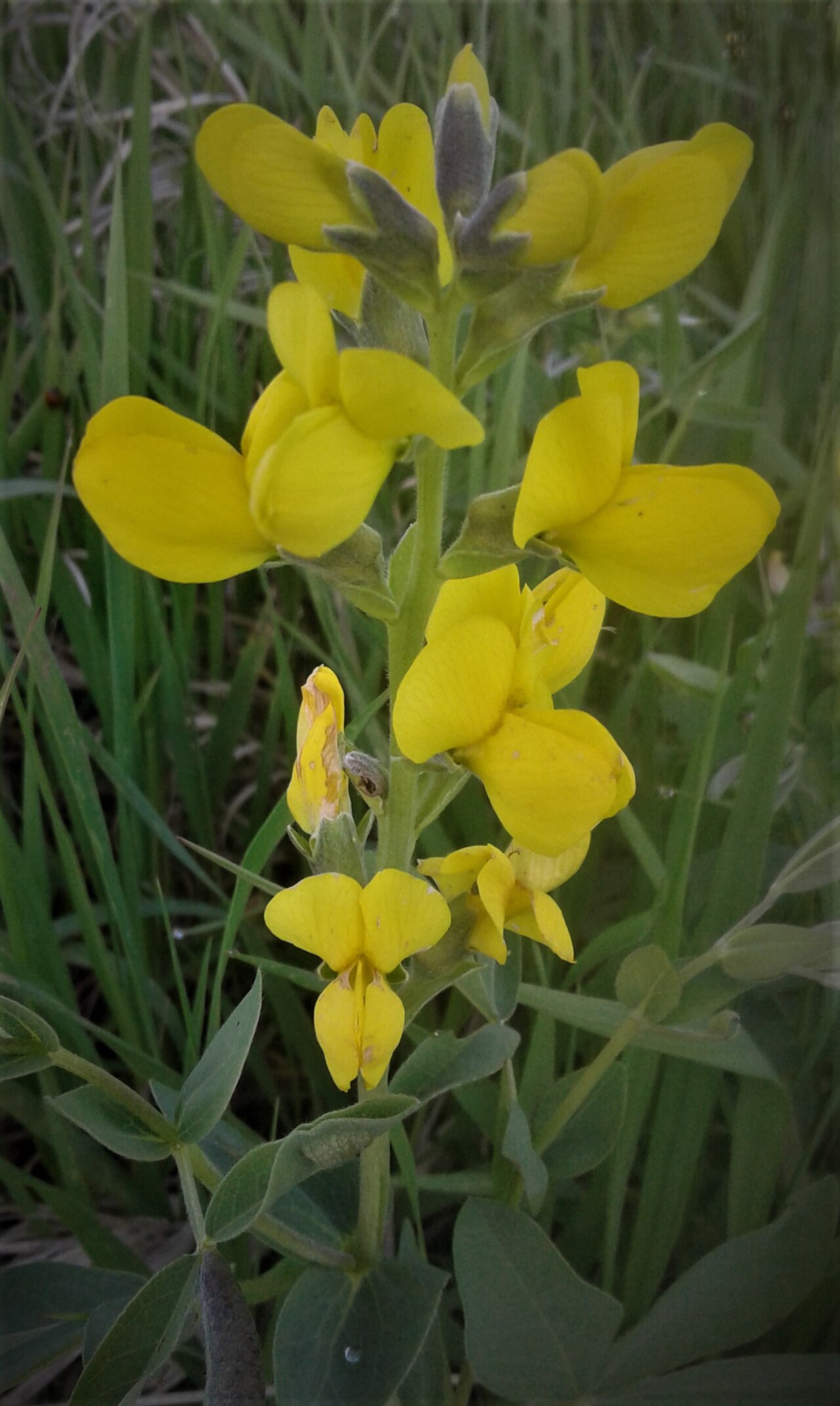
Thermopsis montana, the Mountain Goldenbanner (also called golden pea, false lupine and mountain thermopsis), is a tall, colony-forming wildflower of the mountain West. In late spring and early summer its upright stems carry spikes of bright yellow, pea-like flowers above three-parted leaves, lighting up moist meadows, aspen groves, stream banks and roadsides from Washington and Montana south to Arizona and New Mexico.
It is a member of the pea family and looks much like a yellow lupine, which is how it got the name Thermopsis, “lupine-like.” Unlike lupines, its leaves have only three leaflets. It spreads by creeping rhizomes into large patches and, like other legumes, hosts nitrogen-fixing bacteria in its roots. Bumble bees work the flowers heavily, and it is one of the showiest early-summer wildflowers in the Rocky Mountains and Great Basin ranges.
This guide covers how to identify it and tell it from its relatives, where it grows, how to grow it (it can spread aggressively in a garden) and its value to wildlife. Safety note: all parts of mountain goldenbanner, especially the seeds and pods, contain toxic alkaloids. Children have been poisoned after eating the bean-like seeds, and the plant has caused muscle damage in cattle. Never eat any part of it.
Identification
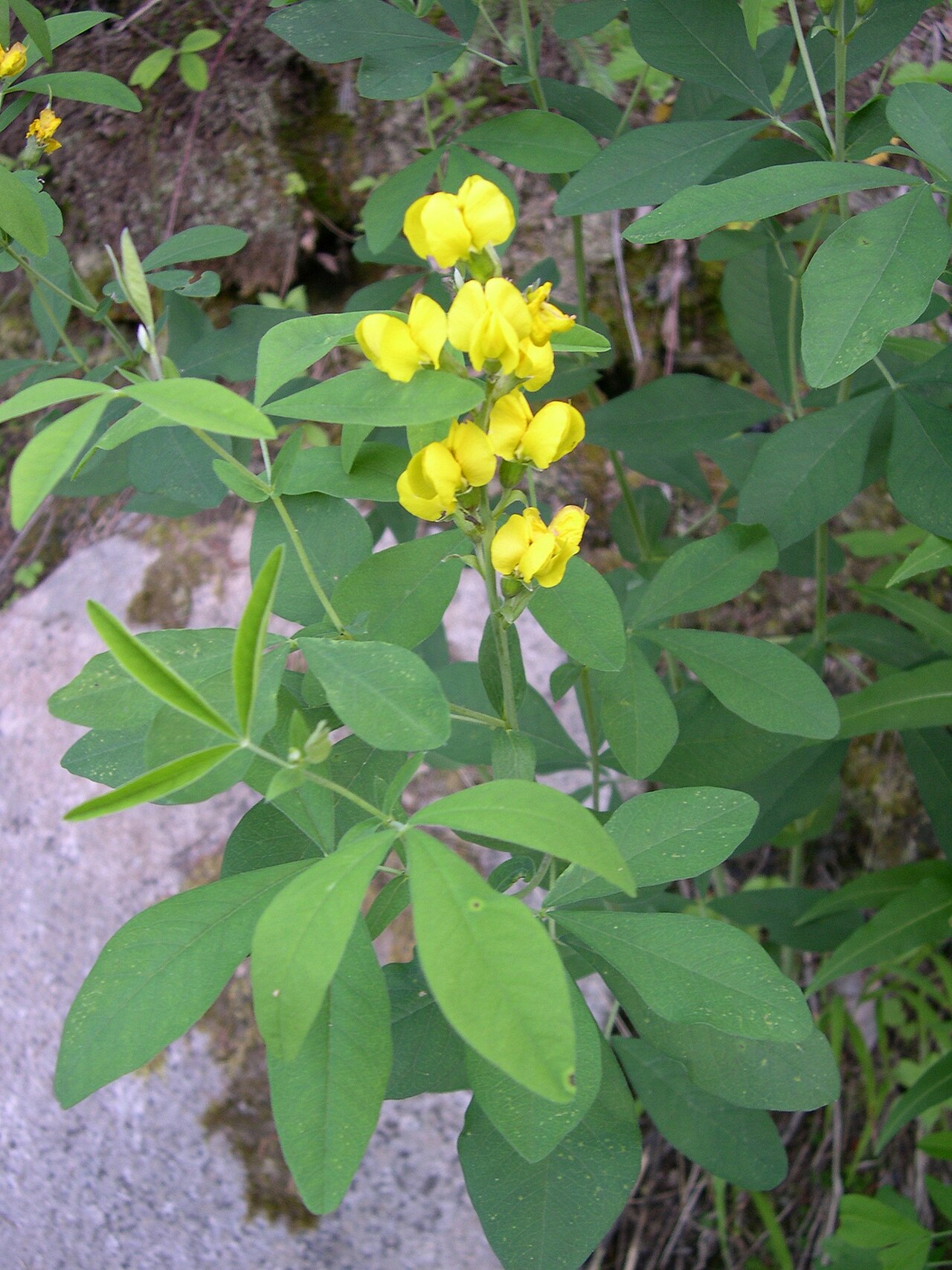
Mountain goldenbanner is an erect, clump- to colony-forming perennial 1 to 3 feet tall. The combination of yellow pea flowers, three-parted leaves with large stipules, and straight, erect, hairy pods identifies it.
Stems & Leaves
Stems are upright, slightly branched above and often hollow, rising from a spreading system of rhizomes that produce many stems in a patch. The leaves are alternate and palmately compound, with three narrow, lance-shaped to elliptic leaflets about 1½ to 3½ inches long, smooth to finely hairy. At the base of each leaf stalk is a pair of large, leaf-like stipules, so each node can look like it has five leaflets.
Flowers
From May into July (later at high elevations), the stems end in loose to dense racemes 4 to 12 inches long of bright yellow, pea-like flowers about ¾ to 1 inch long. Each flower has the typical legume form: a broad upper banner, two side wings and a keel. The flowers open from the bottom of the spike upward.
Fruit
The pods are straight, slender and densely hairy, about 1½ to 2½ inches long, and are held erect, more or less parallel to the stem. They ripen from green to brown in mid- to late summer and split to release several hard, kidney-shaped seeds.
Look-alikes
Prairie Thermopsis (T. rhombifolia) of the Great Plains and foothills is shorter, with broader leaflets and curved to coiled pods; some botanists have treated mountain goldenbanner as a variety of it, but USDA PLANTS keeps the two as separate species. Spreadfruit goldenbanner (T. divaricarpa) of Colorado and nearby states has pods that spread outward rather than standing erect. Yellow-flowered lupines such as some forms of Silvery Lupine have palmate leaves with five or more leaflets, not three. Farther west, California Goldenbanner replaces it in California.
Quick Facts
| Scientific Name | Thermopsis montana Nutt. |
| Family | Fabaceae (pea or legume family) |
| Plant Type | Rhizomatous herbaceous perennial |
| Mature Height | 1–3 ft |
| Mature Spread | 2–4 ft per clump; spreads into larger colonies |
| Growth Rate | Moderate to fast once established |
| Sun Exposure | Full sun to partial shade |
| Water Needs | Moderate; tolerates moist soils and short dry spells |
| Soil Type | Loam, sandy or gravelly soils; tolerates clay |
| Soil pH | About 6.0–8.0 |
| Bloom Time | May–July (into August at high elevations) |
| Flower Color | Bright yellow |
| Fall Color | Foliage yellows and dies back after frost |
| Fruit | Erect, straight, hairy pods 1½–2½ in long |
| Deer Resistant | Yes, generally avoided (toxic alkaloids) |
| USDA Hardiness Zones | 3–7 |
Native Range
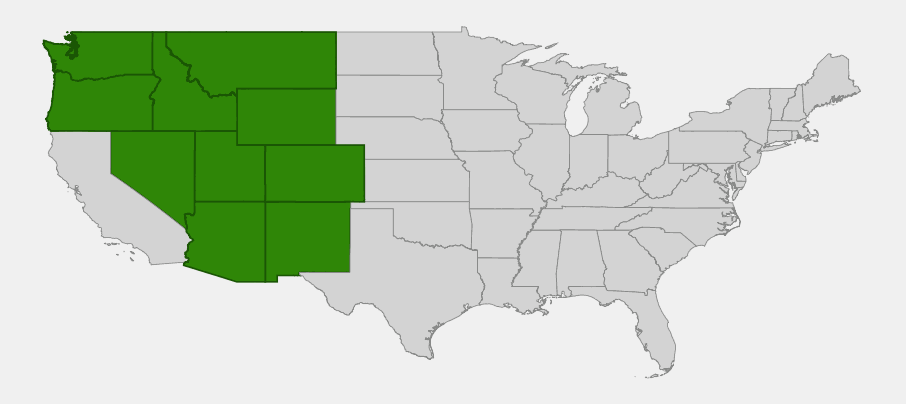
Mountain goldenbanner is native to the interior West. USDA PLANTS lists it in Washington, Oregon, Idaho, Montana, Wyoming, Colorado, Utah, Nevada, Arizona and New Mexico. It is most common in the Rocky Mountains and the ranges of the Great Basin. In Oregon and Washington it grows mainly east of the Cascades, and in Arizona and New Mexico it is found in the higher mountains.
It grows in open to lightly shaded places with moist soil for at least part of the season: wet and dry mountain meadows, stream banks and the edges of willow thickets, aspen groves, openings in ponderosa pine and mixed conifer forest, and moist swales in sagebrush country. It often increases along roadsides and in disturbed or grazed ground, because livestock usually leave it alone while eating the plants around it.
It grows from foothill valleys to the subalpine zone, from roughly 4,000 to over 10,000 feet depending on latitude. Because it spreads by rhizomes, a single plant can eventually form a patch many feet across, and in good years whole meadows turn yellow with it in June.
📋 Regional plant lists featuring Mountain Goldenbanner: Idaho, Eastern Oregon & Eastern Washington · Montana & Wyoming · Utah & Western Colorado · Arizona & New Mexico · California & Nevada · Western Oregon & Western Washington
Growing & Care Guide
Mountain goldenbanner is easy to grow in a sunny spot in cold-winter climates, and it is widely grown in gardens in Europe as well as in the western United States. Its main drawback is that it spreads by rhizomes and can take over a small bed, so give it room or contain it. Buy plants or seed from native nurseries, and keep it away from areas where small children play, since the seeds are poisonous.
Light
Full sun gives the most flowers and the sturdiest stems. It tolerates partial shade, such as the dappled light of an aspen edge, but flowers less and may flop.
Soil & Water
It adapts to most soils, from gravelly loam to clay, as long as they are not waterlogged for long. It does best with even moisture in spring and early summer and can take dry periods once established. Like other legumes, it fixes nitrogen, so it needs no fertilizer.
Planting Tips
Plant in spring or fall, spacing plants 2 to 3 feet apart. Because it spreads underground, choose a place where it can naturalize, such as a meadow, a large border or a slope, or install a deep root barrier. It is hard to move once established because of its deep, spreading roots.
Pruning & Maintenance
Cut flower stalks after bloom if you want to prevent seeding and keep the plants tidier, or leave them for the pods. Cut stems to the ground after frost or in early spring. Pull or dig unwanted shoots around the edges of the patch every year to keep it in bounds. Wear gloves and wash your hands after handling the seeds.
Propagation
Grow it from seed or by dividing the rhizomes in early spring. The seeds have hard coats: scarify them by nicking or rubbing with sandpaper, or pour hot water over them and soak overnight, then sow in spring. Sowing outdoors in fall also works. Divisions establish quickly.
Landscape Uses
- Mountain and meadow gardens: bright early-summer color in sunny, moist sites
- Naturalizing and slopes: rhizomes form patches that help hold soil
- Pollinator gardens: an important early-summer plant for bumble bees
- Restoration: native legume for meadows, stream terraces and disturbed ground
Wildlife & Ecological Value
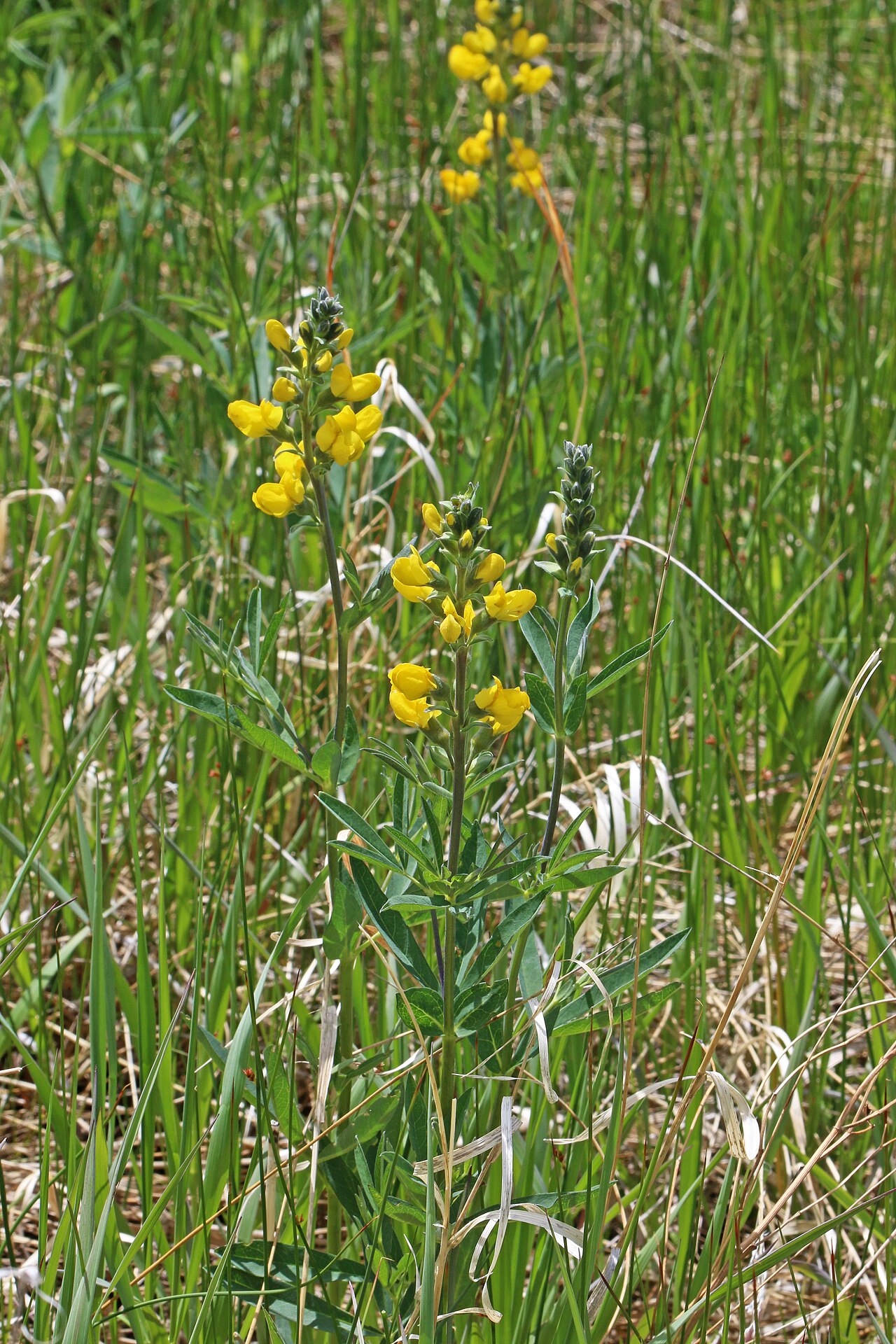
Mountain goldenbanner is one of the early-summer nectar and pollen sources of the mountain West, and as a legume it enriches the soil around it.
For Pollinators
Bumble bees are the main visitors and pollinators. They are strong enough to push open the keel of the flower and reach the nectar and pollen inside. Large solitary bees also visit. Because it blooms in large patches in late spring and early summer, it is valuable to bumble bee colonies as they build up.
For Birds
The seeds are not a significant food for birds. Patches of mountain goldenbanner in meadows and aspen edges add cover for ground-nesting birds and the insects they feed on.
For Mammals
Deer, elk and livestock usually avoid it because of its bitter, toxic alkaloids. Cattle that eat large amounts, usually when other forage is scarce, can develop muscle damage. Rodents may eat some seeds.
Ecosystem Role
Like other legumes, it hosts nitrogen-fixing bacteria in root nodules, adding nitrogen to mountain soils. Because grazing animals avoid it, it often increases on overgrazed rangeland and is sometimes used as an indicator of heavy grazing. Its rhizomes help stabilize stream banks and slopes.
Cultural & Historical Uses
Thomas Nuttall described Thermopsis montana in 1840 from plants collected in the Rocky Mountain region. Thermopsis comes from the Greek thermos, lupine, and opsis, appearance, for its lupine-like flowers; montana means “of the mountains.” The common name goldenbanner refers to the large yellow upper petal, called the banner, of each flower.
Its toxicity is its best-known human connection. The pods look like small bean pods, and poison control and veterinary literature report children becoming ill after eating the seeds, with symptoms such as nausea, vomiting and abdominal pain. In cattle, eating the plant has been linked to muscle damage. Ranchers in the West know it as a plant that spreads where range has been heavily grazed.
Despite this, it is a well-loved wildflower. It is one of the signature yellow flowers of June in mountain parks and valleys, and it has been grown for generations in gardens in Europe, where it is sold as false lupin or golden pea and is valued as a hardy, long-lived perennial.
Frequently Asked Questions
Is mountain goldenbanner poisonous?
Yes. All parts, and especially the seeds and pods, contain toxic quinolizidine alkaloids. Children have become ill after eating the seeds, and cattle can be harmed by eating the plant. Never eat any part of it, and keep it away from play areas.
Is mountain goldenbanner the same as prairie thermopsis?
No. USDA PLANTS treats them as separate species. Prairie thermopsis (Thermopsis rhombifolia) is shorter, grows mainly on the Great Plains and has curved pods, while mountain goldenbanner is taller and has straight, erect pods. Some botanists have treated mountain goldenbanner as a variety of prairie thermopsis.
Does mountain goldenbanner spread?
Yes. It spreads by rhizomes and can form large patches. In a garden it is best for meadows, slopes and large borders, or it should be contained with a root barrier.
When does mountain goldenbanner bloom?
Mainly May to July, with plants at high elevations blooming into August.
How is it different from a lupine?
Its flowers look similar, but its leaves have only three leaflets with a pair of large stipules, while lupine leaves are palmate with five or more leaflets.

Looking for a nursery that carries Mountain Goldenbanner?
Browse our native plant nursery directory: Arizona · Colorado · Idaho · Montana · Nevada & New Mexico · Oregon · Utah · Washington · Wyoming

