
California Goldenbanner (Thermopsis californica)
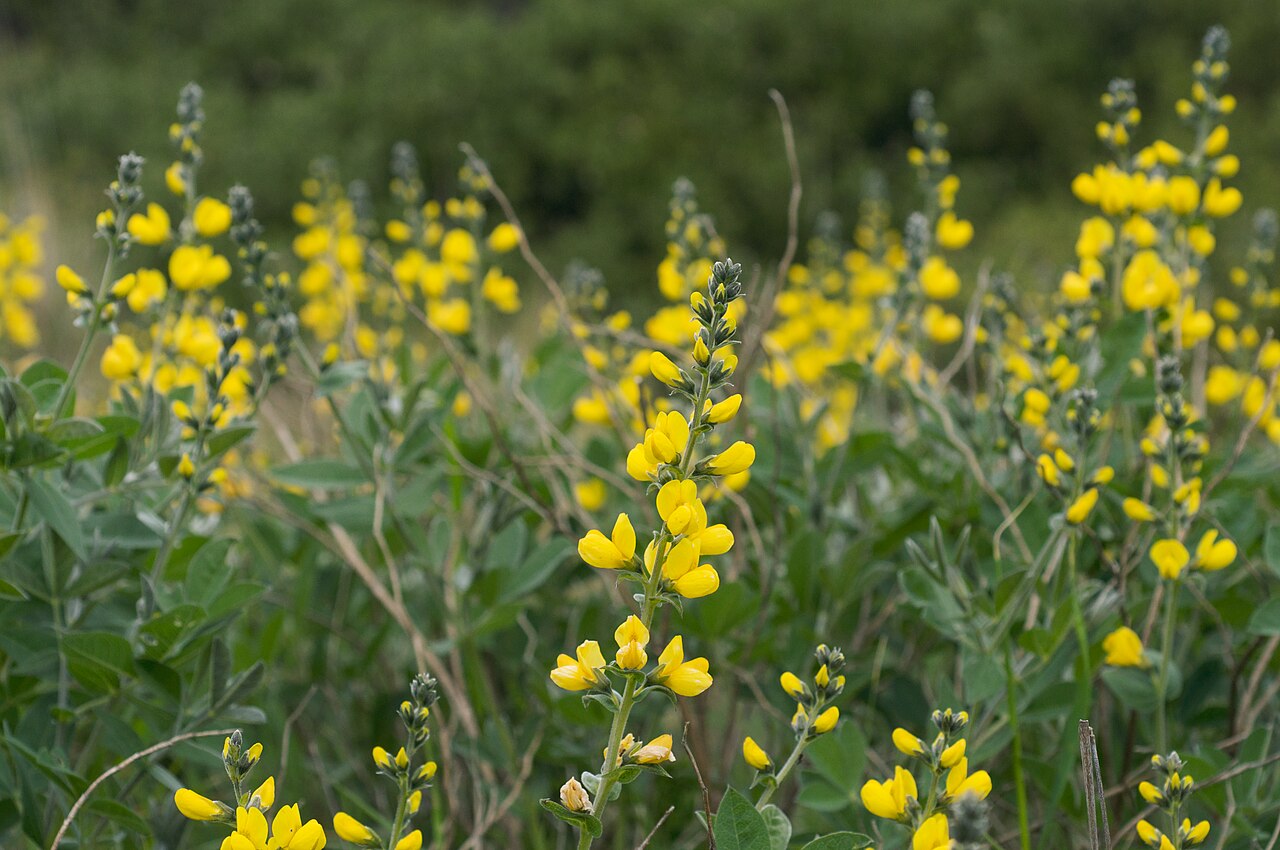
Thermopsis californica, known as California Goldenbanner, California false lupine or golden pea, is a spreading perennial of the pea family (Fabaceae) native to California. In spring it sends up spikes of bright yellow, pea-shaped flowers above soft, silvery-green leaves, making a showy display in grassy clearings, open woodlands and forest edges.
The flowers look much like those of a yellow lupine, which is why it is called false lupine, but the leaves are divided into only three leaflets, not into a fan of many. Plants grow 1 to 3 feet tall and spread by underground rhizomes into loose colonies. Several varieties are recognized, including the silvery-haired var. argentata of the northern and southern mountains and the rare velvety false lupine, var. semota, of southern California.
California goldenbanner is a good plant for native meadow and woodland-edge gardens, where it feeds bumble bees and other native bees in spring. Like other Thermopsis, its seeds and foliage contain toxic alkaloids, so it should never be eaten. This guide covers how to identify it, where it grows, how to grow it and its value to wildlife.
Identification
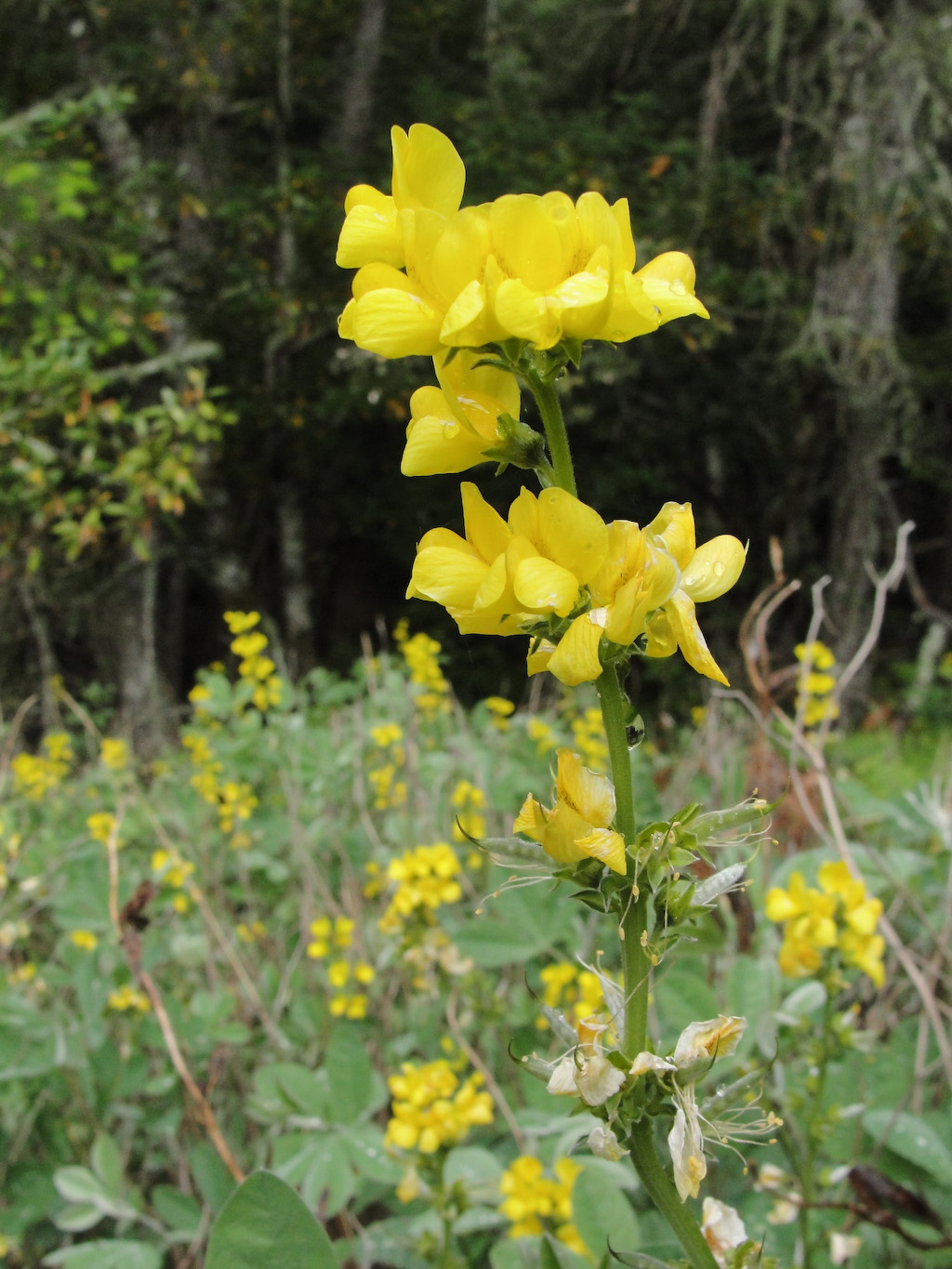
California goldenbanner is easy to recognize in flower: bright yellow pea flowers on upright spikes, combined with leaves of three broad, softly hairy leaflets.
Growth Habit
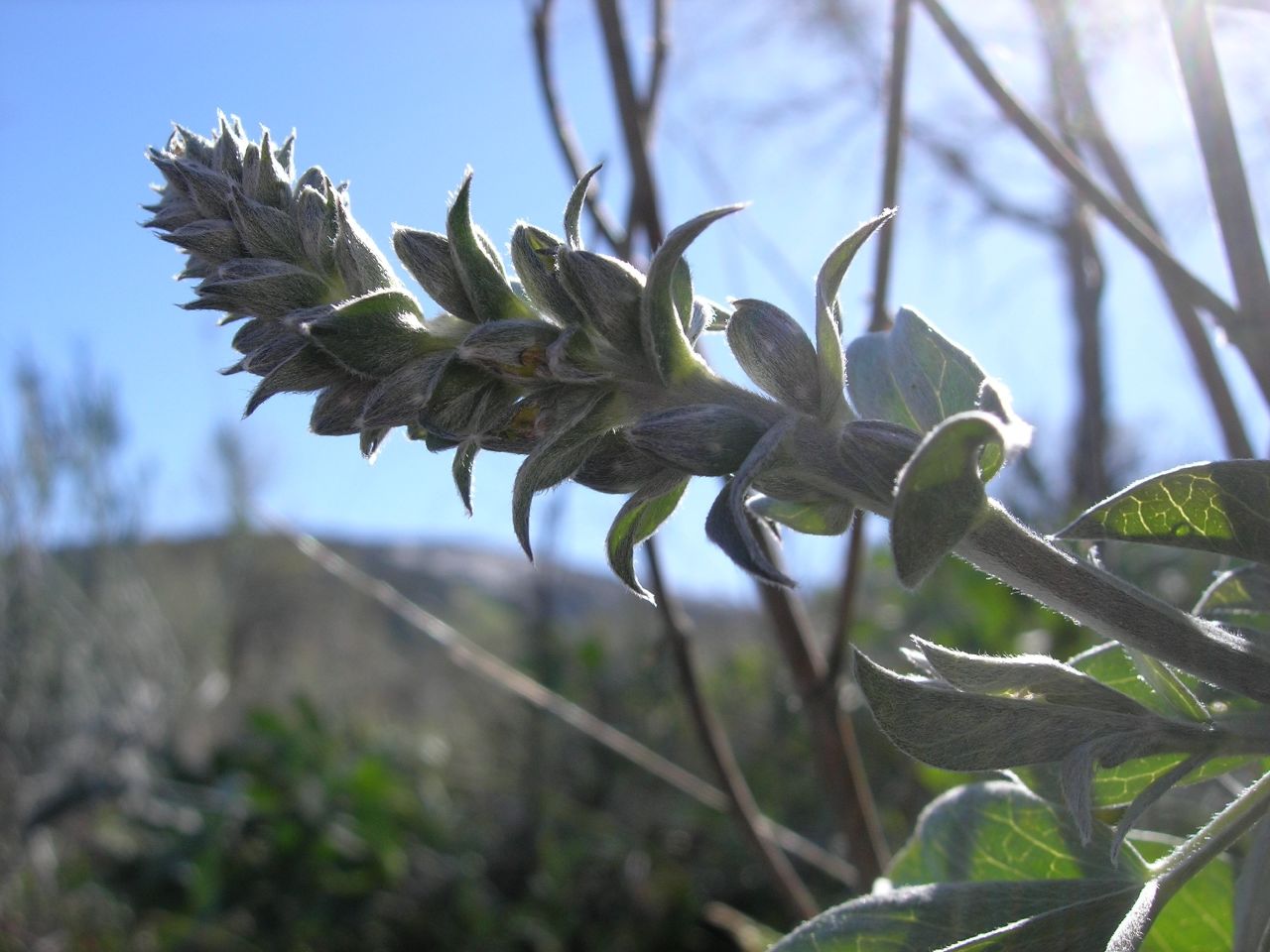
It is a herbaceous perennial that grows from spreading underground rhizomes, forming loose colonies of upright stems 1 to 3 feet tall. The stems and leaves are covered in soft hairs, ranging from fine and silky to dense and woolly, which give the plant a gray-green or silvery look. The top growth dies back in late summer or fall and resprouts in winter.
Leaves
The leaves are alternate and divided into three leaflets, each oval to broadly elliptic and about 1 to 3 inches long. At the base of each leaf stalk is a pair of large, leaf-like stipules, so the leaves can appear to have five leaflets. The amount and color of hair on the leaves varies among the varieties.
Flowers
The bright yellow flowers are about 3/4 inch long and pea-shaped, with an upright banner petal, two wing petals and a keel. They are arranged in dense, upright spikes 4 to 12 inches long at the tops of the stems. Bloom time is mainly March to June, earlier at low elevations near the coast and later in the mountains.
Fruit & Seeds
The fruits are flat, densely hairy pods up to a few inches long, held upright or spreading on the stalk. Each pod contains several hard, kidney-shaped seeds. The seeds are toxic.
Look-alikes
Yellow-flowered lupines, such as yellow bush lupine (Lupinus arboreus), have palmately compound leaves with five or more leaflets. Related goldenbanners elsewhere in North America include prairie thermopsis of the Great Plains and Carolina lupine of the southern Appalachians. Within California, mountain goldenbanner (Thermopsis montana) and other species differ in their pods and hairiness.
Quick Facts
| Scientific Name | Thermopsis californica S. Watson |
| Family | Fabaceae (pea family) |
| Plant Type | Rhizomatous herbaceous perennial |
| Mature Height | 1–3 ft |
| Mature Spread | 2–4 ft or more (spreads by rhizomes) |
| Growth Rate | Moderate |
| Sun Exposure | Full sun to partial shade |
| Water Needs | Low to moderate; dry in summer |
| Soil Type | Well-drained loam, clay loam or rocky soils |
| Soil pH | About 5.5–7.5 |
| Bloom Time | March–June |
| Flower Color | Bright yellow |
| Fall Color | None; dies back in late summer or fall |
| Fruit | Flat, densely hairy pods with hard, toxic seeds |
| Deer Resistant | Generally avoided; foliage contains toxic alkaloids |
| USDA Hardiness Zones | 7–10 |
Native Range
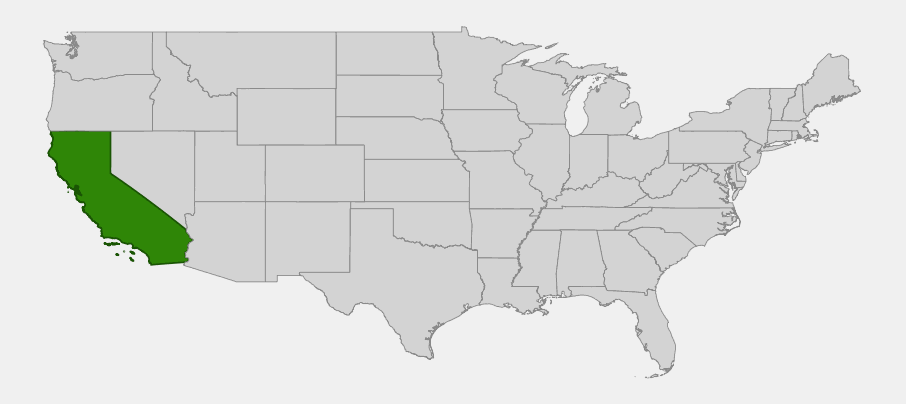
California goldenbanner is a California native. USDA PLANTS lists it only in California, where it grows in many parts of the state west of the deserts.
The typical form is most familiar in the North Coast Ranges and the San Francisco Bay Area, including Marin and Sonoma counties and Mount Tamalpais, and it extends south through the Santa Cruz Mountains and the Central Coast to the Santa Lucia Range. The silvery var. argentata grows in the Klamath and Cascade ranges and the Sierra Nevada, and in the Transverse Ranges and Tehachapi Mountains. The rare var. semota, the velvety false lupine, is found in a few mountain meadows and forest openings in southern California.
Typical habitats are grassy clearings, open oak and conifer woodlands, forest edges, chaparral openings and meadows, from near the coast into the mountains. It often grows where the soil holds some moisture in spring and dries out in summer.
📋 Regional plant lists featuring California Goldenbanner: California & Nevada
Growing & Care Guide
California goldenbanner is an easy, long-lived perennial for California native gardens. Native nurseries sometimes sell it, and it can be grown from seed. Give it room, because it spreads by rhizomes into a patch over time.
Light
Plant it in full sun near the coast and in partial or afternoon shade inland. It also does well at the edge of woodland or under high, open trees.
Soil & Water
It grows in most well-drained soils, from loam to clay loam and rocky ground. Water young plants through their first summer. Established plants need little or no summer water near the coast and occasional deep watering in hot inland gardens. Like many pea-family plants, it fixes nitrogen with the help of root bacteria and does not need fertilizer.
Planting Tips
Plant in fall or winter, at the start of the rainy season. Use it in a meadow, a woodland edge or a large bed where its spreading habit is welcome, and combine it with native bunchgrasses, blue-eyed grass and other spring wildflowers. Do not plant it where children or pets might eat the seeds.
Pruning & Maintenance
Cut the stems back to the ground once they turn brown in late summer or fall. Remove the seed pods if you want to limit self-sowing or keep seeds away from children and pets. Thin or edge the patch if it spreads farther than you want.
Propagation
Grow it from seed or by dividing rhizomes. The hard seeds germinate better after scarification: nick the seed coat or soak the seeds in hot water overnight before sowing in fall or winter. Divide established clumps in winter while they are dormant.
Landscape Uses
- Meadow gardens: bright yellow spring flowers among native grasses
- Woodland-edge plantings: tolerates partial shade under open trees
- Bee gardens: spring pollen and nectar for bumble bees and other native bees
- Erosion control: its spreading rhizomes help hold soil on gentle slopes
- Restoration plantings: a native legume for California grassland and woodland restoration
Wildlife & Ecological Value
California goldenbanner is a valuable spring flower for bees, and as a legume it also enriches the soil around it.
For Pollinators
The flowers are built for strong bees. Bumble bees and other large native bees push open the keel to reach the pollen and nectar inside, and smaller bees also visit. It flowers in spring, when many native bees are building their nests and need abundant pollen.
For Birds
Its toxic seeds are not an important food for birds, but its flowers attract insects that insect-eating birds feed on.
For Mammals
The foliage and seeds contain alkaloids, and deer and other browsers generally avoid it. Livestock poisoning has been reported from related Thermopsis species in other parts of the West.
Ecosystem Role
As a nitrogen-fixing legume, California goldenbanner adds nitrogen to the soil through bacteria in its root nodules. Its spreading rhizomes help hold soil, and its ability to resprout from underground stems helps it recover after fire or disturbance.
Cultural & Historical Uses
Safety note: All parts of California goldenbanner, especially the seeds, should be considered poisonous. Thermopsis species contain quinolizidine alkaloids, and children have been poisoned by eating the seeds of related goldenbanners. Do not eat any part of the plant, and keep seeds away from children and pets.
The genus name Thermopsis comes from the Greek thermos, lupine, and opsis, resemblance, meaning “lupine-like”. The species was described by Sereno Watson. Some plants in the San Francisco Bay Area were formerly called Thermopsis macrophylla, a name now usually applied to a different, rare plant, so older references may use either name.
With its golden spikes in spring, California goldenbanner is one of the more conspicuous wildflowers of the hills around San Francisco Bay, and in Marin and Sonoma counties it is a familiar sight along fire roads and trails in April and May.
Frequently Asked Questions
Is California goldenbanner poisonous?
Yes. Its seeds and foliage contain toxic alkaloids, as in other Thermopsis species. Do not eat any part of the plant, and keep seeds away from children and pets.
Is California goldenbanner a lupine?
No. It is a close relative in the pea family, and its yellow flowers look like a lupine’s, but its leaves have three leaflets instead of the fan of five or more leaflets found in lupines.
When does California goldenbanner bloom?
Mainly from March to June, depending on elevation.
Does California goldenbanner spread?
Yes. It spreads by underground rhizomes into loose colonies over time, which makes it useful for meadows and slopes but less suited to small, formal beds.
How do I grow California goldenbanner from seed?
Nick or soak the hard seeds in hot water overnight, then sow them in fall or winter. Established clumps can also be divided while dormant.

Looking for a nursery that carries California Goldenbanner?
Browse our native plant nursery directory: California

