Carolina Lupine (Thermopsis villosa)
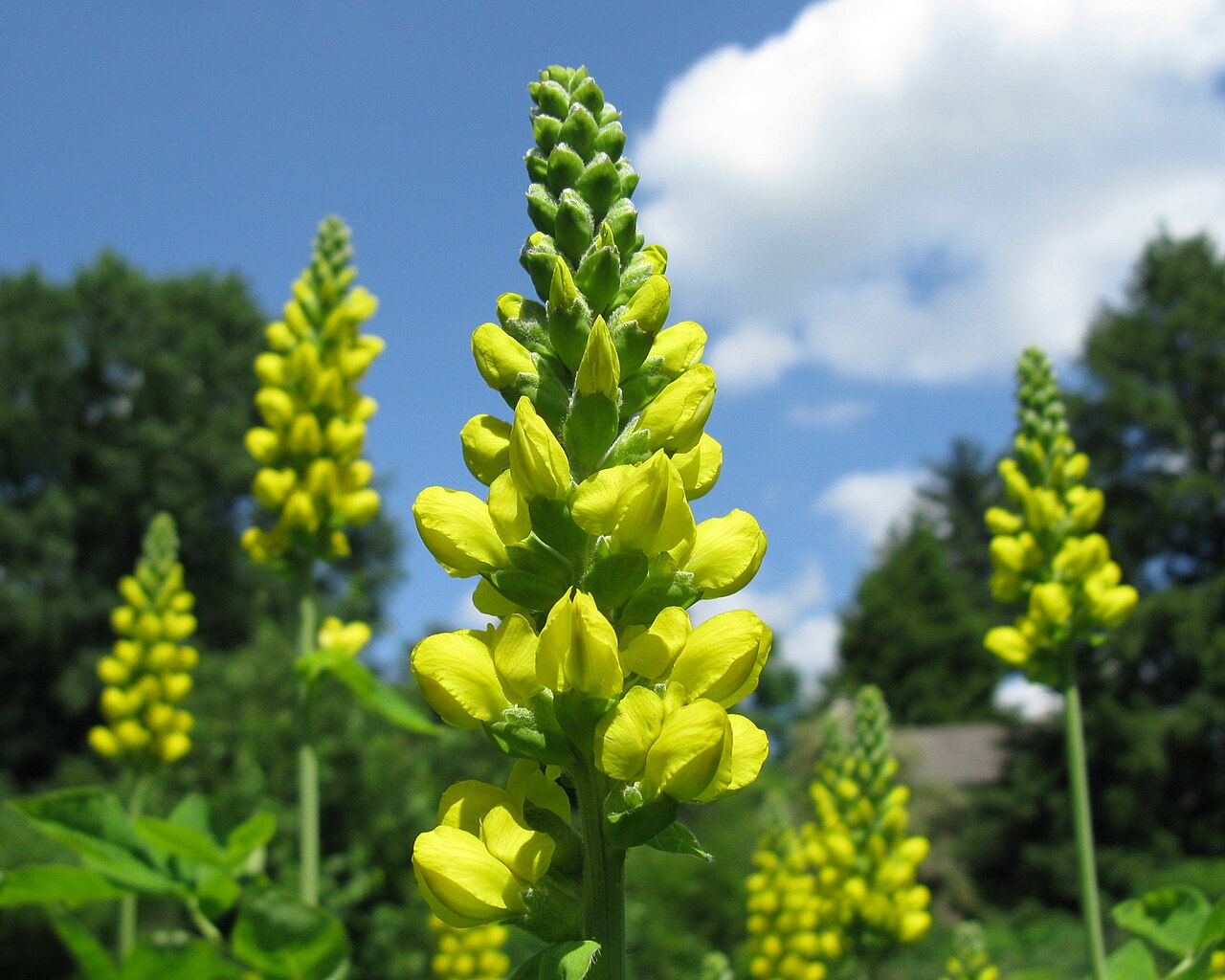
Carolina lupine (Thermopsis villosa) brings upright yellow flower spikes to the early-season perennial garden. Also called Carolina bushpea, it is a herbaceous member of the pea family, not a woody shrub and not a true Lupinus. Its substantial stems and three-part leaves give it presence after the bright flower display has passed, making it useful where a low border needs a taller seasonal accent.
Its name hides an important regional distinction: the authoritative North Carolina flora describes its natural range as North Carolina, Tennessee and Georgia, and explicitly notes that it is not known as native in South Carolina. Cultivated or naturalized records elsewhere should not be colored as native on a map. A plant may grow beautifully outside its natural range without becoming an appropriate choice for a local habitat-restoration project.
The site's combined Carolina table therefore needs a qualification, not an assumption that every listed plant belongs naturally to both states. This page keeps that distinction visible while explaining how to recognize and grow the species. Choose nursery-propagated material, verify the scientific name and ask about origin when the planting has a conservation purpose. The familiar synonym Thermopsis caroliniana may still appear on a label.
Identification
Flowers
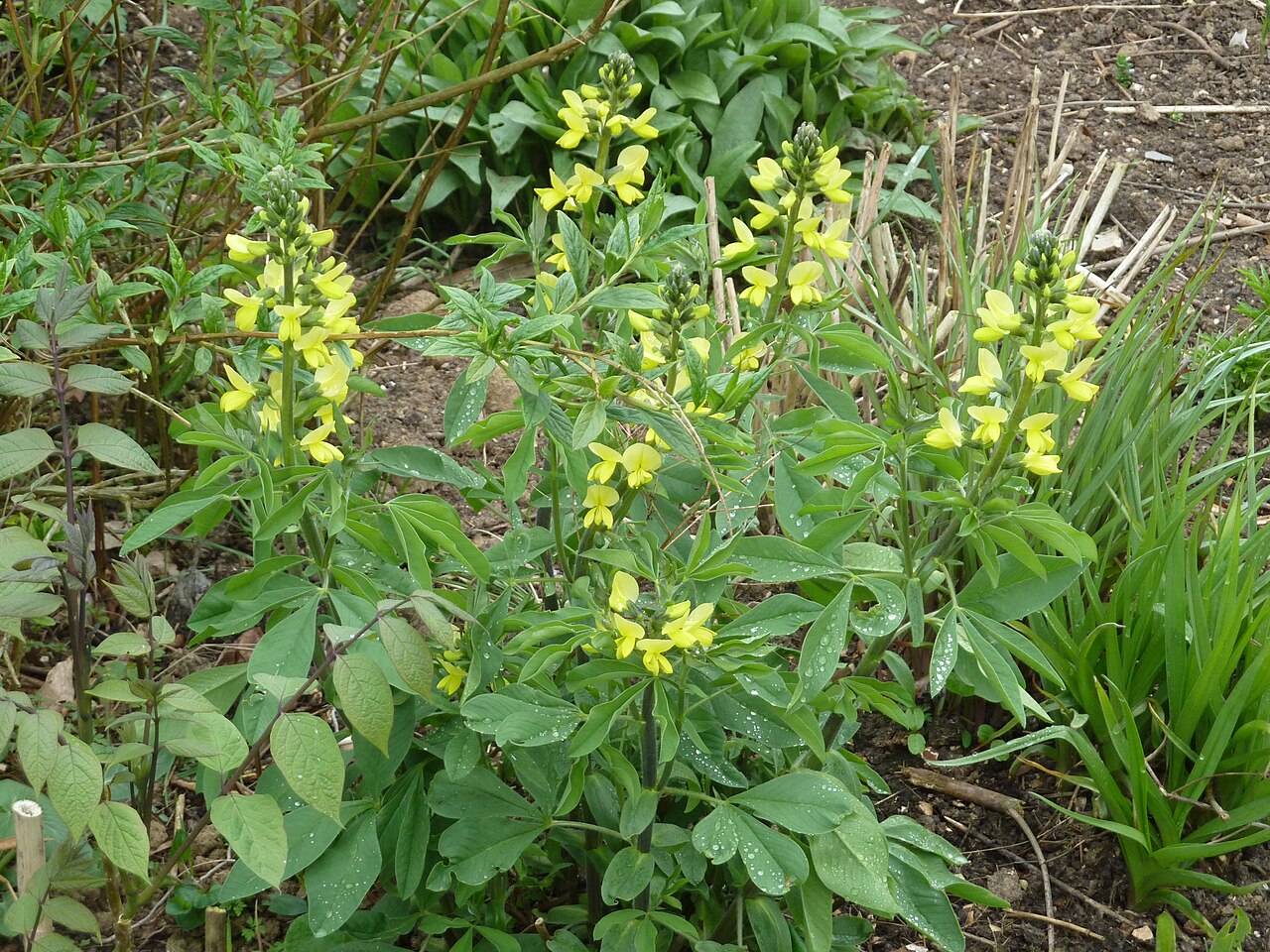
Yellow pea-shaped flowers are arranged up the ends of upright stems. The individual blossoms have the characteristic petal arrangement of this family, and multiple flowers open along the spike rather than forming a flat daisy-like head. Late spring into early summer is the usual flowering period. Photograph the whole stem as well as a close flower when comparing the plant with yellow Baptisia or other Thermopsis species.
Leaves and stems
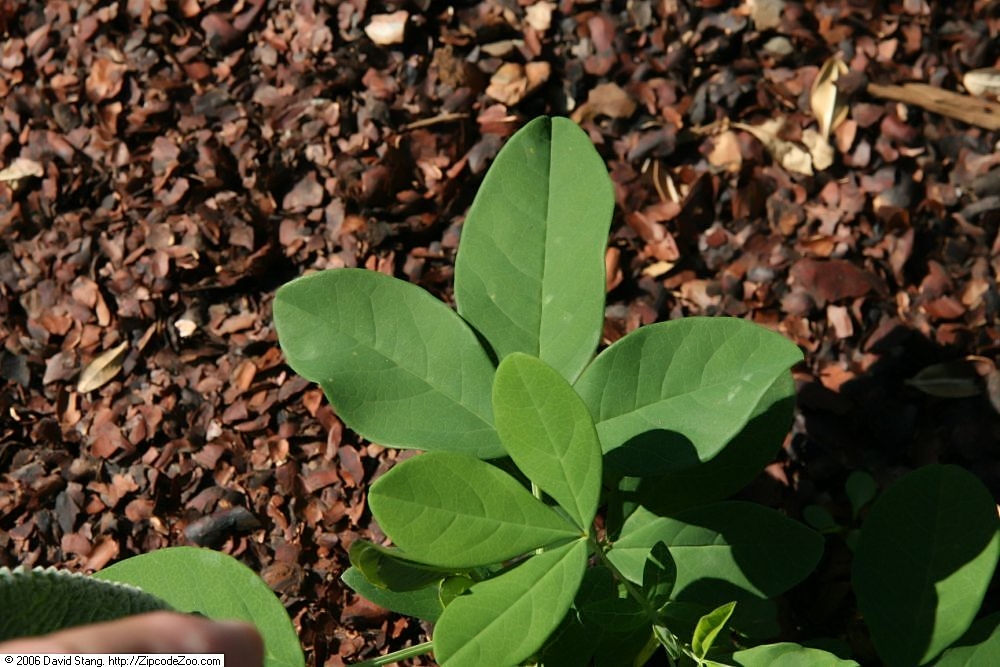
Leaves are divided into three leaflets, with conspicuous stipules at their attachment to the stem. Hairiness is another useful part of the picture, reflected in the species name villosa. A single leaflet does not show the full leaf structure, so follow its stalk back to the stem before using it for identification. The plant dies back seasonally rather than retaining woody branches like a shrub.
Pods and stature
After flowering, hairy pea-family pods can develop along the stems. They are useful identification features but not a food crop. Mature plants commonly reach about three to five feet tall and one to three feet across. The height makes them better suited to the middle or rear of a small border than directly beside a narrow walkway where stems will be brushed repeatedly.
Similar garden plants
Carolina lupine is often compared with Baptisia, but the names are not interchangeable. Likewise, a photograph of a different yellow Thermopsis does not identify this species. Nursery labels, leaf and stipule structure, flower arrangement and reliable botanical references should agree. The images here exclude a Commons search result identified as Thermopsis montana and a duplicate crop of the same photograph.
Quick Facts
| Common Name | Carolina Lupine; Carolina Bushpea |
| Scientific Name | Thermopsis villosa |
| Synonym | Thermopsis caroliniana |
| Family | Fabaceae (pea family) |
| Plant Type | Deciduous herbaceous perennial |
| Mature Height | About 3–5 feet |
| Mature Width | About 1–3 feet |
| Sun Exposure | Full sun to partial sun |
| Water Needs | Average to moist, with drainage |
| Soil Type | Ordinary well-drained garden soil; avoid waterlogging |
| Flower Color | Yellow |
| Bloom Time | Late spring to early summer |
| Foliage | Three leaflets; stems and parts hairy |
| Natural U.S. Range | NC, TN and GA; chiefly southern Appalachians |
| South Carolina Status | Not native according to the NC flora treatment |
| Safety | Ornamental bushpea; do not eat seeds or plant parts |
Native Range
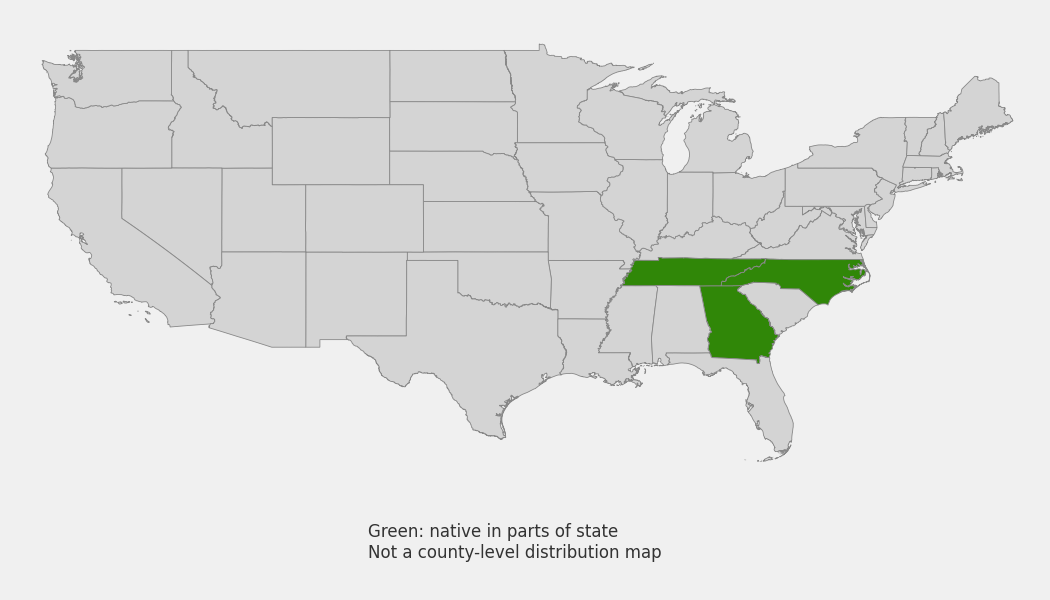
The natural range is much smaller than a broad occurrence map might suggest. North Carolina's state flora and Georgia's biodiversity program place native Carolina lupine in the southern Appalachian region of North Carolina, Tennessee and Georgia. Georgia's account distinguishes naturalized populations farther north from the native range. Our map accordingly shades only those three states.
Within North Carolina, the flora emphasizes the southwestern mountains and notes that some records farther north or east appear not to be natural. Its habitats include woodland openings and margins, roadbanks and other relatively open, mesic to moist settings. The presence of a species beside a road does not by itself establish either native or introduced status; historical and botanical evidence must supply that interpretation.
Although this page links back to a combined North Carolina and South Carolina list, it is not a claim of native status in South Carolina. Gardeners there can grow a regional ornamental if desired, but should choose a locally documented species for restoration. A state-level map is deliberately broad; it does not identify every native county, and it does not equate horticultural hardiness with nativity.
📋 Regional plant list: North Carolina & South Carolina Native Plants
Growing & Care Guide
Light
Plant in full to partial sun, not deep shade. This corrects the misleading shade-only code that appeared in the older regional row. A lightly shaded woodland opening can be suitable, but a dense canopy is a different environment. Watch where the sun falls after nearby trees leaf out; an apparently bright spring bed may become deeply shaded just as the plant is developing its seasonal growth.
Soil and moisture
Aim for average to moist soil that drains after rain. A productive garden loam can be suitable, but there is no need to create a water-holding bowl around the crown. Water newly set plants thoroughly and then check the root zone before repeating. During establishment, a nursery root ball and the surrounding ground may dry at different rates, so judge both rather than relying on surface appearance.
Placement and planting
Allow for a three- to five-foot flowering plant, not just the small container specimen in hand. Put it where tall stems can rise behind shorter perennials without blocking paths. Plant at nursery depth, water in and label it with both botanical names if the supplier uses the older synonym. A clear label prevents a yellow-flowered volunteer elsewhere in the bed from being assumed to be the same plant.
Seasonal care
After flowering, retain some stems if the pods and foliage suit the design. Remove a portion of spent spikes if seed production is unwanted, using clean tools and leaving healthy basal growth intact. When growth dies back, cut dead stems without damaging the crown. Do not shear it like a woody hedge: it is a perennial whose entire above-ground structure is renewed seasonally.
Propagation and sourcing
Ask a native nursery for propagated Thermopsis villosa and a regional seed origin. For seed propagation, follow a documented species-specific protocol rather than assuming every pea-family seed requires identical treatment. Keep seed lots and seedlings labeled; taxonomic confusion between yellow-flowered relatives is avoidable when source records travel with the plants. Do not collect from rare or protected wild populations.
Troubleshooting and restraint
Poor flowering in a shaded site is not a reason to add repeated doses of fertilizer. First check light, competition and whether the crown is healthy. Where a plant fails in persistently wet ground, improve placement or choose another species rather than watering less while leaving the roots in stagnant soil. In a restoration context, do not spread seed outside verified local native populations simply because the plant looks vigorous.
Landscape Uses
- Use as an upright yellow accent in a sunny perennial border within its appropriate regional context.
- Position behind lower plants so the tall flowering stems have space and remain visible.
- Include in a southern Appalachian native garden when local provenance and habitat are suitable.
- Outside its natural range, label it as a cultivated regional ornamental rather than a locally native restoration plant.
Wildlife & Ecological Value
Flower visitors
The Georgia biodiversity account notes that detailed pollination work on this species is limited and discusses larger bees in related Thermopsis. That distinction matters. It is reasonable to observe insects using garden flowers, but not to turn observations from relatives into a guaranteed species-specific dependency. Watch the flowers during warm, calm weather and record visitors without disturbing them.
Garden diversity
A tall spring-flowering perennial can add a different flowering period and structure to a mixed planting. Combine it with other plants appropriate to the same light and soil rather than building a monoculture. Native status alone is not a complete garden design: a useful planting also offers seasonal continuity, avoids pesticide exposure and leaves room for the plants to mature without constant disturbance.
Seed pods and safety
The pea-family appearance of a pod does not make it edible or suitable as livestock feed. This page makes no forage recommendation. In a family garden, explain that ornamental bushpea is not a vegetable pea, and collect unwanted mature pods carefully when self-sowing would create a management problem. Identification should precede any claim about a plant's food value.
Protecting local populations
The narrow natural range makes provenance particularly important. A plant sold nationally may come from cultivated stock far from the project site. For conservation work, consult local botanists and use documented material. Keeping naturalized records separate from native records also prevents well-intentioned planting from obscuring where the species originally occurred.
Cultural & Historical Uses
The common name Carolina lupine is a horticultural analogy, not a statement that the plant belongs to the genus Lupinus. Both are pea-family plants with eye-catching flowers, but the botanical name is the reliable way to connect this plant with research and nursery material. Bushpea similarly describes appearance without making it a woody bush or edible pea.
Thermopsis caroliniana is a familiar older name associated with the species now treated as Thermopsis villosa. Preserving that synonym is useful when reconciling historical lists. It is not a reason to create another species page or to assume that every Carolina-labeled seed packet refers to the same taxon without checking the full botanical name.
Its ornamental appeal has encouraged cultivation beyond its natural southern Appalachian range. That history helps explain why a general database of occurrences can show more states than a carefully interpreted native-range map. In a garden guide, both facts deserve space: it can be a handsome cultivated perennial, and its authentic native distribution remains geographically limited.
Frequently Asked Questions
Is Carolina lupine native to South Carolina?
The cited North Carolina flora says it is not known as native there. The natural range used here is NC, TN and GA, despite the broader common name.
Is it a true lupine?
No. Its genus is Thermopsis, not Lupinus. Use the scientific name when ordering plants or checking propagation instructions.
Should I plant it in full shade?
No. Full to partial sun is the appropriate garden starting point. The former shade-only table code was incorrect.
Can I eat the peas or pods?
No. Treat it as an ornamental and do not eat its seeds or other parts. A pea-family shape does not establish edibility.
Why are other states shown in some records?
Records may include cultivated or naturalized populations. The map here follows botanical sources that explicitly distinguish native range from introduced occurrences.
Sources & Further Reading
- North Carolina flora — native range and regional status
- Georgia Biodiversity Portal — Thermopsis villosa
- NC State Extension — identification and cultivation
- University of Tennessee — Thermopsis villosa
- USDA PLANTS — Thermopsis villosa
Find Native Plants
Ask growers about nursery propagation and regional provenance. Browse our NC native plant nurseries, TN native plant nurseries, GA native plant nurseries directory for suppliers. Explore the native nursery finder.