Early Blue Violet (Viola adunca)
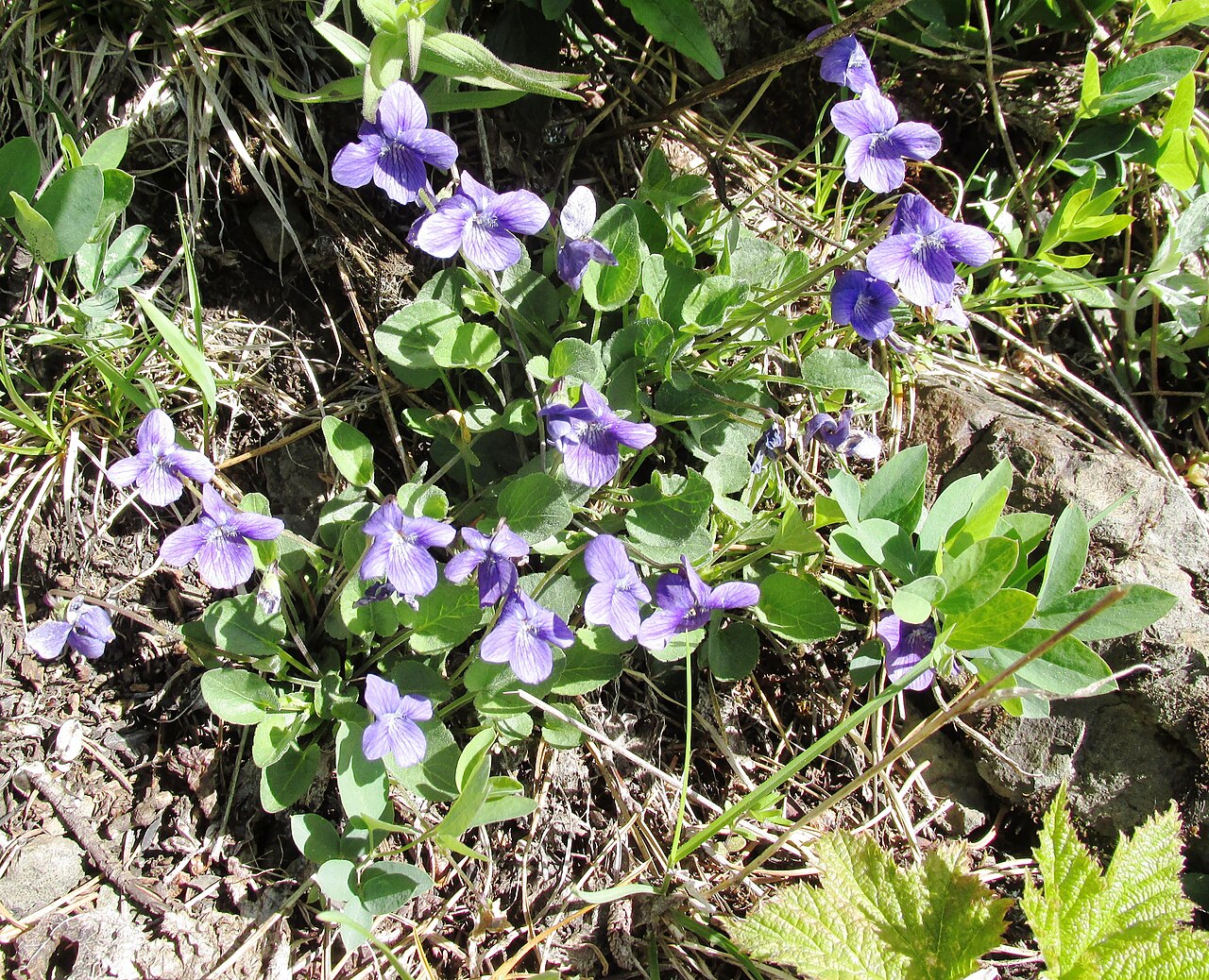
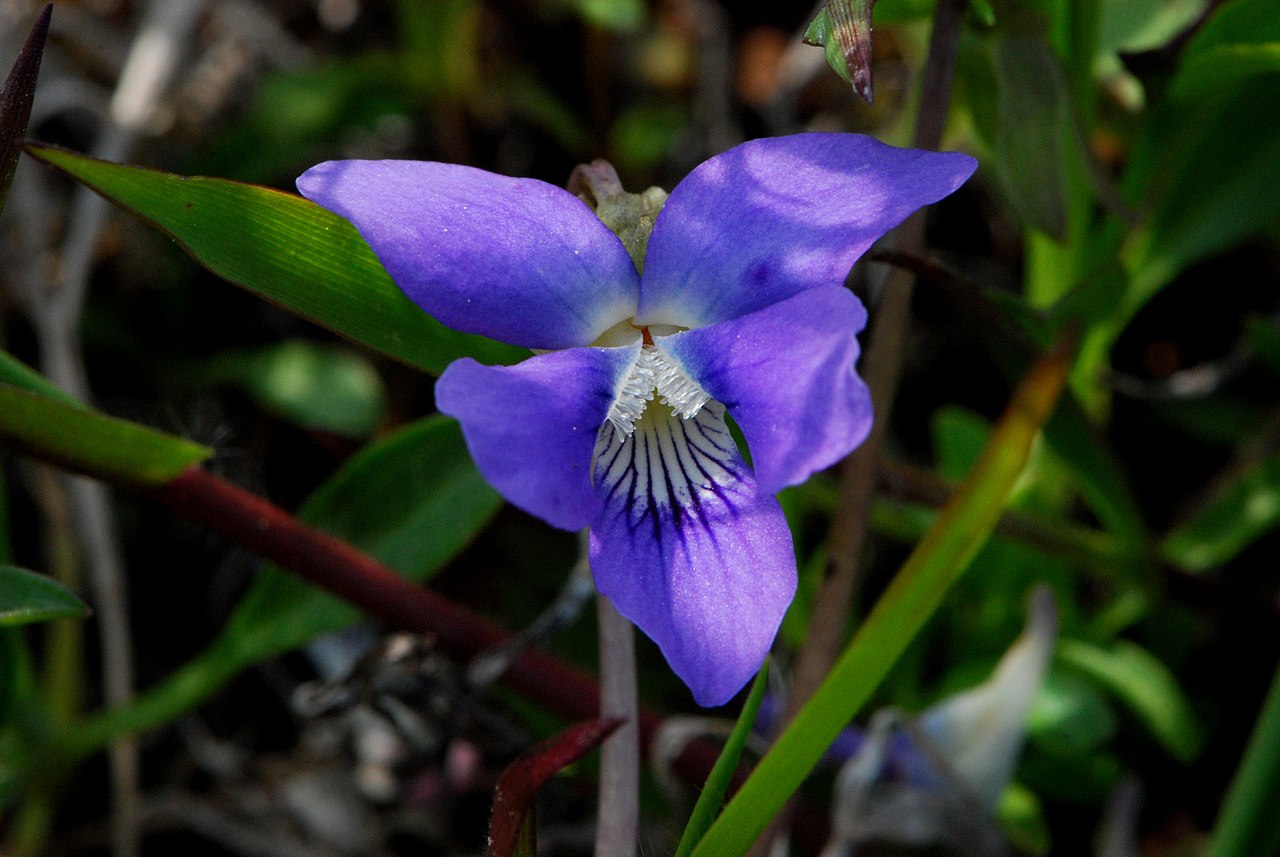
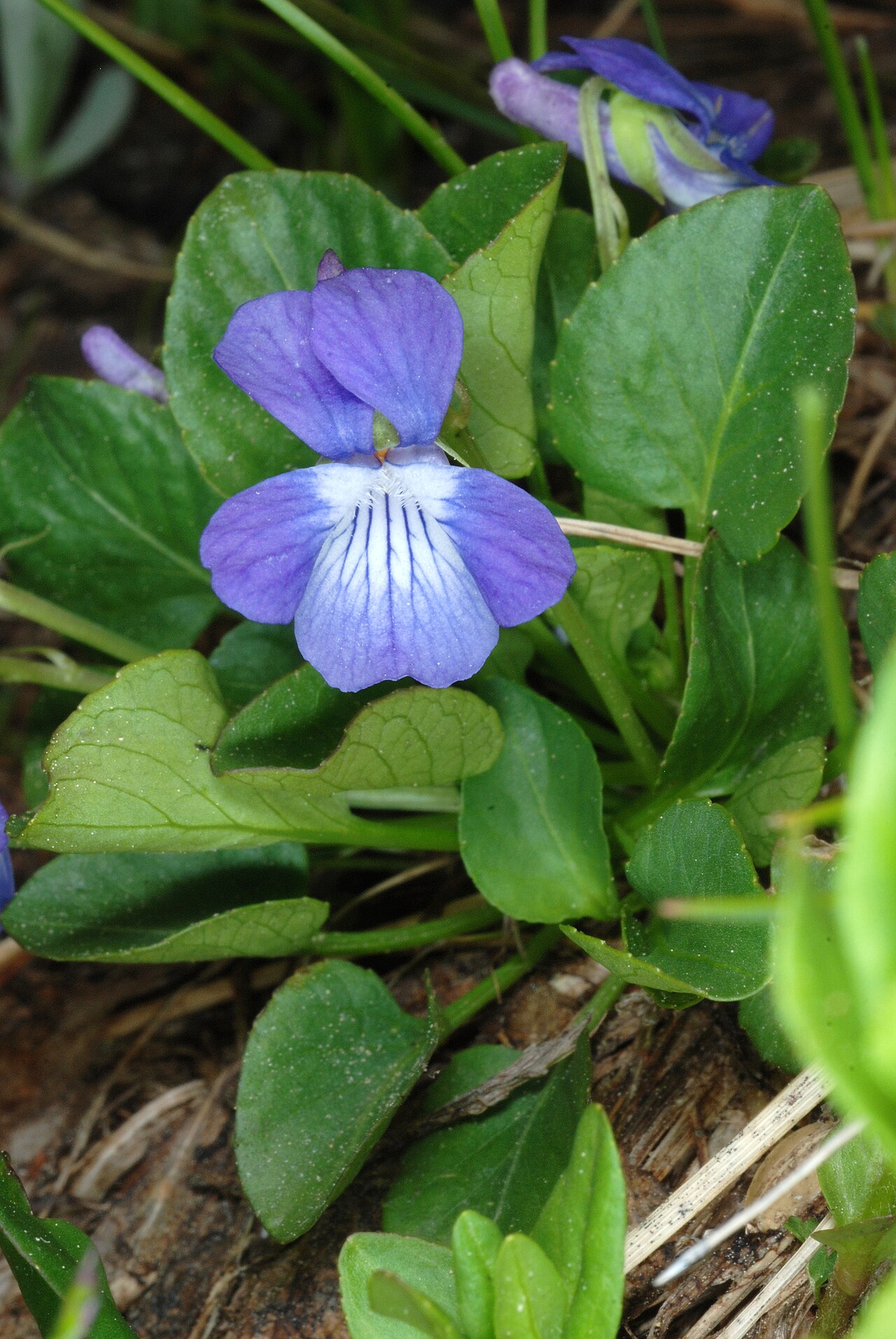
Early blue violet (Viola adunca) is a small native perennial with an outsized ability to reward close observation. Blue to violet-purple flowers appear above low green foliage, their pale throats marked with darker lines. A side view reveals the spur that gives the plant another common name, hookedspur violet. In a suitable meadow edge or open woodland garden, a few plants can form a subtle spring display without the height of larger border perennials.
Its broad northern and western distribution means that there is no single garden setting that describes every population. A cool mountain meadow, a coastal opening and an inland woodland margin differ substantially in sunlight, summer water and soil. Plants of local or climatically similar origin are a better starting point than assuming a violet from anywhere in North America will behave identically in an Oregon or Washington garden.
Two old table details require correction: this species does not normally have yellow flowers, and it is not restricted to wet, deeply shaded soil. Washington State University's regional guide describes dry to moist open woods and meadows. The blue-purple flowers and site-specific moisture guidance on this page replace those misleading generalizations, while retaining the plant's place in the regional list.
Identification
Flowers
The flowers have five petals, commonly blue or violet-purple, with a paler, dark-veined area toward the center. Side petals can be bearded, and the lower petal extends backward into a spur. To see the hooked-spur character, examine a flower from the side rather than relying only on a face-on image. Yellow-flowered violets in the same woodland belong to other species and should not be assigned this name.
Leaves and growth
Leaves vary from rounded or kidney-like to more oval or heart-shaped, with shallowly toothed margins. Early growth can appear nearly stemless, while later growth develops more obvious leafy stems. That seasonal change can make two photographs of the same species look surprisingly different. Compare mature leaf shape, stipules and flowers together when using a regional identification key.
Size and seasonal variation
Many garden or wild plants are only a few inches high, although regional descriptions include taller flowering or leafy growth. About three to six inches is a useful expectation for a small garden selection, not a universal maximum for the species. Competition from grasses can hide it easily. Mark a newly planted patch so that dormant or inconspicuous plants are not accidentally weeded out.
Distinguishing nearby violets
The Pacific Northwest has several native violets, including yellow-flowered woodland species and other blue-flowered taxa. Flower color helps narrow the field but does not settle identification. A useful record includes a whole-plant image, leaves, stipules and a side view of the spur. Do not transfer the care description of a yellow shade violet to this species merely because both share the genus Viola.
Quick Facts
| Common Name | Early Blue Violet; Hookedspur Violet |
| Scientific Name | Viola adunca |
| Family | Violaceae (violet family) |
| Plant Type | Low herbaceous perennial |
| Mature Height | Often 3–6 inches; regional forms can be taller |
| Mature Width | Small clumps, gradually spreading; often 6–18 inches |
| Sun Exposure | Sun to partial shade, depending on local climate |
| Water Needs | Dry to moist by habitat; avoid stagnant wetness |
| Soil Type | Well-drained soil matched to regional origin |
| Flower Color | Blue to violet-purple, with pale marked throat |
| Bloom Time | Spring to early summer; elevation dependent |
| Key Feature | Backward-projecting hooked flower spur |
| Native Region | Northern and western North America; scattered northern eastern areas |
| Pacific Northwest | Native to Oregon and Washington |
| Growth Habit | Low foliage with seasonally developing leafy stems |
| Garden Use | Meadow edge, open woodland, low native border |
Native Range
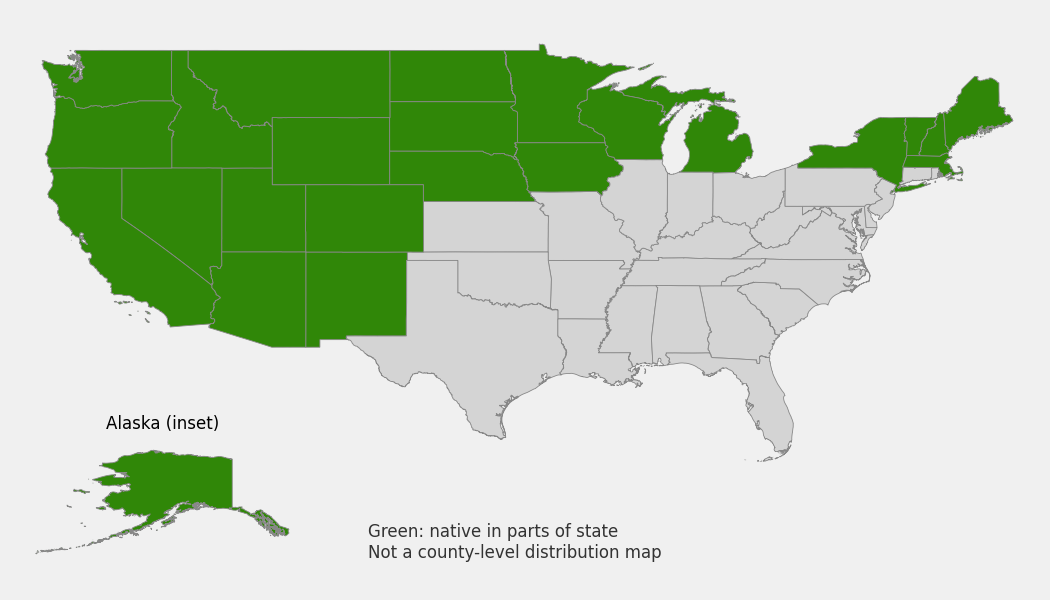
Kew records Viola adunca across much of northern and western North America, extending from subarctic areas into parts of northern Mexico. Its range includes Alaska, western states and a discontinuous set of northern and Great Lakes states. Canada and Greenland are also part of the wider range. The map here shows U.S. state-level native presence, with Alaska included in a separate inset rather than silently omitted.
In Oregon and Washington, a regional guide places the species in dry to moist open woods and meadows. That is a range of habitats, not a requirement for constant irrigation or dense shade. A local population's exposure and soil can be more informative for planting than a broad national summary. Avoid using the green state shading as evidence that any patch of land in that state is suitable.
The native-state list follows Kew's species-level treatment. Local floras may discuss varieties or ecotypes and can refine what is appropriate for a conservation project. The USDA link provides another distribution reference; a garden photograph outside the native range is not added to the map. Nursery provenance, county records and habitat matching remain important even for a species with such an extensive overall distribution.
📋 Regional plant list: Oregon & Washington Native Plants
Growing & Care Guide
Light and origin
Start with the conditions described by the supplier for its particular stock. Sun or partial shade can suit the species, but hot inland exposure and a cool coastal opening are not equivalent. In a warmer garden, a little afternoon shelter may reduce stress. In a cool, shaded woodland, more light may improve flowering. Observe the plants before deciding that all violets should be pushed into the darkest corner.
Water and drainage
The species occurs across a dry-to-moist habitat spectrum, so establish a plant with attention to its origin and the actual soil. Water a newly planted root ball when it begins to dry, then adjust as roots spread. Avoid leaving it in stagnant water. A wet-soil code copied from another violet is not a good irrigation prescription, especially in a summer-dry region where local forms may be adapted to seasonal change.
Planting and competition
Plant small nursery specimens at their original depth and keep aggressive weeds away during establishment. A low violet can disappear beneath a vigorous groundcover long before it appears unhealthy from above. Give it a visible edge or a small open patch among compatible plants. Labeling the position helps avoid accidental removal when seasonal growth is sparse or when neighboring plants have grown taller.
Seasonal management
Do not assume an inconspicuous summer plant is dead without checking carefully. Seasonal behavior varies with climate and moisture, and repeated disturbance is rarely helpful. Remove weeds by hand around the small crown rather than cultivating deeply. If the patch expands by seedlings, decide where volunteers are welcome and move only garden-grown material that can be confidently identified.
Propagation
Use nursery-grown plants or a reputable regional seed source. Violet germination can be influenced by seed freshness and seasonal conditions, so follow a supplier's species-specific protocol rather than treating the seed like a quick annual crop. Keep different species and seed lots labeled. Dividing an established garden patch may be appropriate when it has enough rooted growth, but avoid taking wild clumps to fill a border.
Troubleshooting
A poor display can result from heavy competition, an unsuitable exposure or a mismatched watering regime. Before adding nutrients, check whether neighboring plants have overtaken the patch and whether water is actually reaching the root zone. If a plant flowers yellow, the first issue is identification, not a fertilizer deficiency. Record flowers, leaves and the source label before seeking regional botanical advice.
Landscape Uses
- Place along an open woodland path where the small spring flowers are easy to observe.
- Use in a low native border with neighbors that will not immediately overtop it.
- Include in a regional meadow planting only where competition, soil and provenance are appropriate.
- Use labeled nursery stock in educational plantings to contrast blue violets with yellow-flowered woodland species.
Wildlife & Ecological Value
Violets and butterflies
Violets are important larval food plants for fritillary butterflies, and regional guidance includes Viola adunca among useful native violets. The relevant butterfly species and habitat requirements vary by location. A garden plant alone does not recreate an entire butterfly habitat, and this page does not promise that a particular rare butterfly will colonize a small planting.
Flower resources
The small flowers can be visited by insects during the spring season. Leave blooming plants free of broad-spectrum insecticide exposure and observe visitors without pulling apart flowers. Floral value is strongest as part of a sequence of different plants, so combine the violet with other locally suitable natives that flower at different times rather than relying on a brief single-species display.
Low-growing cover
A modest patch adds another vegetation layer close to the soil. It can soften the edge between a path and taller plants without forming a tall barrier. Protect that low layer from trampling and repeated raking. Leaving appropriate organic cover nearby and reducing disturbance are practical ways to make a garden more hospitable without claiming a specific unverified animal association.
Conservation fit
For habitat projects, match both species and local population context. A plant propagated from distant stock can be botanically correct but ecologically less appropriate for a sensitive restoration site. Consult the relevant land manager or native-plant specialist before moving seed or plants into wild habitat. Garden enjoyment and conservation planting are related activities, but they do not have identical sourcing standards.
Cultural & Historical Uses
The epithet adunca refers to the hooked feature associated with the flower spur. Common names such as early blue violet and hookedspur violet emphasize different useful observations: color and season in one case, a structural character in the other. Neither should be used to identify a nonflowering plant without considering its other features.
Broadly distributed species often accumulate a range of garden descriptions because writers observe them in different climates. A cool mountain population and a low-elevation garden can differ in size, flowering time and exposure. Good regional gardening advice preserves that variation instead of compressing every violet into one formula for wet shade.
This page focuses on identification, responsible planting and habitat value rather than food or medicinal preparations. Do not use an online violet image as a basis for tasting an unidentified wild plant. Nursery records and a local flora are more useful for maintaining a correctly named garden patch than an assumed connection between all plants called violets.
Frequently Asked Questions
Are the flowers yellow?
No. Viola adunca normally has blue to violet-purple flowers. The old yellow-flower description in the regional row was incorrect and likely reflected another violet.
Must it be grown in wet shade?
No. Regional guidance includes dry to moist open woods and meadows. Match sunlight and watering to local conditions and the source of the plant.
Why does the map include Alaska?
Alaska is part of the documented native range. The inset keeps that portion visible while the main map shows the contiguous states.
How tall should it be?
Many plants remain only a few inches high, but size varies with population and growing conditions. A three- to six-inch garden expectation is not an absolute species maximum.
Can I use it to support fritillaries?
Native violets can contribute larval food resources, but the appropriate butterfly species and wider habitat differ by region. Use local guidance and avoid promising a specific butterfly outcome from one plant.
Sources & Further Reading
- Kew — Viola adunca native distribution
- Washington State University — native plant habitat guide
- USDA Forest Service — field identification guide
- South Dakota State University — Viola adunca
- USDA Forest Service — native plant cultivation guide
- Calflora — California record
- USDA PLANTS — Viola adunca
Find Native Plants
Ask growers about nursery propagation and regional provenance. Browse our OR native plant nurseries, WA native plant nurseries directory for suppliers. Explore the native nursery finder.