Little Brown Jugs (Asarum arifolium)
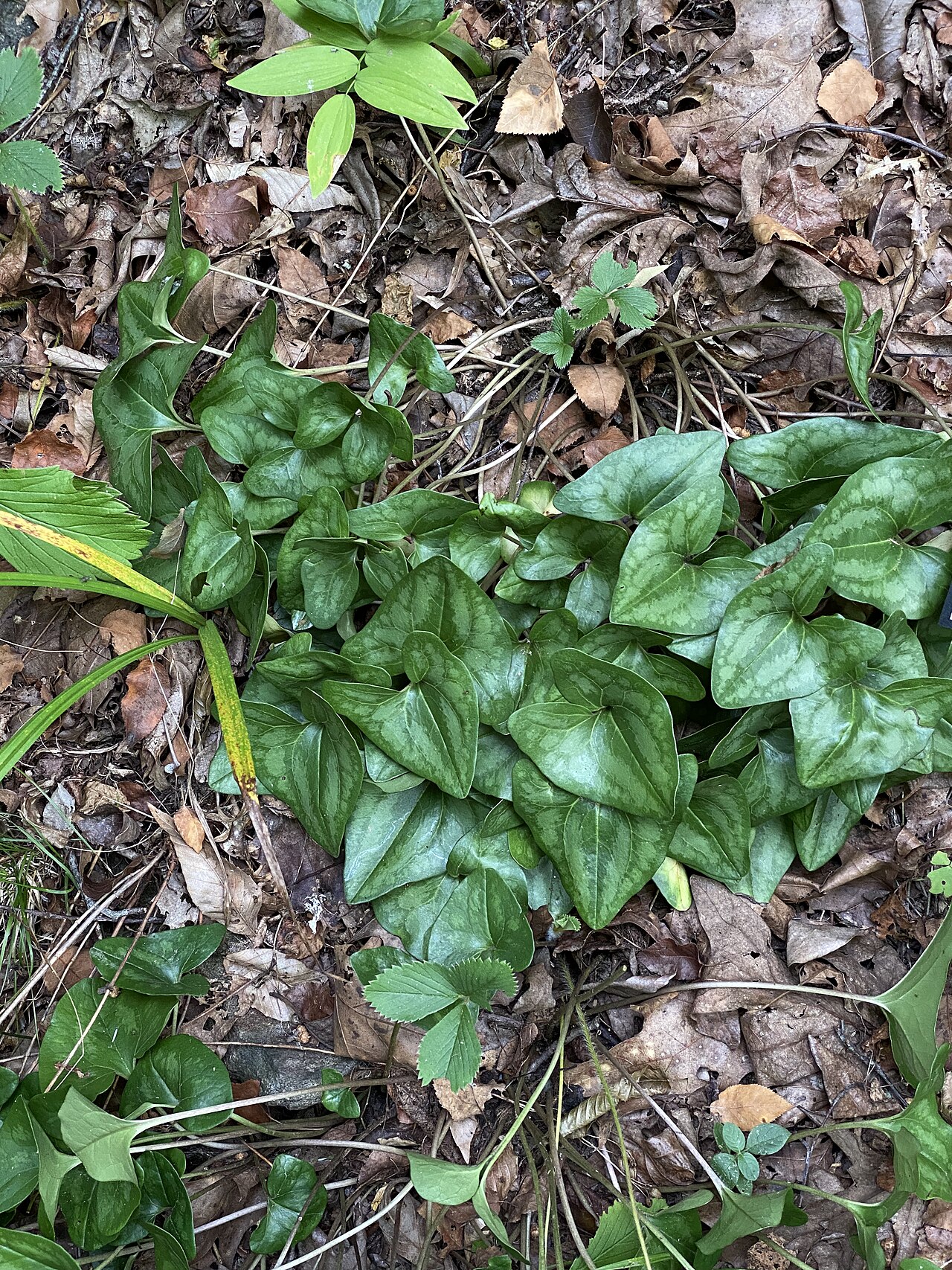
Little brown jugs (Asarum arifolium, also widely known as Hexastylis arifolia) is a woodland perennial best appreciated at close range. The enduring feature is a low cluster of arrow- to heart-shaped evergreen leaves, sometimes marked with pale silver-green patterning. Its small jug-shaped flowers sit almost on the woodland floor, so a person walking past may notice the foliage for years before discovering the flowers beneath it.
This is not culinary ginger. The ginger common name should never be interpreted as an invitation to taste a root, brew a tea or experiment with home remedies. NC State Extension advises against consuming any part. Treat it as a foliage and botanical-interest plant, and choose another groundcover where children or pets regularly sample garden plants.
For a native shade garden, a small group can make a quiet foreground beneath taller perennials or shrubs. It is not a rapid, traffic-tolerant lawn substitute. Its value lies in the detail of the leaves, the unusual spring flowers and the way a low evergreen patch anchors the garden between other plants' seasons. Regional nursery stock is preferable to digging a clump from an established woodland colony.
Identification
Foliage
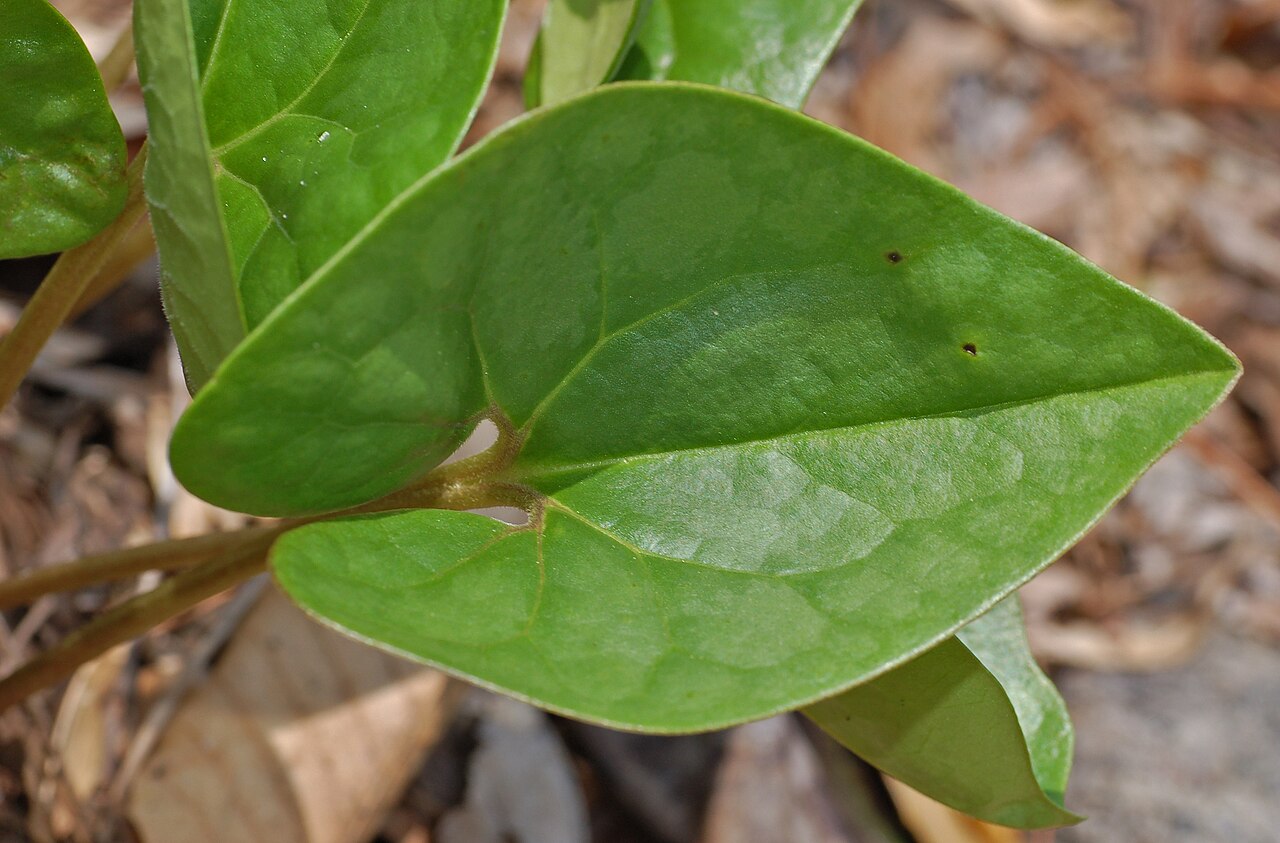
Leaves rise on stalks from underground growth rather than along conspicuous aerial stems. The outline can be broadly arrow-shaped, with a pointed tip and two basal lobes; other leaves appear more heart-shaped. Pale markings vary, so a plain green leaf does not automatically exclude the species. Examine several mature leaves and their attachments rather than identifying a plant from the brightest or youngest leaf alone.
Flowers
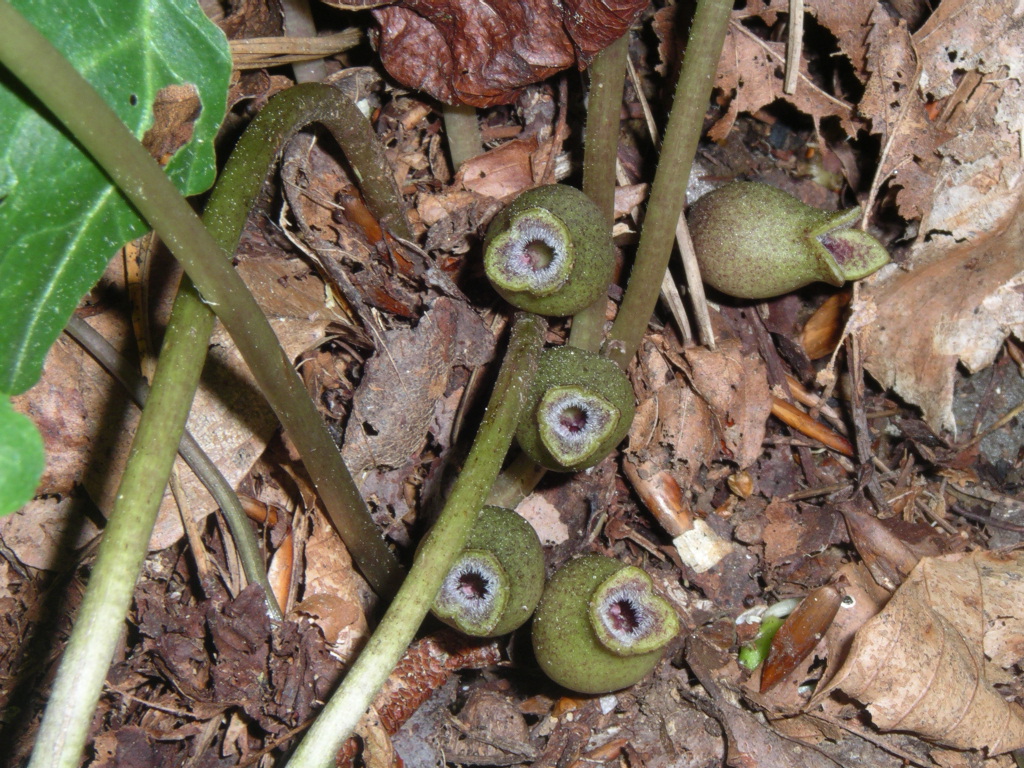
The jug-like flowers lie at or close to soil level and are often obscured by foliage or fallen leaves. Their subdued brown, greenish-brown or burgundy tones make them easy to overlook. They are flowers, not carnivorous pitchers. A close photograph of the flower opening is much more useful for distinguishing related heartleaf species than a distant photograph of the green groundcover.
Related names and varieties
Kew and NC State Extension use Asarum arifolium, while many regional floras retain Hexastylis arifolia. This page treats those names as the same species concept. Several varieties have been recognized, and southeastern heartleaf identification can depend on flower structure as well as leaf outline. Do not relabel every similar evergreen heartleaf as this species, especially when working with a rare local population.
Garden size
A typical patch has foliage roughly four to eight inches high and spreads slowly outward, often occupying about six to twelve inches across initially. Individual leaves and clumps vary with age and conditions. A low plant can still need growing room: burying it under taller groundcovers or a deep mulch layer obscures both its crown and the flowers it produces near the surface.
Quick Facts
| Common Name | Little Brown Jugs; Arrowhead Wild Ginger |
| Scientific Name | Asarum arifolium |
| Widely Used Synonym | Hexastylis arifolia |
| Family | Aristolochiaceae (pipevine family) |
| Plant Type | Evergreen herbaceous perennial |
| Mature Height | About 4–8 inches |
| Mature Width | About 6–12 inches; slowly enlarging |
| Sun Exposure | Dappled light to partial shade |
| Water Needs | Average moisture; well-drained soil |
| Soil Type | Humus-rich woodland soil; not stagnant |
| Flower Color | Small jug-shaped brownish to burgundy flowers |
| Bloom Time | Spring; regionally March–June |
| Foliage | Evergreen, arrow- or heart-shaped; markings variable |
| Native Region | Southeastern United States |
| USDA Hardiness Zones | Approximately 5–9; local conditions matter |
| Safety | Not edible; do not consume any part |
Native Range
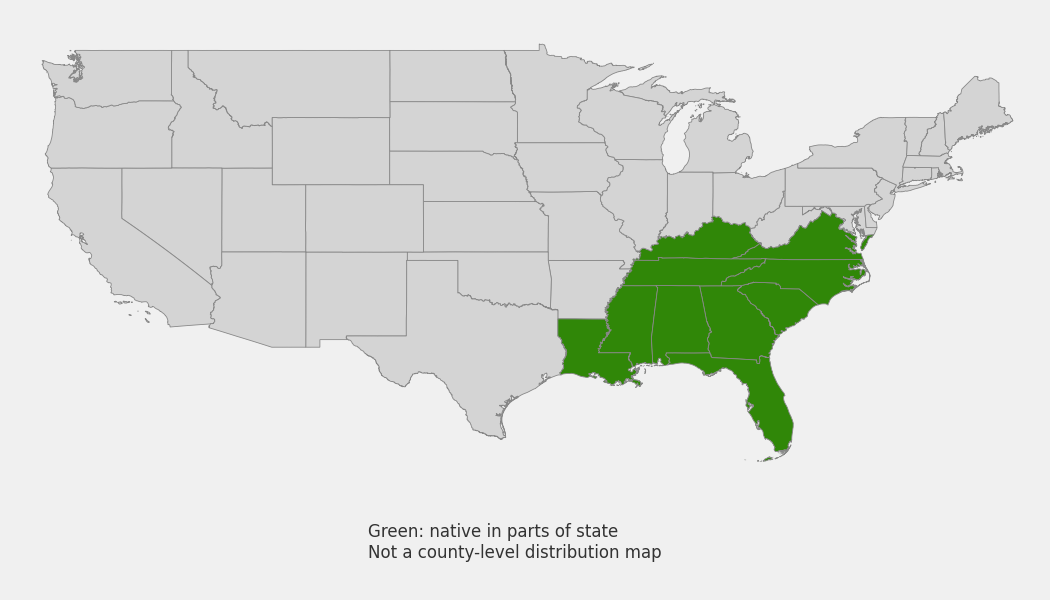
The species is native to the southeastern United States. Kew's native distribution includes Alabama, Florida, Georgia, Kentucky, Louisiana, Mississippi, North Carolina, South Carolina, Tennessee and Virginia. The map follows that state-level treatment. A photograph taken in a botanical garden outside those states documents cultivation, not an extension of the native range.
Regional botanical sources place it in deciduous woodland habitats ranging from dry-mesic to mesic conditions, with some varieties associated with more particular substrates. Those habitat descriptions should not be translated into a recommendation to let a newly planted container specimen dry out repeatedly. A sheltered, leaf-littered garden position with moisture and drainage is a more useful starting point than either a permanently wet bed or a bare, baked bank.
The species occurs in both Carolinas, but local heartleaf species overlap and can be difficult to distinguish. A native garden supplier should give a scientific name and, ideally, an origin for propagated material. For conservation planting, consult county records and a regional key rather than assuming that an attractive evergreen leaf from a neighboring woodland is the same taxon.
📋 Regional plant list: North Carolina & South Carolina Native Plants
Growing & Care Guide
Light and location
Choose dappled light or partial shade, such as an open deciduous woodland garden. Avoid the extremes of exposed afternoon heat and an impenetrably dark corner. If the desired location is beneath a dense evergreen hedge, observe both summer dryness and light before planting. A bright woodland foreground gives you a better chance of seeing the leaves and flowers than a place hidden behind large shrubs.
Moisture and drainage
Keep the planting soil reasonably moist without holding water around the crown. Fallen leaves and a light organic surface layer can help moderate drying. Check beneath that surface before watering: a dry-looking mulch layer does not prove that the root zone is dry. Conversely, a new container root ball can dry while the surrounding ground remains moist, so inspect the actual planted root area during establishment.
Planting
Set the plant at its existing nursery depth, keeping leaves and the crown above the soil surface. Water to settle soil around the roots, then label the plant while it is still easy to locate. Give it room to develop without immediate competition from fast-spreading groundcovers. When planting among trees, work around major roots rather than cutting them to make a larger ornamental bed.
Mulch and cleanup
Use a loose woodland-style surface rather than a deep mound of bark. Heavy coverage can hide the small flowers and bury the base of the foliage. Clear only what is necessary to keep the crown from being smothered, and leave the rest of the woodland floor intact. Remove badly damaged leaves individually; there is no benefit in shearing a low evergreen patch merely because nearby deciduous plants are being cut back.
Propagation
Seed and careful division are recognized propagation routes. Nursery propagation is preferable to taking plants from the wild, particularly because closely related species may be uncommon or difficult to identify. When dividing an established garden clump, keep roots attached to each portion and protect the divisions from drying. Seed-grown plants require patience, labeling and attention to the supplier's germination guidance rather than a generic annual-flower schedule.
Pests and practical limits
Slugs and snails may damage foliage. Inspect the underside of leaves and the immediate ground before assigning a cause to holes. A few blemishes do not necessarily justify treatment. Repeated decline is a reason to examine drainage, crown depth and summer drying. This plant is not intended for regular foot traffic, and stepping-stones should carry visitors around, not through, the patch.
Landscape Uses
- Plant beside a shaded path where the low leaves can be seen throughout the year.
- Combine with nonaggressive woodland perennials instead of vigorous carpeting exotics.
- Use a small patch as an evergreen foreground below taller deciduous plants.
- Include in a botanical-interest garden where visitors can see flowers at ground level.
Wildlife & Ecological Value
A different kind of flower display
The flowers are close to the soil and unlike an open, sunlit daisy. Their subdued appearance reminds gardeners that not every ecological interaction takes place at eye level. Avoid tearing away foliage or repeatedly disturbing the crown to expose them. A single careful observation or photograph can document flowering while leaving the surrounding leaf litter in place.
Ground-level habitat
A low evergreen patch contributes structure to the woodland floor between taller plants. Keeping a modest litter layer around it protects the surface from repeated disturbance. This is a garden-management benefit, not evidence that a particular animal is exclusively dependent on this species. More varied plantings, with different leaf heights and flowering seasons, offer a broader set of conditions than a uniform carpet.
Pollination claims
Extension accounts mention small insects in connection with pollination. The precise relative roles of visitors can be difficult to infer from a garden sighting; an insect on a flower is not automatically an effective pollinator. For that reason, this page does not promise a named specialist butterfly or bee association without species-level evidence. Grow the plant for its regional fit and botanical interest rather than an unsupported wildlife guarantee.
Conserving wild colonies
Do not collect plants or disturb a natural colony to supply a garden. Native status does not make a woodland population an unlimited resource. Buy propagated material, keep its label and source, and consider leaving naturally occurring colonies undisturbed when planning paths or landscaping. Accurate identification is especially important in a genus with similar-looking local species.
Cultural & Historical Uses
The two familiar scientific names reflect different treatments of the heartleaf group. Older regional gardening references often use Hexastylis, while Kew places this species in Asarum. Keeping the synonym visible preserves access to those references and prevents the same plant from appearing twice in a list under two generic names.
Little brown jugs is a descriptive common name drawn from the flowers rather than the foliage. It is particularly helpful when explaining the plant to someone who has only noticed its leaves. The alternative ginger names are less safe as everyday instructions: an aromatic association is not evidence of culinary suitability, and this plant should not be substituted for grocery-store ginger.
This guide does not reproduce medicinal preparations or recommend traditional remedies. Its role in a home landscape is ornamental and ecological, with emphasis on propagated stock and appropriate woodland conditions. Botanical gardens can offer useful opportunities to study the leaf and flower details without disturbing wild plants, but their cultivated locations must not be mistaken for native-range records.
Frequently Asked Questions
Are Asarum arifolium and Hexastylis arifolia different species?
They are alternative botanical treatments of the same species here. Both names are provided so that older lists and modern references can be reconciled.
Can I use it as ginger in food or tea?
No. Do not consume any part. The common name does not make it culinary ginger, and extension guidance warns against ingestion.
Why have I never seen flowers?
Look carefully near ground level in spring. The small jug-shaped flowers are concealed beneath leaves and litter rather than displayed above the foliage.
Does it need a wet garden?
No. It benefits from moisture with drainage. Standing water and a buried crown are different from the sheltered woodland conditions being recommended.
Will it quickly cover a large bare area?
It is a slow-growing, small groundcover, not a fast lawn replacement. Use realistic spacing, control competing weeds and allow time for a patch to develop.
Sources & Further Reading
- NC State Extension — Asarum arifolium
- Kew — accepted name, synonyms and native states
- NC State Herbarium — Hexastylis identification key
- Phytoneuron — southeastern flora and taxonomic discussion
- USDA PLANTS — Hexastylis arifolia
Find Native Plants
Ask growers about nursery propagation and regional provenance. Browse our NC native plant nurseries, SC native plant nurseries directory for suppliers. Explore the native nursery finder.