
Woolly Locoweed (Astragalus mollissimus)
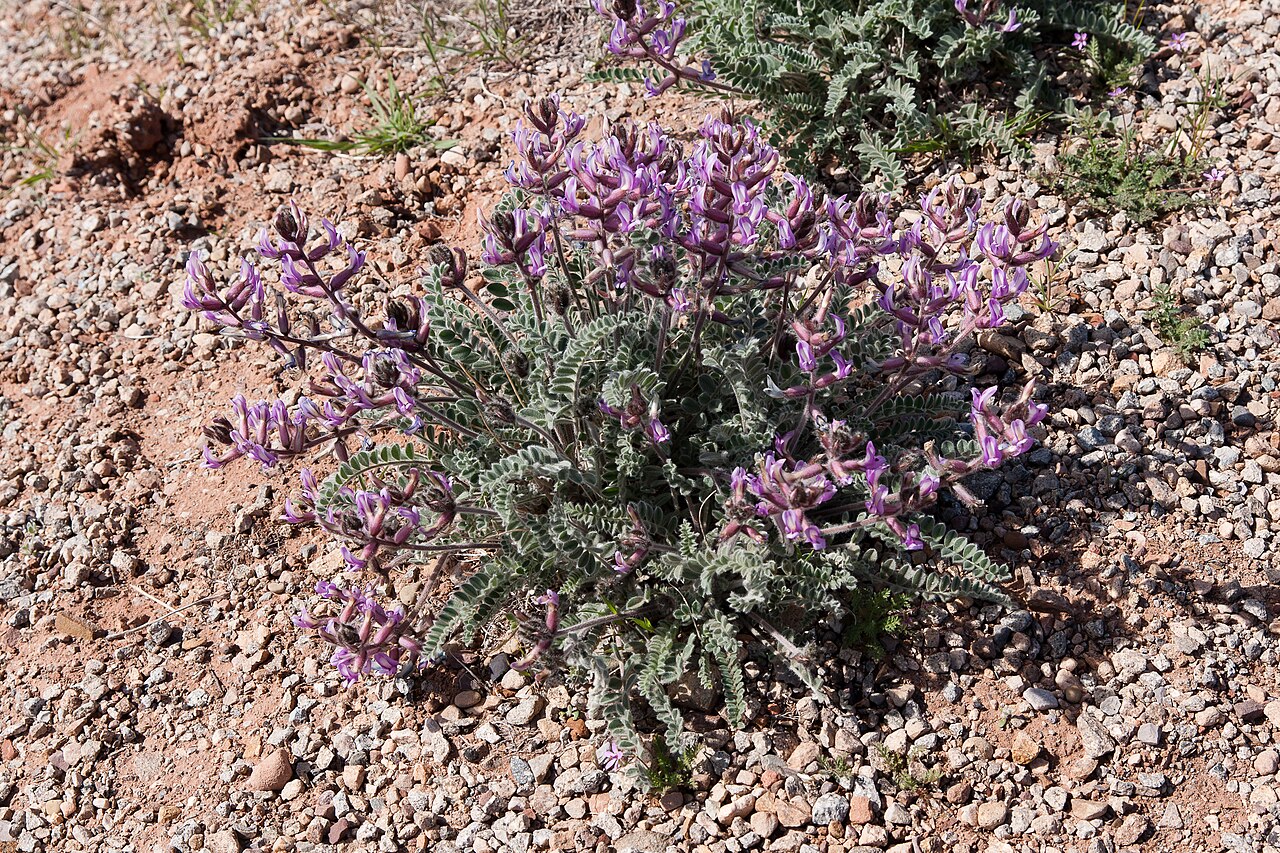
Astragalus mollissimus, known as Woolly Locoweed, woolly loco or purple locoweed, is a low, clump-forming perennial of the pea family (Fabaceae) that grows on the plains, mesas and canyon country of the American West, from Wyoming and Nebraska south to West Texas, New Mexico and Arizona. It is one of the earliest and showiest spring wildflowers in much of its range, forming silvery, cushion-like mounds 6 to 18 inches tall covered with spikes of purple pea flowers.
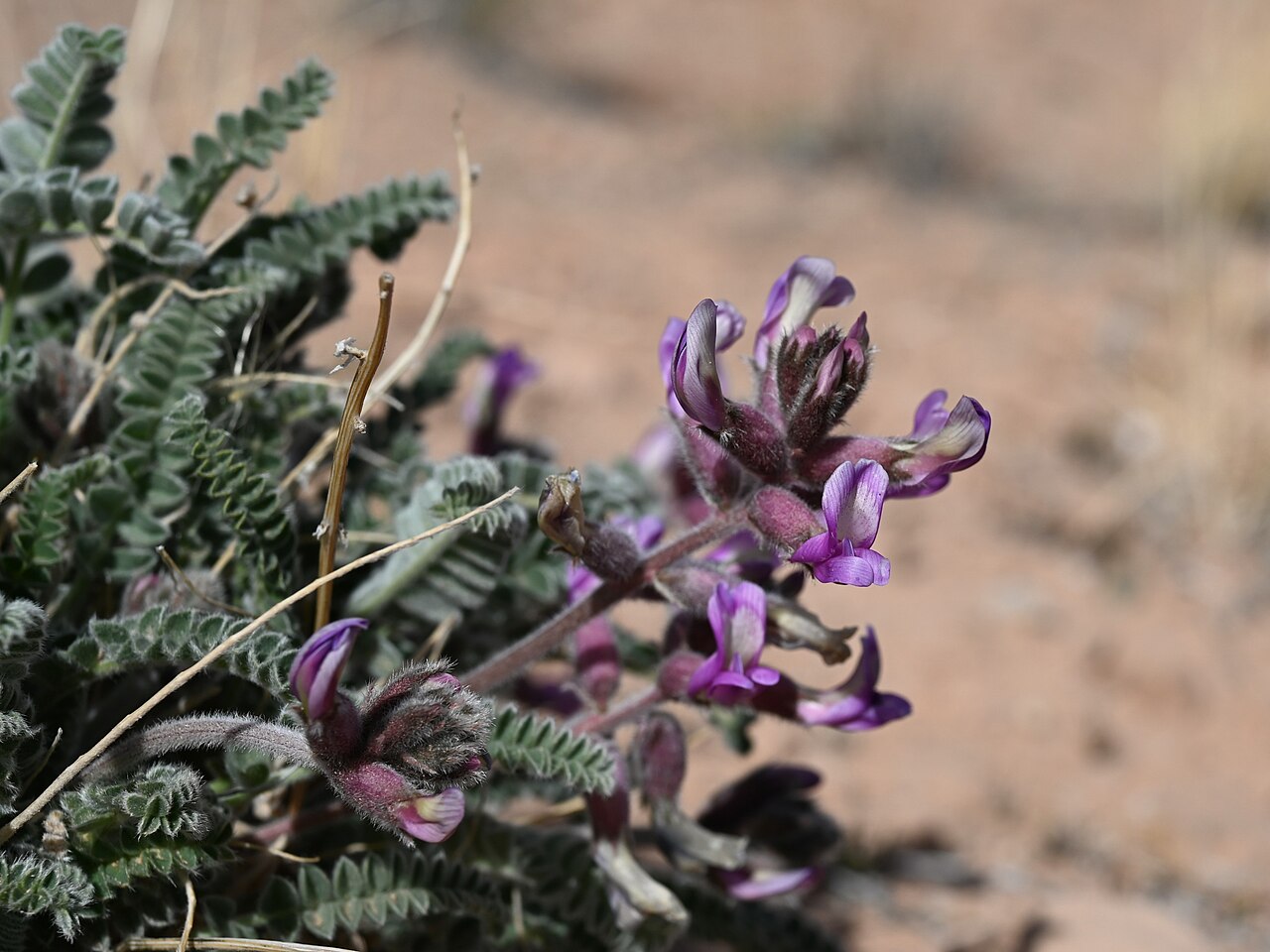
The name mollissimus means “softest”, and the whole plant is densely covered in soft, silky, woolly hairs that give it a silvery-gray look. The leaves are divided into many small, oval leaflets, and in spring short stalks carry clusters of upturned, purple to pinkish-lavender flowers, often with a white center. The flowers are followed by plump, curved pods.
Safety note: woolly locoweed is poisonous to livestock and other animals. It contains swainsonine, a toxin that causes “locoism”, a nervous-system disorder in horses, cattle and sheep that eat it over time, and it can also cause birth defects and other damage. People should not eat any part of it. This guide covers how to identify woolly locoweed, where it grows, its role in nature and its toxicity, and how to appreciate it safely.
Identification
Woolly locoweed is easy to spot in spring: a low, rounded mound of silvery, very hairy leaves with dense spikes of purple pea flowers, usually growing in dry, open grassland or on sandy or rocky ground.
Growth Habit
It is a perennial that grows from a deep, thick taproot and a short, woody crown. Most plants form a rounded clump 6 to 18 inches tall and about as wide, with many short, spreading to upright stems. Some forms are nearly stemless, with leaves and flower stalks rising directly from the crown. The whole plant is covered with long, soft, silky hairs.
Leaves
The leaves are pinnately compound, roughly 3 to 10 inches long, with about 15 to 35 oval to elliptic leaflets. The leaflets are so densely covered with woolly hairs that they look silvery gray or grayish green and feel very soft.
Flowers
The flowers are typical pea flowers, about 3/4 inch long, with an upturned banner petal, two wing petals and a keel. They are purple to pinkish-lavender, often with a white or pale center on the banner. They grow in dense clusters (racemes) of about 7 to 20 flowers at the ends of stalks from the leaf axils. Woolly locoweed blooms mainly from March to May on the southern plains, and into summer at higher elevations and farther north.
Fruit & Seeds
The pods are plump, egg-shaped to oblong and slightly curved, about 1/3 to 1 inch long, smooth to densely hairy. They dry papery or leathery and split to release small, kidney-shaped seeds.
Look-alikes
Several other locoweeds and milkvetches grow in the same areas. Lambert’s locoweed (Oxytropis lambertii) also has purple flowers, but its leaves are less woolly and its flowers have a sharp point on the keel petal. Woollypod milkvetch (Astragalus purshii) is smaller and lower, with woolly pods. Woolly locoweed’s large, soft, silvery leaves and dense purple flower spikes set it apart.
Quick Facts
| Scientific Name | Astragalus mollissimus Torr. |
| Family | Fabaceae (pea or legume family) |
| Plant Type | Herbaceous perennial from a deep taproot |
| Mature Height | 6–18 in |
| Mature Spread | 1–2 ft |
| Growth Rate | Moderate |
| Sun Exposure | Full sun |
| Water Needs | Low |
| Soil Type | Dry, well-drained sandy, gravelly, rocky or clay-loam soils |
| Soil pH | About 7.0–8.5 |
| Bloom Time | March–June (into summer at higher elevations) |
| Flower Color | Purple to pinkish-lavender, often with a white center |
| Fall Color | None; leaves often persist as silvery tufts |
| Fruit | Plump, curved pods 1/3 to 1 in long |
| Deer Resistant | Not reliably; toxic to livestock and wildlife that eat it |
| USDA Hardiness Zones | 4–9 |
Native Range
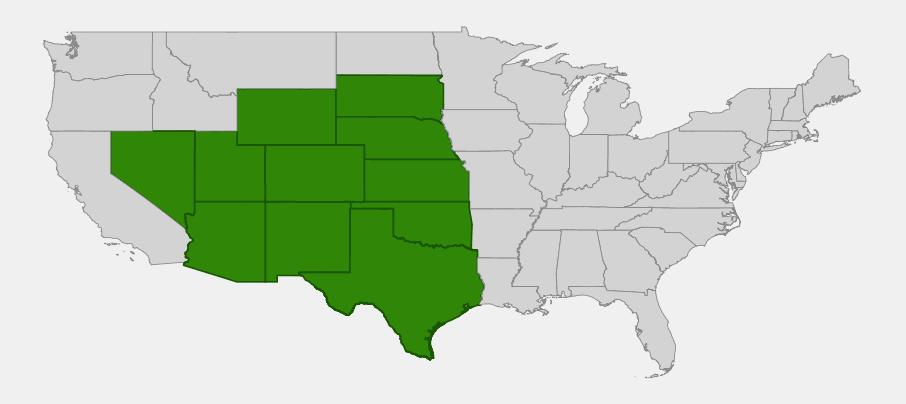
Woolly locoweed is widespread in the western Great Plains and the Southwest. USDA PLANTS lists it as native to Arizona, Colorado, Kansas, Nebraska, Nevada, New Mexico, Oklahoma, South Dakota, Texas, Utah and Wyoming, and it extends south into northern Mexico. Botanists recognize several varieties that differ in size, hairiness and pod shape across this large range.
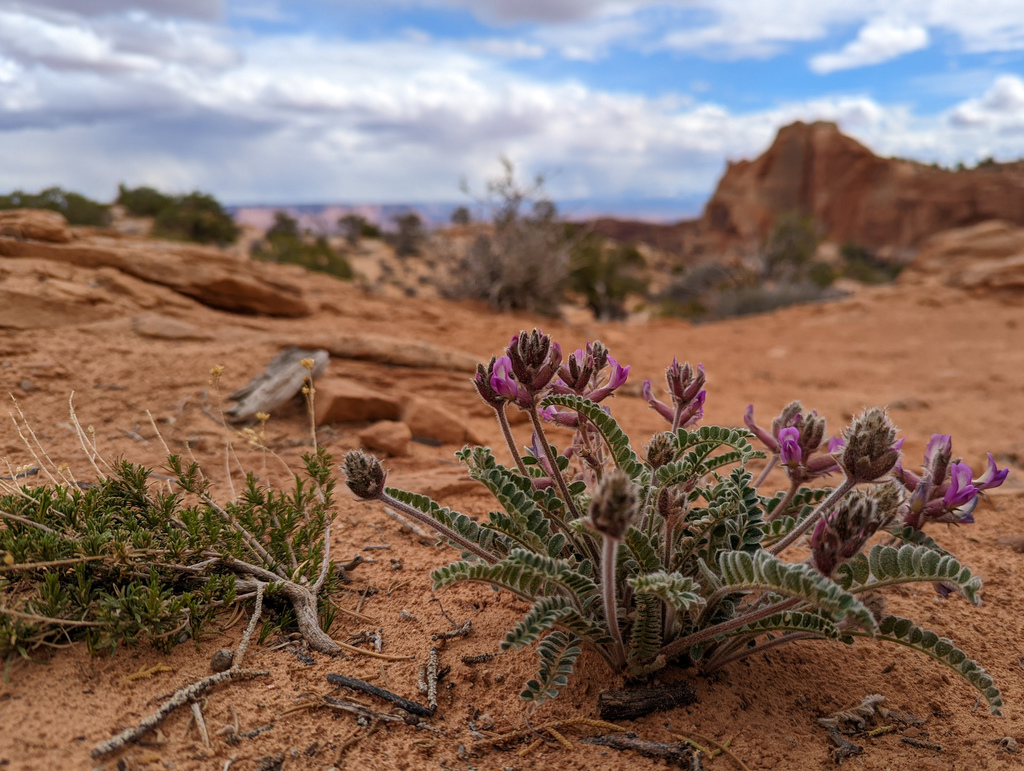
On the plains it grows from southeastern Wyoming, western Nebraska and western Kansas south through eastern Colorado, the Oklahoma Panhandle and western Oklahoma, the Texas Panhandle and West Texas. In the Southwest it is common in New Mexico, on the Colorado Plateau of southern Utah and northern Arizona, including Arches and Canyonlands National Parks, and in western Colorado. The records in eastern Nevada and southwestern South Dakota lie at the western and northern edges of its range.
It grows in shortgrass prairie, dry grassland, sandy and gravelly plains, mesas, canyon benches and openings in pinyon-juniper woodland, often on disturbed or overgrazed ground and along roadsides. It is most abundant in years with good fall and winter moisture.
📋 Regional plant lists featuring Woolly Locoweed: Montana & Wyoming · Nebraska, Kansas & Eastern Colorado · Utah & Western Colorado · Arizona & New Mexico · South & West Texas · California & Nevada · North Dakota, South Dakota & Western Minnesota
Growing & Care Guide
Woolly locoweed is beautiful in flower and very drought-tolerant, but because it is poisonous to animals it is best enjoyed in the wild or in gardens where no livestock, horses or pets graze. It is rarely sold by nurseries. If you do grow it, treat it as a plant for dry, sunny wildflower and rock gardens.
Light
It needs full sun. In the wild it grows on open plains, mesas and slopes with little or no shade.
Soil & Water
Grow it in dry, well-drained sandy, gravelly or rocky soil. It tolerates alkaline and poor soils. Once established it needs little or no supplemental water; overwatering and heavy, wet soil can rot the taproot. It grows actively in cool, moist weather in spring and is often semi-dormant in the heat of summer.
Planting Tips
Woolly locoweed is difficult to transplant because of its deep taproot, so start it from seed sown in place. Never plant it where horses, cattle, sheep, goats or other grazing animals can reach it, and keep it away from areas used by pets.
Pruning & Maintenance
No pruning is needed. Wear gloves when handling it, and remove spent stems and pods if you want to limit reseeding. On rangeland, locoweed populations are managed by grazing management and, where needed, by the advice of local extension services.
Propagation
Grow it from seed. Like many legumes, the seeds have a hard coat; scarify them by nicking or rubbing them with sandpaper before sowing, or sow in fall and let winter weather soften the coat. Sow in place in well-drained soil.
Safety Note
All parts of woolly locoweed are poisonous. It contains swainsonine, which causes locoism in horses, cattle, sheep and other animals that eat it over a period of weeks. Affected animals may show nervous behavior, poor coordination, weight loss and depression, and the toxin can cause abortion and birth defects. The plant is toxic both fresh and dried, including in hay. Do not eat any part of it, and keep it away from livestock and pets. Contact a veterinarian if you suspect an animal has eaten it.
Landscape Uses
- Wildflower viewing: one of the showiest spring wildflowers of the western plains and canyon country
- Native bee habitat: early spring flowers for bumble bees and other native bees
- Wild areas and natural landscapes: a characteristic native perennial of shortgrass prairie and mesas
- Rock and dry gardens: silvery foliage and purple flowers, only where no animals graze
- Education: an important example of a native plant that is toxic to livestock
Wildlife & Ecological Value
Despite its toxicity to grazing animals, woolly locoweed is part of the native plant community of the western plains and supports many insects.
For Pollinators
The purple pea flowers bloom early in spring and are pollinated mainly by bees, especially bumble bees and other large native bees that are strong enough to open the keel and reach the nectar and pollen. It can be an important early nectar source on the open plains.
For Insects
Locoweeds host specialized insects. The larvae of some moths and weevils feed on the leaves, stems and seeds, and butterflies such as blues may use milkvetches as larval host plants. These insects are part of the plains food web.
For Birds & Mammals
Wild animals generally avoid woolly locoweed when other forage is available, but wild grazing animals can also be affected by locoism if they eat a lot of it. Some birds and small mammals may eat the seeds.
Ecosystem Role
As a legume, woolly locoweed hosts nitrogen-fixing bacteria in its root nodules, adding nitrogen to poor, dry soils. It often increases after drought or on disturbed, overgrazed ground, and its numbers rise and fall with weather cycles, sometimes producing spectacular flowering years.
Cultural & Historical Uses
The genus name Astragalus is an ancient Greek name for a plant of the pea family. The species name mollissimus means “softest” or “most soft”, for the dense woolly hairs. The American botanist John Torrey described the species in 1827 from collections made in the West.
The word loco is Spanish for crazy. Ranchers and cowboys on the western plains named the plant locoweed after the strange behavior of horses and cattle that had eaten it, and “locoed” became a common expression in the West. The toxin responsible, swainsonine, was identified much later and was formerly called locoine.
Locoweed poisoning has had a large economic impact on western ranching and has been studied by range scientists for more than a century. At the same time, woolly locoweed is a native wildflower whose silvery mounds and purple flowers are a welcome sign of spring on the plains and mesas.
Frequently Asked Questions
Is woolly locoweed poisonous?
Yes. It contains swainsonine, which causes locoism in horses, cattle, sheep and other animals that eat it over time, and can cause birth defects. It is toxic both fresh and dried. People should not eat any part of the plant.
Why is it called locoweed?
Loco means crazy in Spanish. Animals that eat locoweed for weeks may behave strangely, stagger and become nervous or depressed, so ranchers called them “locoed”.
When does woolly locoweed bloom?
Mainly from March to May on the southern plains and in the Southwest, and into June or summer at higher elevations and farther north.
Where does woolly locoweed grow?
It grows on shortgrass prairie, dry grasslands, mesas and canyon country from Wyoming, Nebraska and Kansas south to West Texas, New Mexico and Arizona, with edge records in Nevada and South Dakota, and into northern Mexico.
Can I grow woolly locoweed in my garden?
You can grow it from seed in dry, sunny, well-drained soil, but only where no livestock, horses or pets can graze it. It is better enjoyed in the wild.

Looking for a nursery that carries Woolly Locoweed?
Browse our native plant nursery directory: Arizona · Colorado · Kansas · Nebraska, Nevada, New Mexico & Oklahoma · South Dakota, Texas & Utah · Wyoming

