
Shaggy Dwarf Morning-Glory (Evolvulus nuttallianus)
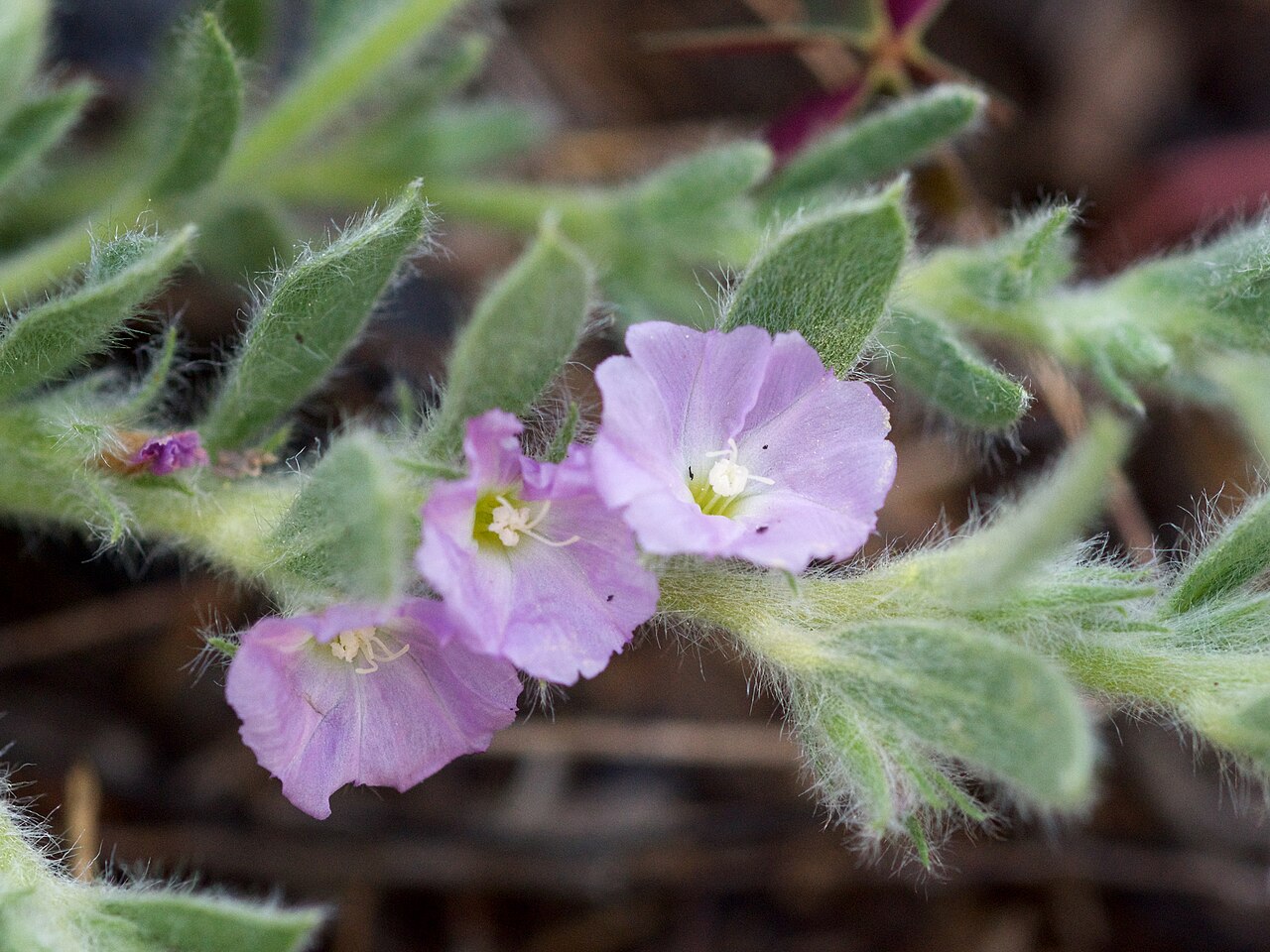
Evolvulus nuttallianus, the Shaggy Dwarf Morning-Glory, is a small, tough perennial wildflower of dry prairies, plains and desert grasslands. Unlike most of its relatives in the morning-glory family (Convolvulaceae), it does not climb or twine. It forms a low tuft of upright stems only 4 to 8 inches tall, densely clothed in long, silky hairs, with small lavender to pale blue flowers tucked among the leaves from spring into late summer.
The “shaggy” in its name refers to that coat of soft, spreading hairs, which give the whole plant a silvery-gray look and help it cope with sun, wind and drought. It is also called hairy evolvulus or Nuttall’s evolvulus, after the English naturalist Thomas Nuttall, who collected widely on the Great Plains in the early 1800s. Older books list it as Evolvulus pilosus.
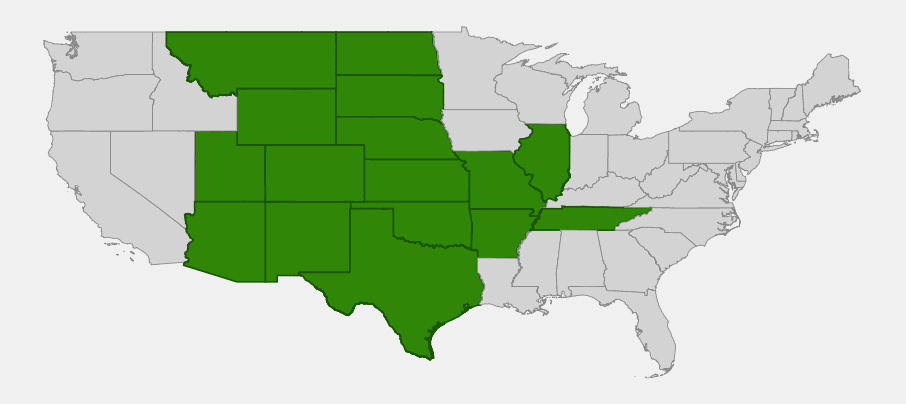
Shaggy dwarf morning-glory ranges from Montana and North Dakota south to Texas and Arizona, with outlying eastern populations in Arkansas, Missouri, Illinois and Tennessee. This guide covers how to recognize it, where it grows and how to use it in a dry prairie or rock garden. It is not the same as the popular bedding plant sold as “Blue Daze,” a South American species.
Identification
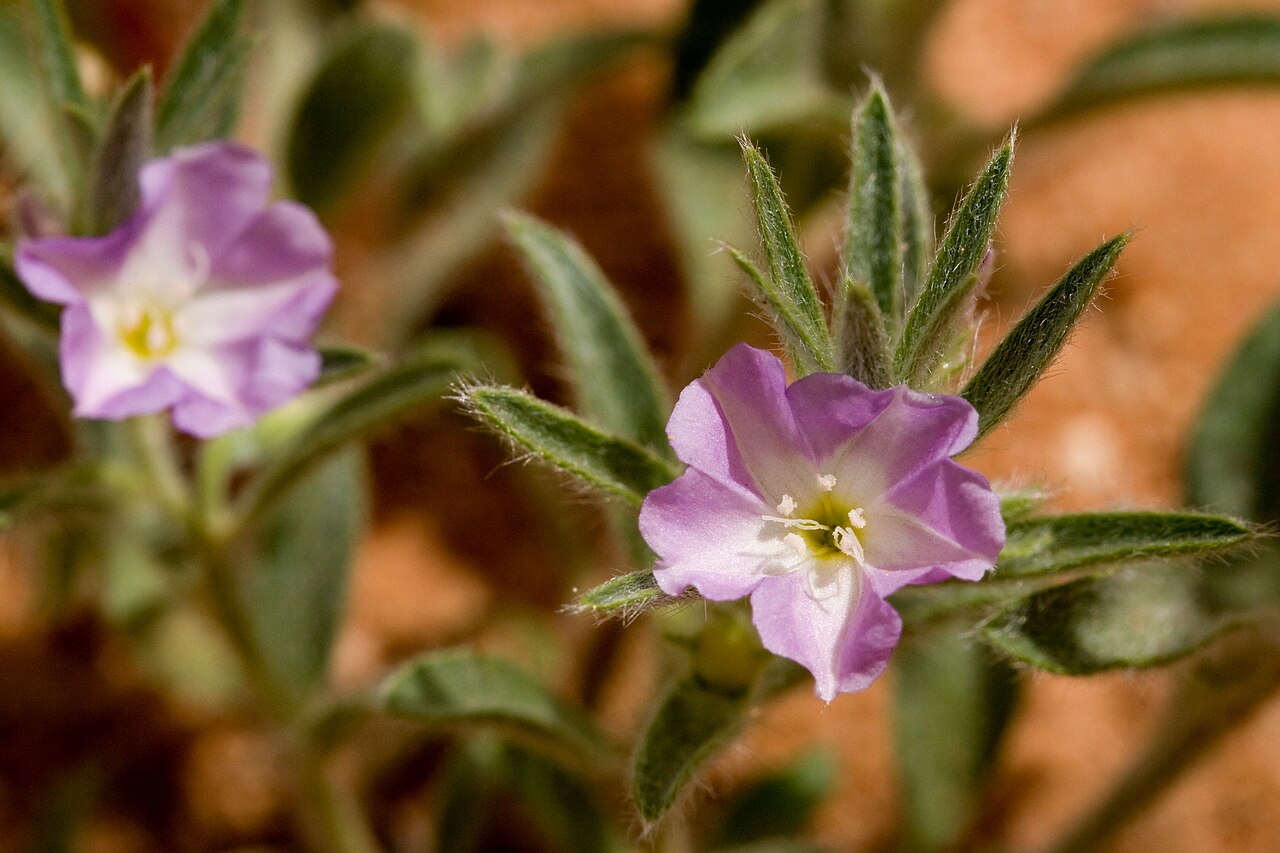
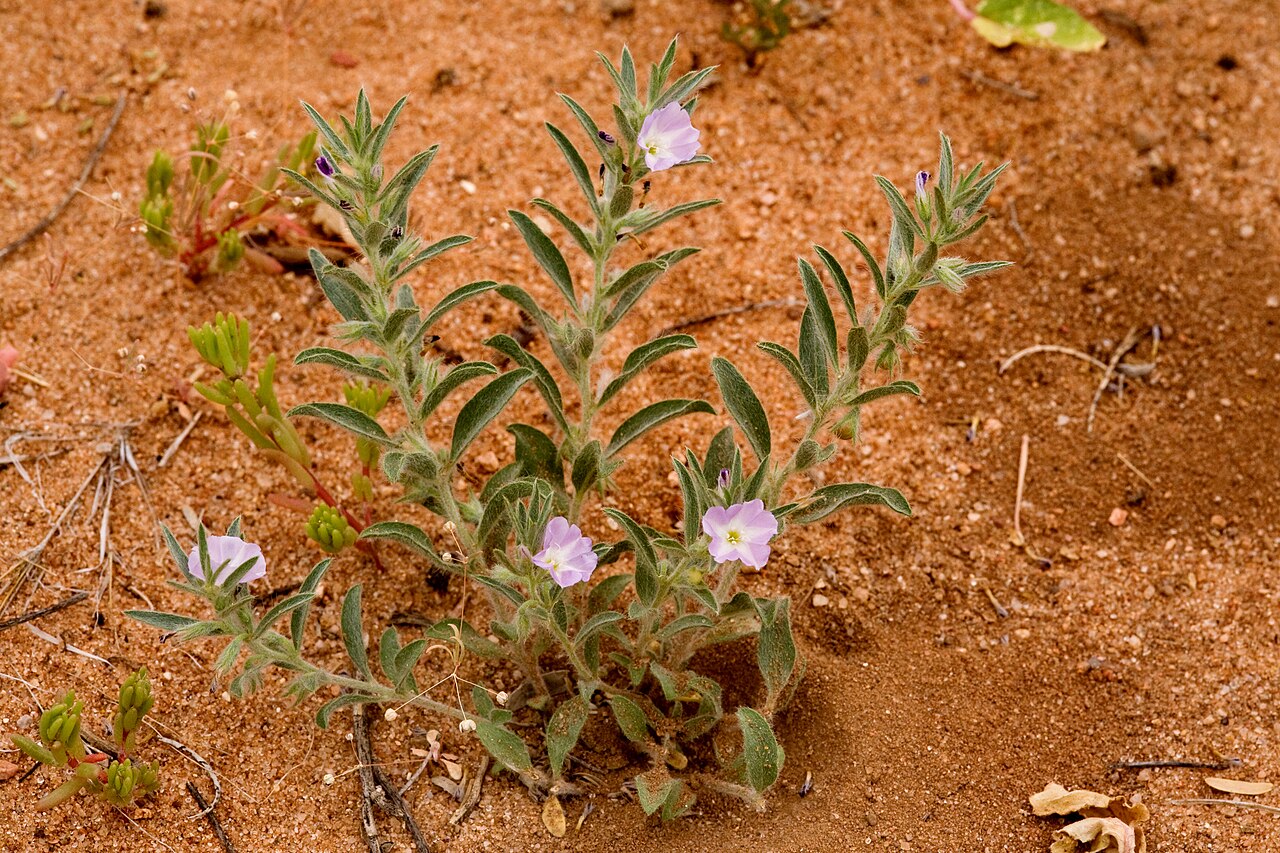
Because it is so small, shaggy dwarf morning-glory is easy to overlook until it flowers. Look for a low, hairy, gray-green tuft on dry, open ground, with flat, five-sided lavender flowers about half an inch wide.
Stems & Roots
Several stems rise from a woody crown on a deep taproot. They are erect to ascending, usually 4 to 8 inches tall (rarely to about 1 foot), unbranched or sparingly branched, and covered with long, soft, spreading white to rusty hairs. The plant does not vine or twine.
Leaves
Leaves are alternate, crowded along the stems, stalkless or nearly so, and narrowly oblong to lance-shaped, about ½ to 1 inch long. Both surfaces are densely hairy, giving them a soft, silvery-green look. The edges are smooth.
Flowers
Flowers are borne singly in the leaf axils on very short stalks, partly hidden among the upper leaves. Each is a shallow, saucer-shaped funnel about ⅜ to ⅝ inch across, pale lavender to blue-violet (occasionally whitish), with a white center and five faint pleats. Like other Evolvulus, it has two separate styles, each split again into two, a feature that separates the genus from true morning-glories. The flowers open in the morning and close by afternoon. Blooming runs from April or May into August.
Fruit & Seeds
The fruit is a small, round capsule about ¼ inch across, partly enclosed by the hairy sepals. It holds one to four smooth brown seeds that drop near the parent plant.
Quick Facts
| Scientific Name | Evolvulus nuttallianus (syn. E. pilosus) |
| Family | Convolvulaceae (morning-glory family) |
| Plant Type | Low, non-climbing herbaceous perennial |
| Mature Height | 4–8 in (rarely to 12 in) |
| Mature Spread | 6–10 in |
| Growth Rate | Slow |
| Sun Exposure | Full sun |
| Water Needs | Low; very drought tolerant once established |
| Soil Type | Dry sand, gravel, rocky limestone or shallow clay; well drained |
| Soil pH | About 6.5–8.5 |
| Bloom Time | April–August |
| Flower Color | Pale lavender to blue-violet with a white center |
| Fall Color | None of note |
| Fruit | Small round capsule with 1–4 seeds |
| Deer Resistant | Moderately; small and hairy, rarely browsed |
| USDA Hardiness Zones | 4–9 |
Native Range
Shaggy dwarf morning-glory is a plant of the Great Plains and the Southwest. USDA PLANTS records it from 16 states: Montana, North Dakota, South Dakota, Wyoming, Nebraska, Kansas, Colorado, Utah, Oklahoma, Texas, New Mexico and Arizona, plus Arkansas, Missouri, Illinois and Tennessee. It extends south into northern Mexico.
Its heartland is the shortgrass and mixed-grass prairie, where it grows on dry hilltops, sandy plains and rocky slopes, and the desert grasslands and pinyon-juniper country of the Southwest. In Texas it is widespread in the Hill Country, the Rolling Plains and the Trans-Pecos.
East of the Plains it is an outlying plant of special habitats: limestone and dolomite glades and barrens in the Ozarks of Arkansas and Missouri, dry hill prairies in Illinois, and cedar glades in Tennessee. These eastern populations are small and scattered, and the species is considered rare in several of those states.
📋 Regional plant lists featuring Shaggy Dwarf Morning-Glory: Arkansas, Louisiana, Eastern Oklahoma & Eastern Texas · South & West Texas · Illinois, Iowa & Missouri · Kentucky & Tennessee · Nebraska, Kansas & Eastern Colorado · North Dakota, South Dakota & Western Minnesota · Montana & Wyoming · Utah & Western Colorado · Arizona & New Mexico
Growing & Care Guide
Shaggy dwarf morning-glory is rarely sold, but it is occasionally available from native seed companies and specialist prairie nurseries in the Plains states and Texas. It is a plant for people who enjoy small, tough wildflowers in a dry, sunny spot, such as a rock garden, a gravel garden or a shortgrass prairie planting.
Light
Give it full sun. In shade, or when crowded by taller plants, it weakens and stops flowering.
Soil & Water
It needs dry, well-drained, lean soil: sand, gravel, rocky limestone soil or thin clay over rock. It tolerates alkaline soil well. Once established, it needs no supplemental water in most of its native range. Wet or rich soils, especially in winter, lead to rot.
Planting Tips
Plant in spring among low companions such as blue grama, buffalograss, prairie verbena and other short prairie wildflowers. Because of its deep taproot, set out small plants rather than trying to move established ones.
Pruning & Maintenance
No pruning is needed. Keep taller grasses and weeds from shading it. Do not mulch heavily with organic material; a gravel mulch suits it better.
Propagation
Grow from seed sown in fall or in early spring after a short cold stratification. Scarifying the seed (lightly nicking or sanding the coat) can improve germination, as with many morning-glory relatives. Seedlings grow slowly and may not flower until their second year.
Landscape Uses
- Rock and gravel gardens: a small, silver-gray accent for hot, dry spots
- Shortgrass prairie plantings: fits among blue grama and buffalograss
- Xeriscapes: thrives with little or no supplemental water once established
- Glade and barrens restoration: in limestone glades within its native range
Wildlife & Ecological Value
Small as it is, shaggy dwarf morning-glory contributes to the diversity of dry prairies and glades.
For Pollinators
The open, morning-blooming flowers are visited by small native bees, including sweat bees and other solitary bees, and by small flies and butterflies. The flowers provide nectar and pollen over a long season from spring into late summer.
For Birds
Its few seeds are a minor food for ground-feeding birds such as sparrows and quail. Its main value to birds is as part of the low, diverse plant cover of shortgrass prairie that supports grassland birds.
For Mammals
Pronghorn, deer and rabbits may nibble it, but it is too small and hairy to be an important forage plant.
Ecosystem Role
With its deep taproot and hairy, drought-resistant foliage, shaggy dwarf morning-glory is adapted to the long dry spells, intense sun and wind of the Plains. It is one of many small perennial forbs that make up much of the plant diversity of grazed and ungrazed shortgrass prairie.
Cultural & Historical Uses
The species honors Thomas Nuttall (1786–1859), the English botanist and ornithologist who traveled up the Missouri River in 1810–1811 and later through Arkansas Territory, collecting many plants new to science. Nuttall himself had named the plant Evolvulus pilosus, and it was renamed in his honor by Josef August Schultes when that earlier name proved to be already in use.
The genus name Evolvulus comes from the Latin evolvere, “to unroll” or “untwist,” referring to the fact that these plants, unlike their twining morning-glory relatives, do not climb.
Few uses of this small plant by people are recorded. Today it is valued mainly by botanists and native plant enthusiasts as a characteristic wildflower of dry prairies and glades.
Frequently Asked Questions
Is shaggy dwarf morning-glory a vine?
No. Although it is in the morning-glory family, it is a low, upright perennial 4 to 8 inches tall and never climbs or twines.
Is it the same as the bedding plant “Blue Daze”?
No. “Blue Daze” is Evolvulus glomeratus, a tropical South American species with brighter blue flowers. Shaggy dwarf morning-glory is a hardy native wildflower of the Great Plains and Southwest, with smaller, paler lavender flowers.
Where does shaggy dwarf morning-glory grow?
On dry prairies, sandy plains, rocky slopes and desert grasslands from Montana and North Dakota to Texas and Arizona, with outlying populations on glades in Arkansas, Missouri, Illinois and Tennessee.
How do I grow shaggy dwarf morning-glory?
Plant it in full sun in dry, well-drained, lean soil, such as a rock or gravel garden. Water only until established, and keep taller plants from crowding it.
Are there other native Evolvulus species?
Yes. Several grow in the southern United States, including silky evolvulus, which has white to pale blue flowers and grows across the southern United States.

Looking for a nursery that carries Shaggy Dwarf Morning-Glory?
Browse our native plant nursery directory: Arizona & Arkansas · Colorado · Illinois & Kansas · Missouri & Montana · Nebraska, New Mexico, North Dakota & Oklahoma · South Dakota, Tennessee, Texas & Utah · Wyoming

