
ʻĀhinahina (Argyroxiphium sandwicense)
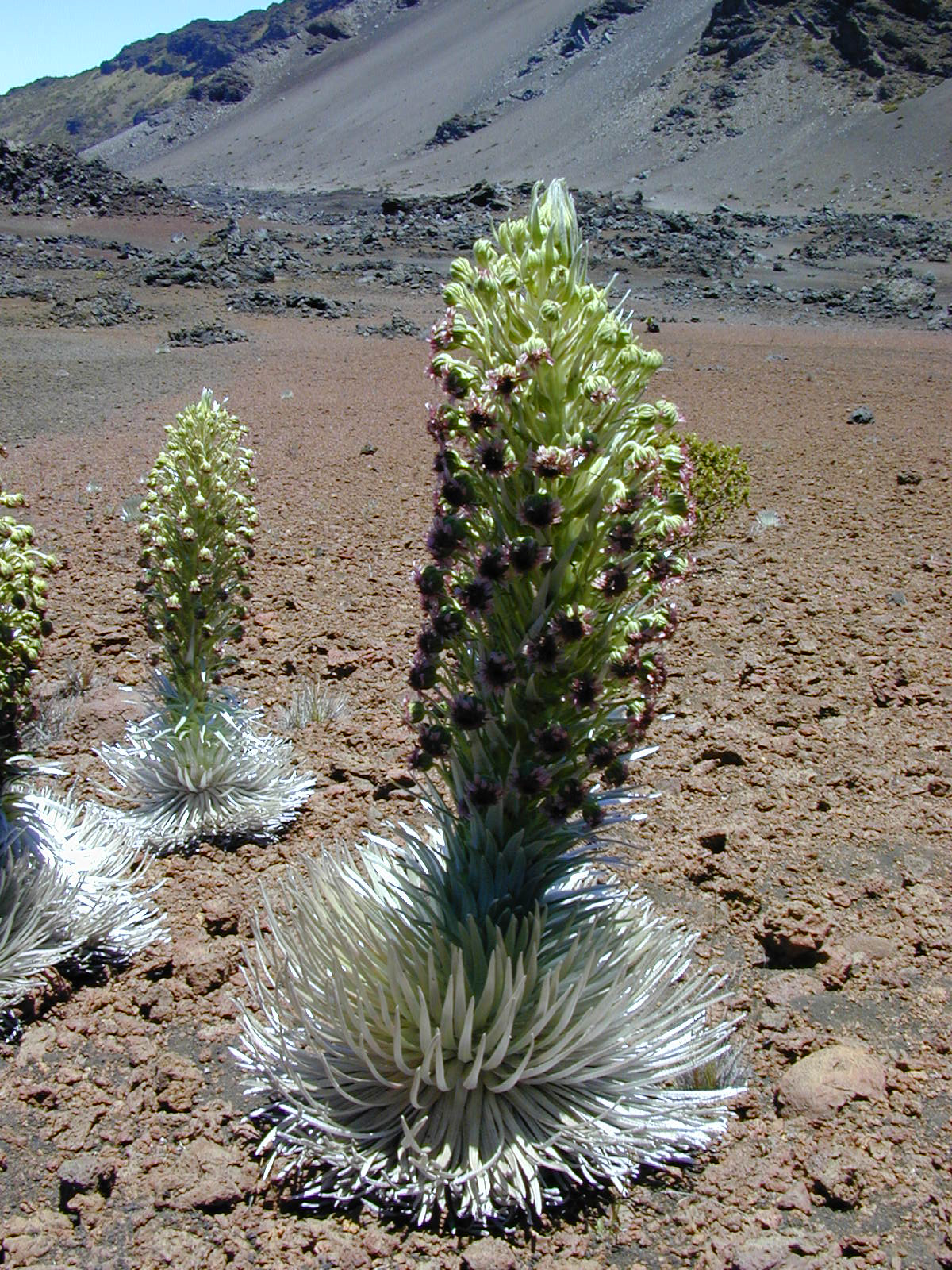
Argyroxiphium sandwicense, the ʻĀhinahina or Hawaiʻi silversword, is one of the most famous plants in the United States: a spherical rosette of silver, sword-shaped leaves that lives for decades on the cinder slopes of Hawaiian volcanoes, then sends up a single towering stalk of maroon flowers and dies. The Hawaiian name means “very gray,” for its silvery leaves. It is a member of the aster or sunflower family (Asteraceae) and is found nowhere else on Earth.
There are two subspecies. The Haleakalā silversword (subsp. macrocephalum) grows only in and around the summit crater of Haleakalā on Maui and is federally listed as Threatened. The Mauna Kea silversword (subsp. sandwicense) grows only on Mauna Kea on Hawaiʻi Island and is federally listed as Endangered; feral sheep and goats once reduced its wild population to a few dozen plants.
This is a protected plant that cannot be grown in gardens. It is illegal to collect, damage or remove silverswords, and it survives only in its alpine home. This guide covers how to recognize it, its remarkable life history, where it grows, and where and how to see it responsibly.
Identification
No other plant in its habitat looks like a silversword. Its relatives, the greenswords and the Kaʻū silversword (Argyroxiphium kauense), are rare plants of bogs and wet or lower-elevation slopes and have greener or narrower leaves.
Stems & Growth Habit
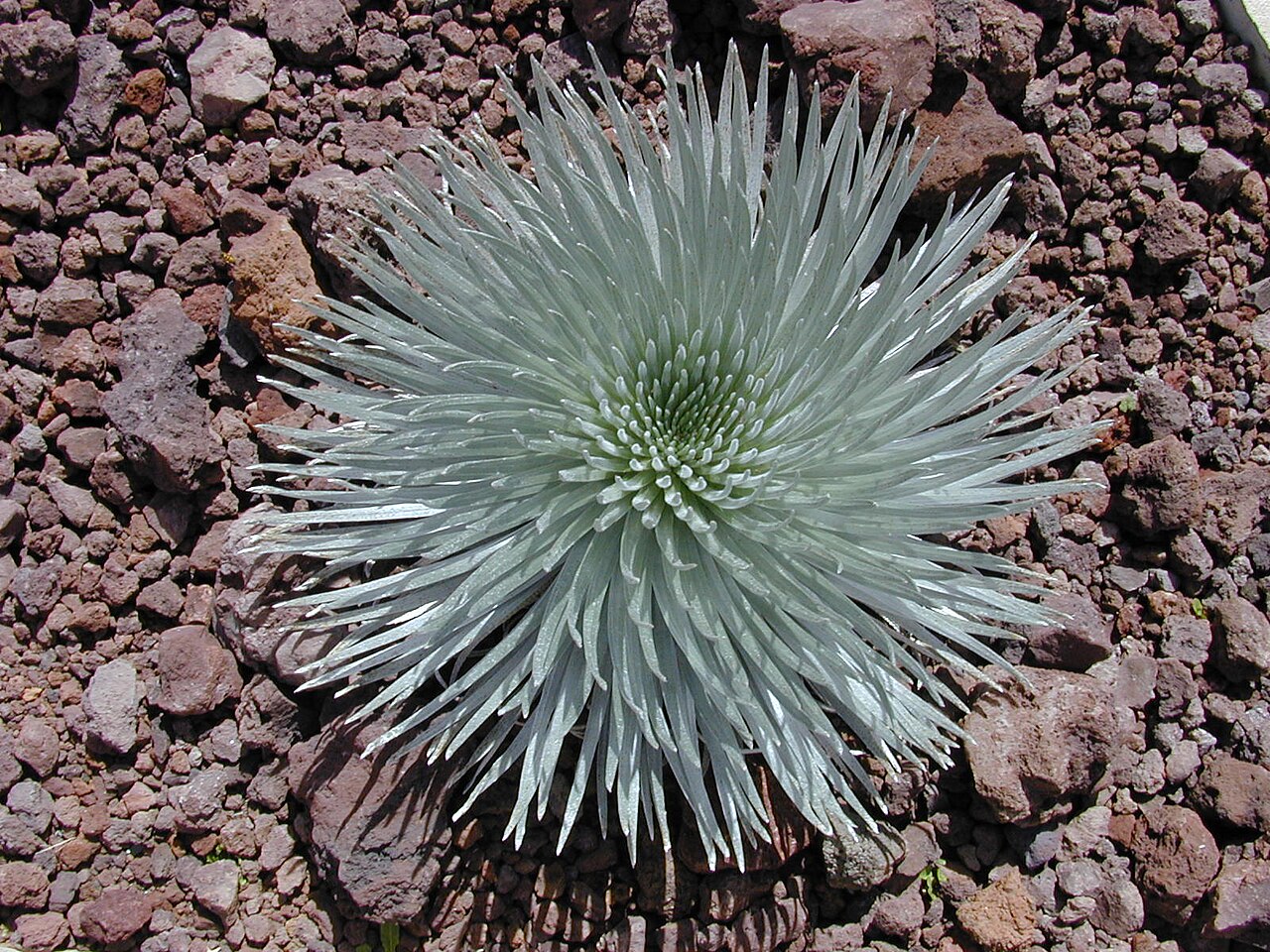
A rosette shrub, usually a single dense, nearly round ball of leaves 1 to 2 feet across on a very short stem. Older plants may branch into several rosettes. It grows slowly for 20 to 90 years before it flowers. Its roots are shallow and spread widely just below the loose cinder surface, which makes the plant easy to damage by trampling.
Leaves
Hundreds of narrow, rigid, sword-shaped leaves, typically 6 to 16 inches long, curve upward and outward from the center. They are covered in dense, silky, silver hairs that reflect sunlight and protect the plant from intense ultraviolet light, drying winds and freezing nights. Inside, the leaves hold a water-storing gel.
Flowers
When it finally blooms, usually in summer and early fall, a single flowering stalk grows 3 to 6 feet tall from the center of the rosette. It carries a hundred to several hundred nodding, sunflower-like heads with maroon to wine-red or pinkish florets. Silverswords are largely self-incompatible, so a plant needs pollen from another flowering plant to set good seed. After flowering and setting seed, the whole plant dies.
Fruit
Each head produces many small, dry, one-seeded fruits (achenes). Seeds fall close to the parent plant. In years when few plants bloom at the same time, many seeds are not viable because of poor cross-pollination.
Quick Facts
| Scientific Name | Argyroxiphium sandwicense DC.; subspecies macrocephalum and sandwicense |
| Family | Asteraceae (aster or sunflower family) |
| Plant Type | Long-lived, once-flowering (monocarpic) rosette shrub |
| Mature Height | 1–2 ft rosette; flowering stalk 3–6 ft |
| Mature Spread | 1–2 ft |
| Growth Rate | Very slow (20–90 years before flowering) |
| Sun Exposure | Full sun (alpine) |
| Water Needs | Low; alpine desert with occasional rain and fog |
| Soil Type | Loose volcanic cinder and lava |
| Soil pH | Volcanic cinder; not applicable to gardens |
| Bloom Time | Mostly June–October, once in a lifetime |
| Flower Color | Maroon to wine-red or pinkish |
| Fall Color | None; silver all year |
| Fruit | Small dry achenes |
| Deer Resistant | No; historically devastated by feral goats, sheep and cattle |
| USDA Hardiness Zones | Not cultivable; alpine Hawaii only |
Native Range
ʻĀhinahina is endemic to Hawaii, and each subspecies is restricted to one volcano. The Haleakalā silversword grows in the summit crater and on the upper slopes of Haleakalā, East Maui, mostly above about 6,900 feet (2,100 m), almost entirely within Haleakalā National Park. The Mauna Kea silversword grows on the upper slopes of Mauna Kea on Hawaiʻi Island, above about 8,500 feet (2,600 m).
Both grow in alpine and subalpine cinder deserts, where nights are often below freezing, days are sunny and dry, and the soil is loose volcanic cinder with little organic matter. These are some of the harshest plant habitats in the United States.
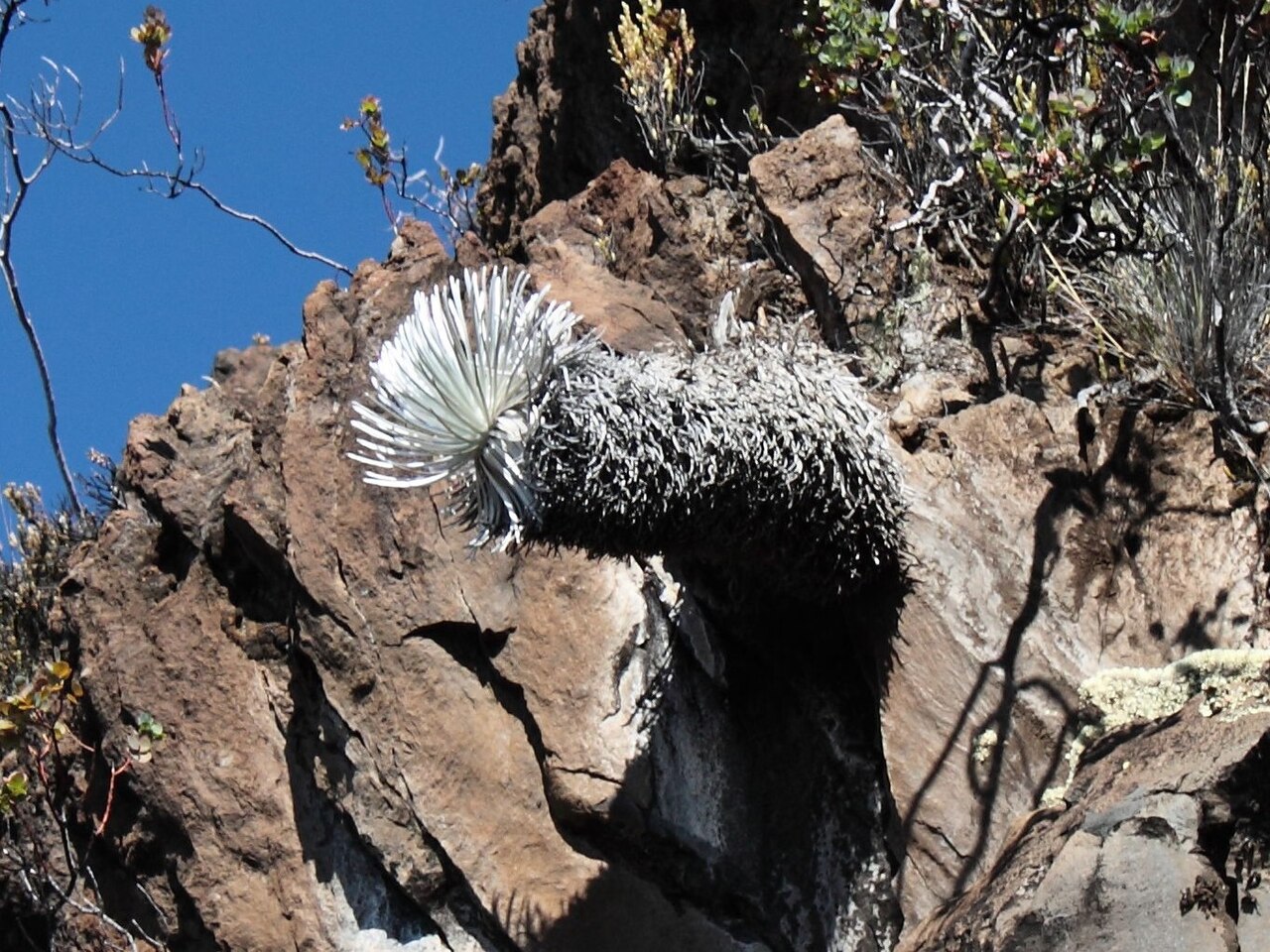
In the 19th and early 20th centuries, feral goats, sheep and cattle ate silverswords, and visitors uprooted them as souvenirs or rolled them down slopes. Fencing, ungulate removal and protection allowed the Haleakalā population to recover strongly in the late 20th century, but since then hotter, drier conditions have caused large declines. On Mauna Kea, wild plants survived only on cliffs out of reach of browsing animals, and the subspecies has been rebuilt by outplanting nursery-raised seedlings in fenced areas.
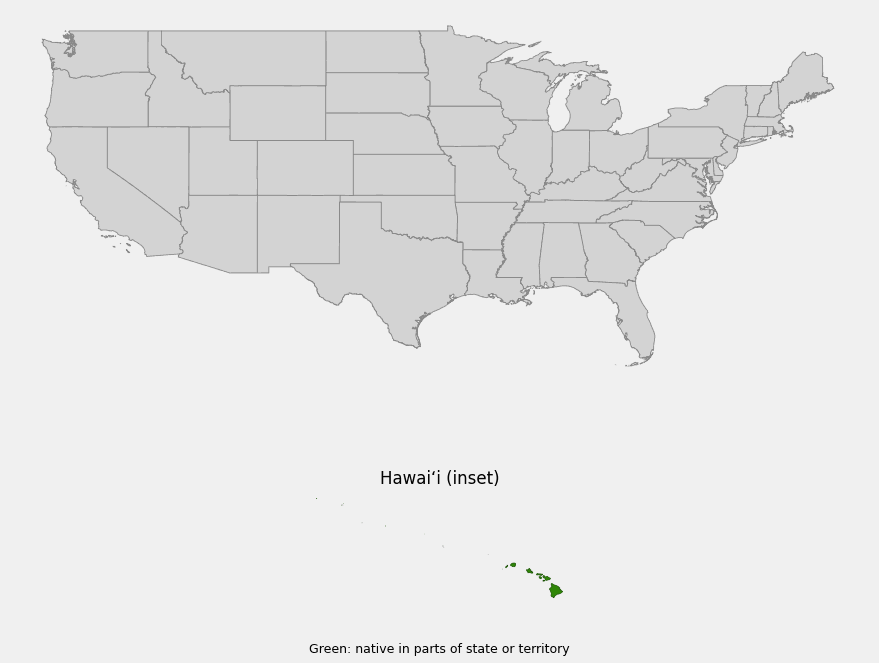
📋 Regional plant lists featuring ʻĀhinahina: Hawaii
Can You Grow It?
No. ʻĀhinahina cannot be grown in home gardens, and you should never buy, collect or move one. Both subspecies are protected under the federal Endangered Species Act and Hawaii state law, and it is illegal to remove, damage or collect plants or seeds. Plants or seeds occasionally offered online are not a legal or responsible option, and the species dies quickly outside its cold, dry, high-altitude home.
Light
In the wild it grows in full, intense alpine sun at high altitude. Its silver hairs are an adaptation to ultraviolet radiation that lowland gardens and greenhouses cannot reproduce.
Soil & Water
It needs loose, fast-draining volcanic cinder, cold nights, dry air and occasional rain or fog. Its shallow roots are easily crushed. On Haleakalā and Mauna Kea, never walk on the cinder around a silversword or touch it, because footsteps compact the soil and break the roots.
Planting Tips
Silverswords are planted only by the National Park Service, the State of Hawaii and their partners, from seed collected and raised under permit, and only into fenced, protected habitat on Haleakalā and Mauna Kea.
Pruning & Maintenance
Wild plants need no care except protection: fences that keep out goats, sheep and mouflon; control of invasive ants and wasps that harm native pollinators; and visitors who stay on trails.
Propagation
Conservation programs hand-pollinate flowering plants, collect seed and raise seedlings in nurseries before outplanting them into protected areas. This careful work, done under federal and state permits, is how the Mauna Kea silversword was brought back from a few dozen wild plants.
Where to See It
- Haleakalā National Park, Maui: silverswords grow along the crater trails and at overlooks such as Kalahaku; view them from the trail or overlook
- Mauna Kea, Hawaiʻi Island: fenced restoration plantings on the upper slopes; follow posted rules
- Bloom season: flowering plants are most often seen from about June to October; the number in bloom varies greatly from year to year
- Respectful viewing: stay on trails, do not touch, step near or photograph from the cinder around the plant
- Support conservation: park and nonprofit programs that fence habitat and control invasive species
Wildlife & Ecological Value
ʻĀhinahina is a keystone of Hawaii’s alpine ecosystems and a textbook example of how a single colonizing ancestor can evolve into many very different species on remote islands.
For Pollinators
Its flowers are visited mainly by native Hawaiian yellow-faced bees (Hylaeus), along with native moths and flies. Invasive Argentine ants and western yellowjackets prey on these native insects in parts of Haleakalā, which threatens silversword seed set.
For Birds
Native birds such as the endangered nēnē (Hawaiian goose) forage in silversword habitat, and the crater’s seabirds, including the endangered ʻuaʻu (Hawaiian petrel), nest in nearby burrows. Silverswords themselves are not a major bird food.
For Mammals
Hawaii has no native land mammals except a bat. Introduced goats, sheep, mouflon and cattle eat silverswords, and keeping them out with fences has been essential to the plant’s survival.
Ecosystem Role
Silverswords provide shade, moisture and shelter on bare cinder for insects and other small animals. The Hawaiian silversword alliance, about 30 species in Argyroxiphium, Dubautia and Wilkesia, descends from a California tarweed that reached Hawaii millions of years ago and is one of the best-known examples of adaptive radiation.
Cultural & Historical Uses
Augustin Pyramus de Candolle named the species in 1836. The genus name combines Greek words for “silver” and “sword,” and sandwicense refers to the Sandwich Islands, an old European name for Hawaii. The Hawaiian name ʻāhinahina means “very gray” or “silvery.”
In the 19th and early 20th centuries, visitors to Haleakalā collected silverswords as souvenirs, used them in decorations, and sometimes rolled the round rosettes down the crater slopes for fun. Combined with browsing by feral animals, this brought the Haleakalā silversword close to extinction before protection and fencing reversed the decline.
Today the silversword is a symbol of Haleakalā National Park and of Hawaiian conservation. It is also a warning: long-term monitoring has linked recent declines to a warmer, drier climate at the summit, and research suggests that the plant may struggle to survive continued climate change.
Frequently Asked Questions
Can I grow a silversword at home?
No. It is federally protected and illegal to collect, and it cannot survive outside its cold, dry alpine habitat on Haleakalā and Mauna Kea. Plants are raised only by permitted conservation programs for planting back into the wild.
Where can I see ʻāhinahina?
In Haleakalā National Park on Maui, along the crater trails and at overlooks such as Kalahaku, and in fenced restoration areas on Mauna Kea on Hawaiʻi Island. Stay on trails and never touch the plants or walk on the cinder around them.
How long does a silversword live?
Usually 20 to 90 years. It grows as a rosette for decades, flowers once, sets seed and then dies.
Why are silverswords silver?
The leaves are covered in dense, silky silver hairs that reflect intense sunlight and ultraviolet radiation, reduce water loss in dry wind, and help protect the leaves from frost.
Is the silversword endangered?
Yes. The Haleakalā silversword is listed as Threatened and the Mauna Kea silversword as Endangered under the U.S. Endangered Species Act. Feral animals, invasive insects and a drying climate are the main threats.

Looking for a nursery that carries ʻĀhinahina?
Browse our native plant nursery directory: Hawaii

