Māmane (Sophora chrysophylla)
Māmane (Sophora chrysophylla) brings bright yellow pea flowers and finely divided foliage to a Hawaiian native landscape. It is an endemic member of the pea family, Fabaceae, and may grow as a shrub or a substantial tree. Its appearance is especially associated with upland and subalpine woodland, though suitable nursery sources can also be grown at lower elevations.
Māmane is more than an ornamental flowering tree. The endangered palila has an exceptionally close feeding relationship with it, especially with the developing seeds inside green pods. Nectar-feeding birds also visit the flowers. These relationships make the tree a powerful subject for learning about Hawaiian ecology, while also reminding gardeners that a single cultivated specimen is not a substitute for protected forest.
Use māmane where its mature form has room to develop and its roots can occupy well-drained soil. A slow-growing plant should not be forced with frequent feeding or cut repeatedly into a shape it does not naturally make. Ask a native nursery about the elevation and locality of its seed source, particularly when planning a lowland garden.
Identification
Bark & Stems
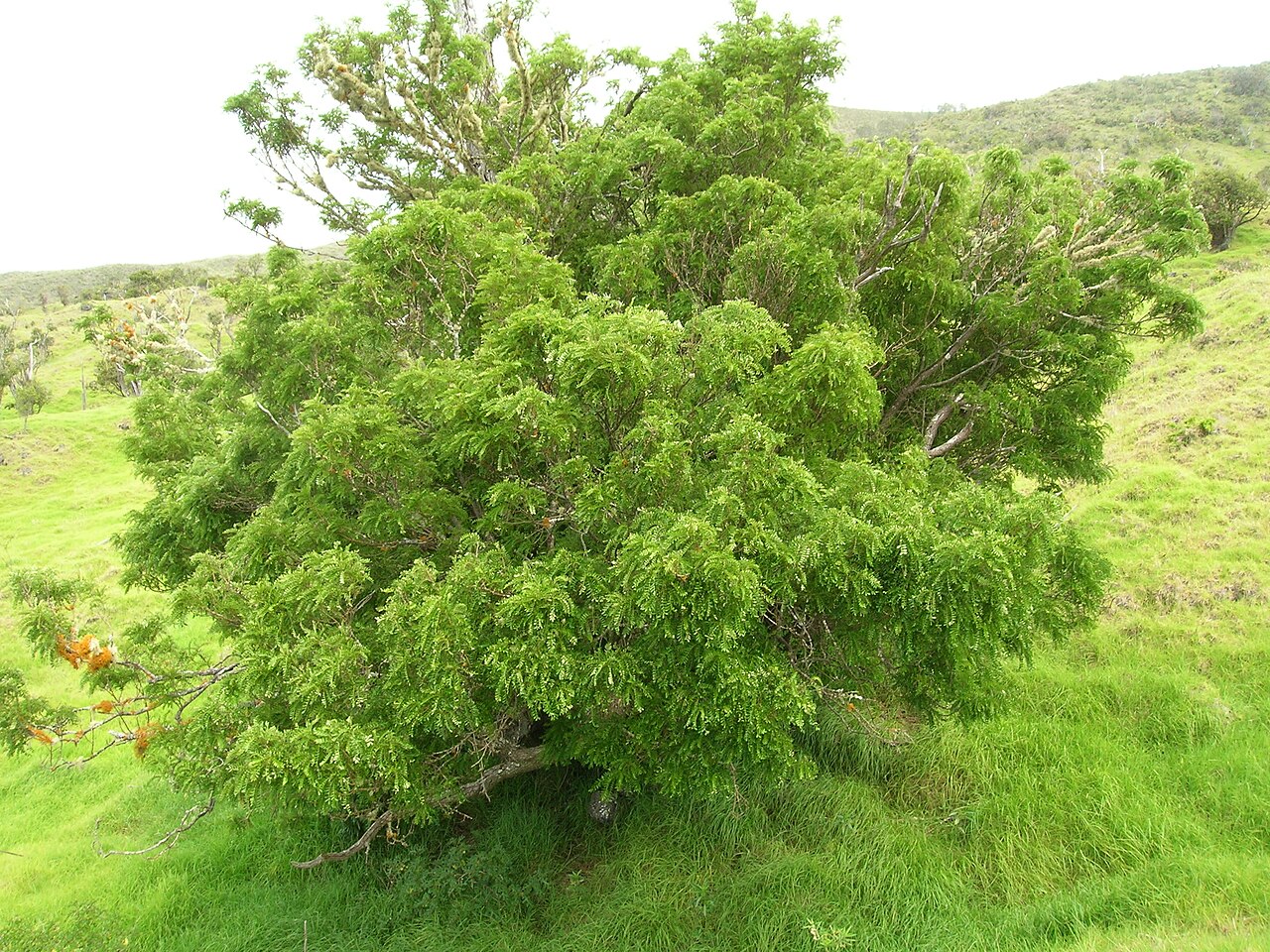
Māmane varies from a branching shrub to a small or medium tree. Older bark becomes textured, while fine young stems carry the compound foliage and flowering shoots. A windswept upland plant may look quite different from a sheltered garden specimen. Growth form is therefore part of the identification, not sufficient evidence on its own.
Leaves
The leaves are pinnately compound, made up of a series of small leaflets rather than one broad blade. Gray-green foliage and hairs on younger growth can give the canopy a soft appearance. Looking closely at the leaflets helps distinguish a young māmane from trees whose fernlike foliage later changes into the sickle-shaped phyllodes of koa or koaiʻa.
Flowers
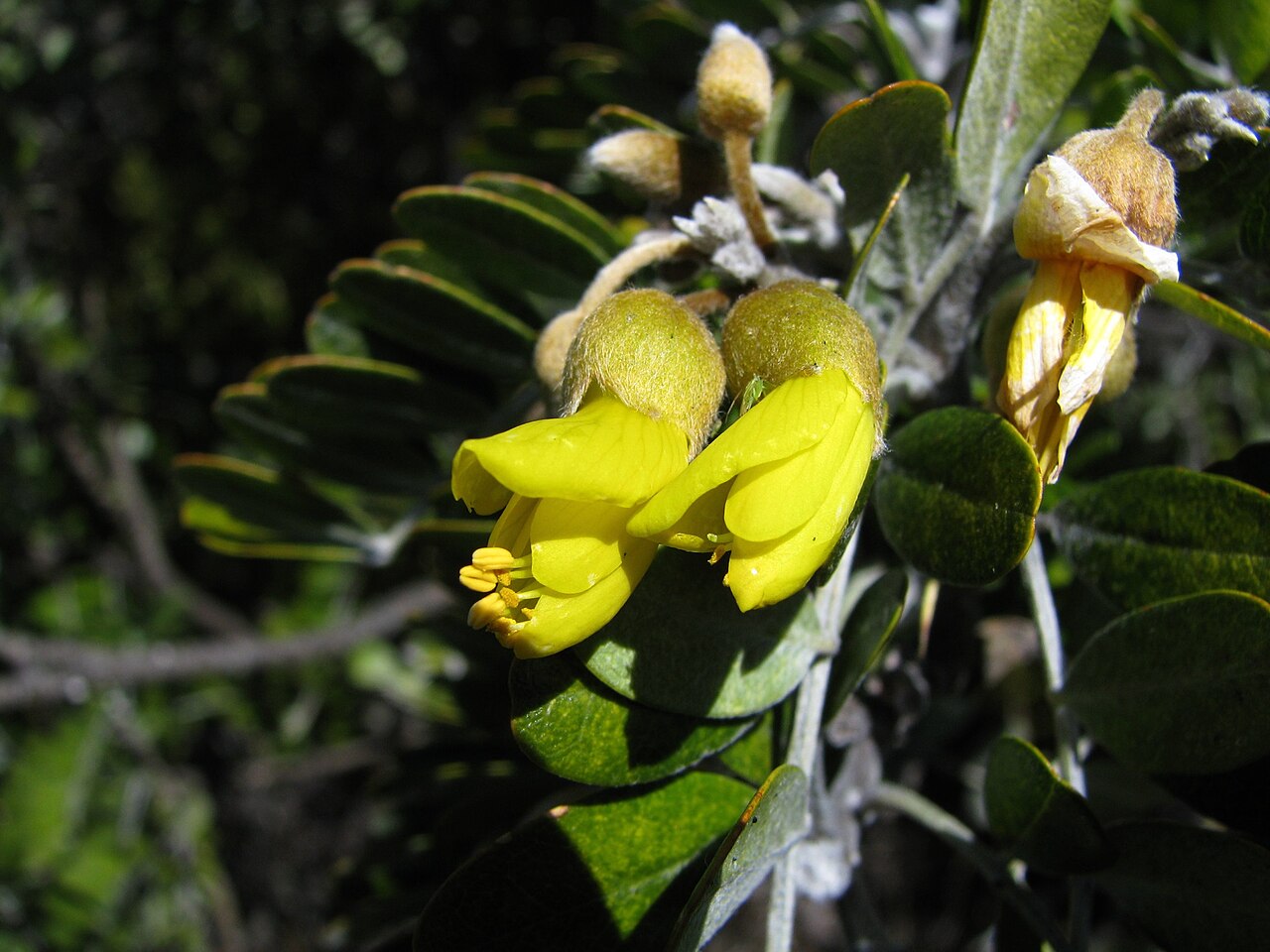
Bright yellow flowers are grouped near branch ends. Their recognizable pea-flower form makes the family relationship visible. Blooming times vary between sites and islands, so a rigid month-by-month schedule is less useful than observations of the actual source and growing location. A healthy plant may not flower heavily in its first year after planting.
Fruit & Seeds
The pods become woody and are conspicuously narrowed between the seeds, giving them a segmented outline. Old brown pods can remain on the tree. The palila’s use of developing seeds should not be confused with human edibility: the seeds contain potentially toxic compounds and are not a garden food crop.
Quick Facts
| Scientific Name | Sophora chrysophylla |
| Family | Fabaceae |
| Plant Type | Evergreen native shrub or tree |
| Mature Height | 15–50 ft for tree forms; shrub forms can be smaller |
| Mature Spread | About 3–20 ft, depending on form |
| Growth Rate | Slow |
| Sun Exposure | Full sun; partial sun tolerated |
| Water Needs | Dry to average; source-dependent, with good drainage |
| Soil Type | Well-drained volcanic or organic soils; not a default coastal salt-site tree |
| Bloom Time | Variable and sporadic; timing differs among sites |
| Flower Color | Bright yellow |
| Fruit | Woody segmented pods; seeds not edible |
| Soil pH | Match the planting soil to locally successful nursery stock; do not lime routinely |
| Fall Color | Evergreen; no conventional temperate autumn display |
| Deer Resistant | Protect young plants from introduced browsing animals |
| USDA Hardiness Zones | Hawaiian tropical to subtropical sites; match elevation and exposure locally |
Native Range
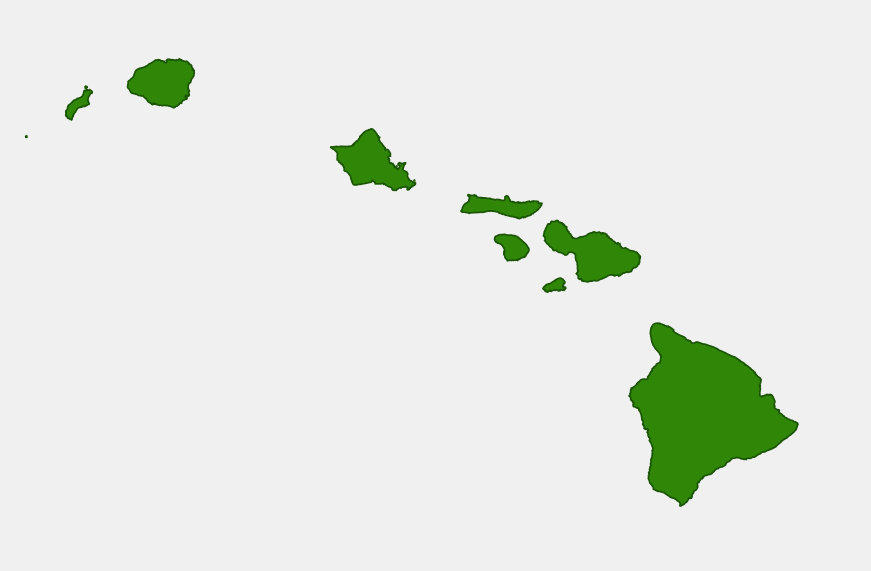
Māmane is endemic to the Hawaiian Islands. Hawaiian botanical sources record it in dry-to-mesic forests and subalpine vegetation, with a broad reported elevation range of roughly 1,475–10,630 feet. It is especially conspicuous in parts of East Maui and Hawaiʻi Island, but its historical and present distribution should not be reduced to those familiar upland landscapes.
Local occurrence and abundance differ among islands. A statewide native-range label does not mean that nursery material from any island is appropriate for every restoration site. For conservation planting, retain locality records and follow the receiving project’s provenance requirements rather than making an unplanned transfer of seed or seedlings.
The Hawaii map below is a state-level guide. It does not map palila distribution, individual māmane stands, or places where wild collection is allowed. A garden can demonstrate the species’ beauty and ecological importance even if it lies outside the bird’s current habitat, but it should not be advertised as a guaranteed way to attract palila.
Native Range
| U.S. States | Hawaii |
| Hawaiian Islands | Recorded across the main islands; present abundance and occurrence vary |
| Mexico / Canadian Provinces | None in the natural range |
| Ecoregion | Hawaiian dry-to-mesic forest and subalpine woodland |
| Elevation Range | Roughly 1,475–10,630 ft in botanical habitat accounts |
| Habitat | Forest, woodland, and subalpine vegetation |
| Common Associates | Locally appropriate upland native plants, including naio in suitable woodland |
USDA PLANTS profile (SOCH). Species identity verified; this link is not a guarantee of county-level distribution data.
📋 Explore compatible species in our Hawaii native plant list.
Growing & Care Guide
Light
Full sun is the usual goal for an established landscape plant, with some partial sun tolerated. Very young nursery seedlings may need protection while they are being established and hardened. Match the transition to the stock you buy; a plant raised under protection should not be treated exactly like one already accustomed to an exposed nursery bench.
Soil & Water
Use freely draining soil and moderate establishment care. Māmane is associated with relatively dry settings, but the original root ball must not repeatedly dry out before roots reach surrounding ground. Check it directly and adjust irrigation to rainfall and drainage. Do not use the species’ drought tolerance as an excuse to skip establishment monitoring.
Once established, watering needs vary with provenance and local conditions. Protect the root zone from excessive heating with a suitable mulch or compatible planting, without piling organic material against the trunk. Coastal salt exposure and poorly draining clay or coral-based settings are not good default choices for this upland-associated species; discuss difficult sites with a nursery that knows local performance.
Planting Tips
Select a site where the plant can keep its natural structure. The tree list’s 15–50-foot range is a planning range for tree-sized plants, not a guarantee that a shrubby source will grow into a tall tree. Conversely, do not assume that a small nursery specimen will always remain beneath a window or overhead line.
Plant at the established nursery depth and provide good contact between the root ball and surrounding soil. Avoid creating a small, heavily amended pocket in ground that otherwise drains poorly. Keep weeds controlled without repeated digging through young roots. Where browsing animals are present, install protection before the plant becomes their newest source of shoots.
Pruning & Maintenance
Māmane is generally slow growing and needs little routine pruning. Remove a genuine structural or safety problem thoughtfully; do not shear the crown simply to create an artificially dense appearance. Allow the branching pattern to develop and reassess spacing early if nearby plants begin to crowd it.
Monitor leaf damage and growth over time rather than judging the whole plant from one damaged flush. The University of Hawaiʻi profile notes that insects such as thrips and Chinese rose beetles can affect foliage. Correct identification is useful before treatment, and protecting roots, light, and water balance remains important even when an insect is present.
Propagation
Māmane can be propagated from hard seed using appropriate nursery treatment and clean, well-drained conditions. Obtain instructions suited to the seed lot rather than guessing how long to soak or heat it. Keep the identity and source with every container. Successful germination is only the first stage; a seedling also needs sound roots, suitable light, and timely movement out of an undersized container.
For restoration, collect only within an authorized plan that considers parent diversity and the receiving habitat. A handful of seeds from one convenient tree is not automatically representative of a local population. A native nursery or conservation program can help distinguish material suitable for a home garden from collections intended to rebuild a forest community.
Landscape Uses
- Upland native garden: a yellow-flowering tree or shrub for an open, well-drained setting.
- Educational planting: interpret the relationship between native forest, developing seeds, and palila.
- Naturalistic landscape: allow the plant’s variable branching and mature form to remain visible.
- Managed restoration: use appropriate source material alongside browsing and weed control.
Wildlife & Ecological Value
For Pollinators
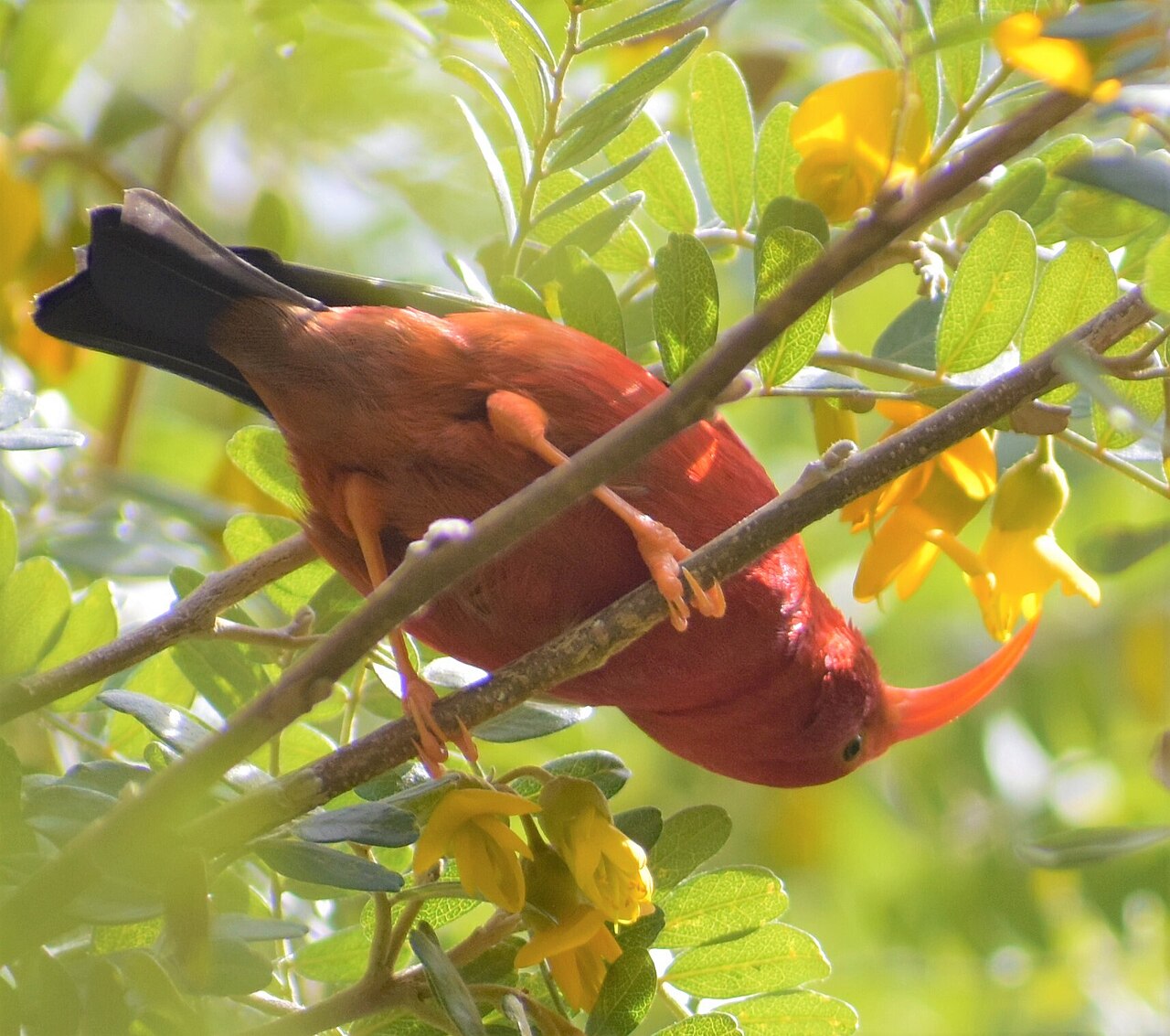
Flowers are visited by insects and nectar-feeding birds. The photograph of an ʻiʻiwi feeding among blossoms shows one real relationship, not a promise that the same bird will appear in every garden. Avoid spraying flowering shoots and include other compatible native plants so that the planting offers more than one seasonal resource.
For Birds
Palila specialize in the developing seeds of māmane and also consume flowers, buds, and other plant parts. Federal wildlife sources describe this dietary dependence, which is a central reason that protecting māmane woodland matters for the bird. Old dry pods and young green pods do not have the same food value, so retaining healthy, reproducing trees is more meaningful than counting trunks alone.
A home planting outside suitable palila habitat still has educational and landscape value. Avoid claiming that it creates replacement habitat simply by being the correct species. Forest extent, food availability, threats, and the bird’s distribution all affect conservation outcomes.
For Mammals
Introduced sheep, goats, and other ungulates can damage māmane foliage, shoots, and bark and interfere with regeneration. The conservation issue is protection from browsing, not feeding these animals. In vulnerable locations, coordinated exclusion and follow-up monitoring may be needed for seedlings to survive long enough to replace older trees.
Ecosystem Role
Māmane is a nitrogen-fixing legume and a structural component of native woodland. Shade, litter, roots, flowers, and seeds all contribute to the community around it. Those functions depend on more than planting density: weed competition, disturbance, and successful seedling recruitment shape whether a stand persists.
Cultural & Historical Uses
The hard wood of māmane was used in Hawaiian construction and in tools and implements. Accounts also describe its use in the runners of hōlua sleds. These uses reflect a knowledge of wood properties quite different from treating every native tree as an interchangeable timber resource.
Flowers and seeds have been used in lei. Ornamental use should not be confused with edibility, and educational handling of seed requires care. A cultural garden is most informative when it connects named materials and practices with knowledgeable local interpretation.
Growing a documented nursery plant provides a way to learn from a living tree without harvesting a wild stand. Keep the Hawaiian name and source with the planting, and let the tree’s flowers, segmented pods, and compound foliage remain visible rather than pruning away the features that make it distinctive.
Frequently Asked Questions
Is māmane always a large tree?
No. It varies from shrub to tree. Ask about the source and expected form of the plant you are buying.
Will planting it attract palila?
Not necessarily. Palila depend on suitable habitat and occur within a restricted distribution. A garden specimen outside that setting is not a guarantee of bird visits.
Are the seeds edible because birds eat them?
No. The palila’s specialized diet does not establish safety for people or pets; māmane is not a food crop.
Can it grow at low elevation?
Some sources can be cultivated lower than familiar upland stands. Obtain locally appropriate nursery advice rather than moving high-elevation stock into a hot coastal site without checking its suitability.
Should I prune it to stimulate fast growth?
No. It is generally slow growing and does not need routine hard pruning. Match the site and protect roots instead of trying to force growth.
Sources & Further Reading
- U.S. Fish and Wildlife Service: Revised Recovery Plan for Hawaiian Forest Birds, palila ecology
- University of Hawaiʻi, Native Plants Hawaiʻi species profile
- USDA Forest Service, Common Forest Trees of Hawaii species account
Botanical range, identification, and cultural information are based on these sources. Garden-management advice should be adapted to local soil, exposure, and nursery provenance.
Find Native Plants Near You
Look for correctly identified, nursery-propagated plants with documented Hawaiian provenance. Visit our Hawaii native plant nursery directory and ask about stock suited to your island, elevation, and rainfall.