
False Mermaid (Floerkea proserpinacoides)
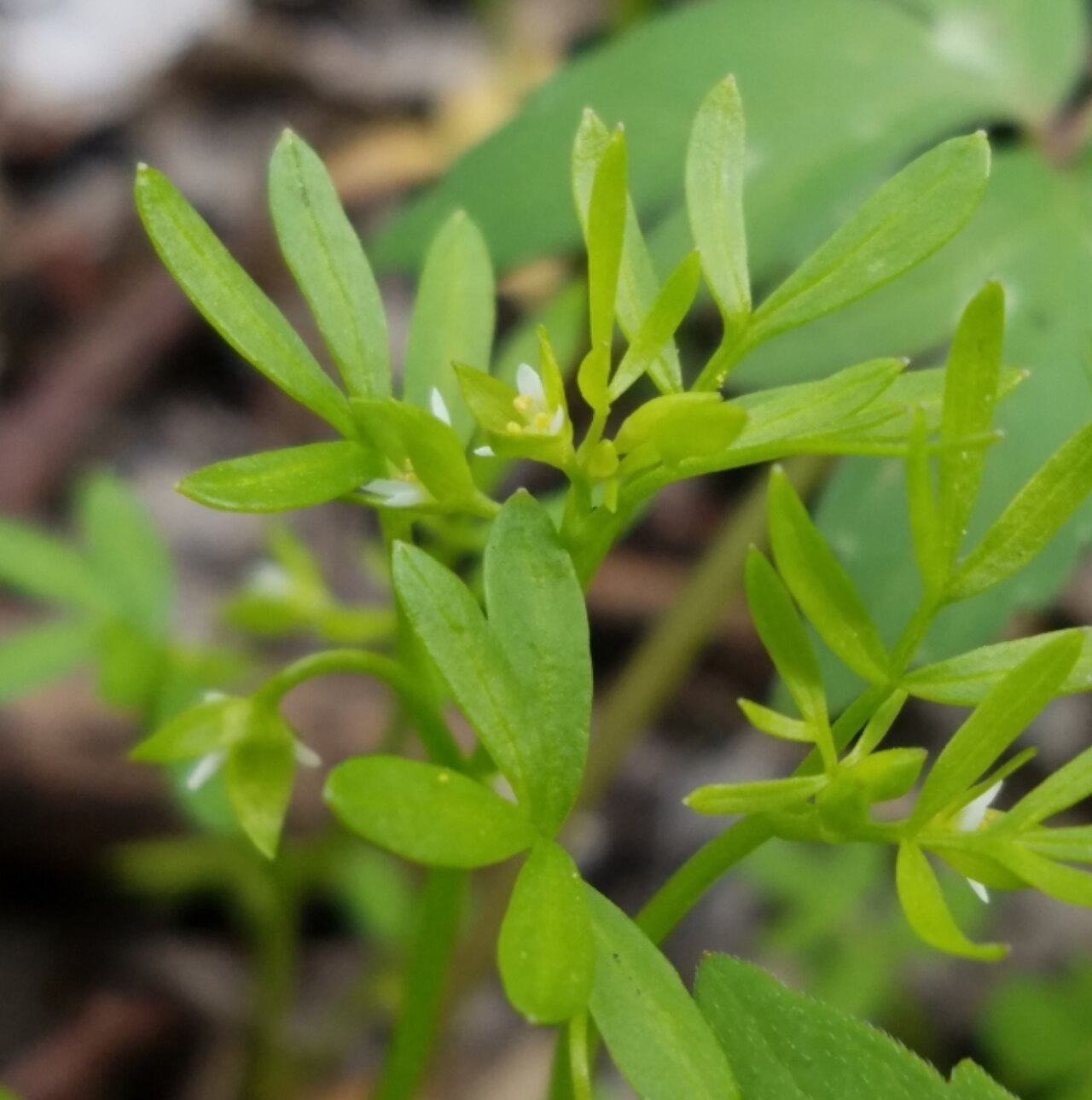
Floerkea proserpinacoides, known as False Mermaid or false mermaidweed, is a tiny, delicate annual wildflower of rich, moist woods, floodplains and seepy meadows in the northern United States, the western mountains and southern Canada. Its weak, succulent stems are only 2 to 12 inches long, with small leaves divided into a few narrow leaflets, and its minute flowers, with three sepals and three white petals, sit singly in the leaf axils. It belongs to the meadowfoam family (Limnanthaceae) and is the only species in its genus.
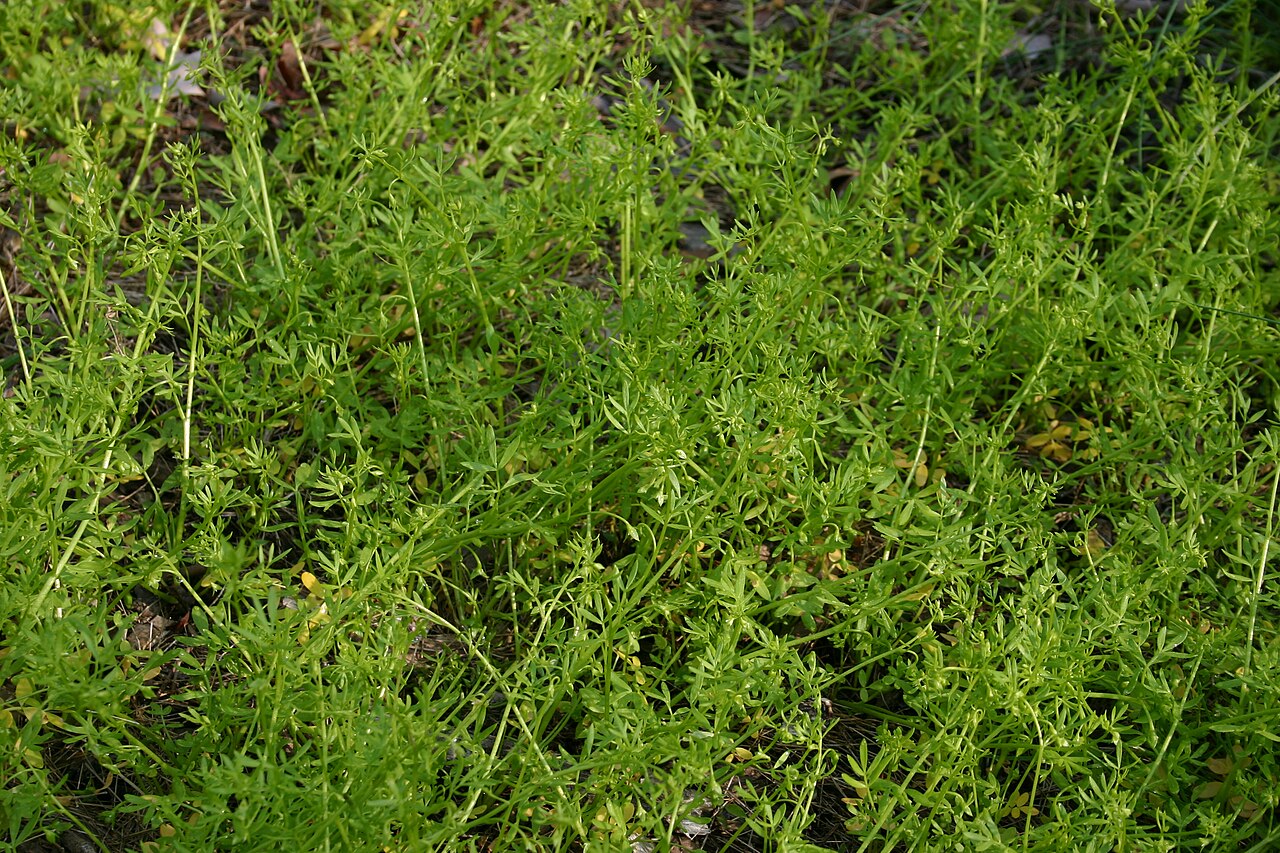
False mermaid is a spring ephemeral. Seeds germinate in late winter or early spring, the plants flower and set seed by late spring, and they die back by early summer, before the forest canopy closes. In good sites it can form bright green carpets over the floodplain floor, often together with spring beauties, Virginia bluebells and waterleafs. It is easily overlooked because of its small size and its resemblance to a grass or a weak, sprawling herb.
This is not a nursery plant. It is grown only by letting it spread from seed in moist, shady woodland gardens where it already occurs or where seed from a nearby population can be sown. It is uncommon to rare in parts of its range, so leave wild populations undisturbed and never dig plants.
Identification
Look in early spring on moist woodland floors for a low, pale green, sprawling plant with small leaves split into three to five narrow leaflets and tiny three-parted white flowers on slender stalks in the leaf axils.
Growth Habit
A small, smooth annual with weak, fleshy, often reclining or sprawling stems 2 to 12 inches long, branching from the base. Plants often grow in dense patches, forming a soft green mat in the floodplain or seep where they grow. The whole plant is hairless and slightly succulent.
Leaves
The leaves are alternate, on long stalks, and pinnately divided into usually three to five narrow, lance-shaped to elliptic leaflets about 1/4 to 3/4 inch long, with smooth edges.
Flowers
The flowers are tiny, about 1/8 inch across, and borne singly on slender stalks from the leaf axils. Each has three green, pointed sepals and three smaller white petals, three or six stamens and a pistil with a three-lobed style. Flowering is from about March to June, depending on latitude and elevation. The three-parted flowers are an unusual feature, since most of its relatives have flowers in fives.
Fruit
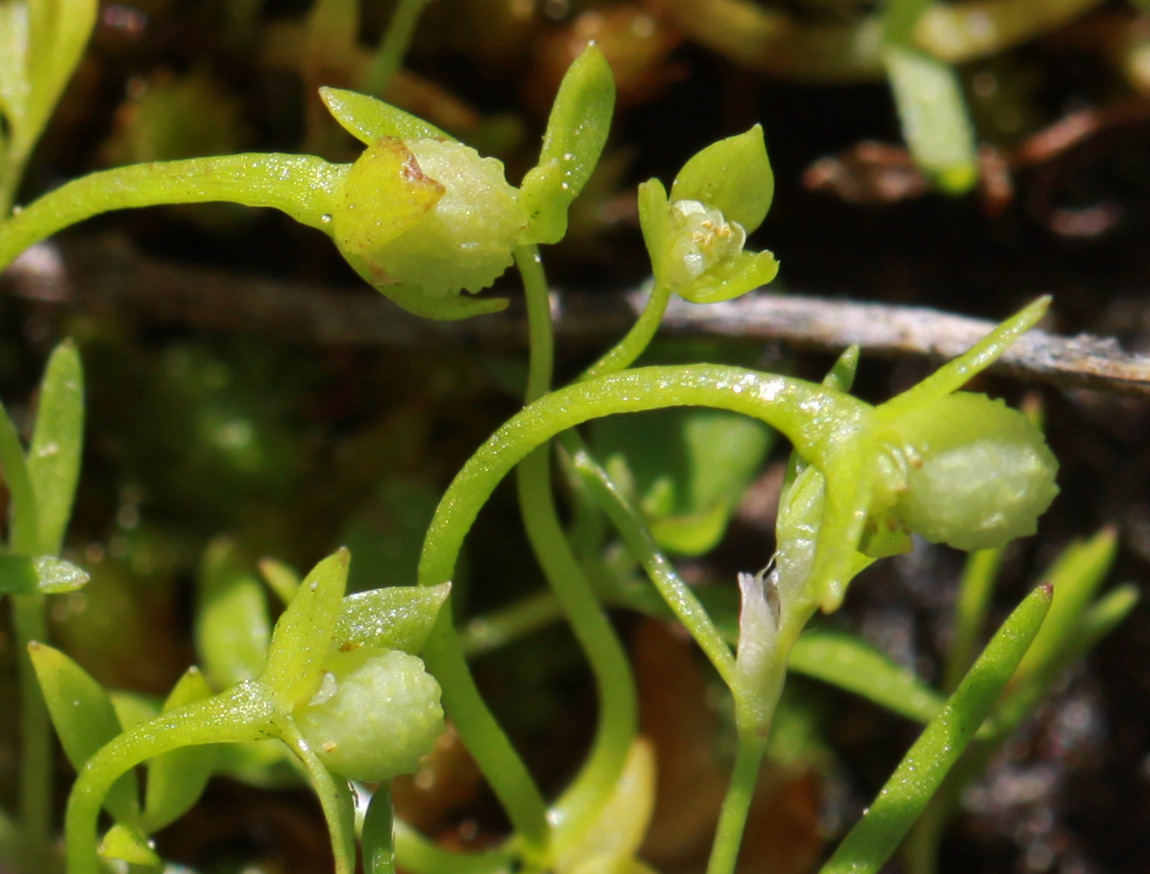
Each flower produces one to three rounded nutlets, about 1/8 inch across, with a bumpy (tuberculate) surface. They fall to the ground in late spring and lie dormant over summer and fall, germinating the following spring.
Look-alikes
Young plants can be confused with small bedstraws (Galium), which have whorled leaves, or with seedlings of other woodland plants. The leaves with a few narrow leaflets and the tiny three-parted flowers are distinctive. Its relative, Douglas’ meadowfoam (Limnanthes douglasii), has larger leaves and showy five-petaled flowers. Mermaidweeds (Proserpinaca), for which it is named, are aquatic plants of a different family with comb-like leaves.
Quick Facts
| Scientific Name | Floerkea proserpinacoides |
| Family | Limnanthaceae (meadowfoam family) |
| Plant Type | Spring-ephemeral annual herb |
| Mature Height | 2–12 in (sprawling) |
| Mature Spread | 2–8 in; forms patches |
| Growth Rate | Fast; completes life cycle by early summer |
| Sun Exposure | Part shade to shade (sun before trees leaf out) |
| Water Needs | High; moist to wet in spring |
| Soil Type | Rich, moist loam and silt of floodplains, seeps and woods |
| Soil pH | Slightly acidic to neutral (about 6.0–7.5) |
| Bloom Time | March–June |
| Flower Color | White (tiny) |
| Fall Color | None; dies back by summer |
| Fruit | One to three rounded, bumpy nutlets |
| Deer Resistant | Unknown |
| USDA Hardiness Zones | Annual (cool-season; native in zones 3–7) |
Native Range
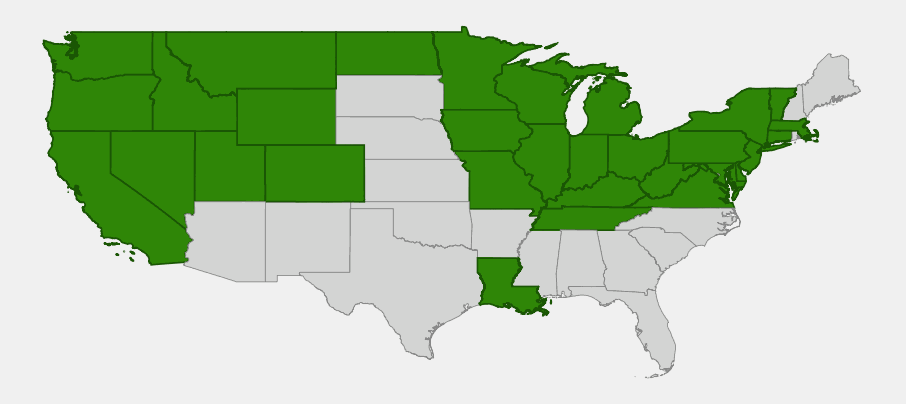
False mermaid is native to much of temperate North America. USDA PLANTS lists it in 31 states and in British Columbia, Ontario, Quebec and Nova Scotia. In the East it grows from New England and the mid-Atlantic states west through the Ohio Valley, the Great Lakes region and the upper Mississippi Valley to Iowa and Missouri, with outlying southern records in Tennessee. USDA PLANTS also lists Louisiana and North Dakota, but these are isolated, poorly documented records far from its main range.
In the West it grows in the Rocky Mountains of Montana, Wyoming, Colorado and Utah, the Great Basin mountains of Nevada, the Sierra Nevada and northern mountains of California, and through Idaho, Oregon and Washington. In the Pacific Northwest it is most common east of the Cascades, in moist aspen groves, streamsides and seepy meadows of the Blue and Wallowa mountains and the eastern Cascades, but it also grows west of the Cascades, in places such as the Rogue Valley of southwestern Oregon, the Willamette Valley and the lower Columbia River area.
Its habitats are always moist in spring: rich floodplain forests, bottomland woods, wooded seeps and springs, shaded stream banks, aspen and cottonwood groves and wet meadows. It favors deep, fertile soils that are flooded or saturated in winter and early spring.
📋 Regional plant lists featuring False Mermaid: New York, Pennsylvania & Northern New Jersey · Idaho, Eastern Oregon & Eastern Washington · Ohio & Indiana · Montana & Wyoming · Michigan, Wisconsin & Eastern Minnesota · Kentucky & Tennessee · Utah & Western Colorado · Connecticut, Massachusetts & Rhode Island · New Hampshire, Maine & Vermont · Maryland, Virginia & West Virginia · Delaware, Southern New Jersey & Long Island · Illinois, Iowa & Missouri · North Dakota, South Dakota & Western Minnesota · Western Oregon & Western Washington · California & Nevada
Growing & Care Guide
False mermaid is not sold by nurseries, and it is best appreciated as a wild plant. If you garden on a rich, moist, wooded floodplain within its range, it may already be present or may arrive on its own. The only practical way to grow it is to let it reseed in suitable habitat.
Light
Part shade to full shade under deciduous trees. It needs sun in early spring, before the canopy leafs out, and shade later, when it is dormant.
Soil & Water
Rich, deep, moist to wet soil high in organic matter, such as floodplain silt or woodland loam. The soil must stay moist from late winter through spring. It tolerates brief spring flooding and needs no water once it dies back in summer.
Planting Tips
Sow fresh seed in late spring or early summer, as soon as the nutlets ripen, by scattering it on moist, bare woodland soil and lightly covering it with leaf litter. Do not let the seed dry out. It will germinate the following spring if conditions are right. Avoid thick mulch, lawn grass or aggressive groundcovers, which crowd out tiny annuals.
Pruning & Maintenance
No maintenance is needed. Leave fallen leaves in place as natural mulch, and allow the plants to ripen seed before any spring cleanup. Control invasive species such as garlic mustard and lesser celandine, which compete with native spring ephemerals in floodplain woods.
Propagation
Only from seed. Because it is an annual, populations depend entirely on seed produced each spring. Never transplant wild plants; they will not survive, and collecting reduces the next year’s seed supply. Collect only a small amount of seed, and only where the plant is common and you have permission.
Landscape Uses
- Woodland and floodplain gardens: a delicate spring groundcover under deciduous trees
- Habitat restoration: part of the native spring flora of bottomland forests
- Rain gardens in shade: for moist, shady low spots that are wet in spring
- Nature study: an unusual plant with three-parted flowers, worth finding on spring walks
- Wildflower walks: look for it in rich floodplains in April and May
Wildlife & Ecological Value
False mermaid is one of the early-season annuals of rich floodplain forests, active only during the short window before the canopy closes.
For Pollinators
Its tiny flowers are visited by small flies, small bees and other insects, but they are also capable of self-pollination, which helps it set seed reliably in cool, early spring weather.
For Birds
Its seeds and those of other spring annuals fall to the forest floor, where ground-feeding birds forage among the leaf litter.
For Mammals
It is too small to be important forage, but it is part of the green spring flush of floodplain forests where deer, rabbits and small mammals feed.
Ecosystem Role
As a spring ephemeral, it takes up nutrients from floodplain soils early in the year and returns them to the soil as it dies back, part of the nutrient cycling known as the “vernal dam.” Its patches also help cover and protect bare floodplain soil in early spring.
Cultural & Historical Uses
The genus name Floerkea honors Heinrich Gustav Flörke, an early 19th-century German botanist known for his work on lichens. The species name proserpinacoides means “resembling Proserpinaca,” the genus of aquatic mermaidweeds, which gave rise to the common name “false mermaid.”
False mermaid is the closest relative of the meadowfoams (Limnanthes) of the Pacific Coast. Meadowfoam is grown as an oilseed crop in Oregon, so this small woodland annual has a commercially important cousin.
Because of its small size and short season, false mermaid is often overlooked, and new populations are still found by botanists surveying floodplain forests in spring. It is uncommon or rare in several states, and good floodplain forests where it carpets the ground are worth protecting.
Frequently Asked Questions
Is false mermaid an annual?
Yes. It germinates in late winter or early spring, flowers and sets seed by late spring, and dies back by early summer. The next generation grows from seed.
Can I buy false mermaid plants?
It is not sold by nurseries. It can only be grown by letting it reseed in moist, shady woodland habitat, or by sowing a small amount of fresh, responsibly collected seed.
Where does false mermaid grow?
In rich, moist floodplain forests, wooded seeps and shaded stream banks across the northern United States, the western mountains and southern Canada.
Why is it called false mermaid?
Its scientific name means “resembling Proserpinaca,” the aquatic mermaidweeds, so it became known as false mermaid or false mermaidweed.
How can I recognize false mermaid?
Look for a small, smooth, sprawling plant with leaves of three to five narrow leaflets and tiny flowers with three white petals on slender stalks from the leaf axils.

Looking for a nursery that carries False Mermaid?
Browse our native plant nursery directory: California · Colorado, Connecticut & Delaware · Idaho, Illinois, Indiana & Iowa · Kentucky, Louisiana, Maryland, Massachusetts, Michigan, Minnesota, Missouri & Montana · Nevada, New Jersey, New York, North Dakota & Ohio · Oregon · Pennsylvania, Tennessee, Utah, Vermont & Virginia · Washington · West Virginia, Wisconsin & Wyoming