Meadowfoam (Limnanthes douglasii)
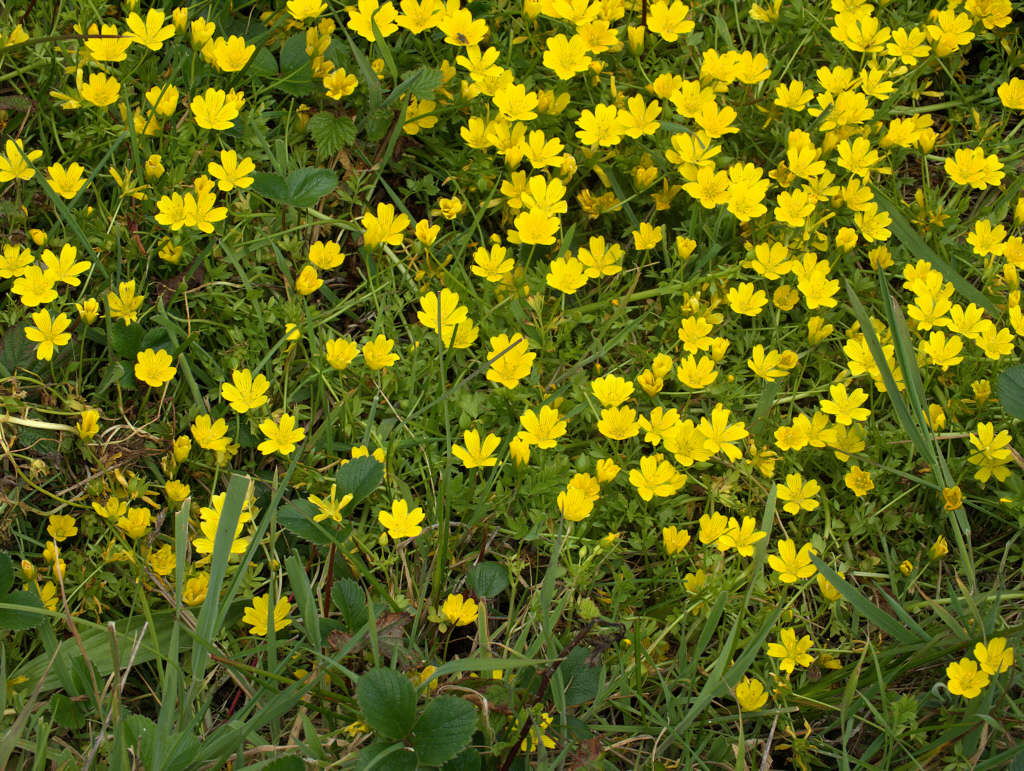
Limnanthes douglasii, commonly called meadowfoam or poached egg flower, is a low, spreading annual wildflower native to California. In spring it carpets damp meadows, vernal pool margins and grassy slopes with cup-shaped, five-petaled flowers, usually cream to white with a bright yellow center, that from a distance look remarkably like a tray of fried eggs scattered across the ground. Plants rarely top 6 to 12 inches, but a good stand can cover many square feet in bloom, drawing in bees from the moment the first flowers open.
Meadowfoam belongs to its own small family, the Limnanthaceae, found only in western North America. Several geographic subspecies are recognized, ranging from the common white-and-yellow form of the Coast Ranges to the all-golden-yellow ssp. sulphurea of the Point Reyes peninsula, which is rare enough to be tracked by the California Native Plant Society. The typical species, however, is a widespread and easy annual that reseeds reliably once established.
For California gardeners, meadowfoam is one of the most reliable low-growing native annuals for a sunny spot that gets some spring moisture. It is a superb bee plant, tolerates heavy clay better than most wildflowers, and its ferny foliage and tidy habit make it a good edging or filler plant between larger perennials. It is also grown commercially in the Willamette Valley for its seed oil, which is prized in cosmetics for its unusual stability.
Identification
Meadowfoam is easiest to recognize in bloom, when its open, saucer-shaped flowers stand just above a mat of finely divided, fern-like leaves. Before flowering, the foliage alone can be mistaken for a number of other low annuals, so look for the distinctive succulent, bright-green leaflets and the way stems branch low and sprawl outward from the base.
Growth Habit
Plants are low and spreading, usually 4 to 12 inches tall but considerably wider, with fleshy, hollow stems that branch repeatedly from the base and often sprawl or lean rather than stand upright. In a good stand the branching habit lets individual plants knit together into a continuous low carpet.
Leaves
Leaves are alternate, 2 to 4 inches long, and pinnately divided into narrow, toothed or lobed leaflets, giving the foliage a soft, fern-like or carrot-top texture. They are a fresh, slightly glossy green and somewhat fleshy, a reflection of the plant’s affinity for moist ground.
Flowers
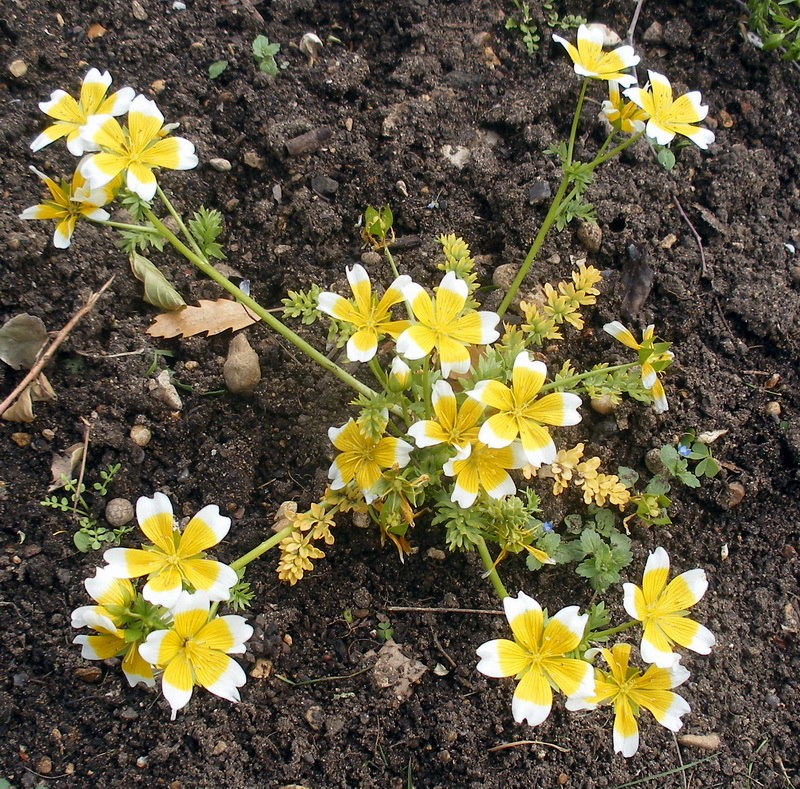
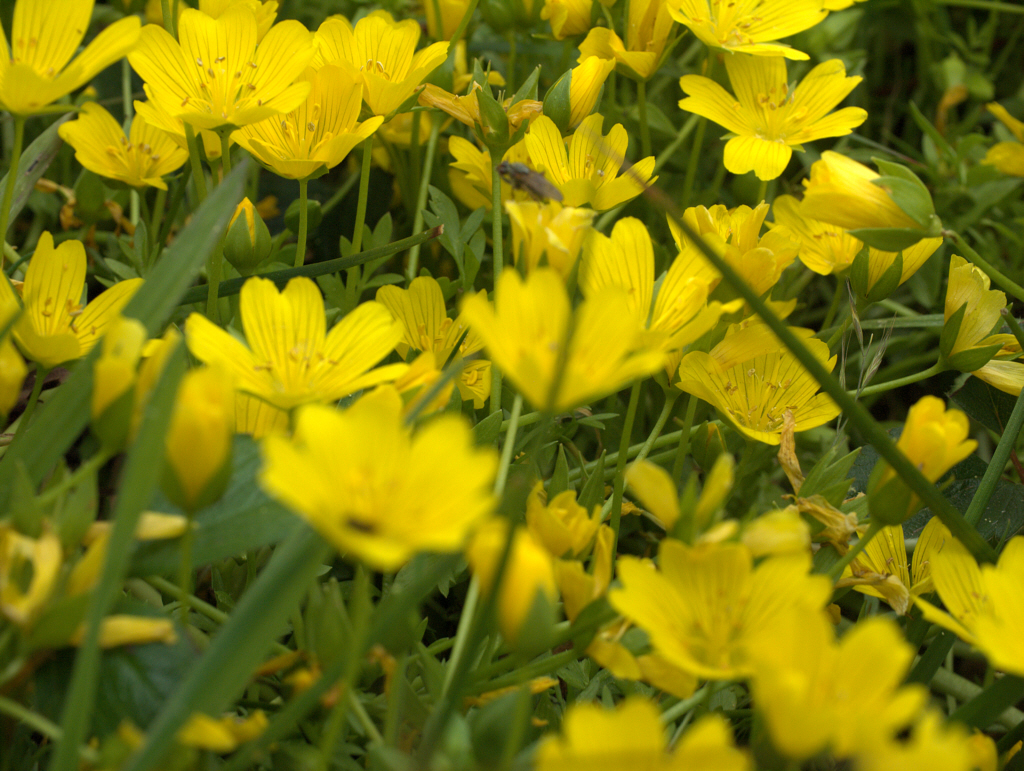
Flowers are solitary on long stalks rising from the leaf axils, each about 1 to 1.5 inches across with five broad, overlapping petals. In the typical form the petals are white toward the tips and bright yellow at the base, creating the “poached egg” look; in some populations, including the Point Reyes subspecies, the petals are yellow throughout. Five sepals alternate with the petals, and the flower center holds a ring of stamens around a five-parted pistil. Bloom runs from February to May depending on elevation and rainfall.
Fruit & Seed
After pollination each flower develops into a cluster of up to five small, warty, nutlet-like seeds that fall close to the parent plant. The seeds are relatively large and oily, which is what makes the plant valuable for commercial seed oil production, and they germinate readily with fall and winter rain.
Quick Facts
| Scientific Name | Limnanthes douglasii |
| Family | Limnanthaceae (Meadowfoam) |
| Plant Type | Annual wildflower |
| Mature Height | 4–12 in |
| Mature Spread | 12–18 in, sprawling |
| Growth Rate | Fast (completes life cycle in one season) |
| Sun Exposure | Full Sun to Part Shade |
| Water Needs | Average to moist in spring; dies back as soil dries in summer |
| Soil Type | Clay, loam or sand; tolerates seasonally wet ground |
| Soil pH | Neutral to slightly acidic (about 6.0–7.0) |
| Bloom Time | February – May |
| Flower Color | White with yellow center (some populations all yellow) |
| Fall Color | None (plant dies back by early summer) |
| Fruit | Small warty nutlets, several per flower |
| Deer Resistant | Mostly yes |
| USDA Hardiness Zones | 7–10 (grown as a cool-season annual) |
Native Range
Meadowfoam is native to California, where it grows from the North Coast Ranges south through the Central Coast and into the Sierra Nevada foothills, generally at low to moderate elevations. It is most common near the coast and in the Coast Ranges, where damp winters and dry summers suit its fast annual life cycle, but populations also occur in the Central Valley and foothill grasslands.
Typical habitat is open, sunny ground that holds moisture in late winter and early spring: grassy meadows, the margins of vernal pools, seasonal seeps, swales in pastures, and roadside ditches. Several named subspecies track specific habitats and small geographic ranges within California, including the rare, all-yellow ssp. sulphurea of the Point Reyes peninsula, which the California Native Plant Society tracks as rare. Plants complete their life cycle quickly, germinating with fall and winter rain, blooming heavily in spring, and dying back to seed as the ground dries in early summer.
Although it is sometimes grown as a garden annual and for commercial seed oil well outside its native range, including in Oregon’s Willamette Valley, meadowfoam is native only to California; naturalized or cultivated populations elsewhere are not part of its native range.
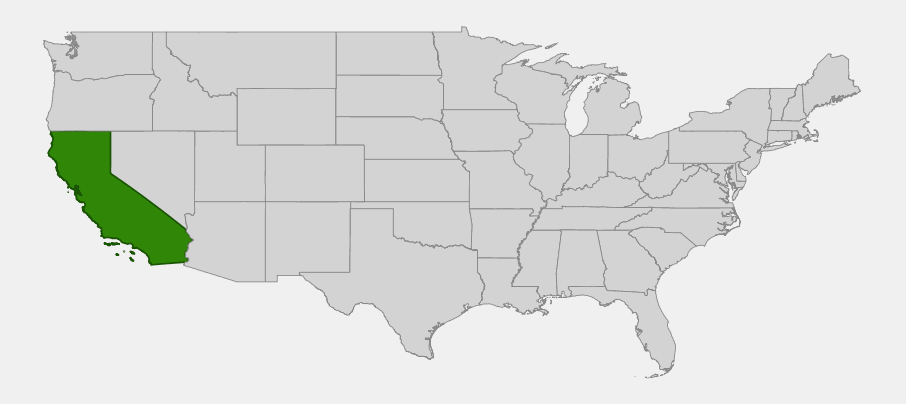
📋 Regional plant lists featuring Meadowfoam: California & Nevada
Growing & Care Guide
Meadowfoam is one of the easiest California annual wildflowers to grow from seed, as long as it gets sun and some moisture while it is actively growing. It is a true winter annual: sow in fall, enjoy a spring show, then let the plant finish its cycle and reseed.
Light
Full sun gives the most flowers, but meadowfoam also does well in light or part shade, especially inland where afternoon shade keeps the soil from drying too fast. In cooler coastal gardens, full sun all day is rarely a problem.
Soil & Water
Unlike many California annuals that demand fast drainage, meadowfoam actually prefers soil that holds some moisture, including heavy clay, and tolerates standing water for short periods in winter. Keep the soil consistently moist from germination through bloom; established drifts can handle an average garden watering schedule in addition to rain. As the weather warms in late spring, let the planting dry out and go to seed rather than trying to keep it green through summer.
Planting Tips
Direct-sow seed in fall, as soon as the first rains arrive, pressing seed lightly into bare, loosened soil rather than burying it deep. Meadowfoam resents transplanting because of its fleshy roots, so direct seeding works far better than starting plants in containers. Scatter seed generously, since plants are small individually but fill in well as a group; a light raking and watering-in after sowing helps germination.
Pruning & Maintenance
No pruning is needed. Deadheading is unnecessary and even counterproductive, since the small seeds that follow the flowers are what re-sow the planting for next year. Once plants finish blooming and begin to yellow in late spring, you can pull the dried remains or simply leave them in place to drop their seed, then clear the bed for summer plantings.
Propagation
Meadowfoam is grown from seed almost exclusively. Collect seed as the papery fruit clusters dry and turn brown, usually a few weeks after the flowers fade, and store it dry until fall sowing. In a planting left undisturbed, the species usually self-sows reliably from year to year without any help.
Landscape Uses
- Wildflower meadows and seed mixes, where its low habit and tolerance of damp soil complement taller native annuals
- Rain garden and swale margins, since it tolerates seasonal wet feet better than most California annuals
- Edging and filler between young native perennials and shrubs while they establish
- Bee gardens, as a heavy, reliable spring nectar and pollen source
- Clay-soil plantings, where many other wildflowers struggle
Wildlife & Ecological Value
Meadowfoam blooms early and in such quantity that it is an important short-season food source in the California grasslands where it grows.
For Pollinators
The flowers are heavily visited by native bees, including specialist bees in the genus Andrena that are closely associated with Limnanthes, as well as honeybees and syrphid flies. The open, flat flower shape makes nectar and pollen easy to reach for a wide range of visitors.
For Birds
Small seed-eating birds forage through meadowfoam stands for the ripening nutlets in late spring, and the dense low foliage offers some cover for ground-foraging species while plants are in growth.
For Mammals
Meadowfoam is generally left alone by deer and rabbits, which makes it useful in gardens where browsing pressure is high, though it plays a minor role as forage in wild grasslands grazed by native and domestic animals.
Ecosystem Role
As a fast-cycling winter annual, meadowfoam helps hold and enrich soil in seasonally wet grassland and vernal pool habitats during the months when many other plants are dormant, and its dense spring bloom is part of the characteristic wildflower display of California’s grasslands.
Cultural & Historical Uses
Meadowfoam has no significant history as a food or medicinal plant among Indigenous peoples of California; it is a minor, short-lived annual rather than a staple resource. Its main documented historical use is recent and commercial rather than traditional: in the twentieth century, agronomists recognized that meadowfoam seed yields an unusually stable vegetable oil, high in long-chain fatty acids, that resists rancidity better than most plant oils.
That discovery led to meadowfoam being developed as a specialty crop, grown commercially (mostly as cultivated relatives and selections of the species) in Oregon’s Willamette Valley since the 1980s for use in cosmetics, skin care products and specialty lubricants. In its native California range, however, the plant remains primarily a wild and garden ornamental rather than an agricultural one.
Frequently Asked Questions
Why is it called “poached egg flower”?
The typical form of meadowfoam has petals that are white at the tips and bright yellow at the base, so each flower looks like a small fried or poached egg sitting in the grass. Some California populations, including the Point Reyes subspecies, are solid yellow instead.
Is meadowfoam an annual or perennial?
It is a true annual. Seeds germinate with fall and winter rain, plants bloom heavily in spring, and the entire plant dies back to seed by early summer, ready to start again the following fall.
Can meadowfoam handle clay soil?
Yes. It is one of the few California native wildflowers that actually does well in heavy clay and seasonally wet ground, which makes it useful where many drought-adapted natives would struggle.
Will meadowfoam come back every year on its own?
In an undisturbed bed with some winter moisture, yes. Let the spent flowers go to seed and avoid heavy summer irrigation or cultivation of the bed, and the planting will usually reseed itself each fall.
Is meadowfoam the same plant grown for seed oil in Oregon?
It is a close relative. Commercial meadowfoam oil crops use cultivated selections related to Limnanthes alba and Limnanthes douglasii, grown as an introduced agricultural crop in Oregon; the wild Limnanthes douglasii covered here is native only to California.

Looking for a nursery that carries Meadowfoam?
Browse our native plant nursery directory: California