
Bulbous Woodland Star (Lithophragma glabrum)
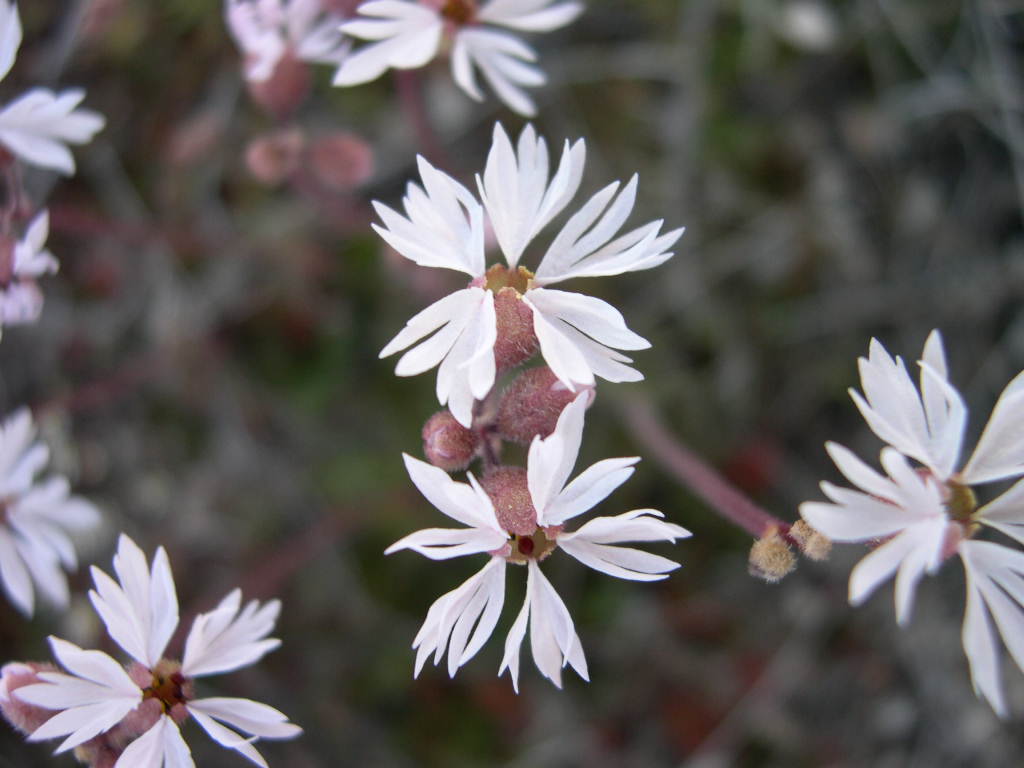
Lithophragma glabrum, known as Bulbous Woodland Star, bulbiferous prairie star, smooth woodland star or rockstar, is a small, delicate spring wildflower of western North America. It belongs to the saxifrage family (Saxifragaceae). It grows from British Columbia, Alberta and Saskatchewan south to California, Nevada, Utah and Colorado, and east to western South Dakota.
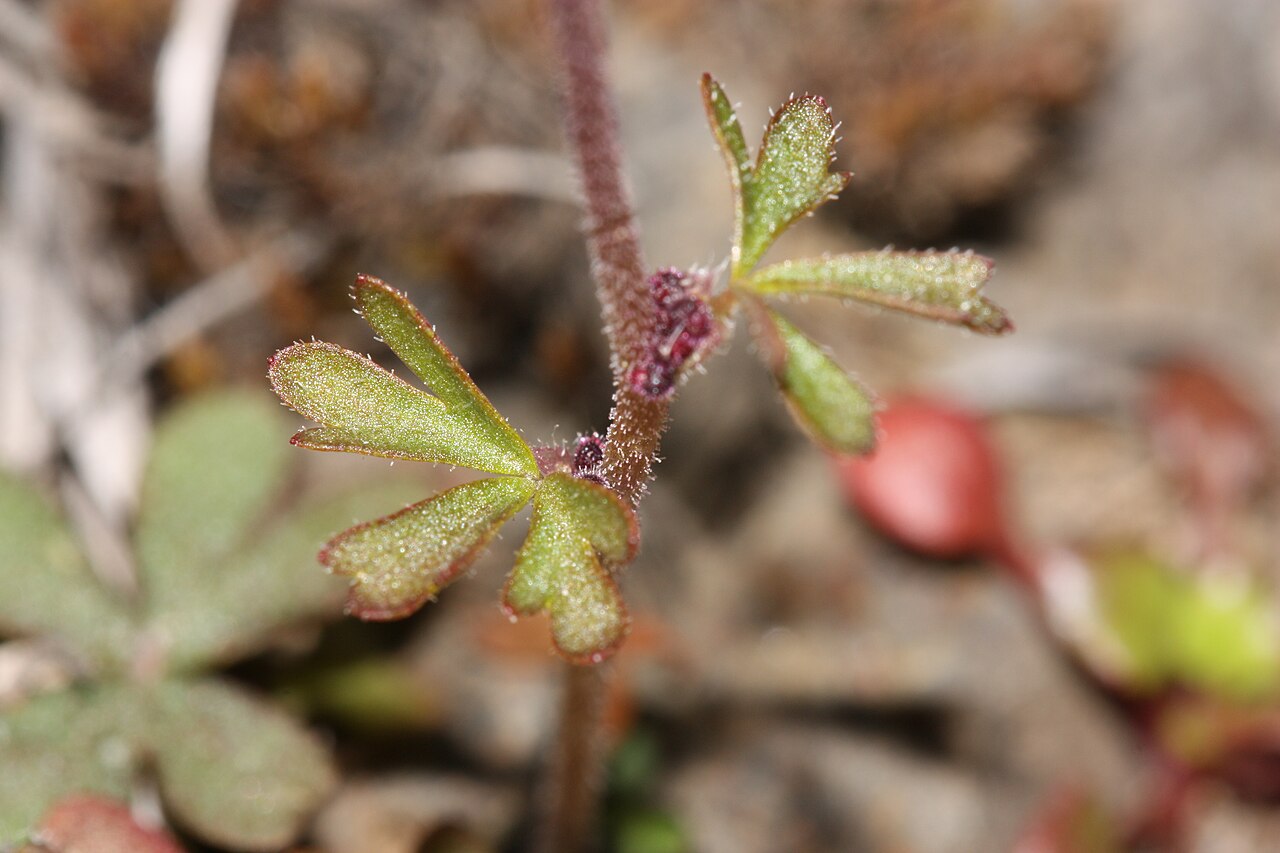
The plant sends up slender, often reddish stems 3 to 14 inches tall from a cluster of tiny underground bulblets. Each stem carries one to seven pink to white, star-shaped flowers. Every petal is cut deeply into about five narrow lobes, so the flowers look like little lacy stars. Its best-known trait is the small, dark red bulblets that form in the axils of the stem leaves and often replace some or all of the flowers; they drop off and grow into new plants.
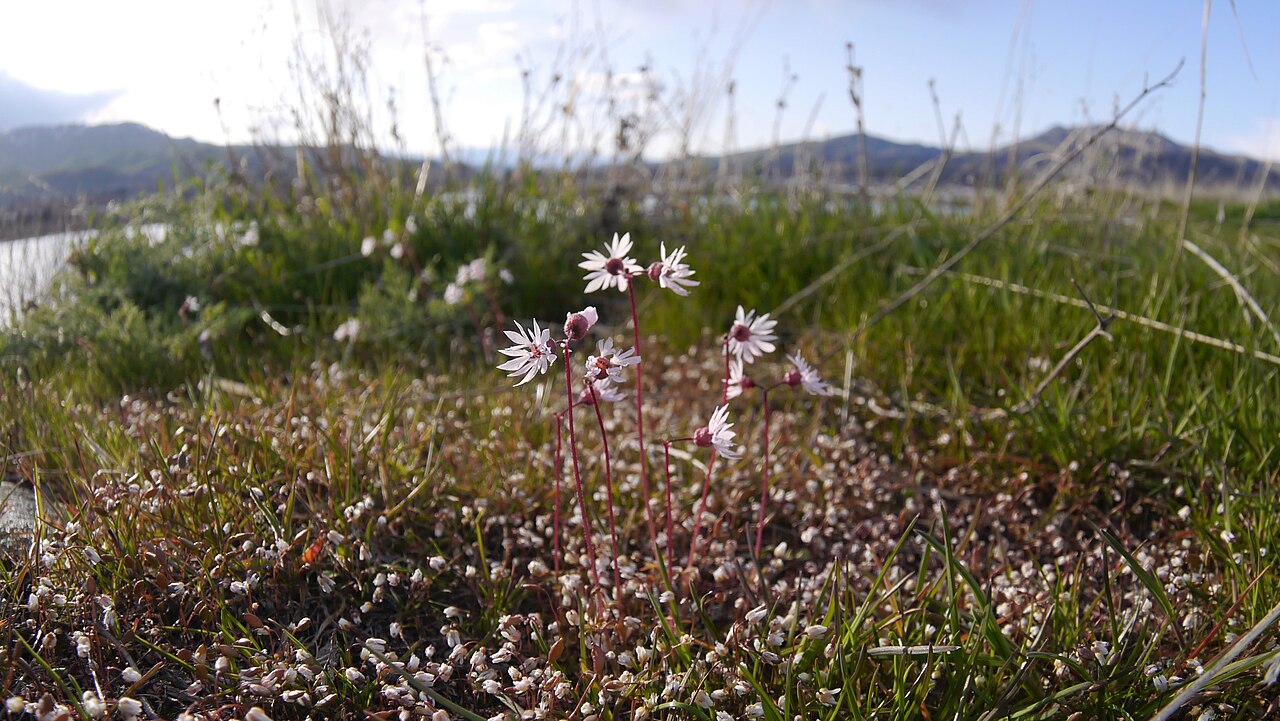
Bulbous woodland star is common in sagebrush steppe, grasslands, open forests and rocky meadows, and it blooms early, often among the first wildflowers of spring. It disappears underground by summer, which makes it a charming but fleeting plant for natural, unwatered gardens within its range.
Identification
Look for a slender, reddish-stemmed spring wildflower with small, pink to white flowers whose petals are cut into narrow finger-like lobes, and for dark red bulblets in the leaf axils.
Growth Habit
Bulbous woodland star is a perennial herb from a short rhizome with small, rice-grain-like bulblets. The flowering stem is simple, usually 3 to 14 inches tall, slender and fragile, often red-tinged and slightly glandular-hairy. Plants that make many bulblets are often branched. It grows in spring and dies back after setting seed, staying dormant through summer.
Leaves
The basal leaves are small and round in outline, with a heart-shaped base and three main lobes that are themselves cut into rounded segments. Their stalks are 1/2 to 1 1/2 inches long. Two to four much smaller, three-lobed or three-parted leaves grow on the stem, often with dark red bulblets in their axils. The leaves are nearly hairless or only sparsely hairy.
Flowers
Flowers appear from late winter at low elevations to late summer in the high mountains, mostly in April to June. Each stem carries one to seven flowers on long stalks, held horizontally. The cup-shaped base (hypanthium) is narrowly bell-shaped. The five petals are usually pink, rarely white, about 1/8 to 1/4 inch long, and deeply cut into about five narrow lobes. Some or all of the flowers may be replaced by bulblets.
Fruit & Seeds
The fruit is a small capsule within the persistent flower base that releases tiny, bumpy seeds. The plant spreads at least as much by its bulblets as by seed.
Look-alikes
Several other woodland stars share its habitats. Smallflower woodland star has a narrow, cone-shaped flower base, three-lobed petals and no bulblets on the stem. Woodland star (Lithophragma affine) of California and Oregon has white, three-lobed petals and a more bell-shaped base. Hillside woodland star of California has white petals with fewer, broader lobes. Small, five-lobed pink petals together with red bulblets in the stem-leaf axils point to bulbous woodland star.
Safety Notes
Bulbous woodland star is not known to be toxic. It is a small wild plant, so enjoy it in place rather than picking it.
Quick Facts
| Scientific Name | Lithophragma glabrum |
| Family | Saxifragaceae (saxifrage family) |
| Plant Type | Perennial wildflower (summer-dormant) |
| Mature Height | 3–14 in |
| Mature Spread | 2–4 in |
| Growth Rate | Moderate |
| Sun Exposure | Full sun to partial shade |
| Water Needs | Low; moist in spring, dry in summer |
| Soil Type | Rocky, gravelly or thin soils; well-drained |
| Soil pH | About 6.0–7.5 |
| Bloom Time | February–September (mostly April–June) |
| Flower Color | Pink, rarely white |
| Fall Color | None; dormant by summer |
| Fruit | Tiny capsules; red bulblets in leaf axils |
| Deer Resistant | Unknown; small and short-lived above ground |
| USDA Hardiness Zones | 4–8 |
Native Range
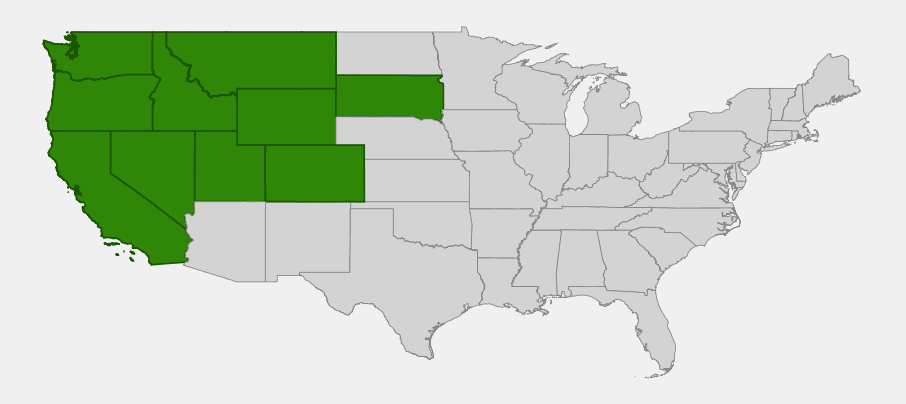
Bulbous woodland star is native to western North America. USDA PLANTS lists it as native in California, Colorado, Idaho, Montana, Nevada, Oregon, South Dakota, Utah, Washington and Wyoming, and in Alberta, British Columbia and Saskatchewan in Canada. Flora of North America gives the same range.
It is widespread east of the Cascades and Sierra Nevada, in the Columbia Basin, Great Basin and northern Rocky Mountains, and it also reaches coastal bluffs and rocky meadows west of the Cascades. In South Dakota it is at the eastern edge of its range. Flora of North America gives an elevation range of about 100 to 11,800 feet.
Habitats include seacoast bluffs and rocky meadows, open forests, grasslands and sagebrush shrublands, up to dry, open, gravelly subalpine sites. It favors thin, rocky soils that are moist in spring and dry out in summer.
📋 Regional plant lists featuring Bulbous Woodland Star: Idaho, Eastern Oregon & Eastern Washington · Western Oregon & Western Washington · California & Nevada · Montana & Wyoming · Utah & Western Colorado · North Dakota, South Dakota & Western Minnesota
Growing & Care Guide
Bulbous woodland star is rarely sold, though some native seed suppliers and native plant society sales in the Northwest offer it. It is best enjoyed in natural areas or in unwatered native gardens where it can come back each spring.
Light
It grows in full sun to partial shade, such as open grassland or the dappled light of open pine woods.
Soil & Water
Give it well-drained, rocky or gravelly soil. It needs moisture from fall through spring, then dry soil in summer while it is dormant. Do not irrigate it in summer.
Planting Tips
Sow seed or set bulblets in fall in a rock garden, among bunchgrasses or at the edge of a sagebrush or pine planting. Mark the spot, since plants vanish in summer. It looks best in small drifts with other early wildflowers such as balsamroot and larkspur.
Pruning & Maintenance
No pruning is needed. Let the stems ripen and drop their bulblets and seed before tidying. Avoid disturbing the soil where it grows in summer and fall.
Propagation
It spreads naturally by the red bulblets that form in the leaf axils and drop to the ground. In gardens, sow fresh seed in fall outdoors for natural winter chilling, or plant bulblets about 1/2 inch deep. Collect only from your own plants or with permission, and never dig wild plants.
Landscape Uses
- Rock gardens: delicate early flowers among stones
- Unwatered native meadows: pairs with bunchgrasses and spring wildflowers
- Sagebrush and pine landscapes: natural understory in dry western gardens
- Habitat restoration: part of the native wildflower mix of steppe and grassland
- Early pollinator food: blooms when few other flowers are open
Wildlife & Ecological Value
As one of the earliest spring bloomers in dry western habitats, bulbous woodland star gives small insects nectar and pollen when little else is flowering.
For Pollinators
Small native bees and flies visit the flowers. Woodland stars as a group are also known for their close relationship with small Greya moths, which pollinate the flowers while laying eggs in them.
For Birds
It has little direct value for birds, though ground-foraging birds may pick up seeds and bulblets.
For Mammals
Small mammals may eat the bulblets, and grazing animals occasionally nibble the stems in spring.
Ecosystem Role
As part of the spring wildflower community of steppe and grassland, it adds diversity between bunchgrasses and shrubs. Woodland stars and their Greya moths are a classic example of a pollinator that also feeds on the plant’s developing seeds.
Cultural & Historical Uses
The species was named by Thomas Nuttall in the 1830s. The genus name Lithophragma comes from the Greek for “rock” and “fence” or “wall,” a reference to the rocky places where many species grow. The species name glabrum means “smooth” or “hairless,” for its nearly hairless leaves.
Plants that make many bulblets were once called a separate species, Lithophragma bulbiferum. Flora of North America notes that bulblet production is the only feature separating the two and that it varies a lot even within one clone, so it treats them as one species.
Ecologist John N. Thompson and colleagues studied the relationship between woodland stars, especially smallflower woodland star, and Greya moths for decades. Their work made the genus one of the best-known examples of how a plant and its pollinator evolve together across a landscape.
Frequently Asked Questions
Why is it called bulbous woodland star?
It forms small, dark red bulblets in the axils of its stem leaves, and these often replace some of the flowers. The bulblets drop off and grow into new plants.
When does bulbous woodland star bloom?
Mostly in April to June, but anywhere from late winter at low elevations to late summer in the high mountains.
Where does it grow?
Across the West, from British Columbia to Saskatchewan and south to California, Nevada, Utah and Colorado, in sagebrush steppe, grasslands, rocky meadows and open forests.
Can I grow it in my garden?
Yes, in a sunny, well-drained, unwatered spot within its native range. Start from seed or bulblets from cultivated plants, and expect it to go dormant by summer.
How is it different from other woodland stars?
Its pink petals are cut into about five narrow lobes, and it usually has red bulblets in the stem-leaf axils. Most other woodland stars have three-lobed, white or pale pink petals and no bulblets.

Looking for a nursery that carries Bulbous Woodland Star?
Browse our native plant nursery directory: California · Colorado · Idaho · Montana · Nevada · Oregon · South Dakota & Utah · Washington · Wyoming

