
Hillside Woodland Star (Lithophragma heterophyllum)
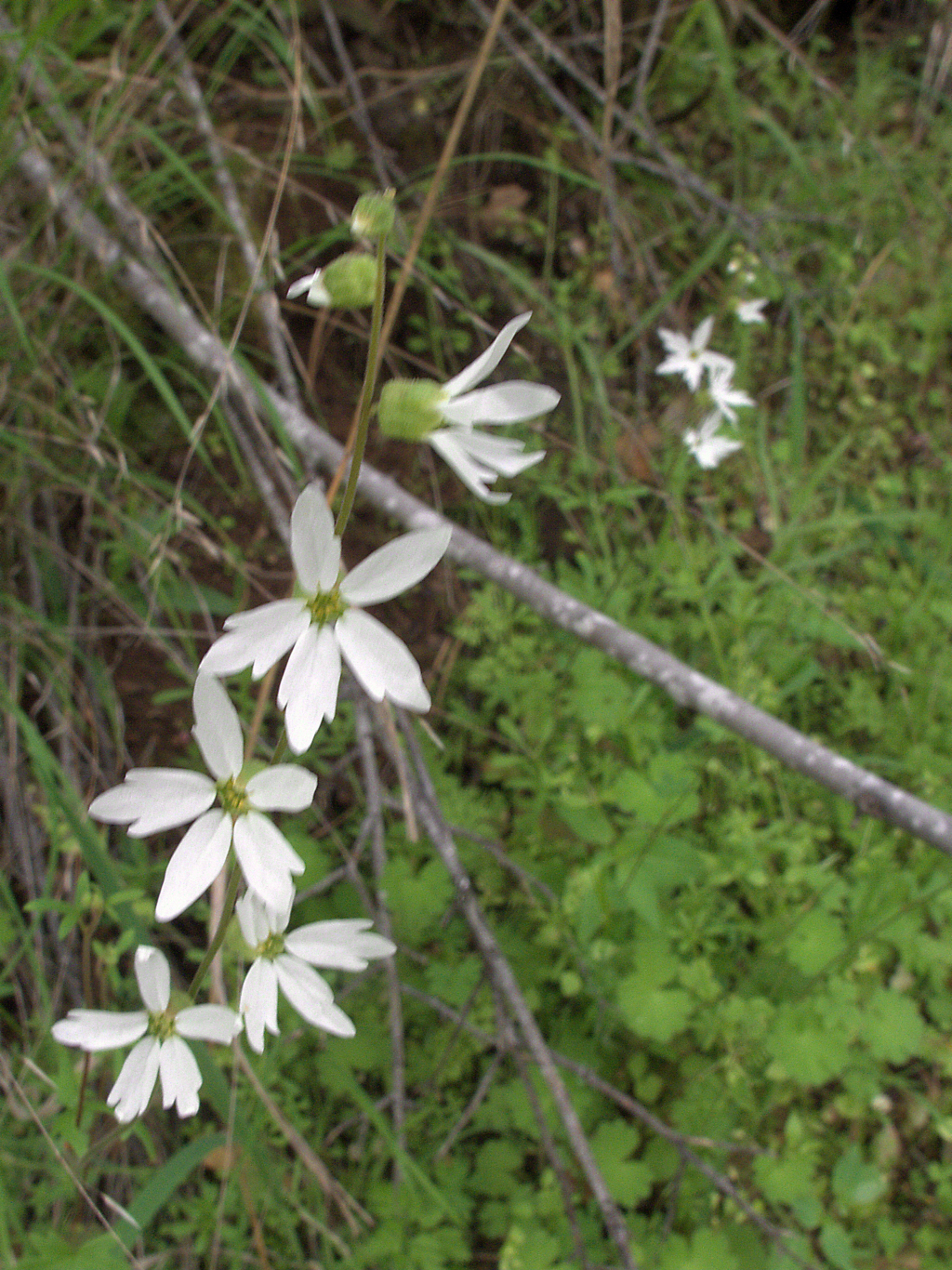
Lithophragma heterophyllum, known as Hillside Woodland Star or hill star, is a dainty spring wildflower of California’s foothill woodlands. From a small cluster of rounded, lobed leaves, it sends up slender stems 6 to 18 inches tall, each carrying several bright white, star-shaped flowers with neatly lobed petals. It is common in shady oak and bay woodlands of the Coast Ranges, where it brightens trail edges and mossy banks from March to May.
It belongs to the saxifrage family (Saxifragaceae), the same family as alumroots and coral bells. Like other woodland stars, it grows from small underground bulblets on a short rhizome, flowers in spring and goes dormant during the dry summer, surviving underground until the winter rains return.
Hillside woodland star is a charming plant for shady, dry-summer native gardens in California, though it is rarely sold. It is easily overlooked, but the sparkling white flowers are a pleasure up close. It is pollinated mostly by specialized moths, a fascinating story it shares with its relatives.
Identification
Look in spring for slender, unbranched, often reddish stems in shady woodland, carrying several white flowers whose five petals are each cut into about three pointed lobes, above a small tuft of rounded, scalloped leaves.
Growth Habit
A small, perennial herb that grows from a short rhizome bearing tiny bulblets. It forms a low tuft of basal leaves and one to a few erect or leaning flowering stems, usually 6 to 18 inches tall. Plants appear after winter rains and die back to the ground by early summer.
Leaves
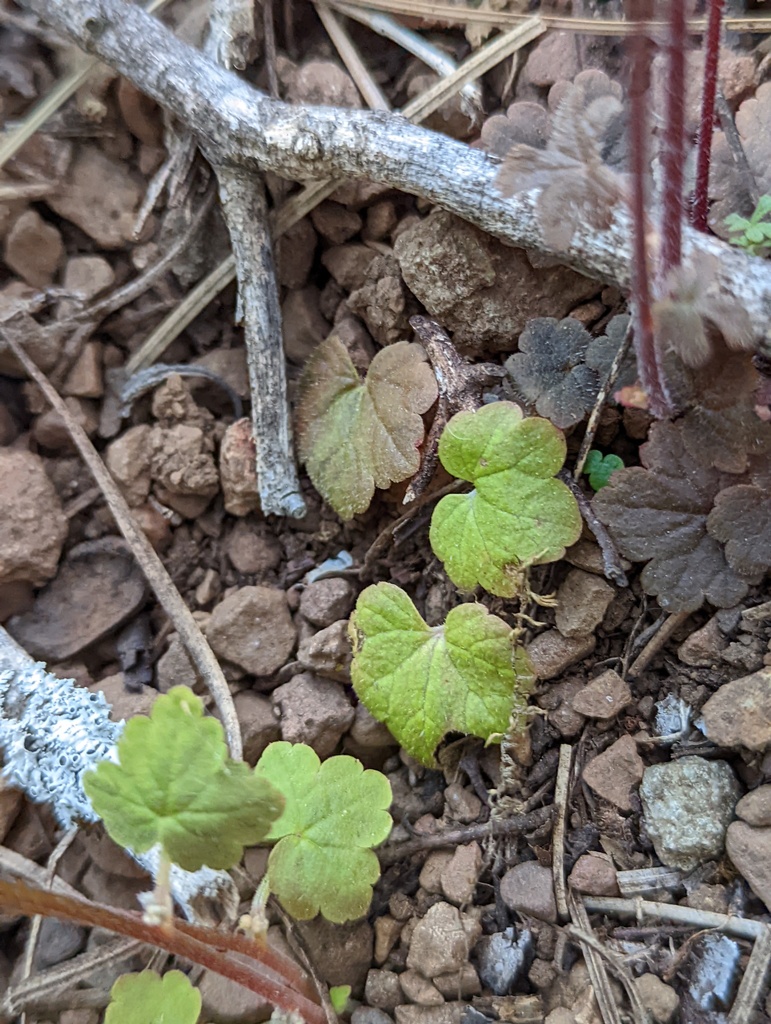
The basal leaves are rounded to kidney-shaped, about 1/2 to 1 1/2 inches wide, with three shallow lobes and scalloped edges, on long stalks. The one to three stem leaves are smaller and often more deeply divided, which gives the plant its species name, meaning “different leaves.” Leaves and stems are finely hairy and often glandular.
Flowers
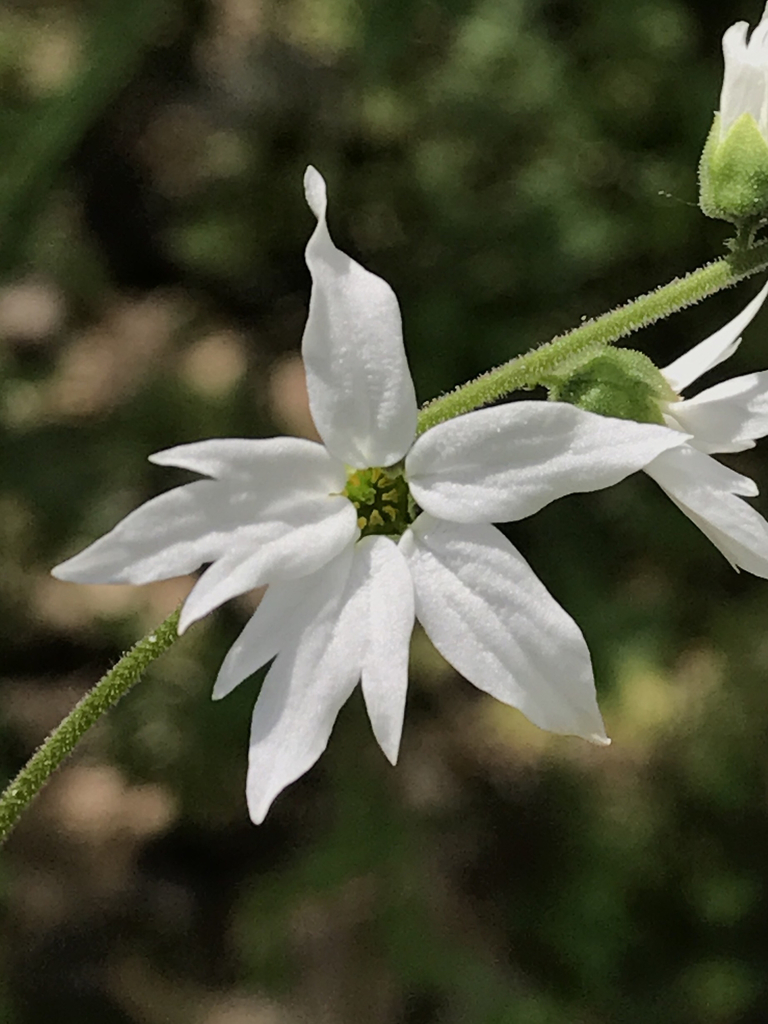
Each stem carries about 3 to 12 flowers in a loose, open cluster from March to May. The flowers have a bell- to cup-shaped calyx that is green or reddish, with a rounded or slightly tapered base, and five white petals up to about 1/2 inch long. Each petal is usually cut into three pointed lobes, the middle one often longest, making the flower look like a small star.
Fruit
The fruit is a small capsule within the persistent calyx, splitting at the top to release many tiny seeds that are shaken out by wind.
Look-alikes
Several woodland stars grow in California. Woodland star (L. affine) has a calyx with a tapered, cone-shaped base and usually more deeply divided leaves. Smallflower woodland star (L. parviflorum) has deeply divided, three-cleft petals and finely divided leaves. Bolander’s woodland star (L. bolanderi) is another similar foothill species. A hand lens and the shape of the calyx base help separate them.
Quick Facts
| Scientific Name | Lithophragma heterophyllum |
| Family | Saxifragaceae (saxifrage family) |
| Plant Type | Perennial wildflower (summer-dormant) |
| Mature Height | 6–18 in |
| Mature Spread | 3–8 in |
| Growth Rate | Moderate |
| Sun Exposure | Part shade to shade |
| Water Needs | Moist in winter and spring; dry in summer |
| Soil Type | Loamy, rocky or humus-rich, well-drained |
| Soil pH | Slightly acidic to neutral (about 5.5–7.0) |
| Bloom Time | March–May |
| Flower Color | White |
| Fall Color | None; dormant by summer |
| Fruit | Small capsule with tiny seeds |
| Deer Resistant | Moderately |
| USDA Hardiness Zones | 8–10 |
Native Range
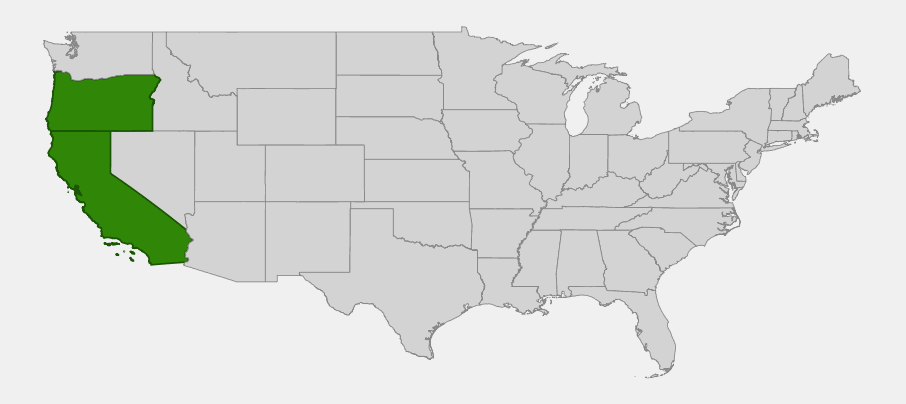
Hillside woodland star is mostly a California plant. It is common in the Coast Ranges, especially in the San Francisco Bay Area, Marin and Sonoma counties, the Santa Cruz Mountains and the Mount Diablo region, and it extends south through the Central Coast with scattered records farther south, including Los Angeles County, and in the Sierra Nevada foothills.
USDA PLANTS also lists it as native in Oregon. There it is known only from outlying records in Jackson County in southwestern Oregon, in the Rogue Valley region west of the Cascade crest. It is not known from Washington or farther north.
It grows in shaded or partly shaded sites in oak woodland, mixed evergreen forest, bay laurel groves, chaparral edges and moist, grassy or rocky slopes and stream banks at low to middle elevations.
📋 Regional plant lists featuring Hillside Woodland Star: Western Oregon & Western Washington · California & Nevada
Growing & Care Guide
Hillside woodland star is easy to keep once established in a shady, dry-summer spot, but it is seldom offered for sale. Look for it at native plant society sales or grow it from seed collected responsibly.
Light
Part shade to full shade, such as under oaks or on a north-facing slope. Morning sun is fine near the coast.
Soil & Water
Use well-drained loam or rocky soil with some leaf litter. Natural winter and spring rains are usually enough. Let the plants go dormant and keep them fairly dry in summer; regular summer watering can rot the bulblets.
Planting Tips
Sow seed in fall on the surface of a pot or prepared bed and keep it outdoors, or plant small potted plants in winter. Place it where you will see it up close, at the edge of a path or under trees, with other spring woodland plants such as fiesta flower, miner’s lettuce and alumroot.
Pruning & Maintenance
No pruning is needed. Mark its location so you do not dig it up while it is dormant. Leave a light layer of leaf litter rather than heavy mulch.
Propagation
Grows from seed and from the small bulblets on the rhizome, which can be separated when the plant is dormant. Collect seed only in small amounts and only where permitted.
Landscape Uses
- Woodland gardens: a delicate spring flower under oaks and bay laurel
- Shade gardens: brightens dry shade in spring
- Rock gardens: tucks into shaded pockets between stones
- Pollinator gardens: supports specialized native moths and bees
- Naturalizing: self-sows in suitable shady sites
Wildlife & Ecological Value
Hillside woodland star is part of the rich spring wildflower community of California oak woodlands.
For Pollinators
Woodland stars are known for their close partnership with Greya moths, small moths that pollinate the flowers while laying eggs in them; the caterpillars eat some of the developing seeds. The flowers are also visited by small native bees and flies.
For Birds
It provides little direct food for birds, but the woodland habitat where it grows is rich in birds.
For Mammals
Deer may nibble the leaves and flowers, but the plants are small and often overlooked.
Ecosystem Role
As a summer-dormant perennial, it uses the cool, wet season for growth and adds to the diversity of the woodland floor. Its relationship with Greya moths is a classic example of plant-insect coevolution studied by biologists.
Cultural & Historical Uses
The genus name Lithophragma comes from Greek words for stone and fence or hedge, a reference to the rocky places where some species grow. The species name heterophyllum means having different leaves, for the contrast between the rounded basal leaves and the more divided stem leaves.
Woodland stars have become famous among ecologists through studies by John N. Thompson and others of their relationship with Greya moths. The moths can act as pollinators or as seed predators, and the balance between the two changes from place to place, which makes the system a model for studying coevolution.
For hikers in the Bay Area, Mount Diablo and the Santa Cruz Mountains, the sparkling white flowers of hillside woodland star along shady trails are one of the familiar signs of spring.
Frequently Asked Questions
Where does hillside woodland star grow?
Mainly in the Coast Ranges of California, especially around the San Francisco Bay Area, with scattered records farther south and in the Sierra Nevada foothills, and a few records in southwestern Oregon.
How is it different from woodland star (Lithophragma affine)?
Hillside woodland star has a calyx with a rounded or slightly tapered base and rounded basal leaves. Woodland star has a cone-shaped calyx base. A hand lens helps.
Why does it disappear in summer?
It is summer-dormant. It grows during the cool, wet season, flowers in spring and dies back to small underground bulblets until the rains return.
What pollinates woodland stars?
Mainly Greya moths, along with small bees and flies.
Can I grow hillside woodland star in my garden?
Yes, in a shady, dry-summer spot in California. It is rarely sold, so look for it at native plant sales or grow it from seed.

Looking for a nursery that carries Hillside Woodland Star?
Browse our native plant nursery directory: California · Oregon