Western Needlegrass (Achnatherum occidentale)
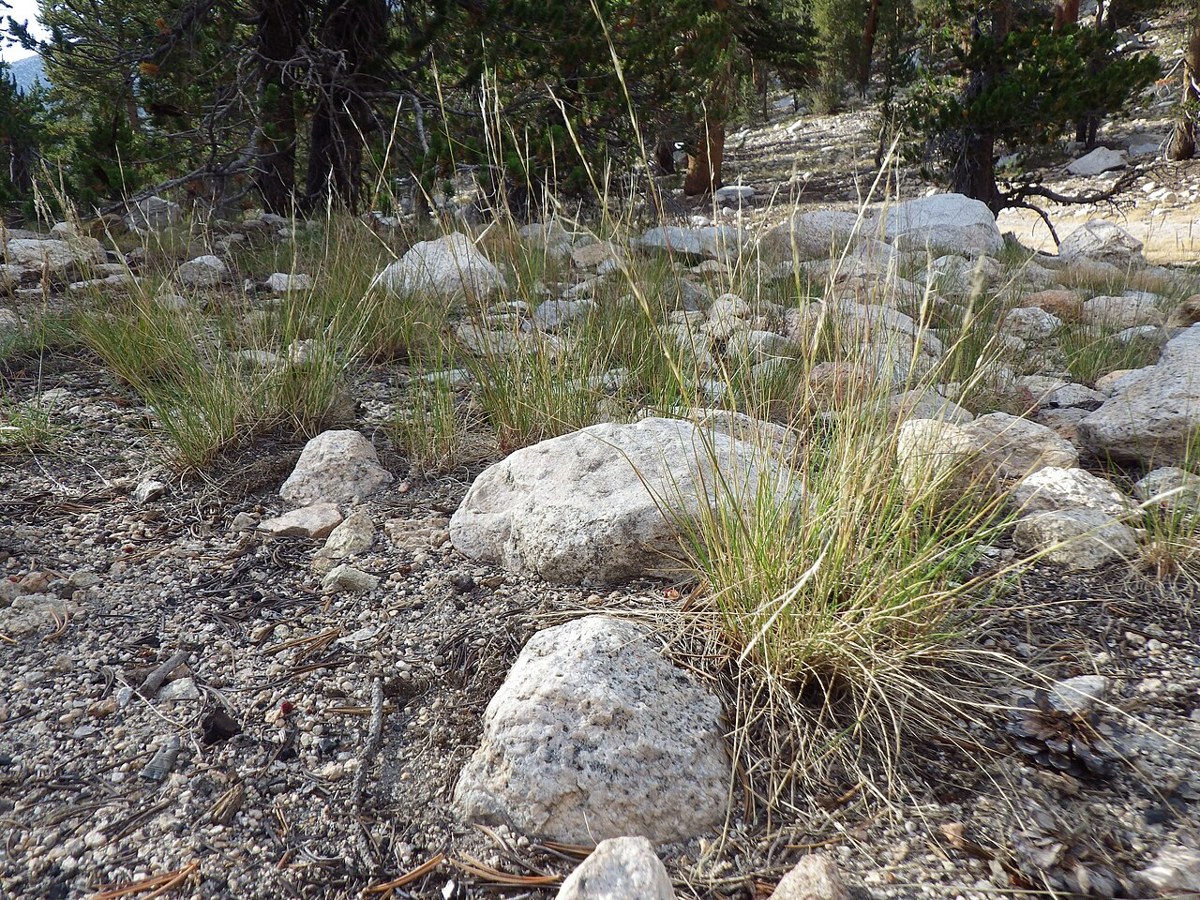
Achnatherum occidentale (formerly classified as Stipa occidentalis), commonly known as western needlegrass, is a tough, drought-tolerant bunchgrass found across the mountains and high deserts of the western United States. A member of the Poaceae (grass family), it forms neat, dense tufts of fine, wiry foliage that stay green through spring before curing to a soft straw color for the rest of the year. It is one of the more common native grasses on dry, well-drained slopes from the Sierra Nevada and Cascades east through the Great Basin and into the Rockies.
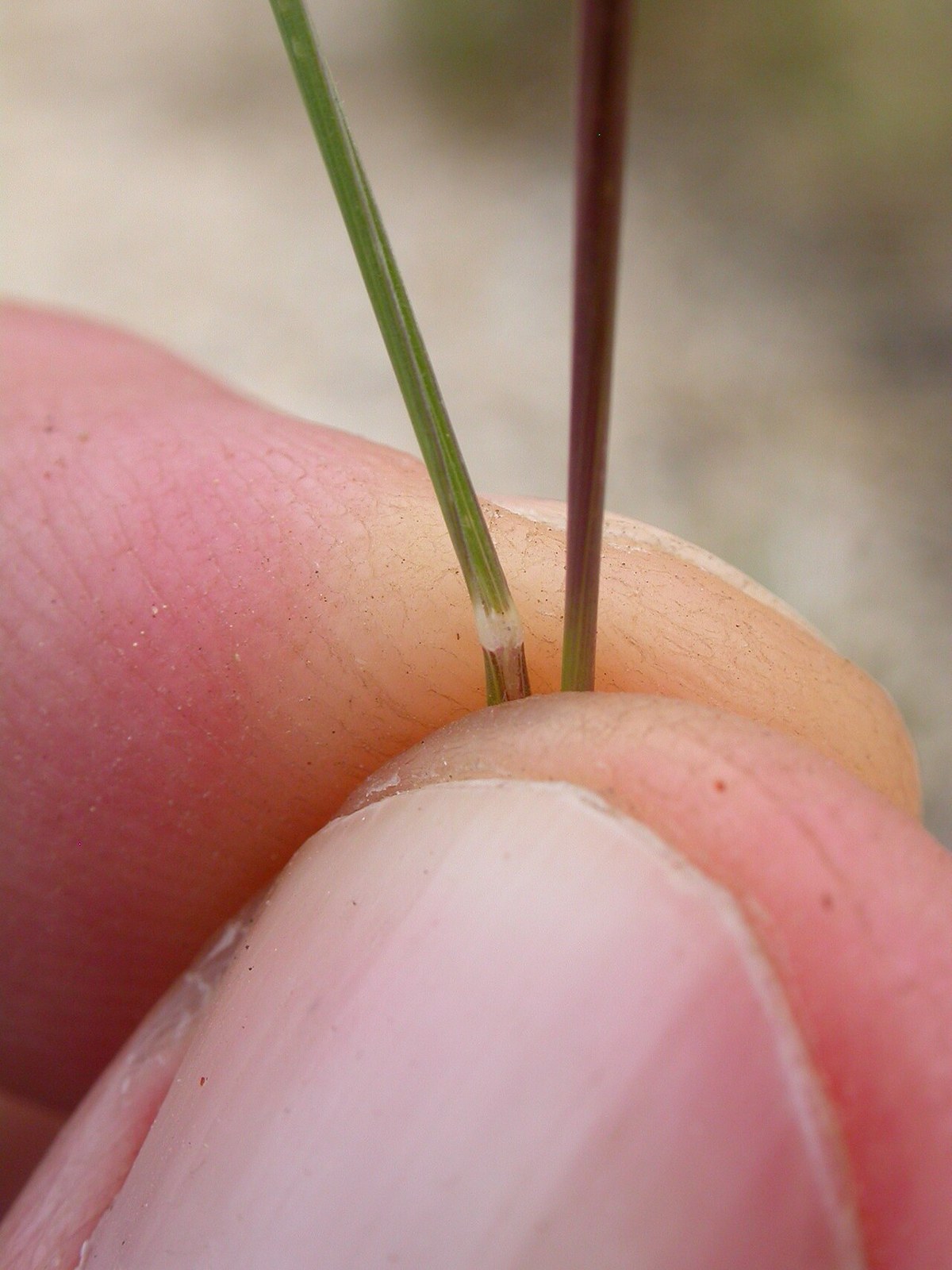
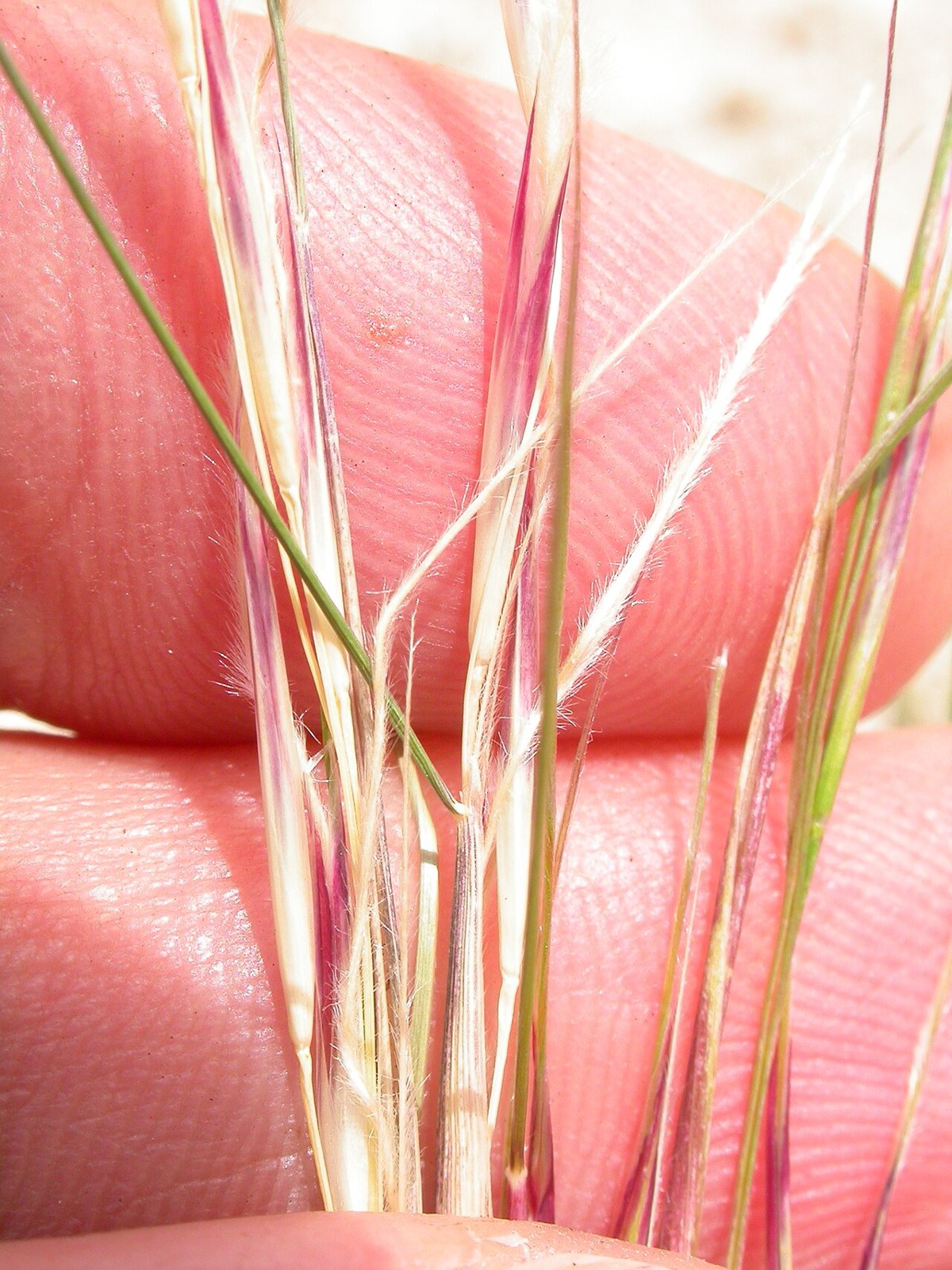
Western needlegrass is best recognized once it flowers: each stem carries a loose, narrow seedhead of slender spikelets, each tipped with a long, bent, feather-like (plumose) awn. That awn, combined with a notably short ligule at the base of the leaf blade, separates it from similar needlegrasses such as Thurber’s needlegrass. The plant typically grows 1 to 2½ feet tall, forming compact clumps rather than spreading by rhizomes, so it stays where it is planted without becoming weedy.
In the wild, western needlegrass is a common understory grass in open pine and lodgepole pine woodlands, sagebrush steppe, and rocky subalpine slopes, usually on thin, excessively drained soils where taller, thirstier grasses struggle. For gardeners in the Mountain West and Pacific states, it is a low-maintenance choice for dry meadows, rock gardens, and restoration plantings that need a fine-textured, well-behaved native bunchgrass.
Identification
Western needlegrass is a perennial bunchgrass that grows in dense, erect tufts without rhizomes, so individual clumps slowly widen but never run. Mature plants are usually 12 to 30 inches tall when in flower, though the basal foliage itself is shorter and more wiry.
Leaves
The leaves are narrow, mostly basal, and rolled or folded (involute) in cross-section, giving them a fine, almost hair-like appearance. They are typically green through the cooler months and cure to a pale tan or straw color by midsummer in dry sites. A short, blunt ligule at the junction of blade and sheath is a key identification feature, distinguishing this species from Thurber’s needlegrass, which has a longer, pointed ligule.
Flowers & Seedhead
Flowering stems rise above the foliage bearing a narrow, somewhat open panicle. Each spikelet has a single floret with a sharp-pointed, hardened base (callus) and a long, twice-bent awn, 1 to 2 inches long, that is covered in fine hairs for most of its length — the “plumose” awn that gives needlegrasses their common name. These awns catch the light attractively when backlit and help the ripe seed drill itself into loose soil, aiding natural seed dispersal.
Fruit & Seeds
The fruit is a narrow, cylindrical grain (caryopsis) enclosed by the hardened floret, with the sharp callus at its base. Like other needlegrasses, the seed’s twisting, moisture-responsive awn can work the sharp-tipped grain into soil or animal fur, which is both the plant’s dispersal strategy and the reason the dry seed heads can be mildly irritating to bare skin or pet coats when plants are left to fully cure.
Quick Facts
| Scientific Name | Achnatherum occidentale (syn. Stipa occidentalis) |
| Family | Poaceae (Grass) |
| Plant Type | Perennial Bunchgrass |
| Mature Height | 1–2½ ft in flower |
| Mature Spread | 8–14 in clump width |
| Growth Rate | Slow to moderate |
| Sun Exposure | Full Sun to Part Shade |
| Water Needs | Low |
| Soil Type | Dry, rocky to sandy, well-drained |
| Soil pH | 6.0–8.0 |
| Bloom Time | May – July |
| Flower Color | Straw-tan (inconspicuous) |
| Fall Color | Straw-gold (cures in summer) |
| Fruit | Narrow grain with a long, plumose, twisted awn |
| Deer Resistant | Yes |
| USDA Hardiness Zones | 4–8 |
Native Range
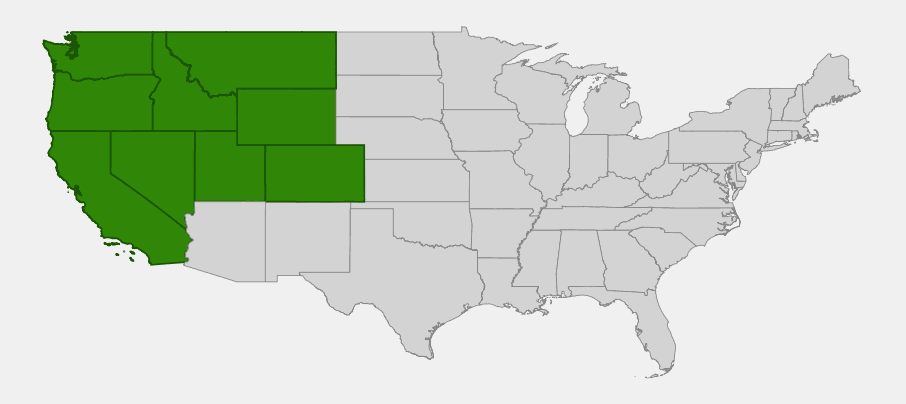
Western needlegrass is widespread across the mountains and intermountain basins of the western United States, from the Pacific Coast ranges of California, Oregon, and Washington east through the Great Basin of Nevada and Utah, and into Idaho, Montana, Wyoming, and the mountains of western Colorado. County-level records confirm it throughout this range, including both sides of the Cascades in Oregon and Washington.
It grows from low-elevation sagebrush flats up into subalpine forest openings, typically on dry, excessively drained soils — granitic gravel, rocky ridgelines, and thin mountain soils where many other grasses cannot compete. It is a frequent component of open ponderosa pine and lodgepole pine woodlands, as well as sagebrush steppe and dry montane meadows.
Western needlegrass is not native to the Southwest deserts, the Great Plains, or the eastern United States, and it is not the plant to use outside its mountain-and-basin native range. Within Colorado, it is native to the western, mountainous part of the state rather than the eastern plains.
📋 Regional plant lists featuring western needlegrass: California & Nevada · Western Oregon & Western Washington · Idaho, Eastern Oregon & Eastern Washington · Montana & Wyoming · Utah & Western Colorado
Growing & Care Guide
Western needlegrass is an easy, unfussy grass for gardeners in its native range who want a fine-textured, drought-proof accent that never becomes a maintenance headache. It thrives on neglect once established and is a natural fit for xeriscapes, rock gardens, and dryland restoration.
Light
Plant in full sun for the densest, most upright clumps. It also tolerates light, open shade such as beneath scattered pines, where it grows a bit looser and greener but still performs well.
Soil & Water
This grass wants sharp drainage above all else — rocky, gravelly, or sandy soils that mimic its native mountain slopes. It is intolerant of heavy clay or soils that stay wet, which can rot the crown. Once established, it needs little to no supplemental water and is one of the more drought-tolerant native grasses available for high-elevation and intermountain gardens.
Planting Tips
Set out container plants in fall or early spring so roots can establish before summer heat. Space clumps 10 to 14 inches apart for a naturalistic dryland meadow effect. Avoid amending the planting hole with rich organic matter; this species performs best in lean, mineral soils.
Pruning & Maintenance
Little maintenance is needed. Cut back dried foliage in late winter if a tidier look is wanted, though the cured straw-gold clumps provide good winter interest and should be left standing where a more naturalistic look is preferred. Avoid overwatering or heavy fertilizing, both of which can cause floppy growth and crown rot.
Propagation
Propagate by seed collected in summer once the awned florets have matured and turned tan, or by dividing established clumps in early spring. Seed benefits from a period of cold, moist stratification before sowing.
Landscape Uses
- Dry rock gardens and gravel beds where little irrigation is available
- Native meadow and prairie restoration in mountain and intermountain settings
- Erosion control on dry, rocky slopes
- Fine-textured accent grass among wildflowers and low shrubs
- Open pine woodland underplanting in naturalistic landscapes
Wildlife & Ecological Value
Western needlegrass is a modest but steady contributor to dryland food webs and soil stability across its mountain and intermountain range.
For Pollinators
As a wind-pollinated grass, it does not provide nectar, but its early-season foliage and the structural cover it provides support ground-nesting native bees and other insects that shelter among bunchgrass clumps.
For Birds
Seeds are eaten by small songbirds and native sparrows foraging on dry slopes, and the dense basal tufts offer nesting and hiding cover for ground-dwelling birds in open woodland and sagebrush habitats.
For Mammals
Young spring growth is grazed by deer, elk, and small mammals before the foliage cures and toughens; once dry, the sharp awns discourage heavy browsing, which helps the plant persist on rangeland that sees grazing pressure.
Ecosystem Role
As a non-rhizomatous bunchgrass, western needlegrass holds soil in place on steep, rocky slopes without spreading aggressively, making it a stabilizing presence in naturally sparse dryland plant communities and a useful species in post-disturbance restoration seeding mixes.
Cultural & Historical Uses
Western needlegrass has not been documented as a significant food, fiber, or medicinal plant among Indigenous peoples of the region, unlike some of its larger-seeded needlegrass relatives. Its primary historical significance lies in its ecological role as a common native component of the dry mountain rangelands that have long supported grazing economies across the Great Basin and Rocky Mountain West.
Rangeland scientists and botanists have long used western needlegrass, alongside Thurber’s needlegrass and other Achnatherum species, as an indicator of healthy, ungrazed or lightly grazed dry forest understory and sagebrush steppe, since it tends to decline under heavy, season-long livestock grazing in favor of less palatable species.
Today its main cultural value is as a restoration and native landscaping species, prized by land managers and native-plant gardeners for revegetating disturbed dry slopes with a grass that belongs on the site rather than an introduced forage grass that can outcompete other natives.
Frequently Asked Questions
Is western needlegrass the same as Stipa occidentalis?
Yes. Stipa occidentalis is the older scientific name; most needlegrasses in North America, including this species, were reclassified into the genus Achnatherum and it is now correctly called Achnatherum occidentale.
Will western needlegrass spread aggressively in my garden?
No. It is a bunchgrass that grows in place without rhizomes or stolons, so clumps slowly widen but do not run or become invasive in garden beds.
Can I grow western needlegrass outside the mountain West?
It is adapted to dry, well-drained mountain and intermountain soils and climates, and it is not native to the Great Plains, Southwest deserts, or eastern United States. Gardeners outside its native range should look for a locally native bunchgrass instead.
Are the seed awns a problem for pets or livestock?
The sharp, twisted awns on mature seed, like those of many needlegrasses, can work into fur, skin, or eyes if animals pass through dense stands of fully cured seed heads. Mowing or grazing before seed set reduces this risk in high-traffic areas.
What soil does western needlegrass need?
It needs sharp drainage — rocky, gravelly, or sandy soil. Heavy clay or soils that stay consistently moist are not suitable and can cause crown rot.

Looking for a nursery that carries western needlegrass?
Browse our native plant nursery directory: California · Nevada · Oregon · Washington · Idaho · Montana & Wyoming · Utah · Colorado