Thurber’s Needlegrass (Achnatherum thurberianum)
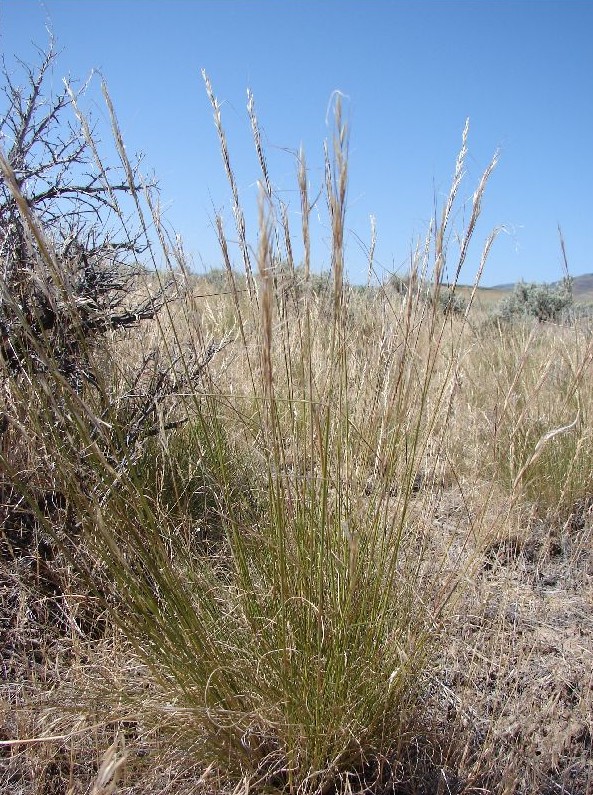
Achnatherum thurberianum (Piper) Barkworth — Thurber’s Needlegrass — is a fine-leaved, deeply rooted bunchgrass that forms a backbone of the sagebrush steppe and pinyon-juniper woodlands of the Intermountain West. For decades it was classified in the genus Stipa as Stipa thurberiana, and that older name still turns up often in field guides, nursery lists and older botanical literature; USDA PLANTS and current taxonomy now place it in Achnatherum.
Growing in dense, narrow tufts of wiry, blue-green to gray-green leaves, Thurber’s needlegrass is easy to overlook until its slender flowering stems rise above the surrounding sagebrush in early summer, each tipped with a narrow, nodding seed head bearing the long, twisted, bristly awns typical of needlegrasses. Those awns, and the sharp, needle-like seed they carry, give the whole genus its common name and are a hazard to grazing animals’ eyes and mouths when seed matures and dries.
For native plant gardeners and restoration projects across the Great Basin and Columbia Plateau, Thurber’s needlegrass offers a tough, drought-adapted bunchgrass that asks for almost nothing once established, tolerates the region’s cold winters and bone-dry summers, and provides structure and texture that pairs naturally with sagebrush, bitterbrush and bunch wheatgrasses.
Identification
Thurber’s needlegrass is a long-lived, cool-season perennial bunchgrass, typically forming dense tufts 12 to 24 inches tall, with flowering stems that can reach 2 feet or a bit more. Unlike sod-forming grasses, it grows strictly as a bunch, with no spreading rhizomes, so individual clumps remain distinct over many years.
Leaves
Leaves are narrow, wiry and mostly basal, rolled or folded (involute) rather than flat, giving the clump a fine, needle-like texture even before flowering. Foliage color ranges from blue-green to gray-green, and the leaves stay relatively short compared to the taller flowering stems that emerge above them in early summer.
Flowers & Seed Heads
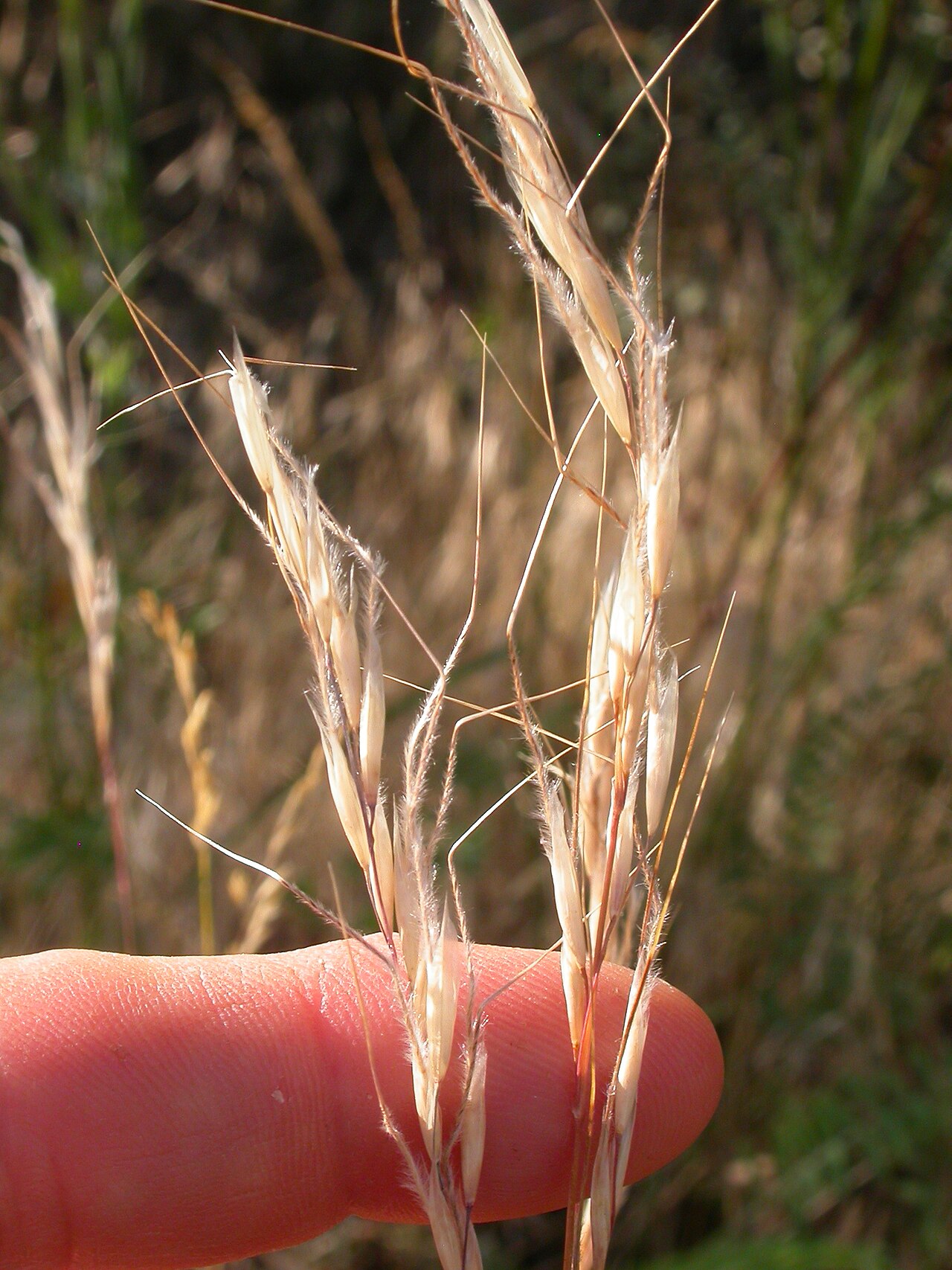
The flowering stems carry a narrow, somewhat open seed head (panicle) of individual spikelets, each enclosing a single floret. The most distinctive feature is the awn: a slender, twisted bristle 1 to 1.5 inches long, hairy or plumose at least toward the base, attached to a sharp, hardened, bullet-shaped seed (floret). As the awn dries, it twists and untwists with changes in humidity, slowly drilling the sharp-tipped seed into the soil or, less happily, into the eyes, mouths and coats of grazing animals.
Roots
Like most native bunchgrasses of arid rangeland, Thurber’s needlegrass develops a deep, extensive fibrous root system that allows it to draw on soil moisture well below the reach of shallow-rooted annuals, a key adaptation to the long, dry summers of its range.
Quick Facts
| Scientific Name | Achnatherum thurberianum (syn. Stipa thurberiana) |
| Family | Poaceae (Grass) |
| Plant Type | Perennial Cool-Season Bunchgrass |
| Mature Height | 12–24 in (30–60 cm) in leaf; to 30 in (75 cm) in flower |
| Mature Spread | 10–16 in (25–40 cm) clump |
| Growth Rate | Slow to moderate |
| Sun Exposure | Full Sun |
| Water Needs | Low once established |
| Soil Type | Dry, well-drained; rocky, sandy or loamy |
| Soil pH | Neutral to alkaline |
| Bloom Time | May – June (seed heads) |
| Flower Color | Straw to purplish-green, fading tan |
| Fall Color | Tan/gold cured foliage |
| Fruit | Sharp-pointed floret with a long twisted awn |
| Deer Resistant | Generally yes once cured |
| USDA Hardiness Zones | 4–8 |
Native Range
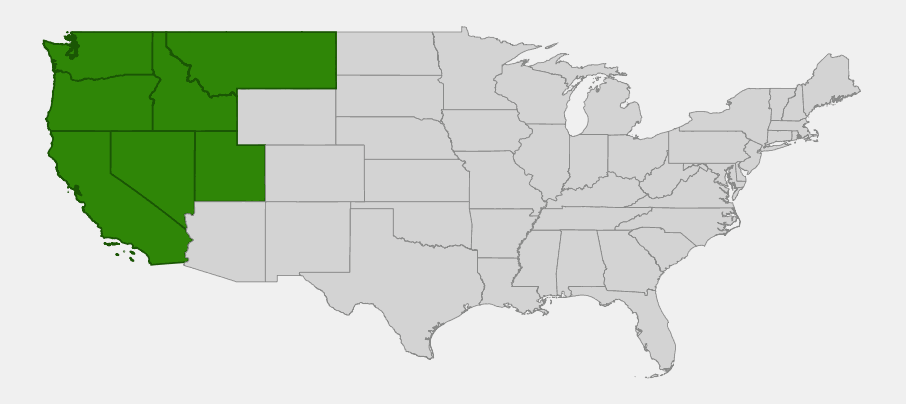
Thurber’s needlegrass is native across the Intermountain West and interior Pacific Northwest, found through much of Washington, Oregon, Idaho, Montana, Nevada, Utah and California, with its range centered on the sagebrush steppe and high desert of the Great Basin and Columbia Plateau. It is one of the defining bunchgrasses of sagebrush steppe plant communities across this broad region.
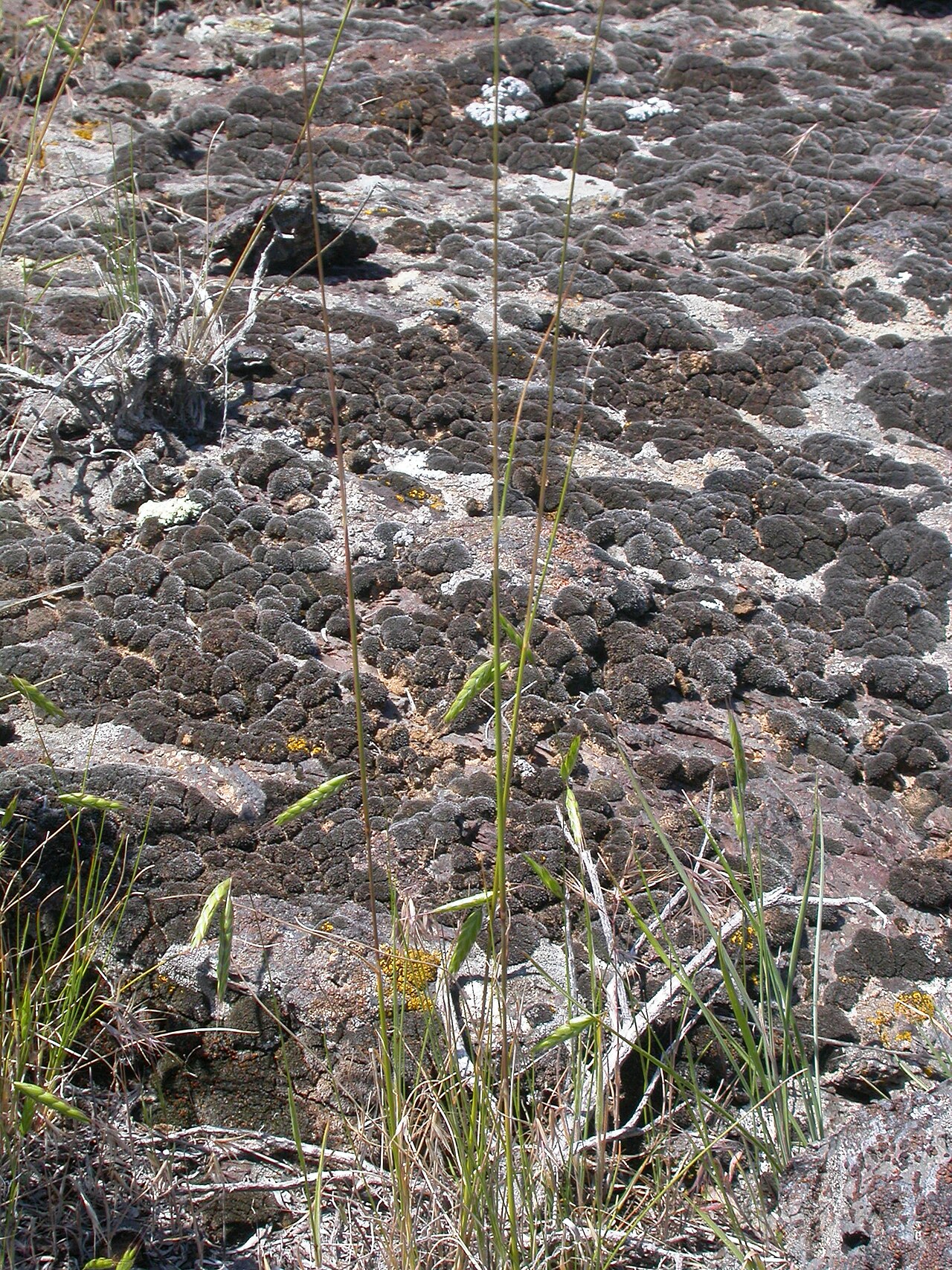
Within this range it typically grows between roughly 2,000 and 8,000 feet in elevation, on dry, open slopes, flats and ridges dominated by Big Sagebrush and associated shrubs, as well as in open pinyon-juniper woodlands and dry montane grasslands, often growing alongside Bluebunch Wheatgrass. It favors well-drained, often rocky or gravelly soils, including shallow soils over basalt or other bedrock where few other grasses can establish.
Thurber’s needlegrass is notably drought-tolerant even by the standards of the arid sagebrush steppe, and it is considered a good indicator of relatively intact, healthy rangeland, since it tends to decline under heavy, continuous livestock grazing in favor of more grazing-tolerant species.
📋 Regional plant lists featuring Thurber’s Needlegrass: Idaho, Eastern Oregon & Eastern Washington · Montana & Wyoming · Utah & Western Colorado
Growing & Care Guide
Thurber’s needlegrass rewards patience: it establishes slowly compared with many weedy grasses, but once rooted in, it is remarkably tough, long-lived and nearly maintenance-free in the dry climates it calls home.
Light
Plant in full sun. This is an open-country grass of exposed sagebrush flats and ridgelines, and it does not perform well with significant shade competition.
Soil & Water
Give it dry, well-drained soil — sandy, rocky or loamy ground that mimics its native high-desert sites. It needs regular watering only to get established in the first one to two growing seasons; after that, established clumps rely on natural precipitation and need no supplemental irrigation in climates that resemble its native range. Soil that stays wet, especially in winter, is poorly tolerated.
Planting Tips
Establish from seed sown in fall or from container plants set out in early spring or fall, spacing clumps about 12 to 18 inches apart for a naturalistic steppe planting. Seedlings are slow to establish and can be out-competed by weeds, so control competing vegetation around new plantings during the first couple of seasons. Once established, clumps are long-lived and persist for many years with minimal care.
Pruning & Maintenance
Little maintenance is needed. Cured, tan foliage can be left standing through winter for habitat value and winter interest, then trimmed back in early spring before new growth begins if a tidier appearance is wanted. Avoid mowing or cutting during the growing season, which can weaken the clump.
Propagation
Propagate by seed, collected when florets begin to loosen from the seed head in summer. Seed benefits from fall sowing to receive natural winter chilling, and because the sharp-pointed, awned florets can be difficult to handle by hand, many restoration projects use de-awned or debearded seed from a native seed supplier.
Landscape Uses
- Sagebrush steppe and high-desert native plantings, its most natural setting
- Rangeland restoration and erosion control on dry, disturbed slopes
- Low-water, no-mow native lawns in appropriate climates
- Accent planting for its fine texture and seasonal seed-head interest
- Fire-adapted landscaping paired with other native bunchgrasses and shrubs
Wildlife & Ecological Value
As one of the characteristic bunchgrasses of sagebrush steppe, Thurber’s needlegrass supports the wildlife community built around that ecosystem.
For Pollinators
Like most wind-pollinated grasses it offers little direct floral resource to pollinators, but the structure it adds to sagebrush steppe supports the broader mix of native wildflowers that do provide nectar and pollen through the growing season.
For Birds
Ground-nesting sagebrush steppe birds, including sage grouse and various sparrows, use dense bunchgrass clumps like Thurber’s needlegrass for nesting cover and concealment from predators, and seed-eating birds forage on the ripe florets in summer, though the sharp awns limit which species make heavy use of the seed.
For Mammals
Thurber’s needlegrass provides valuable spring forage for mule deer, pronghorn and other rangeland grazers while the foliage is young and tender; as seed heads mature and the sharp, awned florets dry and harden, palatability drops sharply and the plant becomes far less attractive, and even hazardous, to grazing animals’ eyes and mouths. Small mammals use the dense clumps for cover.
Ecosystem Role
As a deep-rooted, long-lived perennial bunchgrass, Thurber’s needlegrass helps anchor soil against wind and water erosion on the open slopes and flats of the sagebrush steppe, and its decline under heavy grazing pressure makes it a useful indicator species for rangeland health. Its persistence alongside sagebrush and other native bunchgrasses helps resist the spread of invasive annual grasses such as cheatgrass.
Cultural & Historical Uses
Thurber’s needlegrass has little documented history as a food or fiber plant for Indigenous peoples of the Great Basin and Columbia Plateau, likely because its sharp, awned seeds make it difficult and even hazardous to harvest and process compared with other regional grass seeds that were more commonly gathered.
Its primary historical and ongoing significance is as native rangeland forage. Stock growers across the Intermountain West have long recognized it as valuable spring and early summer grazing for cattle and sheep, while also understanding the need to move livestock off needlegrass range before seed matures and the sharp, barbed florets become a hazard to grazing animals.
In more recent decades, Thurber’s needlegrass has become an important species in sagebrush steppe restoration seed mixes, used to help rebuild native bunchgrass cover on lands degraded by overgrazing, wildfire or invasion by non-native annual grasses.
Frequently Asked Questions
Is Thurber’s needlegrass the same as Stipa thurberiana?
Yes. Stipa thurberiana is the older scientific name for this species; it has since been reclassified into the genus Achnatherum as Achnatherum thurberianum, though both names refer to the same plant and the older name is still common in field guides and seed catalogs.
Are the awns on Thurber’s needlegrass dangerous to pets or livestock?
Yes, once mature and dry. The long, sharp-tipped florets can work their way into animals’ eyes, ears, mouths and skin, so livestock are typically moved off needlegrass range before seed fully matures, and pet owners in needlegrass country should check coats and paws after walks through dry rangeland in summer.
How long does Thurber’s needlegrass take to establish?
It is a slow starter. Expect one to two full growing seasons before a seeded or transplanted clump looks well established, and control of competing weeds during that period significantly improves success.
Does Thurber’s needlegrass need mowing?
No. As a bunchgrass, it does not form a lawn-like sod and does not require regular mowing. An occasional early-spring trim of old cured foliage is optional and purely cosmetic.
Can Thurber’s needlegrass tolerate heavy grazing?
Not well. It tends to decline under sustained heavy grazing pressure and is considered an indicator of healthier, less heavily grazed rangeland, which is one reason it is valued in restoration plantings aimed at improving range condition.

Looking for a nursery that carries Thurber’s Needlegrass?
Browse our native plant nursery directory: Washington · Oregon · Idaho · Montana · California · Nevada · Utah