False Willow (Baccharis neglecta)
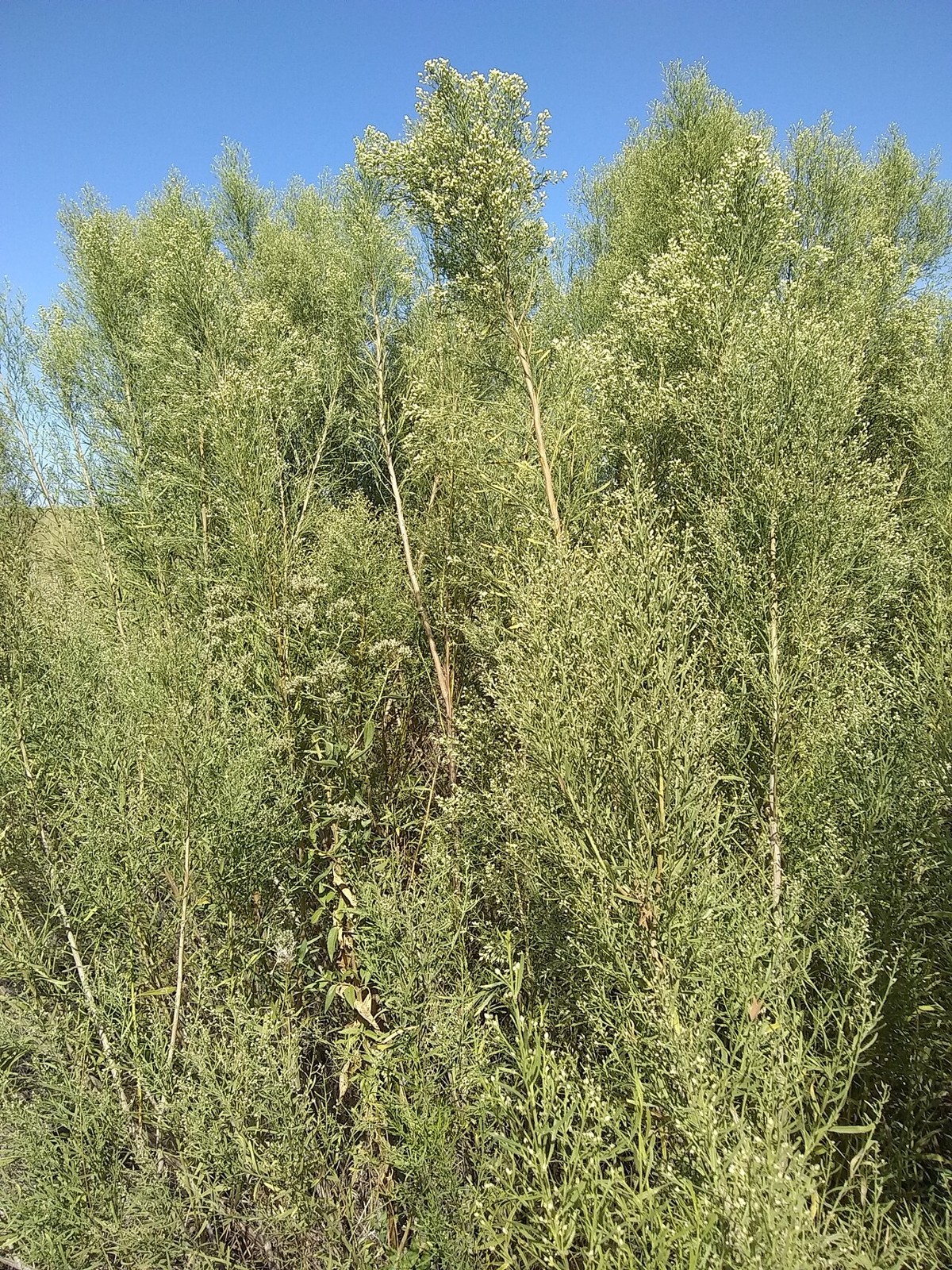
Baccharis neglecta, commonly known as false willow, Roosevelt-weed, or poverty weed, is a fast-growing, deciduous-leaning native shrub of central and south Texas named for its narrow, willow-like leaves rather than any true relationship to willows — it is actually a member of the aster family. The “Roosevelt-weed” nickname dates to the 1930s, when the shrub was widely planted for erosion control on New Deal conservation projects along eroded creeks and overgrazed rangeland.
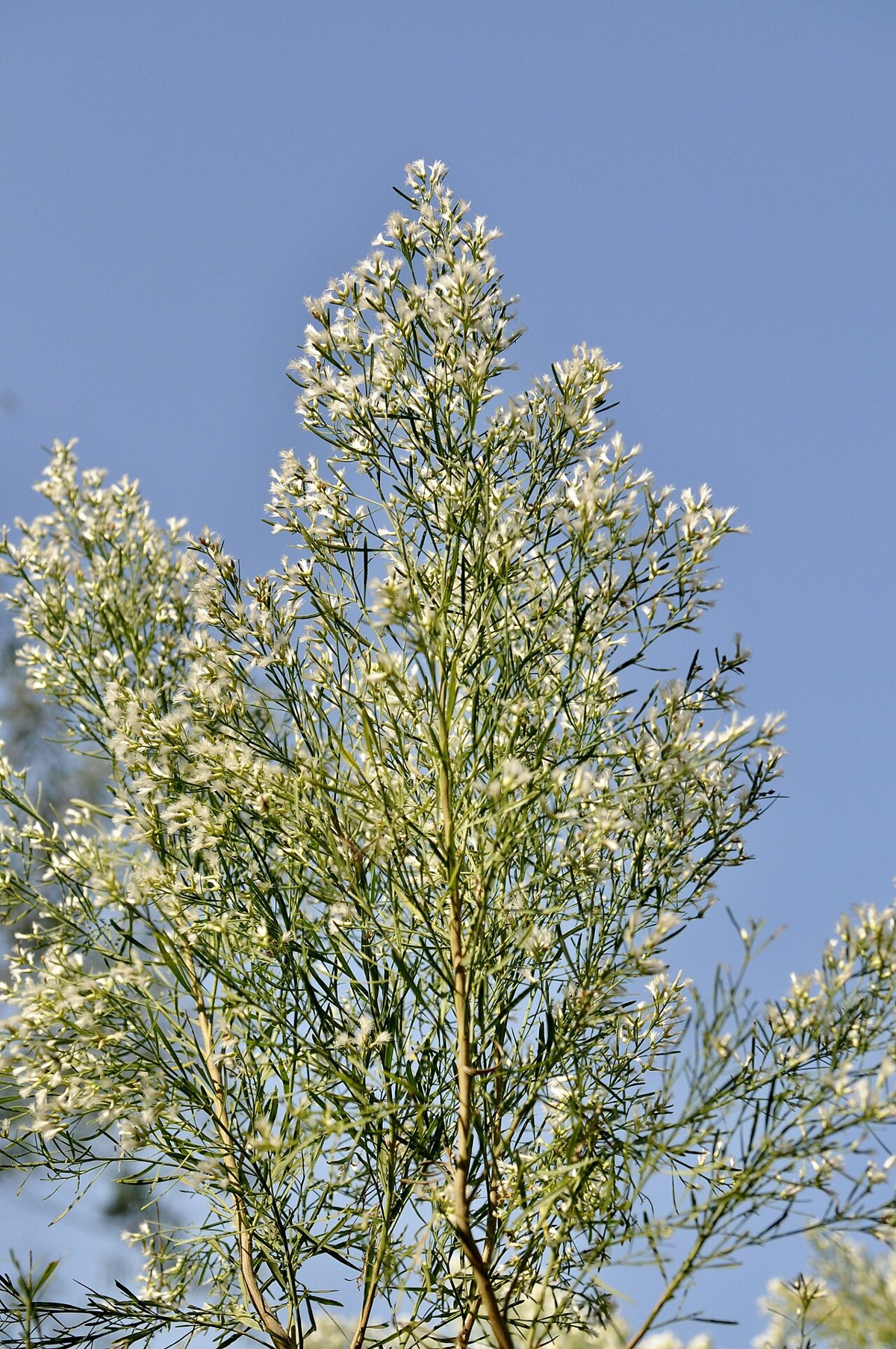
False willow grows as an upright, multi-stemmed shrub to small tree, typically 6 to 12 feet tall, with slender, pale green branches densely clothed in narrow, resinous leaves that give the whole plant a willow-like or almost pine-like silhouette from a distance. In late summer and fall, female plants burst into show-stopping clouds of white, cottony seed heads that can make a roadside thicket look dusted with snow, a striking contrast to the otherwise plain, utilitarian appearance of the plant through the rest of the year.
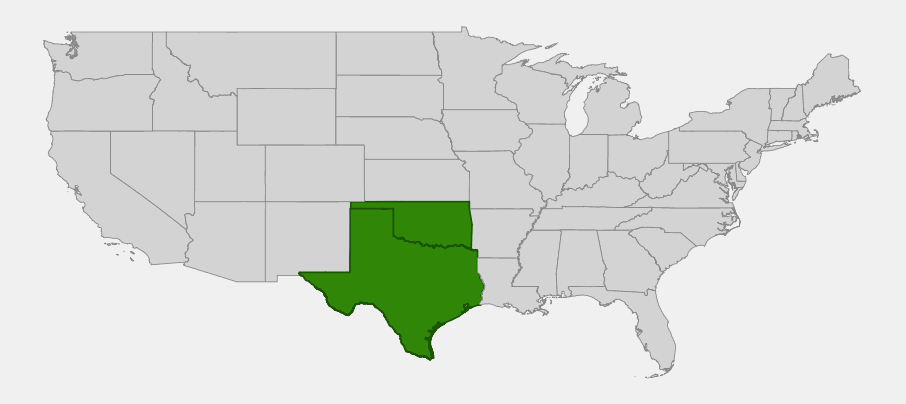
Tough, fast-growing, and remarkably adaptable, false willow is valued less as an ornamental centerpiece and more as a workhorse plant: it is widely used for erosion control, quick screening, and wildlife cover on disturbed, poor, or seasonally wet ground across its native range in Texas and a small part of central Oklahoma. It is dioecious, meaning individual plants are either male or female, and only female plants produce the conspicuous fluffy seed heads.
Identification
False willow is best recognized by its upright, many-stemmed form, narrow resinous leaves, and — in season — the striking contrast between inconspicuous flowers and the dense white, cottony seed clusters that follow on female plants.
Growth Form
Plants grow as an upright, rounded to broom-shaped shrub or small tree, usually 6 to 12 feet tall and nearly as wide, with numerous slender, light green to yellowish-green stems rising from the base. The overall look is airy and willow-like, especially from a distance.
Leaves
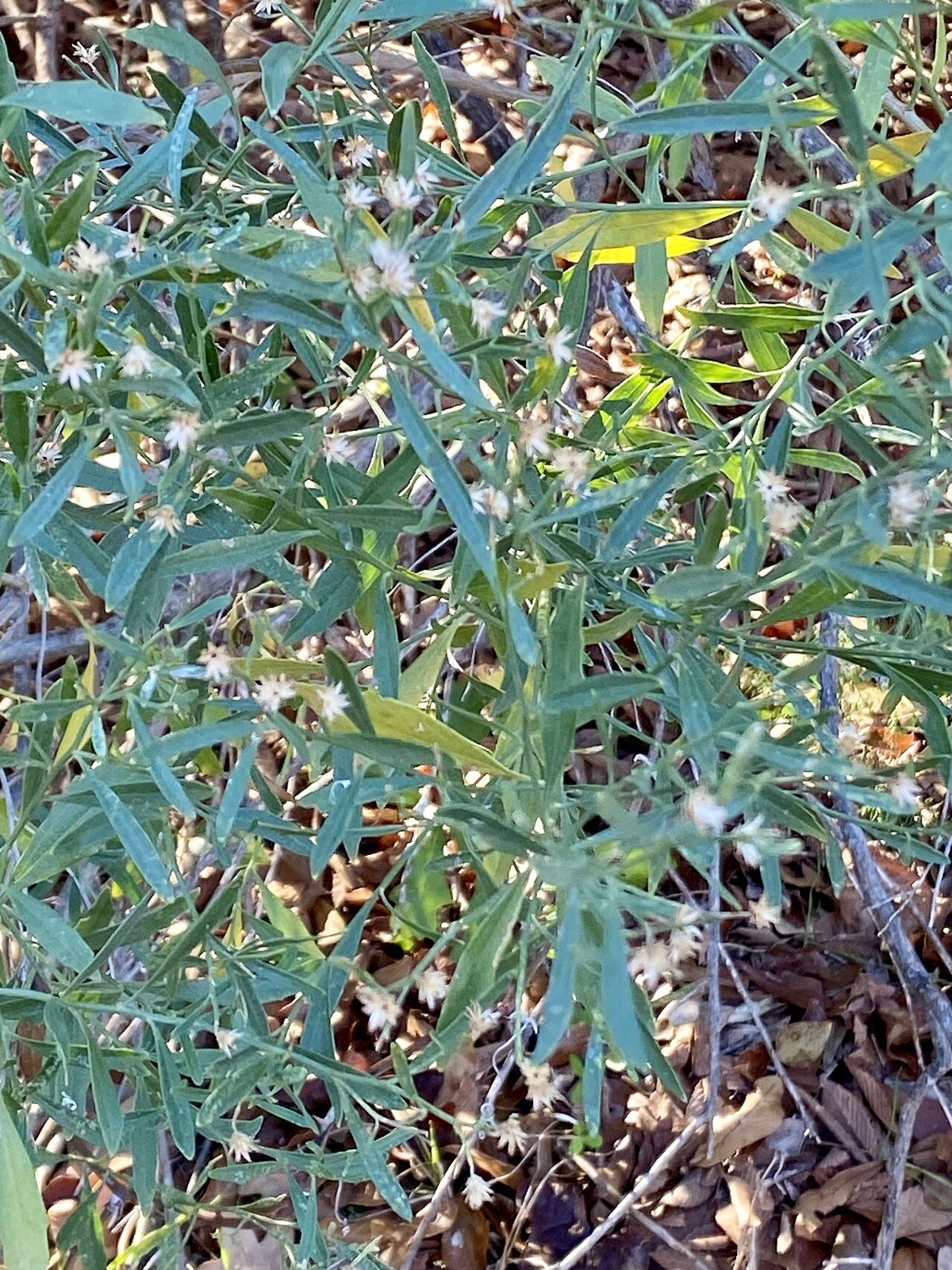
Leaves are narrow, linear to narrowly lance-shaped, about 1 to 3 inches long and under ¼ inch wide, with smooth or only slightly toothed margins. They are sticky-resinous and pale to grayish-green, giving the foliage a somewhat dusty or silvery cast. The plant is only lightly deciduous, often holding much of its foliage through mild winters in the southern part of its range.
Flowers & Seed Heads
False willow is dioecious: male and female flowers occur on separate plants. The flowers themselves are small, pale, and relatively inconspicuous, clustered at branch tips and blooming from late summer into fall. After pollination, female plants produce abundant small seeds, each topped with a tuft of fine white hairs (a pappus); these clustered, cottony seed heads are the plant’s most conspicuous feature and give infested fence lines and creek banks a snow-dusted look in autumn.
Quick Facts
| Scientific Name | Baccharis neglecta |
| Family | Asteraceae (Aster/Sunflower) |
| Plant Type | Fast-growing deciduous-leaning shrub |
| Mature Height | 6–12 ft |
| Mature Spread | 6–10 ft |
| Growth Rate | Fast |
| Sun Exposure | Full sun to part sun |
| Water Needs | Adaptable; low to moderate, tolerates occasional flooding |
| Soil Type | Adaptable; clay, caliche, sand, disturbed or poor soils |
| Soil pH | Neutral to alkaline |
| Bloom Time | Late summer – fall (August–October) |
| Flower Color | Whitish/cream; female seed heads showy white and cottony |
| Fall Color | None notable; showy white seed heads instead |
| Fruit | Tiny wind-dispersed seeds with white hair tufts (female plants) |
| Deer Resistant | Yes |
| USDA Hardiness Zones | 7–9 |
Native Range
False willow is native to central, southern, and western Texas, with a small additional native presence in south-central Oklahoma. It is largely absent from the eastern third of Texas and from the rest of the central and eastern United States, reflecting its preference for the drier, more alkaline soils typical of the Edwards Plateau, South Texas Plains, and Rolling Plains regions.
Within this range, false willow is a classic pioneer of disturbed ground: eroded creek and river banks, overgrazed rangeland, caliche road cuts, fence lines, and other sites with exposed or compacted soil. It tolerates both periodic flooding along drainages and extended dry spells on upland sites, which is part of why it became such a popular choice for erosion-control plantings in the twentieth century.
False willow is common and secure throughout its native Texas range and is not of conservation concern; if anything, it is known for aggressively colonizing disturbed or overgrazed ground within its native region, sometimes to the point of being considered a nuisance on rangeland, though this behavior is natural pioneer-species colonization within its native range rather than invasiveness outside it.
📋 Regional plant lists featuring False Willow: South & West Texas
Growing & Care Guide
False willow is one of the easiest native Texas shrubs to establish, thriving on neglect and poor soil where many other plants fail. It is best used as a practical, fast-growing plant for screening or erosion control rather than a refined ornamental.
Light
Plant in full sun for the densest growth and best flowering, though it tolerates part sun. In deeper shade it becomes leggy and sparse.
Soil & Water
False willow is remarkably unfussy about soil, growing well in clay, caliche, sand, or disturbed fill, and tolerating both alkaline soils and periodic flooding along creeks and drainages. Once established it needs very little supplemental water, though it will grow faster and fuller with occasional deep watering during extended drought. Good drainage is not essential; it is equally at home on dry uplands and in seasonally wet bottomland.
Planting Tips
Set out young plants in fall or spring. Because false willow grows quickly and can self-seed prolifically from windblown seed, especially on disturbed soil, it is best planted with a specific purpose in mind — erosion control, quick screening, or wildlife habitat — rather than as a foundation planting near a home. Space plants 4 to 6 feet apart for a continuous screen, or farther apart for individual specimens.
Pruning & Maintenance
False willow tolerates hard pruning well and can be cut back nearly to the ground periodically to rejuvenate a dense, bushy form, since it resprouts vigorously. Many land managers prune or mow it back on a multi-year cycle to control size on rangeland and rights-of-way. If a tidier look is wanted in a garden setting, shape lightly after the fall seed display fades.
Landscape Uses
- Erosion control on creek banks, slopes, and disturbed soil — its best-known traditional use
- Quick screening or windbreaks where fast height is needed
- Wildlife habitat plantings, especially for fall-migrating pollinators
- Restoration plantings on overgrazed or eroded rangeland within its native range
- Low-maintenance, low-water landscaping on difficult caliche or clay sites
Wildlife & Ecological Value
Though often overlooked as “just a weedy shrub,” false willow punches above its weight ecologically, especially as a late-season nectar and seed source in a Texas landscape where few other natives are still blooming in October.
For Pollinators
The late-summer and fall flowers are an important nectar source for a wide range of native bees, wasps, and butterflies, including migrating monarchs, at a time of year when many other nectar plants have finished blooming. Thickets of flowering false willow can be genuinely abuzz with pollinator activity during peak bloom.
For Birds
The dense, twiggy growth form provides good nesting cover and shelter for small songbirds, and the seed heads, while mostly wind-dispersed, offer some incidental forage for seed-eating birds in fall and winter.
For Mammals
False willow is not a preferred browse plant for deer or livestock, which contributes to its tendency to increase on grazed rangeland where more palatable plants are kept in check. Its dense thickets do provide cover for small mammals.
Ecosystem Role
As a fast-colonizing native pioneer species, false willow plays an important stabilizing role on eroded creek banks and disturbed ground, where its extensive root system helps hold soil and its canopy provides shade that allows longer-lived woody species to establish over time. Its abundant, wind-borne seed also makes it one of the first native woody plants to recolonize bare or disturbed sites within its range.
Cultural & Historical Uses
False willow’s best-known human history is recent and practical rather than traditional: during the 1930s, the shrub was widely planted across Texas as part of New Deal-era soil conservation efforts aimed at stabilizing eroded creek banks, gullies, and overgrazed rangeland devastated by drought and poor land management during the Dust Bowl years. This large-scale use gave rise to its enduring nickname “Roosevelt-weed,” a reference to President Franklin D. Roosevelt’s conservation programs.
Beyond its conservation-era planting history, false willow has little documented use as a food, medicine, or material plant among Indigenous peoples of Texas, and it is not used in any of these ways today. Its common names “false willow” and “poverty weed” both reflect practical, somewhat dismissive folk observations — the former about its willow-like leaves despite no close relationship to true willows, the latter about its tendency to dominate poor, overgrazed, or depleted ground.
Today the plant is primarily recognized by ranchers and land managers, who regard it as both a useful erosion-control species and, in some contexts, a rangeland plant to be periodically controlled where it becomes overly dense on grazing land.
Frequently Asked Questions
Is false willow actually a willow?
No. Despite its narrow, willow-like leaves and common name, false willow is a member of the aster/sunflower family (Asteraceae), not the willow family. The resemblance is only in leaf shape and general silhouette.
Why is it called Roosevelt-weed?
The nickname comes from the 1930s, when the shrub was widely planted across Texas as part of New Deal-era (President Franklin D. Roosevelt) soil conservation programs to control erosion on damaged creek banks and rangeland.
Why do only some plants produce the fluffy white seed heads?
False willow is dioecious, meaning individual plants are either male or female. Only female plants develop the showy, cottony seed heads in late summer and fall; male plants flower but do not produce this fluffy display.
Is false willow invasive?
Within its native Texas and Oklahoma range, it is a natural pioneer species that can become locally dominant on disturbed or overgrazed ground, which is sometimes seen as a rangeland nuisance, but this is native colonizing behavior, not invasiveness. It should not be planted outside its native range or in states where it does not naturally occur.
How do I control false willow if it spreads too much?
Because it resprouts readily, cutting alone is only a temporary measure; repeated mowing or cutting over several seasons, combined with managing the underlying soil disturbance or overgrazing that favors it, is more effective for long-term control on rangeland.

Looking for a nursery that carries False Willow?
Browse our native plant nursery directory: Texas