Paper Birch (Betula papyrifera)
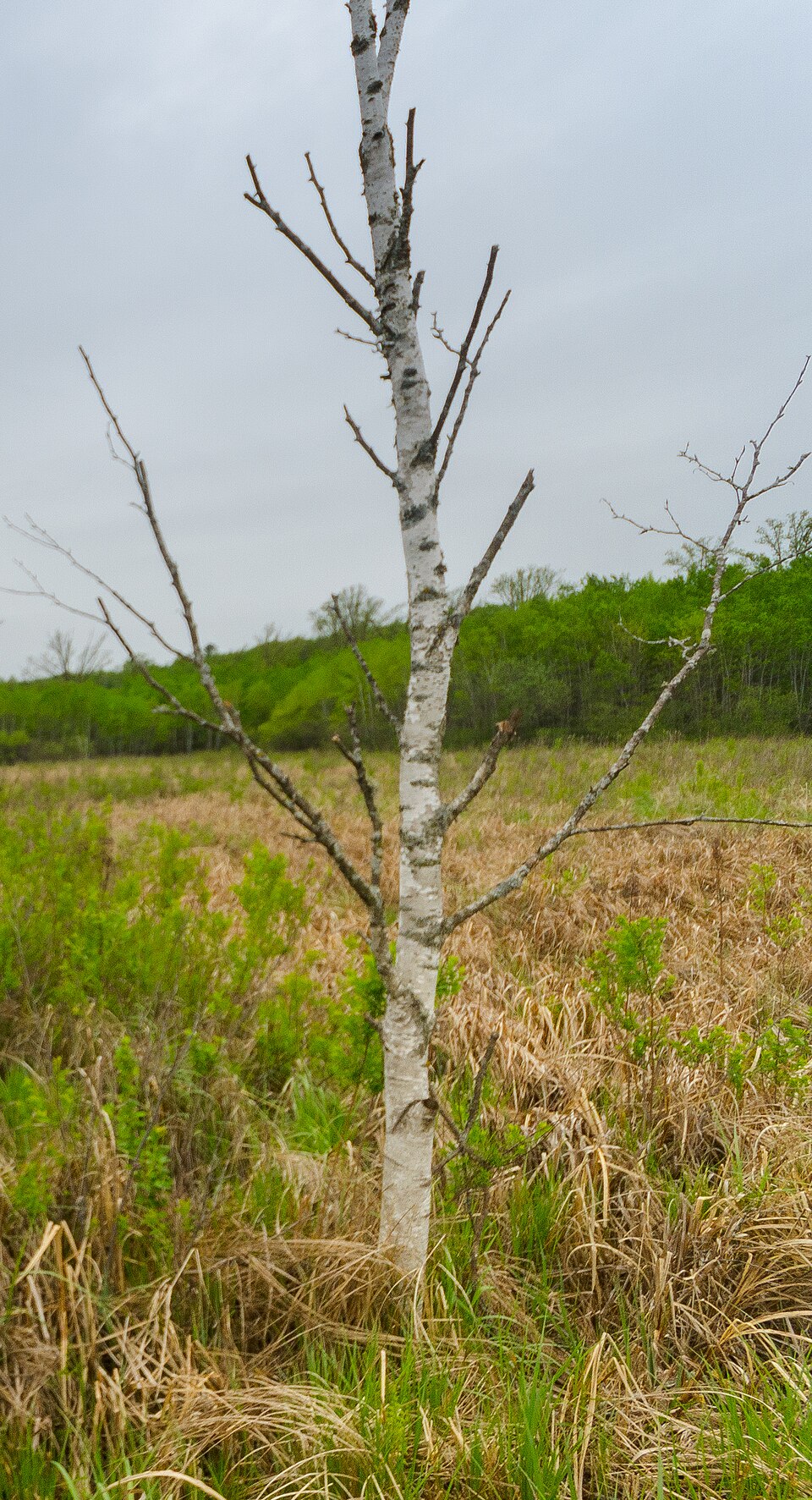
Betula papyrifera, commonly known as Paper Birch, White Birch, or Canoe Birch, stands as one of North America’s most iconic and instantly recognizable trees. This magnificent member of the Betulaceae (birch) family has captured human imagination for millennia with its brilliant white, papery bark that peels in horizontal strips like ancient scrolls. Growing as tall as 50 to 70 feet with graceful, slightly drooping branches, Paper Birch creates an unmistakable silhouette against the deep greens of northern forests.
Native across the vast boreal and northern temperate regions of North America — from Alaska to Newfoundland and south through the northern United States — Paper Birch represents the essence of wilderness and northern landscapes. Its distinctive bark has made it not just a tree, but a cultural symbol, featured in countless works of art, poetry, and literature as the embodiment of pristine northern forests. The bark’s remarkable properties allowed Indigenous peoples to craft everything from canoes to writing surfaces, earning it names that reflect these vital uses.
What makes Paper Birch truly extraordinary is its role as both an ecological pioneer and a keystone species. Following forest fires, windstorms, or other disturbances, Paper Birch is often among the first trees to colonize bare ground, rapidly establishing itself and creating conditions that allow slower-growing conifers to eventually take hold. Its brilliant fall foliage — a warm golden yellow that seems to glow from within — provides one of autumn’s most spectacular displays across the northern forests. For gardeners in suitable climates, Paper Birch offers the opportunity to bring the wild beauty and ecological richness of the boreal forest into cultivated landscapes.
Identification
Paper Birch is one of the most distinctive trees in North America, easily identified by its characteristic white bark and graceful growth habit. This deciduous tree typically reaches 50 to 70 feet in height with a trunk diameter of 2 to 3 feet, though exceptional specimens can grow even larger under ideal conditions.
Bark
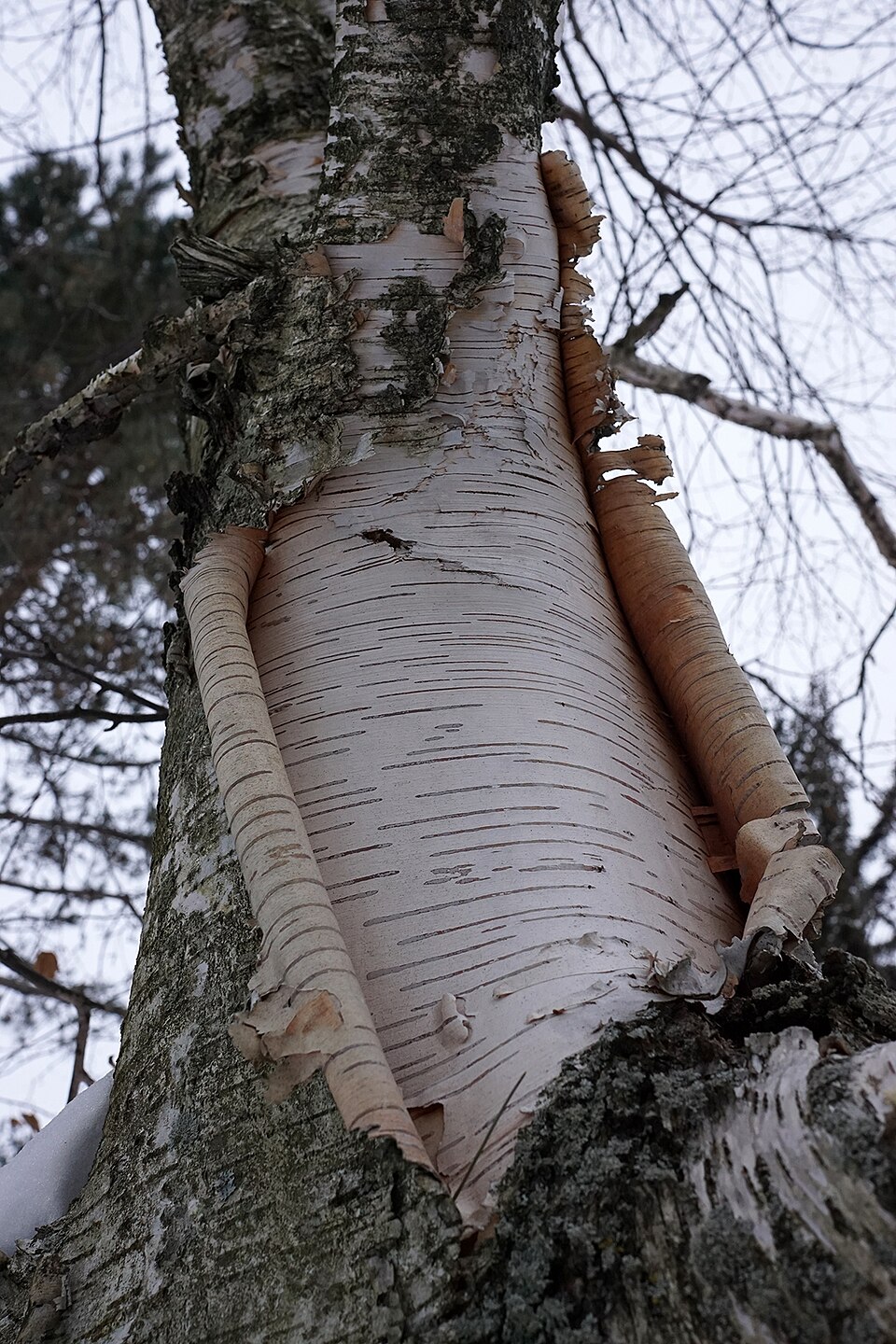
The bark is Paper Birch’s most famous feature and the source of all its common names. On mature trees, the outer bark is brilliant white with distinctive dark horizontal lines (lenticels) that encircle the trunk. The bark peels naturally in thin, papery sheets that can be separated by hand, revealing fresh white or slightly pink bark underneath. Young trees may have darker, more bronze-colored bark that gradually transitions to white as the tree matures. The inner bark is typically reddish-brown to orange, creating beautiful color contrasts when the outer bark peels.
Growth Form & Branching
Paper Birch develops an oval to irregular crown with slightly drooping branches that give it a graceful, weeping appearance. The tree often grows with multiple trunks, especially when young or after disturbance, creating attractive clumps. The branching pattern is alternate, with twigs that are initially green or reddish-brown, becoming darker with age. The overall silhouette is open and airy, allowing filtered light to reach the forest floor beneath.
Leaves
The leaves are simple, alternate, and ovate to triangular in shape, measuring 2 to 4 inches long and 1.5 to 3 inches wide. They have doubly serrated (double-toothed) margins and are bright green above with a paler green underside. The leaves have prominent parallel veins that run from the central midrib to the leaf edges. In autumn, the foliage turns a brilliant golden yellow that is among the most spectacular of any North American tree, often glowing like lanterns in the fall sunlight.
Flowers & Reproduction
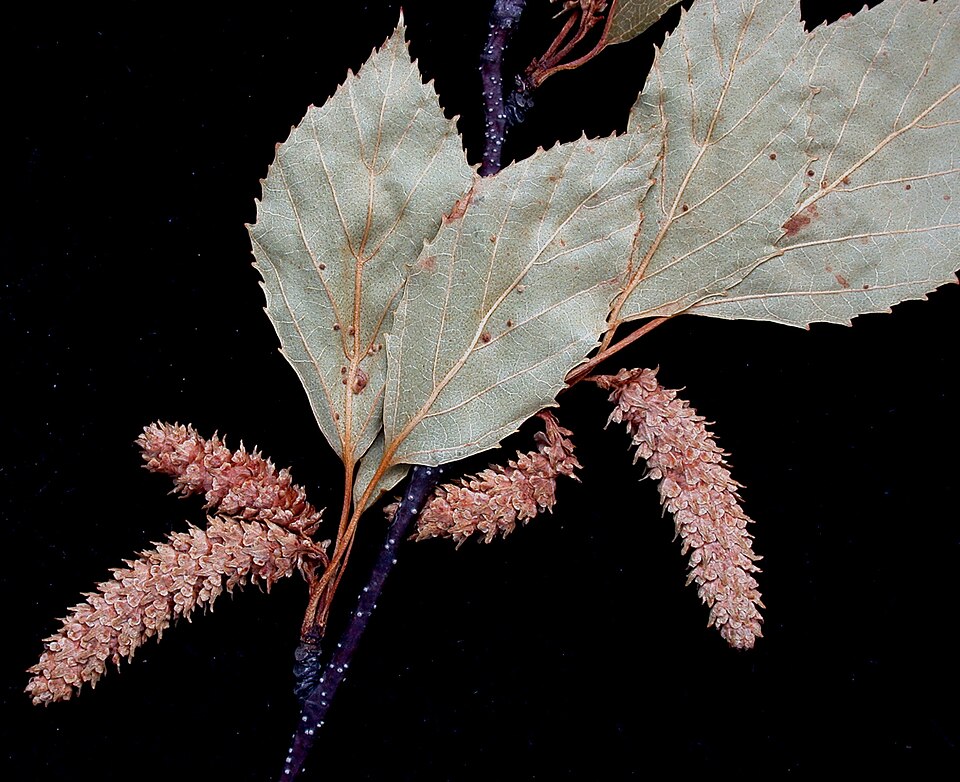
Paper Birch is monoecious, meaning both male and female flowers appear on the same tree. The male catkins (aments) are pendulous, 3 to 4 inches long, and appear in clusters of 2 to 4 at the tips of branches. They develop in late summer, overwinter as hard, brown structures, and elongate in spring to release pollen. Female catkins are shorter, upright, and appear as small green structures in late spring. After pollination, they develop into brown, cone-like structures that break apart to release thousands of tiny, winged seeds.
Quick Facts
| Scientific Name | Betula papyrifera |
| Family | Betulaceae (Birch) |
| Plant Type | Deciduous Tree |
| Mature Height | 50–70 ft |
| Sun Exposure | Full Sun |
| Water Needs | Moderate |
| Bloom Time | April – May |
| Flower Color | Green (catkins) |
| USDA Hardiness Zones | 2–7 |
Native Range
Paper Birch possesses one of the most extensive native ranges of any North American tree, stretching across the entire width of the continent from the Atlantic to the Pacific and from the Arctic treeline south to the northern United States. This transcontinental distribution reflects the species’ remarkable adaptability to cool, moist climates and its role as a dominant component of boreal forest ecosystems.
The species reaches its greatest abundance in the boreal forest (taiga) that extends across Alaska and Canada, where it forms vast stands mixed with spruce, fir, and aspen. In the northern United States, Paper Birch extends south along mountain chains and in areas with suitable cool, moist conditions. It’s particularly common in the Great Lakes region, northern New England, the northern Rocky Mountains, and the Pacific Northwest, where it thrives in areas that experience long, cold winters and relatively cool summers.
Paper Birch shows remarkable elevation tolerance, growing from sea level in northern latitudes to elevations exceeding 4,000 feet in mountainous regions. This broad adaptability allows it to occupy diverse habitats, from lakeshores and stream valleys to upland slopes and forest clearings. The species is often associated with areas that have experienced recent disturbance — fire, windstorms, logging, or other disruptions — where its pioneer nature allows it to quickly establish and begin the process of forest succession.
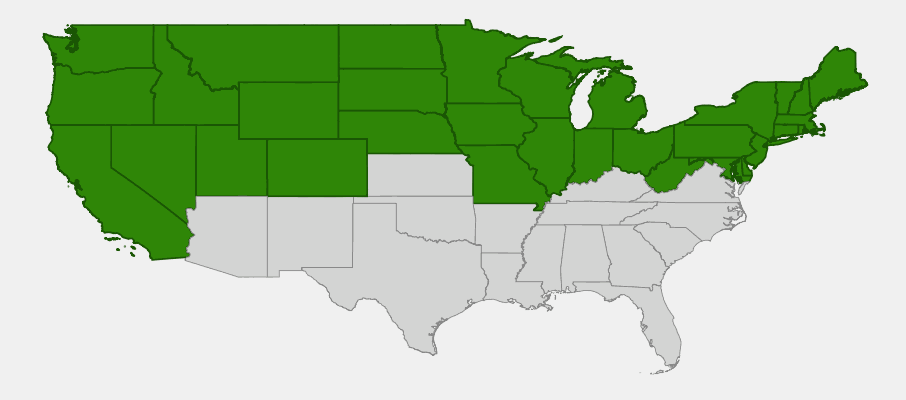
📋 Regional plant lists featuring Paper Birch: North Dakota, South Dakota & Western Minnesota · Alaska · Northern New England · Montana & Wyoming · Oregon & Washington
Growing & Care Guide
Paper Birch is an excellent choice for northern gardens and landscapes, offering year-round interest through its distinctive bark, graceful form, and brilliant fall color. While it has specific requirements, understanding its natural habitat needs makes successful cultivation straightforward.
Light
Paper Birch requires full sun to thrive, needing at least 6 hours of direct sunlight daily for optimal growth and health. In nature, it typically grows in forest openings, clearings, and edges where it receives abundant light. While young trees can tolerate light shade, they perform best and develop the characteristic white bark most fully in sunny locations. Insufficient light leads to poor bark development, weak growth, and increased susceptibility to pests and diseases.
Soil & Water
Paper Birch thrives in moist, well-drained, slightly acidic soils (pH 6.0-6.8) that are rich in organic matter. The species is somewhat adaptable to soil type but performs best in loamy soils with good drainage and consistent moisture. Avoid planting in heavy clay soils that stay waterlogged, as this can lead to root rot. The tree has moderate to high water requirements, particularly during establishment and dry periods. Deep, infrequent watering is preferable to frequent shallow watering, encouraging deep root development.
Climate Requirements
Paper Birch requires cool climates with cold winters and is not suitable for warm southern regions. It performs best in USDA zones 2-6, with marginal performance in zone 7 at elevation or in cooler microclimates. The tree needs a period of winter chill to break dormancy properly and struggles in areas with hot, humid summers. In warmer regions, it’s susceptible to heat stress and various pest problems, including the bronze birch borer which can be fatal.
Planting Tips
Plant Paper Birch in spring or early fall when temperatures are cooler and rainfall is typically more reliable. Choose a location with morning sun and some afternoon protection in warmer climates. Space trees 20-30 feet apart to allow for their mature spread. When planting, dig a hole twice as wide as the root ball but no deeper, and backfill with the original soil amended with compost. Water thoroughly after planting and maintain consistent soil moisture during the establishment period.
Pruning & Maintenance
Paper Birch requires minimal pruning beyond removing dead, damaged, or crossing branches. Prune during late fall or winter when the tree is dormant to avoid attracting insects and to minimize sap bleeding. The tree naturally develops an attractive shape, so structural pruning is rarely necessary. Apply a 2-4 inch layer of organic mulch around the base to retain soil moisture and protect the shallow root system, but keep mulch away from the trunk base.
Landscape Uses
Paper Birch excels in many landscape applications:
- Specimen tree — the white bark provides year-round focal point interest
- Naturalized areas — excellent for creating woodland garden settings
- Stream & pond edges — thrives in moist riparian environments
- Winter interest — bark and branching structure beautiful against snow
- Fall color — provides brilliant golden yellow autumn display
- Wildlife habitat — supports numerous bird and insect species
- Erosion control — effective for stabilizing slopes and stream banks
Potential Challenges
Paper Birch can be susceptible to several pests and diseases, particularly when stressed by heat, drought, or poor growing conditions. The bronze birch borer is the most serious threat, especially in warmer climates or during drought periods. Regular watering during dry spells, proper mulching, and avoiding trunk damage can help prevent problems. The tree’s relatively short lifespan (40-60 years in cultivation) should be considered when planning landscapes.
Wildlife & Ecological Value
Paper Birch plays a crucial role in northern forest ecosystems, serving as both a pioneer species that initiates forest succession and a keystone species that supports a remarkable diversity of wildlife throughout its range.
For Birds
Paper Birch is exceptionally valuable for birds, supporting over 35 species that use various parts of the tree for food and nesting. The abundant small seeds feed numerous finches, chickadees, nuthatches, and siskins, particularly during winter when other food sources are scarce. Woodpeckers, including Yellow-bellied Sapsuckers, frequently use Paper Birch for feeding and nesting holes. The tree’s caterpillar population supports insectivorous birds like warblers and vireos during breeding season. Cavity-nesting birds often use old woodpecker holes in birch trunks, while the tree’s branching structure provides excellent nesting sites for songbirds.
For Mammals
Many northern mammals depend on Paper Birch for food and shelter. Moose browse the twigs and bark, particularly in winter, while white-tailed deer feed on young shoots and leaves. Snowshoe hares rely heavily on birch bark and twigs as winter food, and their population cycles are closely linked to birch abundance. Beavers use birch extensively for both food and dam construction, often preferring it over other species. Small mammals like squirrels and chipmunks consume the seeds and nest in tree cavities, while porcupines feed on the inner bark.
For Pollinators
Paper Birch supports a diverse community of pollinating insects. The early-blooming catkins provide crucial pollen resources for native bees, including mining bees and mason bees, during spring when few other flowers are available. The tree also hosts numerous caterpillar species that serve as important food sources for both adult butterflies and moths and their predators. Over 40 species of moths and butterflies use Paper Birch as a host plant, including several beautiful species like the Mourning Cloak and various sphinx moths.
Ecosystem Role
As a pioneer species, Paper Birch plays a vital role in forest succession following disturbances. Its rapid establishment helps stabilize soil, moderate temperature extremes, and create conditions suitable for longer-lived conifers to establish. The tree’s leaf litter decomposes relatively quickly, enriching soil with nutrients and supporting soil microorganism communities. Paper Birch also forms important mycorrhizal relationships with fungi that enhance nutrient uptake and connect it to the broader forest communication network. In areas affected by climate change, Paper Birch’s ability to rapidly colonize disturbed areas makes it crucial for ecosystem resilience and recovery.
Cultural & Historical Uses
Perhaps no other North American tree has played such a central role in human culture and survival as Paper Birch. For thousands of years, Indigenous peoples across the tree’s range have utilized virtually every part of this remarkable species, developing sophisticated technologies and cultural practices around its unique properties. The tree’s bark, in particular, became the foundation for technologies that enabled human survival and prosperity in northern climates.
The most famous use of Paper Birch was in canoe construction, where large sheets of bark were expertly sewn together with spruce roots and sealed with pine pitch to create lightweight, durable watercraft. These birchbark canoes were essential to the fur trade and exploration of North America’s waterways, enabling travel across vast distances through the continent’s interconnected river and lake systems. The Ojibwe, Algonquin, and other tribes developed canoe-building into a high art form, creating vessels perfectly adapted to different water conditions and uses.
Beyond canoes, Paper Birch bark was used for countless other purposes: baskets, containers, roofing materials, writing surfaces (the word “birch” comes from the Sanskrit word meaning “to write”), and even emergency food during times of scarcity. The inner bark contains nutrients and can be dried and ground into flour, while the sap can be tapped and processed into syrup similar to maple syrup, though in much smaller quantities. Various parts of the tree were used medicinally for treating everything from skin conditions to respiratory ailments.
European colonists quickly adopted many Indigenous uses for Paper Birch, and the tree became important in early American industries. The wood was used for everything from furniture to paper pulp, while the bark found applications in tanning leather and roofing. The tree’s beauty also inspired countless artists, writers, and poets — from Henry Wadsworth Longfellow’s famous “Song of Hiawatha” to the paintings of the Group of Seven in Canada. Paper Birch became an iconic symbol of the North American wilderness, representing the pristine beauty and enduring strength of northern forests.
Today, while modern materials have largely replaced birchbark in practical applications, the tree remains culturally significant. Many Indigenous communities continue traditional birchbark crafts as both cultural preservation and artistic expression. The tree is widely planted as an ornamental in suitable climates, bringing the beauty and symbolism of the northern wilderness to urban and suburban landscapes. Conservation efforts focus on maintaining healthy Paper Birch populations in the face of climate change and forest fragmentation, recognizing both their ecological importance and deep cultural significance.
Frequently Asked Questions
Why does Paper Birch bark peel, and is it harmful to the tree?
The peeling bark is completely natural and actually beneficial to the tree. The outer bark layers die as the tree grows, and the peeling allows the tree to shed these dead layers while maintaining the protective white outer layer. This adaptation helps reflect sunlight and prevent overheating. Never pull bark off manually, as this can damage the living inner bark and create entry points for pests and diseases.
Can I grow Paper Birch in warm climates?
Paper Birch is not suitable for warm southern climates and struggles in USDA zones 8 and above. The tree requires cold winters to break dormancy properly and is highly susceptible to heat stress and pests like bronze birch borer in warm climates. If you live in a warm area, consider native alternatives like River Birch (Betula nigra) which is better adapted to southern conditions.
How long do Paper Birch trees live?
In cultivation, Paper Birch typically lives 40-60 years, though wild specimens can live longer under ideal conditions. The relatively short lifespan is normal for pioneer species, which are designed to grow quickly, reproduce early, and then make way for longer-lived species. This shorter lifespan should be considered when planning landscapes, perhaps by planting other longer-lived trees nearby.
Is Paper Birch wood valuable for lumber?
Paper Birch wood is moderately valuable and is used for various purposes including furniture, plywood, pulp, and specialty items like ice cream sticks and clothespins. The wood is light-colored, fine-grained, and takes stain well, making it popular for interior applications. However, it’s not considered a premium lumber species and is generally less valuable than hardwoods like oak or maple.
Do Paper Birch trees attract pests?
Paper Birch can attract several pests, with bronze birch borer being the most serious threat, particularly in stressed or heat-stressed trees. Other potential issues include leaf miners, aphids, and various caterpillars. However, healthy trees in suitable growing conditions are generally quite resistant to serious pest problems. Proper care — including adequate watering, mulching, and avoiding trunk damage — is the best prevention.

Looking for a nursery that carries Paper Birch?
Browse our native plant nursery directory: North Dakota · South Dakota · Minnesota