
Moschatel (Adoxa moschatellina)
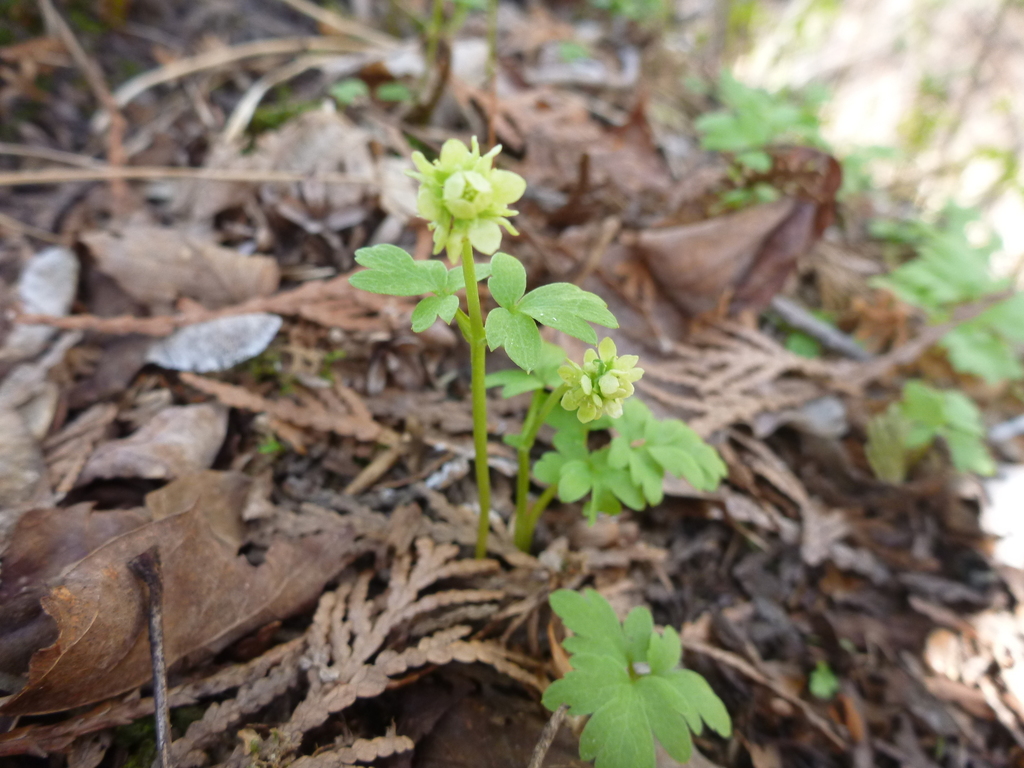
Adoxa moschatellina, known as Moschatel (also muskroot, town hall clock and five-faced bishop), is a tiny, delicate perennial of cool, moist, shady places. It is only 2 to 6 inches tall, with soft, pale green, finely divided leaves and a curious little green flower head shaped like a cube: four flowers face outward to the four sides and a fifth faces the sky, like the faces of a clock tower.
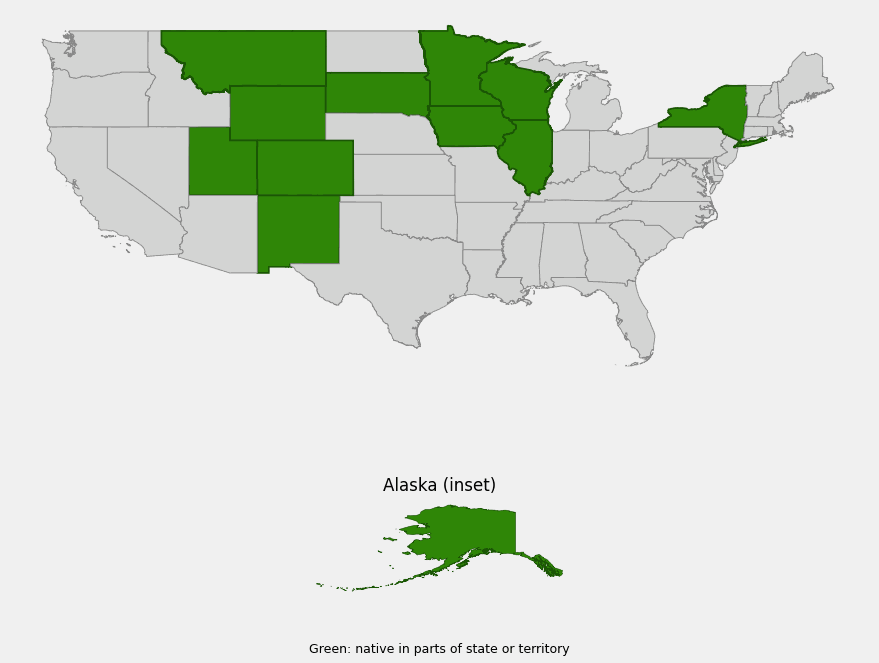
Moschatel grows around the Northern Hemisphere, in Europe, northern Asia and North America. In the United States it is a plant of the North and the mountains: Alaska, the Rocky Mountains from Montana and Wyoming south to Colorado, Utah and New Mexico, the Black Hills of South Dakota, and scattered, rare sites in the upper Midwest and New York, where many populations grow on cold, moist, north-facing slopes.
It flowers very early, often as soon as the snow melts, and then quietly dies back by midsummer. The flowers and the plant give off a faint musky scent, especially in damp evening air, which gives it the name moschatel. It is a plant to look for and enjoy in the wild rather than a garden plant, and it should never be dug up.
Identification
Look for a very small, soft plant in moist shade in spring, with pale green, three-part, much-divided leaves and a single pea-sized, cube-shaped green flower head on a slender stalk with one pair of small leaves.
Growth Habit
Moschatel is a small herbaceous perennial that grows from a short, white, scaly rhizome, spreading by slender runners to form loose patches. The flowering stems are 2 to 6 inches tall. The whole plant is soft and hairless and appears in early spring, flowers, fruits and dies back to the ground by early or midsummer.
Leaves
The basal leaves rise on long stalks and are divided into three parts, each again divided and lobed (biternate), giving a soft, lacy look similar to a small meadow rue or a corydalis. They are pale to bright green and slightly fleshy. Each flowering stem carries a single pair of smaller, three-parted leaves halfway up.
Flowers
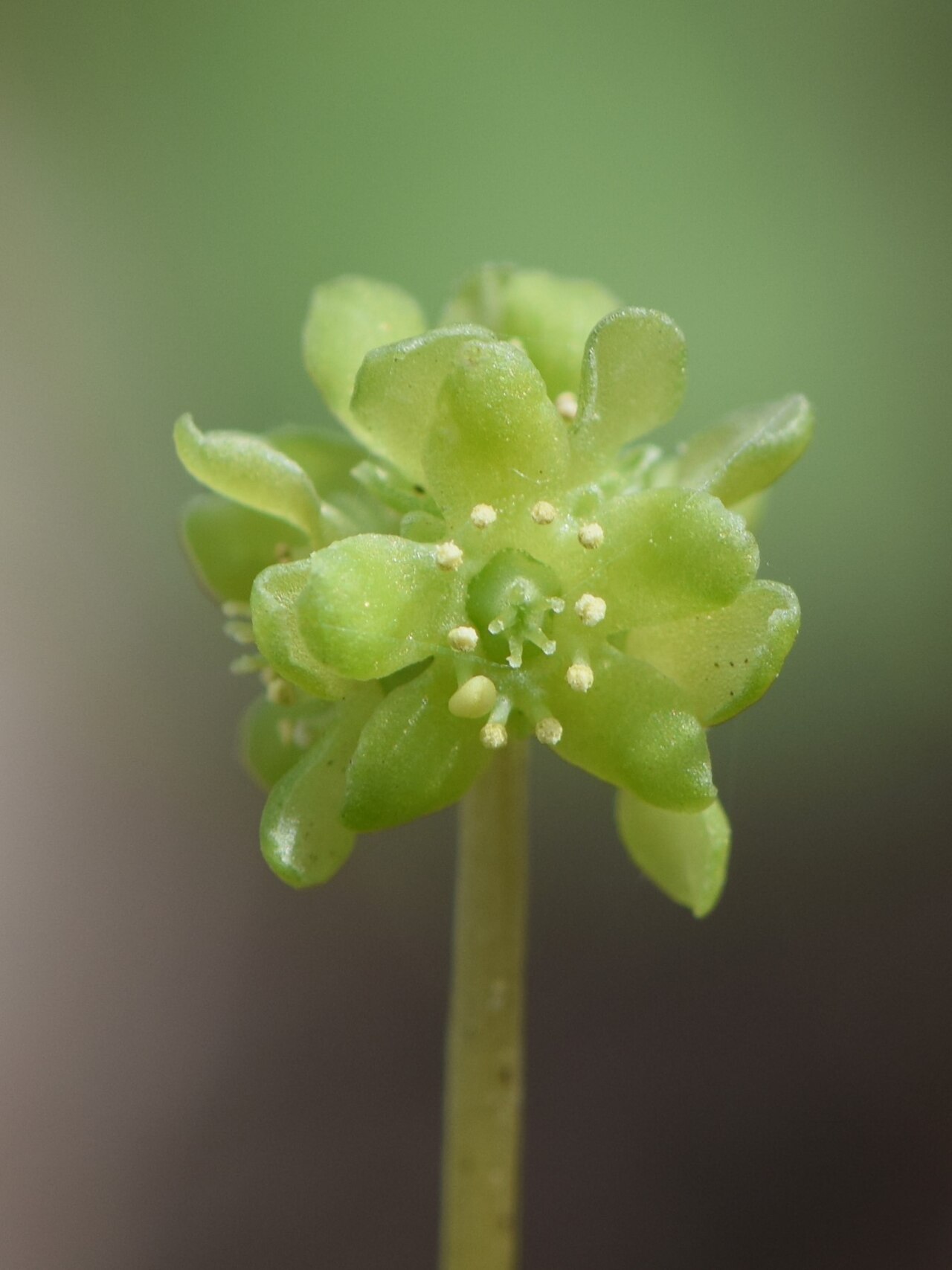
The flower head is a tight, cube-shaped cluster about 1/4 inch across, made of usually five small, pale green to yellowish-green flowers. The top flower usually has four petal lobes and the four side flowers usually have five, each facing a different direction. The stamens are split, so each flower appears to have twice as many, each with yellow anthers. The flowers are faintly musky. Bloom is from about April to June, later at high elevations and in the North.
Fruit & Seeds
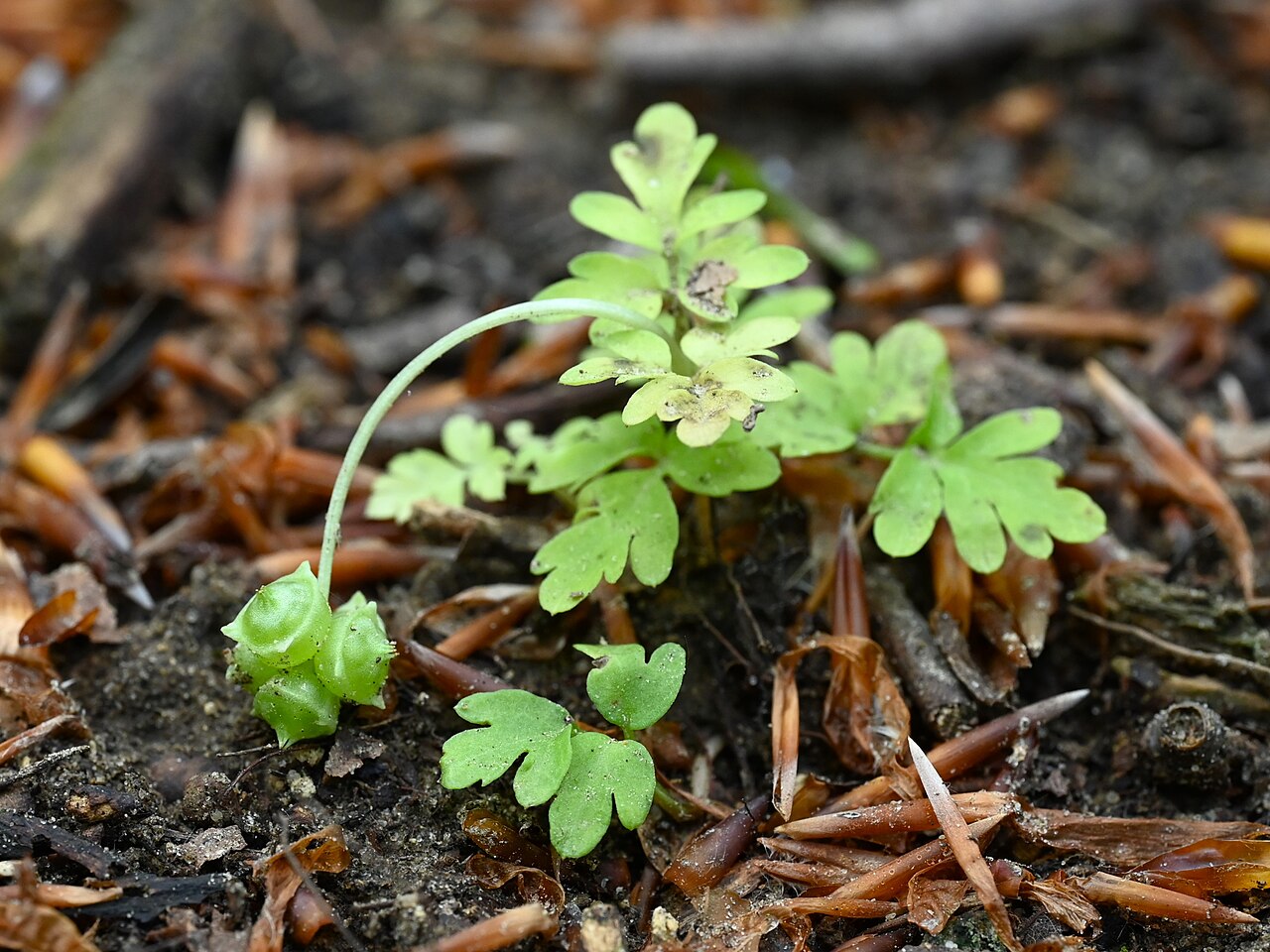
The fruit is a small, green, juicy drupe containing a few seeds. As it ripens the flower stalk often bends down toward the ground. Fruit set is often sparse, and the plant spreads mostly by its runners.
Look-alikes
The leaves look like those of early meadow rue, small anemones or Dutchman’s breeches, which grow in the same shady woods. None of these has the tiny, green, cube-shaped flower head with a single pair of stem leaves, which makes moschatel unmistakable once it flowers.
Quick Facts
| Scientific Name | Adoxa moschatellina |
| Family | Adoxaceae (moschatel family; also includes elderberries and viburnums) |
| Plant Type | Tiny spring ephemeral perennial |
| Mature Height | 2–6 in |
| Mature Spread | Slowly forms patches 6–12 in or more |
| Growth Rate | Slow |
| Sun Exposure | Part shade to full shade |
| Water Needs | Medium to high; cool, moist soil |
| Soil Type | Moist, humus-rich loam, mossy rock ledges and talus |
| Soil pH | Slightly acidic to slightly alkaline (about 5.5–7.5) |
| Bloom Time | April–June (to July at high elevation) |
| Flower Color | Pale green to yellowish green |
| Fall Color | None; dies back by midsummer |
| Fruit | Small green drupe |
| Deer Resistant | Not well known |
| USDA Hardiness Zones | 2–7 |
Native Range
Moschatel is circumboreal, native across Europe, northern and central Asia and northern North America. USDA PLANTS lists it in 12 states: Alaska, Montana, Wyoming, South Dakota, Colorado, Utah, New Mexico, Minnesota, Iowa, Wisconsin, Illinois and New York. In Canada it grows from the Yukon and British Columbia east to Manitoba and Ontario.
In the West it grows in moist, shaded places in the mountains, mainly in montane and subalpine forests, along streams and under cliffs and rock outcrops, and in the Black Hills of western South Dakota. In the upper Midwest it is a rare relict of colder times, found mainly in the Driftless Area of northeastern Iowa, southwestern Wisconsin, southeastern Minnesota and northwestern Illinois, often on algific (cold-air) talus slopes, where cold air from underground ice caves keeps the ground cool all summer. The New York records are outlying, far east of the main range.
Because it is so small, so early and so short-lived above ground, moschatel is easy to overlook. It is tracked as a rare plant by natural heritage programs in several states at the edges of its range. Never dig it from the wild.
📋 Regional plant lists featuring Moschatel: New York, Pennsylvania & Northern New Jersey · Montana & Wyoming · Michigan, Wisconsin & Eastern Minnesota · Utah & Western Colorado · Delaware, Southern New Jersey & Long Island · Illinois, Iowa & Missouri · Alaska · North Dakota, South Dakota & Western Minnesota
Growing & Care Guide
Moschatel is rarely grown in North America, and plants are almost never offered by native nurseries. It is best enjoyed in the wild. Never dig it from wild populations: many are small and rare, and transplanted plants seldom survive outside cool, moist shade.
Light
Part to full shade under deciduous trees or on a north-facing slope, where it gets spring sun before the leaves come out.
Soil & Water
It needs cool, constantly moist, humus-rich soil that drains well, such as leaf mold over rock or a mossy, shady bank. It cannot tolerate hot, dry summers, although the plant is dormant by then; the soil around the rhizomes must stay cool and slightly moist.
Planting Tips
Where it is available from legitimate sources (it is grown in some European woodland gardens), plant the small rhizomes 1 inch deep in fall or early spring in a shady woodland garden, among ferns and other spring ephemerals, and mark the spot, since it disappears in summer.
Pruning & Maintenance
No pruning is needed. Leave leaf litter in place as a natural mulch, and avoid disturbing the soil once the plant has gone dormant.
Propagation
Divide established patches in early spring or fall by separating rhizomes with a bud. Seed should be sown fresh outdoors, but germination is slow and erratic.
Landscape Uses
- Woodland gardens: a tiny, early ephemeral for cool, moist shade
- Shade rock gardens: fits mossy, shaded crevices and ledges
- Nature study: one of the most unusual flowers of northern woods
- Habitat protection: an indicator of cool, undisturbed, moist forest
Wildlife & Ecological Value
Moschatel is a small part of the spring flora of cool forests, active only for a few weeks before the tree canopy closes.
For Pollinators
The musky, green flowers produce a little nectar and are visited by small flies, beetles and other small insects. The plant can also self-pollinate.
For Birds
The small green fruits are not a significant bird food, but they may be eaten by ground-feeding birds.
For Mammals
Small mammals may eat the soft leaves in spring, but the plant is too small to be an important food.
Ecosystem Role
As a spring ephemeral, moschatel uses the light available before the tree leaves expand. Its presence, especially on algific talus slopes in the Midwest, marks rare cold, moist microhabitats that also shelter other northern relict plants and snails.
Cultural & Historical Uses
The genus name Adoxa comes from Greek words meaning “without glory,” a reference to its small, inconspicuous flowers. The species name moschatellina means “little musk,” for the faint musky scent of the flowers.
Its English nicknames “town hall clock” and “five-faced bishop” come from the five little flowers facing in five directions, like the clock faces on a tower.
Moschatel gives its name to the family Adoxaceae. DNA studies showed that this tiny herb is closely related to woody plants such as elderberries and viburnums like nannyberry, which are now placed in the same family.
Frequently Asked Questions
Why is moschatel called town hall clock?
Its tiny flower head has five flowers: four face outward to the sides and one faces straight up, like the clock faces on a town hall tower.
Does moschatel smell of musk?
Yes, faintly. The flowers give off a musky scent, especially in damp air in the evening, which gives the plant its name.
Where does moschatel grow in the United States?
In Alaska, the Rocky Mountains from Montana to New Mexico, the Black Hills, the Driftless Area of the upper Midwest, and in rare outlying sites in New York.
When does moschatel bloom?
In early spring, from about April to June depending on latitude and elevation, often soon after the snow melts.
Can I grow moschatel in my garden?
It is very rarely available in North America and needs cool, moist shade. Enjoy it in the wild, and never dig it from wild populations.

Looking for a nursery that carries Moschatel?
Browse our native plant nursery directory: Alaska · Colorado · Illinois & Iowa · Minnesota & Montana · New Mexico & New York · South Dakota & Utah · Wisconsin & Wyoming

