Goosefoot Violet (Viola purpurea)
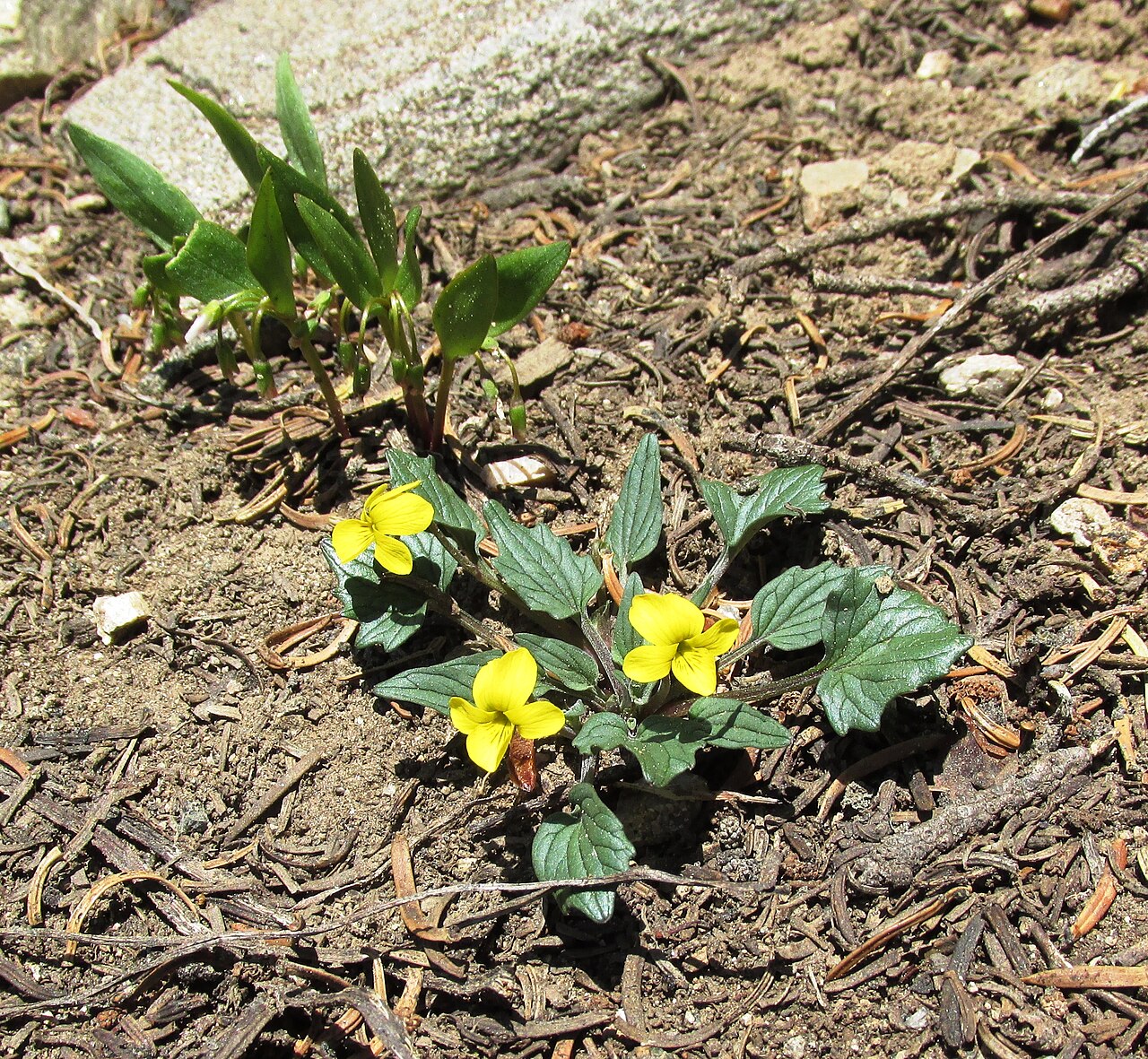
Viola purpurea, commonly called Goosefoot Violet (also known as mountain violet), is a small, drought-tolerant perennial wildflower of the mountains and high desert of the western United States. It belongs to the Violaceae (violet) family and takes its common name from the angular, goose-foot-shaped lobing often seen on its gray-green leaves, which distinguishes it from the smoother, heart-shaped leaves of most eastern violets.
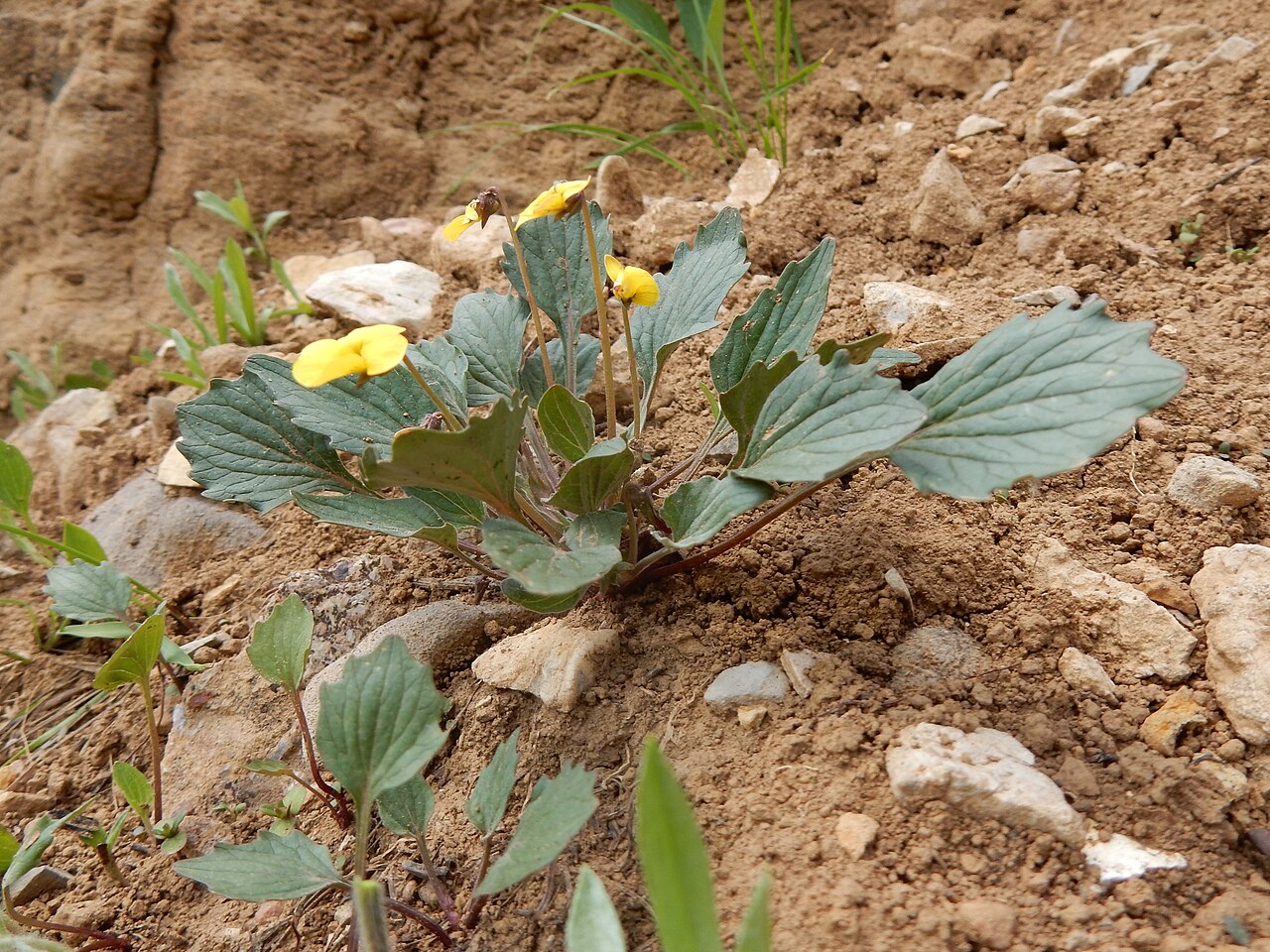
Unlike the moist-woodland violets familiar to many gardeners, Goosefoot Violet is built for dry, exposed, often rocky sites — sagebrush flats, open pine and juniper woodlands, and rocky slopes from the lower foothills up into the subalpine zone. It forms low, tufted rosettes and produces cheerful yellow flowers, often with fine purple-brown veining on the lower petals, from spring through early summer depending on elevation.
For western gardeners working with lean, well-drained soil and limited water, Goosefoot Violet is a useful small-scale native for rock gardens, dry meadow plantings, and the edges of xeric borders. It asks for almost nothing once established and offers early-season color and nectar in landscapes where many showier perennials are still dormant.
Identification
Goosefoot Violet is a low, clump-forming perennial, typically only 2 to 6 inches tall, spreading slowly from a woody taproot or short rhizome rather than running stolons. The whole plant often has a grayish or silvery cast from fine hairs on the leaves and stems, an adaptation to its sunny, dry habitat.
Leaves
Leaves are mostly basal, oval to broadly heart-shaped, ½ to 2 inches long, with margins that range from nearly smooth to coarsely and irregularly toothed — the toothed forms give the leaf its distinctive angular, “goosefoot” outline. Leaf color is dull green to blue-green above, often purplish beneath, and the surfaces are usually finely hairy. Leaf shape and toothing vary considerably among the many recognized varieties and subspecies across its range.
Flowers
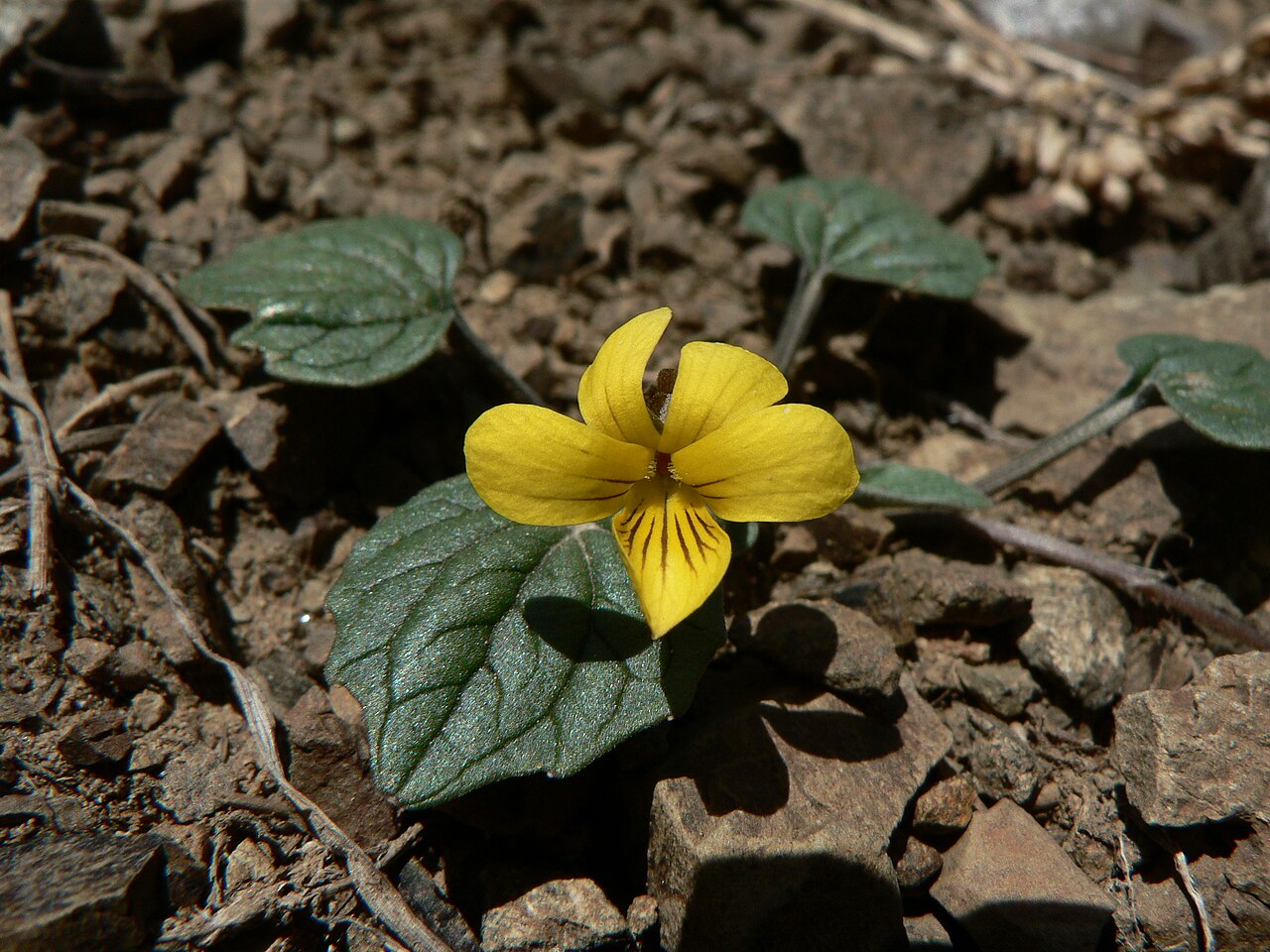
Flowers are bright yellow, ½ to ¾ inch across, held singly on short stalks that rise just above the leaves. The two upper petals are often tinged brownish-purple on the back, and the lower three petals usually carry fine dark purple to brownish veining (nectar guides) that directs pollinators to the nectar spur. Bloom occurs from April to July, starting earlier at low elevation and later in alpine and subalpine sites.
Fruit & Seed
After pollination, an upright three-valved seed capsule develops, splitting open to eject seeds a short distance as it dries. Like many violets, Goosefoot Violet also produces inconspicuous self-pollinating (cleistogamous) flowers later in the season that never open but still set seed, a backup strategy for reproduction in short or unpredictable growing seasons.
Quick Facts
| Scientific Name | Viola purpurea |
| Family | Violaceae (Violet) |
| Plant Type | Low perennial wildflower |
| Mature Height | 2–6 in |
| Mature Spread | 4–10 in, slowly clumping |
| Growth Rate | Slow |
| Sun Exposure | Full Sun to Part Shade |
| Water Needs | Low once established; drought tolerant |
| Soil Type | Lean, gravelly or rocky, well-drained |
| Soil pH | Neutral to slightly alkaline |
| Bloom Time | April – July (elevation dependent) |
| Flower Color | Yellow, with purple-brown nectar-guide veining |
| Fall Color | None notable |
| Fruit | Small upright seed capsule, splits when ripe |
| Deer Resistant | Moderate |
| USDA Hardiness Zones | 4–8 |
Native Range
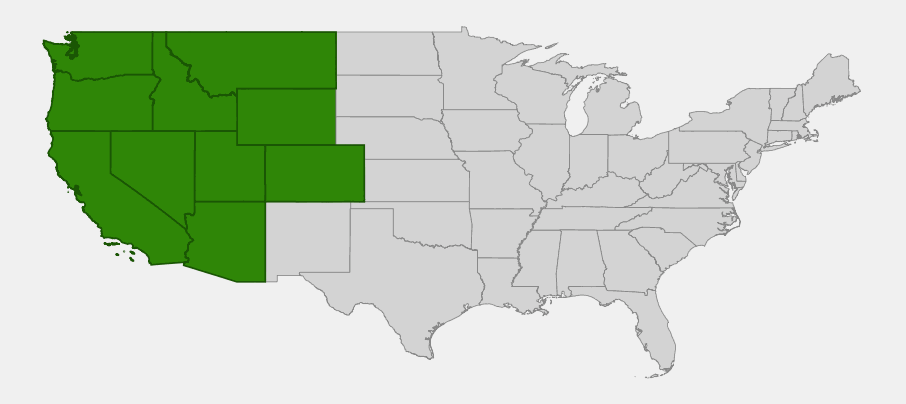
Goosefoot Violet is native to the interior mountains and high desert of the western United States, from eastern Washington and Oregon south through California, Nevada, Utah and Arizona, and east through Idaho, Montana, Wyoming and western Colorado. It is a plant of inland, continental climates rather than the humid coastal strip, and does not occur in the Pacific lowlands west of the Cascade and Sierra crest.
Typical habitat includes dry, open sagebrush flats, rocky slopes, and the understory of open ponderosa pine, Douglas-fir, and piñon-juniper woodlands, usually on thin, well-drained, often gravelly or rocky soils. Elevation ranges widely across its territory, from foothill sagebrush country up to alpine and subalpine meadows above 10,000 feet in the Rocky Mountains and Sierra Nevada.
Several regional varieties and subspecies are recognized across this broad range, reflecting local adaptation to different soils and elevations; gardeners should look for seed or plants sourced from populations near their own region when possible. The species is not documented as native east of the Rocky Mountain front or outside the interior West.
📋 Regional plant lists featuring Goosefoot Violet: Arizona & New Mexico · Utah & Western Colorado · Montana & Wyoming · Idaho, Eastern Oregon & Eastern Washington · Western Oregon & Western Washington
Growing & Care Guide
Goosefoot Violet is best grown as a true xeric companion plant, mimicking the lean, rocky, sun-baked conditions of its native sagebrush and dry-woodland habitats rather than the rich, moist soil most garden violets prefer.
Light
It flowers best in full sun, which is how it grows in most of its open sagebrush and rocky-slope habitat. In its woodland sites, it tolerates the light, dappled shade of open pine and juniper canopies, but dense shade reduces flowering and can make the plant leggy.
Soil & Water
Plant Goosefoot Violet in lean, fast-draining, gravelly or rocky soil; rich garden loam or soil that stays wet encourages rot and shortens the plant’s life. Once established, it needs little supplemental water and is genuinely drought tolerant, drawing on a taproot that reaches moisture deep in rocky ground. Overwatering is a far greater risk to this species than underwatering.
Planting Tips
Set out container-grown plants in fall or early spring to let roots establish before summer heat or winter cold. Give each plant 6 to 10 inches of space, since it spreads slowly and does not compete well with faster, taller neighbors. Rock gardens, gravel beds, and the dry edges of a xeriscape are better matches than a conventional perennial border.
Pruning & Maintenance
Little to no pruning is needed; simply remove spent flower stalks and winter-killed foliage in early spring. The plant is low-maintenance once sited correctly, and its main care requirement is restraint — avoid fertilizer, heavy mulch, or extra irrigation that push it toward richer, wetter conditions than it tolerates.
Landscape Uses
- Rock gardens and gravel beds, where its low form and drought tolerance fit naturally
- Dry meadow and sagebrush-steppe restoration plantings
- Xeriscape borders paired with other low-water natives
- Open woodland gardens beneath ponderosa pine or piñon-juniper
- Early-season pollinator plantings in high-elevation gardens
Wildlife & Ecological Value
Though small and easy to overlook, Goosefoot Violet contributes early-season nectar and host-plant value in some of the drier, less floriferous habitats of the interior West.
For Pollinators
The bright yellow flowers, open early in spring at many sites, provide nectar and pollen for native bees and small butterflies at a time when few other wildflowers are blooming in sagebrush and dry-woodland habitats. Like other violets, the species also serves as a larval host plant for several fritillary butterflies in parts of its range.
For Birds
The plant’s small size limits direct value to birds, but the seeds produced in its capsules provide incidental food for ground-foraging songbirds, and the low foliage adds groundcover complexity that supports insect prey for nesting birds nearby.
For Mammals
Deer and other browsers occasionally eat the foliage, though it is not a preferred forage species. Small mammals such as ground squirrels may feed on the seed capsules.
Ecosystem Role
As a low, drought-adapted perennial, Goosefoot Violet helps fill in the understory of sagebrush steppe and open conifer woodlands, adding plant diversity and structure in habitats where taller herbaceous cover is often sparse. Its presence is often an indicator of relatively undisturbed native plant communities in dry western rangeland and woodland.
Cultural & Historical Uses
Documentation of traditional use of Goosefoot Violet specifically is limited compared with some other western wildflowers, though violets as a genus have a long history of use by Indigenous peoples across North America for food and in various preparations. Because Viola purpurea grows scattered across many distinct mountain ranges and plant communities, recorded ethnobotanical knowledge likely varied by region and tribal tradition.
Botanically, the species was described in the 19th century and has since been split into numerous regional varieties and subspecies by taxonomists working to make sense of its wide range and variable leaf shape, flower size, and growth habit across different mountain systems. This variability continues to interest botanists studying how western wildflowers adapt to isolated, high-elevation habitats.
In more recent decades, Goosefoot Violet has drawn interest from native-plant gardeners and rock-garden enthusiasts in the interior West looking for authentic, low-water alternatives to showier but thirstier ornamental violets, fitting into the broader movement toward xeriscaping in increasingly water-conscious western landscapes.
Frequently Asked Questions
Is Goosefoot Violet the same as common garden violets?
No. Most garden violets and violas prefer moist, rich soil and part shade. Goosefoot Violet is adapted to dry, rocky, sunny sites and will rot in the damp, fertile conditions that suit typical bedding violets.
Why is it called “goosefoot” violet?
The name refers to the angular, lobed or coarsely toothed outline of the leaves on many forms of the species, which can resemble the splayed shape of a goose’s foot — distinct from the smooth, heart-shaped leaves of most other violets.
Can I grow Goosefoot Violet outside the interior West?
It can be grown elsewhere in a rock garden or raised bed with very sharp drainage and low water, but it is best suited and most ecologically valuable within or near its native range in the interior mountain West, where local pollinators and butterflies are adapted to it.
Does Goosefoot Violet spread aggressively?
No. It grows slowly from a taproot or short rhizome and forms modest clumps rather than spreading by runners, so it stays well-behaved in a garden setting.
What soil kills Goosefoot Violet fastest?
Constantly wet, rich, or heavy clay soil is the most common cause of failure. This species needs sharp drainage; soggy roots lead quickly to rot.

Looking for a nursery that carries Goosefoot Violet?
Browse our native plant nursery directory: Arizona · California · Colorado · Idaho · Montana · Nevada · Oregon · Utah · Washington · Wyoming