Walter’s Viburnum (Viburnum obovatum)
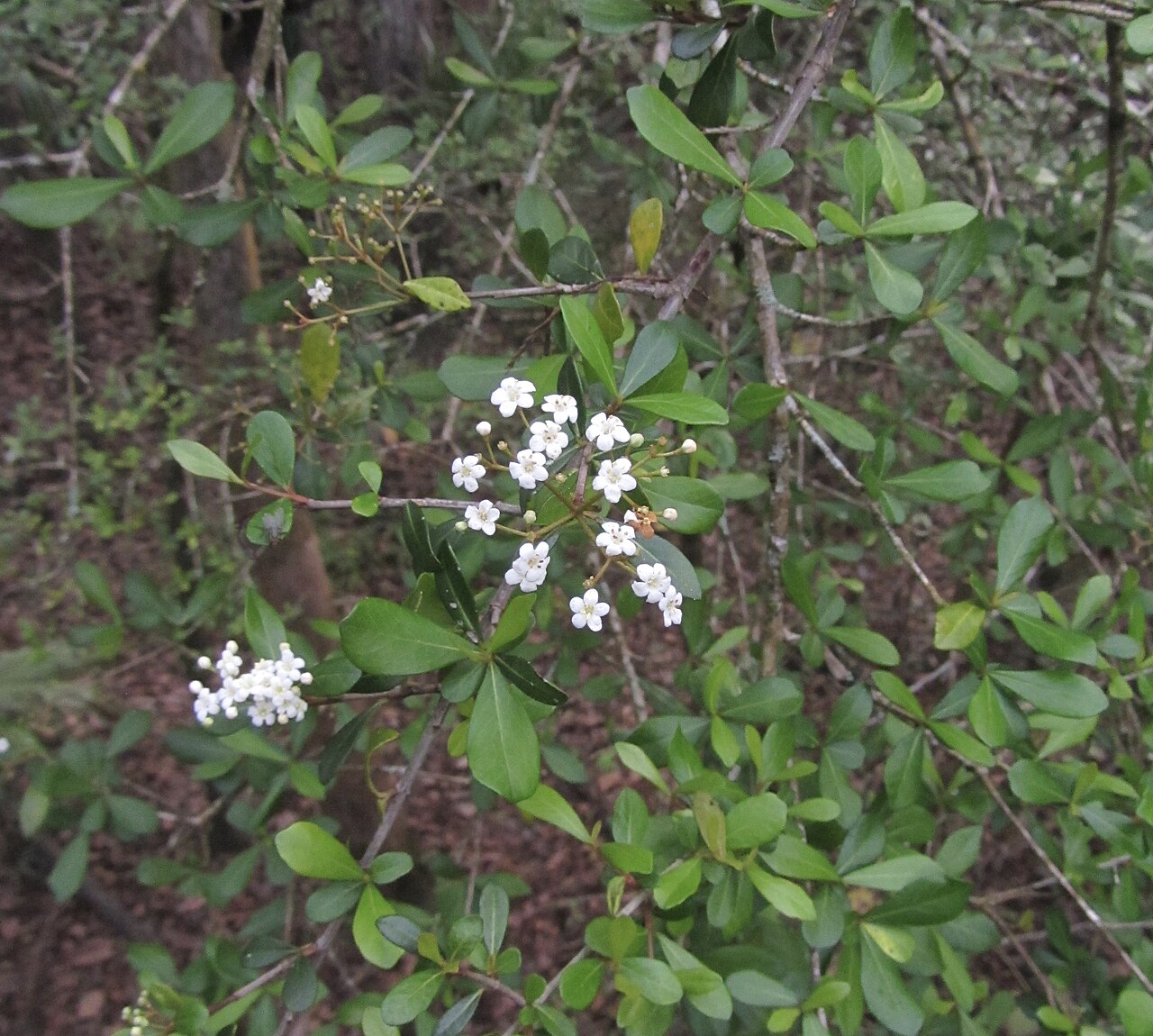
Viburnum obovatum, commonly known as Walter’s Viburnum or small-leaf arrowwood, is a tough, adaptable native shrub of the southeastern coastal plain. It belongs to the Adoxaceae (formerly Caprifoliaceae) family and is named for botanist Thomas Walter, who first described many Carolina and Florida plants in the late 1700s. In the wild it grows as a dense, twiggy shrub or small multi-trunked tree, with small, rounded, glossy leaves that give it a fine, almost boxwood-like texture unusual among viburnums.
Walter’s Viburnum is found naturally along river floodplains, calcareous hammocks, pond margins and the edges of wet woods from the Florida peninsula north into Georgia and South Carolina and west to the Florida Panhandle and southeastern Alabama. It tolerates occasional flooding as well as periods of drought once established, a combination that makes it unusually versatile in cultivated landscapes.
For southeastern gardeners, Walter’s Viburnum offers reliable, nearly evergreen structure, a long bloom season for pollinators, and small fruit that birds readily eat. Its fine foliage and tolerance of shearing have also made dwarf, compact-growing selections popular as a native substitute for boxwood hedging, but the wild species itself is an excellent choice for naturalistic plantings, screens, and wildlife borders.
Identification
Walter’s Viburnum typically grows 6 to 15 feet tall and almost as wide, though it can reach 20 feet as an open, small tree with age. Plants are semi-evergreen to evergreen in the warmer parts of their range, dropping some or most leaves after a hard freeze farther north. The overall form is dense and twiggy, with many slender branches arising low on the plant.
Bark & Stems
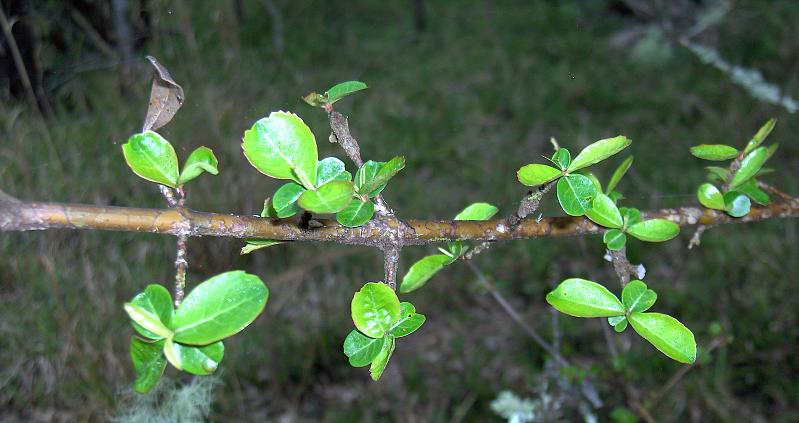
Young stems are slender, gray-brown and finely hairy, becoming smooth and gray with age. Older trunks develop shallow furrows and a slightly scaly texture. Twigs are noticeably fine and numerous compared with most other native viburnums, giving the whole shrub a dense, twiggy silhouette even in winter.
Leaves
The leaves are opposite, simple, and small for a viburnum — typically ½ to 2 inches long, obovate to oblong (wider toward the tip, the feature behind the species name obovatum), and either untoothed or with a few shallow teeth near the tip. They are glossy dark green above and paler beneath, turning a dull bronze-purple in cold snaps before dropping where the plant is deciduous.
Flowers
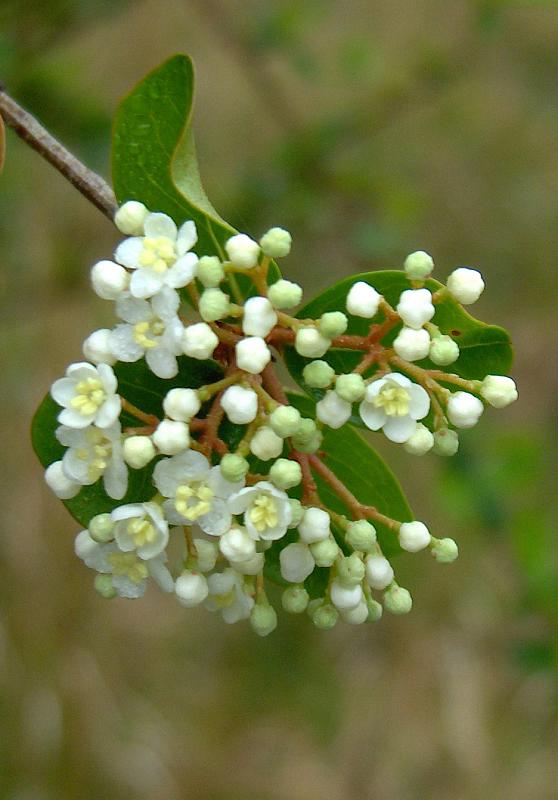
Small, five-petaled white flowers open in flat-topped clusters (cymes) 1 to 2 inches across at the branch tips. Bloom is heaviest in late winter to early spring (January through April across most of the range) but light repeat flushes can appear after rain or a mild fall. The flowers have a mild, sweet fragrance and are visited by a wide range of small bees, flies and butterflies.
Fruit
Flowers are followed by small oval drupes about ¼ inch long that ripen from red to black by late summer and fall. The fruit is not showy from a distance but is quickly stripped by songbirds once ripe.
Quick Facts
| Scientific Name | Viburnum obovatum |
| Family | Adoxaceae (Moschatel, formerly Caprifoliaceae) |
| Plant Type | Semi-evergreen to evergreen shrub or small tree |
| Mature Height | 6–15 ft (to 20 ft as a small tree) |
| Mature Spread | 6–12 ft |
| Growth Rate | Moderate |
| Sun Exposure | Full Sun to Part Shade |
| Water Needs | Average; tolerates both periodic flooding and short drought once established |
| Soil Type | Moist, well-drained sand, loam or calcareous soils |
| Soil pH | Slightly acidic to alkaline |
| Bloom Time | January – April, with occasional light repeat bloom |
| Flower Color | White |
| Fall Color | Bronze-purple where deciduous; mostly evergreen in the Deep South |
| Fruit | Small red-to-black drupes, late summer–fall |
| Deer Resistant | Moderate (occasionally browsed) |
| USDA Hardiness Zones | 8–10 |
Native Range
Walter’s Viburnum is native to the lower coastal plain of the southeastern United States. Its range runs through the Florida peninsula and Panhandle, southeastern Georgia, southeastern Alabama, and the coastal counties of South Carolina. It is most abundant in central and northern Florida, becoming more scattered toward the northern and western edges of its range.
Typical habitat includes the margins of rivers, floodplain forests, wet hammocks, pond edges, and calcareous (limestone-influenced) woodlands, often where the water table fluctuates seasonally. It grows alongside other wetland-edge and hammock species rather than in standing water, usually on slightly higher ground within these moist systems.
Because it tolerates both occasional inundation and drier upland conditions once established, Walter’s Viburnum has become a popular landscape plant well beyond its native range, including compact cultivated forms sold as hedging. Gardeners outside the Southeast coastal plain should treat it as a regional native and favor it primarily in Florida, Georgia, Alabama and South Carolina landscapes, where it supports local pollinators and birds.
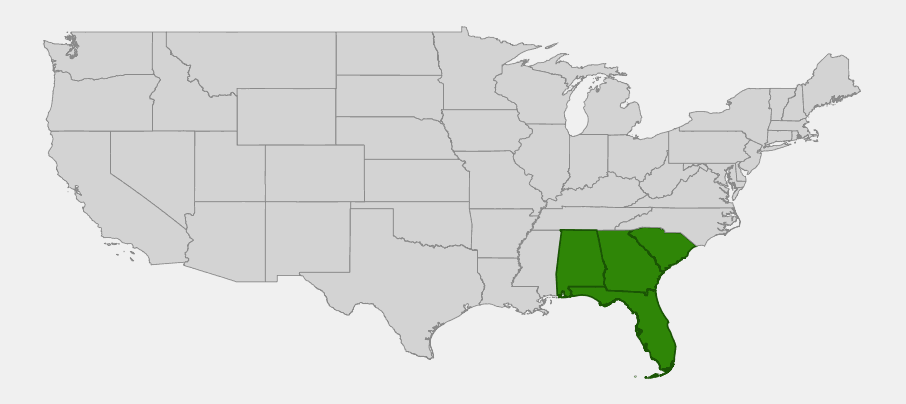
📋 Regional plant lists featuring Walter’s Viburnum: Georgia, Alabama & Mississippi · North Carolina & South Carolina
Growing & Care Guide
Walter’s Viburnum is one of the most forgiving native shrubs for southeastern gardens, tolerating a wide range of soil moisture and light conditions once it has a season or two to establish roots.
Light
It flowers most heavily in full sun to light shade. In deeper shade it still grows well and keeps good foliage density, but bloom and fruit set are reduced. A site with at least half a day of sun gives the best combination of flowering and compact form.
Soil & Water
Walter’s Viburnum is adaptable to sand, loam, and limestone-influenced soils, and it tolerates both occasional flooding and short dry spells once established, reflecting its floodplain and hammock origins. For the best growth, keep soil evenly moist with a 2- to 3-inch layer of mulch, especially during the first two growing seasons. It is not a true bog plant and does not want permanently saturated soil.
Planting Tips
Plant container-grown stock in fall or early spring so roots can establish before summer heat. Space plants 6 to 10 feet apart for an informal screen, or closer if a dense clipped hedge is the goal. Because many nursery plants sold under this name are compact cultivars, confirm you are getting straight species stock if a full-sized, naturalistic shrub is what you want for restoration or wildlife plantings.
Pruning & Maintenance
Walter’s Viburnum tolerates shearing well, which is part of why dwarf selections are popular as a native hedge plant, but the straight species needs little pruning beyond removing dead or crossing branches. Prune right after the main late-winter bloom flush if shaping is needed, since flower buds form on the growth that follows. The plant has few serious pest or disease problems in the Southeast.
Landscape Uses
- Informal screens and borders along property lines or driveways
- Wildlife hedgerows that combine flowers, fruit, and dense cover
- Rain garden edges and the drier margins of wet-weather swales
- Foundation and mixed-shrub plantings in Gulf and South Atlantic coastal landscapes
- Naturalistic hammock or floodplain restoration alongside live oak and sweetbay magnolia
Wildlife & Ecological Value
Walter’s Viburnum earns its keep in a wildlife garden by offering something in nearly every season: flowers for pollinators in late winter and spring, fruit for birds in late summer and fall, and dense evergreen cover year-round.
For Pollinators
The late-winter to spring bloom period makes this one of the earlier nectar sources available to small bees, flies, and butterflies in the Deep South, when few other woody natives are flowering. The flat flower clusters are easy for short-tongued insects to work.
For Birds
Songbirds including mockingbirds, catbirds, and various thrushes eat the small drupes as they ripen in late summer and fall. The dense, twiggy branching also provides good nesting cover and protection from predators for small birds.
For Mammals
White-tailed deer browse the foliage occasionally, though it is not a preferred food source. The thick growth habit offers cover for rabbits and other small mammals along forest edges and hedgerows.
Ecosystem Role
As an understory and edge shrub in floodplain and hammock communities, Walter’s Viburnum helps stabilize soil near seasonally wet ground and adds structural diversity beneath the canopy of live oak and magnolia. Its tolerance of both flooding and drought lets it persist through the variable water levels typical of Florida’s natural wetland-edge habitats.
Cultural & Historical Uses
Walter’s Viburnum carries the name of Thomas Walter, an English-born botanist who settled in South Carolina and published Flora Caroliniana in 1788, one of the earliest systematic accounts of plants in the southeastern United States. Many Carolina and Florida natives, including this species, were first scientifically described in that work.
There is little documented traditional use of Walter’s Viburnum for food or medicine among Indigenous peoples of the region, unlike some of its showier viburnum relatives. Its primary historical role has been ecological rather than economic, functioning as a component of the hammock and floodplain plant communities of peninsular Florida long before horticultural interest developed.
In the twentieth century, Walter’s Viburnum gained attention from Florida nurseries for its fine, boxwood-like texture and tolerance of shearing, leading to the selection and wide sale of compact cultivars such as ‘Densa’ and ‘Mrs. Schiller’s Delight’ as a native substitute for non-native boxwood hedges. The straight species remains valuable for naturalistic and restoration plantings where a larger, less formal shrub is appropriate.
Frequently Asked Questions
Is Walter’s Viburnum evergreen?
It is semi-evergreen to evergreen through most of its range, especially in Florida and coastal Georgia. In the cooler, northern parts of its range it may drop most of its leaves after a hard freeze, turning bronze-purple beforehand.
What is the difference between the species and the dwarf cultivars sold at nurseries?
Many garden centers in the Southeast sell compact cultivars such as ‘Densa’ or ‘Mrs. Schiller’s Delight,’ bred for a small, dense hedge form. The wild species is larger, reaching 6 to 15 feet or more, with a looser, more naturalistic shape better suited to screens and wildlife plantings than tight hedges.
Does Walter’s Viburnum tolerate wet soil?
Yes. It grows naturally along floodplains and pond edges and tolerates occasional, temporary flooding well. It is not a true wetland plant for permanently saturated soil, but it handles the fluctuating moisture typical of Florida hammocks and stream margins better than most upland shrubs.
Will Walter’s Viburnum grow outside Florida and the Deep South?
It is hardy to about USDA zone 8, so it can be grown as far north as the South Carolina coast and the warmer parts of Georgia and Alabama, but it is not reliably hardy or ecologically appropriate much farther north or outside its native coastal plain range.
Are the berries edible?
The small fruits are eaten by birds, not people. They are not documented as a human food source and, like many viburnum fruits, are better left for wildlife.

Looking for a nursery that carries Walter’s Viburnum?
Browse our native plant nursery directory: Florida & Georgia · Alabama · South Carolina