
Foothill Death Camas (Zigadenus paniculatus)
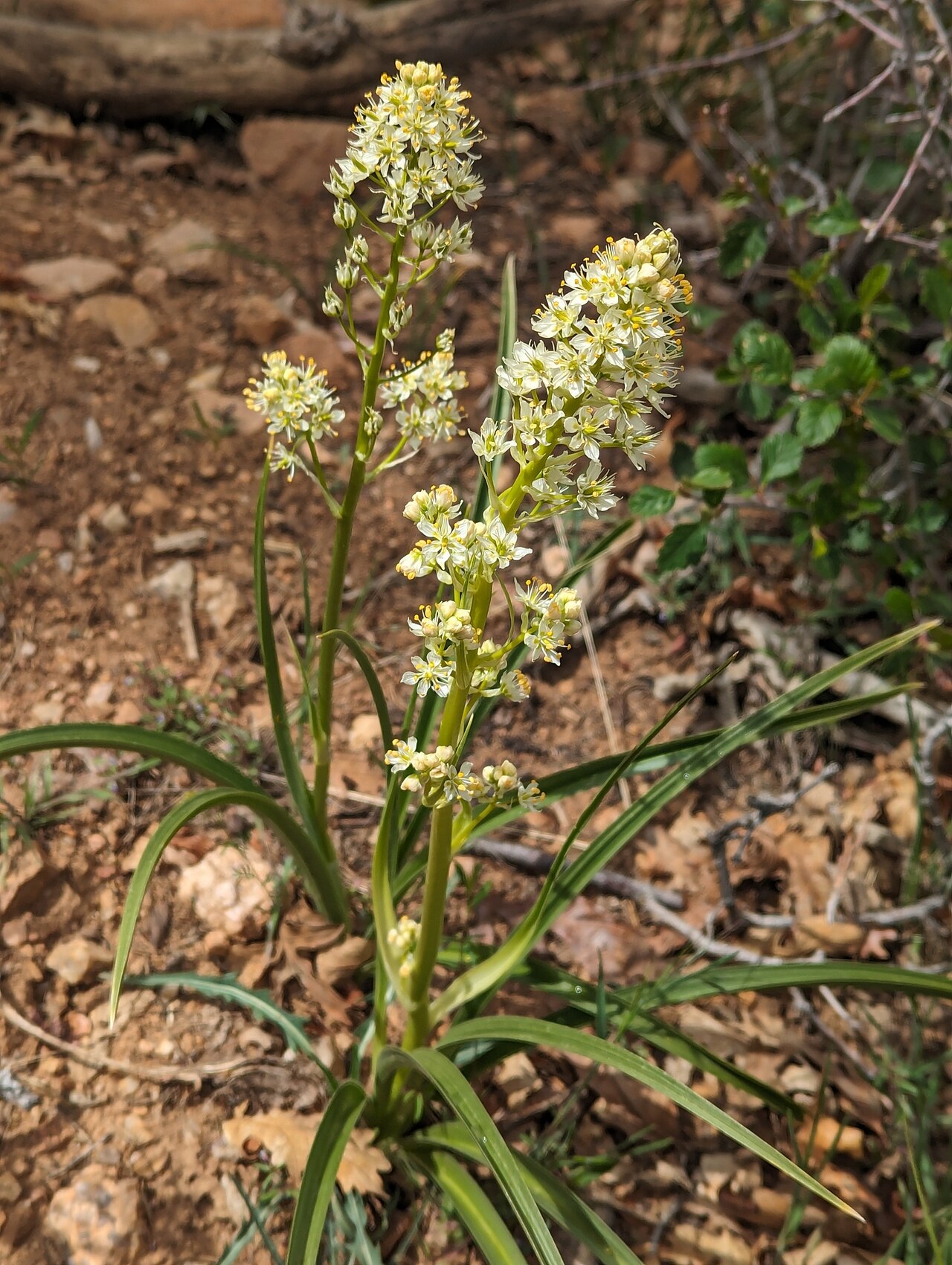
Zigadenus paniculatus, known as Foothill Death Camas, panicled death camas or sand corn, is a spring-blooming bulb of the sagebrush steppe, pinyon-juniper woodlands and dry foothills of the American West. From an onion-like bulb it sends up a fan of grasslike leaves and a branched stalk of small, creamy white, star-shaped flowers. Many botanists now place it in the genus Toxicoscordion as Toxicoscordion paniculatum; USDA PLANTS still uses Zigadenus paniculatus.
As its name warns, foothill death camas is highly poisonous. All parts of the plant, especially the bulbs, contain zygacine and related steroidal alkaloids, which can be fatal to people and livestock. It has caused serious losses of sheep and other livestock on western rangelands, and people have been poisoned after mistaking its bulbs for edible camas or wild onions.
For all that, it is a native wildflower with a real place in western ecosystems, and it is worth learning to recognize, both to appreciate it and to avoid it. This guide covers how to identify foothill death camas, where it grows, how to tell it from edible look-alikes, and why it does not belong in gardens where children, pets or livestock might eat it.
Identification
Foothill death camas is recognized by its fan of grasslike, V-shaped leaves and its branched, pyramid-shaped cluster of creamy flowers. The branched flower cluster is the best way to tell it from its relative meadow death camas.
Bulb & Growth Habit
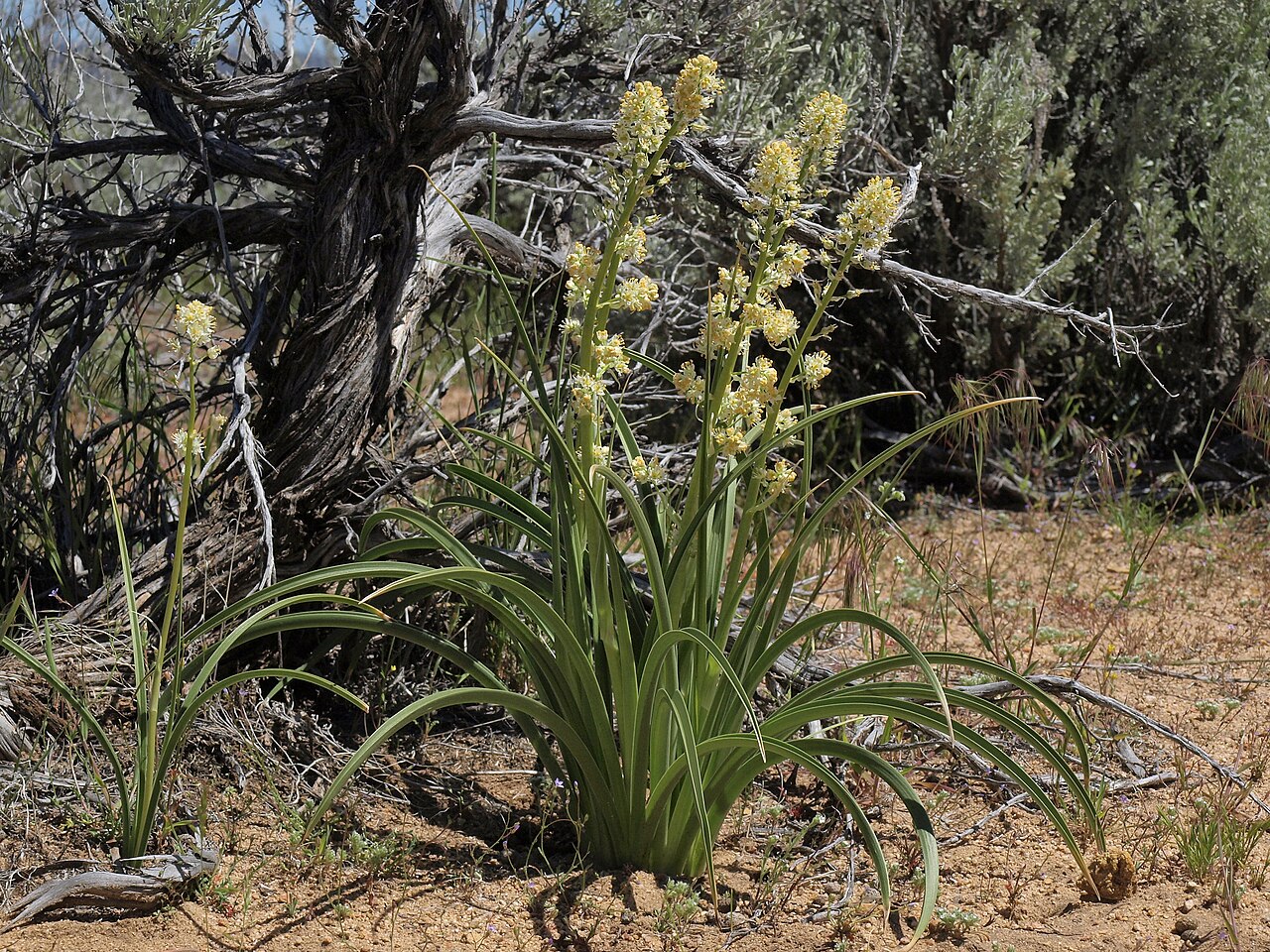
The plant grows from a dark-coated, egg-shaped bulb, usually 1 to 2 inches long, buried several inches deep. Each spring it produces a clump of leaves and a single flowering stem 8 to 28 inches tall. The plant goes dormant in summer after setting seed.
Leaves
The leaves are mostly basal, long and narrow (about ¼ to ¾ inch wide and up to 12 inches long), grasslike, smooth and folded lengthwise into a V shape or keel. They are often grayish-green and somewhat curved. Unlike wild onions, the leaves and bulb have no onion smell.
Flowers
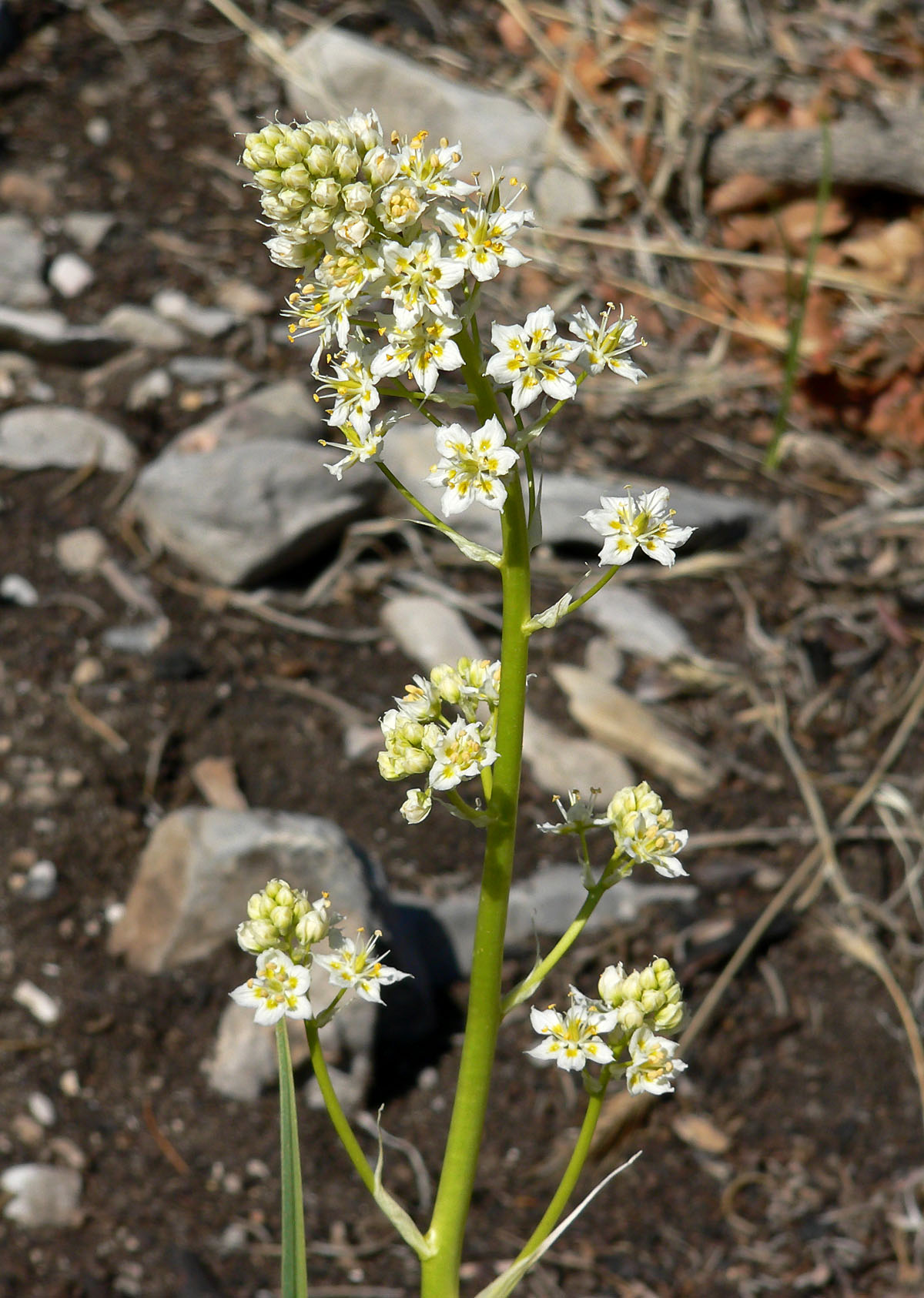
The flowers grow in a branched cluster (panicle) at the top of the stem, with side branches at the bottom of the cluster giving it a pyramid shape. Each flower is about ⅓ to ½ inch across, with six creamy white to yellowish tepals, each bearing a yellowish-green gland near the base, and six stamens that stick out beyond the tepals. Plants bloom from about April to June, later at higher elevations.
Fruit & Seeds
The flowers are followed by upright, three-lobed capsules about ½ inch long that split open in summer to release many small seeds. The dry stalks with open capsules can remain into late summer.
Look-alikes
Meadow death camas (Toxicoscordion venenosum) is very similar but usually has an unbranched raceme rather than a branched panicle, and it often grows in wetter meadows. Star lily (T. fremontii) of California has larger flowers. Blue camas (Camassia quamash), an important traditional food, has blue flowers and grows in moist meadows; out of flower the bulbs are hard to tell apart, which is why camas was traditionally gathered only when in bloom. Wild onions (Allium) smell of onion; death camas does not.
Safety Note
Foothill death camas is highly toxic. All parts of the plant contain steroidal alkaloids, chiefly zygacine, that cause vomiting, slowed heart rate, low blood pressure, breathing problems, convulsions and death. Never eat any wild bulb unless it is positively identified by an expert, and never use the smell test alone. Keep children, pets and livestock away from it. If someone may have eaten it, call Poison Control (1-800-222-1222 in the U.S.) or emergency services right away.
Quick Facts
| Scientific Name | Zigadenus paniculatus (syn. Toxicoscordion paniculatum) |
| Family | Melanthiaceae (bunchflower family; formerly in Liliaceae) |
| Plant Type | Bulbous perennial; highly toxic |
| Mature Height | 8–28 in in flower |
| Mature Spread | 6–12 in |
| Growth Rate | Slow |
| Sun Exposure | Full sun to part shade |
| Water Needs | Low; moist in spring, dry in summer |
| Soil Type | Dry sandy, gravelly or rocky soils |
| Soil pH | About 6.5–8.0 |
| Bloom Time | April–June (into July at higher elevations) |
| Flower Color | Creamy white to pale yellow |
| Fall Color | None; dormant by summer |
| Fruit | Three-lobed capsule with many small seeds |
| Deer Resistant | Yes; toxic and generally avoided |
| USDA Hardiness Zones | 4–9 |
Native Range
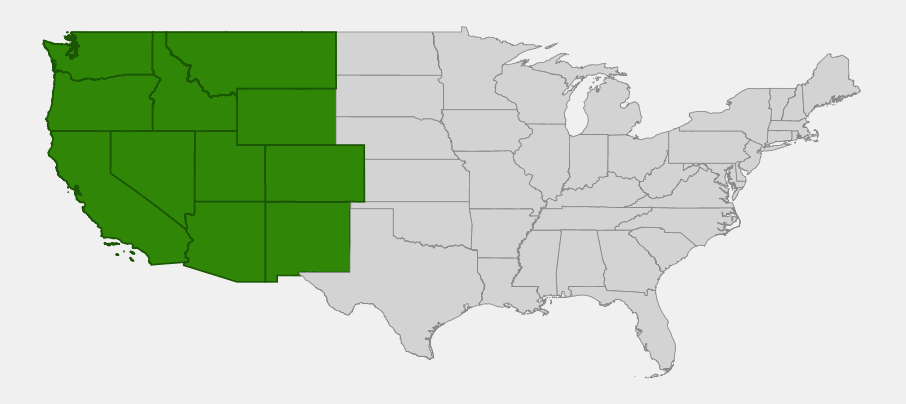
Foothill death camas is native to the interior West. USDA PLANTS lists it in Arizona, California, Colorado, Idaho, Montana, Nevada, New Mexico, Oregon, Utah, Washington and Wyoming. It is especially common in the sagebrush country of the Great Basin and the Columbia Plateau, from eastern Washington and Oregon through southern Idaho, Nevada and Utah, and in the foothills of western Montana, western Wyoming and western Colorado.
In Washington and Oregon it grows almost entirely east of the Cascades, from the foothills near Wenatchee and Yakima to the high desert of central and southeastern Oregon, with only a few scattered records in the Siskiyou region of southwestern Oregon. In California it grows mainly east of the Sierra Nevada and in the northeastern part of the state, and it reaches the mountains of northern Arizona and New Mexico.
It grows in sagebrush steppe, pinyon-juniper woodlands, open ponderosa pine forests, dry grassy slopes and sandy flats, from the valleys into the mountains. It is often among the first wildflowers to bloom in spring in the sagebrush, alongside balsamroots, desert parsleys and phloxes.
📋 Regional plant lists featuring Foothill Death Camas: Idaho, Eastern Oregon & Eastern Washington · Montana & Wyoming · Utah & Western Colorado · Arizona & New Mexico · California & Nevada
Growing & Care Guide
Foothill death camas is rarely grown in gardens, and because it is so poisonous, it should not be planted where children, pets or livestock could eat it. Some native plant enthusiasts in the West grow it in dry, naturalistic plantings for its creamy flowers, but it is rarely sold, and wild bulbs should never be dug. If it grows naturally on your land, learn to recognize it, leave it in place where it poses no risk, and keep grazing animals away from it in spring.
Light
Full sun to light shade, as in open sagebrush and pine woodland.
Soil & Water
It needs dry, well-drained sandy, gravelly or rocky soil. It grows with spring moisture from snowmelt and rain, then goes dormant and must stay dry in summer; summer water rots the bulbs.
Planting Tips
Plant only nursery-grown bulbs or seed, and only in places away from play areas, vegetable gardens and pastures. Plant bulbs in fall about 3 to 4 inches deep. Label the planting clearly so no one mistakes it for edible bulbs or onions. Always wear gloves when handling the bulbs, and wash your hands afterward.
Pruning & Maintenance
Little care is needed. Remove the old flower stalks after seed falls if you wish. On rangeland, the main management concern is preventing livestock poisoning, especially for hungry sheep in early spring when death camas is one of the first green plants available.
Propagation
It can be grown from seed sown outdoors in fall; seedlings take several years to reach flowering size. Offsets from mature bulbs can also be separated. Always handle the plant with gloves.
Landscape Uses
- Wildflower viewing: common in spring in sagebrush and foothill country across the interior West
- Naturalistic dry gardens: only where no children, pets or livestock could eat it
- Plant identification education: a classic example of a poisonous plant that resembles edible camas and wild onions
- Habitat value: part of native sagebrush-steppe wildflower diversity
- Rangeland awareness: ranchers learn to recognize it to protect livestock in spring
Wildlife & Ecological Value
Although it is poisonous to most mammals, foothill death camas still plays a role in western ecosystems, especially for the insects that pollinate it.
For Pollinators
The creamy flowers produce nectar from the glands at the base of each tepal and attract small native bees, flies and beetles. Some specialist bees visit death camas flowers. The nectar and pollen of death camas are toxic to honeybees.
For Birds
Birds rarely use the plant directly, but it is part of the spring flower display in sagebrush habitats used by sage-grouse and other birds, which feed on insects attracted to the flowers.
For Mammals
It is toxic to most mammals. Livestock, especially sheep, can be poisoned when they graze on it in early spring, when it is among the first green plants and other forage is scarce. Deer and elk usually avoid it.
Ecosystem Role
As a native bulb that blooms early, foothill death camas contributes to the diversity of the sagebrush steppe and foothill grasslands. Its toxicity helps protect it from grazing, allowing it to persist in heavily grazed rangelands.
Cultural & Historical Uses
The genus name Zigadenus comes from Greek words meaning “yoke” and “gland,” referring to the paired glands on the tepals in some species. The newer genus name Toxicoscordion means “poisonous garlic.” The species name paniculatus refers to the branched flower cluster (panicle). The name sand corn is an older local name.
Indigenous peoples of the West knew death camas well and distinguished it from edible blue camas, which was an important food. Camas was often harvested in bloom, when the blue flowers made it easy to tell apart from the white-flowered death camas. Mistaking one for the other remains a risk for foragers today.
Western ranchers have long feared death camas. Sheep in particular have died in large numbers after grazing it in early spring, and range managers still advise keeping hungry animals off areas where it is abundant until other forage is available.
Frequently Asked Questions
Is foothill death camas poisonous?
Yes, highly. All parts, especially the bulbs, contain toxic alkaloids that can kill people and livestock. Never eat any wild bulb unless it has been positively identified by an expert.
How can I tell death camas from wild onion?
Wild onions smell of onion when crushed; death camas has no onion smell. Do not rely on smell alone, and never eat a wild bulb that you cannot identify with certainty.
How is foothill death camas different from meadow death camas?
Foothill death camas usually has a branched flower cluster (panicle), while meadow death camas (Toxicoscordion venenosum) usually has an unbranched spike-like cluster. Both are highly poisonous.
What is Toxicoscordion paniculatum?
It is the newer scientific name for foothill death camas, used by many botanists. USDA PLANTS still uses Zigadenus paniculatus.
What should I do if someone eats death camas?
Call Poison Control (1-800-222-1222 in the U.S.) or emergency services immediately. For animals, contact a veterinarian right away.

Looking for a nursery that carries Foothill Death Camas?
Browse our native plant nursery directory: Arizona · California · Colorado · Idaho · Montana · Nevada & New Mexico · Oregon · Utah · Washington · Wyoming

