Longleaf Phlox (Phlox longifolia)
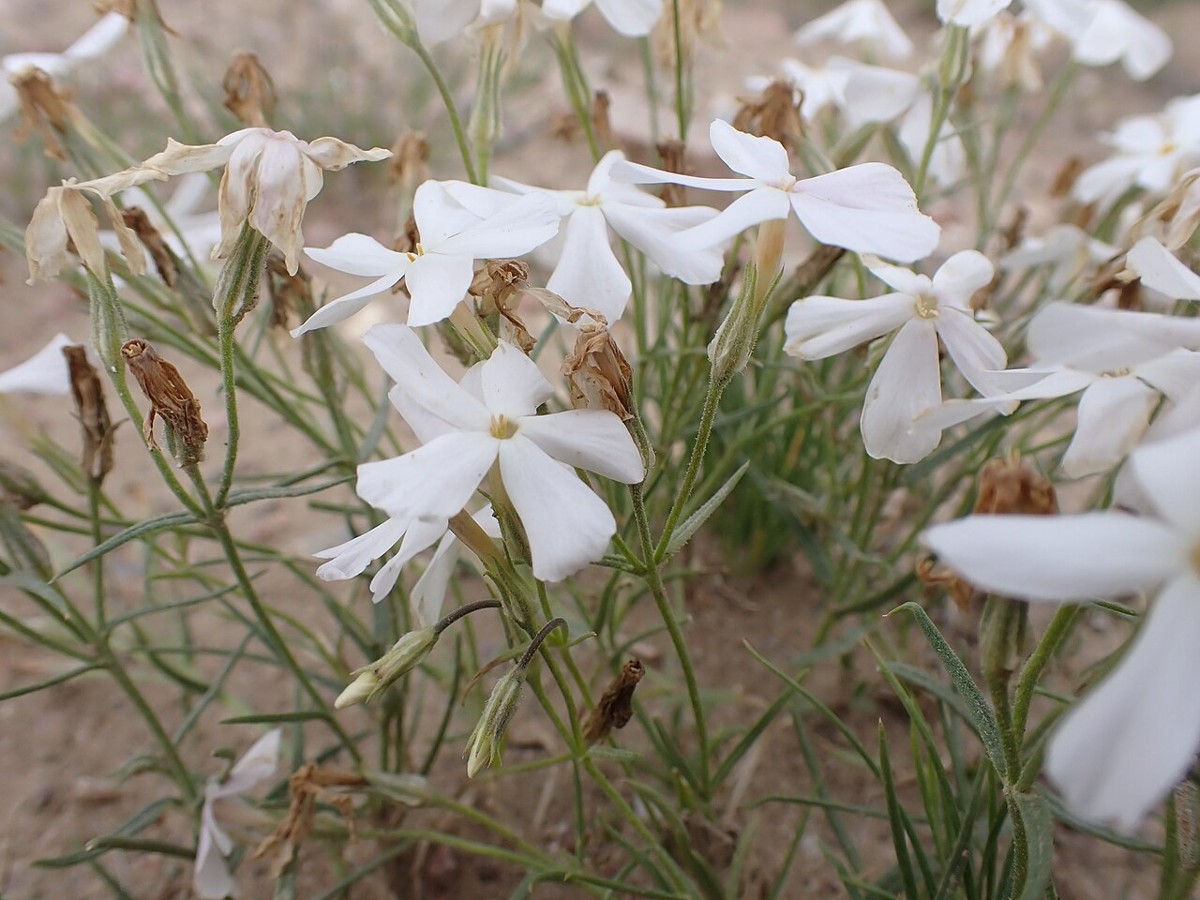
Phlox longifolia, commonly called longleaf phlox, is a low, mat- to clump-forming perennial wildflower of the sagebrush steppe and dry open country of the intermountain West. Named for its narrow, elongated leaves, this phlox is one of the most widespread and recognizable spring wildflowers across the Great Basin and Rocky Mountain region, often carpeting dry slopes and flats with white, pink, or lavender blooms well before most other perennials have broken dormancy.
Longleaf phlox belongs to the Polemoniaceae (phlox family) and typically grows 4 to 16 inches tall, with slender, grass-like leaves and clusters of flat, five-petaled flowers held just above the foliage. It is extremely common and ecologically important across its range, frequently growing in close association with big sagebrush (Artemisia tridentata) and its relatives, and providing some of the earliest nectar available to native pollinators emerging in spring.
Native to the intermountain West east of the Cascade and Sierra Nevada crest, longleaf phlox is tough, drought-tolerant, and low-maintenance once established, making it an excellent choice for a xeric rock garden, a sagebrush-steppe restoration planting, or any sunny, well-drained native garden bed within its native range.
Identification
Longleaf phlox forms a loose, spreading clump or low cushion from a woody base, with numerous slender stems rising from the crown. Mature plants can spread into a patch 8 to 18 inches across but rarely grow taller than about 16 inches, even in bloom.
Leaves
The leaves are narrow and linear to lance-shaped, ¾ to 2½ inches long but only a fraction of an inch wide, giving the plant its common and scientific names. They are opposite along the stem, somewhat stiff, and often slightly hairy or glandular, sometimes with a grayish cast that helps the plant blend into the dry, grassy ground it grows in — easy to overlook until the flowers open.
Flowers
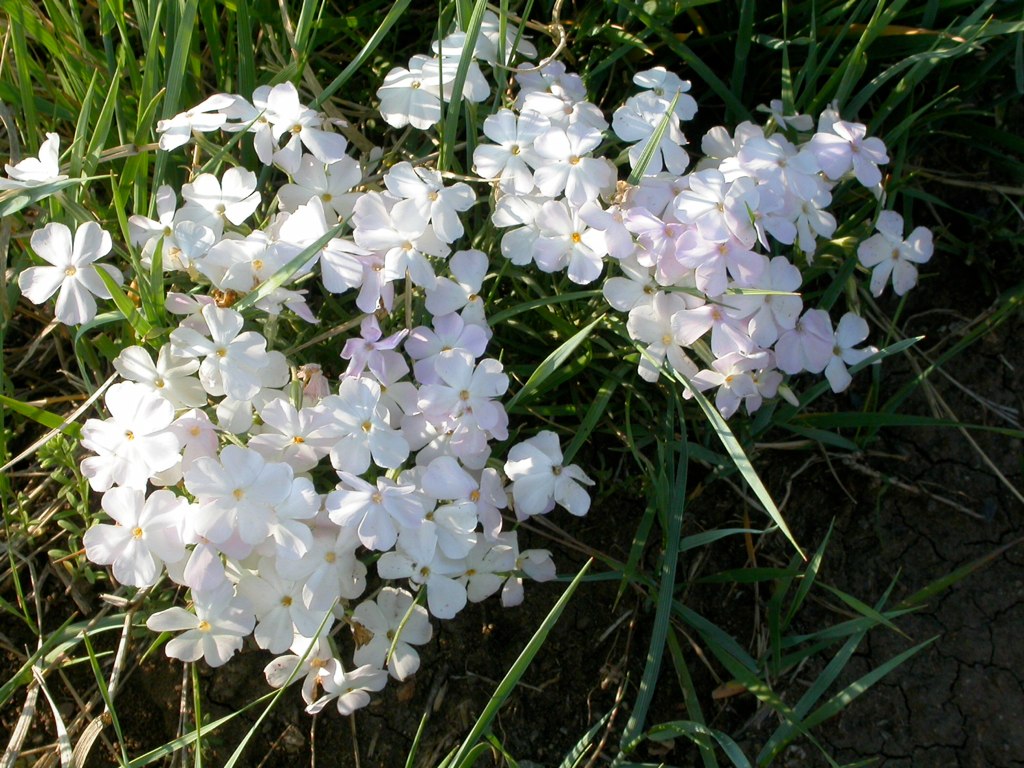
The flowers are flat-faced and five-lobed, ½ to ¾ inch across, in colors ranging from pure white through pale pink to soft lavender, usually with a faint darker eye or none at all. They are borne in loose, open clusters of a few to several blooms at the stem tips and have a mild, sweet fragrance. Bloom time runs from April into June depending on elevation, with lower, warmer sites flowering earliest.
Fruit & Seeds
After flowering, each bloom forms a small, dry, three-chambered capsule that splits open at maturity to release a handful of seeds. The capsules are inconspicuous and easily hidden among the narrow foliage; most gardeners notice the plant only in flower.
Quick Facts
| Scientific Name | Phlox longifolia |
| Family | Polemoniaceae (Phlox) |
| Plant Type | Herbaceous Perennial Wildflower |
| Mature Height | 4–16 in (10–40 cm) |
| Mature Spread | 8–18 in (20–45 cm) |
| Growth Rate | Slow to moderate |
| Sun Exposure | Full Sun |
| Water Needs | Low |
| Soil Type | Dry, rocky or sandy, well-drained |
| Soil pH | 6.5–8.0 (neutral to alkaline) |
| Bloom Time | April – June |
| Flower Color | White to pale pink or lavender |
| Fall Color | None notable |
| Fruit | Small three-chambered dry capsules |
| Deer Resistant | Yes (generally not preferred browse) |
| USDA Hardiness Zones | 4–8 |
Native Range
Longleaf phlox is native to the intermountain West, ranging from southern British Columbia south through eastern Washington, eastern Oregon, Idaho, and Nevada to central and southern California, east across Montana and Wyoming to Utah and western Colorado, and south to Arizona and New Mexico. It is a plant of the dry interior, found east of the Cascade and Sierra Nevada crest; it is not native to the moist, coastal parts of Oregon or Washington.
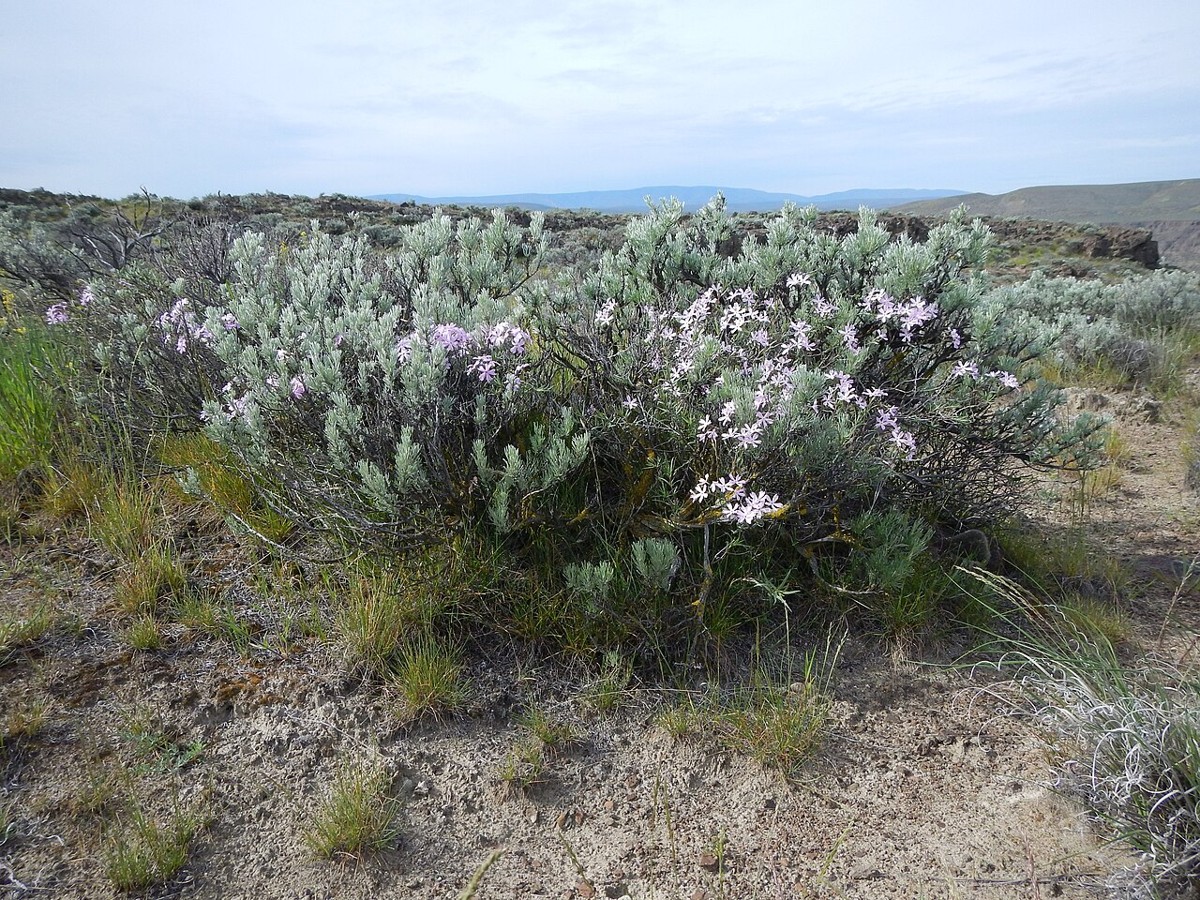
Within this broad range, longleaf phlox is a characteristic plant of sagebrush steppe, dry open woodlands, and rocky or gravelly slopes and flats, typically growing from valley floors up into mid-elevation mountain foothills. It is especially abundant in big sagebrush (Artemisia tridentata) communities, where it is often among the first wildflowers to bloom each spring.
Longleaf phlox tolerates a wide range of soils as long as drainage is sharp, from sandy flats to rocky caprock and basalt outcrops, and it is well adapted to the cold winters, hot dry summers, and thin soils typical of intermountain rangeland. It is a long-lived, drought-adapted perennial rather than a short-lived annual, persisting in the same spot for many years once established.
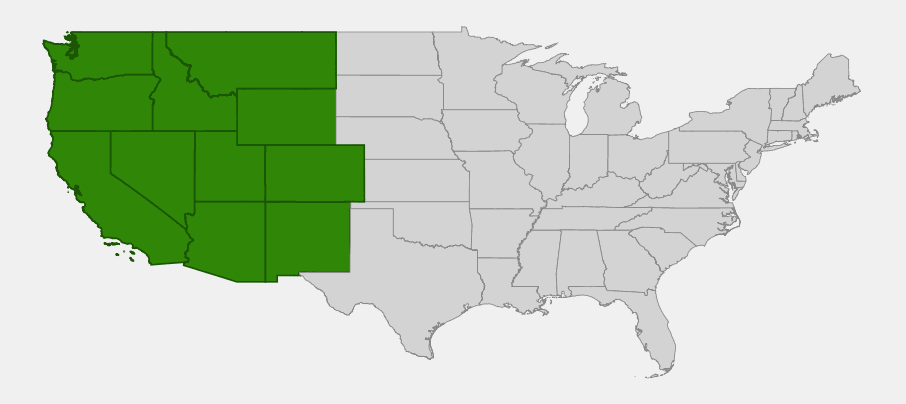
📋 Regional plant lists featuring Longleaf Phlox: California & Nevada · Idaho & Eastern Oregon/Washington · Montana & Wyoming · Utah & Western Colorado · Arizona & New Mexico
Growing & Care Guide
Longleaf phlox is a tough, low-care perennial for gardeners within its intermountain West range who want reliable, early-season color on a dry, sunny site. Its main requirement is drainage: give it a lean, gritty soil and it asks for very little else.
Light
Plant longleaf phlox in full sun. In the wild it grows in open sagebrush steppe with little overhead shade, and it flowers sparsely and grows leggy in shaded garden spots.
Soil & Water
This phlox demands sharp drainage — sandy, gravelly, or rocky soils that mimic the dry caprock and basalt flats of its native sagebrush country. Heavy clay or regularly irrigated garden beds are its biggest enemy, since wet roots in winter are the most common cause of failure. Once established, longleaf phlox needs little to no supplemental water and is genuinely drought-tolerant, drawing on deep, well-developed roots to survive the hot, dry summers typical of its range.
Planting Tips
Set out nursery starts in fall or early spring, in a site with excellent drainage — a rock garden, a gravel bed, or a slope works well. Avoid amending the soil with rich organic matter, which can hold too much moisture around the crown; a mineral, gritty soil is closer to its natural preference. Space plants 10 to 15 inches apart to allow for its spreading, clump-forming habit.
Pruning & Maintenance
Little maintenance is needed. Trim back spent flower stems after bloom if you want a tidier appearance, though this is optional. Avoid overwatering and avoid mulching thickly against the crown, which can trap moisture and encourage rot. Established plants are long-lived and rarely need division.
Propagation
Propagate from seed sown in fall to take advantage of natural winter chilling, or by taking small basal cuttings in spring from an established clump. Seed germination can be slow and uneven; patience is often required. Division of mature clumps is possible but can set the plant back, since longleaf phlox resents root disturbance.
Landscape Uses
Longleaf phlox suits several dry-garden settings:
- Rock gardens and gravel gardens where its low water needs and drainage preference fit naturally
- Sagebrush-steppe restoration plantings alongside big sagebrush and native bunchgrasses
- Xeric borders for an early, low-water burst of spring color
- Slopes and banks with fast-draining, rocky soil
- Pollinator gardens that need early-spring blooms before most perennials wake up
Wildlife & Ecological Value
As one of the earliest and most abundant spring bloomers across the intermountain sagebrush steppe, longleaf phlox plays an outsized role in supporting pollinators and other wildlife emerging from winter dormancy.
For Pollinators
The flowers provide an important early nectar source for native bees, bee flies, and butterflies, including some of the first long-tongued pollinators active in spring, for whom the tubular flower shape is well suited. Because it often blooms before many other wildflowers, longleaf phlox can be a critical bridge food source in the sagebrush steppe’s otherwise lean early season.
For Birds
Longleaf phlox is not a major direct food source for birds, but the insects it attracts are foraged by early-arriving songbirds, and its low, matted growth form offers some ground-level cover for sagebrush-obligate species such as sage sparrows in the broader shrub-steppe community it helps compose.
For Mammals
The foliage is browsed lightly by mule deer and pronghorn in some areas, though it is not a preferred forage species and is generally considered deer-resistant in garden settings. Small mammals and ground-nesting insects benefit from the cover and soil stabilization its spreading root system provides.
Ecosystem Role
Longleaf phlox is a key understory component of sagebrush steppe, one of North America’s most imperiled ecosystems, where it helps fill the gap between shrubs and bunchgrasses, stabilizes soil with its persistent root system, and contributes to the structural diversity that supports sagebrush-obligate wildlife. Its abundance and reliability make it a useful indicator species for healthy, intact sagebrush steppe plant communities.
Cultural & Historical Uses
Longleaf phlox does not carry an extensive documented record of traditional food or medicinal use comparable to larger or more conspicuous plants of the intermountain West, consistent with its status as a modest-statured wildflower rather than a major resource plant. It has long been recognized by range ecologists and botanists, however, as an indicator of healthy sagebrush steppe plant communities, given its close ecological association with big sagebrush across much of its range.
The genus name Phlox comes from the Greek word for “flame,” originally applied by Linnaeus to a group of brightly colored New World phloxes; longleaf phlox’s more muted white-to-pink palette is a quieter member of a genus best known for the fiery reds and magentas of its eastern relatives. The species name longifolia is simply Latin for “long-leaved,” describing the narrow, elongated foliage that distinguishes it from other western phlox species.
In more recent decades, longleaf phlox and other sagebrush-steppe wildflowers have drawn increasing interest from native-plant gardeners and restoration practitioners working to rebuild degraded rangeland and support declining sagebrush-obligate wildlife, including greater sage-grouse, across the intermountain West.
Frequently Asked Questions
Is longleaf phlox the same as creeping phlox sold at garden centers?
No. Creeping phlox (Phlox stolonifera and Phlox subulata) are different species native to the eastern and central United States, widely sold as groundcovers. Longleaf phlox (Phlox longifolia) is a distinct western species adapted to dry, cold-winter sagebrush country, not the moist or acidic soils favored by its eastern relatives.
Why does my longleaf phlox have both white and pink flowers?
Flower color in this species is naturally variable, even within a single population or plant, ranging from pure white through pale pink to light lavender. This is a normal feature of the species, not a sign of a problem or cross-pollination issue.
Can I grow longleaf phlox in a typical irrigated garden bed?
Not reliably. This species is adapted to dry, fast-draining soils and is prone to root rot in regularly irrigated or heavy clay garden beds. It performs best in a dedicated dry garden, rock garden, or gravel bed with minimal supplemental water.
How long does longleaf phlox live?
It is a long-lived perennial, not an annual or short-lived species, and established plants can persist in the same spot for many years, slowly forming a wider woody-based clump over time.
Does longleaf phlox need winter cold to grow well?
Yes. It is native to cold-winter intermountain country and is best suited to USDA zones 4–8, where it receives the winter chilling it is adapted to. It is not well suited to mild, frost-free or humid coastal climates.

Looking for a nursery that carries Longleaf Phlox?
Browse our native plant nursery directory: Arizona · California · Colorado · Idaho · Montana · Nevada & New Mexico · Oregon · Utah · Washington · Wyoming