Creeping Phlox (Phlox stolonifera)
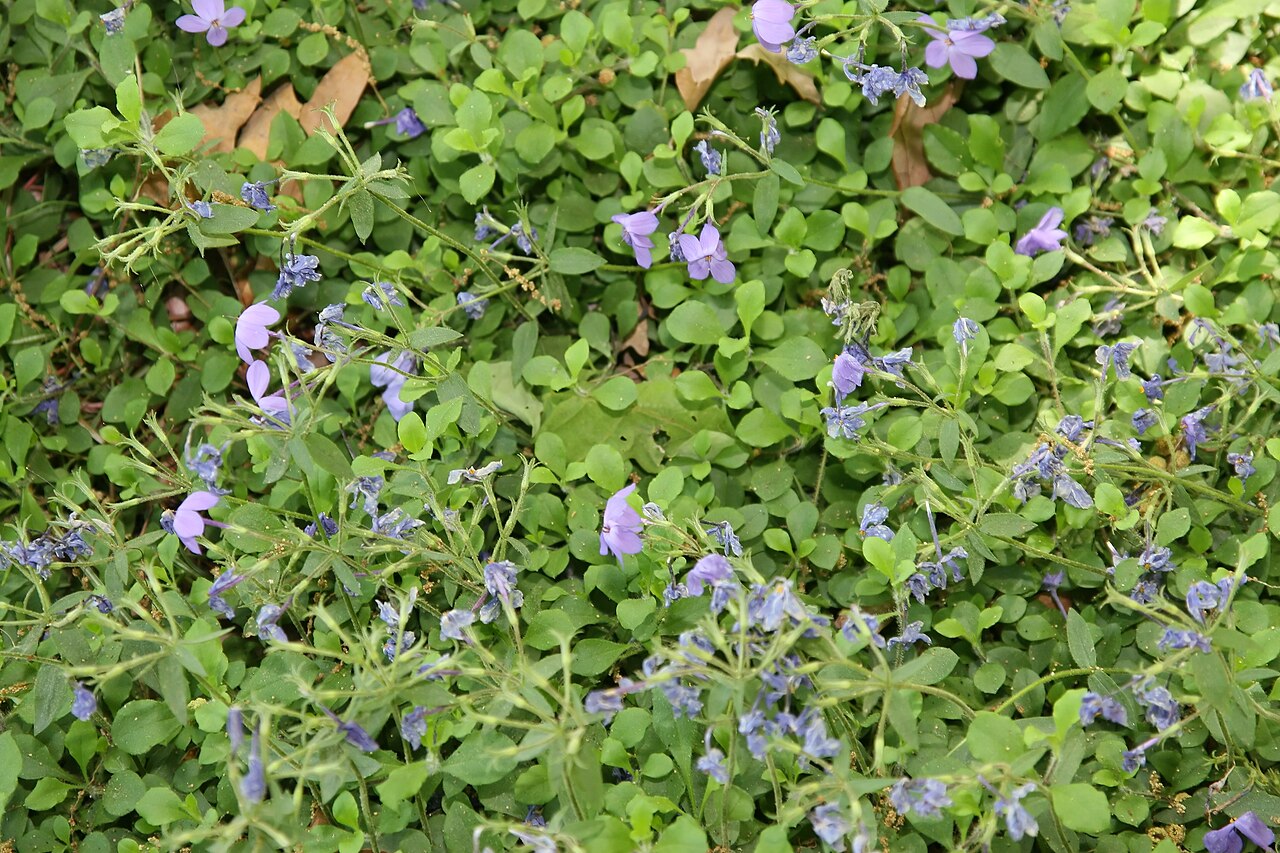
Creeping phlox is a woodland groundcover with broad little leaves, rooting runners and upright spring flower clusters. It makes a loose green carpet below taller plants rather than the dense needle-leaved cushion associated with sunny rock-garden phlox.
A path-side colony can bring the flowers close enough to appreciate without requiring a large border. The vegetative stems remain low while flowering shoots lift violet, pink or white blossoms above them. This separation between a leafy carpet and taller flowers is a useful design feature: after the floral display ends, the plant still covers the ground instead of leaving a bare row of cut stems.
The scientific name is essential at purchase. Phlox stolonifera and Phlox subulata are both sold as creeping phlox, but they differ in foliage and preferred setting. There is also a geographic distinction: this species is native in the Appalachian region, including parts of Pennsylvania and the Carolinas, while New York occurrences are treated as introduced by Kew. A place on a multi-state list does not make every state in that list part of its native range.
Identification
The runners behind the name
Stolons are stems that grow along the soil surface and can root where their nodes touch suitable ground. Follow a runner gently with your eyes: it links one leafy portion of the mat to another. This habit explains both the plant’s ability to fill a gap and the need to leave a little room around small, slow-growing neighbors. It is not a woody vine climbing through the border.
Leaves on different shoots
Opposite, broad oval to spoon-shaped leaves occur on the low sterile stems; the leaves on the flower stalks are smaller. Their relatively soft, broad outline is an important distinction from the stiff, narrow leaves of moss phlox. A nursery plant without flowers can still be checked for this foliage character, although a label from a reliable grower remains important.
Flowers above the mat
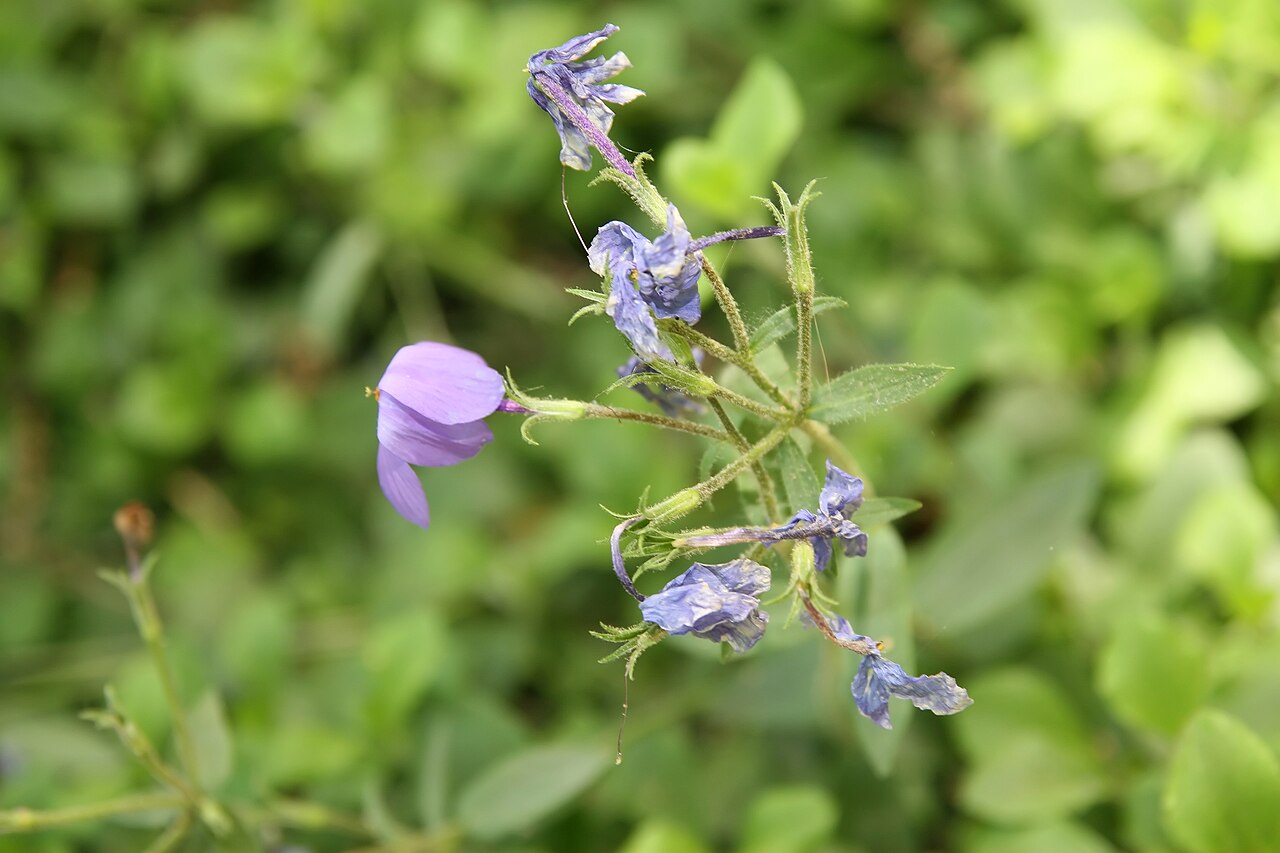
The flowers open into a flat five-lobed face from a slender tube. Several occur together on raised stems, giving the plant a light, lifted display rather than a completely solid blanket at soil level. Colors vary among selections. White or pink flowers do not make a plant a different species, but a named cultivar should retain its cultivar label in photographs and garden records.
Similar garden phloxes
Woodland phlox, Phlox divaricata, is another spring-flowering woodland plant and should not be substituted solely because a photo looks blue. Tall garden phlox has a much taller summer display. When comparing creeping phloxes, inspect the basal shoots as well as the inflorescence; flower color alone is a weak identification tool. A hybrid or named selection is not evidence for a wild local population.
Quick Facts
| Scientific Name | Phlox stolonifera |
| Family | Polemoniaceae |
| Plant Type | Mat-forming herbaceous perennial; semi-evergreen foliage |
| Mature Height | Foliage about 3 inches; flowering stems typically 6–12 inches |
| Mature Spread | About 9–18 inches per plant initially; rooted stolons expand the colony |
| Growth Rate | Spreading by above-ground stolons; vigor varies with conditions and selection |
| Sun Exposure | Partial shade preferred; more sun with reliable moisture |
| Water Needs | Average to moist, well-drained soil; water new plants through establishment |
| Soil Type | Humus-rich woodland soil with drainage |
| Soil pH | Slightly acidic soil generally suits it |
| Bloom Time | Mid-spring, commonly April–May; later in cooler sites |
| Flower Color | Violet, lavender, pink or white depending on plant or selection |
| Fall Color | Green foliage may persist; winter appearance varies by climate |
| Fruit | Small dry seed capsules |
| Deer Resistant | Often relatively resistant, never guaranteed deer-proof |
| USDA Hardiness Zones | Commonly recommended around USDA zones 4–8; sources vary at the edges |
Native Range
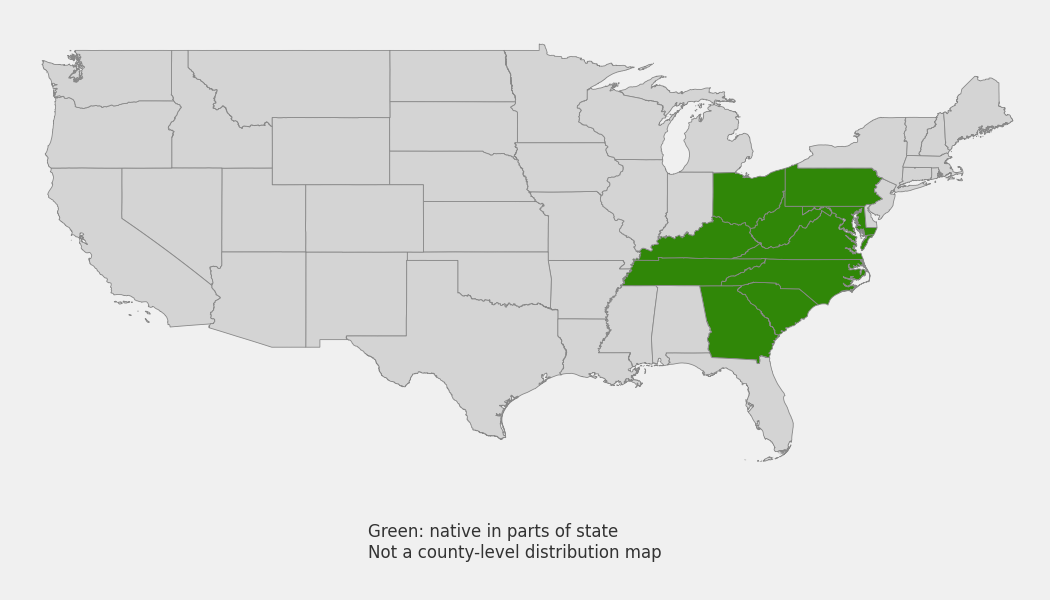
The main native range follows eastern Appalachian woodlands from Pennsylvania southward, extending through adjacent states. The map includes Georgia, Kentucky, Maryland, North Carolina, Ohio, Pennsylvania, South Carolina, Tennessee, Virginia and West Virginia. It summarizes the well-supported Appalachian treatment rather than every reported garden escape.
There is a real disagreement to note at the northern edge: Kew includes Maine and Vermont within its native distribution, but Native Plant Trust treats New England occurrences as introduced. This guide follows the regional flora for that question and leaves Maine and Vermont unshaded. New York is explicitly introduced in Kew’s treatment; New Jersey is not established as native by the sources used here.
Woodland slopes, stream-side ground and shaded rocky settings provide context for cultivation, but a stream-side species need not grow in stagnant water. Local moisture, canopy density and soil structure can change over a few yards. On a regional restoration project, verify the county and seed source instead of stretching an Appalachian range to cover the entire Northeast. Our NY/PA/NJ table link is a navigation aid, not a blanket nativity endorsement.
📋 Regional plant list: New York, Pennsylvania and New Jersey
Growing & Care Guide
Match shade with moisture
Partial shade is a practical starting point, particularly where summers are warm. Watch the planting through a whole summer: the sun at the edge of a woodland may move substantially as the season changes. More exposed plants need a dependable root-zone moisture supply, while very dark sites may flower less. Do not assume that the word shade means an airless, wet corner under dense evergreen branches.
Plant a colony, not a buried mat
Set nursery plants at their existing soil level, allowing runners to rest on the surface. Leave enough room for foliage to spread rather than crowding every pot edge-to-edge on the first day. Remove tough perennial weeds first, because extracting them later from rooted stolons is much harder. A few clearly placed groups are easier to maintain than scattered single plants lost among weeds.
Water the new roots
Newly planted runners can be shallow-rooted even when the original crown looks full. Check several points in the colony during dry weather, including its advancing edges. Water the soil rather than repeatedly misting flowers. An established planting may tolerate some dry periods, but that is not a reason to subject young divisions to chronic drought or choose the hottest reflected-heat strip beside paving.
Let the ground surface remain usable
A thin layer of leaf mold can fit a woodland planting; deep piles of coarse mulch can keep runners suspended above the soil where they cannot root. Pull away matted autumn leaves if they smother the low foliage. The goal is a lightly protected, aerated surface, not a completely uncovered mineral bed and not a blanket that hides every green shoot.
Trim thoughtfully after bloom
If a tidier edge is needed, shorten finished flowering stalks without shearing the entire green mat to bare stems. Leave some capsules where seed is welcome. Small adjustments along a path are easier on the planting than periodically removing a large overgrown sheet. Do not confuse naturally finished flower stalks with widespread disease; look at the surviving foliage before taking action.
Division and propagation
Rooted sections can be lifted with a small soil plug and moved during a cool, moist period. Label divisions of named selections so cultivar identity is not lost. If you use seed, expect variation rather than a perfect copy of the parent’s flower color. Keep new divisions watered until roots occupy the surrounding soil, and avoid separating tiny unrooted fragments during a hot spell.
Mildew and other problems
Mt. Cuba Center’s trial found that species material could suffer mildew and uneven spread, so it should not be advertised as maintenance-free. Give the mat breathing room, avoid crowding it under sprawling taller plants and watch for recurring stress. Dry sites can encourage mite problems; persistently wet places can favor slug damage. Identify the actual cause before reaching for a pesticide or increasing irrigation.
Landscape Uses
- A low spring-flowering layer beside a shaded path where flowers can be viewed closely.
- Small colonies below open deciduous shrubs, with room for runners to expand.
- A woodland border combined with taller summer plants that do not smother the mat.
- A comparison planting with moss phlox showing different leaves, habitats and flowering structures.
Wildlife & Ecological Value
Spring flowers
The tubular flowers are visited by pollinators, and their spring timing can complement later-blooming plants in the same garden. Keep the flower form accessible and avoid spraying during bloom. A groundcover planted entirely for visual neatness can still be managed with room for flower visitors and seed production.
Groundcover is one layer
Creeping phlox covers soil but does not provide every habitat function of a woodland. Retain other plant heights, some leaf litter in suitable places and a sequence of flowering species. Choose companions for shared light and moisture needs rather than assembling plants solely because their flowers have matching colors.
Local provenance
For restoration, use material of known regional origin and treat cultivar trial performance as gardening information, not proof of local ecological suitability. Outside the native range, successful spread is not evidence of historical presence. Keep garden divisions within managed plantings and do not introduce them into nearby natural woodland.
Cultural & Historical Uses
The epithet stolonifera describes the plant’s runner-forming habit. Older names such as Phlox reptans appear in botanical references, but current treatments accept Phlox stolonifera. Keeping that scientific name on a nursery tag helps prevent the common-name confusion with moss phlox.
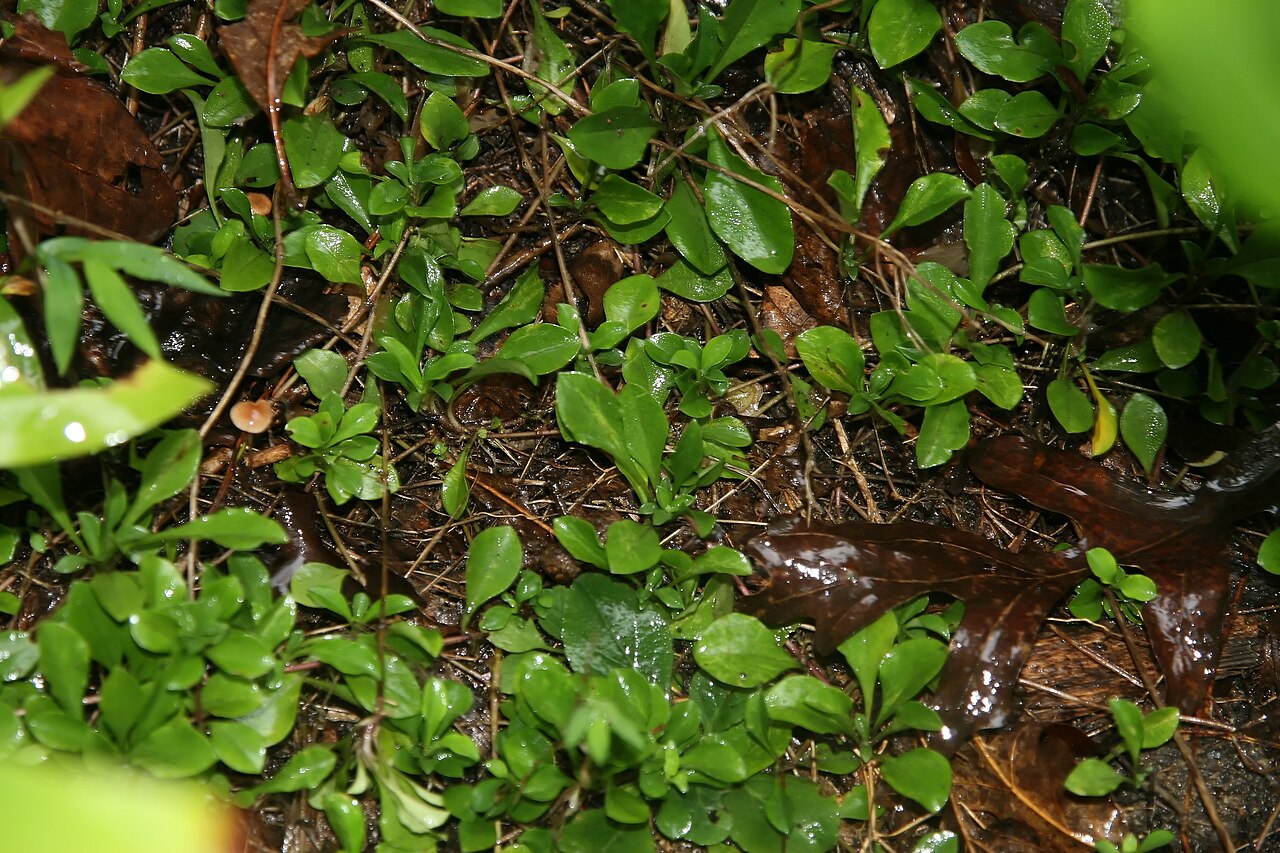
Gardeners have selected white, pink and purple forms for the spring shade garden. Those selections can be useful ornamental plants, but they are not interchangeable with wild-origin material for a habitat project. The photographs on this page show species-labelled cultivated plants and are not offered as evidence that their garden locations are native sites.
The Mt. Cuba trial is a useful reminder that a native species is not automatically flawless in every garden. Trial plants differed in vigor and mildew response. For a homeowner, the practical lesson is to monitor a small planting in the intended site before purchasing enough to carpet an entire slope; local performance is more informative than an unconditional easy-care label.
Frequently Asked Questions
Is this the same creeping phlox used on sunny retaining walls?
Not necessarily. Phlox subulata is commonly sold under the same name and has needle-like leaves. Phlox stolonifera has broader leaves and is associated with woodland conditions. Check the botanical label.
Will it grow in full shade?
It can persist in shade, but partial shade often gives a better balance of growth and flowers. Extremely dark, crowded conditions should not be treated as ideal simply because it is a woodland plant.
Does creeping mean invasive?
It describes a spreading habit, not an invasive classification. Manage its edges around small neighbors, and do not introduce it into natural habitat outside its documented native range.
Is it native to New York and New Jersey?
New York is treated as introduced by Kew, and New Jersey nativity was not confirmed by the sources used here. Pennsylvania and the Carolinas include native populations, but still check local records for restoration.
Can I replace all mulch with it immediately?
Allow the plants to establish and root between crowns before expecting a continuous cover. Keep weeds controlled while gaps remain and avoid burying stolons beneath a thick new mulch layer.
📋 Also listed: North Carolina and South Carolina
Sources & Further Reading
- NC State Extension — identification and cultivation
- Mt. Cuba Center — creeping phlox garden profile
- Mt. Cuba Center — species trial results
- Kew POWO — accepted name and distribution
- Native Plant Trust — introduced New England status
Find Native Plants
Ask growers about nursery propagation and regional provenance. Browse our NY native plant nurseries, PA native plant nurseries, NJ native plant nurseries, NC native plant nurseries, SC native plant nurseries directory for suppliers. Explore the native nursery finder.