Moss Phlox (Phlox subulata)
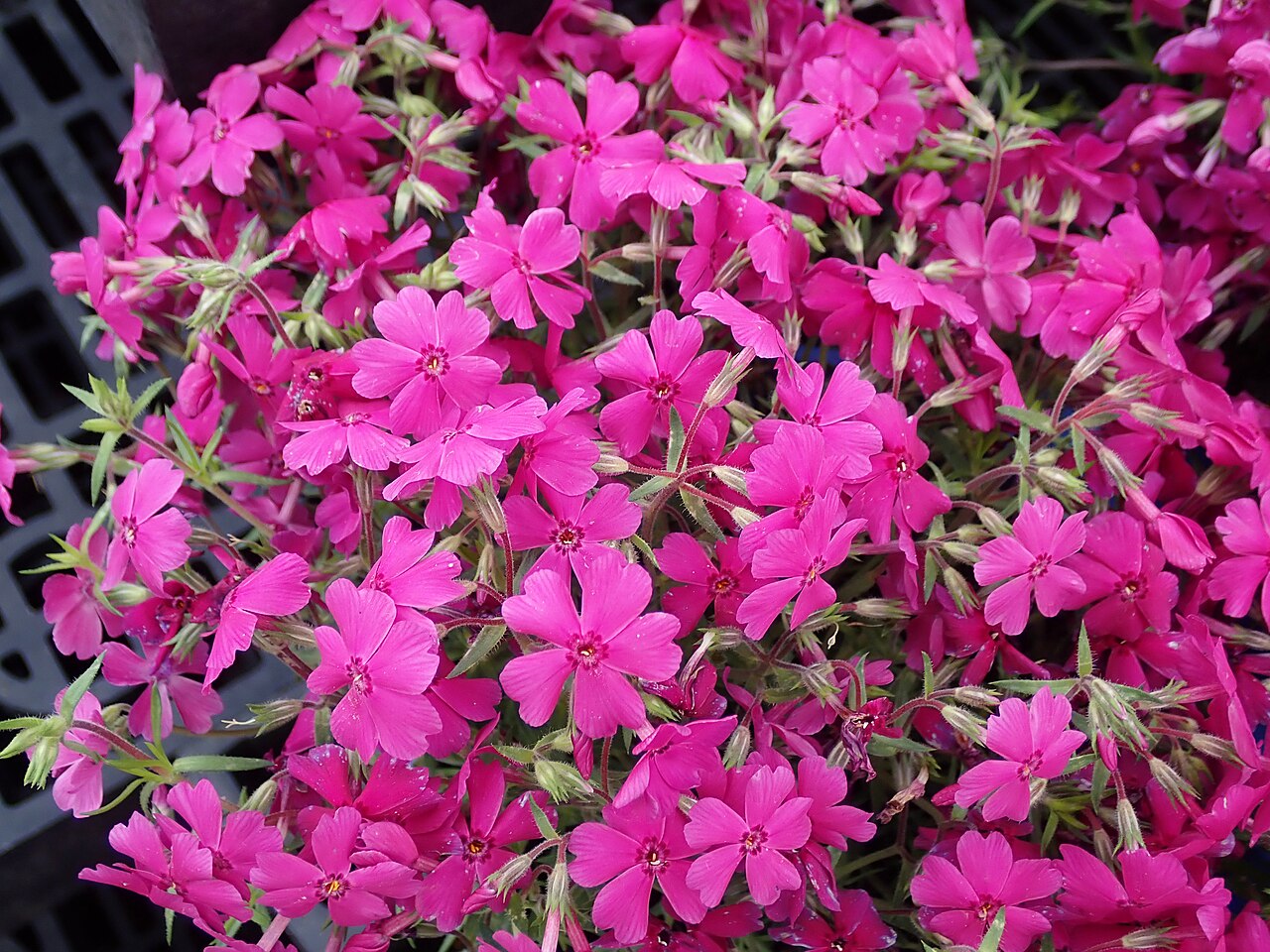
Moss phlox (Phlox subulata) is a low native perennial that can turn a sunny rock edge into a spring ribbon of color. Its fine, needle-like foliage forms a spreading mat, and clusters of pink, lavender, or white flowers sit close above it. Unlike tall summer phlox, this species works at the front of a planting, along a low wall, or on a small well-drained slope.
For Maryland, Virginia, and West Virginia gardeners, the basic match is sun and drainage. The regional list’s full-sun and dry-soil codes describe a plant adapted to open rocky or sandy places, not a pond margin. Water is still important while a young plant roots into the site. Drought tolerance after establishment is not the same as success in a tiny, unwatered nursery root ball.
Moss phlox is widely cultivated, and the photographs here include garden selections rather than claiming to show local wild populations. If the goal is ecological restoration or a regionally sourced native garden, ask about straight-species stock and provenance. The common name creeping phlox is also applied to other species, including woodland phlox relatives with broader leaves and different light requirements.
Identification
Foliage
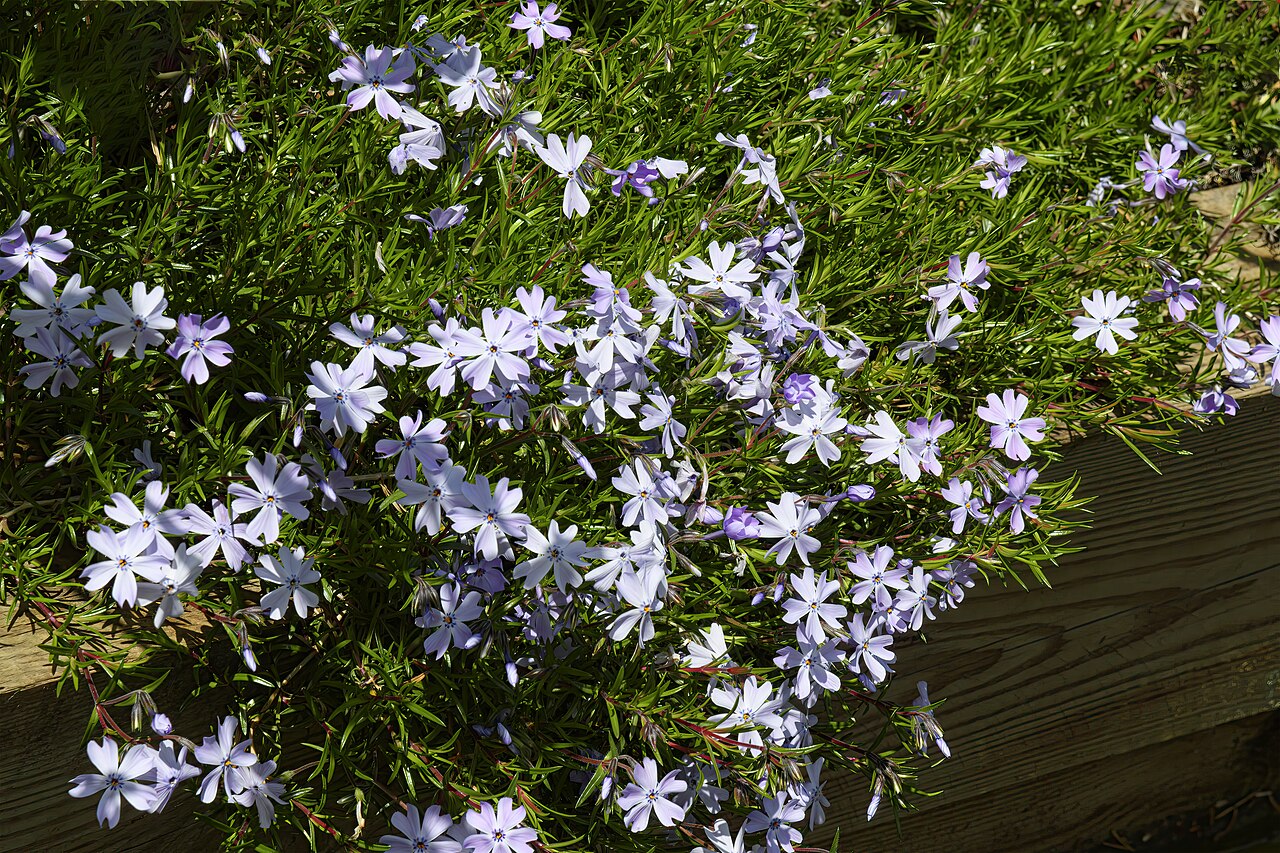
Leaves are narrow, stiff, and awl-like, densely arranged on creeping stems. Their pointed tips and fine texture give the plant a mossy appearance from a distance, though it is a flowering vascular plant, not a moss. Much of the foliage can persist through mild winters, while exposed plants may look weathered after cold or dry conditions. The small leaves help distinguish it from broad-leaved woodland creeping phlox.
Stems and Mat
Stems spread horizontally and root where nodes meet suitable soil. Older portions can become woody and less leafy, particularly in an aging mat. A typical plant is only about 4–6 inches tall but can spread 2–3 feet or more over time. That difference between height and width matters in design: leave lateral room rather than crowding plugs together because their pots look small.
Flowers
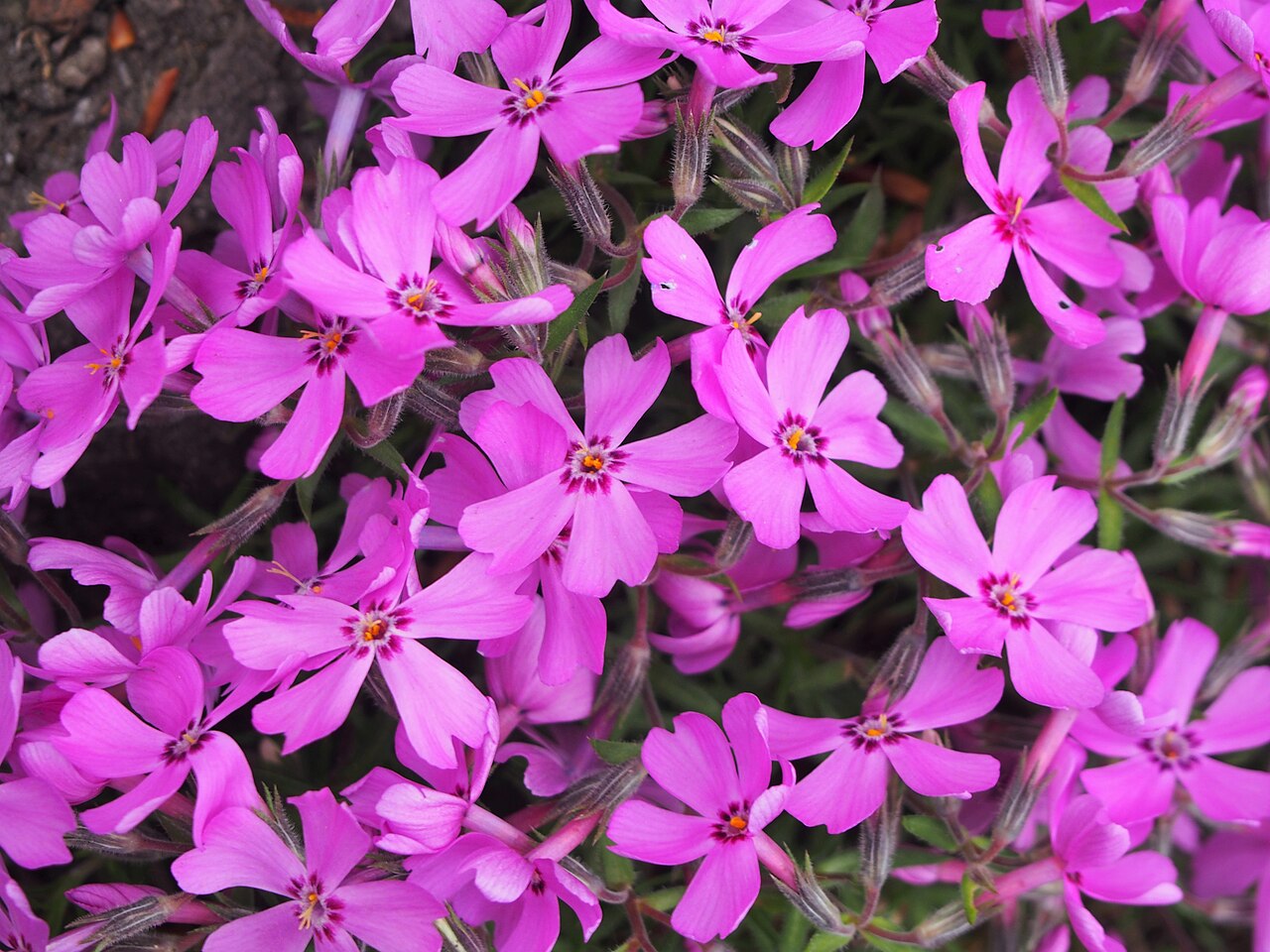
Flowers have a narrow tube opening into five flat lobes, usually with a small notch at the tip of each lobe. They occur in loose clusters near the stem ends and can nearly hide the foliage at peak bloom. Typical colors are pink, lavender, purple, and white; cultivated selections extend the palette. Flowering is primarily a spring event. A plant that remains green after the display ends is behaving normally, not failing to bloom continuously.
Fruit and Look-alikes
Small capsules follow the flowers. Seedlings may differ from a named parent selection, and seed from a garden collection is not automatically equivalent to wild regional stock. Distinguish moss phlox from P. stolonifera, P. divaricata, P. nivalis, and western low phlox species using leaves, habit, and an identified nursery source. A low mound with pink flowers is not enough for a confident species determination.
Quick Facts
| Scientific Name | Phlox subulata L. |
| Family | Polemoniaceae (phlox family) |
| Plant Type | Low spreading, semi-evergreen perennial or subshrub |
| Mature Height | 4–6 in |
| Mature Spread | About 2–3 ft; mats can expand with time |
| Growth Rate | Moderate |
| Sun Exposure | Full sun; light afternoon shade can help in hot settings |
| Water Needs | Dry to average once established; water new plants |
| Soil Type | Well-drained rocky, sandy, or loamy soil |
| Soil pH | Broadly adaptable; avoid unnecessary amendments |
| Bloom Time | Spring, commonly April–May locally |
| Flower Color | Pink, lavender, purple, or white; cultivars vary |
| Fall Color | Usually retained green foliage rather than a major autumn display |
| Fruit | Small dry capsules |
| Deer Resistant | Often relatively resistant; rabbits and deer can still browse |
| USDA Hardiness Zones | 3–9, depending on site and selection |
Native Range
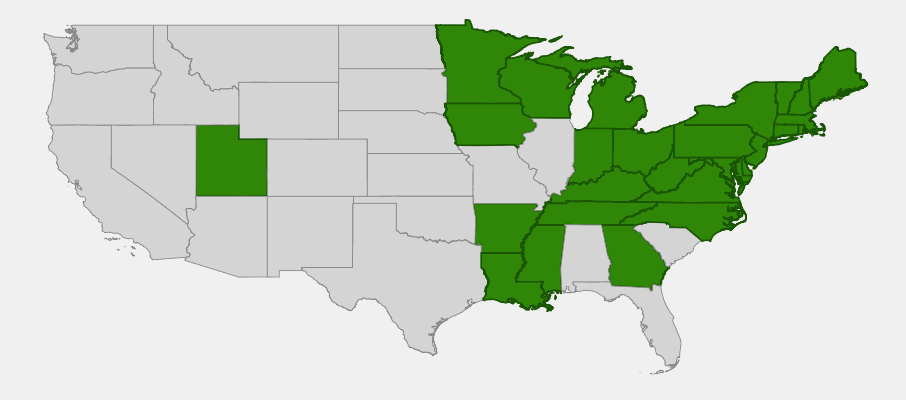
The species is native to central and eastern North America and is strongly associated with open, well-drained places. Rocky ledges, slopes, sandy openings, and clearings provide a useful picture of its habitat. It is native in Maryland and appropriate regional occurrences extend through Virginia and West Virginia, but garden suitability and local wild occurrence are separate questions.
The state map follows the native distribution in Kew’s Plants of the World Online, which distinguishes Alabama and Illinois as introduced rather than native. Other regional sources use a narrower core range and describe some northeastern records as escapes. Treat this broad map as a starting point, not a restoration prescription, and verify unusual or outlying records with a state flora.
A cultivated plant photographed in Europe can illustrate the species’ foliage or a named selection, but it says nothing about native range there. Likewise, a familiar roadside carpet may have been planted or escaped from a garden. When local ecological fit matters, provenance and a verified native population record are more useful than how frequently the plant appears in neighborhood landscaping.
📋 Regional plant list: Maryland, Virginia & West Virginia
Growing & Care Guide
Light
Full sun generally gives the most abundant flowering and a dense mat. In hot humid gardens, a little afternoon shade can be helpful, but deep shade is a poor substitute for the open habitat this plant favors. If a once-flowering patch becomes sparse as nearby shrubs grow, reassess light before fertilizing. A plant may remain alive in shade without providing the spring display expected from it.
Soil and Water
Drainage comes first. Moss phlox can use modest moisture, especially during establishment, but should not sit in a saturated crown. A rocky or sandy slope can be suitable if roots have actual soil to occupy; a layer of decorative gravel over compacted clay may still drain badly below the surface. Water new plugs thoroughly and then according to soil conditions. Once established, avoid keeping the foliage and crown continually wet with unnecessary overhead irrigation.
Planting Tips
Set the root ball at its original depth and spread the surface stems naturally rather than burying them. Allow space for the eventual mat. On a slope, stabilize the soil before planting so heavy rain does not wash roots out. Do not rely on a few new plugs as immediate erosion control for a steep failing bank. A low wall planting needs adequate soil behind the wall and drainage away from the crown, not just a narrow crack with no rooting volume.
Pruning and Renewal
A light trim after the main spring bloom can tidy the plant and encourage leafy growth. Avoid cutting so hard into old bare woody centers that little green growth remains. If an older mat has a dead or open center, rooted edge pieces can be used to renew it. Take time to distinguish winter damage, aging stems, and a drainage problem; each calls for a different response. Repeated shearing throughout the season is unnecessary.
Propagation
Division and stem cuttings are common ways to propagate a selected garden plant. Use healthy leafy material and a well-drained medium, keeping cuttings from severe drying while roots develop. Seed-grown offspring can vary, particularly where several selections grow together. For a native-species planting, request seed or plants from a suitable regional source rather than assuming a commercial color mixture represents local wild genetics. Keep labels with divided plants.
Weeds and Plant Health
Weed before the mat closes, because grasses and deep-rooted weeds become difficult to remove without tearing the phlox. Do not bury the foliage under a thick mulch layer. In a humid setting, airflow and drainage help avoid crown and root problems. If part of a mat dies, inspect the roots and soil rather than treating all browning as drought. Rabbits may browse foliage even where deer usually leave the planting alone.
Landscape Uses
- Edge a sunny path or low wall with a spring-flowering mat.
- Plant on a modest, stable, well-drained slope with suitable soil volume.
- Use in a native rock garden among low plants that do not shade it out.
- Create a low foreground for taller later-blooming natives, leaving enough room for lateral spread.
Wildlife & Ecological Value
For Pollinators
The tubular flowers are visited by butterflies, skippers, and bees; extension sources also note hummingbird visits. A flowering patch can add spring resources, but cultivars and local insect communities differ. Retain a variety of native bloom forms and seasons rather than relying on one carpet of flowers. Avoid spraying open blooms.
For Birds
Moss phlox is not a major berry-bearing bird plant. Its contribution is as a low living layer and part of a diverse insect-supporting garden. Pair it with appropriate native shrubs, grasses, and other herbs if bird habitat is a goal, rather than expecting a six-inch mat to provide every resource.
For Mammals
Rabbits can feed on the foliage, and deer resistance is relative. Protect new plants where browsing repeatedly prevents establishment. A mat beside a path can also suffer from trampling even if animals do not eat it. Leave a clear walking surface: low growth does not mean it is a durable lawn replacement.
Ecosystem Role
Spreading stems cover suitable soil and add texture at ground level. In a garden this can reduce some exposed soil, but it does not make the plant a universal erosion solution or a substitute for a diverse native community. Outside its local native range, evaluate garden escape and regional recommendations before using it broadly.
Cultural & Historical Uses
The epithet subulata describes the awl-like leaves, an identifying feature that remains useful after flowers fade. Names such as moss pink, mountain pink, and flowering moss describe its appearance rather than its relationship to true mosses. Keeping the scientific name with the plant avoids confusion among the many low-growing phloxes.
Moss phlox has a long ornamental history and is now represented by many named selections. A cultivar photograph can be useful if it is labeled honestly, but a bright garden carpet should not be presented as proof of a wild native population. The images on this page show cultivated plants and identify the named selection where that information is available.
For a modern native garden, the choice is not simply between beauty and ecological value. It is between a plant suited to the site and purpose and one chosen from a generic common-name label. Select provenance appropriate to the project, preserve identification records, and enjoy the spring display without assuming that every cultivated form serves the same role.
Frequently Asked Questions
Is creeping phlox always Phlox subulata?
No. The common name is used for several species. Moss phlox has narrow awl-like leaves and a low mat suited to sunny, well-drained sites; other creeping phloxes can favor woodland shade.
Will it bloom all summer?
Its main display is in spring. The foliage continues as a low mat afterward. Plan later-flowering companions rather than expecting continuous bloom.
Can it replace a lawn?
Not where people or pets regularly walk. It is a low ornamental groundcover, not a wear-tolerant turf. Use it beside paths and on lightly disturbed sites.
Why is the middle of my patch bare?
Older stems can become woody and less leafy, but drainage or damage can also cause loss. Inspect the plant, correct site problems, and renew with healthy rooted edge pieces if needed.
Are all the pictured plants wild natives?
No. The photos illustrate cultivated moss phlox, including a named selection. For restoration or local-provenance gardening, purchase appropriately sourced stock rather than choosing solely by color.
Sources & Further Reading
- NC State Extension: Phlox subulata
- University of Maryland Extension: moss phlox
- Kew Plants of the World Online: native and introduced distribution
- Lady Bird Johnson Wildflower Center: moss phlox
- USDA PLANTS: Phlox subulata
Find Native Plants
Ask growers about nursery propagation and regional provenance. Browse our Maryland native plant nurseries, Virginia native plant nurseries, West Virginia native plant nurseries directory for suppliers.