Sticky Phacelia (Phacelia viscida)
Phacelia viscida, commonly called sticky phacelia or sticky scorpionweed, is a native California annual wildflower prized for having some of the most intensely saturated blue flowers of any plant in the state. A member of the Boraginaceae (borage) family — it was formerly classified in the Hydrophyllaceae, or waterleaf family — sticky phacelia grows as a low, branching herb covered in fine glandular hairs that give the whole plant a tacky feel, which is the source of both its common and scientific names (viscidus is Latin for “sticky”).
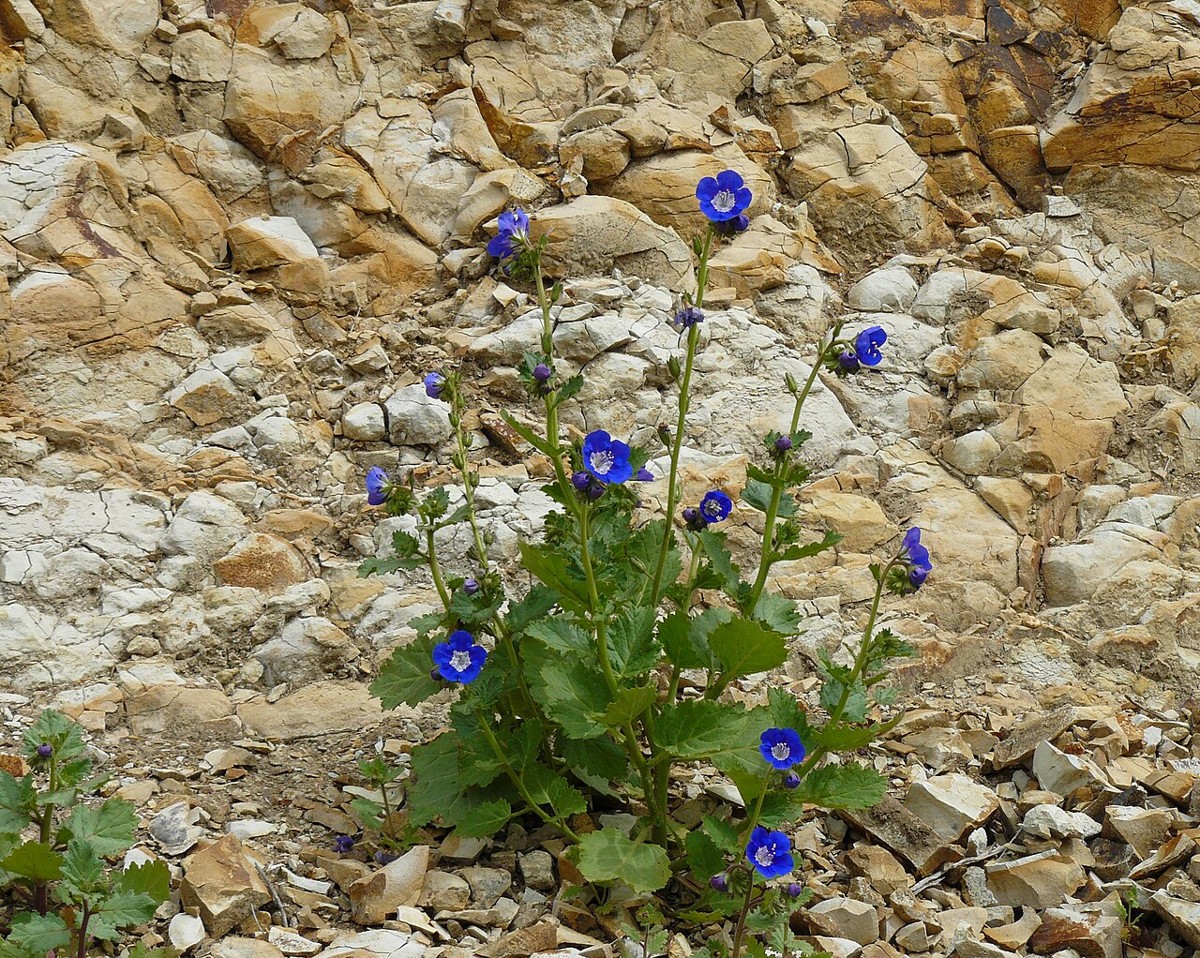
In the wild, sticky phacelia is a plant of rocky slopes, road cuts, and disturbed openings in coastal sage scrub and chaparral, where its electric blue-violet, cup-shaped flowers with crisp white throats and long, prominently protruding stamens stand out sharply against bare rock and gray-green shrubs. The flowers open from coiled, scorpion-tail-like buds (the “scorpionweed” in its other common name refers to this unfurling habit shared by many phacelias) and are a magnet for native bees throughout their spring bloom.
Sticky phacelia is a true California endemic, found only along the central and southern California coast and adjacent foothills, with its range extending south into northern Baja California, Mexico. Easy to grow from seed and well suited to a sunny, lean, well-drained garden bed, it is an excellent choice for a wildflower meadow, rock garden, or pollinator planting anywhere within or near its native range.
Identification
Sticky phacelia is a winter or spring annual herb, typically 8 to 24 inches tall, with an erect to sprawling, branched habit. Every part of the plant above ground — stems, leaves, and flower stalks — is covered in short glandular hairs that exude a slightly resinous, sticky secretion, a trait shared with several other chaparral-dwelling phacelias.
Leaves
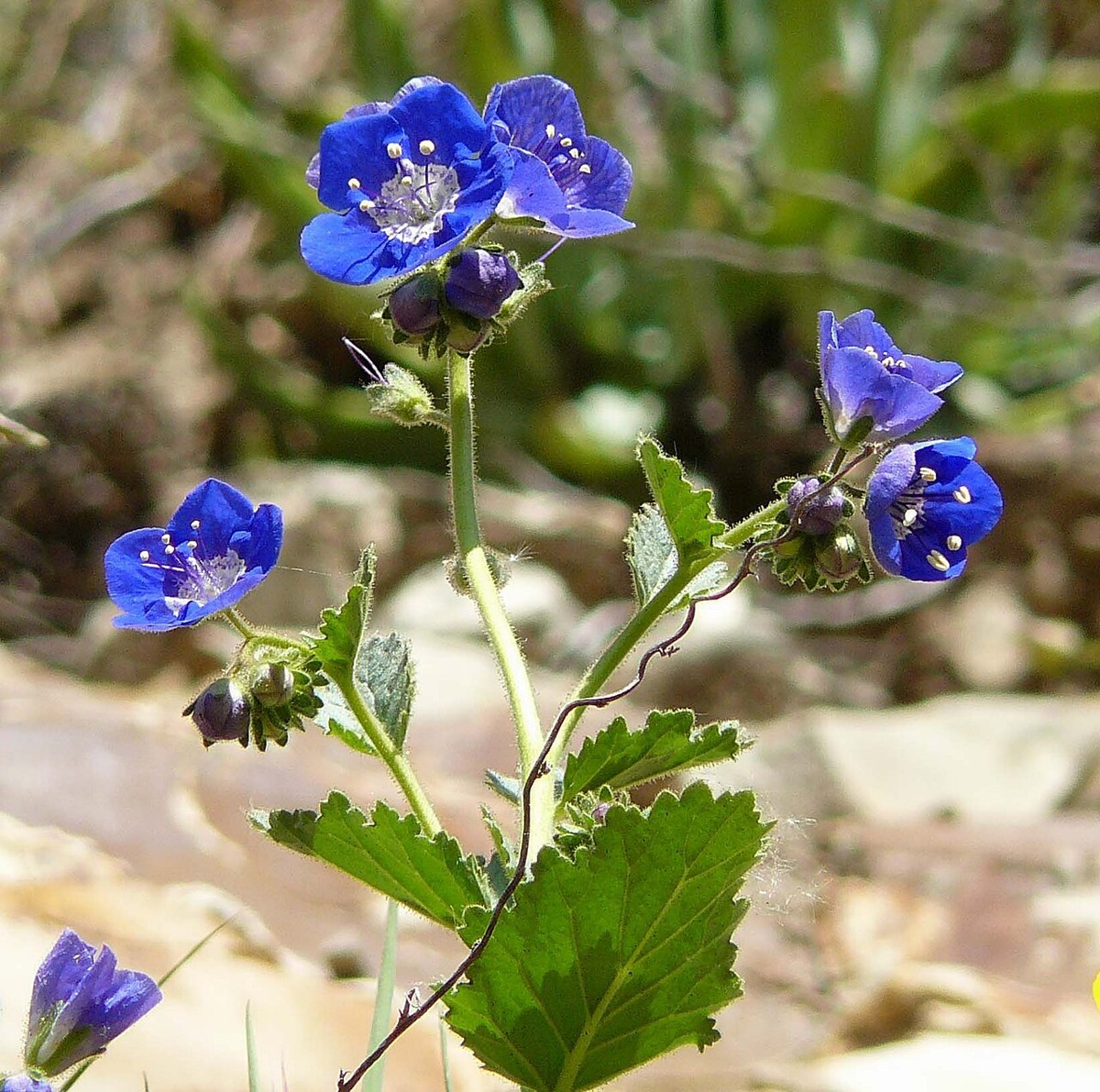
The leaves are simple to shallowly lobed, oval to triangular in outline, 1 to 3 inches long, with coarsely toothed or scalloped margins. They are arranged alternately along the stem and, like the stems, are covered in fine, gland-tipped hairs that can cause mild skin irritation in sensitive people on contact, similar to a mild poison-oak-type reaction.
Flowers
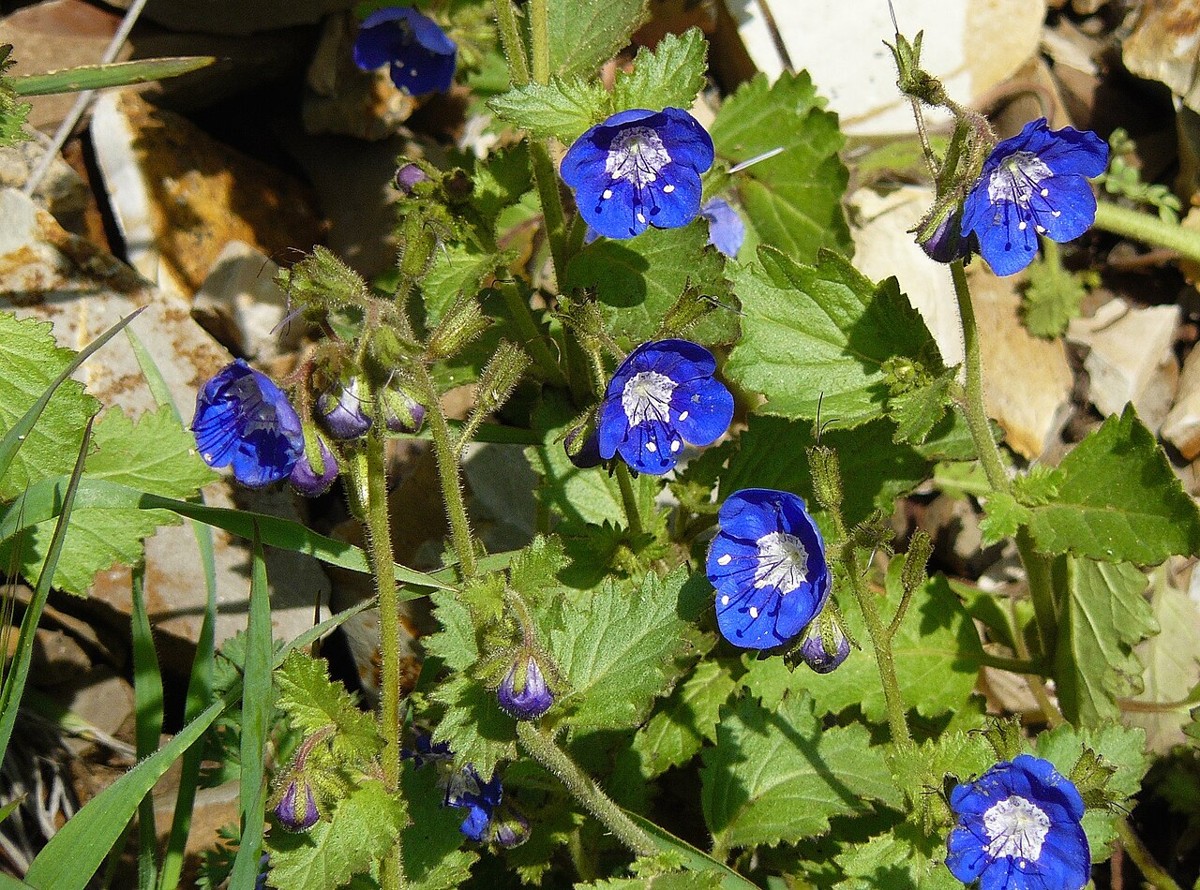
The flowers are the plant’s signature feature: broadly bell- to cup-shaped, five-lobed, and ¾ to 1¼ inches across, in a deep, saturated blue-violet rarely matched by other California wildflowers. Each flower has a conspicuous white throat and five stamens that extend well beyond the petals, tipped with pale anthers that give the open flower a starry, almost fringed look. Flowers are borne in coiled, one-sided clusters (cymes) that uncurl as buds open in succession, a classic phacelia trait. Bloom season runs from March or April into June, peaking after wet winters.
Fruit & Seeds
After flowering, each bloom develops into a small, two-valved capsule containing a handful of tiny, pitted seeds. The capsules dry and split open in early summer, and the seeds drop near the parent plant or wash downslope in rain, which is part of why sticky phacelia favors loose, rocky, disturbed ground where seed can lodge in crevices and germinate the following winter.
Quick Facts
| Scientific Name | Phacelia viscida |
| Family | Boraginaceae (Borage) |
| Plant Type | Annual Wildflower |
| Mature Height | 8–24 in (20–60 cm) |
| Mature Spread | 12–18 in (30–45 cm) |
| Growth Rate | Fast (completes life cycle in one season) |
| Sun Exposure | Full Sun |
| Water Needs | Low once established |
| Soil Type | Lean, rocky or sandy, fast-draining |
| Soil pH | 6.0–7.5 (slightly acidic to neutral) |
| Bloom Time | March – June |
| Flower Color | Deep blue-violet with white throat |
| Fall Color | None (dies back after seed set) |
| Fruit | Small two-valved seed capsules |
| Deer Resistant | Yes (sticky, hairy foliage is rarely browsed) |
| USDA Hardiness Zones | 8–10 (grown as a cool-season annual) |
Native Range
Sticky phacelia is a California endemic, native to the coastal hills, bluffs, and foothills of the central and southern California coast, from roughly the San Luis Obispo County coast south through Santa Barbara, Ventura, Los Angeles, Orange, and San Diego counties, with its range continuing south into adjacent Baja California, Mexico. It is not native to Nevada or any other U.S. state.
Within this coastal belt, sticky phacelia favors open, disturbed ground: road cuts, eroding bluffs, burned chaparral, and rocky or sandy slopes in coastal sage scrub and chaparral plant communities. It typically grows from near sea level up to around 3,000 feet in elevation, often in places where competing shrub cover is thin or has recently been removed by fire, grading, or erosion.
Because it depends on open, sunny microsites, sticky phacelia often appears in flushes after fire or heavy winter rains, then persists as a dormant seed bank in the soil between favorable years. This boom-and-bust pattern is typical of California’s chaparral annuals and is part of why the species can seem locally abundant one spring and nearly absent the next.
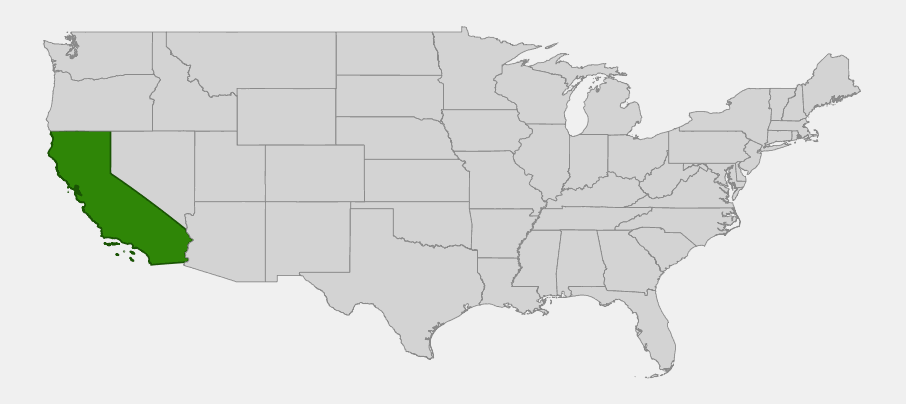
📋 Regional plant lists featuring Sticky Phacelia: California & Nevada
Growing & Care Guide
Sticky phacelia is an easy, rewarding annual wildflower for gardeners within its native coastal California range, and it rewards almost total neglect once the seed is in the ground. It is best grown from direct-sown seed each fall, mimicking the winter rains that trigger its natural germination.
Light
Give sticky phacelia full sun. It is a plant of open, unshaded slopes in the wild and flowers poorly, with weak, floppy stems, if grown in shade or crowded among taller plants.
Soil & Water
This species wants lean, fast-draining soil — rocky, gravelly, or sandy ground is ideal, and it does not need or want rich garden soil or regular fertilizer. Water to germinate seed in fall and keep the soil lightly moist through the winter growing season; established plants need little to no supplemental water and, like most chaparral annuals, finish their life cycle and dry out naturally as the soil dries in late spring.
Planting Tips
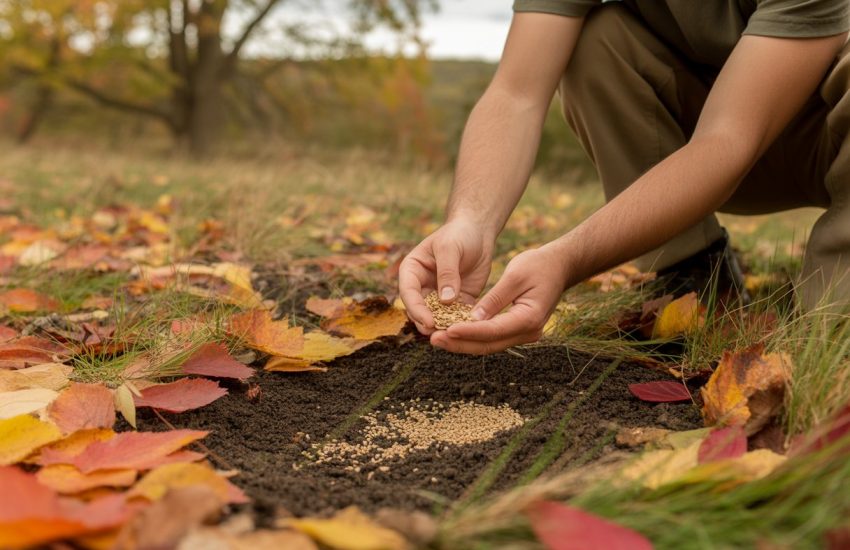
Sow seed directly in fall, just as the first rains arrive, pressing seed lightly into bare or lightly raked soil rather than burying it deep. Sticky phacelia does not transplant well as a seedling because of its taproot, so direct sowing in its permanent spot gives the best results. Choose a lean, sunny site such as a rock garden, a dry slope, or the edge of a gravel path, and avoid areas with heavy irrigation or rich amended soil.
Pruning & Maintenance
No pruning is needed. Once plants finish flowering and set seed in late spring or early summer, they dry up and die, as expected for an annual; leave the dried plants in place if you want them to reseed, or pull and compost them for a tidier look. Handle the sticky, hairy foliage with gloves if you are sensitive to contact dermatitis.
Propagation
Propagate by seed only. Collect dry seed capsules in early summer once they have browned and split, store the tiny seeds in a cool, dry place, and sow in fall. No pretreatment is typically required, though a period of cool, moist stratification (mimicking winter rains) can improve germination for seed that has been stored dry for more than a year.
Landscape Uses
Sticky phacelia works well in several garden settings:
- Wildflower meadows and native seed mixes for coastal and foothill California gardens
- Rock gardens and dry slopes where its lean-soil preference is an asset, not a limitation
- Pollinator gardens — few flowers draw native bees as reliably
- Post-fire or erosion-prone sites being restored with fast-establishing native annuals
- Containers for a season of intense blue color on a sunny patio
Wildlife & Ecological Value
Sticky phacelia plays an outsized ecological role for its modest stature, offering some of the most important early-season nectar and pollen in California’s coastal chaparral and sage scrub communities.
For Pollinators
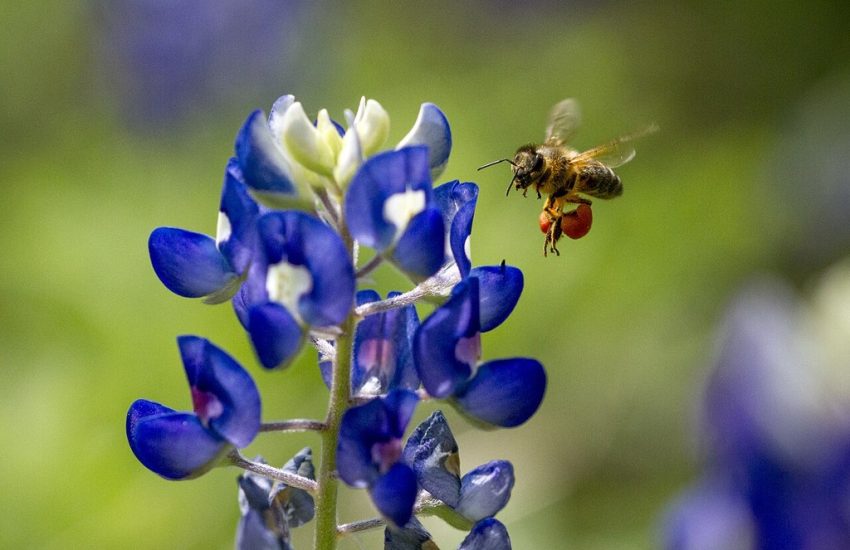
The flowers are a favored nectar and pollen source for native bees, including bumble bees, digger bees, and other solitary ground-nesting bees that are active in spring, as well as honey bees and a range of flies and small butterflies. The deep blue color and wide, open corolla make the flowers especially visible and accessible to bees, which is part of why phacelias in general are considered among the best bee plants in California’s native flora.
For Birds
While sticky phacelia is not a major food source for birds directly, the insects it attracts — particularly bees and small flies — are foraged by insectivorous birds such as warblers, flycatchers, and wrens working through chaparral and sage scrub in spring. The seeds are small and not a significant food source for seed-eating birds.
For Mammals
Sticky phacelia’s glandular, resinous foliage discourages browsing by deer and other mammalian herbivores, which is part of why it can persist and bloom reliably even in areas with heavy deer pressure. It plays little direct role as mammal forage, but its presence in a plant community supports the broader insect populations that many small mammals depend on.
Ecosystem Role
As a fast-colonizing annual, sticky phacelia helps stabilize bare, disturbed soil after fire, erosion, or grading, holding ground and contributing organic matter before longer-lived shrubs reestablish. Its dependence on open microsites also makes it a useful indicator of healthy disturbance regimes within coastal sage scrub and chaparral, habitats that depend on periodic fire and soil disturbance to maintain their characteristic diversity of annual wildflowers.
Cultural & Historical Uses
Sticky phacelia does not carry the extensive documented history of food, medicine, or material use attributed to many larger California native plants, as is typical for most small-statured annual wildflowers in the genus Phacelia. It has long been recognized and admired, however, by botanists and naturalists for the remarkable intensity of its blue flower color, which is frequently singled out in California wildflower guides as among the most vivid blues in the state’s flora.
In more recent decades, sticky phacelia and its relatives have drawn growing attention from pollinator researchers and native-plant horticulturists, who prize phacelias generally as exceptionally attractive and reliable bee plants. Seed of sticky phacelia and other California phacelia species is now commonly included in native wildflower seed mixes aimed at supporting bee populations in gardens, restoration sites, and agricultural buffer plantings.
The genus name Phacelia comes from the Greek phakelos, meaning “a bundle” or “cluster,” a reference to the tightly clustered, coiled flower arrangement shared across the genus. The species name viscida is simply Latin for “sticky,” a straightforward nod to the glandular hairs that cover the entire plant.
Frequently Asked Questions
Is sticky phacelia the same as other “scorpionweed” phacelias?
No. “Scorpionweed” is a common name shared loosely across many Phacelia species because of their coiled, scorpion-tail-shaped flower clusters. Sticky phacelia (Phacelia viscida) is a distinct species, best identified by its unusually deep blue-violet flower color and sticky, glandular foliage.
Will touching sticky phacelia irritate my skin?
It can, for sensitive individuals. The glandular hairs that cover the stems and leaves can cause mild contact dermatitis similar to a mild poison-oak reaction in some people. Most gardeners handle the plant without issue, but wearing gloves when direct-sowing or cleaning up dried plants is a reasonable precaution if you have sensitive skin.
Does sticky phacelia come back every year?
Not from the same root — it is a true annual that completes its life cycle in one growing season and dies after setting seed. However, it readily reseeds itself if allowed to drop seed in the garden, so an established patch can return reliably year after year from self-sown seed.
Can I grow sticky phacelia outside California?
You can grow it as a garden annual well outside its native range, but it is only considered native to the central and southern California coast and should not be treated as a native plant option, or relied on for local ecological value, in other states.
What is the best way to start sticky phacelia from seed?
Direct-sow seed in fall, just as rains begin, into lean, well-drained, sunny soil. Press the seed lightly into the surface rather than burying it, keep the soil lightly moist through germination, and then let winter rains take over. The plant resents transplanting, so sow it where you want it to grow.

Looking for a nursery that carries Sticky Phacelia?
Browse our native plant nursery directory: California