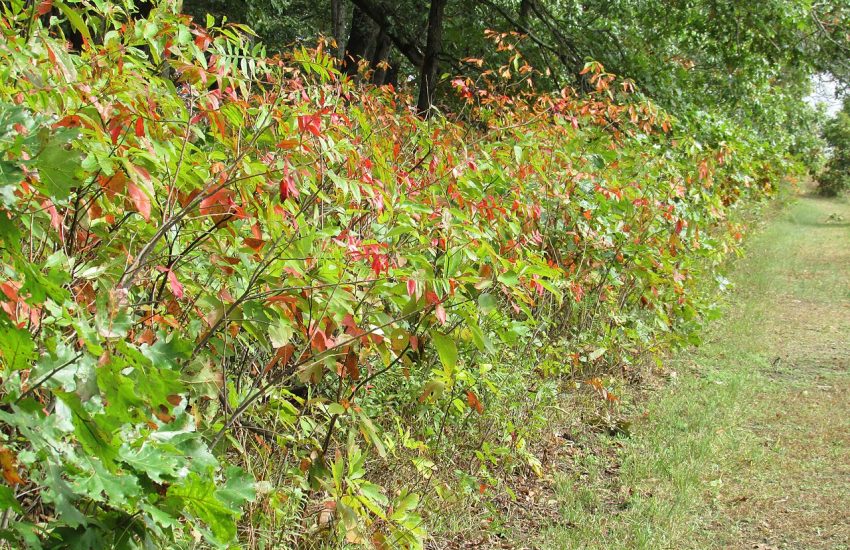
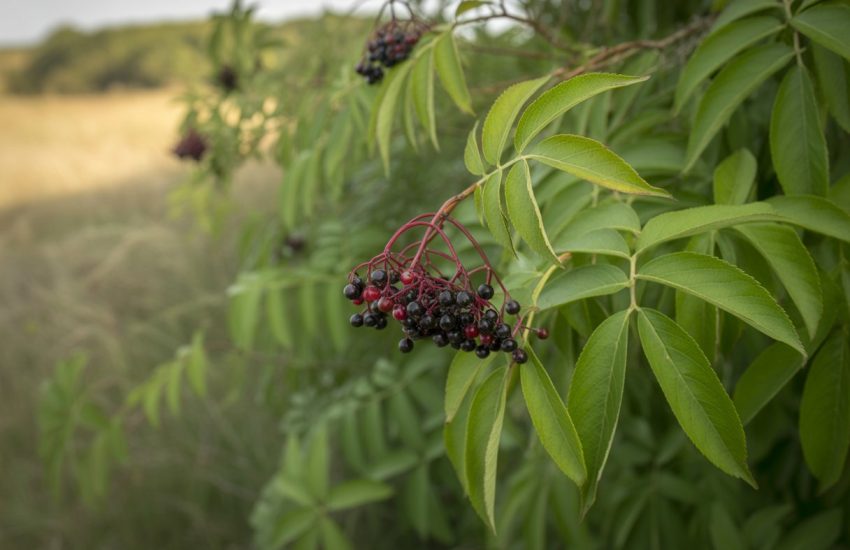
Heartleaf Willow (Salix eriocephala)
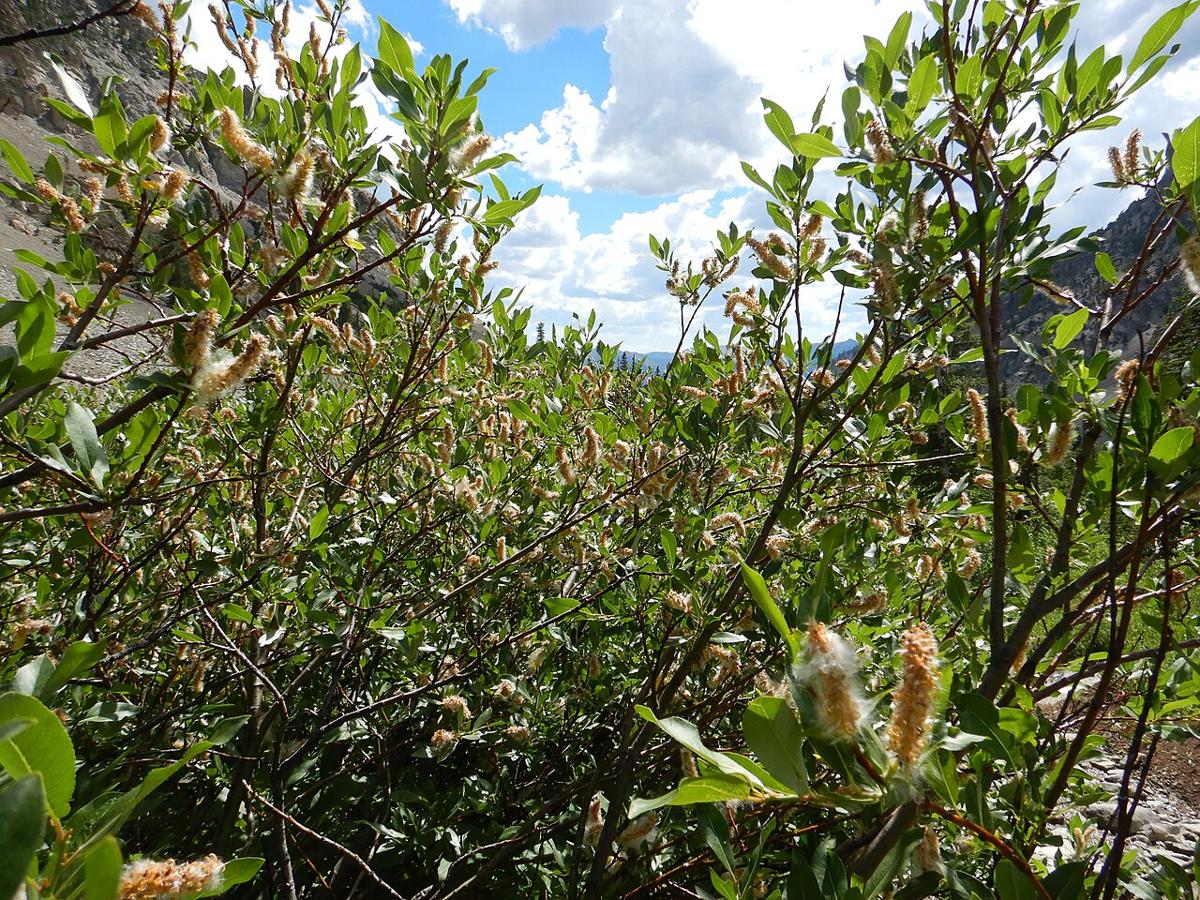
Salix eriocephala, commonly called Heartleaf Willow or Missouri River willow, is a fast-growing native shrub or small multi-trunked tree found along streambanks, lakeshores, and wet meadows across much of the eastern and central United States. The common name refers to the slightly heart-shaped base some leaves show on vigorous sprouts, though many leaves are simply narrow and lance-shaped; botanists have also long known it under the synonym Salix rigida, and some western populations are classified as the variety watsonii.
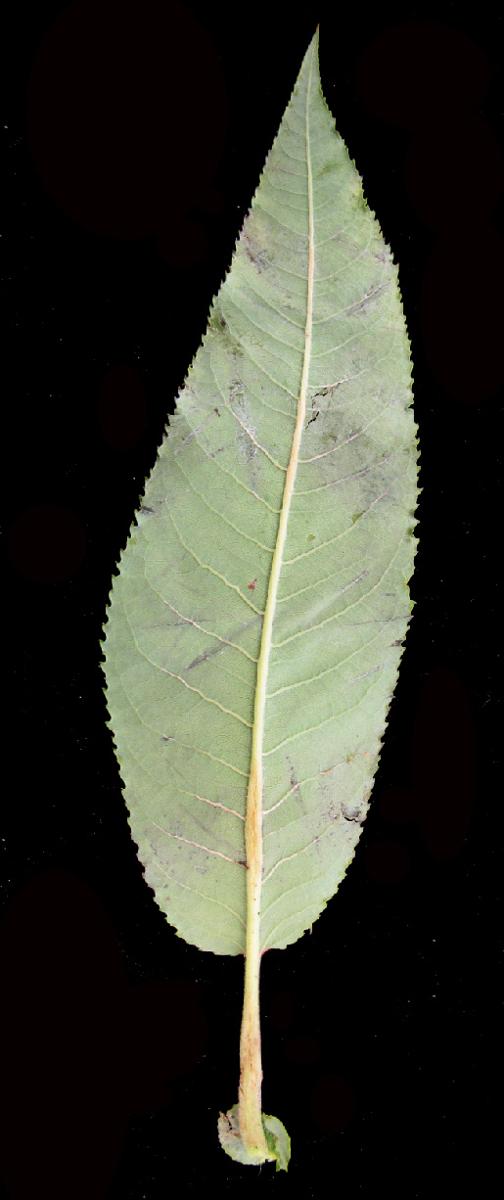
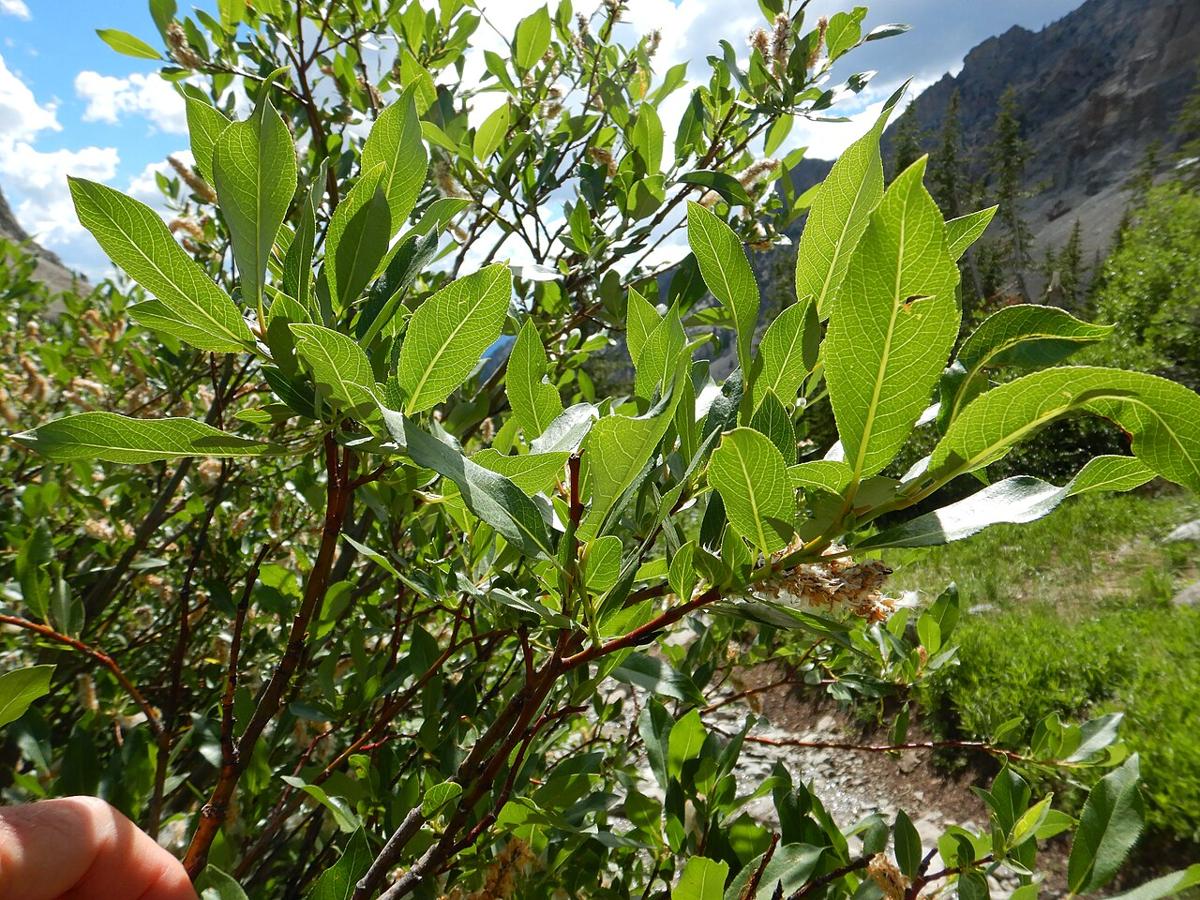
This willow typically grows 10 to 20 feet tall, occasionally reaching small-tree stature with a single dominant trunk, though it more often forms a dense, multi-stemmed thicket from root and stump sprouts. Its silky, upright catkins open before the leaves in early spring, among the first flowers available to emerging pollinators, and its lance-shaped leaves are pale, almost silvery, on the underside, a field mark that separates it from several similar-looking wetland willows.
Because it roots readily from cuttings and tolerates both standing water and periodic drought once established, Heartleaf Willow is a workhorse species for streambank stabilization, wetland restoration, and erosion control, planted far more often for function than for ornamental appeal. Gardeners with a wet corner of the yard or a pond margin to naturalize will find it an undemanding, quick-establishing native shrub.
Identification
Heartleaf Willow is best recognized by its shrubby, multi-stemmed habit, reddish-brown twigs, lance-shaped leaves with pale undersides, and early, upright silky catkins that appear well before the leaves unfold.
Bark & Stems
Young stems are reddish-brown to yellow-brown and smooth, aging to gray-brown bark with shallow fissures on older stems. Twigs are hairless to lightly hairy and flexible, often used historically for basketry because they bend without snapping.
Leaves
Leaves are alternate, simple, lance-shaped to narrowly elliptical, 2 to 5 inches long, with finely toothed margins and a short petiole. The upper surface is dark green and often slightly glossy, while the lower surface is distinctly pale green to silvery and may be sparsely silky-hairy, especially on new growth, a key identification feature that separates this species from willows with uniformly green leaf undersides.
Flowers
Like all willows, Heartleaf Willow is dioecious, with separate male and female plants bearing upright, cylindrical catkins 1 to 2.5 inches long. Catkins emerge before or with the earliest leaves in April and May, the males bright yellow with pollen and the females greenish, both are an important early pollen and nectar source for native bees.
Fruit & Seeds
Female catkins mature into clusters of small capsules that split open to release tiny seeds attached to cottony hairs, dispersed by wind and water in late spring to early summer. Like other willows, the seeds remain viable only briefly and depend on landing in moist, open soil to germinate.
Quick Facts
| Scientific Name | Salix eriocephala |
| Family | Salicaceae (Willow) |
| Plant Type | Deciduous shrub or small tree |
| Mature Height | 10–20 ft |
| Mature Spread | 8–15 ft |
| Growth Rate | Fast |
| Sun Exposure | Full sun to part shade |
| Water Needs | Moderate to high; tolerates wet soils |
| Soil Type | Moist to wet loam, sand, or clay |
| Soil pH | Slightly acidic to neutral |
| Bloom Time | Early to mid spring, before leaf-out |
| Flower Color | Yellow (male) / greenish (female) |
| Fall Color | Yellow, often unremarkable |
| Fruit | Small capsules with cottony seeds |
| Deer Resistant | Low; browsed readily |
| USDA Hardiness Zones | 3–7 |
Native Range
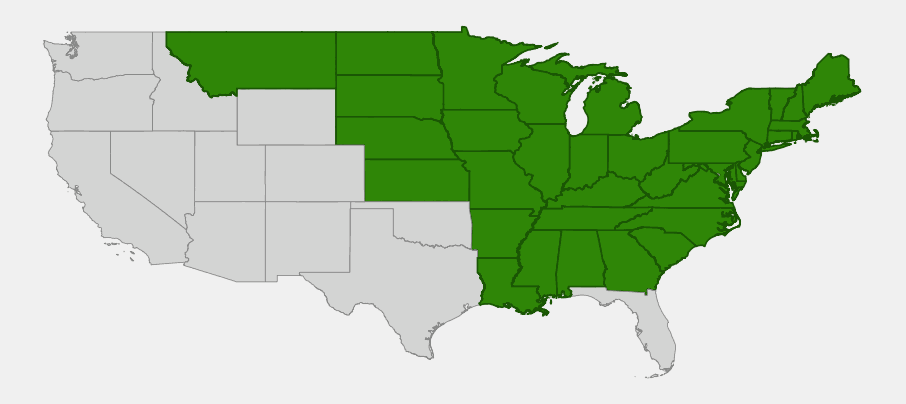
Heartleaf Willow is widespread across the eastern and central United States, from New England and the Mid-Atlantic west through the Great Lakes states and the Dakotas, south through the Ohio Valley and the Ozarks to the Gulf Coast states of Louisiana, Mississippi, and Alabama, with an outlying presence in the Rocky Mountain foothills of Montana as the variety watsonii.
It grows almost exclusively in wet, open habitats: streambanks, riverbanks, lakeshores, marsh and fen edges, floodplains, and disturbed low ground where few trees compete, often alongside other wetland shrubs and pioneer species. It is rarely found far from a reliable water source, and populations can be locally dense along actively eroding or recently scoured stream corridors.
Heartleaf Willow is not native to the Pacific states, the Desert Southwest, Texas, or most of the Rocky Mountain interior outside the Montana populations described above; it is also absent from peninsular Florida. Nursery-grown plants are occasionally offered outside this range for erosion-control projects, but these plantings should not be mistaken for naturally occurring populations.
Native Range
| U.S. States | Alabama, Arkansas, Connecticut, Delaware, Georgia, Illinois, Indiana, Iowa, Kansas, Kentucky, Louisiana, Maine, Maryland, Massachusetts, Michigan, Minnesota, Mississippi, Missouri, Montana, Nebraska, New Hampshire, New Jersey, New York, North Carolina, North Dakota, Ohio, Pennsylvania, Rhode Island, South Carolina, South Dakota, Tennessee, Vermont, Virginia, West Virginia, Wisconsin |
| Canada | Ontario, Quebec, and the Maritime provinces |
| Ecoregion | Eastern Temperate Forests, Great Plains riparian corridors, Northern Forests |
| Elevation Range | Near sea level–6,500 ft (higher in Montana populations) |
| Habitat | Streambanks, lakeshores, marsh edges, floodplains, wet disturbed ground |
| Common Associates | Silky dogwood, black willow, sandbar willow, river birch |
📋 Heartleaf Willow is native to parts of the areas covered by New Hampshire, Maine and Vermont, Connecticut, Massachusetts, and Rhode Island, New York, Pennsylvania, and Northern New Jersey, Delaware, Southern New Jersey, and Long Island, New York, Maryland, Virginia, and West Virginia, North Carolina and South Carolina, Georgia, Alabama and Mississippi, Arkansas, Louisiana, Eastern Oklahoma, and Eastern Texas, Kentucky and Tennessee, Ohio and Indiana, Illinois, Iowa & Missouri, Michigan, Wisconsin, & Eastern Minnesota, North Dakota, South Dakota and Western Minnesota, Nebraska, Kansas, and Eastern Colorado, and Montana and Wyoming.
Growing & Care Guide
Light
Heartleaf Willow grows best in full sun, which promotes the densest branching and most flowering, but it tolerates part shade along wooded stream corridors, where it may grow taller and more open in search of light.
Soil & Water
This is a wetland-adapted species that thrives in consistently moist to wet soils, including seasonally flooded ground, and tolerates clay and poor drainage that would kill most woody plants. It is far less tolerant of sustained drought than upland willows, and performance suffers on dry, sandy sites without supplemental water.
Planting Tips
Plant along stream edges, pond margins, rain gardens, or any low spot that collects water seasonally; if you are starting a rain garden for the first time, this willow is a good structural shrub for the wettest zone, and our rain garden plant selection guide covers companion species for the drier edges of the same bed. Bare, unrooted cuttings taken in dormant season root readily when pushed directly into moist soil, making this one of the easiest native shrubs to propagate for streambank projects without nursery stock, a technique shared with its relative the pussy willow. Space plants 6 to 10 feet apart for a naturalistic thicket.
Pruning & Maintenance
Heartleaf Willow tolerates hard pruning or coppicing well and will resprout vigorously from the base; cut back older, leggy stems periodically to maintain a denser shrub form. Remove storm-damaged or dead wood in late winter before new growth begins.
Propagation
Propagate easily from dormant hardwood cuttings 8 to 12 inches long, inserted directly into moist soil in late winter or early spring; rooting hormone is rarely necessary. Seed is short-lived and must be sown immediately on bare, moist soil, so cuttings are the far more practical method for home gardeners and restoration plantings alike.
Landscape Uses
- Streambank and pond-edge stabilization
- Wetland and rain garden plantings
- Erosion control on disturbed, moist ground
- Naturalistic thicket or screening in wet areas
- Early-season pollinator forage planting
Wildlife & Ecological Value
For Pollinators
Early, abundant catkins make Heartleaf Willow one of the most valuable spring pollen and nectar sources for native bees, including mining bees and bumble bee queens emerging from hibernation before most other flowers are available. It also hosts numerous moth and butterfly caterpillars, including several native swallowtail and hairstreak species.
Birds
Dense thickets provide nesting cover and shelter for songbirds along waterways, and the cottony seeds and catkins attract insects that in turn feed insectivorous birds through spring and summer.
Mammals
Deer, rabbits, and beaver readily browse the twigs and bark, and beaver in particular use willow stems for both food and dam construction, making this species an important component of functioning beaver-wetland ecosystems.
Ecosystem Role
As a fast-colonizing pioneer of newly exposed or disturbed wet soil, Heartleaf Willow stabilizes streambanks against erosion, filters sediment and nutrients from runoff, and provides the early structural cover that allows slower-growing wetland trees and shrubs to establish behind it. It is a good example of the habitat value discussed in our guide to planting native trees for wildlife, even though it more often grows as a multi-stemmed shrub than a single-trunked tree.
Cultural & Historical Uses
Indigenous peoples across the willow’s range used the flexible young stems of Heartleaf Willow and related willows for basketry, fish traps, and woven structures, valuing the wood for its pliability when green. The inner bark of willows generally was also used in cordage and, in some traditions, chewed for its mild analgesic properties, a use connected to the salicin compounds willows are known for, though this is historical practice rather than a recommendation for self-treatment today.
Because of its fast growth and ease of propagation from cuttings, Heartleaf Willow and similar willows have long been planted informally along farm ditches and streambanks to control erosion, a practice that predates formal soil-conservation programs and continues in modern wetland restoration work.
The species carries several botanical names in older literature, most notably Salix rigida, reflecting decades of taxonomic revision among North American willows; gardeners encountering either name in older references or nursery catalogs are looking at the same plant.
Frequently Asked Questions
How can I tell Heartleaf Willow from other wetland willows?
Look at the leaf undersides: Heartleaf Willow’s leaves are distinctly pale to silvery underneath compared with the darker green upper surface, combined with a shrubby, multi-stemmed growth habit and reddish-brown young twigs.
Does Heartleaf Willow need standing water to grow?
It tolerates seasonal flooding and thrives in consistently moist soil, but it does not require permanent standing water. A low spot that stays damp through most of the growing season is ideal.
Can I grow Heartleaf Willow from a cutting instead of buying a plant?
Yes. Dormant hardwood cuttings pushed into moist soil in late winter root readily without special treatment, making this one of the easiest native shrubs to propagate at home.
Is Heartleaf Willow a good choice for a small yard?
It can work in a wet corner but tends to sucker and spread into a dense thicket over time, so give it room or plan to prune hard periodically; it is better suited to larger wet areas, ditches, or naturalized pond edges than small formal beds.
Do deer damage Heartleaf Willow?
Yes, deer and rabbits browse the twigs and bark readily, especially in winter, and young plantings may need temporary protection in areas with heavy deer pressure.
Looking for a nursery that carries native plants for your area? Visit our regional nursery directories: Alabama to Arkansas, Colorado to Hawaii (includes Georgia, Connecticut, Delaware), Idaho to Kansas (includes Illinois, Indiana, Iowa & Kansas), Kentucky to Montana (includes Kentucky, Louisiana, Maine, Maryland, Massachusetts, Michigan, Minnesota, Mississippi, Missouri & Montana), Nebraska to Oklahoma (includes Nebraska, New Hampshire, New Jersey, New York, North Carolina, North Dakota & Ohio), Pennsylvania to Virginia (includes Rhode Island, South Carolina, Tennessee & Virginia), and West Virginia to Wyoming (includes West Virginia & Wisconsin) for growers near Heartleaf Willow’s native range.