Island Mountain Mahogany (Cercocarpus traskiae)
Cercocarpus traskiae, the Island Mountain Mahogany (also called Santa Catalina Island mountain-mahogany or Catalina mahogany), is one of the rarest trees in North America, known in the wild from a single population in Wild Boar Gully, a steep, chaparral-covered arroyo on Catalina Island off the coast of Los Angeles County, California. When it was federally listed as Endangered in 1997, only about six mature wild plants remained, and the species is currently ranked Critically Endangered on the IUCN Red List.
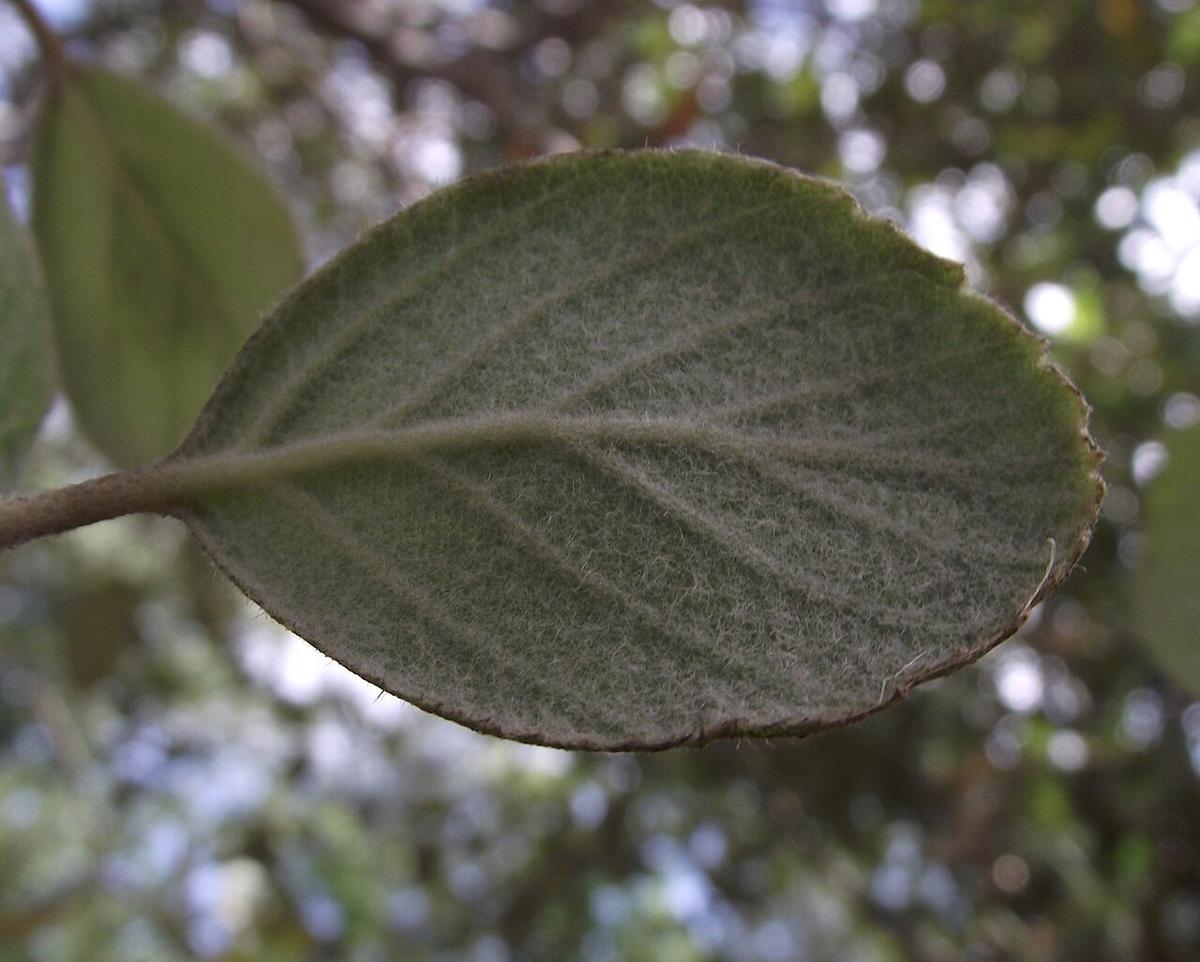
A large shrub or small tree reaching up to about 26 feet, Island Mountain Mahogany is distinguished from its far more common mainland relative, birchleaf mountain mahogany, by its thicker, leathery, oval leaves with a dense woolly covering of hairs on the underside. Clusters of up to ten small, petal-less flowers appear in loose heads, though plants do not flower reliably every year, a trait that has complicated recovery efforts for this already vanishingly rare species.
Because the entire wild population exists in one restricted canyon, Island Mountain Mahogany is the focus of active conservation work, including fencing to exclude browsing mule deer and historically feral goats, and propagation by botanical gardens and the Catalina Island Conservancy to establish backup populations. A small number of accredited native plant nurseries now offer conservation-grown stock, but the wild population itself should never be disturbed, and no seed or cutting material should ever be collected from Wild Boar Gully.
Identification
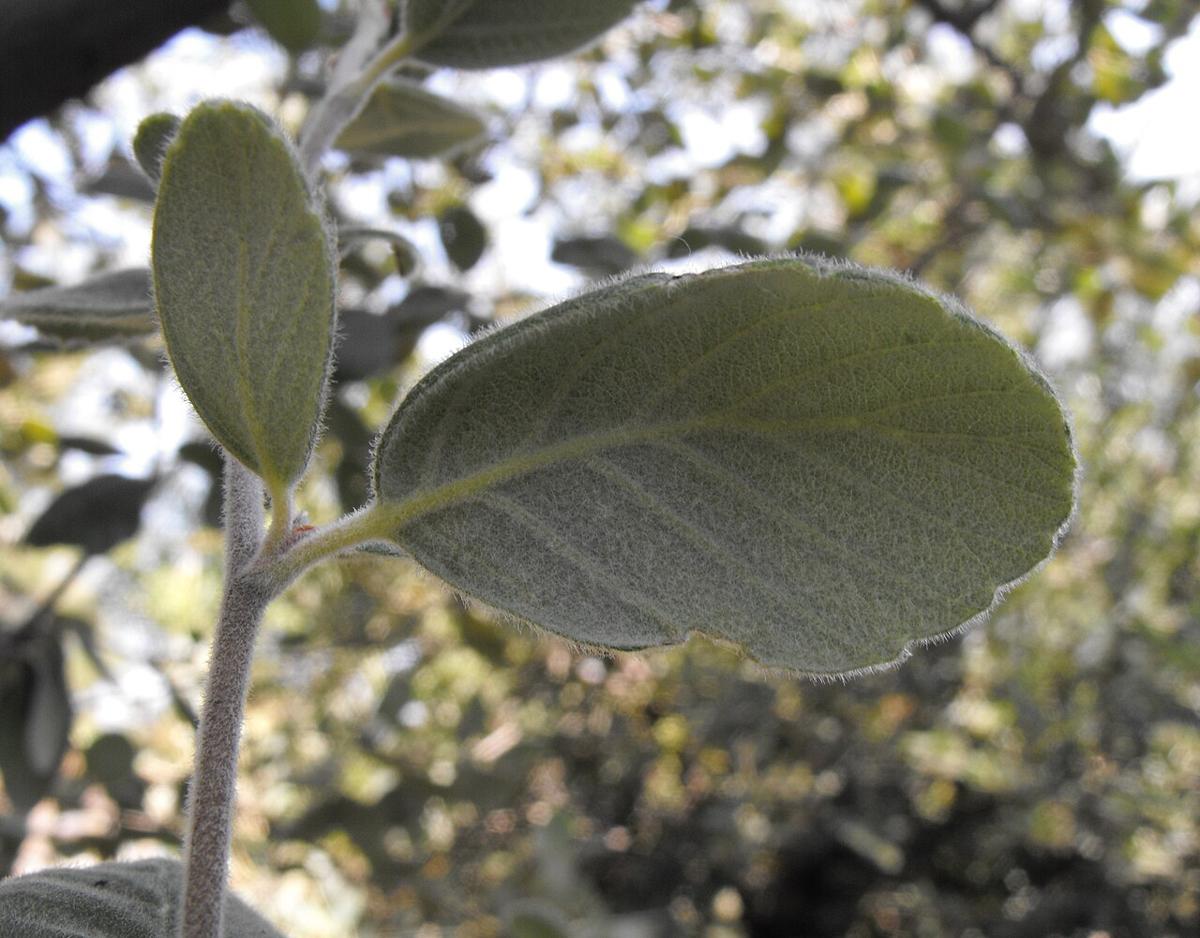
Island Mountain Mahogany is best told apart from the common birchleaf mountain mahogany by its notably thicker, more leathery leaves with a dense, felt-like covering of woolly hairs on the lower surface, a texture unique among California’s mountain mahoganies. Confirmed identification of wild-growing plants should always be left to Catalina Island Conservancy staff and botanists, given the extreme rarity and conservation sensitivity of the species.
Bark & Stems
Mature stems and branches are grayish brown, similar in general appearance to the bark of birchleaf mountain mahogany, with a dense, shrubby to small-tree branching structure that can reach small-tree stature under good conditions in its native gully habitat.
Leaves
Leaves are oval to elliptical, thick and leathery in texture, with finely serrated margins and a dense covering of woolly white hairs on the underside that gives the foliage a grayish, felted appearance when viewed from below. This leathery, woolly leaf texture is the single most reliable field character separating Island Mountain Mahogany from its mainland relative, birchleaf mountain mahogany, which has thinner, less hairy leaves.
Flowers
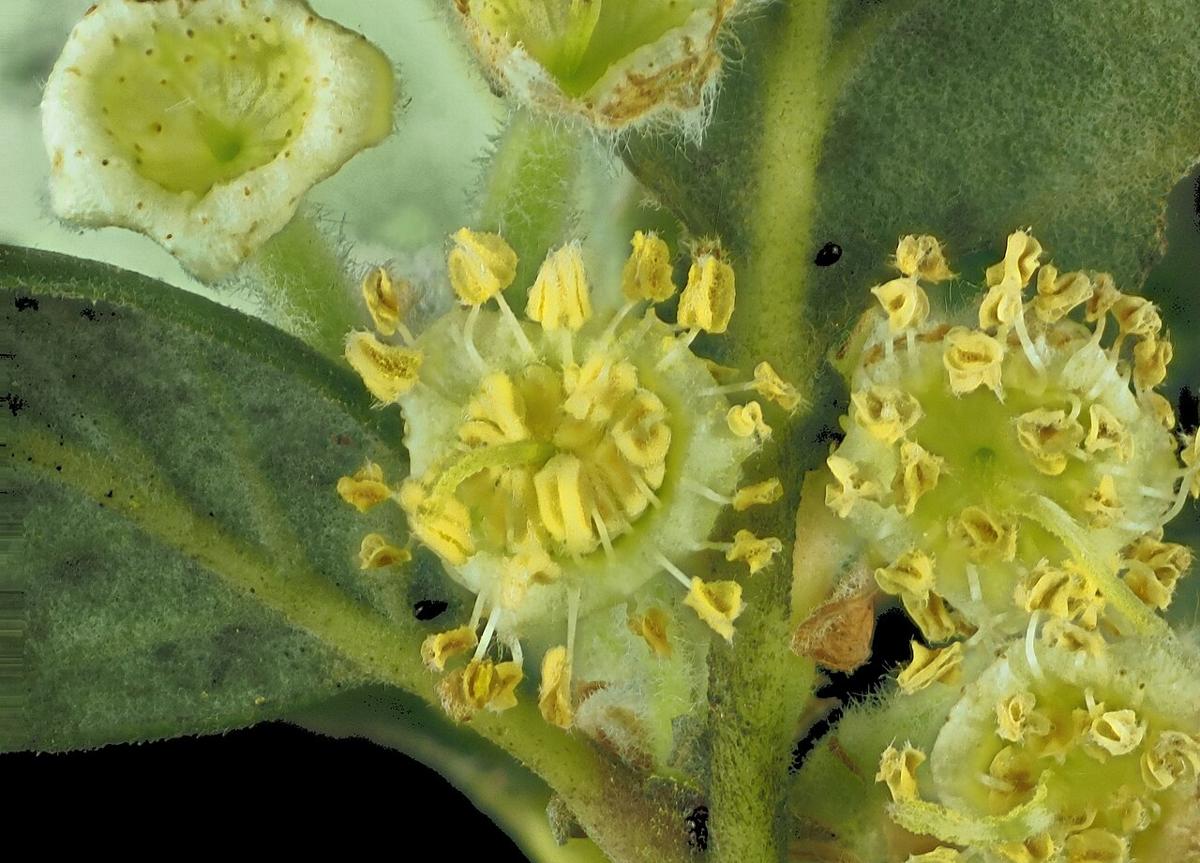
Flowers are small, petal-less, and borne in clusters of up to ten per head, typical of the genus Cercocarpus, which relies on numerous showy stamens rather than petals for visual interest. Plants do not flower reliably every year, a characteristic that limits natural seed production and complicates efforts to grow new plants from wild seed.
Fruit & Seeds
Like other mountain mahoganies, the fruit is a single-seeded achene tipped with a long, feathery, twisted plume that aids wind dispersal, a hallmark feature of the genus Cercocarpus. Seed set is inconsistent given the irregular flowering and the small, isolated wild population, and much of the natural regeneration occurring today may actually be hybrid seedlings, discussed further below.
Quick Facts
| Scientific Name | Cercocarpus traskiae |
| Family | Rosaceae (Rose) |
| Plant Type | Evergreen large shrub or small tree |
| Mature Height | Up to 26 ft |
| Mature Spread | 10–20 ft |
| Growth Rate | Slow |
| Sun Exposure | Full sun to part shade |
| Water Needs | Low once established |
| Soil Type | Rocky, well-drained gabbro-derived soils |
| Soil pH | Neutral to slightly alkaline |
| Bloom Time | Spring, irregular (not every year) |
| Flower Color | Cream to yellow, petal-less |
| Fall Color | Evergreen; no fall color change |
| Fruit | Achene with long feathery plume |
| Deer Resistant | No; actively threatened by deer browsing |
| USDA Hardiness Zones | 9–10 |
Native Range
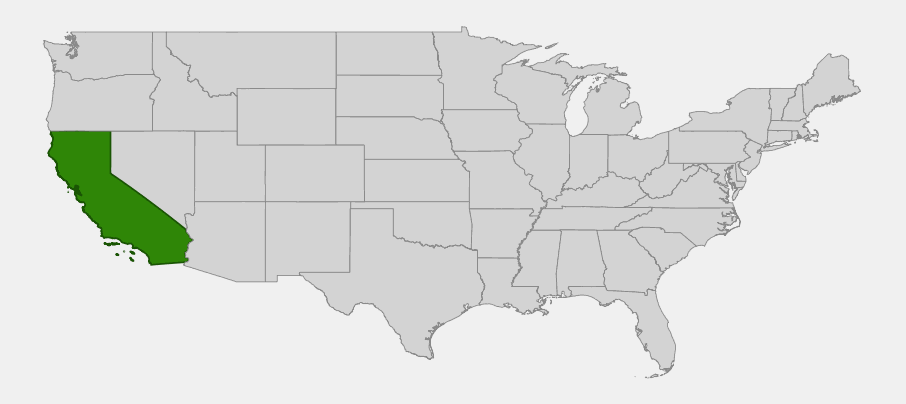
Island Mountain Mahogany is endemic to Catalina Island, one of the southern Channel Islands off the coast of Los Angeles County, California, and is known in the wild from a single population in Wild Boar Gully, a steep arroyo whose slopes are formed of unusual saussurite gabbro rock. This is the only place on Earth the species grows naturally; it has never been documented as native to the California mainland or any other Channel Island.
Within Wild Boar Gully, the surrounding vegetation is coastal sage scrub and chaparral, and Island Mountain Mahogany grows on the steep canyon sides alongside its close relative birchleaf mountain mahogany, with which it readily hybridizes, a situation of real conservation concern since much of the regeneration occurring in the gully today may be hybrid rather than pure Island Mountain Mahogany.
Because the species is restricted to this single canyon, it is not native anywhere on the California mainland, on other Channel Islands, or in any other state; any plant offered by a nursery as “Island Mountain Mahogany” traces back to conservation-propagated stock rather than a naturally occurring population outside Catalina Island.
Native Range
| U.S. States | California (Catalina Island, single population in Wild Boar Gully) |
| Canada | Not present |
| Ecoregion | California Channel Islands coastal sage scrub and chaparral |
| Elevation Range | Low to moderate canyon elevations on Catalina Island |
| Habitat | Steep gabbro-soil arroyo within coastal sage scrub |
| Common Associates | Birchleaf mountain mahogany, coastal sage scrub shrubs |
📋 Island Mountain Mahogany is native to parts of the area covered by California and Nevada.
Growing & Care Guide
Light
Island Mountain Mahogany grows in full sun to part shade, reflecting the open, steep-canyon chaparral conditions of its native Wild Boar Gully habitat.
Soil & Water
This species is adapted to rocky, well-drained, gabbro-derived soils and tolerates low water once established, consistent with its native chaparral and coastal sage scrub setting. It does not tolerate heavy, poorly drained, or consistently wet soils.
Planting Tips
Because the wild population is so small and conservation-sensitive, only conservation-propagated nursery stock from accredited native plant growers should ever be planted; never attempt to collect seed, cuttings, or plants from Catalina Island. Gardeners drawn to this species for a California native garden should also consider the closely related and far more widely available birchleaf mountain mahogany, which shares similar chaparral growing requirements, discussed further in our guide to California native flowering shrubs.
Pruning & Maintenance
Minimal pruning is needed beyond removing dead or damaged wood; this slow-growing species does best with light, infrequent maintenance rather than heavy shaping. Deer fencing is essential for any planting given the species’ documented vulnerability to browsing.
Propagation
Propagation is carried out exclusively by botanical gardens, the Catalina Island Conservancy, and a small number of accredited conservation nurseries using seed or cutting material collected under permit from known, verified non-hybrid individuals. Home gardeners should never attempt to propagate this species from wild-collected material; any interest in growing it should be directed toward purchasing verified nursery stock.
Landscape Uses
- Conservation and ex-situ collection plantings at botanical gardens
- Specimen shrub for California native gardens using verified nursery stock only
- Restoration plantings on Catalina Island under Conservancy management
- Educational plantings highlighting California’s rarest native trees
Wildlife & Ecological Value
For Pollinators
The small, petal-less flower clusters are visited by a range of generalist native insects attracted to the exposed pollen-bearing stamens, though the species is not considered a major nectar resource given its irregular flowering.
Birds
Resident Catalina Island birds use the dense evergreen branching for cover and foraging, though no documented specialist bird relationship with this particular species has been recorded given how few individuals exist to study.
Mammals
Introduced mule deer on Catalina Island browse Island Mountain Mahogany heavily enough to threaten its survival, which is why fencing now protects the remaining wild plants; feral goats, formerly also a major threat, have since been removed from the island.
Ecosystem Role
As one of the rarest trees in North America, every individual of Island Mountain Mahogany carries outsized importance for the genetic conservation of the species, and the Wild Boar Gully population represents an irreplaceable piece of Catalina Island’s unique chaparral ecosystem, underscoring the broader point made in our overview of the benefits of planting native trees about the ecological value even small, localized tree populations provide.
Cultural & Historical Uses
Island Mountain Mahogany was first described by botanist Alice Eastwood and named for Blanche Trask, an early 20th-century botanical collector who documented much of Catalina Island’s unique flora; there is no record of a traditional or historical practical use specific to this species, distinct from the regional uses of the much more common mainland mountain mahogany species for wood and tools.
Since its federal listing as Endangered in 1997, when only about six mature wild individuals were known, the species has become a flagship example in California conservation circles of a critically rare, single-population endemic plant, studied for both its genetics and the ongoing threat of hybridization with birchleaf mountain mahogany, which researchers first documented through genetic testing in the 1990s.
Today the primary significance of Island Mountain Mahogany is as a conservation icon, discussed in guides on planting native trees for wildlife as an extreme example of why protecting even a single population of a native tree can matter for an entire species’ survival.
Frequently Asked Questions
How rare is Island Mountain Mahogany really?
Extremely rare. When federally listed as Endangered in 1997, only about six mature wild plants were known, all within a single population in Wild Boar Gully on Catalina Island. It remains Critically Endangered today, making it one of the rarest trees in North America.
Can I visit the wild population?
Wild Boar Gully is on Catalina Island and the population is actively protected with fencing; visiting requires coordination with the Catalina Island Conservancy, and the plants themselves should never be touched, collected from, or disturbed.
Can I buy an Island Mountain Mahogany for my garden?
A small number of accredited California native plant nurseries offer conservation-propagated stock grown from verified, non-hybrid parent plants under permit. Never attempt to collect seed or cuttings from the wild population yourself.
Why is hybridization a problem for this species?
Island Mountain Mahogany readily hybridizes with the much more common birchleaf mountain mahogany where the two grow near each other, and researchers believe many of the seedlings now growing in Wild Boar Gully may be hybrids rather than pure Island Mountain Mahogany, threatening the genetic integrity of the species.
What is being done to save this species?
Conservation measures include fencing to exclude browsing deer (feral goats, a past threat, have been removed from the island), ex-situ propagation and seed banking by botanical gardens and the Center for Plant Conservation, and ongoing genetic monitoring to track hybridization in the wild population.
Looking for a nursery that carries native plants for your area? Visit our regional nursery directory: California for growers near Island Mountain Mahogany’s native range; note that only a few accredited conservation nurseries carry verified, non-hybrid stock of this critically endangered species.