Kenai Birch (Betula kenaica)
Betula kenaica, commonly called Kenai Birch, is a small to medium native birch restricted almost entirely to south-central Alaska, where it takes its name from the Kenai Peninsula. It is a compact, white-barked tree closely related to the much more widespread paper birch, and some botanists treat it as a variety of that species, but Flora of North America recognizes Kenai Birch as a distinct species based on its smaller stature and smaller, more regularly toothed leaves.
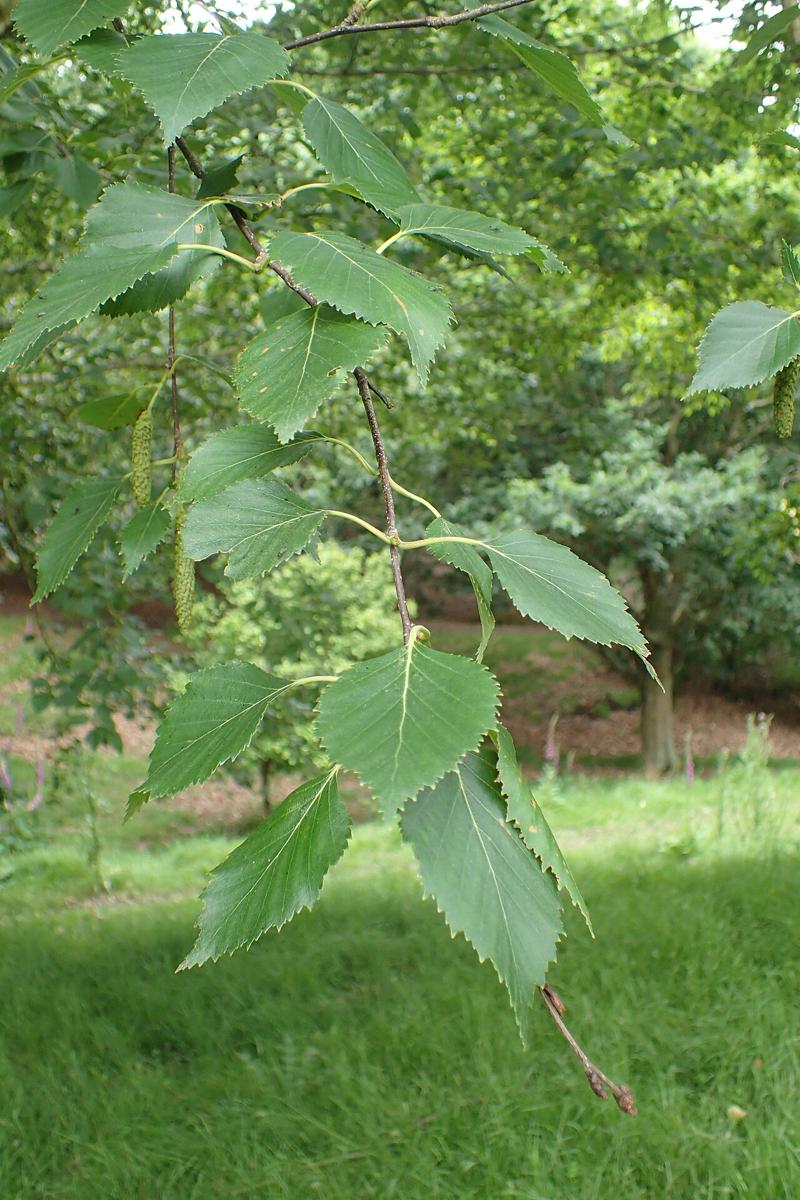
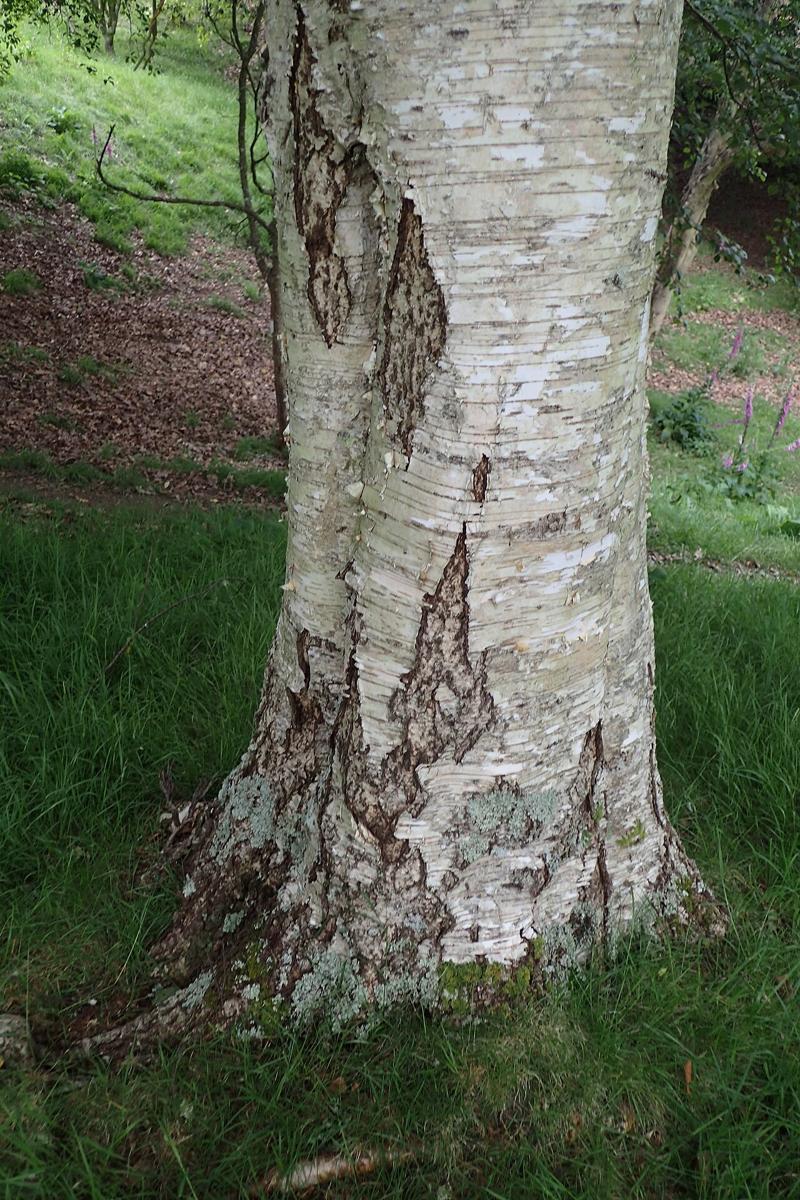
Growing to about 40 feet at maturity, noticeably shorter than paper birch, Kenai Birch has dark reddish-brown bark that gradually exfoliates into pinkish or grayish-white sheets as the tree ages, and small, sharply double-toothed, ovate leaves that turn a clear yellow in fall. It grows on rocky slopes in the subalpine zone, often at the upper edge of tree line, making it one of the hardier native birches for cold, exposed sites.
Kenai Birch hybridizes readily where its range overlaps with dwarf birch (Betula nana), producing the recognized hybrid Betula × hornei; gardeners and foragers in south-central Alaska should expect to see intermediate forms in areas where both species grow together.
Identification
Kenai Birch is best identified by the combination of its relatively small stature for a birch, reddish-brown bark that exfoliates to pinkish or grayish white, and small, blunt-tipped, coarsely and regularly toothed leaves, smaller and more sharply serrate than those of paper birch.
Bark & Stems
Young bark is smooth and dark reddish brown with prominent dark, horizontally expanded lenticels; with age it becomes pinkish to grayish white and exfoliates in thin, papery sheets, similar in general appearance to paper birch but on a smaller tree. Twigs are slightly to moderately hairy and often studded with small resin glands, lacking the wintergreen taste and smell found in some other birches.
Leaves
Leaves are ovate to nearly triangular, 1.5 to 3 inches long (occasionally to 3 inches) and about 1 to 1.75 inches wide, with 2 to 6 pairs of lateral veins, a rounded to wedge-shaped base, and a short-pointed tip. Margins are coarsely and doubly toothed with relatively sharp teeth, and the undersides are sparsely to moderately hairy, especially along the veins, often bearing scattered resin glands.
Flowers
Like all birches, Kenai Birch is monoecious, with separate male and female catkins on the same tree. Male catkins form in late summer and overwinter before shedding pollen the following spring, while female catkins are smaller and appear with the opening leaves, both arranged in typical birch fashion at the branch tips.
Fruit & Seeds
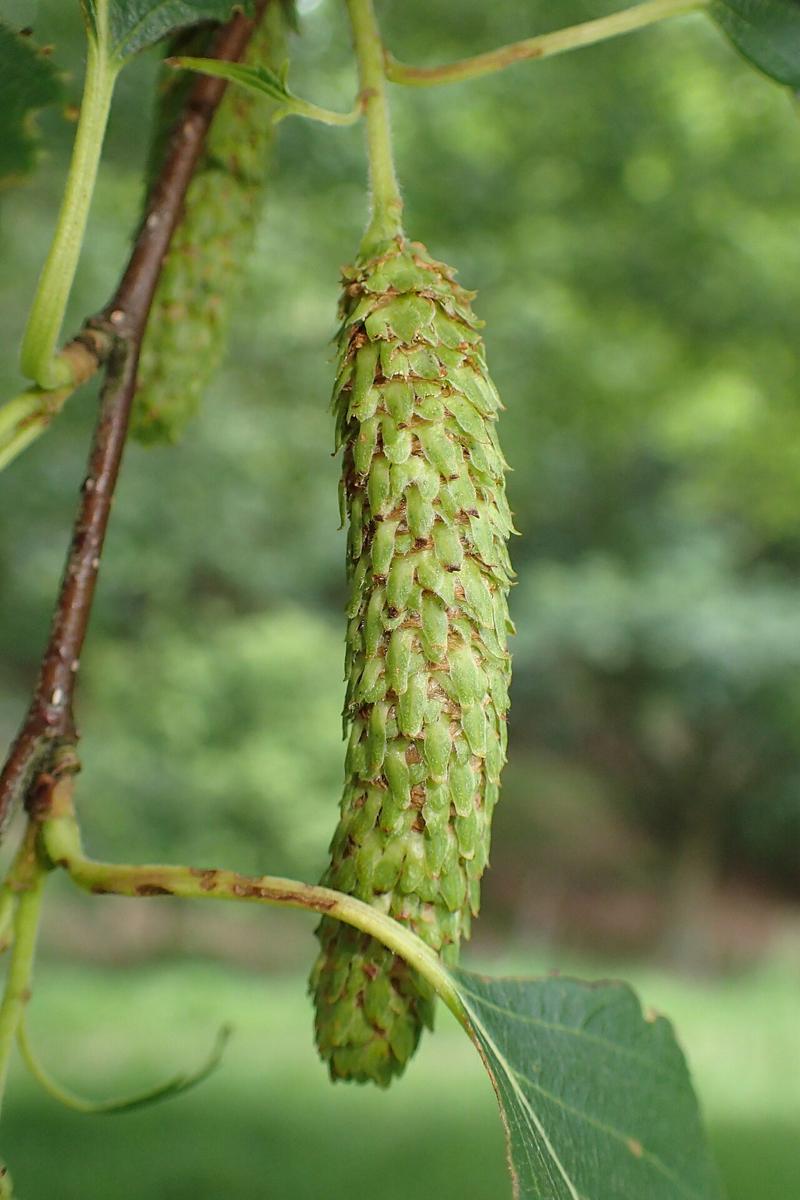
Female catkins develop into erect to somewhat drooping, cylindrical fruiting catkins about 1 to 2 inches long that shatter in fall, releasing small winged seeds (samaras) with wings about as wide as the seed body. Seeds disperse by wind over fairly short distances and require exposed, disturbed mineral soil to germinate successfully.
Quick Facts
| Scientific Name | Betula kenaica |
| Family | Betulaceae (Birch) |
| Plant Type | Deciduous tree |
| Mature Height | 20–40 ft |
| Mature Spread | 15–25 ft |
| Growth Rate | Moderate |
| Sun Exposure | Full sun |
| Water Needs | Low to moderate |
| Soil Type | Rocky, well-drained subalpine soils |
| Soil pH | Slightly acidic |
| Bloom Time | Late spring |
| Flower Color | Greenish-yellow catkins |
| Fall Color | Clear yellow |
| Fruit | Cylindrical catkin with small winged samaras |
| Deer Resistant | Moderately; browsed by moose |
| USDA Hardiness Zones | 2–4 |
Native Range
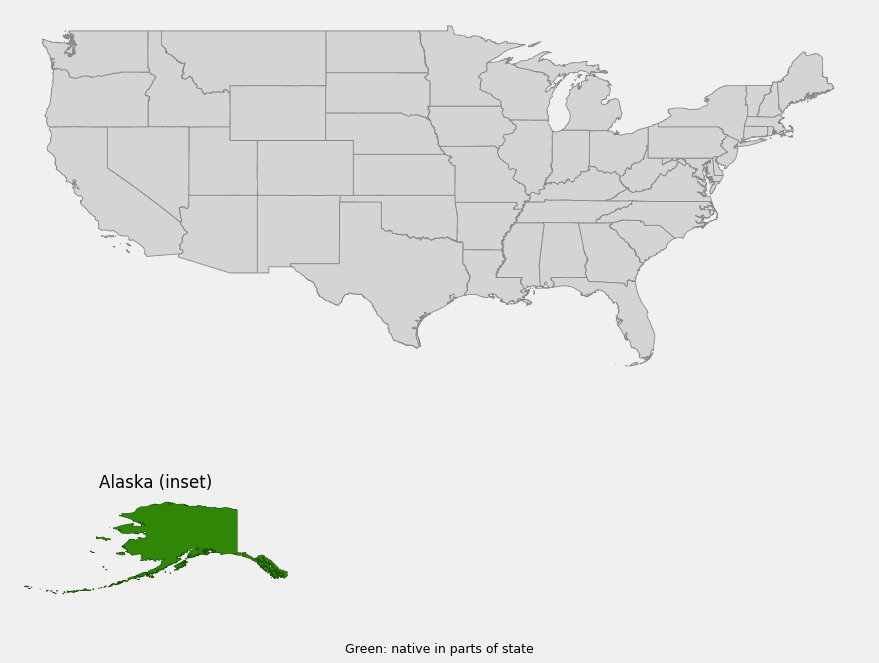
Kenai Birch is a narrow regional endemic of south-central Alaska, centered on the Kenai Peninsula for which it is named, with its range extending into the adjacent Yukon in Canada. Within the United States it is found only in Alaska, where it grows on rocky slopes in the subalpine zone from near sea level up to about 300 meters (roughly 1,000 feet) elevation.
It typically occupies open, rocky, well-drained sites at or near tree line, often growing in close association with dwarf birch, where the two species frequently hybridize to form Betula × hornei. This subalpine habitat preference sets Kenai Birch apart from the lower-elevation floodplain and upland forest habitats favored by paper birch and Alaska birch elsewhere in the state.
Kenai Birch is not native outside Alaska and the adjoining Yukon; it should not be confused with the much more widely distributed paper birch or Alaska birch, both of which occur across a far larger range of interior and coastal Alaska and into the Lower 48 and Canada.
Native Range
| U.S. States | Alaska (Kenai Peninsula and south-central region) |
| Canada | Yukon |
| Ecoregion | South-central Alaska subalpine and upper tree-line zones |
| Elevation Range | Near sea level–1,000 ft |
| Habitat | Rocky slopes in the subalpine zone, near tree line |
| Common Associates | Dwarf birch, white spruce, willows |
📋 Kenai Birch is native to parts of the area covered by Alaska.
Growing & Care Guide
Light
Kenai Birch grows best in full sun, consistent with its native habitat on open, exposed subalpine slopes near tree line where little else provides shade.
Soil & Water
This tree is adapted to rocky, well-drained soils of modest fertility and tolerates low to moderate moisture once established. It does not require the richer floodplain soils favored by paper birch and performs well on lean, gravelly ground.
Planting Tips
Choose an open, well-drained site; this is a cold-hardy tree suited to the coldest parts of its native south-central Alaska range and similar subarctic conditions. For broader guidance on establishing a birch in the landscape, see our general overview on how to plant, grow, and care for birch trees, keeping in mind that Kenai Birch is smaller and more cold- and exposure-tolerant than the paper birch typically covered in general birch guides.
Pruning & Maintenance
Prune in late summer or fall rather than late winter or early spring, since birches “bleed” sap heavily if cut while dormant and close to active growth. Remove dead or storm-damaged limbs as needed; otherwise this species requires little routine maintenance in its native climate.
Propagation
Propagate from seed collected from mature fruiting catkins in fall; seed benefits from cold, moist stratification over winter before spring germination on exposed mineral soil, mimicking the disturbed subalpine sites where it naturally regenerates. Because Kenai Birch hybridizes readily with dwarf birch where the two grow together, seed collected near mixed stands may not come true to the parent species.
Landscape Uses
- Cold-hardy specimen tree for subarctic and high-elevation landscapes
- Smaller-scale alternative to paper birch where a compact birch form is wanted
- Naturalistic plantings on rocky, exposed sites
- Restoration planting on disturbed subalpine ground within its native range
Wildlife & Ecological Value
For Pollinators
As a wind-pollinated tree, Kenai Birch does not rely on insect pollinators, though its early pollen release contributes to the general spring pollen resource some generalist insects make incidental use of.
Birds
Redpolls, siskins, and other seed-eating songbirds feed on the small winged seeds released from the fruiting catkins in fall and winter, and chickadees and other resident birds glean insects from the bark and foliage.
Mammals
Moose browse Kenai Birch twigs and foliage heavily, particularly in winter when other forage is scarce, making this species an important component of subalpine moose habitat on the Kenai Peninsula. Snowshoe hares also browse young stems and bark.
Ecosystem Role
As one of the hardier native birches able to establish at the upper edge of tree line, Kenai Birch helps stabilize rocky subalpine slopes and forms a transitional structural layer between lowland forest and open alpine tundra, while its frequent hybridization with dwarf birch contributes to the genetic and ecological complexity of these upper-elevation plant communities.
Cultural & Historical Uses
Like other native birches in Alaska, Kenai Birch wood and bark have historically been used by Alaska Native peoples and settlers for a range of practical purposes, including as firewood; our overview of whether birch makes good firewood describes the general burning qualities shared across the birch family, including this species.
The species was first formally described in 1899 by botanist William Harry Evans, based on specimens from the Kenai Peninsula that gave the tree its common and scientific names. For much of the 20th century, botanists debated whether Kenai Birch merited recognition as a distinct species or should be classified as a variety of paper birch, a question current Flora of North America treatment resolves in favor of species status based on consistent differences in size and leaf form.
Today Kenai Birch is primarily of interest to foresters, ecologists, and gardeners working in the cold, exposed landscapes of south-central Alaska, where its compact size and tree-line hardiness distinguish it from the larger paper and Alaska birches more commonly planted and discussed elsewhere in the state.
Frequently Asked Questions
How is Kenai Birch different from paper birch?
Kenai Birch is smaller overall, reaching about 40 feet versus the taller stature of paper birch, with smaller, more coarsely and regularly toothed leaves. It also favors rockier, higher-elevation subalpine sites near tree line rather than the richer floodplain soils paper birch often grows on.
Is Kenai Birch the same as Alaska birch?
No. Alaska birch (Betula neoalaskana) is a separate, more widespread species found across much of interior Alaska, while Kenai Birch is a narrower regional endemic centered on the Kenai Peninsula and adjacent subalpine areas.
Does Kenai Birch hybridize with other birches?
Yes, it hybridizes readily with dwarf birch (Betula nana) where their ranges overlap, producing the recognized hybrid Betula × hornei. Gardeners and foragers should expect intermediate-looking trees in mixed stands.
Is Kenai Birch considered a true species or just a variety of paper birch?
Taxonomists have debated this for decades. USDA PLANTS lists it as Betula papyrifera var. kenaica, but Flora of North America treats it as the distinct species Betula kenaica based on its consistently smaller stature and leaf characteristics.
Can Kenai Birch be grown outside Alaska?
It is adapted to cold, subarctic, high-elevation conditions and is rarely available outside its native range; gardeners in milder climates are better served by paper birch or other regionally native birches suited to their area.
Looking for a nursery that carries native plants for your area? Visit our regional nursery directory: Alabama to Arkansas (includes Alaska) for growers near Kenai Birch’s native range.