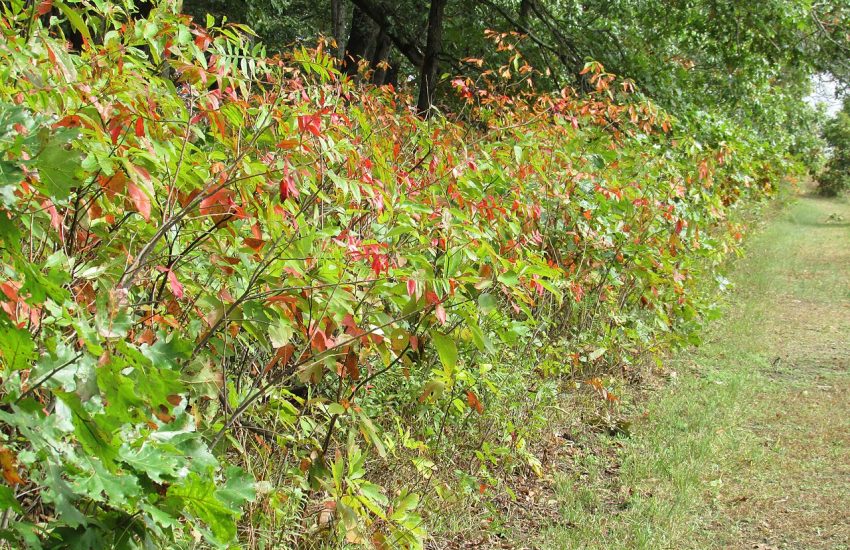
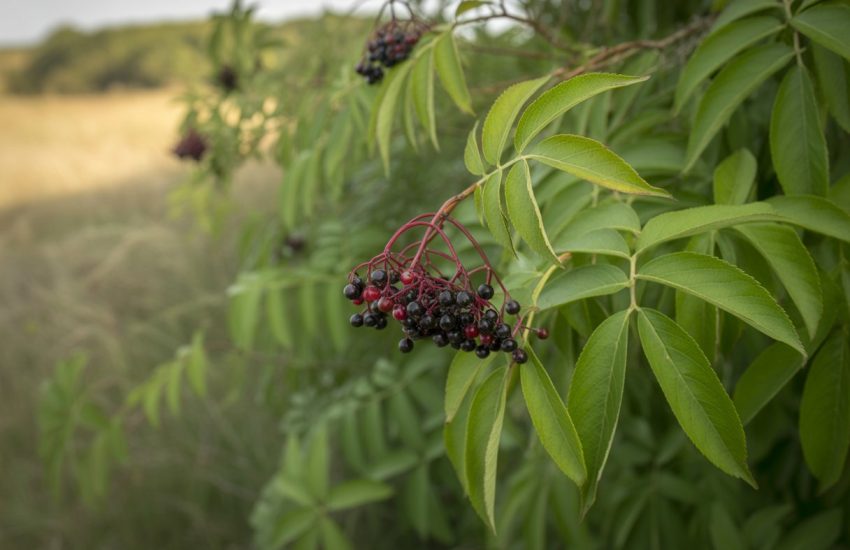
Scarlet Hawthorn (Crataegus coccinea)
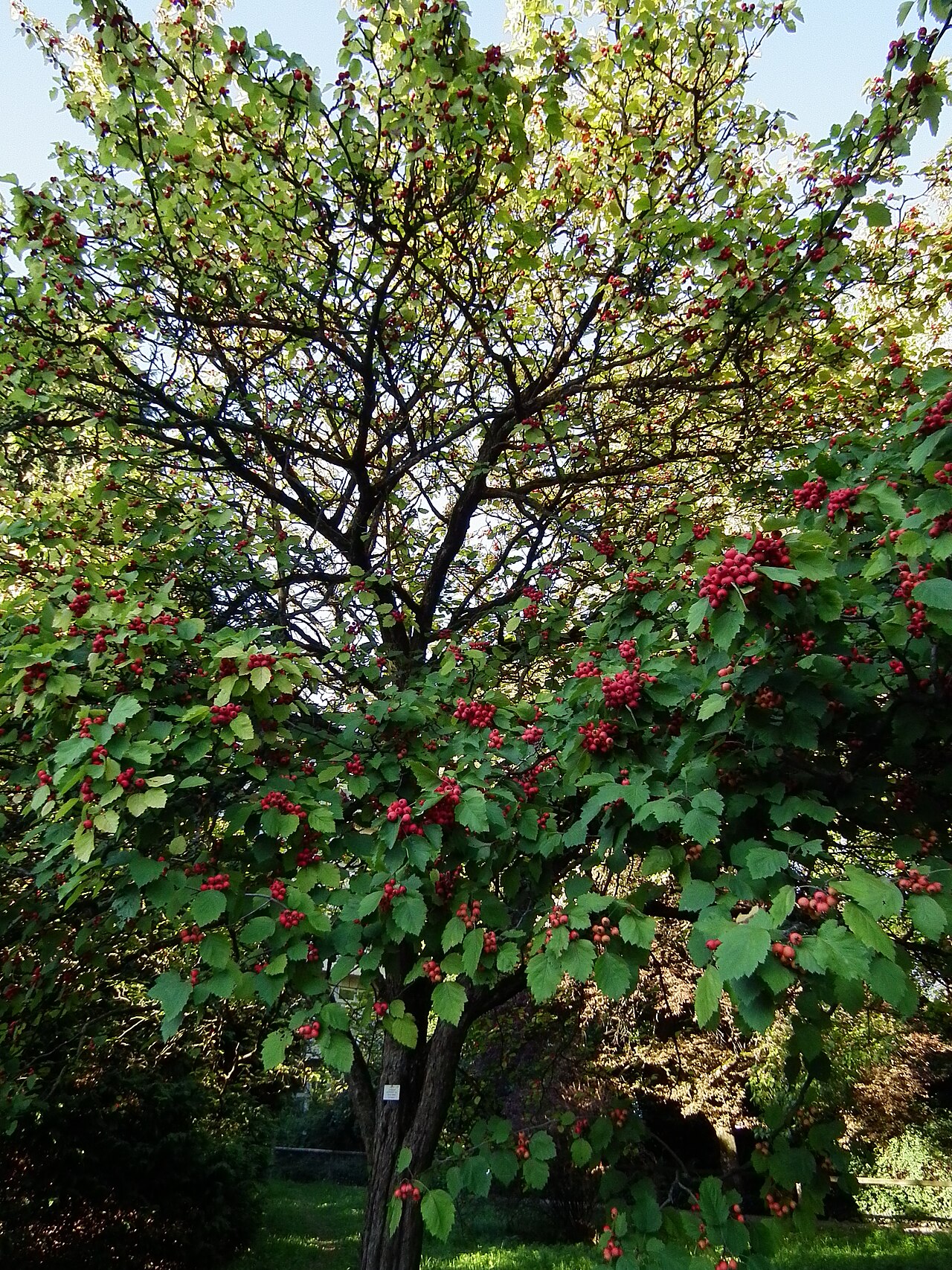
Crataegus coccinea, commonly known as Scarlet Hawthorn or Ontario Hawthorn, is a small, broad-crowned native tree in the rose family (Rosaceae) found across the Northeast, Mid-Atlantic, and upper Midwest. It is one of the classic “white-flowered, red-fruited” hawthorns of old fields and forest edges — a dense, round-topped small tree armed with stout thorns, prized by birds for its persistent fall fruit and by gardeners for its toughness on difficult sites.
This species carries an unusually tangled naming history even by hawthorn standards. For most of the 20th century it was known almost exclusively as Crataegus pedicellata Sarg. — and that is still the name used by the USDA PLANTS Database (symbol CRPE) and many nursery and extension sources. A 2003 taxonomic review by hawthorn specialist J.B. Phipps and colleagues determined that Linnaeus’s original 1753 name C. coccinea applies to this same plant, and under the rules of botanical priority, the older name takes precedence. Current regional floras such as Flora Novae Angliae (Go Botany, Native Plant Trust) now list it as Crataegus coccinea with C. pedicellata as a synonym, and that is the treatment followed here, matching the name most regional plant lists use today.
Identification
Scarlet hawthorn grows as a shrub or small tree up to about 35 feet (10 m) tall, typically with a short trunk and a dense, broad, rounded crown. Thorns on the twigs are straight to slightly curved and relatively long — often 1 to 2½ inches (2.5–6 cm) — a helpful clue for separating it from some other eastern hawthorns with shorter spines.
Leaves
Leaves are ovate to broadly ovate or triangular-ovate, 1¼ to 2¾ inches (3–7 cm) long, with 5 to 6 shallow but distinct lobes and coarsely double-toothed margins. The base is typically truncate to subcordate (flattened to slightly heart-shaped), and leaf length is only about 1 to 1.3 times the width — broader and rounder than the similar C. holmesiana. New leaves and stems often show a reddish flush before maturing to deep green; fall color trends toward a dull reddish-purple.
Flowers
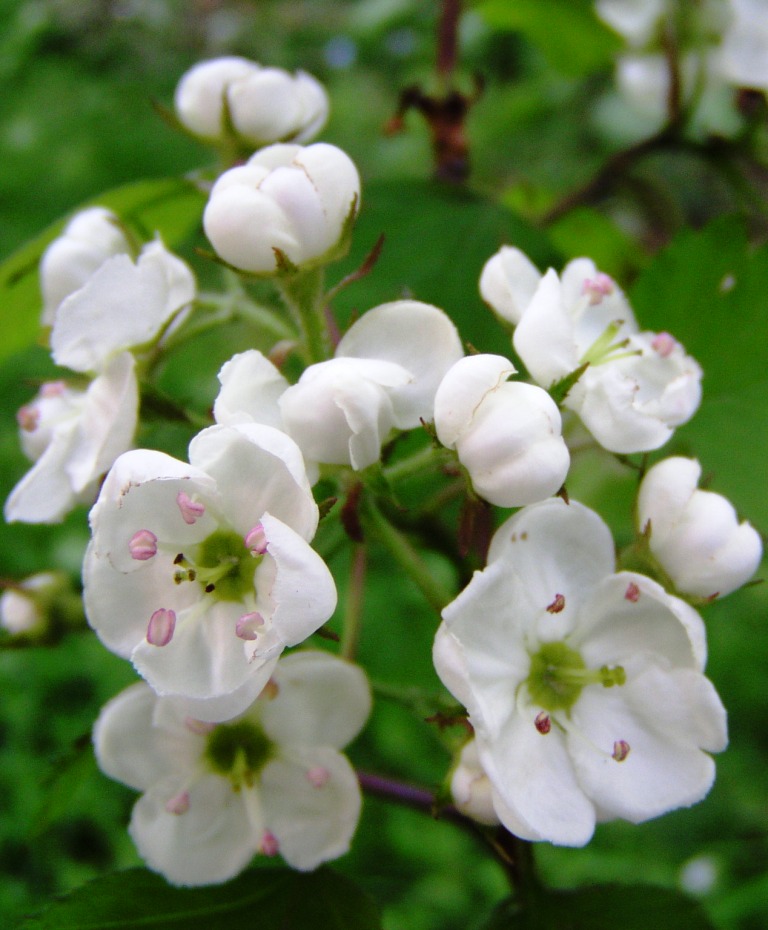
White, five-petaled flowers open in flat-topped clusters (corymbs) in May, each bloom roughly ¾ inch (18–20 mm) across. Deep red buds overwinter and open to reveal anthers with a noticeable pink to purplish tint, giving close-up views of the bloom clusters a subtle blush.
Fruit
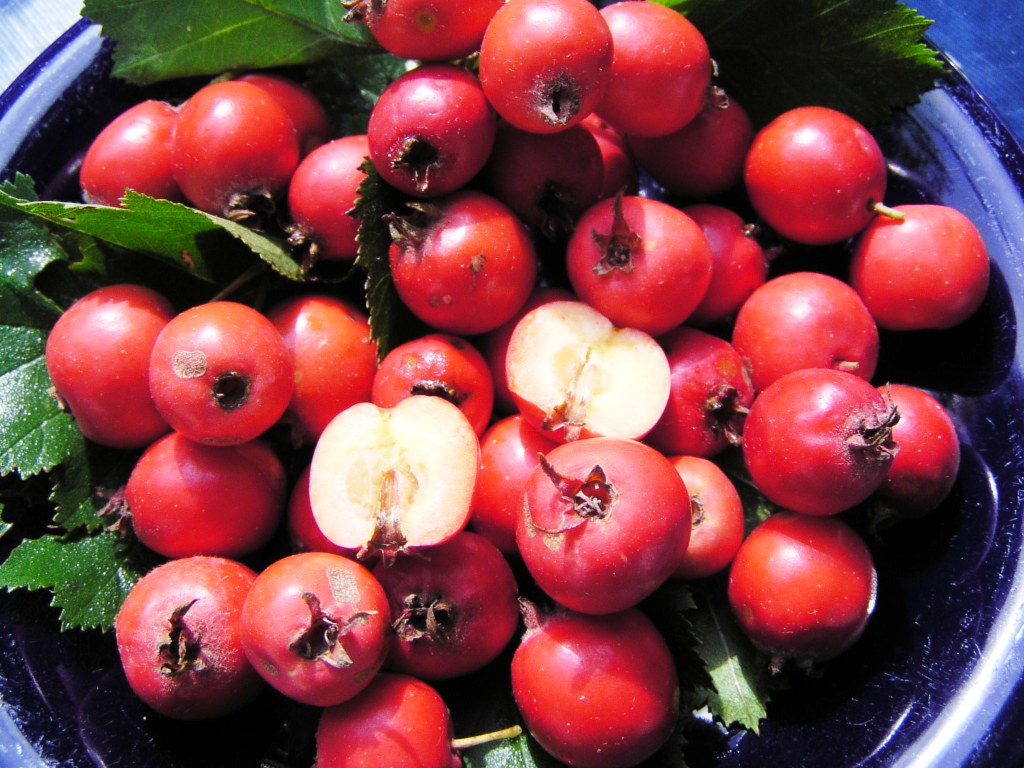
The “scarlet” in the common name describes the fruit: glossy, bright red pomes about ⅓ to ½ inch (8–12 mm) across, ripening in clusters from late summer into fall. Unlike the waxy-coated fruit of frosted hawthorn, scarlet hawthorn’s pomes are smooth and shiny. They are readily eaten by birds and persist on the tree well into autumn.
Quick Facts
| Scientific Name | Crataegus coccinea L. (syn. C. pedicellata Sarg.) |
| Family | Rosaceae (Rose) |
| Plant Type | Deciduous shrub / small tree |
| Mature Height | Up to 35 ft (10 m), often smaller |
| Growth Rate | Slow to moderate |
| Sun Exposure | Full sun to part shade |
| Water Needs | Low to moderate once established |
| Soil Type | Adaptable; dry to mesic, well-drained |
| Bloom Time | May |
| Flower Color | White |
| Fruit | Glossy bright red pomes, late summer–fall |
| Thorns | Yes, 1–2.5 in, straight to slightly curved |
| USDA Hardiness Zones | 3–8 |
Native Range
Scarlet hawthorn is native across the Northeast and Mid-Atlantic, from southern New England and upstate New York through Pennsylvania and New Jersey into Maryland, Virginia, and West Virginia, and west through the Ohio Valley into Indiana, Illinois, and the western Great Lakes. In Canada it occurs in southern Ontario. Like most hawthorns it favors open, disturbed ground — old fields, pastures, fencerows, and forest margins — rather than closed-canopy forest interior.
Because the accepted scientific name for this species changed relatively recently (following Phipps, Cafferty & Macklin’s 2003 lectotype study), gardeners researching it will encounter both C. coccinea and C. pedicellata in the literature, and should treat them as the same plant. The USDA PLANTS Database records it under symbol CRPE as Crataegus pedicellata; this page follows current regional floras in using C. coccinea.
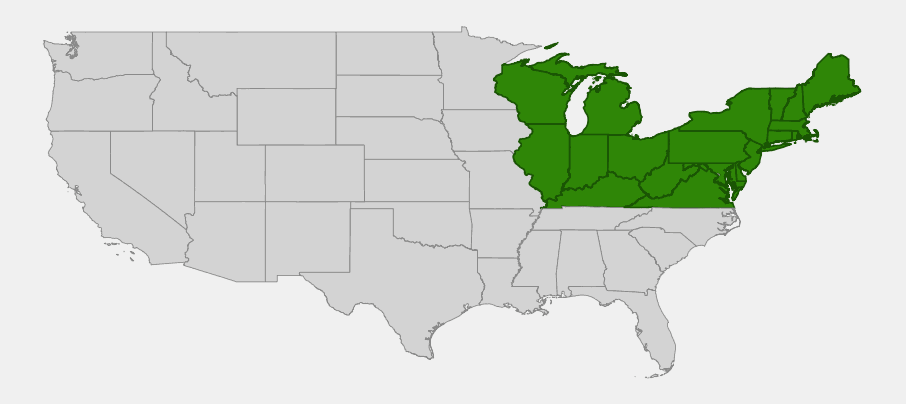
📋 Regional plant lists featuring Scarlet Hawthorn: New Hampshire, Maine & Vermont · Connecticut, Massachusetts & Rhode Island · New York, Pennsylvania & Northern New Jersey · Delaware, Southern New Jersey & Long Island · Maryland, Virginia & West Virginia · Kentucky & Tennessee · Ohio & Indiana · Illinois, Iowa & Missouri · Michigan, Wisconsin & Eastern Minnesota
Growing & Care Guide
Scarlet hawthorn is an easy-care small tree suited to exposed, average-to-poor sites where more demanding ornamentals struggle.
Light & Water
Grow it in full sun for the densest form and heaviest fruit set; it tolerates part shade but flowers and fruits more sparsely. Once established it is drought tolerant and needs no supplemental irrigation beyond its first couple of growing seasons.
Soil & Planting
Adaptable to a range of well-drained soils, from sandy loam to heavier clay-loam, and tolerant of poor or compacted ground. Plant bare-root or container stock in fall or early spring; because the tree typically forms a short trunk and wide crown on its own, little structural pruning is needed to achieve an attractive shape.
Pruning & Maintenance
Remove dead, crossing, or damaged wood in late winter. Like other hawthorns it can develop cedar-hawthorn rust where eastern redcedar is common nearby, which is usually a cosmetic leaf issue rather than a serious threat to the tree’s health. Wear thick gloves when working around the thorny branches.
Landscape Uses
- Specimen small tree for a sunny front or side yard
- Wildlife hedgerow or thorny screen planting
- Street or parking-lot tree in tough, compacted urban soils (site away from pedestrian paths given the thorns)
- Naturalized old-field or meadow-edge restoration
Wildlife & Ecological Value
The glossy red fruit is a favorite of American robins, cedar waxwings, northern mockingbirds, and other fruit-eating birds, which strip ripe clusters through fall. Small mammals forage fallen fruit from the ground beneath the tree. The dense, thorny branching offers secure nesting sites for species such as gray catbirds and brown thrashers that prefer protected, hard-to-reach cover.
Spring flowers attract flies, small native bees, and other generalist pollinators during the brief May bloom window. As with other hawthorns, the foliage serves as a larval host plant for a number of native moths and several butterflies, including spring azure and gray hairstreak.
Frequently Asked Questions
Is scarlet hawthorn the same plant as Crataegus pedicellata?
Yes. For most of the last century this species was known almost exclusively as Crataegus pedicellata, including in the USDA PLANTS Database. A 2003 taxonomic study showed the older Linnaean name C. coccinea applies to the same plant and takes nomenclatural priority, and current regional floras have adopted it, though you will still see both names in use.
Is the fruit edible?
The pomes are not toxic and have occasionally been used in jellies, but the mealy, somewhat bland flesh is not a culinary highlight. They are best appreciated as bird food rather than a harvest crop.
How is scarlet hawthorn different from other northeastern hawthorns?
It is most easily confused with C. holmesiana and C. pringlei. Compared with C. holmesiana, scarlet hawthorn’s leaves are broader and rounder (length about 1–1.3 times the width); compared with C. pringlei, its thorns are typically longer (1–2.5 in vs. 0.6–1.4 in) and its leaf base is more truncate to subcordate rather than rounded.
Will it tolerate a street-tree planting strip?
Reasonably well — it handles compacted, lower-quality soils better than many ornamentals — but the stout thorns make it a poor choice directly beside sidewalks or parking spaces where people brush against the branches.

Looking for a nursery that carries Scarlet Hawthorn?
Browse our native plant nursery directory: CO–HI · ID–KS · KY–MT · NE–OK · PA–VA · WV–WY
More hawthorns to explore: Downy Hawthorn · Dotted Hawthorn. Related reading: Hawthorn Trees: Plant, Grow & Care, Benefits of Planting Native Trees, and Attracting Songbirds with Native Plants.