Downy Paintbrush (Castilleja sessiliflora)
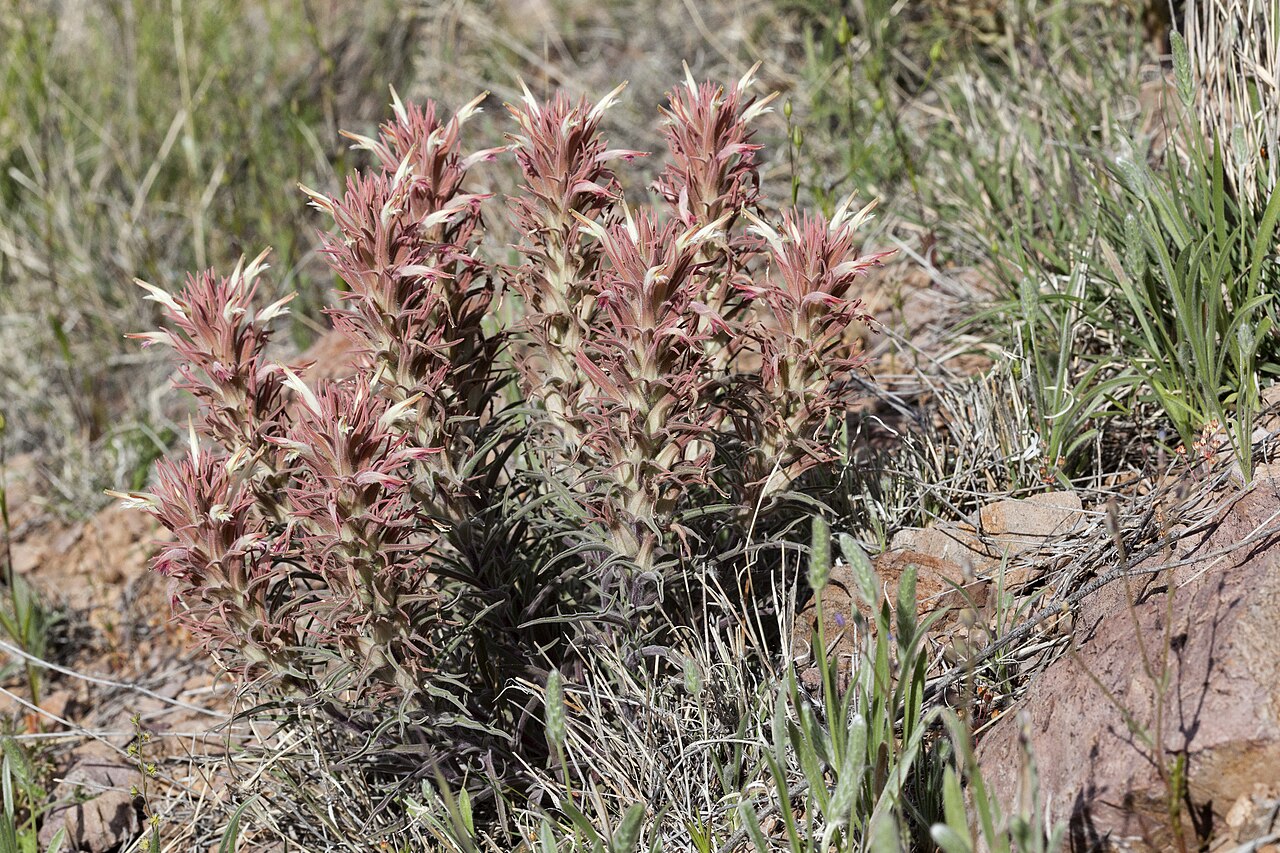
Castilleja sessiliflora, commonly called downy paintbrush or downy paintedcup, is a perennial wildflower of the Great Plains and Rocky Mountain foothills, ranging from southern Canada south through the central United States into northern Mexico. Unlike the fiery red paintbrushes most people picture, downy paintbrush carries soft, pale bracts in shades of cream, pink, pale yellow and dusty green, giving it a muted, almost pastel look that stands out among the showier members of its genus.
The whole plant, stems, leaves and bracts, is covered in fine, soft hairs, which is the source of both its scientific and common names and gives the foliage a grayish, velvety texture. Like all paintbrushes, it is a root hemiparasite, drawing extra water and nutrients from the roots of nearby plants, and it has been documented tapping into eastern redcedar and dwarf juniper roots as well as the roots of native prairie grasses.
Downy paintbrush is widespread across the dry prairies, sandy shinnery and rocky foothills of its native range, and it is a valued, if sometimes finicky, addition to prairie restorations and dryland native gardens, where its long, curling flower spikes bloom through spring and provide an early nectar source for emerging pollinators.
Identification
Downy paintbrush grows as a clump of one to several upright or sprawling stems from a woody root crown, typically 4 to 16 inches tall.
Stems & Leaves
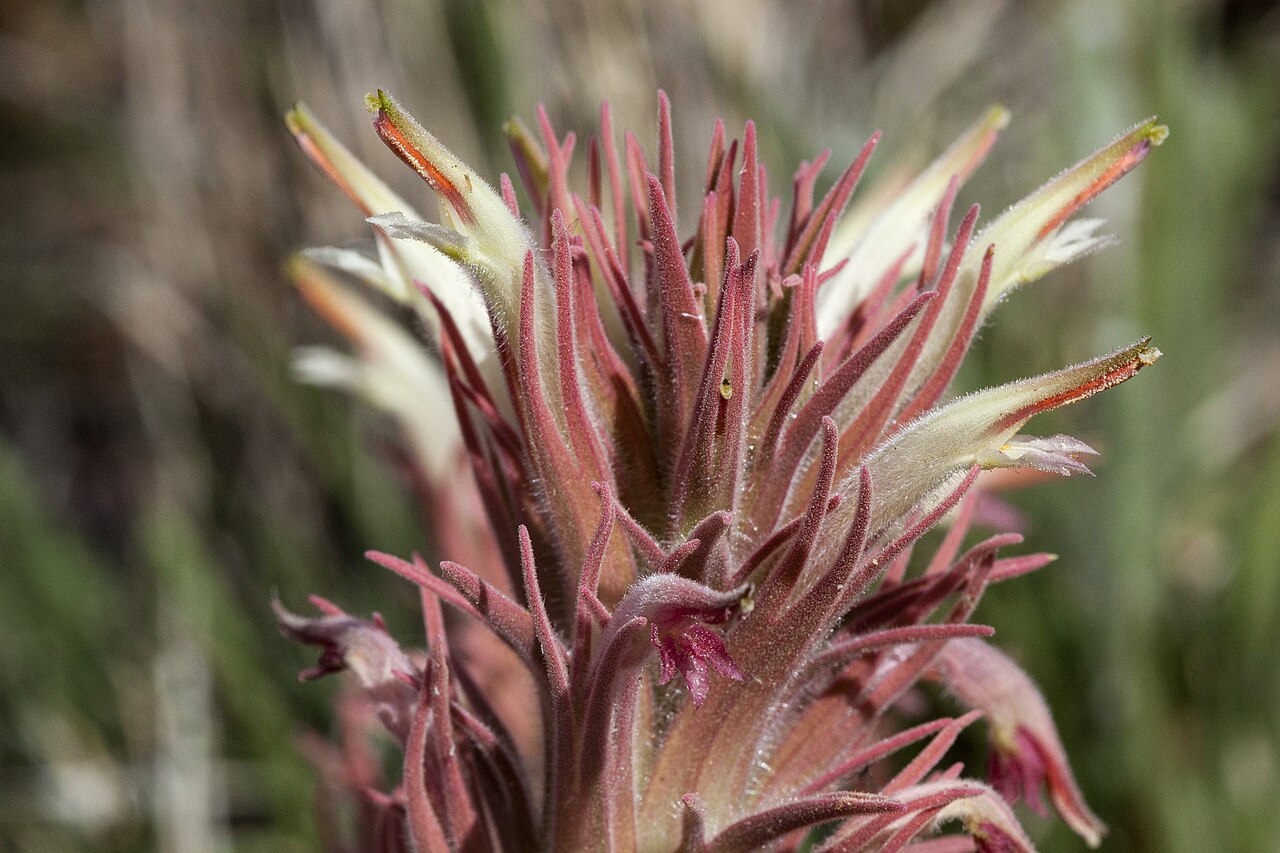
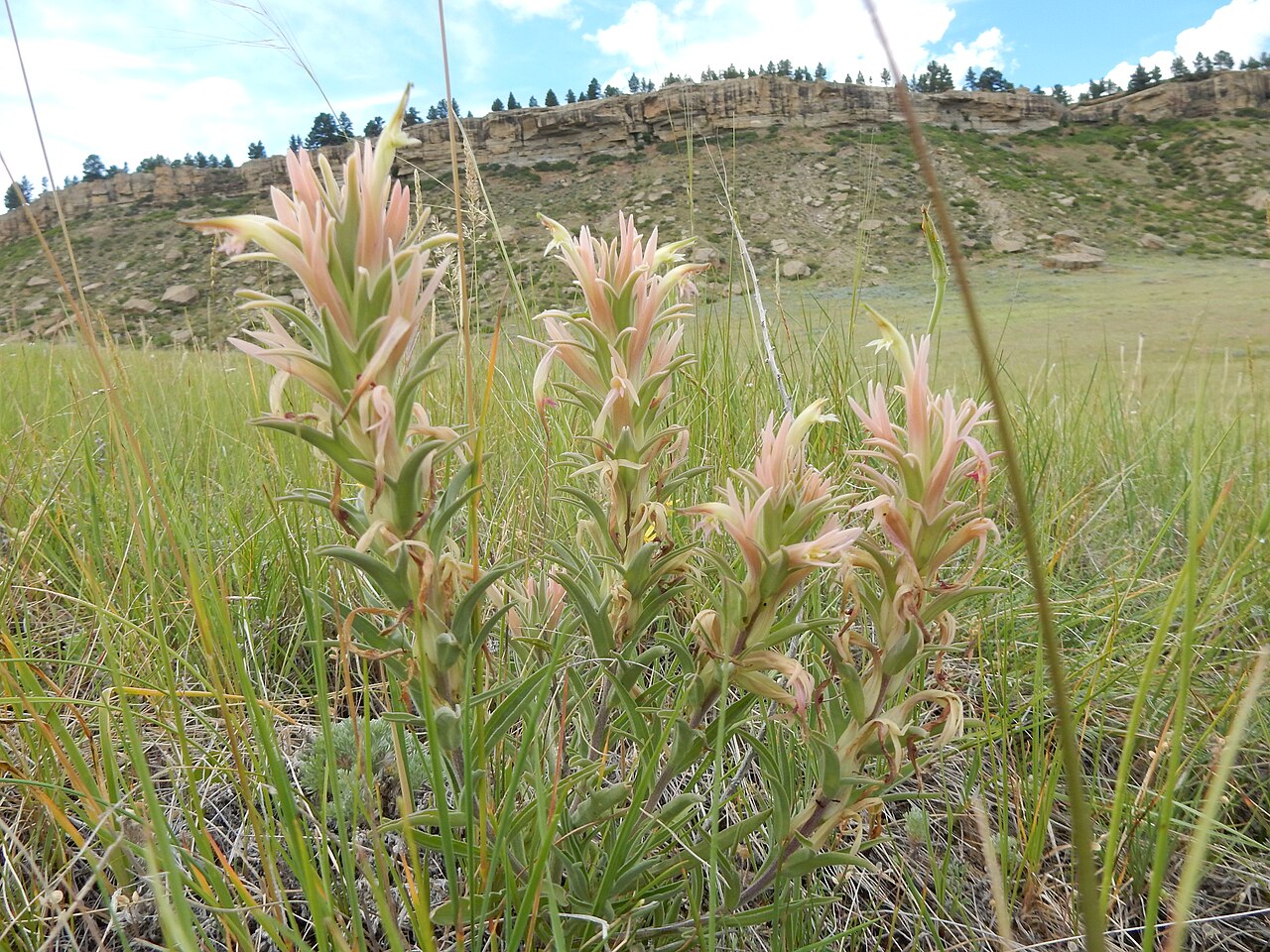
Stems and leaves are covered in fine, soft, downy hairs, giving the plant a grayish-green, velvety appearance rather than the brighter green of many prairie wildflowers. Leaves are narrow and linear, usually undivided lower on the stem, with the upper leaves sometimes showing a few narrow lobes near the flowering tips.
Flowers & Bracts
The flowering spike is made up of leafy bracts in soft shades of cream, pale pink, dusty rose and pale yellow-green, each with narrow, curling, finger-like lobes that give the inflorescence a shaggy, star-burst look up close. The true flowers, mostly hidden among the bracts, are tubular and strongly two-lipped, with an unusually long, slender, curved corolla tube and a narrow upper lip (galea) that projects well beyond the bracts, distinctive among Great Plains paintbrushes. Bloom season runs mainly from April through June, sometimes continuing later at higher elevations or after summer rain.
Roots
Downy paintbrush is a root hemiparasite. It photosynthesizes on its own but also forms root connections with nearby plants, documented hosts include eastern redcedar and dwarf (oldfield) juniper, as well as native bunchgrasses, which supply it with extra water and minerals in the lean, dry soils of its prairie and foothill habitat.
Quick Facts
| Scientific Name | Castilleja sessiliflora |
| Family | Orobanchaceae (Broomrape) |
| Plant Type | Perennial hemiparasitic wildflower |
| Mature Height | 4–16 in |
| Mature Spread | 8–14 in |
| Growth Rate | Slow to moderate |
| Sun Exposure | Full Sun |
| Water Needs | Low; drought tolerant once established |
| Soil Type | Dry, sandy or rocky, well-drained prairie or foothill soil |
| Soil pH | Neutral to slightly alkaline |
| Bloom Time | April – June |
| Flower Color | Cream, pale pink and dusty yellow-green bracts |
| Fall Color | None notable |
| Fruit | Small dry capsules with numerous tiny seeds |
| Deer Resistant | Generally yes |
| USDA Hardiness Zones | 3–8 |
Native Range
Downy paintbrush has one of the broadest ranges of any North American Castilleja, running from the southern Canadian prairies south through the central Great Plains and into the foothills along the eastern slope of the Rocky Mountains, reaching as far south as Texas, New Mexico and northern Mexico. Within the United States it occurs across Montana, Wyoming, the Dakotas, Nebraska, Kansas, Colorado, New Mexico, Arizona and Texas, generally staying east of the higher mountains and west of the tallgrass prairie’s wetter eastern edge.
Typical habitat is open, dry prairie, including mixed-grass and shortgrass prairie, sandy shinnery oak country, Texas savanna and foothill shrubland, almost always on well-drained sandy, gravelly or rocky soils in full sun. It is frequently found in grazed rangeland and undisturbed native prairie remnants alike, often rooted near bunchgrasses or scattered shrubs such as junipers that serve as hemiparasitic hosts.
Downy paintbrush is considered globally secure (NatureServe rank G5) and remains widespread across its range, though, as with other paintbrushes, its dependence on an established host plant and on undisturbed, low-competition soil means it tends to disappear from heavily tilled or densely seeded ground even where it was once common.
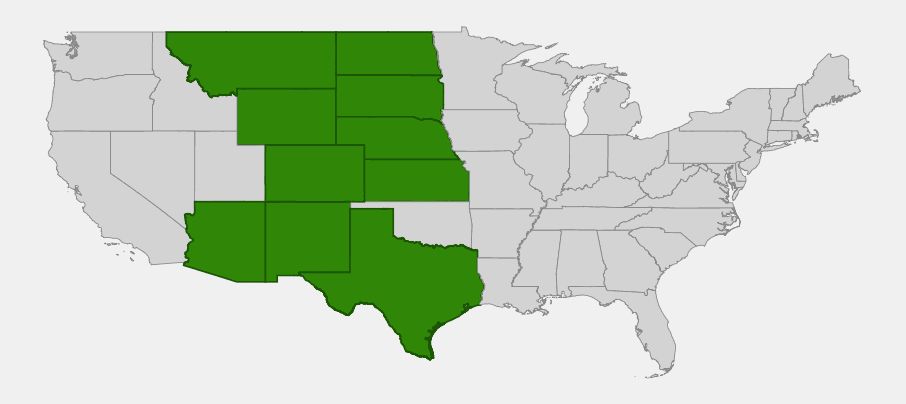
📋 Regional plant lists featuring Downy Paintbrush: South and West Texas · Arizona & New Mexico · Nebraska, Kansas & Eastern Colorado · North Dakota, South Dakota & Western Minnesota · Montana & Wyoming
Growing & Care Guide
Downy paintbrush, like other paintbrushes, is more challenging than an ordinary prairie perennial because of its hemiparasitic habit, but it is also one of the more widely attempted paintbrushes for prairie restoration thanks to its broad native range and tolerance of dry, sandy ground.
Light
Plant it in full sun. It is an open-prairie and foothill species that needs strong direct light to grow and flower well; in shaded or overly sheltered sites it becomes weak and blooms poorly.
Soil & Water
Give it dry, sandy, gravelly or otherwise fast-draining soil; it is well adapted to the lean ground of shortgrass and mixed-grass prairie and does not want rich, damp garden beds. Established plants need very little supplemental water and are best left to rely on natural rainfall once rooted in alongside a compatible host.
Planting Tips
As with other paintbrushes, success depends on having a living host nearby. Sow seed directly into soil that already supports native bunchgrasses, such as little bluestem or grama grasses, or near young junipers, rather than trying to grow it alone in bare or newly tilled ground. Fall seeding, which allows winter cold and moisture to help break seed dormancy, generally gives better results than spring seeding.
Pruning & Maintenance
Minimal maintenance is needed. Avoid fertilizing or amending the soil with rich organic matter, since this favors the host plants’ competitors over the paintbrush itself. Leave spent flower spikes in place through summer to allow seed to mature and disperse naturally into the surrounding prairie planting.
Propagation
Downy paintbrush is propagated from seed, sown in fall directly into or beside an already-established stand of native grasses or shrubs that can serve as hosts. Because germination and establishment depend on finding a compatible host root nearby, seed is usually broadcast into existing prairie plantings rather than started in pots.
Landscape Uses
- Prairie restorations and native seed mixes alongside little bluestem and grama grasses
- Dry, sandy or rocky foothill gardens within its native range
- Early-season pollinator plantings for spring-emerging bees and butterflies
- Naturalistic plantings near young junipers or other known host shrubs
- Rangeland and conservation seeding projects aiming to diversify grazed prairie
Wildlife & Ecological Value
Downy paintbrush adds a long run of early-season color and structure to otherwise low, grass-dominated prairie, and it plays a modest but real role in supporting pollinators as the growing season begins.
For Pollinators
The long, curved, tubular flowers are well matched to long-tongued native bees and to early-season hummingbirds and hawkmoths able to reach the nectar deep in the corolla tube. Blooming in April through June, it provides nectar during a period when many prairie wildflowers have not yet opened.
For Birds
Hummingbirds moving through the Great Plains and foothill corridors in spring visit the tubular flowers for nectar, and the clumped, downy foliage offers some ground-level cover in open prairie habitat that otherwise has little vertical structure.
For Mammals
Like other paintbrushes, the foliage is not a preferred forage plant for deer, pronghorn or livestock, likely due to its bitterness and its capacity to take up minerals such as selenium from certain soils and host plants, which helps it persist on grazed rangeland.
Ecosystem Role
As a root hemiparasite tied into the shared root systems of native grasses and shrubs, downy paintbrush is a visible indicator of intact, diverse prairie plant communities, and its presence in a pasture or restoration site is often read as a sign that the underlying native grass and shrub community has not been too heavily disturbed.
Cultural & Historical Uses
Paintbrushes as a genus hold a place in the traditions of a number of Great Plains and Southwestern Indigenous peoples, who used various showier red-bracted species as dye plants and in decorative or ceremonial contexts; documentation specific to the paler-bracted downy paintbrush is comparatively sparse, likely in part because its muted coloring made it less prominent than its red-flowered relatives for dye and ornamental use.
Because Castilleja species are known to take up minerals, including selenium, from certain soils and host plants, none have been treated as food plants historically, and downy paintbrush should not be eaten. Today its significance is mostly ecological and horticultural, valued by prairie restorationists and native-plant gardeners as one of the more cold-hardy and widely rangeable paintbrushes for the central and northern Great Plains.
Frequently Asked Questions
Why are downy paintbrush flowers pink and cream instead of red?
Unlike many showier Castilleja species, downy paintbrush typically has pale cream, pink and dusty yellow-green bracts rather than bright red ones, which is one of the easiest ways to distinguish it from other prairie and foothill paintbrushes.
Why is downy paintbrush hard to establish in a garden?
It is a root hemiparasite that benefits from tapping into the roots of nearby grasses or shrubs such as junipers. Seeding it into an already-established native prairie planting, rather than growing it alone, gives it the best chance to find a host and thrive.
Is downy paintbrush native to my state?
It is native across much of the Great Plains and Rocky Mountain foothills, including Montana, Wyoming, the Dakotas, Nebraska, Kansas, Colorado, New Mexico, Arizona and Texas. Check county-level distribution data for your specific area, since its range does not cover every county within these states.
Is downy paintbrush safe to eat?
No. Like other paintbrushes, it can take up minerals such as selenium from certain soils and host plants, and it is not recommended as a food plant.
When does downy paintbrush bloom?
Mainly from April through June, making it one of the earlier-blooming paintbrushes across its Great Plains and foothill range, though bloom time can shift later at higher elevations.

Looking for a nursery that carries Downy Paintbrush?
Browse our native plant nursery directory: Texas · New Mexico, Nebraska & North Dakota · Arizona · Colorado · Kansas · Montana · South Dakota · Wyoming