
Mount Hood Pussypaws (Cistanthe umbellata)
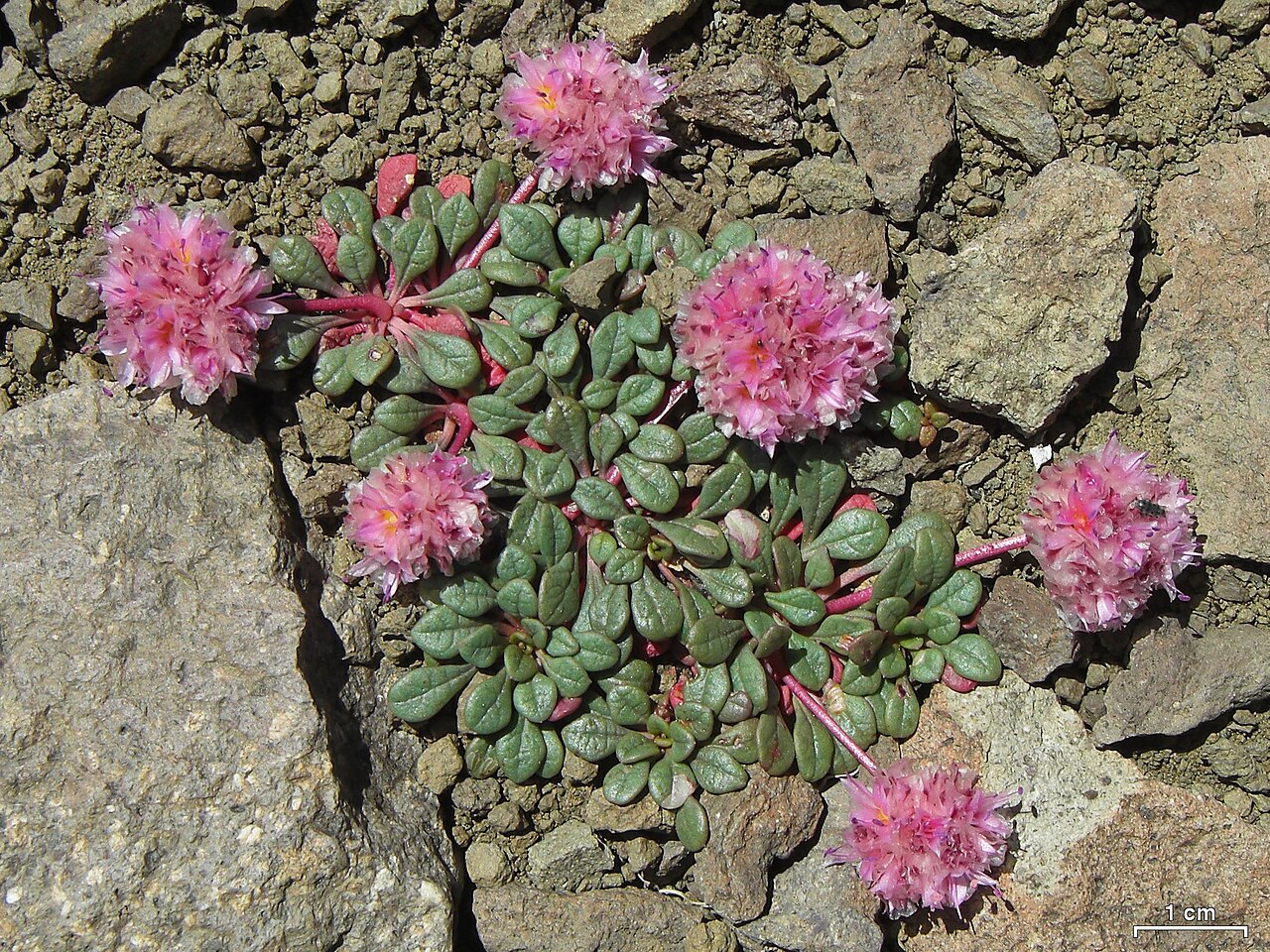
Cistanthe umbellata, known as Mount Hood Pussypaws or simply pussypaws, is a low, mat-forming wildflower of sandy, gravelly and rocky ground in the mountains of the western United States and British Columbia. Each plant has a flat rosette of leathery, spoon-shaped leaves, ringed by reddish stems that end in dense, rounded clusters of papery pink to white flowers. The soft, fuzzy flower clusters look like a cat’s paw pads, which gives the plant its name.
It belongs to the montia family (Montiaceae), which USDA PLANTS still places in the purslane family (Portulacaceae). It is widely known by its older name, Calyptridium umbellatum, and has also been placed in the genus Spraguea. The species name umbellata refers to the umbrella-like clusters of flowers.
Pussypaws is one of the most familiar wildflowers of the high Sierra Nevada and the Cascade volcanoes, including its namesake Mount Hood, where it often grows on bare pumice and granite sand where few other plants can survive. It is a favorite of hikers, and it is a challenging but rewarding plant for rock gardens. This guide covers how to identify it, where it grows, how to grow it and its value to wildlife.
Identification
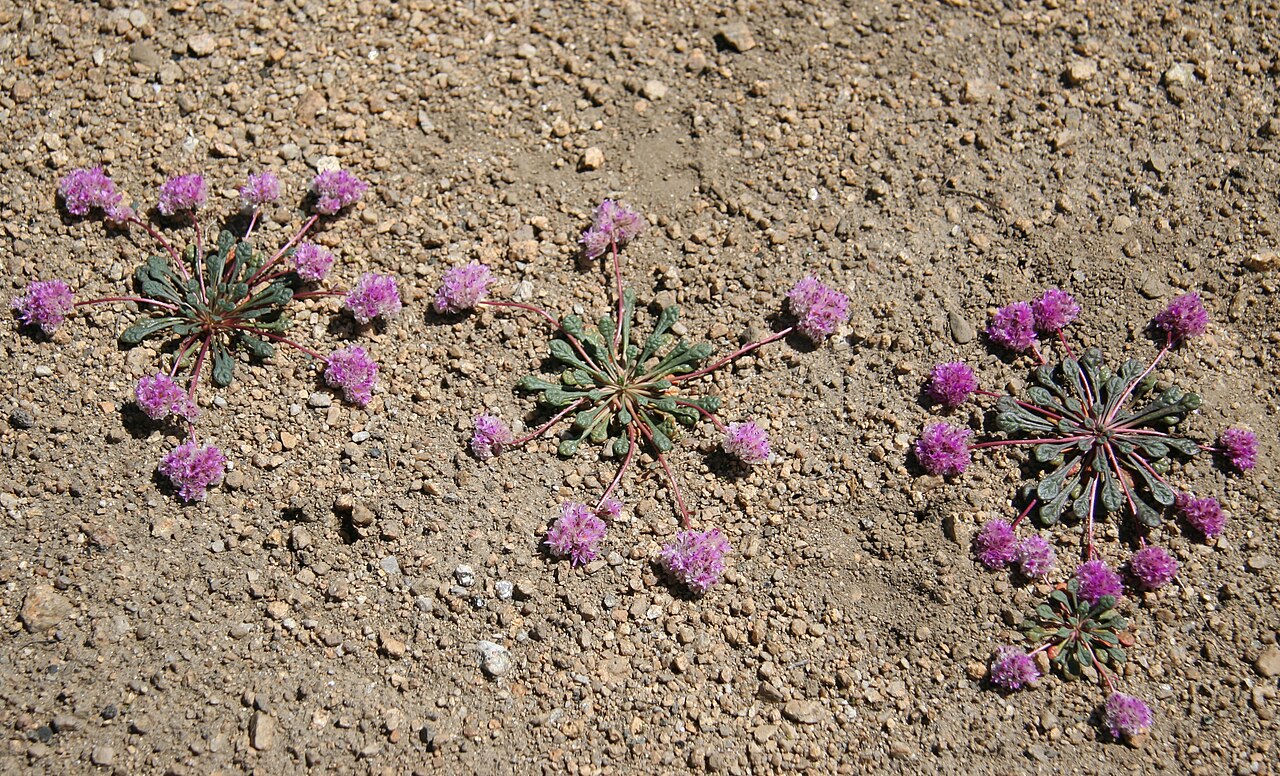
Mount Hood pussypaws is easy to recognize: look for a flat rosette of thick, spoon-shaped leaves on bare, sandy ground, with fuzzy pink or white flower clusters on stems radiating out like the spokes of a wheel.
Growth Habit
It is a low perennial, sometimes growing as an annual or biennial, with a stout taproot and a flat basal rosette 2 to 6 inches across. Several reddish flowering stems, 1 to 10 inches long, radiate from the rosette, lying flat on the ground or rising at the tips. The stems are known to rise off the hot ground during the heat of the day and lie flatter again when it cools.
Leaves
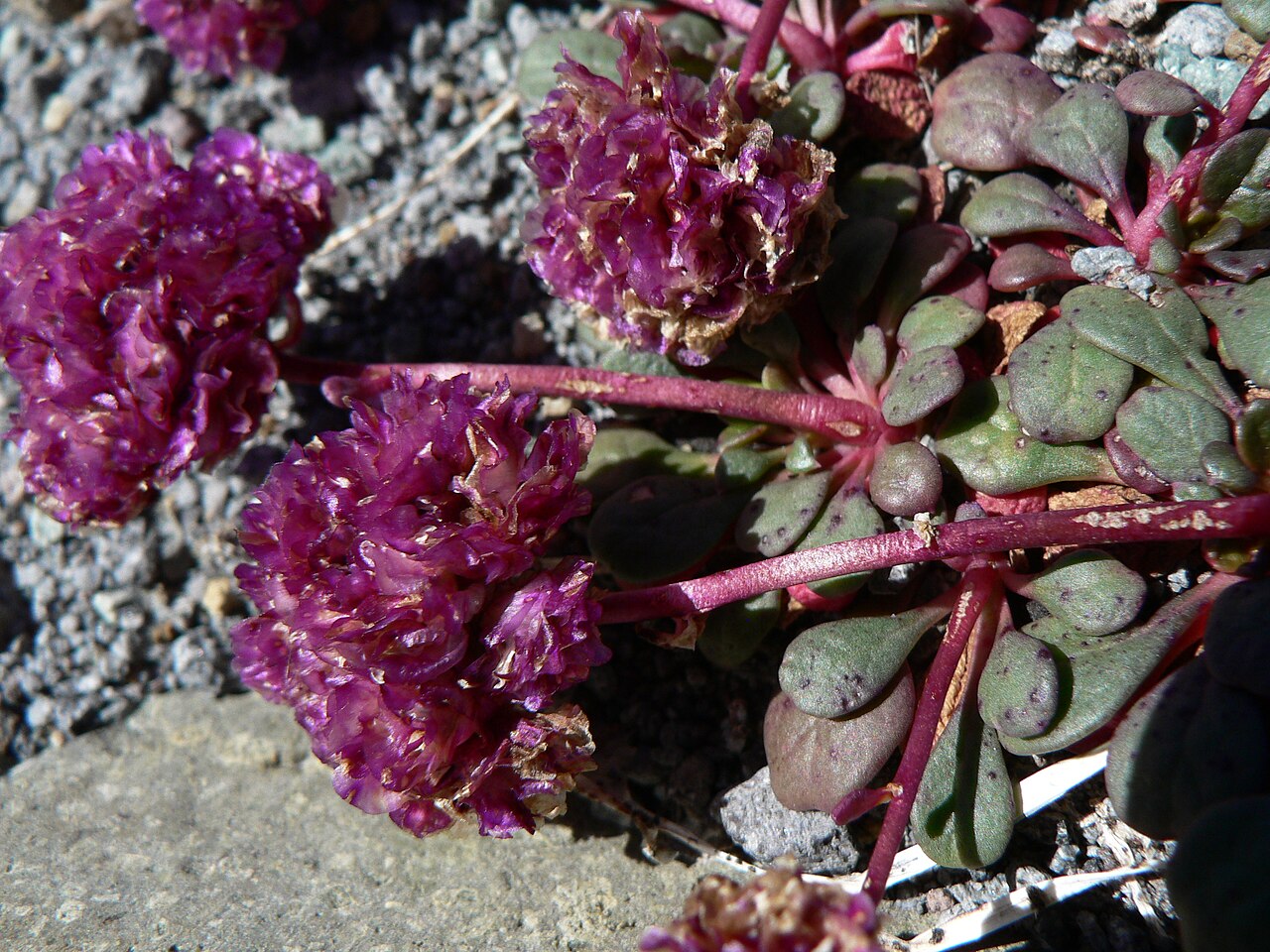
The leaves are all in the basal rosette, spoon-shaped, 1/2 to 2 1/2 inches long, thick and somewhat leathery, smooth and often slightly fleshy. They are green to grayish green and may turn reddish in strong sun or late in the season.
Flowers
The flowers are tightly packed in round, head-like clusters at the ends of the stems. Each tiny flower has four small petals, but most of the color comes from two round, papery sepals that are white, pink or deep rose and stay on the plant after flowering. Bloom time is mainly May to August, depending on elevation and snowmelt.
Fruit & Seeds
Each flower produces a small capsule that holds a few shiny black seeds. The dry, papery flower clusters remain on the plant into late summer and fall, turning tan.
Look-alikes
One-seeded pussypaws (Cistanthe monosperma) of California and Oregon is very similar and has been treated as part of this species; it usually has one seed per capsule and grows mostly at lower elevations. Small annual pussypaws in the genus Calyptridium have much smaller flower clusters. Sulfur buckwheat also forms rosettes on gravel but has yellow, umbrella-like flower clusters on upright stems. Mount Hood pussypaws is identified by its flat rosette of spoon-shaped leaves and radiating stems with fuzzy, papery flower clusters.
Quick Facts
| Scientific Name | Cistanthe umbellata (Torr.) Hershk. |
| Family | Montiaceae (montia family); Portulacaceae in USDA PLANTS |
| Plant Type | Low perennial (sometimes annual or biennial) wildflower |
| Mature Height | 1–4 in |
| Mature Spread | 3–12 in |
| Growth Rate | Moderate |
| Sun Exposure | Full sun |
| Water Needs | Low; spring snowmelt moisture, dry summers |
| Soil Type | Sandy, gravelly or pumice soils; granite or volcanic |
| Soil pH | About 5.5–7.0 |
| Bloom Time | May–August |
| Flower Color | White, pink or deep rose (papery sepals) |
| Fall Color | Papery flower clusters dry to tan |
| Fruit | Small capsule with a few shiny black seeds |
| Deer Resistant | Not well documented |
| USDA Hardiness Zones | 3–8 |
Native Range
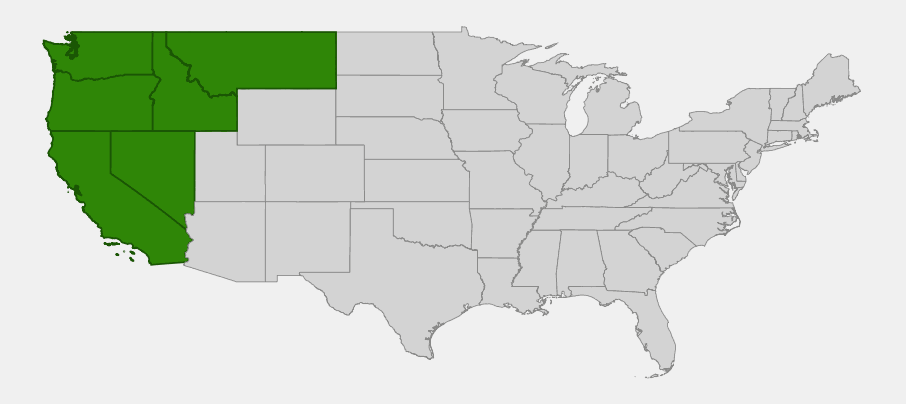
Mount Hood pussypaws is native to the mountains of western North America. USDA PLANTS lists it in Washington, Oregon, California, Idaho, Montana and Nevada, and it also grows in southern British Columbia. It is also recorded around Yellowstone National Park in northwestern Wyoming, at the eastern edge of its range.
It grows throughout the Cascade Range from British Columbia to northern California, including Mount Rainier, Mount St. Helens, Mount Hood and the other volcanoes, and in the Blue and Wallowa Mountains of eastern Oregon and Washington, and the mountains of Idaho and western Montana. In California it is common in the Sierra Nevada, the Klamath Mountains and the southern Cascades. In Nevada it grows in the Carson Range near Lake Tahoe and in other high ranges.
It grows on open, sandy, gravelly or pumice ground: subalpine and alpine slopes, granite sand, volcanic ash and pumice flats, ridges and open conifer forest. It is mostly found from the montane to the alpine zone, often well above 5,000 feet and up to about 12,000 feet in the Sierra Nevada.
📋 Regional plant lists featuring Mount Hood Pussypaws: Idaho, Eastern Oregon & Eastern Washington · Montana & Wyoming · Western Oregon & Western Washington · California & Nevada
Growing & Care Guide
Mount Hood pussypaws is a beautiful but demanding plant for rock gardens, troughs and crevice gardens, best suited to cool mountain climates. It is occasionally offered by alpine and rock garden nurseries and seed exchanges. It needs full sun, very sharp drainage and dry conditions in summer, and it often behaves as a short-lived perennial in gardens.
Light
Give it full sun. It grows naturally on open, exposed ground and becomes weak and leggy in shade.
Soil & Water
Plant it in very fast-draining, lean soil, such as pumice, coarse sand or decomposed granite mixed with a little loam. It needs moisture in spring, like snowmelt, and dry conditions in summer. Wet soil, especially in winter, rots the taproot quickly.
Planting Tips
Plant it in a crevice garden, trough or raised rock garden bed, and top-dress around the rosette with gravel to keep the crown dry. Because of its taproot, it doesn’t like being moved once established, so plant small seedlings rather than large plants.
Pruning & Maintenance
No pruning is needed. Leave the dry flower heads in place to set seed, or remove them for a tidier look. Protect the plants from excess winter wet in rainy, low-elevation climates.
Propagation
It is grown from seed. Sow seed in fall or early winter in a gritty mix and leave it outside for cold, moist stratification over winter; seeds germinate in spring. Plants may self-sow in suitable gravelly spots.
Landscape Uses
- Rock and crevice gardens: a low, colorful rosette for sharp-draining soil
- Troughs and containers: a showy alpine for gravel-topped troughs
- Mountain gardens: summer color on sandy or pumice soil
- Pollinator gardens: pollen and nectar for bees and butterflies at high elevation
- Habitat restoration: a pioneer plant of bare pumice and granite slopes
Wildlife & Ecological Value
Mount Hood pussypaws is a pioneer plant of bare, harsh ground in the mountains, and its long-lasting flower clusters feed many insects.
For Pollinators
The flowers are visited by bees, including bumble bees, and by butterflies, which find nectar and pollen in the dense clusters during the short mountain summer.
For Birds
Seed-eating birds such as juncos and finches may feed on the small seeds in late summer.
For Mammals
Chipmunks, ground squirrels and other small mammals may eat the seeds, and the thick leaves may be nibbled by rodents and other browsers.
Ecosystem Role
Pussypaws is one of the first plants to colonize bare pumice, ash and granite sand, helping to stabilize loose soil and adding organic matter.
Cultural & Historical Uses
The species was first described by John Torrey in the nineteenth century as Spraguea umbellata, in a genus named for the botanical artist Isaac Sprague. It was later known for many years as Calyptridium umbellatum, and the botanist Mark Hershkovitz later moved it to Cistanthe. Many field guides and hikers still use the name Calyptridium.
The name pussypaws comes from the soft, round flower clusters, which look like the paw pads of a cat. Mount Hood pussypaws, the USDA name, honors the volcano in Oregon where the plant is common on bare pumice slopes above the tree line.
For many hikers in the Sierra Nevada and the Cascades, pussypaws is a familiar sight along trails, where its pink rosettes dot otherwise bare, sandy ground. It is a reminder of how plants have adapted to life in harsh, high-elevation conditions, with thick leaves to hold water and a deep taproot to reach moisture.
Frequently Asked Questions
Why is it called pussypaws?
Its soft, round, fuzzy flower clusters look like the paw pads of a cat. The USDA name, Mount Hood pussypaws, refers to the Oregon volcano where it is common.
Is Cistanthe umbellata the same as Calyptridium umbellatum?
Yes. It was long known as Calyptridium umbellatum, and earlier as Spraguea umbellata. USDA PLANTS now uses Cistanthe umbellata.
Where does Mount Hood pussypaws grow?
It grows in the mountains from British Columbia through Washington, Oregon and California to Nevada, Idaho and western Montana, on sandy, gravelly and pumice ground, mostly at high elevations.
Why do the stems move during the day?
The stems tend to rise off the hot ground during the warmest part of the day and lie flatter when it cools, which keeps the flower heads off the hottest surface.
Can I grow Mount Hood pussypaws in my garden?
Yes, but it is challenging. It needs full sun, very sharp drainage and dry conditions in summer and winter. It does best in a rock garden, crevice garden or trough in a cool climate.

Looking for a nursery that carries Mount Hood Pussypaws?
Browse our native plant nursery directory: California · Idaho · Montana · Nevada · Oregon · Washington

