Pinemat Manzanita (Arctostaphylos nevadensis)
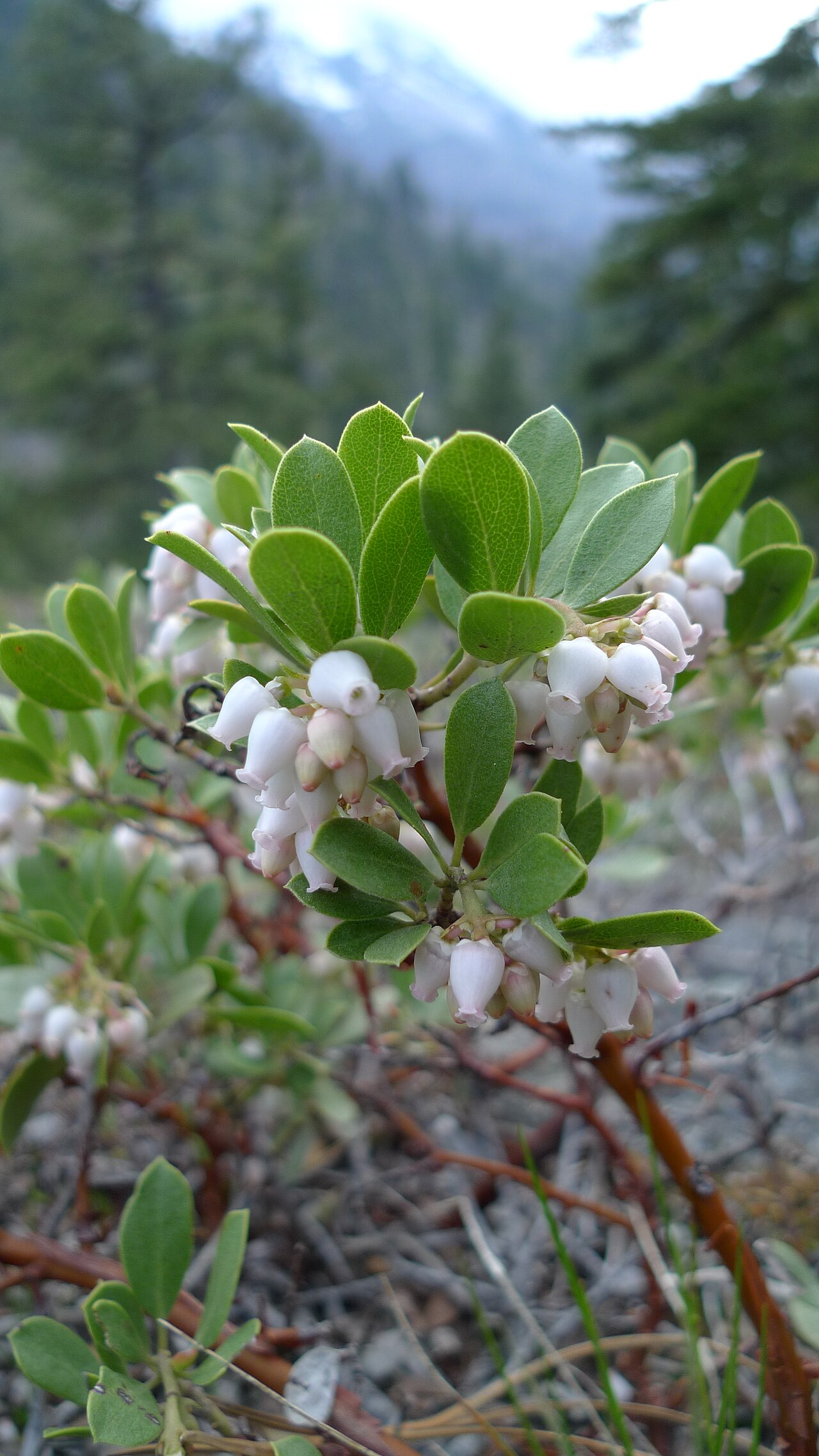
Arctostaphylos nevadensis, commonly known as pinemat manzanita, is a low, ground-hugging evergreen shrub that forms dense, spreading mats across rocky, open slopes in the mountains of the Pacific states. A member of the heath family (Ericaceae), it is one of the few true prostrate manzanitas, rarely exceeding knee height even at maturity, and spreads instead by rooting along its trailing red-brown stems to carpet the forest floor.
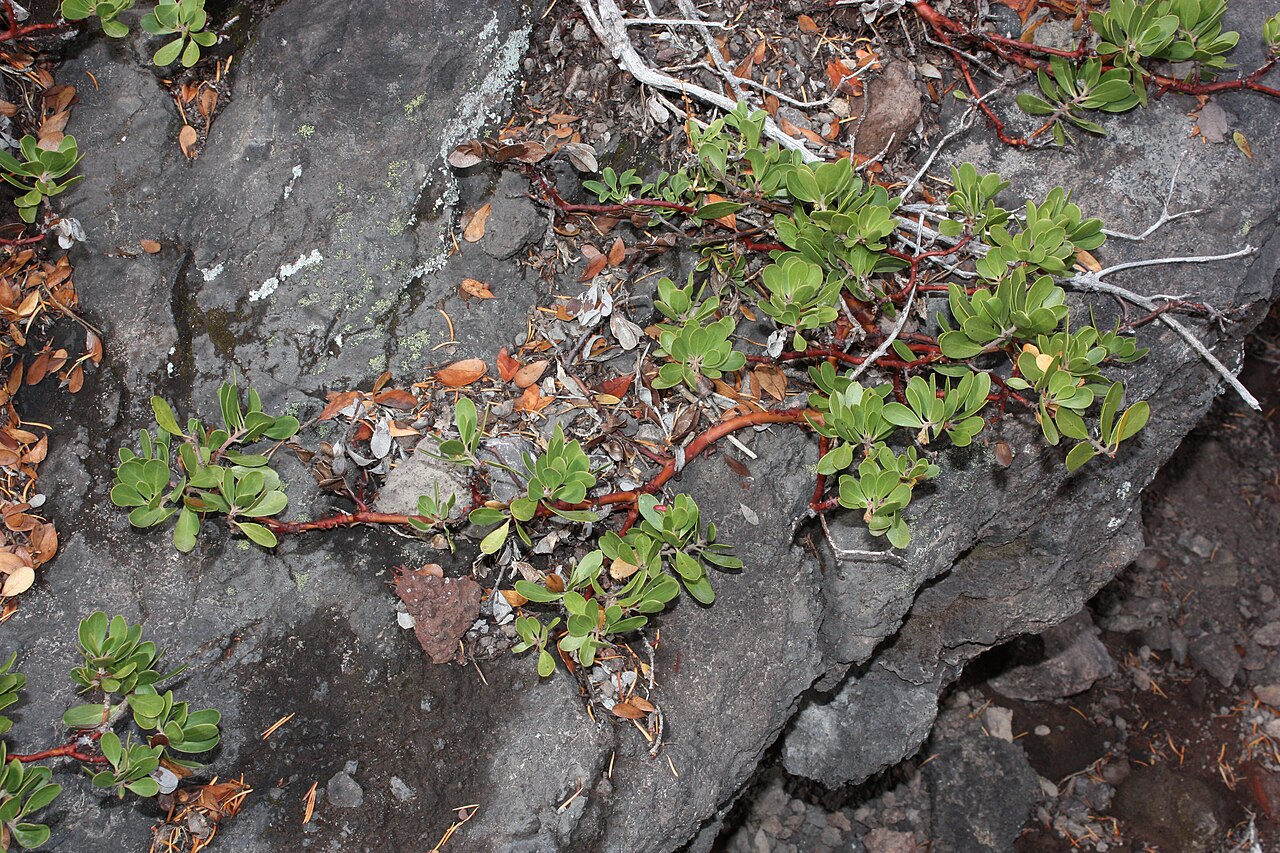
Pinemat manzanita is a familiar sight in the dry understory of pine and fir forests from the Washington Cascades south through Oregon to the Sierra Nevada of California, often growing directly over bare rock and thin, rocky soil where few other shrubs can gain a foothold. Its small, glossy, bright-green leaves and tangled mat of reddish stems make it easy to distinguish from the upright, mounding manzanitas more typical of lower, drier chaparral.
Because it tolerates poor, rocky soil, heavy winter snow, and considerable foot traffic without damage, pinemat manzanita is a favorite groundcover for native gardeners in the mountain West, offering year-round structure, spring flowers, and a tough, low-maintenance alternative to lawn on dry, sunny slopes.
Identification
Pinemat manzanita is a prostrate to low-mounding evergreen shrub, typically only 6 inches to 2 feet tall but spreading 3 to 8 feet or more as a dense mat. Trailing stems root where they touch the ground, allowing a single plant to colonize considerable ground over time.
Bark & Stems
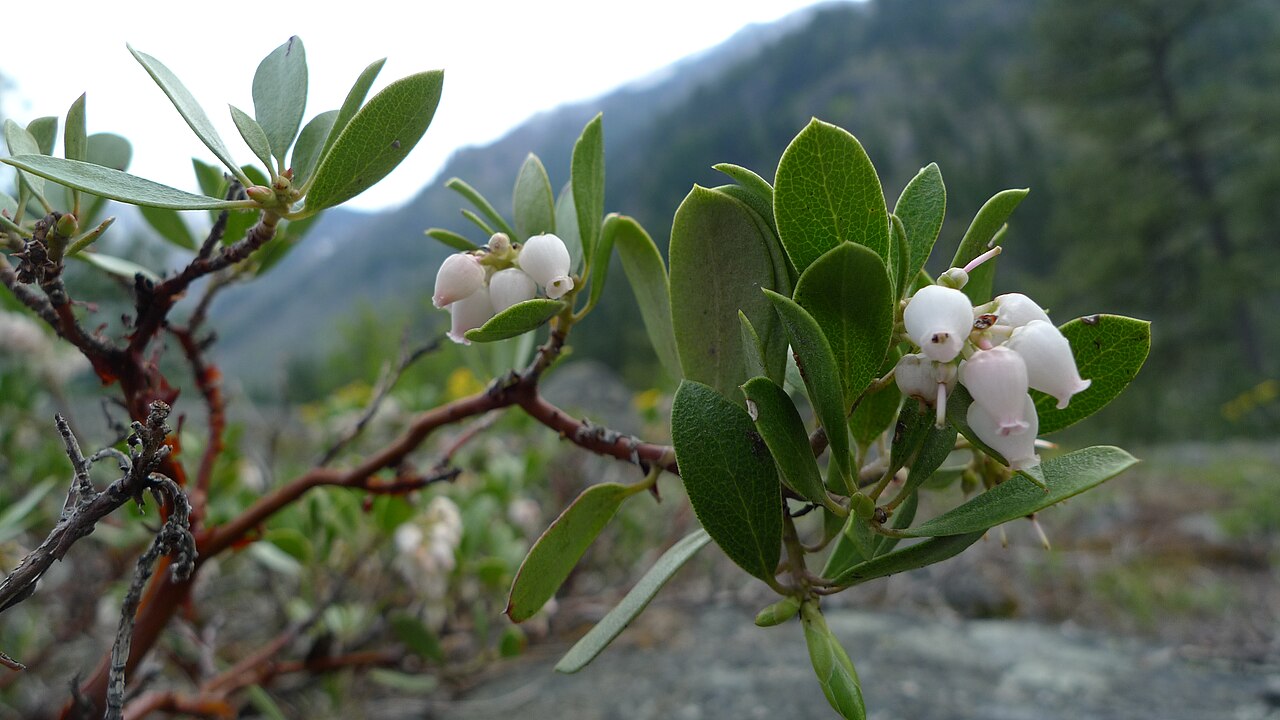
Stems are slender, flexible, and reddish-brown, becoming smoother and more polished with age like other manzanitas, though never developing the thick trunks of upright tree-form species. The low, tangled branching creates a dense mat that closely hugs rock and soil contours.
Leaves
Leaves are evergreen, thick and leathery, oval to elliptic, and 1 to 2 inches long, with a glossy, bright to medium green color that can appear nearly yellow-green in full sun. The foliage is notably smaller and brighter than that of greenleaf manzanita, and the overall low, spreading habit is the easiest field mark distinguishing it from other regional manzanita species.
Flowers
Small, urn-shaped flowers bloom in short, dense clusters at the branch tips from April through June, typically white to very pale pink. Each flower is about ¼ inch long, and the bloom is often heavy enough to visibly dust the mat-like plant with pale color for several weeks each spring.
Fruit & Seeds
The fruit is a small, flattened, berry-like drupe about ¼ to ⅓ inch across, ripening from green to reddish-brown by late summer. As with other manzanitas, the hard seed coat requires fire scarification or extended cold stratification to break dormancy, and wild populations regenerate readily after fire passes through pine forest understories.
Quick Facts
| Scientific Name | Arctostaphylos nevadensis |
| Family | Ericaceae (Heath) |
| Plant Type | Evergreen Prostrate Shrub / Groundcover |
| Mature Height | 6 in – 2 ft |
| Mature Spread | 3–8 ft |
| Growth Rate | Slow |
| Sun Exposure | Full Sun to Part Shade |
| Water Needs | Low once established |
| Soil Type | Rocky, sandy or gravelly; well-drained |
| Soil pH | 5.5–7.0 (acidic to neutral) |
| Bloom Time | April – June |
| Flower Color | White to pale pink |
| Fall Color | None (evergreen) |
| Fruit | Small reddish-brown berries, ¼–⅓ in |
| Deer Resistant | Moderate |
| USDA Hardiness Zones | 5–8 |
Native Range
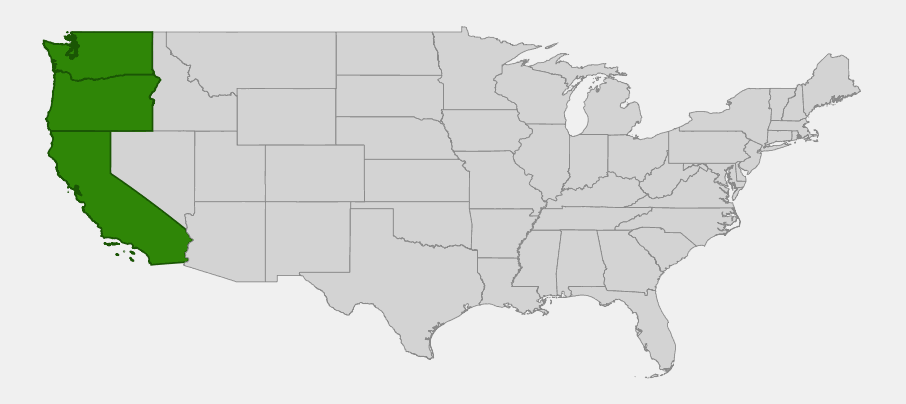
Pinemat manzanita is native to the mountains of the Pacific states, ranging from the Cascade Range of Washington south through Oregon’s Cascades and Blue Mountains into the North Coast Ranges and Sierra Nevada of California. Within this range it typically grows at middle to subalpine elevations, from roughly 2,000 to 9,000 feet, often on exposed, rocky ridgelines and open slopes within dry coniferous forest.
It is most at home in open stands of ponderosa pine, Jeffrey pine, lodgepole pine, and red fir, frequently forming extensive mats directly over granite or volcanic rock where soil is thin and competition from taller shrubs is limited. The species tolerates heavy winter snowpack remarkably well for a broadleaf evergreen, an adaptation reflected in its low, snow-shedding growth form.
Within Washington and Oregon, pinemat manzanita occurs mainly in the Cascades and the Blue Mountains of the state’s eastern half rather than in the wetter, low-elevation forests west of the Cascade crest. It is not documented as native to Nevada; gardeners there should look to other regionally native manzanita species.
📋 Regional plant lists featuring pinemat manzanita: California and Nevada · Idaho, Eastern Oregon, and Eastern Washington
Growing & Care Guide
Pinemat manzanita is an excellent, low-care groundcover for mountain and high-desert gardens where few broadleaf evergreens can handle both summer drought and heavy winter snow.
Light
Best growth and flowering occur in full sun, though plants tolerate light shade beneath an open pine canopy, which mirrors its natural forest-understory habitat. Deep, continuous shade will thin the mat and reduce bloom.
Soil & Water
Rocky, gravelly, or sandy soils with excellent drainage are essential — this species is adapted to thin mountain soils and does poorly in heavy clay or any spot that stays wet. Water regularly through the first growing season to establish the spreading root system, then taper off; established mats need little or no supplemental water and, like other manzanitas, are vulnerable to root rot from summer irrigation.
Planting Tips
Set out small container plants in fall or early spring, spacing them 3 to 4 feet apart to let the mat fill in over several seasons — patience is needed, since this is a slow-growing species. A rocky or gravelly mulch suits it better than bark mulch, which can hold excess moisture against the trailing stems.
Pruning & Maintenance
Little pruning is needed beyond removing dead or winter-damaged stems. The plant’s low, spreading form means it rarely needs shaping, and its tolerance for being walked on occasionally (unlike most manzanitas) makes it forgiving in informal garden paths.
Landscape Uses
Pinemat manzanita fills a specific and valuable niche in mountain-climate gardens:
- Evergreen groundcover for dry, rocky slopes and banks
- Rock garden and alpine-style plantings
- Erosion control on thin mountain soils
- Lawn alternative in sunny, low-water mountain landscapes
- Understory restoration beneath open pine or fir canopy
Wildlife & Ecological Value
Despite its low stature, pinemat manzanita plays an outsized role in the dry mountain forests where it grows, stabilizing thin soils and supporting wildlife through a long spring-to-fall cycle of bloom and fruit.
For Pollinators
Spring flowers attract native bees and bumblebees at mid- to high elevation, providing nectar before many subalpine wildflowers have begun blooming. The dense mats also shelter ground-nesting insects.
For Birds
Mountain quail, grouse, and various songbirds eat the small berries, while the low, tangled mats provide ground-level cover for birds foraging in open pine forest understories.
For Mammals
Black bears and small mammals feed on the berries in late summer, and deer occasionally browse the foliage. The dense mat structure also offers cover for small mammals moving across otherwise exposed, rocky terrain.
Ecosystem Role
As a low, fire-adapted shrub of dry pine forest, pinemat manzanita helps bind thin volcanic and granitic soils on exposed slopes, reducing erosion in a way that few other plants at these elevations can match. Like its manzanita relatives, it typically resprouts or regenerates readily from seed after fire, helping stabilize burned ground during the early stages of forest recovery.
Cultural & Historical Uses
Indigenous peoples of the Cascade and Sierra Nevada mountains, including Klamath, Northern Paiute, and Sierra Miwok communities, gathered the berries of pinemat manzanita and other regional manzanita species as a seasonal food, typically grinding them into meal or soaking them to prepare a tart beverage. Because the fruit of this particular species is smaller than that of bigberry or greenleaf manzanita, pinemat manzanita was likely a secondary rather than a primary food source where larger-fruited relatives were also available.
This page does not describe or recommend any medicinal use of pinemat manzanita. Its modern significance is primarily horticultural and ecological: as a durable, low-growing native groundcover, it has become increasingly popular in mountain-West landscaping as gardeners look for drought-tolerant alternatives to turf on steep or rocky terrain.
Frequently Asked Questions
How is pinemat manzanita different from other manzanita species?
Its prostrate, mat-forming growth habit is the clearest distinction — most manzanitas form upright mounds or small trees, while pinemat manzanita rarely grows taller than 2 feet, instead spreading several feet wide by rooting along its trailing stems.
Is pinemat manzanita native to Nevada?
No. Despite the species name nevadensis (referring to the Sierra Nevada mountain range, not the state of Nevada), it is native to California, Oregon, and Washington, with no documented native populations in the state of Nevada.
Can pinemat manzanita handle foot traffic?
To a degree — its low, flexible, mat-forming stems tolerate occasional light foot traffic better than upright manzanita species, making it a reasonable choice along informal garden paths, though it is not a true traffic-tolerant lawn substitute.
How much snow can pinemat manzanita handle?
A great deal. It is adapted to heavy mountain snowpack across much of its native range, and its naturally low, spreading form helps it shed snow load far better than upright shrubs.
Why is my pinemat manzanita growing so slowly?
Slow growth is normal — this is a naturally slow-spreading species, often taking several years to form a dense mat. Avoid overwatering or fertilizing to speed growth, since both can stress the plant and increase disease risk rather than accelerate spread.

Looking for a nursery that carries pinemat manzanita?
Browse our native plant nursery directory: California · Oregon · Washington