
One-seeded Pussypaws (Cistanthe monosperma)
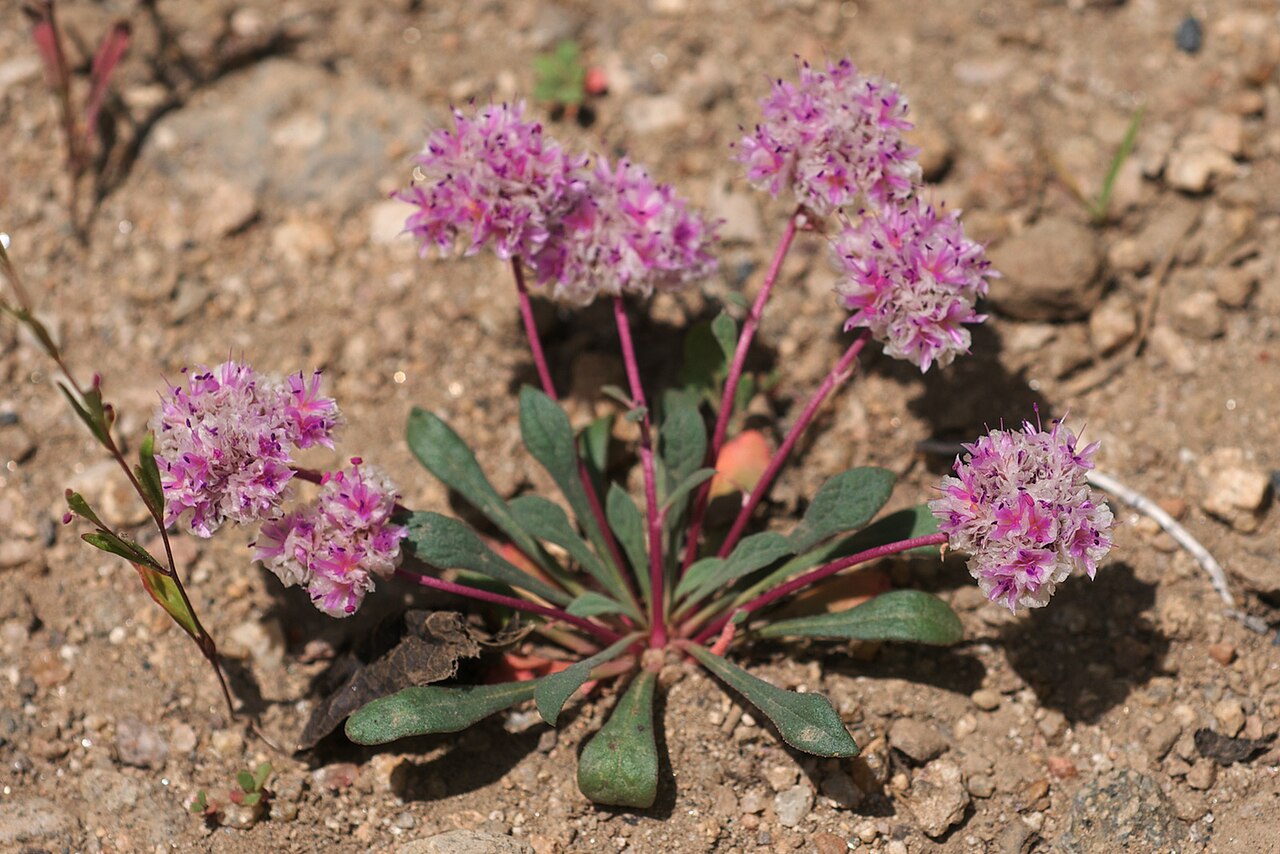
Cistanthe monosperma, known as One-seeded Pussypaws, is a low, ground-hugging wildflower of sunny, gravelly openings in the mountains of California, western Nevada and southwestern Oregon. It forms a flat rosette of thick, spoon-shaped leaves, from which several reddish stems radiate outward, each ending in a dense, rounded head of tiny flowers wrapped in papery, white to rose-pink sepals. The fuzzy-looking heads resemble the soft pads of a cat’s paw, which is how pussypaws got their name.
It belongs to the miner’s lettuce family (Montiaceae), formerly part of the purslane family. Many botanists, including the current California flora, place it in the genus Calyptridium as Calyptridium monospermum, while USDA PLANTS uses Cistanthe monosperma. It is a perennial from a thick taproot and caudex, though individual plants are often short-lived and may flower in their first year.
One-seeded pussypaws is a familiar sight along trails and roadsides in the Sierra Nevada and the southern Cascades, carpeting bare granite sand and volcanic gravel where few other plants grow. It is rarely grown in gardens, but it is a charming plant for a sunny rock garden or gravel bed within its native range if you can obtain seed collected responsibly.
Identification
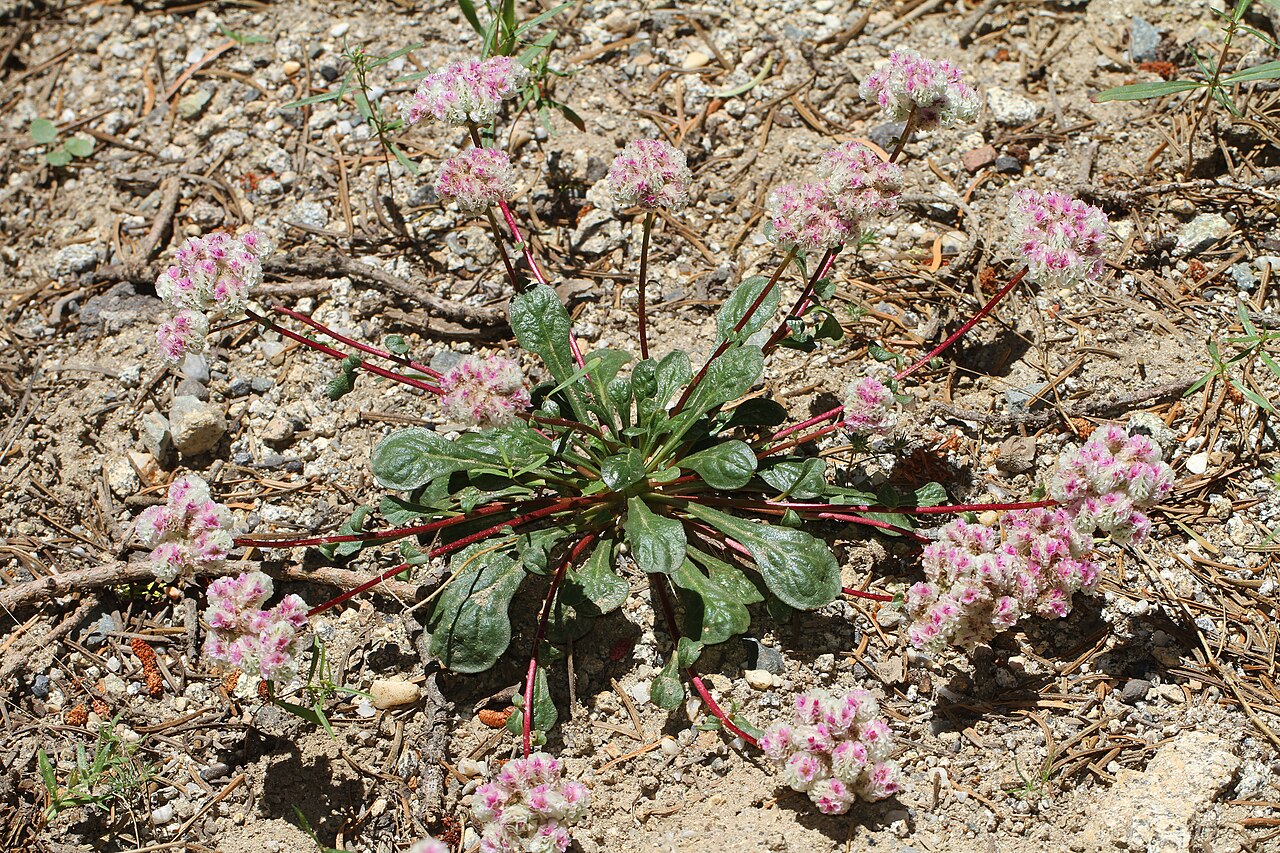
Look for a flat rosette of fleshy, spoon-shaped leaves on bare, sandy or gravelly ground, with several reddish stems spreading out like spokes, each ending in a fuzzy pink or white ball of papery flowers.
Growth Habit
Plants grow from a thick taproot topped by a short caudex. The basal rosette is usually 2 to 5 inches across. Several flowering stems grow from each rosette, lying flat on the ground or rising at an angle, usually 2 to 8 inches long and occasionally longer. Pussypaws are known for moving their flowering stems: they often lie flat in the cool of the morning and lift off the hot ground as the day warms, which helps keep the flowers from overheating.
Leaves
The basal leaves are thick, smooth and somewhat succulent, spoon-shaped (spatulate) and up to about 2 1/2 inches long, often green with reddish tints. A few much smaller leaves grow along the stems.
Flowers
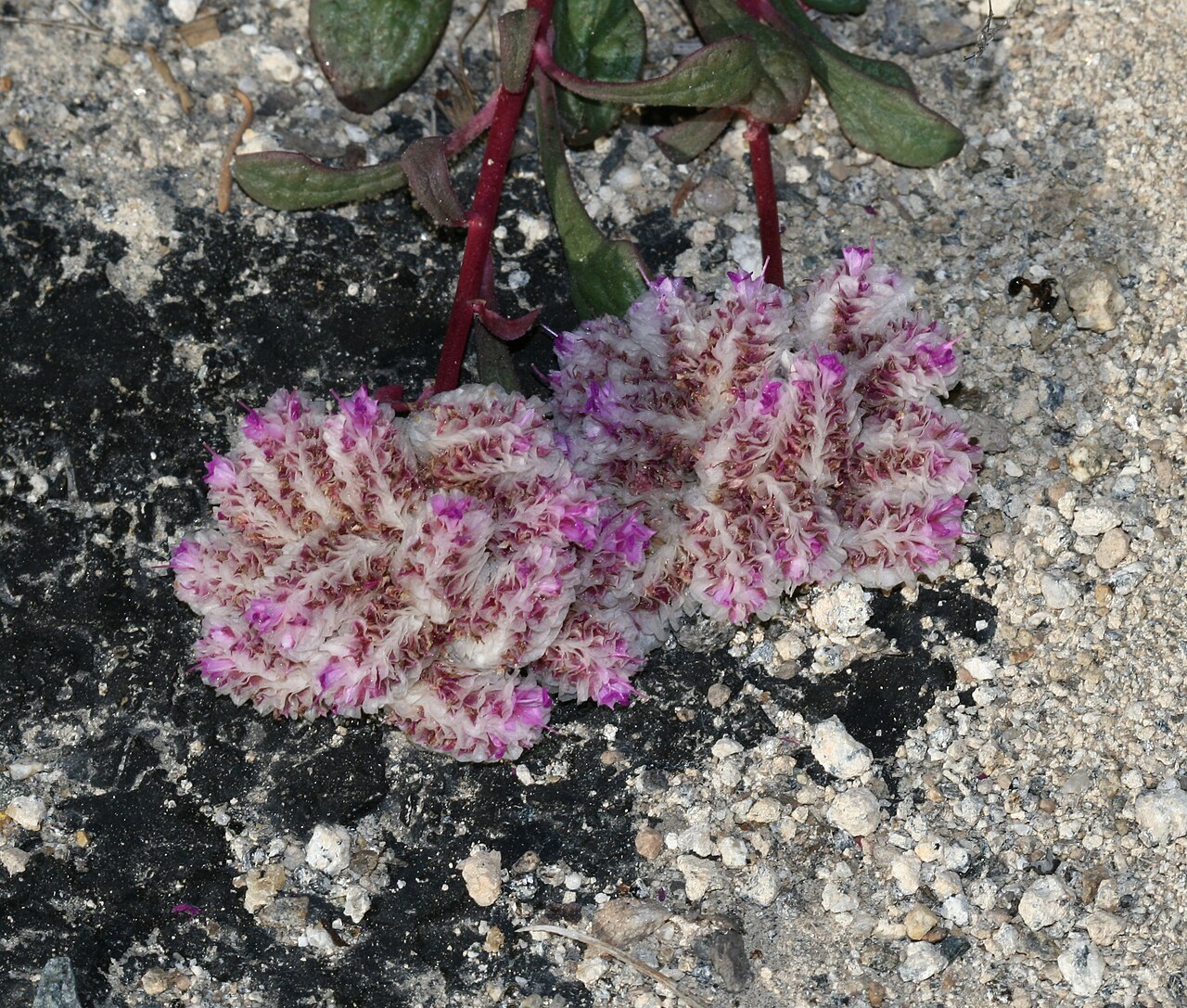
The flowers are packed into dense, rounded, umbel-like heads up to a few inches wide at the stem tips. Each tiny flower has two large, rounded, papery sepals that are white to deep rose-pink, often with darker veins, and four small petals tucked between them. The papery sepals give the heads their soft, fluffy look. Bloom time is roughly April to September, depending on elevation and snowmelt.
Fruit & Seeds
Each flower produces a small, rounded capsule that holds a single seed or very few, the feature behind the name “one-seeded.” The seeds are shiny and black. The papery sepals persist and dry to a tan color, so old flower heads remain visible into fall.
Look-alikes
Mount Hood pussypaws (Cistanthe umbellata, also called Calyptridium umbellatum) is very similar but usually has a single flower cluster per rosette, larger leaves and several seeds per capsule, and it extends farther north and east into the Rockies. Other small Calyptridium species of California are annuals with smaller flower clusters. Plants of buckwheats such as sulfur buckwheat can grow in the same gravelly openings but have yellow flowers in branched umbels and woody bases.
Quick Facts
| Scientific Name | Cistanthe monosperma (syn. Calyptridium monospermum) |
| Family | Montiaceae (miner’s lettuce family) |
| Plant Type | Low, rosette-forming perennial herb (often short-lived) |
| Mature Height | 2–6 in |
| Mature Spread | 4–12 in |
| Growth Rate | Moderate |
| Sun Exposure | Full sun |
| Water Needs | Low; moist in spring, dry in summer |
| Soil Type | Sharply drained granite sand, volcanic gravel or rocky soil |
| Soil pH | Acidic to neutral (about 5.5–7.0) |
| Bloom Time | April–September (by elevation) |
| Flower Color | White to rose-pink (papery sepals) |
| Fall Color | Dry tan flower heads |
| Fruit | Small capsule with one or few shiny black seeds |
| Deer Resistant | Unknown; rarely browsed |
| USDA Hardiness Zones | 4–9 |
Native Range
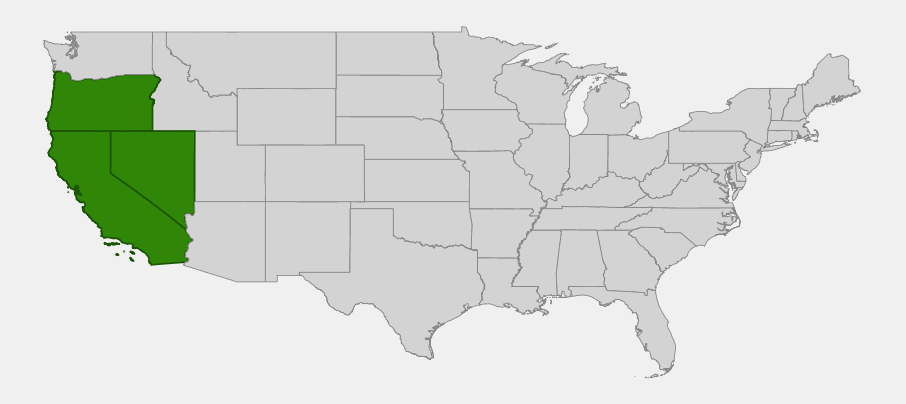
One-seeded pussypaws grows from southwestern Oregon south through the mountains of California to northern Baja California, Mexico. USDA PLANTS lists it as native in California, Nevada and Oregon. In California it is common in the Sierra Nevada and the southern Cascades and grows in the Klamath and North Coast ranges, the Transverse and Peninsular ranges of Southern California and other mountain areas. In Nevada it occurs along the eastern slope of the Sierra Nevada near Lake Tahoe and Reno.
In Oregon it grows mainly in the Klamath-Siskiyou mountains of the southwest and in the southern Cascades, including the Crater Lake area. Most Oregon records come from the Siskiyou and Cascade mountains; plants farther east in Oregon are generally the related Mount Hood pussypaws.
Its habitat is open, sunny ground with little competition: decomposed granite, pumice and volcanic gravel, sandy flats, rocky ridges, open conifer forest and forest openings, and road cuts. It is most common in the montane and subalpine zones, growing where snow lies in winter and the soil dries out by midsummer.
📋 Regional plant lists featuring One-seeded Pussypaws: Western Oregon & Western Washington · California & Nevada
Growing & Care Guide
One-seeded pussypaws is seldom sold by nurseries, and it is a plant for experienced rock gardeners rather than ordinary beds. It needs the conditions of a mountain gravel flat: full sun, sharp drainage, winter cold and a dry summer. Grow it from seed obtained from a native seed source, and never dig plants from the wild; their taproots rarely survive transplanting.
Light
Full sun. In the wild it grows on open ground with little or no shade, and plants in shade become weak and flower poorly.
Soil & Water
Use a very lean, fast-draining mix of coarse sand, decomposed granite or pumice with little organic matter. Moisture in spring from snowmelt or rain, followed by a dry summer, matches its native conditions. Water lightly while seedlings establish, then only occasionally; rich soil or frequent summer watering usually leads to rot.
Planting Tips
Sow seed in fall on the surface of a gravel bed, trough or rock garden pocket so it gets winter cold and moisture before germinating in spring. Choose an open, sunny site where taller plants will not crowd it. It suits mountain gardens best; in hot, humid lowland climates it is difficult to keep.
Pruning & Maintenance
No pruning is needed. Keep the area free of weeds and mulch only with gravel, never bark or compost. Leave some flower heads to ripen so the plant can self-sow, since individual plants may be short-lived.
Propagation
Grow from seed. Collect the small black seeds from dry flower heads in late summer, and sow outdoors in fall or give them a few weeks of cold, moist stratification before a spring sowing. Transplant seedlings while young, if at all, because of the taproot.
Landscape Uses
- Rock gardens: a tiny, long-blooming accent for sunny gravel pockets
- Troughs and crevice gardens: fits well in small-scale alpine plantings
- Mountain and xeric gardens: for gardens within its native range
- Pollinator plantings: its flower heads attract small bees and butterflies
- Wildflower viewing: common along trails and roadsides in the Sierra Nevada and southern Cascades
Wildlife & Ecological Value
One-seeded pussypaws is one of the pioneering plants of bare granite and volcanic gravel in the western mountains, flowering through the short summer season.
For Pollinators
The flower heads are visited by small native bees, flies and butterflies, which find nectar and pollen across a long blooming season at a time when gravel flats offer few other flowers.
For Birds
Small seed-eating birds may pick seeds from the dry flower heads, although the seeds are tiny and few per flower.
For Mammals
Ground squirrels, chipmunks and other small mammals forage on seeds in the open ground where it grows. Its succulent leaves may be nibbled by small herbivores.
Ecosystem Role
As a colonizer of disturbed and sparsely vegetated ground, it helps stabilize loose gravel and adds organic matter to young soils. It is part of the distinctive low wildflower community of granite sand and pumice flats in the Sierra Nevada and Cascades.
Cultural & Historical Uses
The common name “pussypaws” comes from the soft, rounded flower heads, which look like the pads of a cat’s paw. The species name monosperma means “one-seeded,” referring to the single seed usually found in each small capsule.
The plant has been moved among several genera. It was described as Calyptridium monospermum by the botanist Edward Lee Greene and later included in Cistanthe; recent studies have returned it to Calyptridium, the name used in the current California flora. All of these names refer to the same plant.
Pussypaws are a favorite of hikers and wildflower photographers in the Sierra Nevada, where they bloom along trails at Yosemite, Sequoia and Lake Tahoe. The way their flower stalks lift off hot ground and lie down again in the cool hours has also interested botanists studying how plants cope with harsh mountain conditions.
Frequently Asked Questions
Is one-seeded pussypaws an annual or a perennial?
It is a perennial from a thick taproot, but plants are often short-lived and can flower in their first year, so it sometimes behaves like an annual or biennial.
How is it different from Mount Hood pussypaws?
Mount Hood pussypaws (Cistanthe umbellata) usually has one flower cluster per rosette and several seeds per capsule. One-seeded pussypaws usually has several flower stalks per rosette and one seed per capsule.
Can I grow pussypaws in my garden?
Yes, but only in very sharply drained, sunny gravel, ideally in a mountain or dry-summer climate. Grow it from seed and never dig wild plants.
Why do pussypaws stems move during the day?
The stems often lie flat in the cool morning and rise as the ground heats up, which helps keep the flowers from overheating on hot, bare soil.
Where can I see one-seeded pussypaws?
Look on sunny, gravelly ground along trails and roadsides in the Sierra Nevada and southern Cascades in summer, including the Lake Tahoe area, Yosemite and Sequoia national parks.

Looking for a nursery that carries One-seeded Pussypaws?
Browse our native plant nursery directory: California · Nevada · Oregon