
Bogbean (Menyanthes trifoliata)
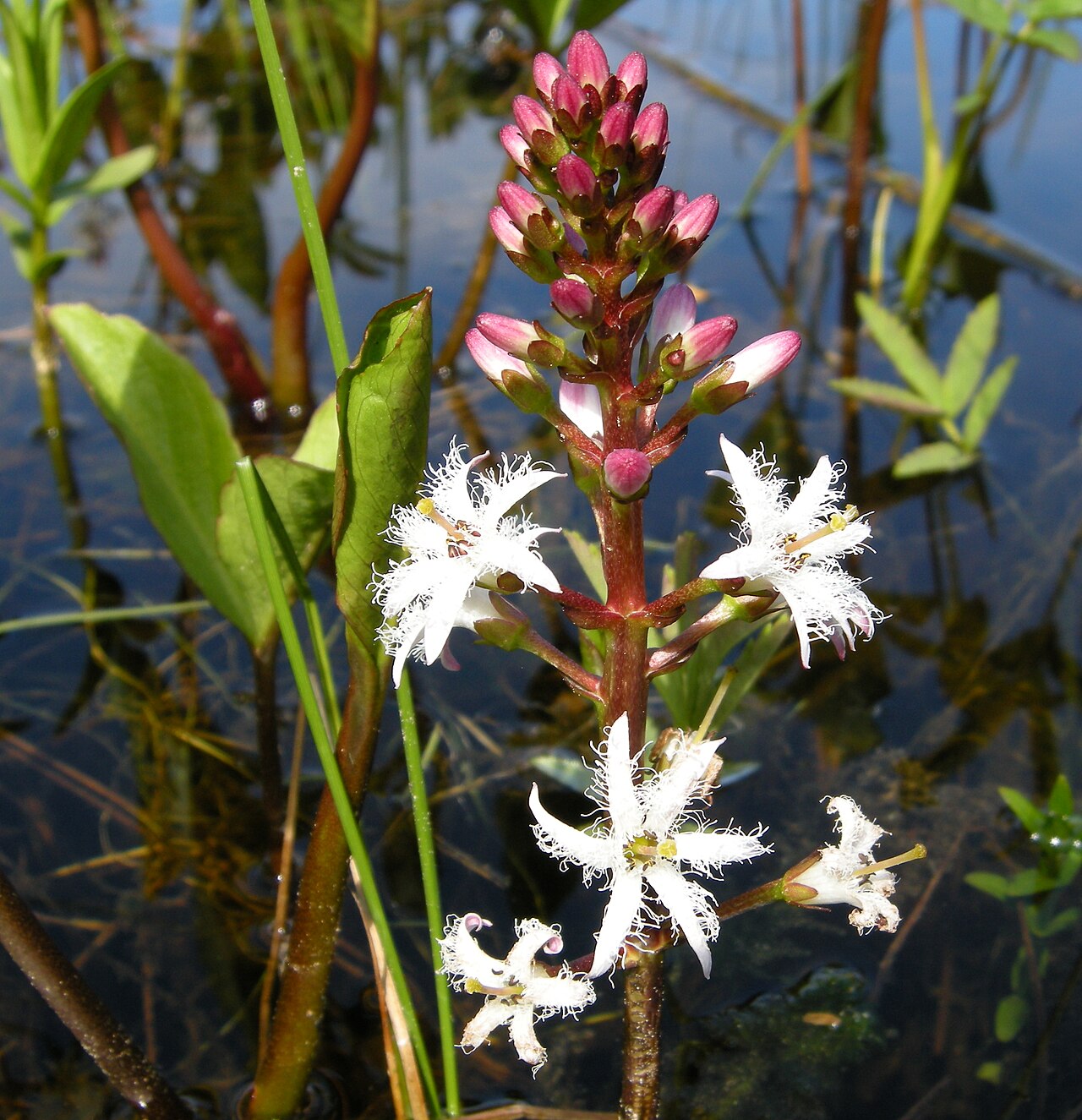
Menyanthes trifoliata, known as Bogbean or buckbean (USDA: buckbean), is a creeping aquatic perennial of bogs, fens, marshes and the shallow edges of cold ponds and lakes. It is the only species in its genus and belongs to the small buckbean family (Menyanthaceae). It grows across the cooler parts of North America, Europe and Asia, from Alaska and across Canada south into the northern and mountain states of the U.S.
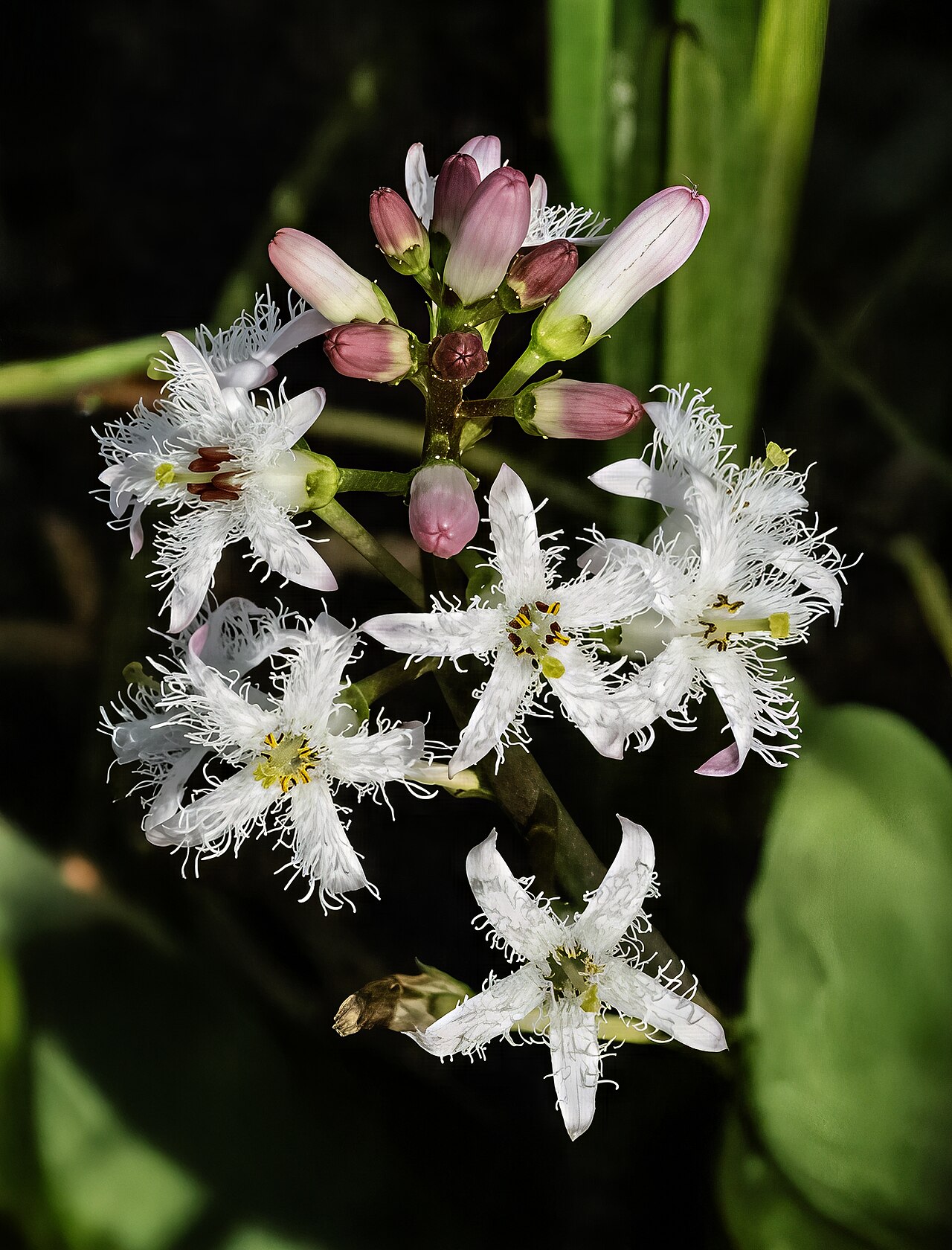
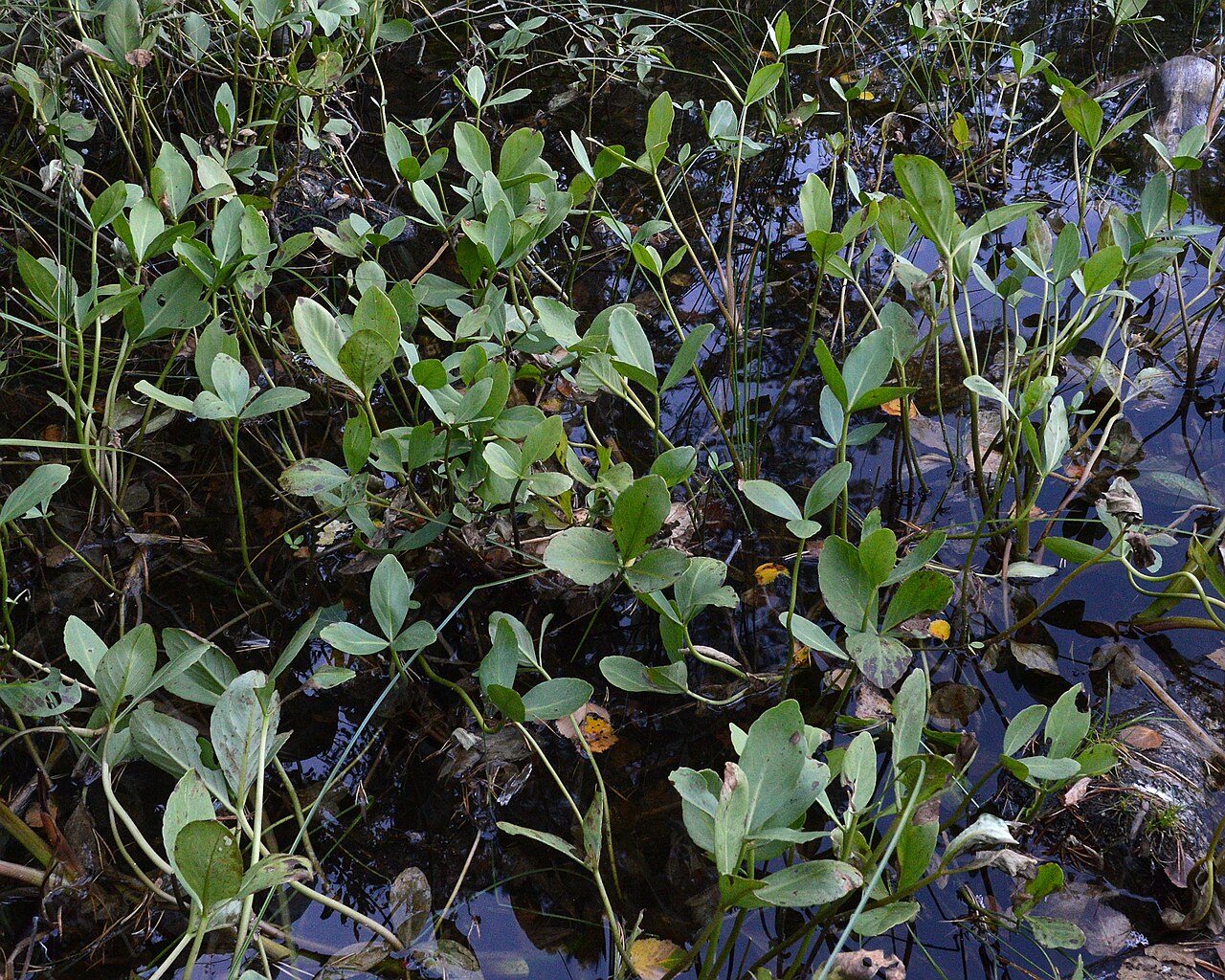
Bogbean spreads by thick, spongy, creeping stems (rhizomes) that run through mud and along the water surface, sending up leaves divided into three smooth, oval leaflets, much like a giant clover or a bean leaf. In spring and early summer, stout stalks rise above the leaves with clusters of pink buds that open into white, star-shaped flowers. Each petal is covered with a dense fringe of white hairs, making the flowers look frosted or feathery. They are among the most beautiful wildflowers of northern wetlands.
In gardens, bogbean is a fine native plant for the shallow margin of a pond or a bog garden in cool climates, where it softens the edge between water and land and attracts early bees. The leaves are intensely bitter, and the plant should not be eaten. As with all wetland plants, buy nursery-propagated stock rather than collecting from wild bogs and fens.
Identification
Bogbean is easy to recognize: no other North American wetland plant combines three-parted leaves on long stalks with spikes of white flowers whose petals are fringed with fuzzy white hairs.
Growth Form
Bogbean is an herbaceous perennial with stout, creeping rhizomes up to about 1/2 inch thick, marked with old leaf scars. The rhizomes grow through wet peat and mud or float at the water surface, often forming large, tangled colonies that can extend out over open water as a floating mat. Leaves and flower stalks rise about 6 to 12 inches above the water or mud.
Leaves
The leaves are alternate and grow from the tips of the rhizomes, each on a long stalk that sheathes the stem at its base. Each leaf has three smooth, hairless, oval to elliptic leaflets about 1-1/2 to 4 inches long, with untoothed or slightly wavy edges. They are slightly fleshy and medium to dark green. The leaves die back in fall.
Flowers
Flowers appear from about April to July, depending on latitude and elevation, in a cluster (raceme) of 10 to 20 or more at the top of a leafless stalk. The buds are pink to purplish, and each open flower is about 1/2 to 3/4 inch across, with five pointed white petals, sometimes tinged pink, joined at the base. The upper surface of each petal is densely covered with long white hairs, giving a fringed, shaggy look. Plants have two flower forms, one with long styles and short stamens and the other the reverse, which encourages cross-pollination.
Fruit & Seeds
The fruit is a round to egg-shaped capsule about 1/3 inch long that opens irregularly to release smooth, shiny, buoyant seeds. The seeds float and are dispersed by water and by waterfowl.
Look-alikes
Out of flower, bogbean leaves might be confused with those of other three-parted wetland plants such as marsh cinquefoil, which has five to seven toothed leaflets, or with trilliums or clovers, which do not grow in standing water. Deer-cabbage (Nephrophyllidium crista-galli), a relative in the same family in the Pacific Northwest and Alaska, has rounded, kidney-shaped single leaves.
Safety Note
All parts of bogbean are intensely bitter and contain bitter compounds that can cause vomiting and diarrhea if eaten in quantity. Do not eat it or use it as a home remedy. Keep children and pets from chewing on it. It is not dangerous to touch.
Quick Facts
| Scientific Name | Menyanthes trifoliata |
| Family | Menyanthaceae (buckbean family) |
| Plant Type | Rhizomatous aquatic or emergent herbaceous perennial |
| Mature Height | 6–12 in above water or mud |
| Mature Spread | Spreads indefinitely by rhizomes; colonies several feet wide |
| Growth Rate | Moderate |
| Sun Exposure | Full sun to partial shade |
| Water Needs | Very high; saturated soil or shallow water up to about 12 in |
| Soil Type | Peat, muck or mud; bogs, fens and pond margins |
| Soil pH | About 4.5–7.5 (acidic to neutral) |
| Bloom Time | April–July |
| Flower Color | White with fringed petals; pink buds |
| Fall Color | Leaves yellow and die back |
| Fruit | Small round capsule with buoyant seeds |
| Deer Resistant | Yes; very bitter and seldom browsed |
| USDA Hardiness Zones | 2–8 |
Native Range
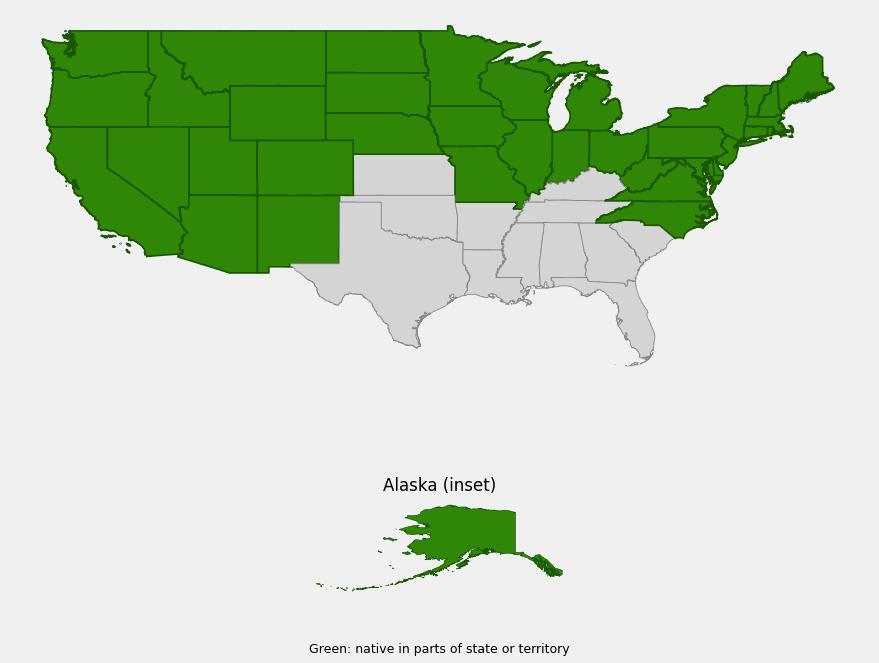
Bogbean is circumboreal, growing across the cooler parts of the Northern Hemisphere. USDA PLANTS lists it as native in Alaska, Canada, Greenland, Saint Pierre and Miquelon and the lower 48 states, where it is recorded from 36 states. In Canada it grows across the country, from Yukon and British Columbia east to Newfoundland and Labrador. The Lady Bird Johnson Wildflower Center summarizes its U.S. range as south to Delaware, northwestern North Carolina, Ohio, Nebraska, the Colorado Rockies and northern California.
It is most common in the glaciated Northeast and Great Lakes states, the upper Midwest, the northern Rocky Mountains, the Pacific Northwest and Alaska. Farther south it is found mostly at higher elevations, in mountain fens and lakes of the Rockies south to Arizona and New Mexico, in the Sierra Nevada and other western ranges, and as scattered, outlying populations in the central Appalachians of Pennsylvania, Maryland, West Virginia, Virginia and North Carolina and in a few places in Missouri. Many of these southern populations are rare and are tracked by state natural heritage programs.
Habitats include sphagnum bogs, fens, floating peat mats, marshes, wet meadows, shallow pond and lake margins, slow streams and ditches, usually in cold water and on peaty or mucky soil. It tolerates both acidic bogs and less acidic fens.
📋 Regional plant lists featuring Bogbean: New York, Pennsylvania & Northern New Jersey · Idaho, Eastern Oregon & Eastern Washington · Ohio & Indiana · Montana & Wyoming · Michigan, Wisconsin & Eastern Minnesota · Nebraska, Kansas & Eastern Colorado · Utah & Western Colorado · Connecticut, Massachusetts & Rhode Island · New Hampshire, Maine & Vermont · Maryland, Virginia & West Virginia · Delaware, Southern New Jersey & Long Island · Arizona & New Mexico · Illinois, Iowa & Missouri · Alaska · North & South Carolina · North Dakota, South Dakota & Western Minnesota · Western Oregon & Western Washington · California & Nevada
Growing & Care Guide
Bogbean is a rewarding plant for the shallow edge of a natural pond, a lined bog garden or a water-garden container, especially in regions with cool summers. It needs constant moisture and does not tolerate drying out. Buy plants from a native plant or water-garden nursery; do not dig them from wild wetlands.
Light
Give it full sun to partial shade. It flowers best in sun, but appreciates some afternoon shade in hot-summer regions, where the water in small ponds can warm up a lot.
Soil & Water
Plant it in wet peat, muck or heavy loam that stays saturated, or in shallow water from about 2 to 12 inches deep. It prefers cool, clean, low-nutrient water and slightly acidic to neutral conditions. Do not fertilize; nutrient-rich water encourages algae and weedy competitors. In water gardens, a planting basket filled with a mix of peat and loam works well.
Planting Tips
Plant rhizome pieces or potted plants in spring, laying the rhizome horizontally just under the mud surface or setting the basket on a shelf at the pond margin. The rhizomes will creep outward and can float out over the water, softening hard pond edges. Combine it with marsh marigold, wild calla, sedges and blue flag iris.
Pruning & Maintenance
Bogbean needs little care. Remove dead leaves in late fall or early spring and cut back rhizomes that spread farther than you want. The rhizomes are hardy and survive winter under ice as long as they stay wet. In small containers, sink the pot deeper or move it to a sheltered spot so it does not freeze solid.
Propagation
The easiest method is to divide or cut the rhizomes in spring, making sure each piece has a growing tip and some roots. Seed can also be sown fresh in fall on wet, peaty soil, or after cold, moist stratification over winter, kept constantly moist.
Landscape Uses
- Pond margins: softening the edge between open water and land in natural ponds
- Bog gardens: a showy spring bloomer with pitcher plants, sedges and wild calla
- Water-garden containers: in a basket set in shallow water
- Wetland restoration: stabilizing peat and mud along cold lakes, fens and ditches
- Rain gardens in cool climates: in the wettest, low zone that holds standing water
Wildlife & Ecological Value
Bogbean adds early flowers and shelter to northern wetlands and is part of the peat-forming community of bogs and fens.
For Pollinators
The fragrant flowers are visited by bumblebees, other native bees and flies in spring and early summer. The two flower forms encourage pollen transfer between different plants, so pollinators are important for good seed set.
For Birds
Waterfowl and other wetland birds eat the floating seeds and help disperse them. The dense rhizome mats provide cover for nesting and feeding birds along wetland edges.
For Mammals
Because the leaves are so bitter, most mammals leave bogbean alone. Its colonies are part of the wetland edge habitat used by muskrats, beavers and moose in the North.
Ecosystem Role
Bogbean rhizomes help bind soft peat and build floating mats that other bog plants colonize. Its colonies shelter aquatic insects, amphibians and small fish along the shallow edges of ponds and lakes, and it is a good indicator of clean, cold, nutrient-poor wetlands.
Cultural & Historical Uses
The name Menyanthes is usually explained as coming from Greek words for “month” and “flower,” perhaps referring to the length of its bloom. The species name trifoliata means “three-leaved,” and the common names bogbean and buckbean refer to the bean-like leaves.
In northern Europe, bogbean has a long history as a bitter herb. Its bitter leaves were used as a substitute for hops in flavoring beer, and the Lady Bird Johnson Wildflower Center notes that powdered roots were reportedly mixed into flour as a bread additive in times of scarcity. It was also a traditional tonic in European folk medicine. It is still sold in some herbal products, but it is strongly bitter and can cause digestive upset; it should not be used without medical advice.
Some Indigenous peoples of northern North America also used bogbean, mainly as a bitter medicine. For gardeners and naturalists, it is above all a signature flower of cold northern bogs and fens, where its fringed white blossoms appear above the water each spring.
Frequently Asked Questions
Is bogbean the same as buckbean?
Yes. Bogbean, buckbean and marsh trefoil are all common names for Menyanthes trifoliata. USDA PLANTS uses buckbean.
How deep can bogbean grow in water?
It grows best in saturated mud or shallow water up to about 12 inches deep, and its rhizomes can float out over deeper water as a mat.
Is bogbean poisonous?
It is not known as a dangerous poison, but all parts are intensely bitter and can cause vomiting and diarrhea if eaten in quantity. Do not eat it, and keep pets and children from chewing on it.
Will bogbean take over my pond?
It spreads steadily by rhizomes but is easy to control by cutting back the rhizomes. It is not an aggressive invader in its native range and does best in cool, low-nutrient water.
Can bogbean grow in warm climates?
It prefers cool summers and cold winters. In hot, southern lowland gardens it often struggles, especially in warm, shallow water. It does best from about zone 2 to zone 8.

Looking for a nursery that carries Bogbean?
Browse our native plant nursery directory: Alaska & Arizona · California · Colorado, Connecticut & Delaware · Idaho, Illinois, Indiana & Iowa · Maine, Maryland, Massachusetts, Michigan, Minnesota, Missouri & Montana · Nebraska, Nevada, New Hampshire, New Jersey, New Mexico, New York, North Carolina, North Dakota & Ohio · Oregon · Pennsylvania, Rhode Island, South Dakota, Utah, Vermont & Virginia · Washington · West Virginia, Wisconsin & Wyoming