Pinemat (Ceanothus prostratus)
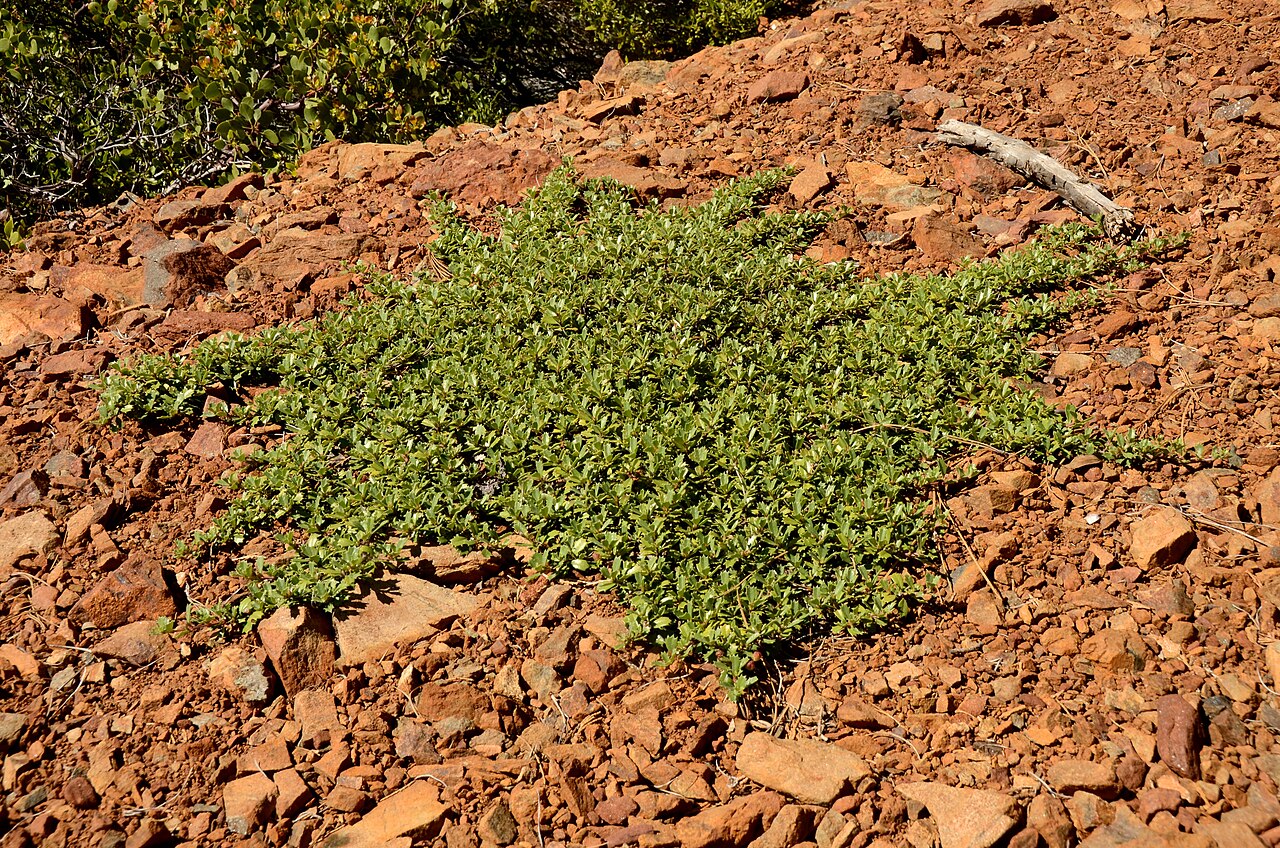
Ceanothus prostratus, commonly known as Pinemat, Prostrate Ceanothus, or Mahala Mat, is a low, woody, evergreen shrub that hugs the ground instead of standing up — a true mat-forming native of dry pine and mixed-conifer forests in the West. Where most Ceanothus species grow as upright shrubs, Pinemat has evolved a flat, spreading habit that lets it carpet open, sun-baked forest floors and rocky slopes where little else can compete.
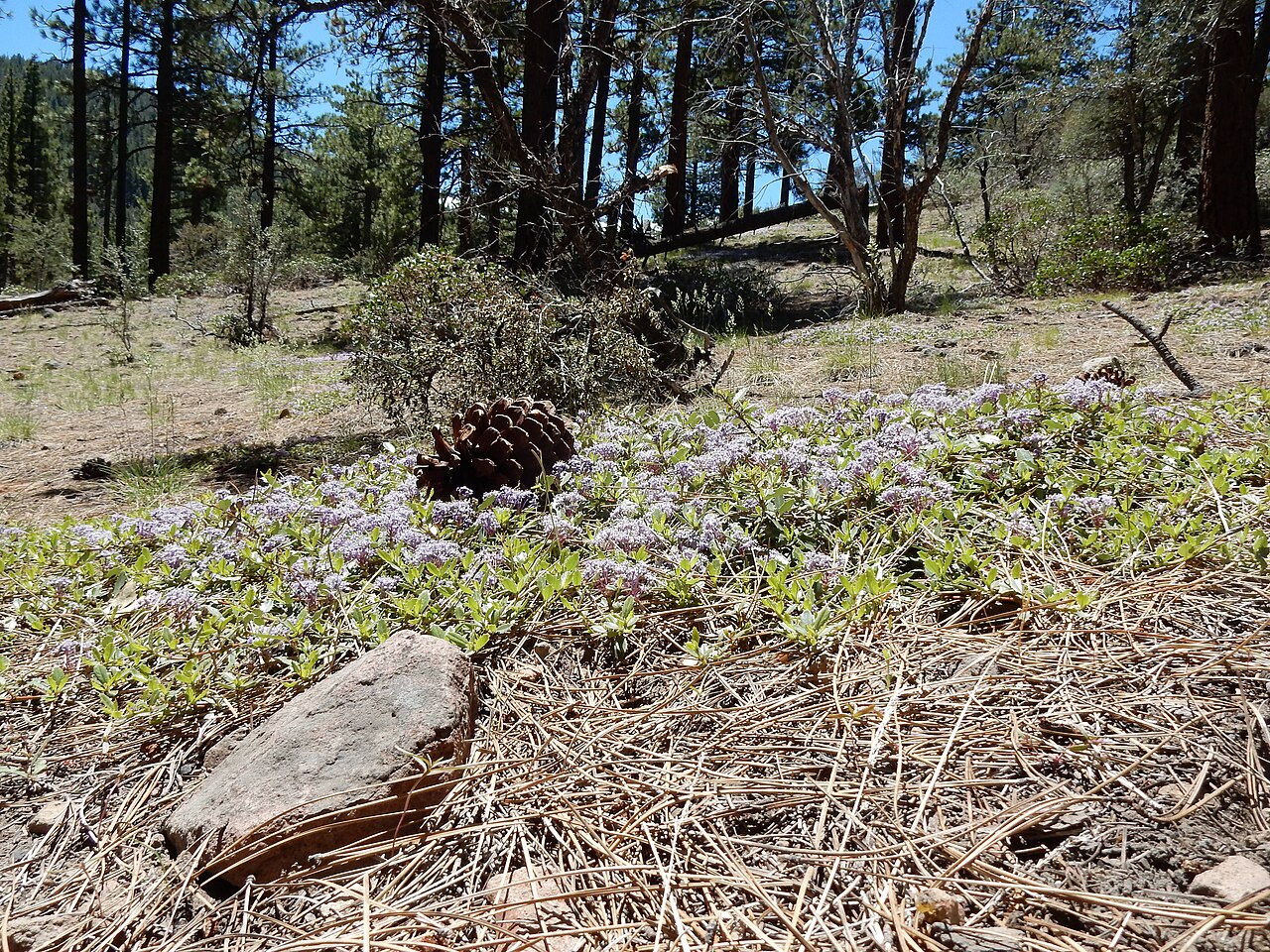
Pinemat typically forms mats just a few inches tall but several feet across, rooting as it spreads and knitting together a dense, leathery groundcover of small, spiny-toothed leaves reminiscent of miniature holly. In late spring, the mats erupt in flat clusters of pale blue to lavender flowers that cover the foliage and draw in a steady stream of native bees and other pollinators — a striking contrast against the pine duff and volcanic rock of its favored habitat.
This is a tough, drought-adapted plant built for lean soils and intense summer sun, and like many western Ceanothus species it fixes nitrogen through root nodules, quietly enriching the thin forest soils it grows in. For gardeners in its native range who need a durable, flowering groundcover for a hot, dry, sunny slope, Pinemat is hard to beat — though it is notoriously particular about drainage and does not tolerate garden-style watering.
Identification
Pinemat is identified by its combination of a flat, mat-forming habit, small rigid evergreen leaves with spiny teeth, and flat-topped clusters of pale blue flowers — a look unlike almost any other native shrub sharing its dry-forest habitat.
Bark & Stems
Stems are woody, prostrate, and root where they touch the ground, forming an interlocking mat that can spread several feet from a central crown while staying just a few inches tall. Young twigs are reddish-brown and finely hairy, aging to gray-brown bark on older stems.
Leaves
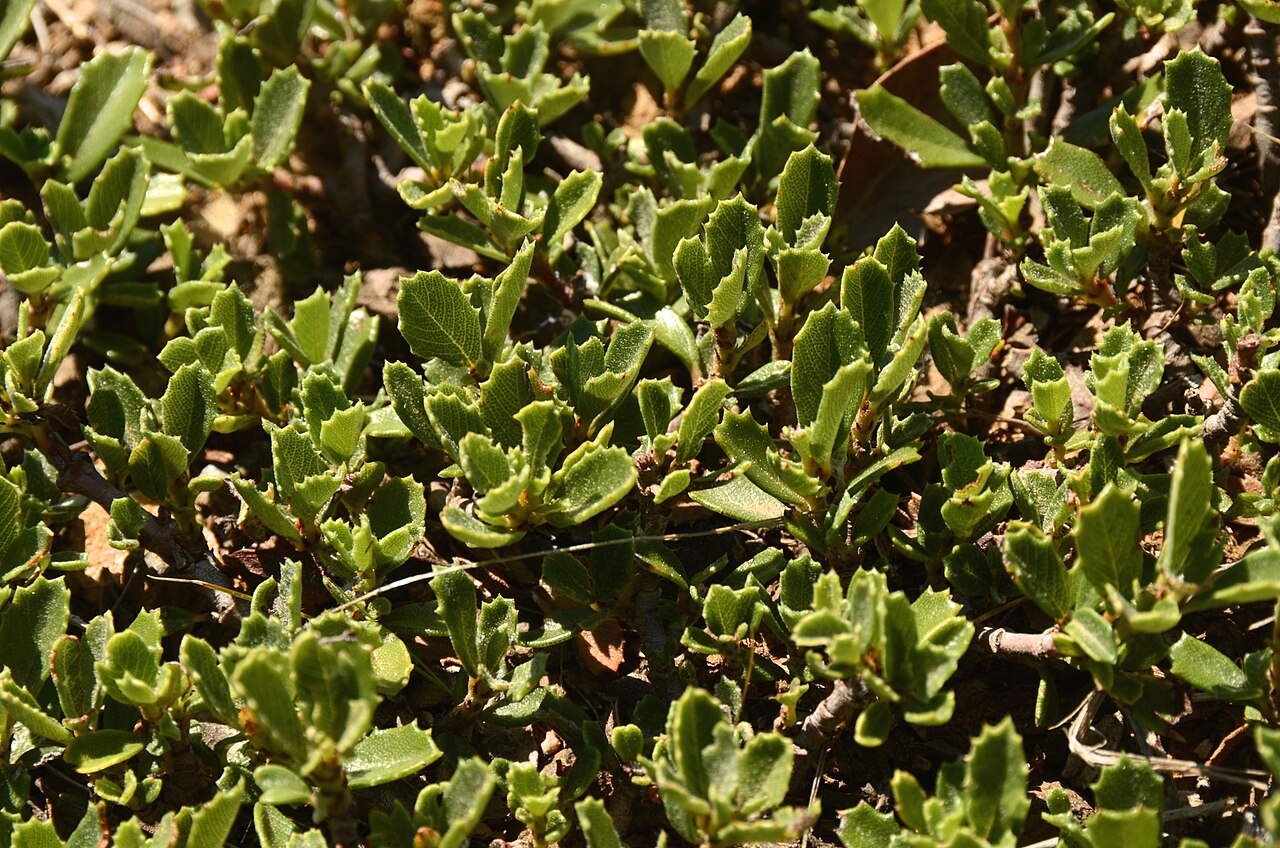
Leaves are small, stiff, and evergreen, typically ½ to 1 inch long, oval to oblong, and arranged oppositely along the stem. The margins are lined with sharp, spine-tipped teeth, giving the foliage a holly-like texture; the upper surface is glossy dark green, and the underside is paler and often finely hairy. This spiny, leathery leaf texture is one of the most reliable field marks separating Pinemat from other low western shrubs.
Flowers
In late spring to early summer, Pinemat produces small, flat-topped clusters (umbels) of tiny flowers in shades of pale blue, lavender, or occasionally white, held just above the foliage on short stalks. Though individually small, the flowers are produced in such quantity that a well-established mat can appear hazed with color for several weeks, and the blossoms carry a light, sweet fragrance that draws bees from a distance.
Fruit & Seeds
Flowers give way to small, three-lobed seed capsules that dry, split, and forcibly eject their hard, dark brown to reddish seeds a short distance from the parent plant — a dispersal mechanism typical of the genus. The seed coat is hard and typically requires heat or scarification (such as from fire) to break dormancy, which helps explain Pinemat’s strong association with periodically burned forest.
Quick Facts
| Scientific Name | Ceanothus prostratus |
| Family | Rhamnaceae (Buckthorn) |
| Plant Type | Evergreen Prostrate Shrub (Groundcover) |
| Mature Height | 4–12 in |
| Mature Spread | 3–8 ft |
| Growth Rate | Slow to moderate |
| Sun Exposure | Full Sun to Part Shade |
| Water Needs | Low; drought tolerant once established |
| Soil Type | Lean, rocky or sandy, well-drained; volcanic or granitic soils |
| Soil pH | 5.5–7.0 |
| Bloom Time | April – June |
| Flower Color | Pale blue to lavender, occasionally white |
| Fall Color | Evergreen; no fall color change |
| Fruit | Small three-lobed seed capsules |
| Deer Resistant | Moderate (browsed occasionally) |
| USDA Hardiness Zones | 6–8 |
Native Range
Pinemat is native to the mountains and foothills of the Pacific states, found from Washington and northern Idaho south through Oregon and into California, with a range that also extends into western Nevada along the Sierra Nevada’s eastern slope. It is most common on the drier, sunnier sides of mixed-conifer and ponderosa pine forests, typically at mid elevations in the mountains rather than at the coast or in the lowland valleys.
Throughout this range, Pinemat favors open, well-drained sites: rocky outcrops, thin volcanic or granitic soils, and sunny openings within pine and fir forest where competition from taller shrubs and trees is limited. It is frequently found alongside other dry-forest natives on slopes that see full sun for much of the day, and it is notably more common on disturbed or recently burned ground, where its fire-adapted seed bank gives it an early advantage.
Pinemat’s low, mat-forming habit and reliance on good drainage make it a poor fit for humid or heavy-clay regions outside its native mountain range; gardeners east of the Rockies or in wetter climates should not expect it to thrive without the dry, lean, well-drained conditions it evolved with.
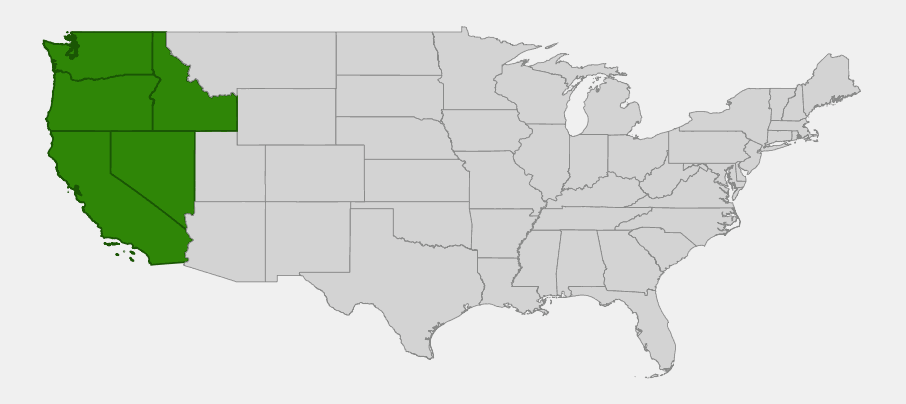
📋 Regional plant lists featuring Pinemat: Idaho, Eastern Oregon & Eastern Washington · Western Oregon & Western Washington
Growing & Care Guide
Pinemat rewards gardeners who can offer it the lean, sharp drainage and full sun it needs, and it punishes those who try to grow it like a typical nursery groundcover. Get the site right and it needs almost no care for decades.
Light
Plant Pinemat in full sun for the tightest growth and heaviest flowering; it tolerates light, dappled shade beneath open pine canopy — its natural companion — but becomes sparse and flowers poorly in denser shade.
Soil & Water
Sharp drainage is non-negotiable. Pinemat is adapted to thin, rocky, or sandy soils with low fertility and performs poorly, often fatally, in heavy clay or any soil that stays wet. Once established, it is highly drought tolerant and should receive little to no supplemental summer water in most gardens; overwatering, especially in warm weather, is the most common cause of failure. A gravel or decomposed-granite mulch that mimics its native rocky substrate helps keep the crown dry.
Planting Tips
Choose a site with excellent drainage — a slope, rock garden, or raised bed is ideal — and plant from small container stock in fall to allow roots to establish before summer heat and drought arrive. Avoid amending the planting hole with rich organic matter, which can hold excess moisture around the roots; Pinemat prefers lean native soil. Space plants 3 to 5 feet apart to allow mats to fill in and merge over several seasons.
Pruning & Maintenance
Pinemat needs very little pruning. Trim back any dead or winter-damaged stem tips in spring, and avoid heavy shearing, which this species tolerates poorly. Established mats are extremely low-maintenance and can persist for many years with no irrigation once rooted into appropriate soil.
Landscape Uses
Its tight, spiny mat and tolerance of lean, dry soil make Pinemat a specialist groundcover for the right conditions:
- Rock gardens and dry slope plantings where drainage is excellent
- Erosion control on sunny, well-drained banks within its native range
- Dry woodland gardens beneath open pine or fir canopy
- Pollinator gardens — spring flowers are a strong draw for native bees
- Low-water, fire-wise landscaping in mountain and foothill communities
Wildlife & Ecological Value
Despite its modest size, Pinemat plays a real ecological role in the dry forests where it grows, particularly as an early food source and a soil-building pioneer.
For Pollinators
The spring flower display draws a wide range of native bees, including mining bees and bumblebees, along with assorted flies and small butterflies. Because Pinemat often blooms before many other montane wildflowers, it provides an important early-season nectar and pollen source in dry pine forest openings.
For Birds & Mammals
Deer and other browsers occasionally eat the foliage and twigs, particularly in winter when other forage is scarce, though Pinemat is not a primary browse species. Small mammals and ground-foraging birds use its dense mats for cover, and the seeds provide food for some rodents and birds once capsules split open.
Ecosystem Role
Like other Ceanothus species, Pinemat hosts nitrogen-fixing bacteria in root nodules, enriching the thin, nutrient-poor soils of dry pine forest as it spreads. Its mats also help stabilize loose, rocky slopes against erosion, and because its hard seed coat is adapted to fire-related scarification, it is often among the first shrubs to recolonize burned ground — a genuine pioneer species in fire-adapted forest ecosystems.
Cultural & Historical Uses
Pinemat’s common name “Mahala Mat” references a historical term for Native American women in parts of the West, reflecting the plant’s long-standing presence in regional folk vocabulary rather than a documented ceremonial or medicinal tradition specific to this species. As with many western Ceanothus species, some Indigenous groups in its range used various Ceanothus plants for soap-like lathers from crushed flowers and for other practical purposes, though detailed, species-specific ethnobotanical records for Ceanothus prostratus in particular are limited.
In more recent horticultural history, Pinemat has been valued chiefly as a specialist rock-garden and native-plant-nursery subject in the Pacific states, prized by gardeners for the specific challenge and reward of growing a true mountain groundcover rather than for any commercial or utilitarian product.
Frequently Asked Questions
Why isn’t my Pinemat spreading like the ones I’ve seen in the wild?
Pinemat is slow-growing and extremely particular about drainage. If soil stays moist or heavy, growth will be sparse rather than the tight, spreading mat seen on rocky, well-drained wild sites. Give it several years and lean, sharply drained soil.
Can I grow Pinemat outside California, Oregon, Washington, Idaho, or Nevada?
It is possible in climates with similarly dry summers and sharp drainage, but it is not adapted to humid regions or heavy clay soils and is unlikely to thrive much beyond its native mountain range.
Does Pinemat need regular watering?
No — established plants are drought tolerant and generally do best with little to no supplemental summer water. Overwatering is the most common reason plantings fail.
Is Pinemat the same as Squaw Carpet?
“Squaw Carpet” is an older common name sometimes used for Ceanothus prostratus as well as for a related species, Ceanothus pumilus; because the term is now considered outdated and offensive, Pinemat or Mahala Mat are the preferred common names.
Will deer eat Pinemat?
Deer browse it occasionally, especially in winter, but it is not a preferred forage species and established mats generally tolerate light browsing without lasting damage.

Looking for a nursery that carries Pinemat?
Browse our native plant nursery directory: California · Oregon · Washington · Idaho · Nevada