
Largeflower Valerian (Valeriana pauciflora)
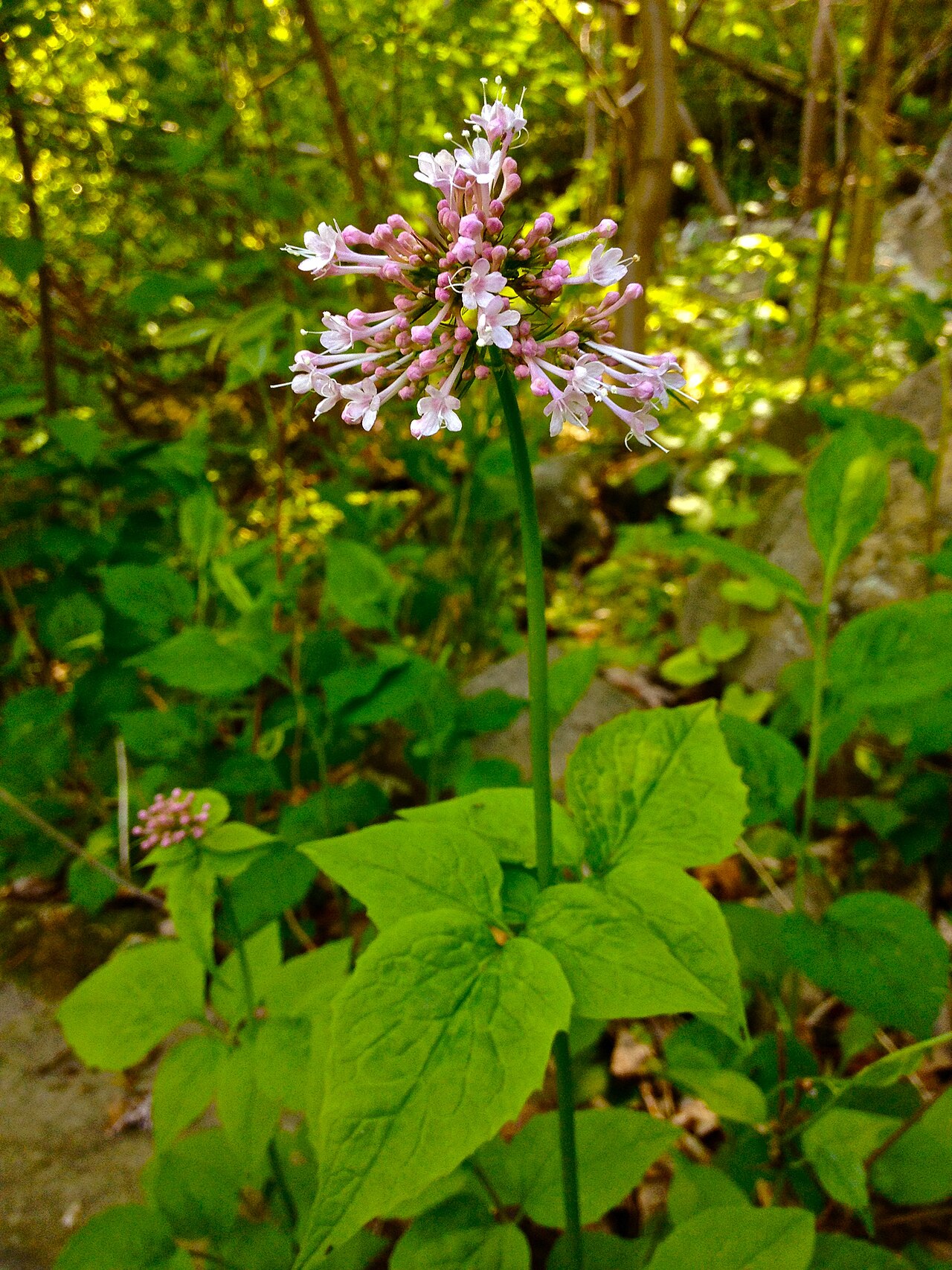
Valeriana pauciflora, known as Largeflower Valerian, is a spring wildflower of rich, moist woods and stream banks in the Ohio Valley and the central Appalachians. In May and June it holds rounded clusters of pale pink, slender, trumpet-shaped flowers on stems 1 to 2 1/2 feet tall, above leaves divided into three to seven leaflets. Its flowers have the longest tubes of any eastern North American valerian, which is the reason for its common name. It belongs to the honeysuckle family in the broad sense (Caprifoliaceae), in the valerian subfamily, formerly treated as its own family, Valerianaceae.
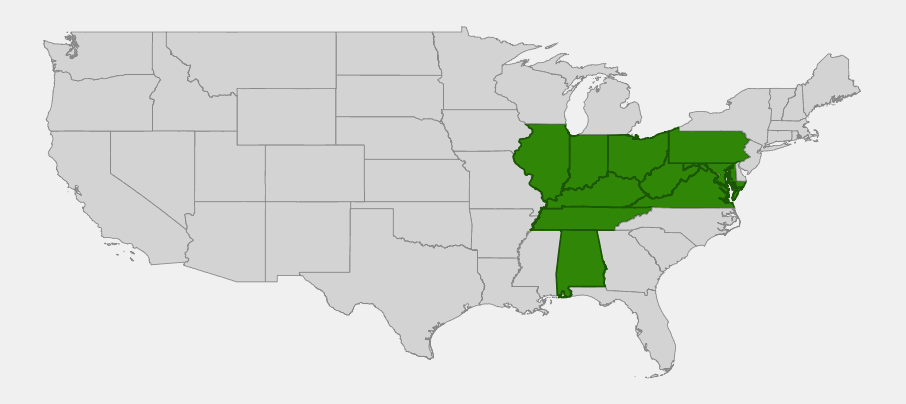
It grows in floodplain forests, wooded ravines and moist slopes, often in limestone regions, from Pennsylvania and Maryland west through Ohio, Indiana and Illinois and south through Kentucky, West Virginia and Tennessee to northern Alabama. It spreads by slender runners and can form loose colonies on stream terraces, where it blooms with Virginia bluebells, woodland phlox and waterleafs.
Largeflower valerian is an attractive, easy plant for moist, shady wildflower gardens, though it is not widely sold. It is a native relative of garden valerian (Valeriana officinalis), a European herb that has escaped in parts of North America, and it should not be confused with that plant or with the shrubby red valerian (Centranthus) of Mediterranean gardens.
Identification
Look in moist spring woods for a colony-forming plant with heart-shaped basal leaves, opposite stem leaves divided into toothed leaflets, and rounded clusters of pale pink, long-tubed flowers in late spring.
Growth Habit
Largeflower valerian is a herbaceous perennial with slender rhizomes and above-ground runners that root at the nodes, so plants often form loose patches. Flowering stems are upright, usually 1 to 2 1/2 feet tall, smooth or slightly hairy, and mostly unbranched below the flower cluster.
Leaves
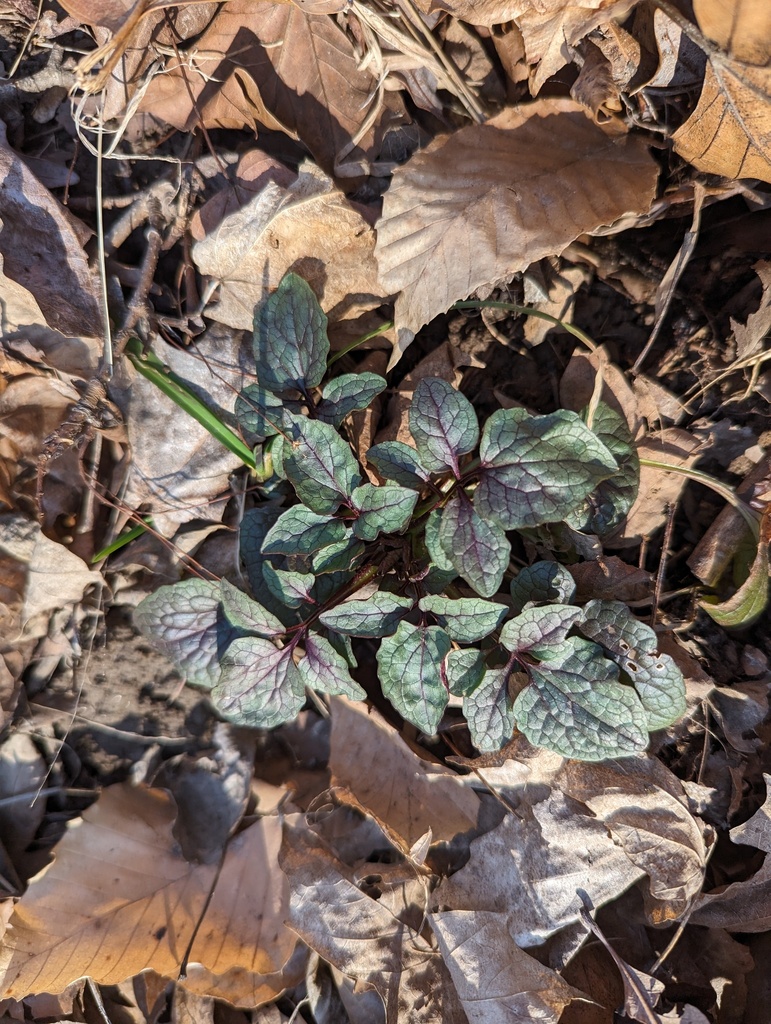
The basal leaves and those on the runners are simple, long-stalked and heart-shaped to oval, about 1 to 3 inches long, with wavy or coarsely toothed edges. Through winter they are often purplish with silvery mottling. The stem leaves are opposite and pinnately divided into three to seven leaflets; the terminal leaflet is largest, oval and toothed, and the side leaflets are smaller. The leaves have the faint, musky smell typical of valerians when bruised.
Flowers
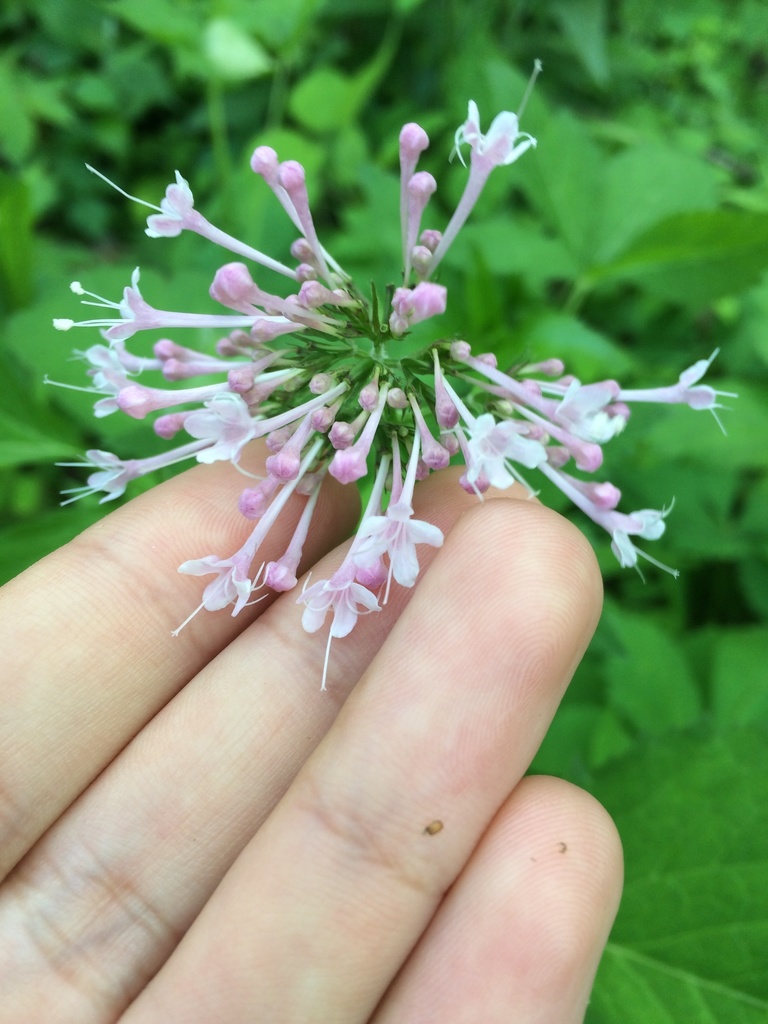
The flowers open in May and June in a rounded, branched cluster about 2 to 4 inches across at the top of the stem. Each pale pink to lavender-pink flower has a slender tube about 1/2 to 3/4 inch long that flares into five short lobes, with three stamens and a style protruding from the mouth. The long tubes give the cluster a spidery, starburst look. Buds are deeper pink.
Fruit
The fruit is a small, flat, one-seeded achene topped by a crown of feathery bristles (the modified calyx), which unroll as the fruit ripens and carry it on the wind like a tiny parachute.
Look-alikes
Sitka valerian of the western mountains has much shorter flower tubes. The other eastern valerians, marsh valerian (Valeriana uliginosa) and edible valerian (V. edulis), have small, short-tubed white flowers and grow in fens, wet meadows and prairies rather than forests. Garden valerian (Valeriana officinalis) is taller, with many narrow leaflets and short-tubed, white to pale pink flowers. When not in flower, the divided stem leaves can recall Jacob’s ladder, but that plant has alternate leaves with many more leaflets.
Quick Facts
| Scientific Name | Valeriana pauciflora |
| Family | Caprifoliaceae (honeysuckle family; formerly Valerianaceae) |
| Plant Type | Herbaceous perennial wildflower |
| Mature Height | 1–2.5 ft |
| Mature Spread | 1–2 ft; spreads slowly by runners |
| Growth Rate | Moderate |
| Sun Exposure | Part shade to shade |
| Water Needs | Medium to high; moist soil |
| Soil Type | Rich, moist loam or silt; often over limestone |
| Soil pH | Near neutral to slightly alkaline (about 6.0–7.5) |
| Bloom Time | May–June |
| Flower Color | Pale pink to lavender-pink |
| Fall Color | None notable; basal leaves persist in winter |
| Fruit | Small achene with feathery bristles |
| Deer Resistant | Moderate |
| USDA Hardiness Zones | 5–8 |
Native Range
Largeflower valerian is native to the eastern United States, centered on the Ohio River valley. USDA PLANTS records it from seven states: Pennsylvania, Maryland, West Virginia, Kentucky, Tennessee, Illinois and Alabama. NatureServe and herbarium and iNaturalist records also confirm native populations in Ohio, Indiana and Virginia, where it is common along the Ohio River and its tributaries and, in Virginia, along the Potomac River. The Ohio, Indiana and Virginia records are included on the map here.
It is most common in Kentucky, southern Ohio, southern Indiana, southern Illinois and western Pennsylvania. It becomes rare toward the edges of its range: NatureServe ranks it as critically imperiled (S1) in Virginia, Maryland and Alabama. No Missouri records turned up in herbarium databases, so Missouri is not included.
Its habitats are rich, moist deciduous forests: floodplains and stream terraces, wooded ravines, the bases of moist slopes and seepy areas, often on calcareous or limestone-derived soils. It grows with spring ephemerals under sycamore, buckeye, sugar maple and other trees of moist forests.
📋 Regional plant lists featuring Largeflower Valerian: New York, Pennsylvania & Northern New Jersey · Ohio & Indiana · Kentucky & Tennessee · Maryland, Virginia & West Virginia · Illinois, Iowa & Missouri · Alabama, Georgia & Mississippi
Growing & Care Guide
Largeflower valerian is an easygoing woodland wildflower for moist shade. It is offered by a few native plant nurseries in the Ohio Valley; buy nursery-propagated plants and never dig it from the wild, especially in states where it is rare.
Light
Part shade to full shade. Like many spring wildflowers, it does well under deciduous trees that let in light in early spring and shade it in summer.
Soil & Water
Give it rich, moist, humusy soil, ideally near neutral, such as a stream terrace or a low, shady spot that stays damp. It tolerates brief flooding but not long periods of standing water or dry, sandy soil.
Planting Tips
Plant in spring or fall, 12 to 18 inches apart, and mulch with shredded leaves. It combines well with Virginia bluebells, woodland phlox, waterleafs and ferns, and its runners will gradually knit plants into a groundcover patch.
Pruning & Maintenance
Little care is needed. Cut back the flowering stems after seed has dispersed if they look untidy, but leave the basal leaves, which stay green or purplish through winter. Keep invasive groundcovers such as garlic mustard and lesser celandine away from it.
Propagation
Divide clumps or pot up rooted runners in early spring or fall. Fresh seed can be sown outdoors in fall; give stored seed 60 days of cold, moist stratification before sowing in spring.
Landscape Uses
- Woodland wildflower gardens: late spring flowers after the earliest ephemerals
- Shady rain gardens and stream banks: tolerates moist soil and brief flooding
- Groundcover in moist shade: spreads slowly by runners into loose colonies
- Pollinator gardens: long-tubed flowers for long-tongued insects
- Floodplain restoration: a characteristic wildflower of Ohio Valley bottomland forests
Wildlife & Ecological Value
Largeflower valerian adds late-spring nectar to moist woods and is part of the rich wildflower layer of Ohio Valley forests.
For Pollinators
Its long, narrow flower tubes hold nectar that is best reached by long-tongued insects, such as bumble bees, bee flies, butterflies and day-flying hawk moths. Smaller bees gather pollen from the protruding anthers.
For Birds
It has little direct value for birds, but the insects it attracts feed warblers, vireos and other woodland birds during spring migration.
For Mammals
Deer browse it at times, but it is not a favored food. Small mammals may use its patches for cover on stream terraces.
Ecosystem Role
Its runners and evergreen basal leaves help hold soil on stream terraces and ravine floors, and it shares the forest floor with spring ephemerals, filling the gap between early spring blooms and summer wildflowers.
Cultural & Historical Uses
The species name pauciflora means “few-flowered,” Compared with many valerians, its clusters hold relatively few flowers, but each one is much larger.
The genus name Valeriana is usually linked to the Latin valere, “to be strong or healthy,” a reference to the long use of European valerian root as a sedative herb. Largeflower valerian has no established medicinal use and should not be harvested.
It is one of only a few valerians native to eastern North America, and the one most closely tied to rich, shady forests. Because it is rare at the edges of its range, protect existing colonies and avoid collecting plants.
Frequently Asked Questions
Why is it called largeflower valerian?
Its flowers have long, slender tubes, larger than those of any other eastern North American valerian.
Is largeflower valerian the same as garden valerian?
No. Garden valerian (Valeriana officinalis) is a European herb used as a sedative. Largeflower valerian is a native woodland wildflower of the Ohio Valley and Appalachians.
When does largeflower valerian bloom?
In May and June, after the earliest spring ephemerals such as bluebells and spring beauty.
Does largeflower valerian spread?
Yes, slowly. It forms loose colonies by runners that root at the nodes, but it is not aggressive.
Is largeflower valerian native to Ohio and Indiana?
Yes. It is common in southern Ohio and Indiana, along the Ohio River and its tributaries, even though USDA PLANTS does not map those states.

Looking for a nursery that carries Largeflower Valerian?
Browse our native plant nursery directory: Alabama · Illinois & Indiana · Kentucky & Maryland · Ohio · Pennsylvania, Tennessee & Virginia · West Virginia

