
Sitka Valerian (Valeriana sitchensis)
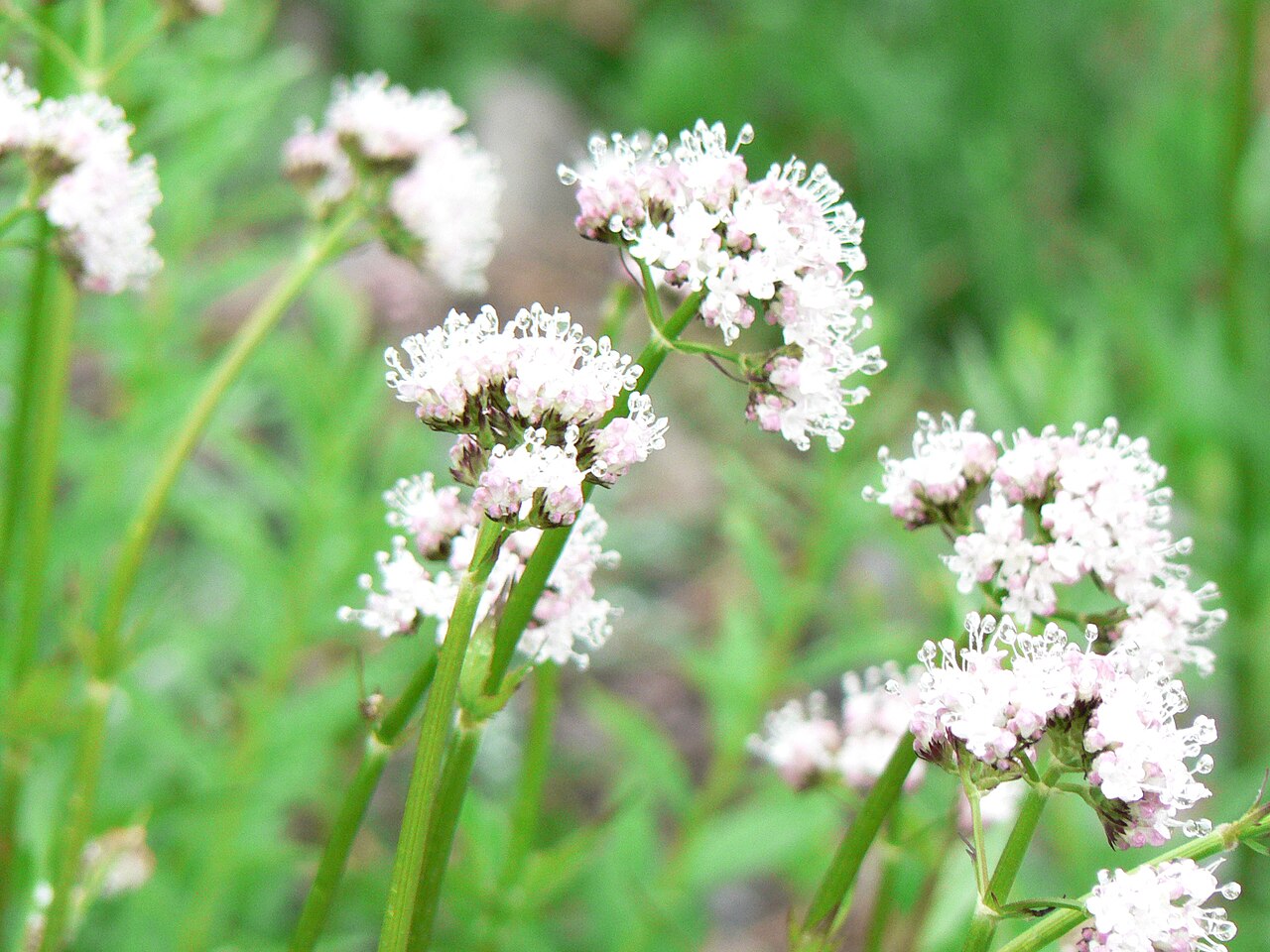
Valeriana sitchensis, known as Sitka Valerian or mountain heliotrope, is a native perennial wildflower of moist mountain meadows and forest openings in western North America. In midsummer it raises leafy stems 1 to 4 feet tall topped with rounded clusters of small, fragrant white flowers that open from pink buds. It belongs to the valerian group, now placed in the honeysuckle family (Caprifoliaceae), and is a close relative of the garden valerian of Europe.
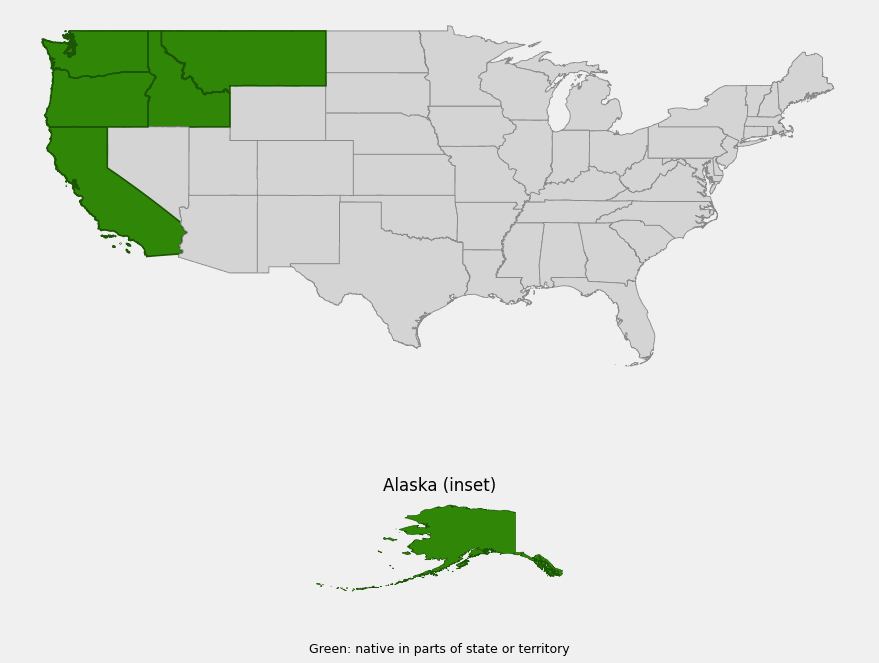
It is native from southern Alaska and the Yukon south through British Columbia and the Cascades and Olympic Mountains of Washington and Oregon to northern California, and east through the northern Rockies of Idaho, western Montana and Alberta. It is one of the signature plants of the subalpine wildflower meadows at Mount Rainier, Olympic and Glacier National Parks.
Sitka valerian is best appreciated in the mountains, but it can be grown in cool, moist gardens in the Pacific Northwest and the north. Its flowers have a sweet scent, while the leaves and roots develop the strong, musky “valerian” smell as they die back in fall.
Identification
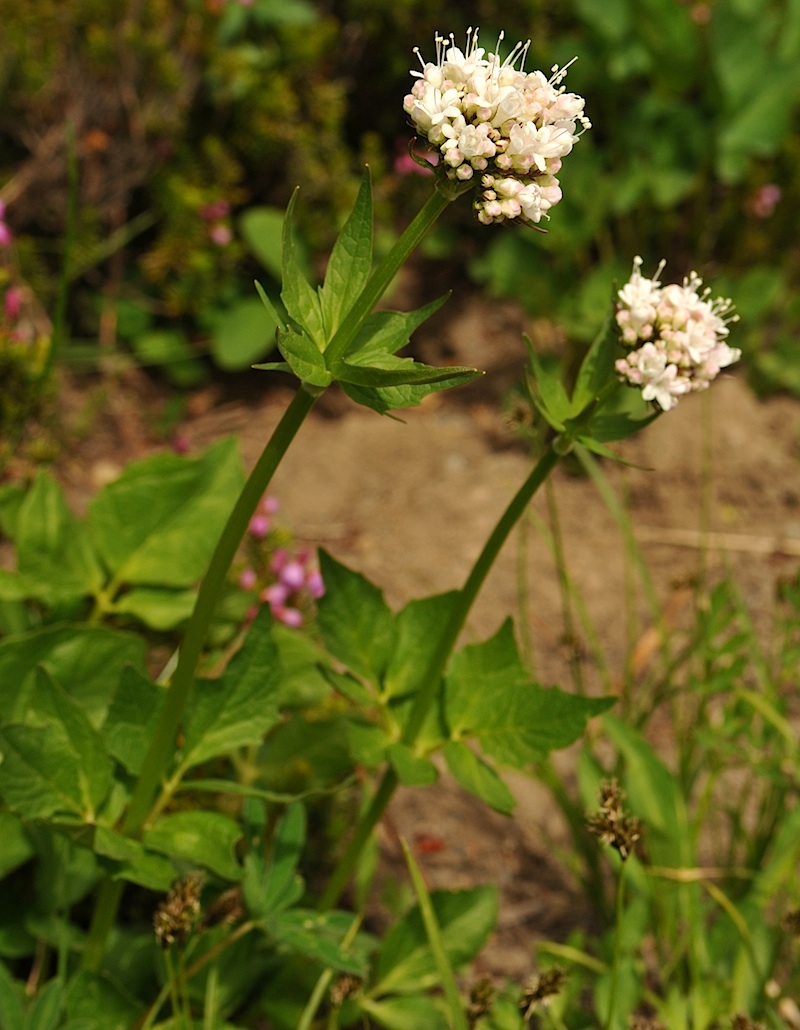
Look for rounded heads of tiny white to pale pink tubular flowers with protruding stamens, above opposite, compound leaves with a few coarsely toothed leaflets, in a moist subalpine meadow in summer.
Growth Habit
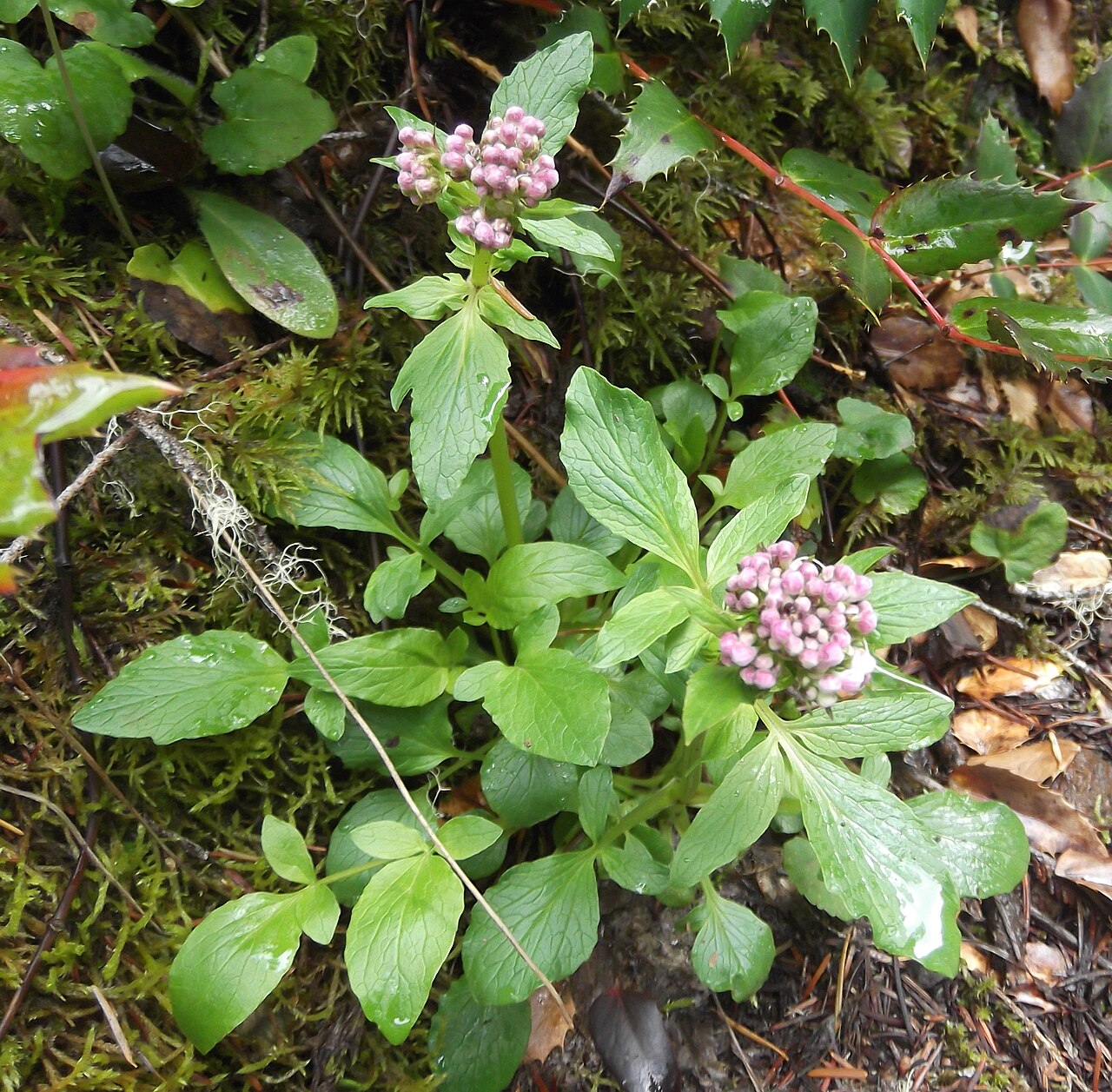
A clump-forming perennial that spreads slowly from stout rhizomes. Each stem is erect, usually 1 to 4 feet tall, with two to five pairs of leaves. Large patches can form in moist meadows and along streams.
Leaves
The leaves are opposite and pinnately compound, with three to seven broad, coarsely toothed leaflets; the terminal leaflet is the largest. Leaves near the base have long stalks, and those higher on the stem are smaller. In late summer and fall the dying leaves give off the strong, musky odor typical of valerian.
Flowers
The flowers are small (about 1/4 inch long), tubular, with five spreading lobes, white or tinged pink, and pinkish in bud. Three long stamens stick out well beyond the petals, giving each cluster a fuzzy look. They are borne in a dense, rounded to flat-topped cluster at the top of the stem, which spreads and becomes looser in fruit. Flowering is from June to August, following snowmelt.
Fruit
Each flower produces a single small, ribbed achene topped with a ring of feathery bristles, formed from the calyx, that carries the seed on the wind like a tiny parachute.
Look-alikes
Cow parsnip and other members of the carrot family also have white, flat-topped flower clusters, but their leaves are alternate. Western valerian (Valeriana occidentalis) is similar but has smaller flowers with shorter stamens and usually grows in drier, lower meadows and open slopes. Mountain sweet cicely and other umbellifers have tiny 5-petaled flowers on umbrella-like spokes rather than tubular flowers.
Quick Facts
| Scientific Name | Valeriana sitchensis |
| Family | Caprifoliaceae (honeysuckle family; formerly Valerianaceae) |
| Plant Type | Herbaceous perennial |
| Mature Height | 1–4 ft |
| Mature Spread | 1–2 ft |
| Growth Rate | Moderate |
| Sun Exposure | Partial shade to full sun in cool climates |
| Water Needs | Moist to wet; never dry |
| Soil Type | Rich, moist loam high in organic matter |
| Soil pH | Slightly acidic to neutral (about 5.5–7.0) |
| Bloom Time | Summer (June–August) |
| Flower Color | White to pale pink |
| Fall Color | Leaves turn yellow-brown; strong musky scent |
| Fruit | Small achene with a feathery, parachute-like pappus |
| Deer Resistant | Moderately; foliage is occasionally browsed |
| USDA Hardiness Zones | 3–8 |
Native Range
Sitka valerian is native to the mountains of northwestern North America. USDA PLANTS records it from six states: Alaska, California, Idaho, Montana, Oregon and Washington. In Canada it grows in British Columbia, Alberta, the Yukon and the Northwest Territories.
It ranges from southern Alaska and the southern Yukon south through the Coast Mountains and British Columbia to the Olympic Mountains and the Cascades of Washington and Oregon, reaching northern California in the Klamath region and the southern Cascades. Inland it grows in the mountains of northern and central Idaho, western Montana and the Rockies of Alberta. It is largely absent from the Oregon Coast Range and the lowlands of the Puget Trough.
Its habitat is moist subalpine meadows, open forests and forest edges, avalanche chutes, streambanks and seeps, mostly at mid to high elevations, where snow lies late and soils stay moist through summer. In coastal Alaska and British Columbia it also comes down to lower elevations.
📋 Regional plant lists featuring Sitka Valerian: Idaho, Eastern Oregon & Eastern Washington · Montana & Wyoming · Alaska · Western Oregon & Western Washington · California & Nevada
Growing & Care Guide
Sitka valerian is a plant of cool, moist mountain meadows. It grows well in gardens with cool summers and steady moisture, such as the Pacific Northwest, coastal Alaska and northern regions, but struggles in hot, humid or dry summers.
Light
Partial shade is best in most gardens; full sun works only where summers are cool and the soil stays moist.
Soil & Water
Give it rich, moist, humus-rich soil that never dries out. It does well near streams, ponds, seeps or in a damp woodland garden. Water regularly in dry weather; drought causes the leaves to scorch and the plant to go dormant early.
Planting Tips
Plant in spring or fall, 12 to 18 inches apart, in groups so the white flower heads make a show. Combine it with other moisture-loving meadow plants such as lupines, paintbrush and bluebells, or ferns in a woodland garden. Mulch with leaf litter to keep the roots cool.
Pruning & Maintenance
Cut flower stalks after the seeds disperse if you want a tidier look. Cut the foliage back in fall when it yellows; the dying leaves have a strong musky odor, so you may want to remove them promptly near a patio.
Propagation
Grow from fresh seed sown in fall outdoors, or give seeds about two months of cold, moist stratification before sowing in spring. Established clumps can also be divided in early spring by cutting sections of rhizome with buds.
Landscape Uses
- Woodland and shade gardens: fragrant white flowers for cool, moist shade
- Rain gardens and pond edges: tolerates consistently wet soil
- Mountain and subalpine gardens: a natural companion for lupines and paintbrush
- Pollinator gardens: summer nectar for bees, flies and butterflies
- Restoration: revegetation of moist montane and subalpine meadows
Wildlife & Ecological Value
Sitka valerian is one of the most abundant wildflowers in many subalpine meadows, where it supports a busy community of insects.
For Pollinators
The fragrant flowers are visited by bumble bees, solitary bees, syrphid flies, butterflies and moths. Its large, conspicuous clusters provide nectar during the short mountain summer.
For Birds
The meadows and forest edges where it grows are foraging grounds for many songbirds, which feed on the insects drawn to its flowers.
For Mammals
Deer, elk and other grazing animals occasionally eat the foliage in subalpine meadows, and the dense patches provide cover for small mammals.
Ecosystem Role
Its rhizomes help bind soils in moist meadows, streambanks and avalanche chutes. Because it is common and conspicuous, it is used by ecologists to describe and monitor subalpine meadow communities, which are changing as treelines rise with a warming climate.
Cultural & Historical Uses
Valerian roots have a long history in herbal traditions. The European Valeriana officinalis is the main medicinal species, and Indigenous peoples of the Pacific Northwest and Alaska are reported to have used the roots of Sitka valerian for a variety of purposes. Do not use wild plants as medicine; consult a qualified professional.
The species name sitchensis refers to Sitka, Alaska, where the plant was collected for science in the early 1800s, when Sitka was the capital of Russian America.
Hikers often notice Sitka valerian before they see it: in late summer and fall, the dying leaves give off the pungent, musky smell that valerians are known for, and whole meadows can carry the scent.
Frequently Asked Questions
Why does Sitka valerian smell bad?
The flowers are sweet-scented, but the dying leaves and the roots contain compounds with a strong, musky odor, most noticeable in late summer and fall.
When does Sitka valerian bloom?
From June to August, soon after snowmelt in mountain meadows.
Can I grow Sitka valerian in my garden?
Yes, in cool, moist gardens with partial shade and rich soil. It struggles in hot, dry or humid summers.
Is Sitka valerian the same as garden valerian?
No. Garden valerian (Valeriana officinalis) is a European species. Sitka valerian is a different, native species of western North American mountains.
What pollinates Sitka valerian?
Bees, flies, butterflies and moths all visit its fragrant flowers.

Looking for a nursery that carries Sitka Valerian?
Browse our native plant nursery directory: Alaska · California · Idaho · Montana · Oregon · Washington