
Oakleaf Fleabane (Erigeron quercifolius)
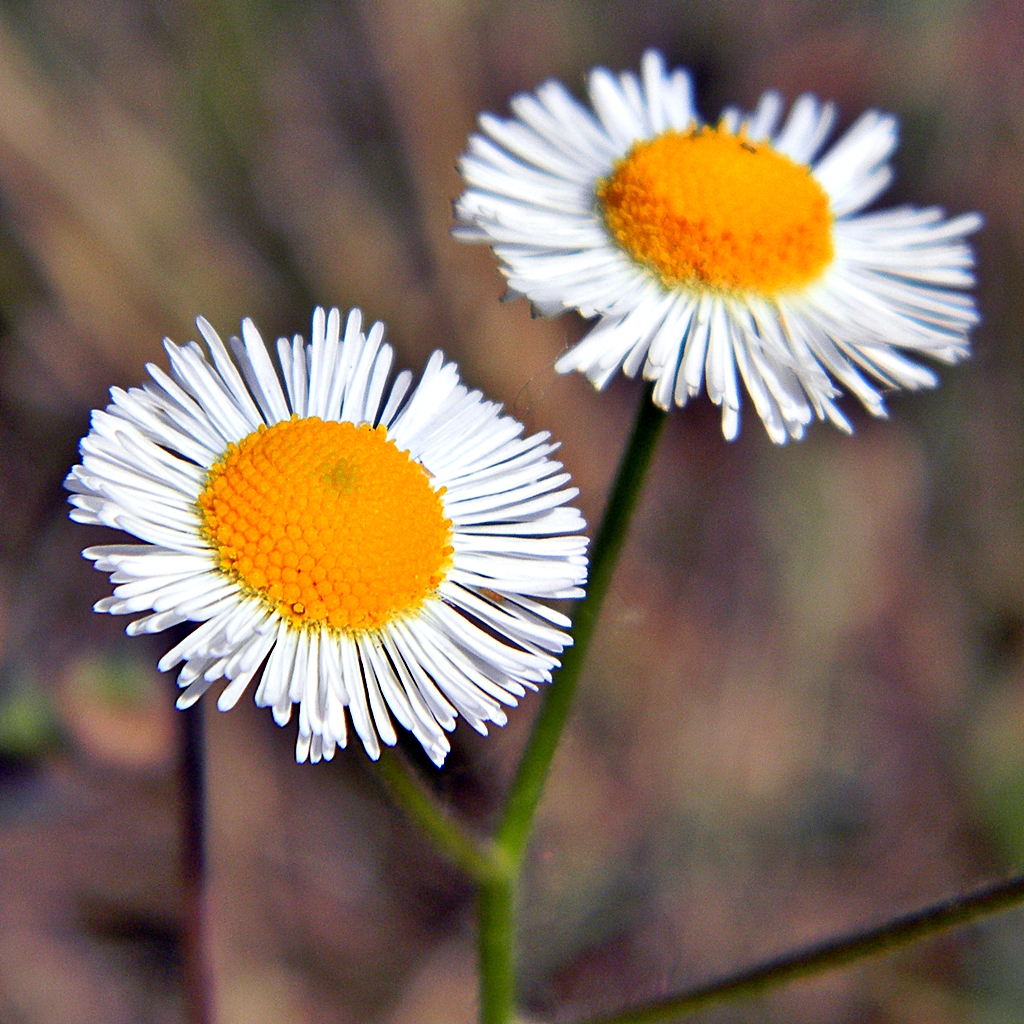
Erigeron quercifolius, known as Oakleaf Fleabane and often called southern fleabane, is a small, short-lived perennial daisy of the aster family (Asteraceae). Its name comes from its basal leaves, which are often lobed like little oak leaves. It is a plant of the southeastern coastal plain, from Virginia and the Carolinas south through Florida and west to Arkansas and Louisiana.
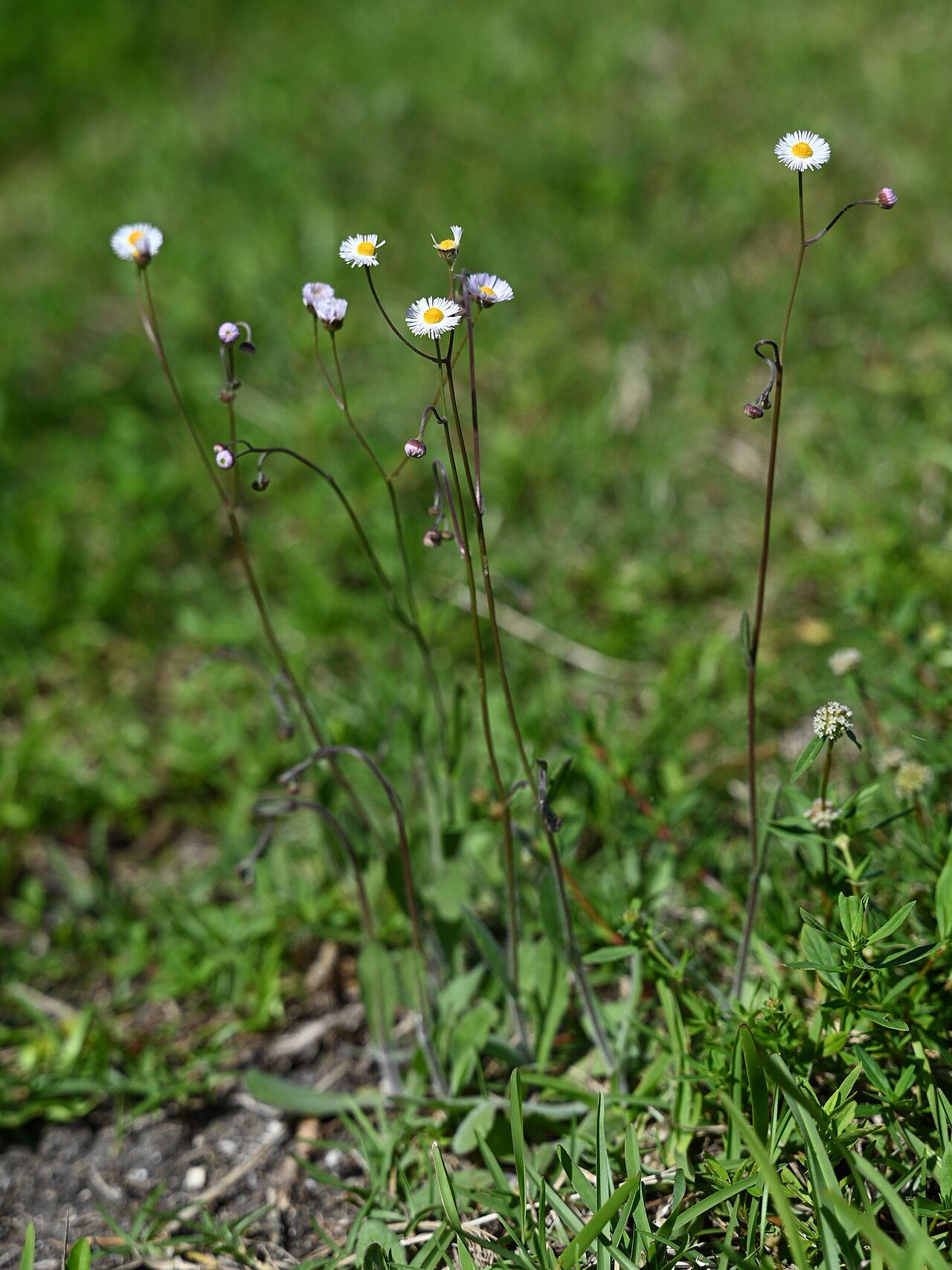
In late winter and spring it sends up slender, hairy stems 4 inches to 2 feet tall, carrying small, button-like flower heads. Each head has an unusually dense fringe of very narrow rays, often more than a hundred, that are white or tinged pink to pale lavender around a yellow center. In Florida it can bloom for much of the year.
Oakleaf fleabane is a common, cheerful wildflower of moist sandy places, pine flatwoods, prairies, ditches, roadsides and even lawns. It is rarely sold, but it is easy to welcome in a naturalistic lawn or meadow, where it feeds many small bees, flies and butterflies early in the season.
Identification
Oakleaf fleabane is one of several small white “daisies” of southern lawns and roadsides. Look for the lobed, oak-like basal leaves and the many thread-thin rays on small heads.
Growth Form
A short-lived perennial (sometimes behaving as a biennial) with fibrous roots and a rosette of basal leaves that is often present at flowering. One to several erect stems rise 4 inches to about 2 feet tall and branch near the top into a loose cluster of flower heads. Stems are hairy with spreading hairs.
Leaves
Basal leaves are oblanceolate to spoon-shaped, about 1 to 5 inches long, tapering to a stalk-like base, with coarsely toothed to pinnately lobed edges that give them an oak-leaf look. They are hairy and soft. Stem leaves are smaller, alternate and partly clasp the stem, becoming narrow and few toward the top.
Flowers
The flower heads are small, about 1/2 inch across, and held in a loose, branched cluster. Each has a yellow disc about 1/4 inch wide surrounded by a dense ring of very narrow rays, usually around 100 to 150 or more, that are white or tinged pink to lavender. The main bloom is from about March to June, with scattered flowers later in the year, especially in Florida.
Fruit
Each tiny seed (achene) carries a short tuft of fine bristles (pappus) and is dispersed by wind, like a miniature dandelion seed.
Look-alikes
Philadelphia Fleabane (E. philadelphicus) is larger, with bigger heads, even more rays and stem leaves that strongly clasp the stem; its basal leaves are toothed rather than oak-lobed. Daisy Fleabane (E. strigosus) blooms later, has fewer, wider rays and narrow, mostly untoothed leaves. Early whitetop fleabane (E. vernus) of wet pinelands has fewer rays and smooth, fleshy basal leaves. Robin’s Plantain (E. pulchellus) has larger heads and spreads by runners.
Safety
Oakleaf fleabane is not known to be toxic. Like other fleabanes it is a harmless wildflower, though the hairy leaves may mildly irritate sensitive skin.
Quick Facts
| Scientific Name | Erigeron quercifolius |
| Family | Asteraceae (aster family) |
| Plant Type | Short-lived herbaceous perennial |
| Mature Height | 4 in–2 ft |
| Mature Spread | 6–12 in |
| Growth Rate | Fast |
| Sun Exposure | Full sun to part shade |
| Water Needs | Moderate; moist soil, tolerates short dry spells |
| Soil Type | Sandy, loamy or marly soils; moist to wet |
| Soil pH | About 5.0–7.5 |
| Bloom Time | March–June (much of the year in Florida) |
| Flower Color | White to pale pink or lavender rays; yellow center |
| Fall Color | None; basal rosette may stay green in winter |
| Fruit | Tiny achenes with fine bristles, wind-dispersed |
| Deer Resistant | Moderately; hairy foliage is seldom browsed |
| USDA Hardiness Zones | 7–11 |
Native Range
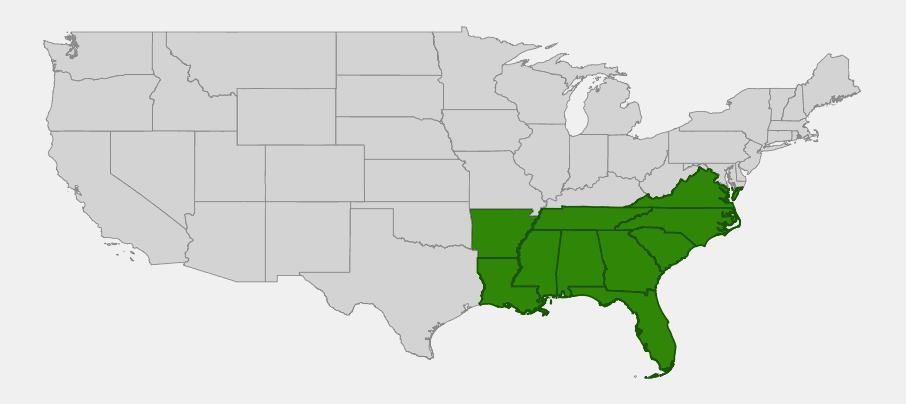
Oakleaf fleabane is native to the southeastern United States. USDA PLANTS records it in Virginia, North Carolina, South Carolina, Georgia, Florida, Alabama, Mississippi, Tennessee, Arkansas and Louisiana. It is mostly a plant of the Atlantic and Gulf coastal plains, and it is common throughout Florida, from the Panhandle to the Everglades.
Away from the coastal plain it is more scattered, reaching the edge of the Piedmont and inland areas of Tennessee and Arkansas. Virginia is near the northern limit of the range.
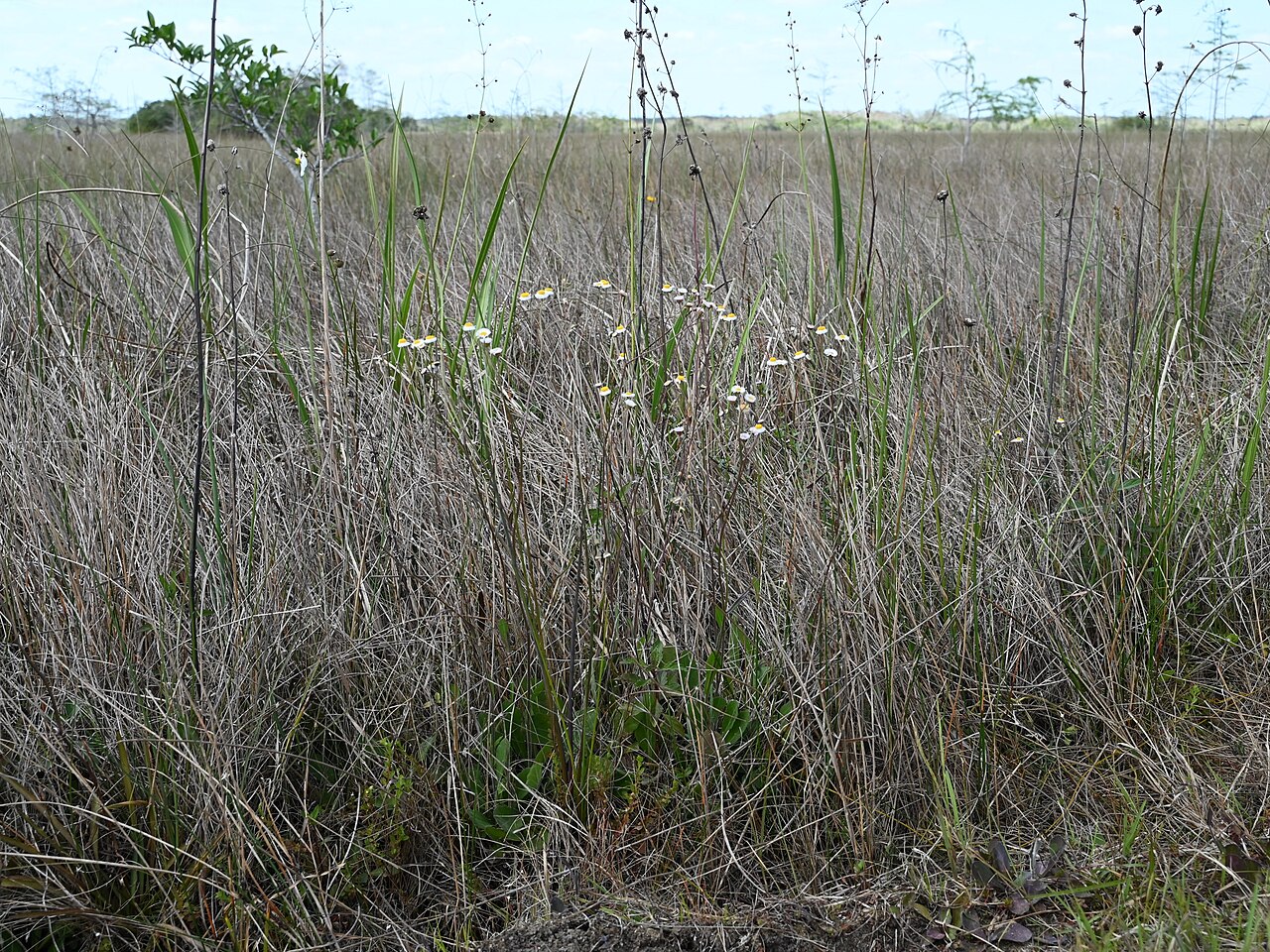
It grows in moist, open places: pine flatwoods and savannas, wet prairies (including the marl prairies of the Everglades), ditches, the edges of marshes and ponds, roadsides, pastures and mown lawns. It is listed as a facultative to facultative-wetland plant, at home on soils that are damp for part of the year.
📋 Regional plant lists featuring Oakleaf Fleabane: Kentucky & Tennessee · Maryland, Virginia & West Virginia · Alabama, Georgia & Mississippi · North & South Florida · North & South Carolina · Arkansas, Louisiana, Eastern Oklahoma & Eastern Texas
Growing & Care Guide
Oakleaf fleabane is seldom offered by nurseries, but it is easy to keep where it already grows, and seed can sometimes be collected from your own property. It is a good fit for flowering lawns, meadows and rain garden edges in the Southeast.
Light
It grows best in full sun to light shade. In deeper shade it flowers sparsely and the stems become weak.
Soil & Water
It prefers moist sandy, loamy or marly soils and tolerates seasonal wetness. Once established it handles short dry spells, but it is not a plant for very dry sand. No fertilizer is needed.
Planting Tips
Scatter fresh seed on bare, moist soil in late spring or fall and press it lightly into the surface; the seeds need light to germinate. In lawns, mow high or skip mowing from late winter until the plants finish blooming to let them flower and seed. Pair it with other small spring wildflowers such as lyreleaf sage and blue-eyed grass.
Pruning & Maintenance
Little care is needed. Plants are short-lived, so allow some to set seed each year to keep a population going. Cut or mow spent stems after the seeds have blown away.
Propagation
Grow it from seed, which ripens a few weeks after flowering. Rosettes can also be dug and moved with a good ball of soil in cool weather.
Landscape Uses
- Flowering lawns: a small native daisy that blooms between mowings
- Wildflower meadows: early-season flowers for small pollinators
- Rain garden edges: tolerates soils that are wet for part of the year
- Pine flatwoods restoration: a common native forb of open, moist pinelands
- Children’s gardens: easy to grow and identify
Wildlife & Ecological Value
Small as it is, oakleaf fleabane is one of the first common nectar sources of the year across much of the Southeast.
For Pollinators
The flower heads attract small native bees such as sweat bees, mining bees and small carpenter bees, as well as hover flies, small butterflies such as skippers and crescents, and beneficial wasps. Xerces Society lists it among plants that support beneficial insects that help control pests.
For Birds
Small seed-eating birds eat the tiny achenes, and the insects drawn to the flowers feed warblers and other insect-eating birds in spring.
For Mammals
Rabbits and deer may nibble the rosettes, but the hairy foliage is not a favored food.
Ecosystem Role
As a quick-growing, short-lived plant, it fills open gaps in flatwoods, prairies and disturbed ground, especially after fire or mowing, and it helps support the early-season pollinator community of the coastal plain.
Cultural & Historical Uses
The genus name Erigeron comes from Greek words meaning “early” and “old man,” usually explained as a reference to the plants flowering early and quickly producing white, fluffy seed heads. The species name quercifolius means “oak-leaved,” for the lobed basal leaves. The species was described in the early 1800s by the French naturalist Jean-Baptiste Lamarck.
The name “fleabane” goes back to an old European belief that dried fleabanes repelled fleas. There is no good evidence that oakleaf fleabane does so, but the name has stuck to the whole genus.
In Florida it is one of the most familiar native wildflowers of lawns and roadsides, and it is often among the plants that native plant enthusiasts point to when encouraging people to let parts of their lawns bloom.
Frequently Asked Questions
Why is it called oakleaf fleabane?
Its basal leaves are often deeply toothed or lobed like a small oak leaf, which is what the scientific name quercifolius (“oak-leaved”) means.
How do I tell it from Philadelphia fleabane?
Oakleaf fleabane is smaller, with smaller heads and oak-like lobed basal leaves. Philadelphia fleabane has larger heads, toothed basal leaves and stem leaves that wrap around the stem.
Is it a weed in my lawn?
It is a native wildflower, not an invasive weed. It is small, short-lived and attracts pollinators, and many gardeners in the Southeast now leave it to bloom in lawns.
Can I buy it?
It is rarely sold in nurseries. The easiest way to grow it is to let existing plants flower and seed, or to sow seed collected from your own land.
When does it bloom?
Mainly from March to June. In Florida it may flower at almost any time of year.

Looking for a nursery that carries Oakleaf Fleabane?
Browse our native plant nursery directory: Alabama & Arkansas · Florida & Georgia · Louisiana & Mississippi · North Carolina · South Carolina, Tennessee & Virginia