
Arctic Butterbur (Petasites frigidus)
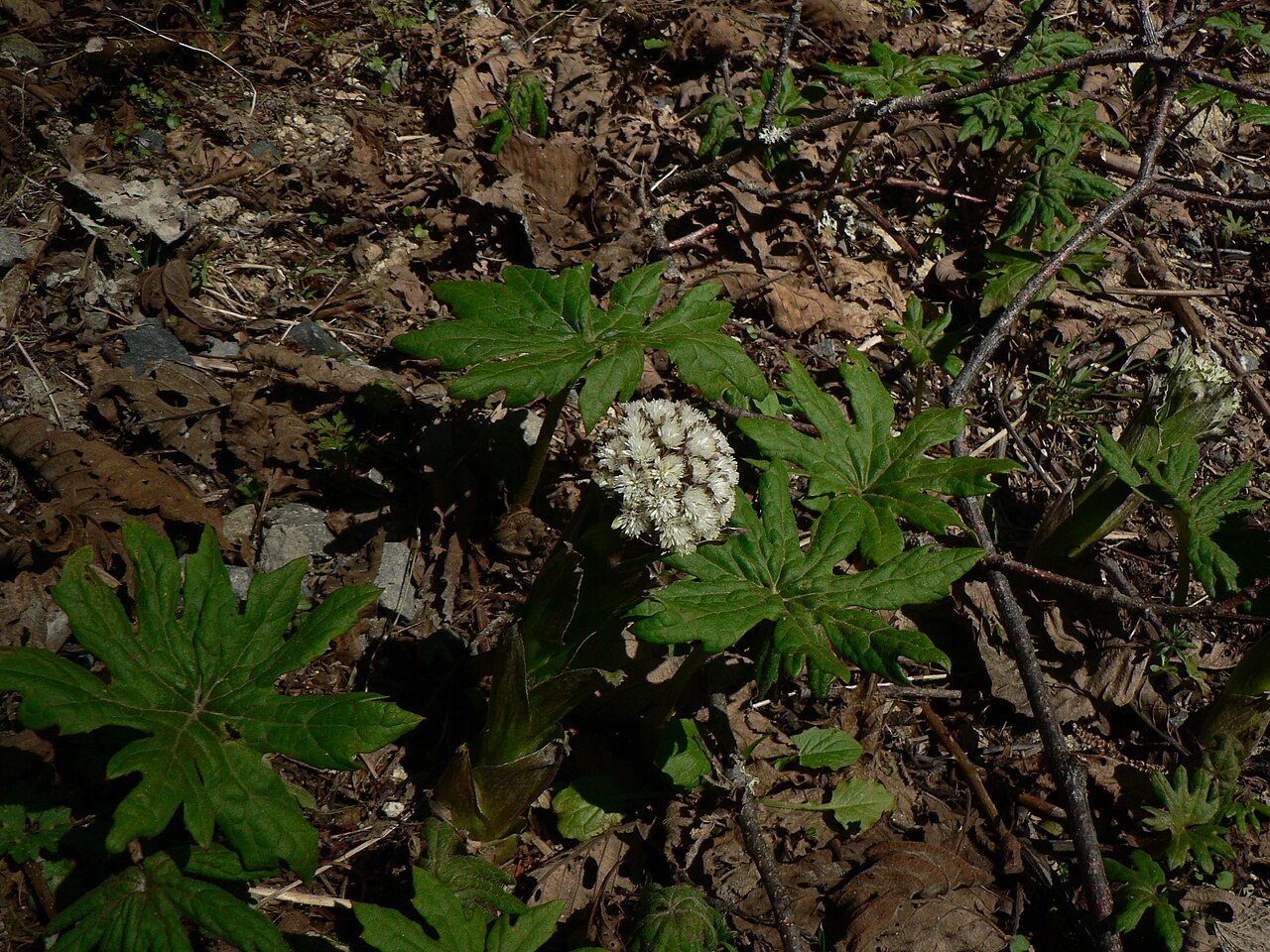
Petasites frigidus, known as Arctic Butterbur or sweet coltsfoot (USDA: arctic sweet coltsfoot), is a spreading perennial in the aster family (Asteraceae) that grows across the cold and cool-temperate regions of North America and northern Eurasia. It is one of the very first wildflowers of spring: thick, scaly stalks topped with fragrant clusters of whitish to pinkish flower heads push up through the litter, often while snow is still nearby and before the big leaves unfold.
After flowering, it produces broad, long-stalked leaves that may be palmately lobed, arrow-shaped or small and toothed, depending on the variety. Plants spread by creeping rhizomes into large colonies in moist woods, swamps, stream banks, wet meadows, ditches and arctic and alpine tundra. USDA PLANTS treats the western sweet coltsfoot (variety palmatus), arrowleaf sweet coltsfoot (variety sagittatus) and the true arctic form (variety frigidus) as varieties of this one species.
Arctic butterbur makes a bold ground cover for wet, shady places, but it spreads aggressively once established. Like other butterburs, it contains pyrrolizidine alkaloids, which can damage the liver; do not eat it or use it as a home remedy.
Identification
Look for stout stalks of fuzzy, whitish flower heads appearing very early in spring, followed by large, long-stalked basal leaves that are white-woolly beneath, in colonies on moist ground.
Growth Habit
Arctic butterbur is a perennial that grows from long, creeping rhizomes and forms colonies. In spring it sends up flowering stems 4 to 20 inches tall (taller in fruit), clothed with clasping, scale-like bracts instead of true leaves. The large basal leaves come up separately from the rhizome, usually after or as the flowers open, and last until fall. In the arctic and alpine form, plants are much smaller.
Leaves
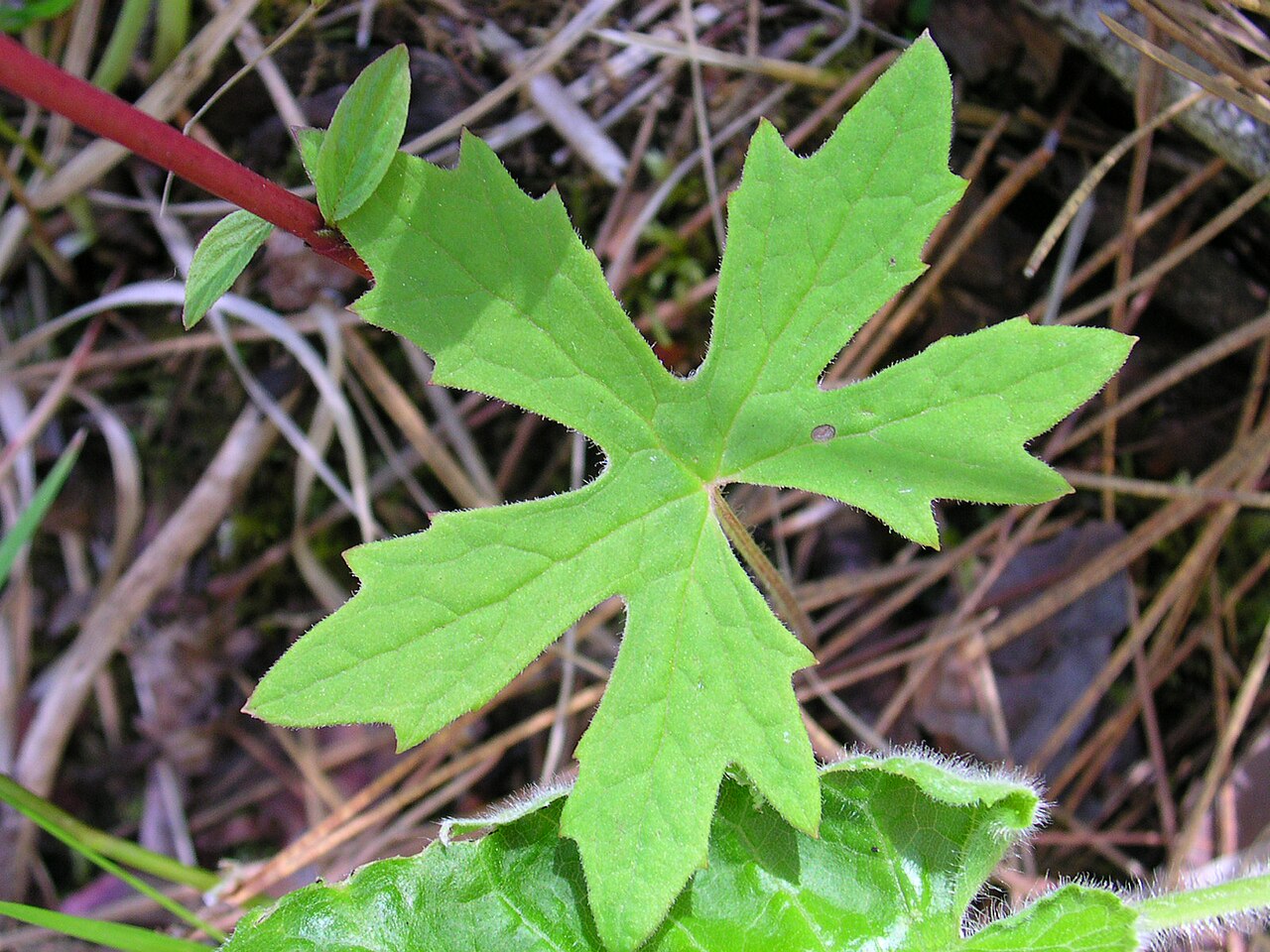
The basal leaves have long stalks, 4 to 16 inches or more, and blades that are green and nearly smooth above and covered with white woolly hairs beneath. Their shape varies by variety. In variety palmatus the blades are round in outline, 4 to 16 inches wide and deeply cut into five to seven toothed lobes, like a hand. In variety sagittatus they are triangular to arrowhead-shaped and only toothed along the edges. In variety frigidus they are small, 1 to 3 inches, and toothed or shallowly lobed. Intermediate plants are common where varieties meet.
Flowers
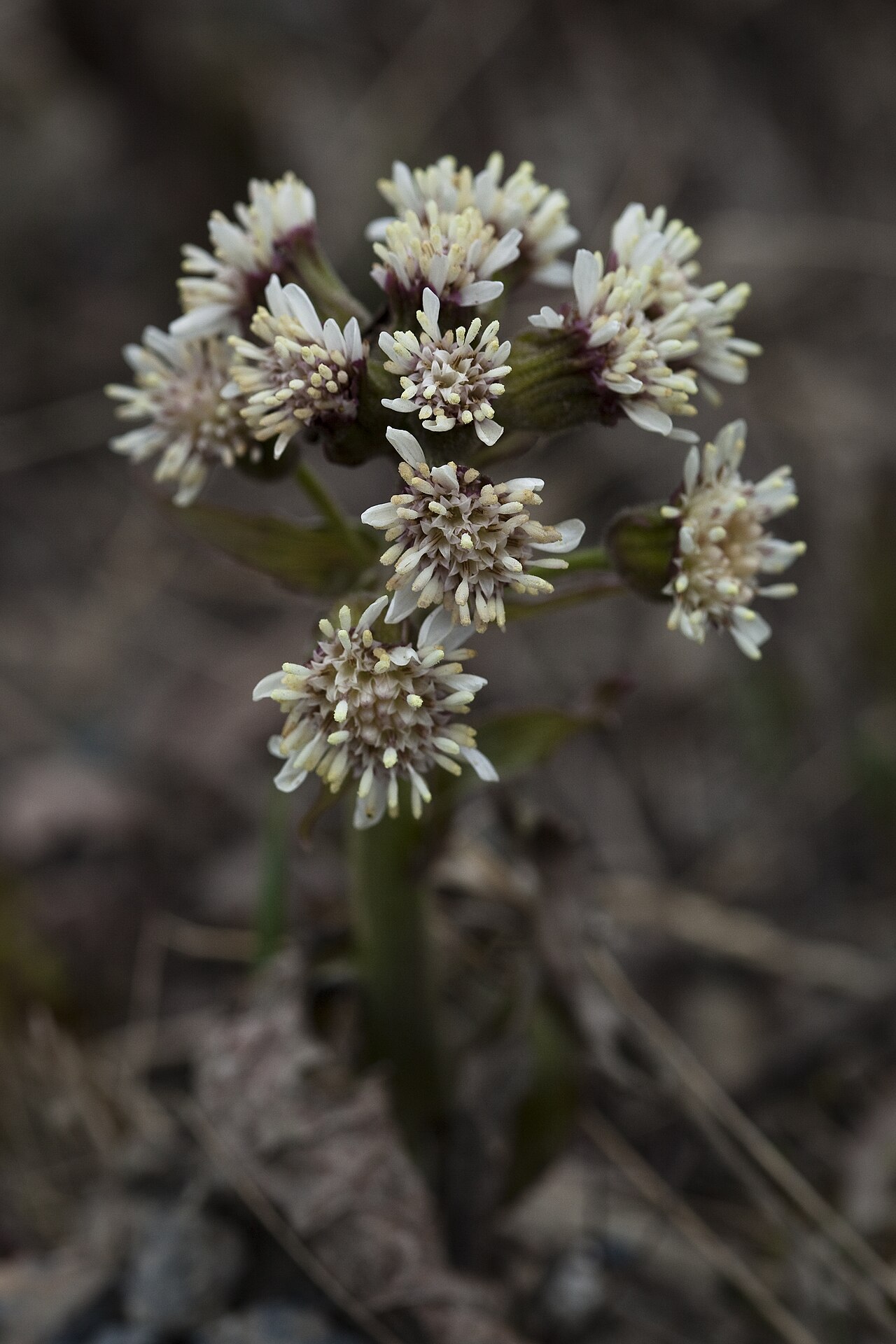
The flowering stem ends in a rounded or flat-topped cluster of several to many flower heads. Each head is about 1/2 inch across and made up of whitish to creamy or pinkish florets. Plants are nearly dioecious: some carry mostly male heads with tubular florets, while others carry mostly female heads with thread-like and short ray-like florets. The flowers are fragrant and appear from March to June, depending on latitude and elevation.
Fruit & Seeds
Female heads produce small, ribbed seeds (achenes), each with a tuft of soft white bristles, so the fruiting heads look like small dandelion clocks. The flowering stalks lengthen as the seeds ripen in late spring, and the seeds blow away on the wind.
Look-alikes
Coltsfoot (Tussilago farfara), a European weed, also blooms early before its leaves appear, but it has bright yellow, dandelion-like flowers and smaller, heart-shaped leaves. Japanese butterbur (Petasites japonicus) and common butterbur (P. hybridus) are non-native garden plants with even larger, rounded, unlobed leaves. Before flowers appear, the palmate leaves of variety palmatus can resemble those of devil’s club, but arctic butterbur leaves are soft, woolly beneath and spineless.
Quick Facts
| Scientific Name | Petasites frigidus |
| Family | Asteraceae (aster family) |
| Plant Type | Rhizomatous herbaceous perennial |
| Mature Height | 4–20 in in flower; leaves to 2 ft |
| Mature Spread | Spreads to form large colonies |
| Growth Rate | Fast; spreads by rhizomes |
| Sun Exposure | Part shade to shade; full sun in cool, wet sites |
| Water Needs | High; moist to wet soil |
| Soil Type | Moist to wet loam, muck or peat |
| Soil pH | Acidic to neutral (about 5.0–7.5) |
| Bloom Time | March–June, before or with the leaves |
| Flower Color | White to cream or pinkish |
| Fall Color | None; leaves die back in fall |
| Fruit | Achenes with white bristly pappus |
| Deer Resistant | Moderate; browsed occasionally |
| USDA Hardiness Zones | 1–7 |
Native Range
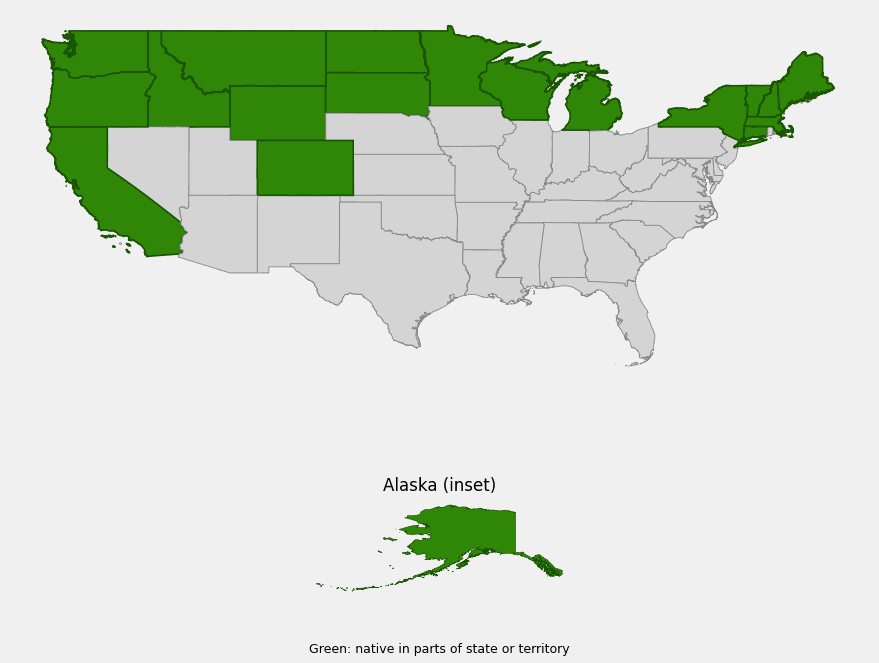
Arctic butterbur has a circumboreal range, growing across northern North America, Europe and Asia. In North America, USDA PLANTS lists it as native in Alaska and every Canadian province and territory, and in California, Colorado, Connecticut, Idaho, Maine, Massachusetts, Michigan, Minnesota, Montana, New Hampshire, New York, North Dakota, Oregon, South Dakota, Vermont, Washington, Wisconsin and Wyoming.
The palmate-leaved variety palmatus is the common form in the Pacific Northwest, where it grows on both sides of the Cascades and south along the coast to northwestern California, and in the forests of the Great Lakes region and New England. The arrowleaf variety sagittatus grows mainly in marshes and wet meadows of the northern Rockies, northern plains and boreal Canada, including the Black Hills and northeastern North Dakota. The small arctic variety frigidus grows in tundra in Alaska and northern Canada. In southern New England, it reaches its southern limit and is scarce.
Its habitats include moist to wet coniferous and mixed forests, swamps and bogs, alder thickets, stream banks, seeps, wet meadows, ditches, road cuts and arctic and alpine tundra. It often grows in places where snow lies late and the soil stays cold and wet in spring.
📋 Regional plant lists featuring Arctic Butterbur: New York, Pennsylvania & Northern New Jersey · Idaho, Eastern Oregon & Eastern Washington · Montana & Wyoming · Michigan, Wisconsin & Eastern Minnesota · Connecticut, Massachusetts & Rhode Island · New Hampshire, Maine & Vermont · Delaware, Southern New Jersey & Long Island · Alaska · North Dakota, South Dakota & Western Minnesota · Western Oregon & Western Washington · California & Nevada
Growing & Care Guide
Arctic butterbur is easy to grow in cool, moist, shady places and can cover a large area. It is best for naturalizing, rain gardens, pond and stream edges and woodland wet spots where its spread is welcome. It is sold now and then by native plant nurseries in the Pacific Northwest and upper Midwest.
Light
Part shade to full shade is best. It tolerates full sun only where the soil stays constantly moist and summers are cool. In hot sun the big leaves wilt quickly.
Soil & Water
Give it moist to wet, humus-rich soil. It thrives in muck, wet loam and peaty soil and tolerates seasonal flooding. Water during dry spells; it does poorly in dry soil and in hot, humid summers.
Planting Tips
Plant rhizome divisions or container plants in spring or fall, spacing them 2 to 3 feet apart. Choose the spot carefully: the rhizomes spread steadily and are hard to remove once established. In small gardens, plant it in a large sunken container or contain it with a deep root barrier.
Pruning & Maintenance
Remove spent flowering stalks if you don’t want seedlings. Cut back the leaves after they die down in fall. Pull or dig unwanted rhizomes each spring to keep the colony in bounds. Wear gloves if you have sensitive skin.
Propagation
Divide rhizomes in early spring or fall; nearly every piece with a bud will grow. It can also be grown from fresh seed sown on the surface of moist soil, but because plants are nearly dioecious, seed may be scarce unless male and female plants grow together.
Landscape Uses
- Wet shade: a bold ground cover for damp, shady corners
- Pond and stream edges: helps hold soil along banks and seeps
- Rain gardens: tolerates periodic flooding in cool climates
- Naturalizing: large colonies for woodland wet spots and swamp edges
- Early spring interest: fragrant flowers when little else is blooming
Wildlife & Ecological Value
Because it blooms so early, arctic butterbur is a valuable first food source for insects emerging in cold northern springs.
For Pollinators
The fragrant early flowers attract bumblebee queens, early solitary bees, flies and early butterflies that are active on cool spring days. In the Arctic, it is one of the first flowers available to insects after snowmelt.
For Birds
It is not an important bird food, but its dense colonies provide cover for ground-feeding birds in wet woods and thickets.
For Mammals
Moose, caribou, bears and other mammals browse the leaves in some areas. Large colonies give shelter to small mammals, amphibians and invertebrates on the damp forest floor.
Ecosystem Role
Arctic butterbur colonizes wet, disturbed ground such as road cuts, landslides and stream bars, and its rhizomes help stabilize soil. Its large leaves shade the ground and help keep it cool and moist.
Cultural & Historical Uses
The genus name Petasites comes from the Greek petasos, a broad-brimmed hat, for the large leaves. The species name frigidus means “cold,” for its northern and alpine range. The name “butterbur” comes from the old European practice of wrapping butter in the large leaves of related butterburs to keep it cool.
Several Indigenous peoples in Alaska, Canada and the Pacific Northwest used sweet coltsfoot. Some groups burned the leaves and used the ash as a salt substitute, and the plant was also used in traditional medicine. These uses depended on careful preparation and traditional knowledge.
Butterburs contain pyrrolizidine alkaloids, compounds that can cause serious liver damage when eaten, especially over time. Do not eat arctic butterbur or make teas or remedies from it. Commercial butterbur extracts use specially processed material that has these alkaloids removed.
Frequently Asked Questions
Is arctic butterbur the same as sweet coltsfoot?
Yes. Sweet coltsfoot and arctic sweet coltsfoot are other common names for Petasites frigidus. Western sweet coltsfoot and arrowleaf sweet coltsfoot are varieties of the same species.
Is arctic butterbur poisonous?
It contains pyrrolizidine alkaloids, which can damage the liver. Do not eat it or use it as a home herbal remedy. Keep children and pets from chewing on it.
Why do the flowers appear before the leaves?
The flowering stalks grow from buds formed on the rhizome the previous year, so they can bloom very early in spring. The large leaves follow once the weather warms.
Is arctic butterbur invasive in gardens?
It is native, but it spreads aggressively by rhizomes in moist soil. Plant it where it has room to spread, or contain it.
Where does arctic butterbur grow?
Across Alaska and Canada, the Pacific Northwest, the northern Rockies, the northern Great Plains, the Great Lakes region and northern New England, in moist woods, wetlands and tundra.

Looking for a nursery that carries Arctic Butterbur?
Browse our native plant nursery directory: Alaska · California · Colorado & Connecticut · Idaho · Maine, Massachusetts, Michigan, Minnesota & Montana · New Hampshire, New York & North Dakota · Oregon · South Dakota & Vermont · Washington · Wisconsin & Wyoming